Sakata's Five Methods: Reading Entries and Exits from Three Buddha Tops, Triple Bottoms, Three Gaps, Three Red/Black Soldiers and Rising/Falling Three Methods
TL;DR: Sakata's Five Methods read bullish and bearish sentiment and human nature through candlestick patterns plus trading volume, and each of the patterns (Three Buddha Tops, Triple Bottoms, Three Gaps, Three Red/Black Soldiers, Rising/Falling Three Methods) gives clear entry and exit signals, but they are only usable when combined with trend, stop-losses and position control.
Key ideas
- The core of Sakata's method is that price speaks: candlesticks reflect investor emotion and the strength of bulls and bears, and volume confirms the pattern; greed and fear never change, so it is not prediction but reading whether big players are afraid or greedy.
- All five patterns catch the start of a rise or a fall, not the highest or lowest price: for a Three Buddha Top, wait for the right shoulder to break the neckline before exiting or shorting; for a Triple Bottom, wait for a breakout above the neckline before buying; a pattern only needs to be similar, not identical.
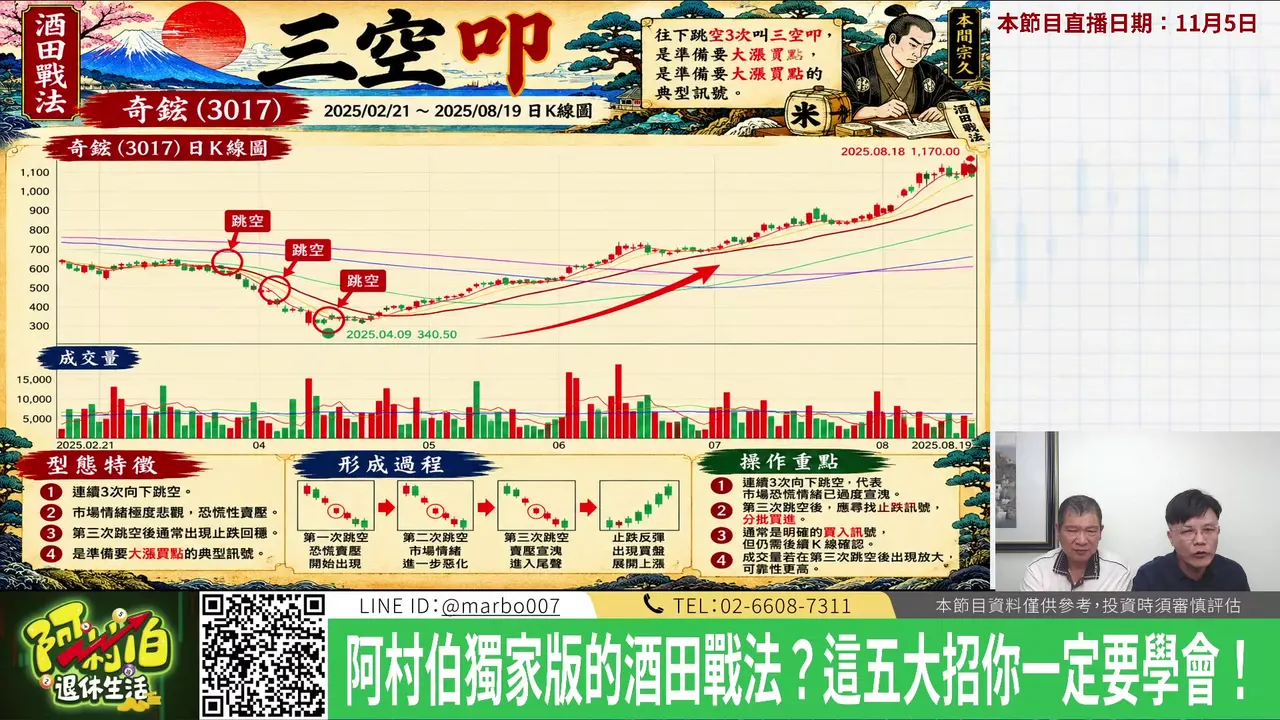
- With Three Gaps, do not rush to short during consecutive gaps; wait for price to fall below the upper edge of the third gap and fill it before calling a top; for the reverse pattern, Three Gaps Down, enter only once price returns above the upper edge of the third gap.
- Three Red/Black Soldiers and the Rising/Falling Three Methods have hard conditions: the soldiers must overlap with volume expanding step by step, and any gap or doji disqualifies them; the Three Methods need consolidation of at least 7 days, and you act on the 8th working day when price breaks out or breaks down on volume.
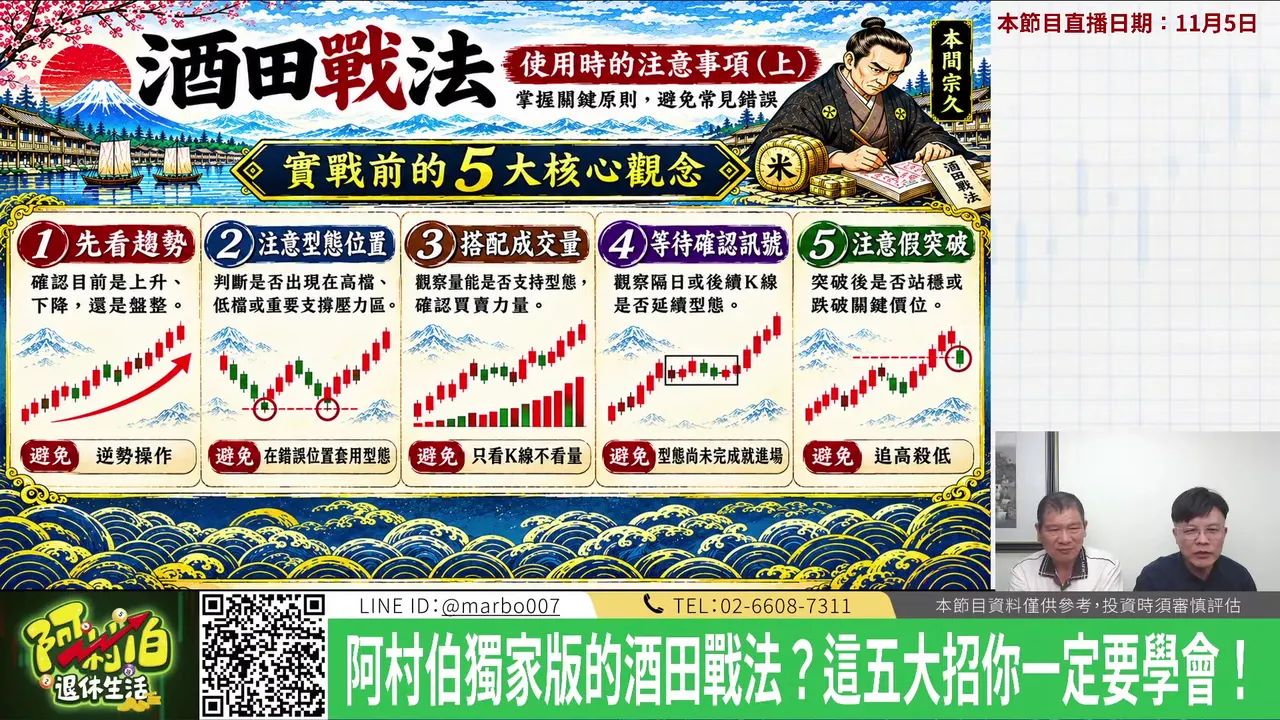
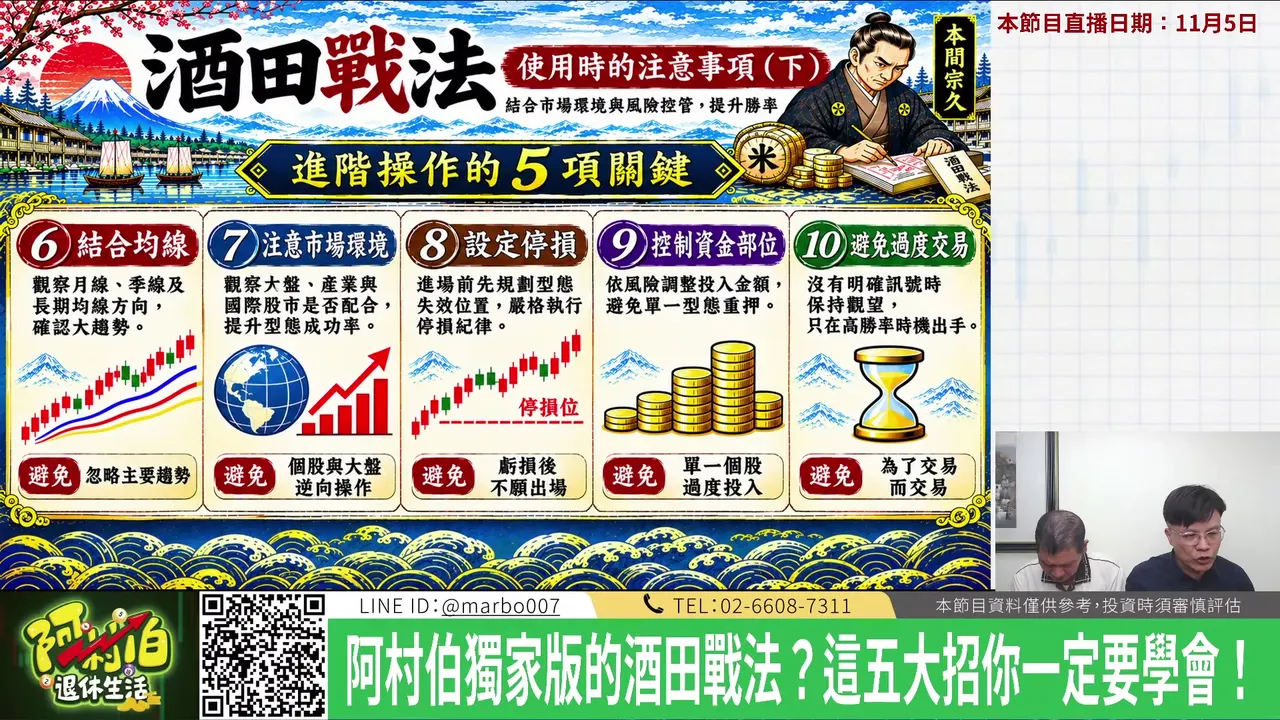
- Beyond patterns, look first at the trend and the broader environment; after entering, cut losses if price breaks below the consolidation zone, control position size and avoid overtrading; when the market is weak, wait until margin balances fall sharply and the Taiwan dollar and the fear index stabilize before entering, and stay conservative ahead of major events.
Section summaries
1:50Market Analysis and When to Stay on the Sidelines
Foreign investors were net sellers of more than 9000 hundred million last month and sold another 3000-plus hundred million in just the first 3 days of this month; margin balances have fallen only 6.39% from their peak while the broad market is already down 14%, and the OTC index is down 25% with margin down only 16%, meaning positions have not been cut enough and holdings have not yet settled. Wait to enter until the Taiwan dollar steadies and the fear index stops spiking, and until stocks stop falling after margin balances drop sharply, rather than rushing to pick a bottom; stay conservative before major events, such as the Taiwan election on November 28 and the Fed meeting on December 16.
▶ Watch from here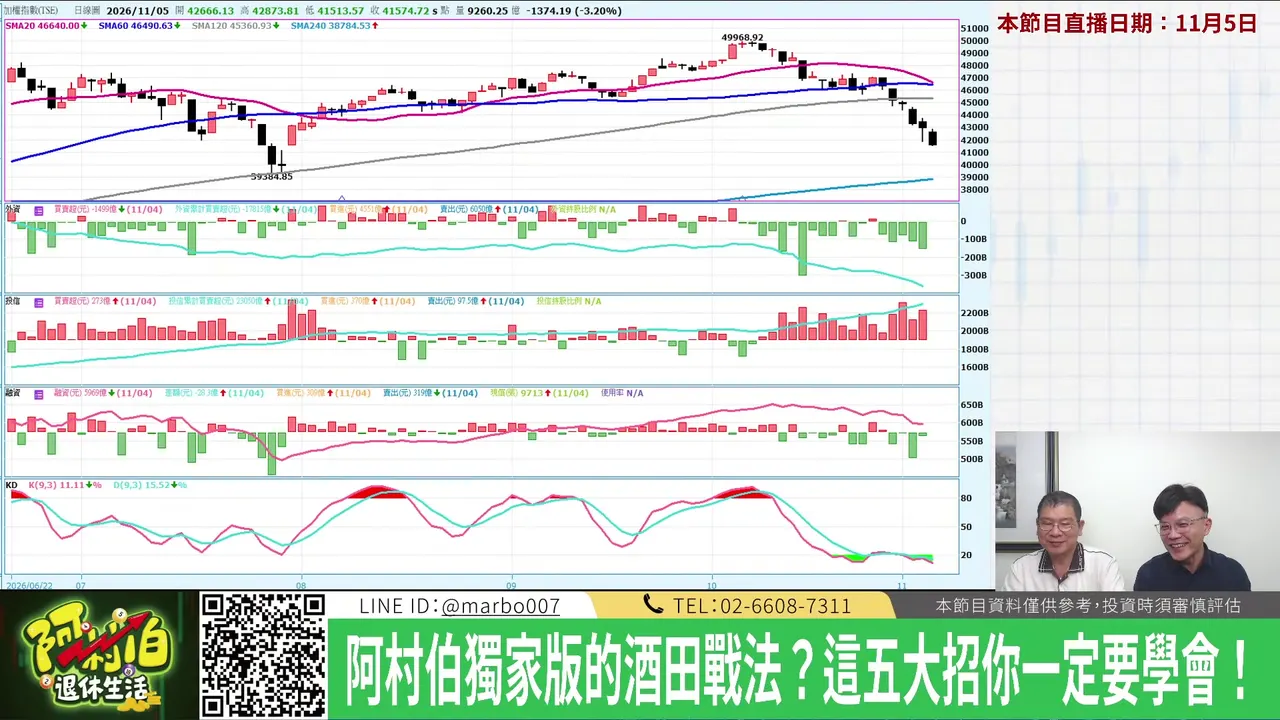
19:40Origins and Basic Framework of Sakata's Methods
Sakata's methods originated in the rice market of Sakata, Japan; about 200–300 years ago rice merchants recorded open, high, low and close prices and distilled them into candlestick patterns. The core is that price speaks: candlesticks reflect investor emotion and the strength of bulls and bears, while volume confirms the pattern. Because the human nature of greed and fear has not changed, it still applies to stocks, futures, forex and other markets and timeframes; it is not a prediction tool but a way to read whether big players are afraid or greedy. The five techniques are the Three Mountains (Three Buddha Top), the Reverse Three Mountains, Three Gaps, Red/Black Three Soldiers, and the Rising and Falling Three Methods; before using them, first tell whether you are in a small wave (days to weeks), a medium wave (months) or a large wave (years or more).
▶ Watch from here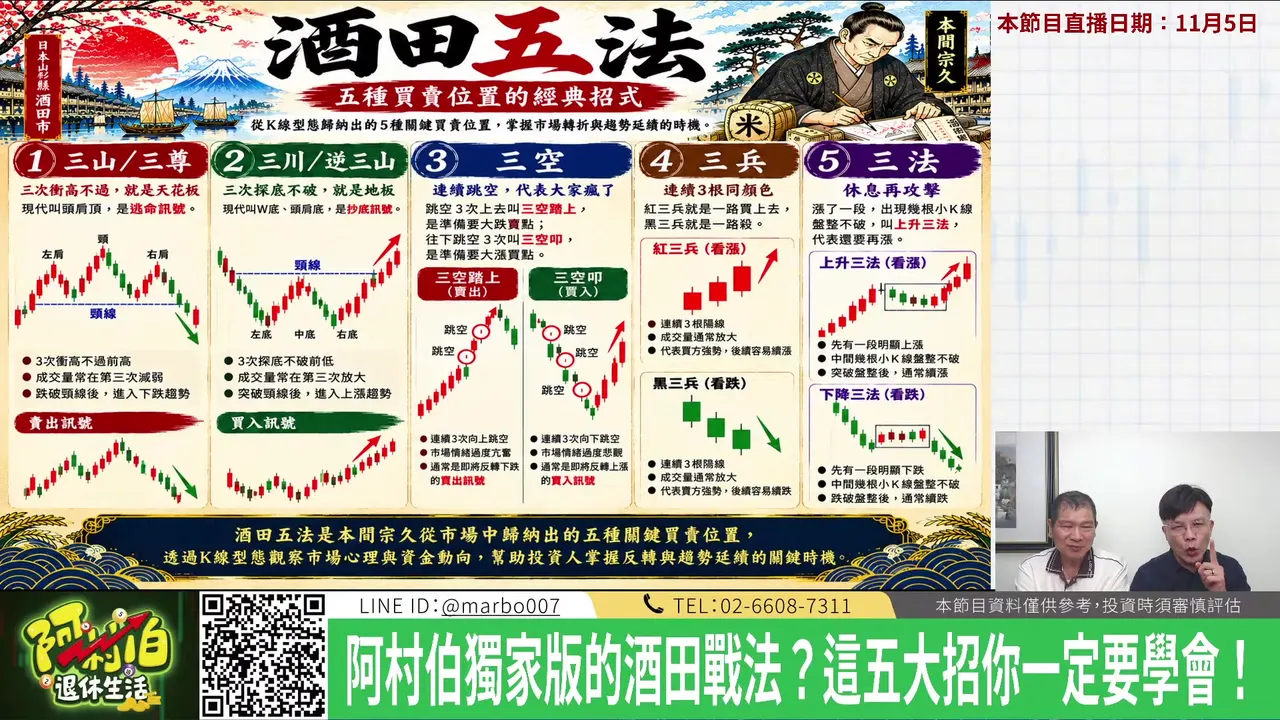
32:40The Three Buddha Top and Short Signal
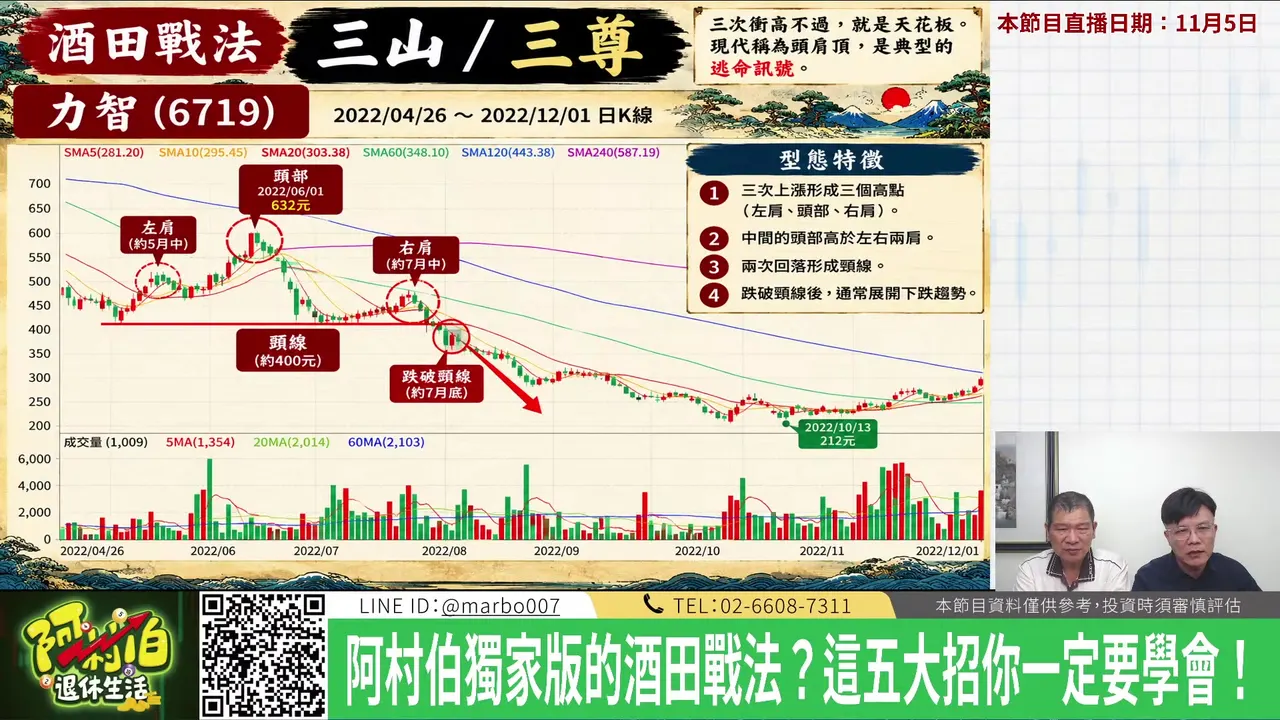
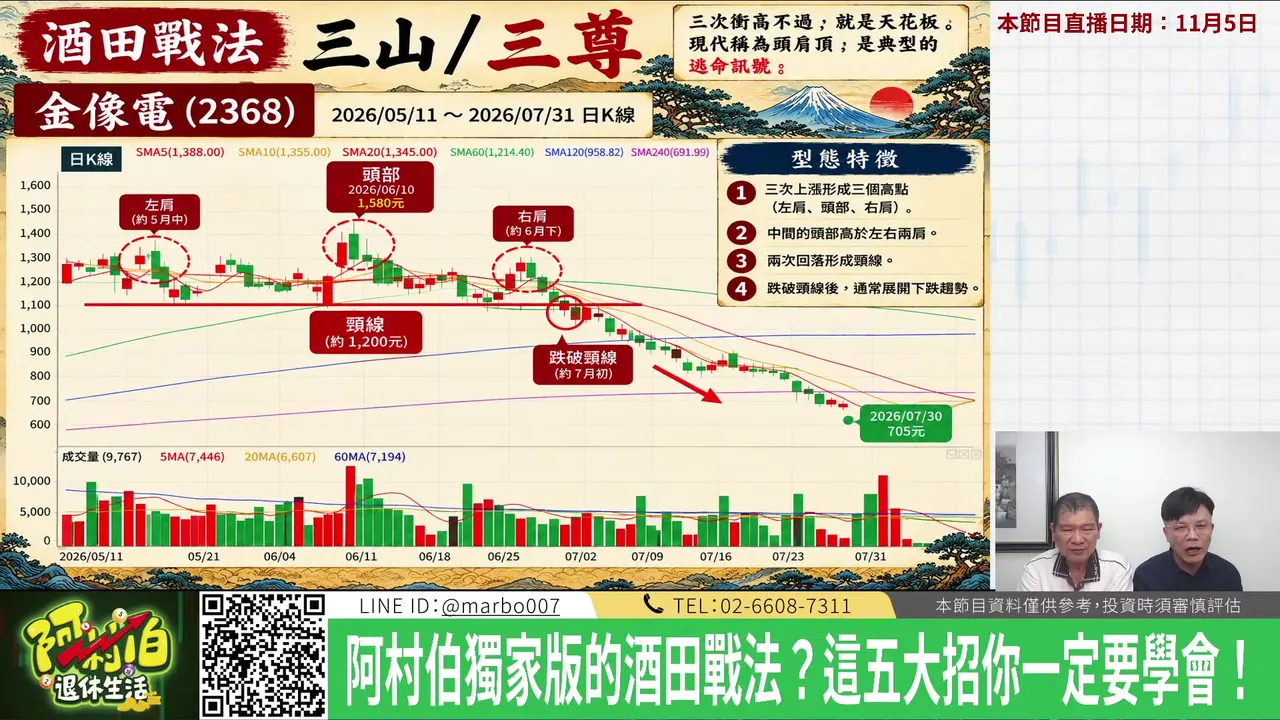
The Three Buddha Top is a ceiling pattern in which price fails 3 times to get past the prior high; the top is hard to guess in advance, and the real signal is a break below the neckline after the right shoulder, at which point the downtrend has begun and you should short heavily or exit. The psychology behind it is a long-term trapped-holder zone, where price can still sell off again after a rebound, so do not go aggressively long. Lizhi's top was at 630, and after breaking the 400 neckline it kept sliding; Kinpo Electronics's top was at 1580, it failed to pass the prior high for the third time and broke the neckline in early July, likewise an exit signal.
▶ Watch from here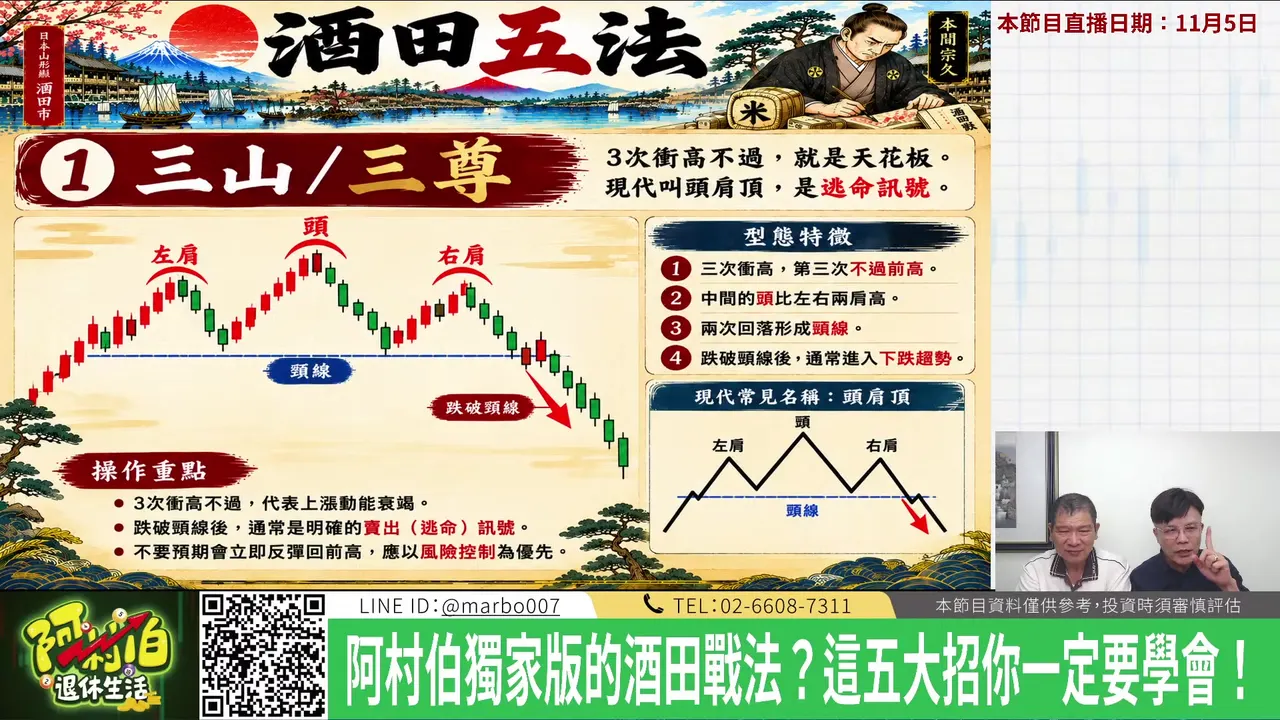
35:50The Triple Bottom and When to Buy
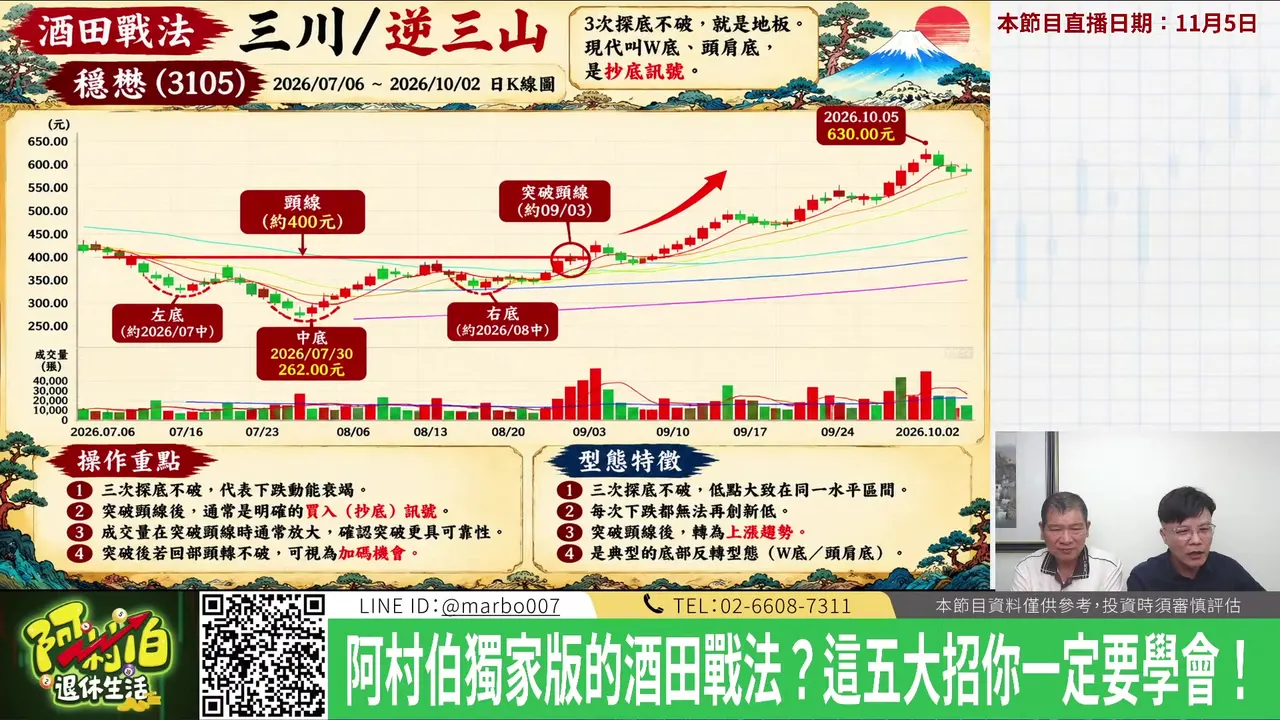
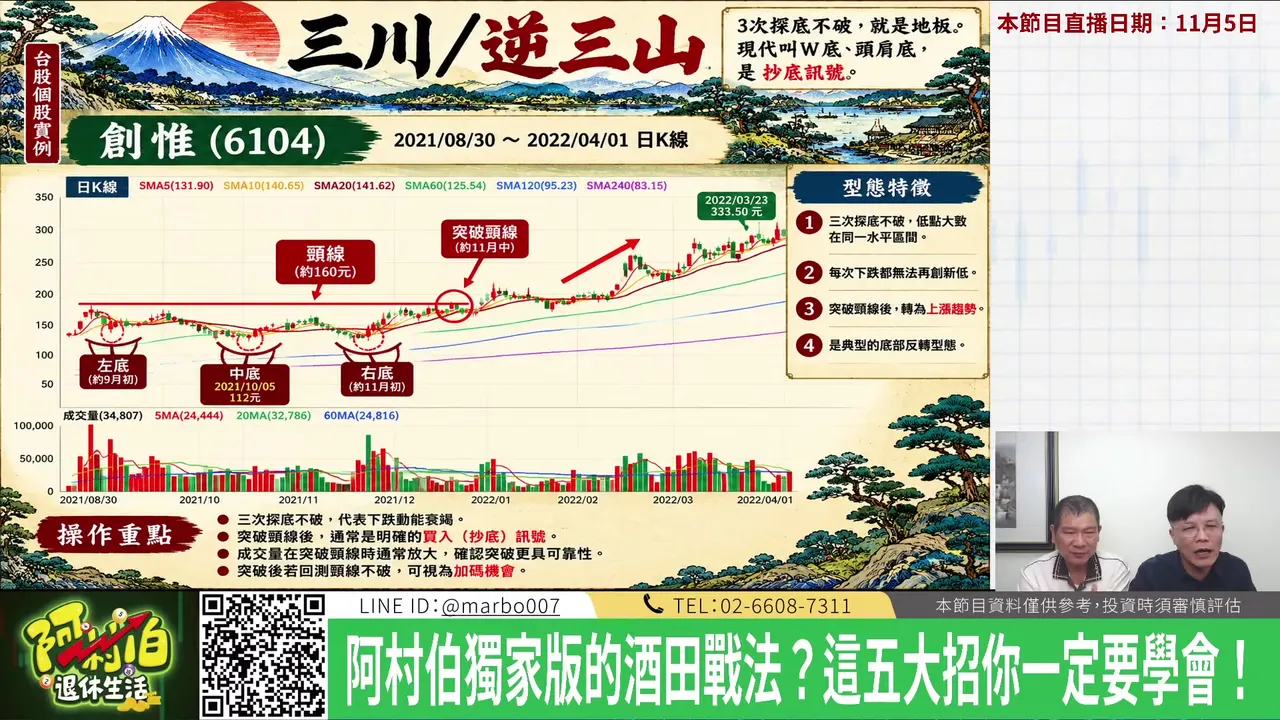
The Reverse Three Mountains is the Triple Bottom (a family that includes the W bottom and head-and-shoulders bottom): draw the neckline across the left, middle and right bottoms, and a breakout above the neckline over the right bottom is the buy signal; you are buying the start of the rise, not the lowest price, and buying at the low and selling at the high is mostly bragging that is only known afterward. The shape need not be identical, and the middle bottom need not be the lowest. Creative Sensor rose steadily after breaking its neckline, and Winbond kept climbing after breaking its neckline in February.
▶ Watch from here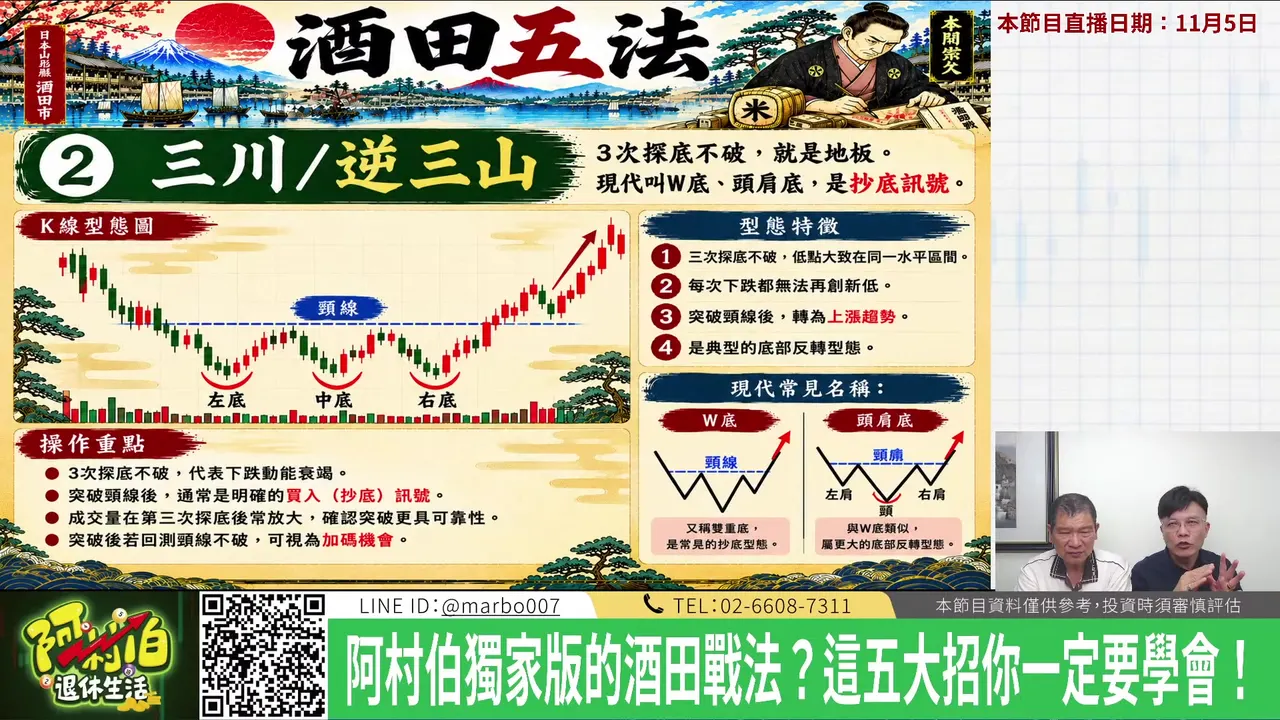
40:41Trading Strategy for the Three Gaps
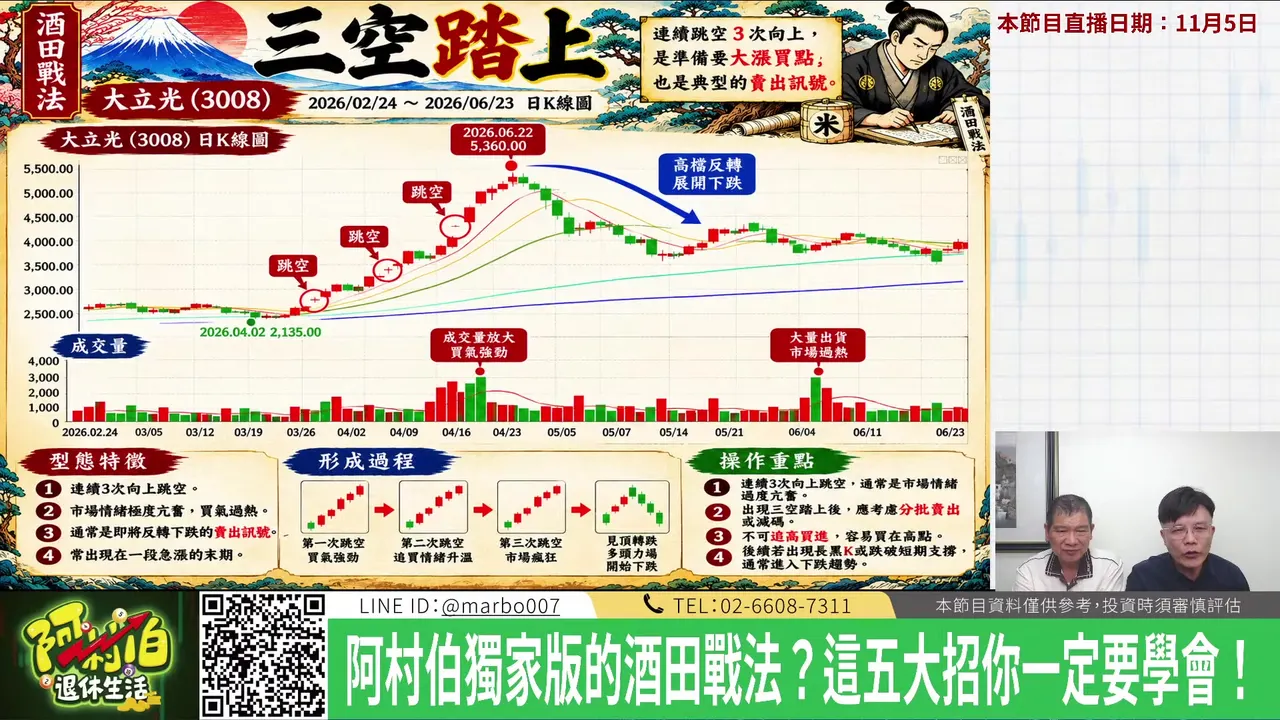
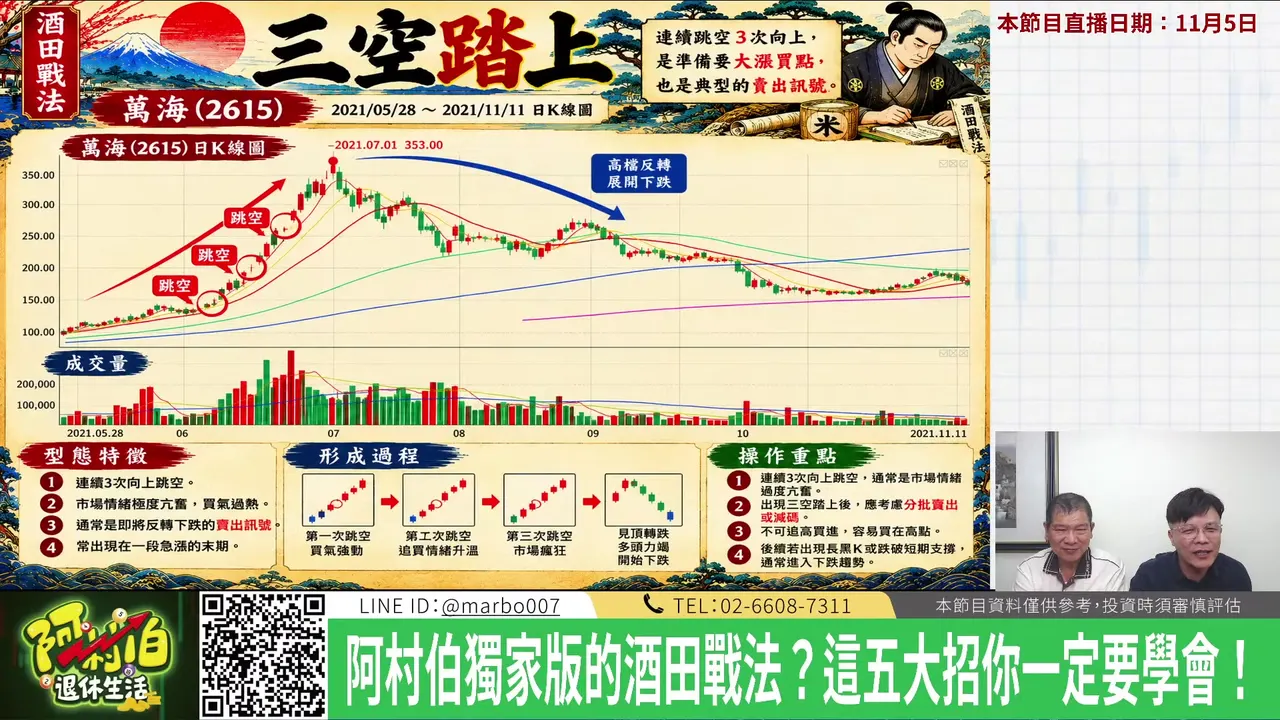
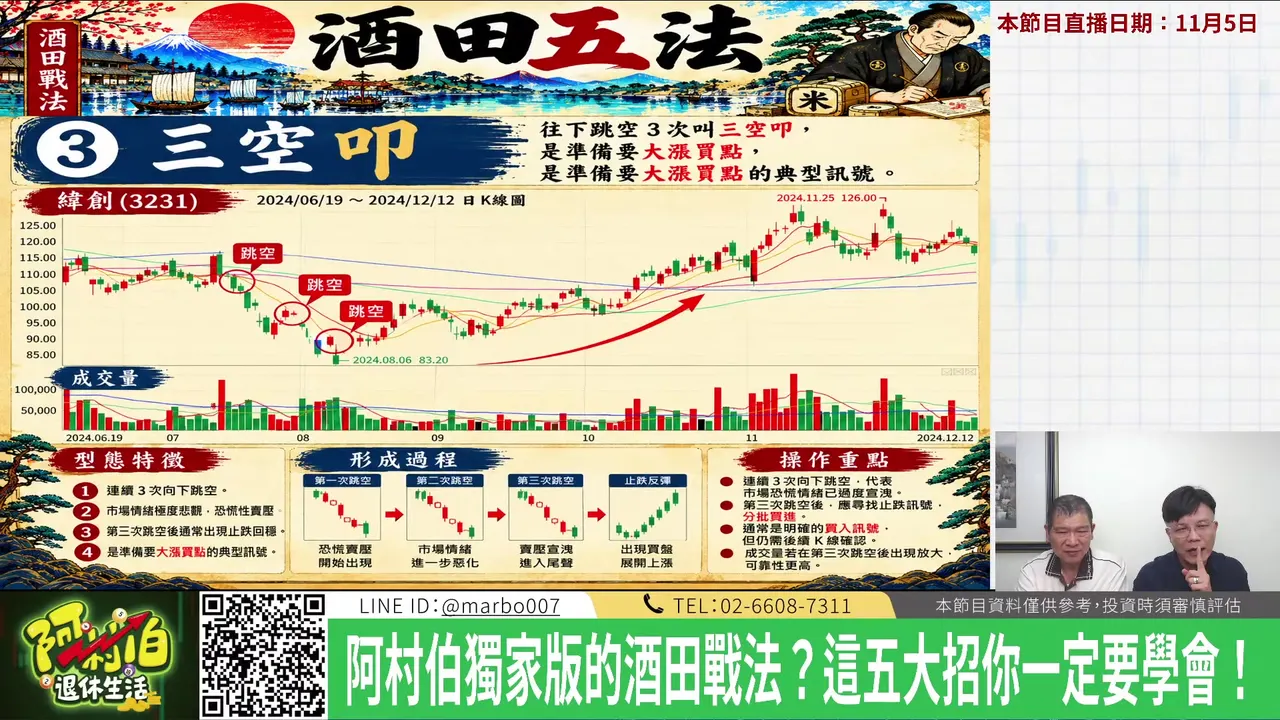
Three Gaps Up means 3 consecutive upward gaps that are not filled; after the third gap, even if price keeps making new highs, do not rush to short, and wait for price to fall below the upper edge of the third gap and fill it, which shows overhead trapped selling pressure has appeared and the trend has turned bearish, so sell quickly. Long positions should exit first, while short positions need not necessarily be opened. More than 3 gaps are nothing to fear as long as none is filled, but stocks that gap many times in a row are mostly small caps with low volume and are not suitable to trade. Evergreen Marine gapped 3 times in May 2021, made a new high, then reversed; Wan Hai peaked at 353 and should have been exited when it fell back to the upper edge of the gap around July. The reverse, Three Gaps Down, is 3 consecutive downward gaps; when price returns above the upper edge of the third gap, it is short covering and you can enter, and Wistron and AVC both rose steadily after gapping.
▶ Watch from here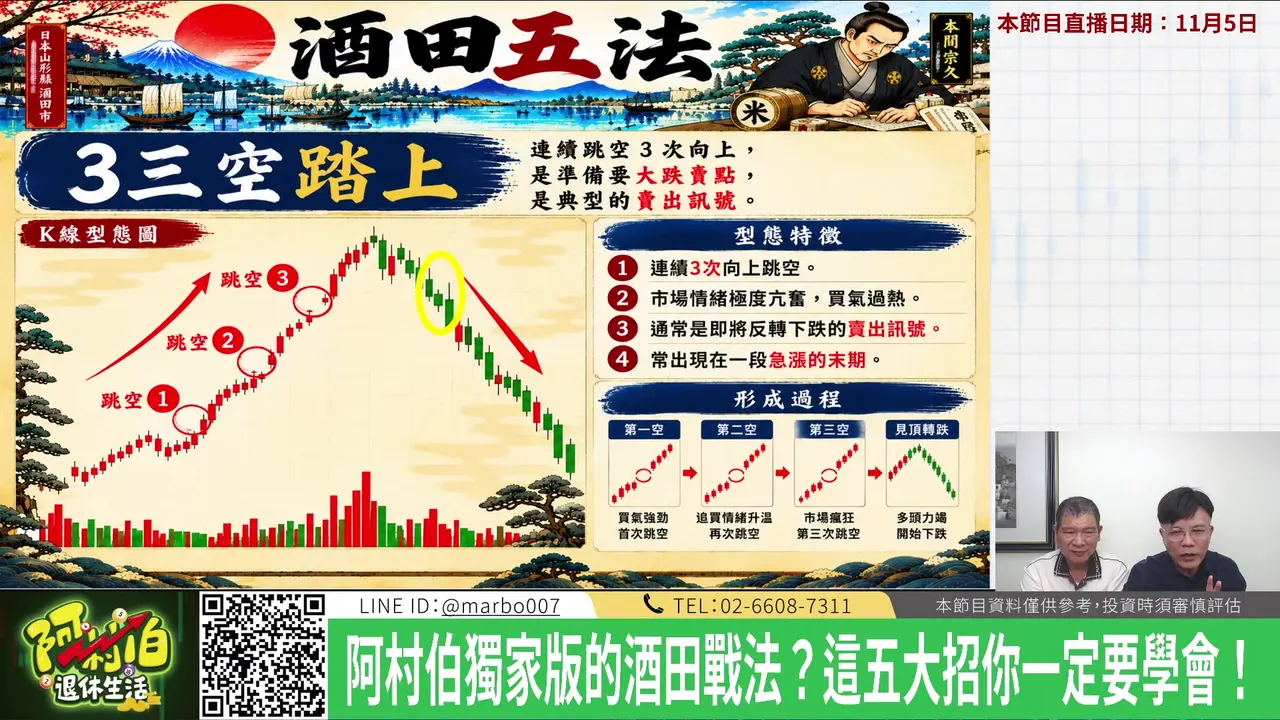
46:19Identifying and Applying Red/Black Three Soldiers
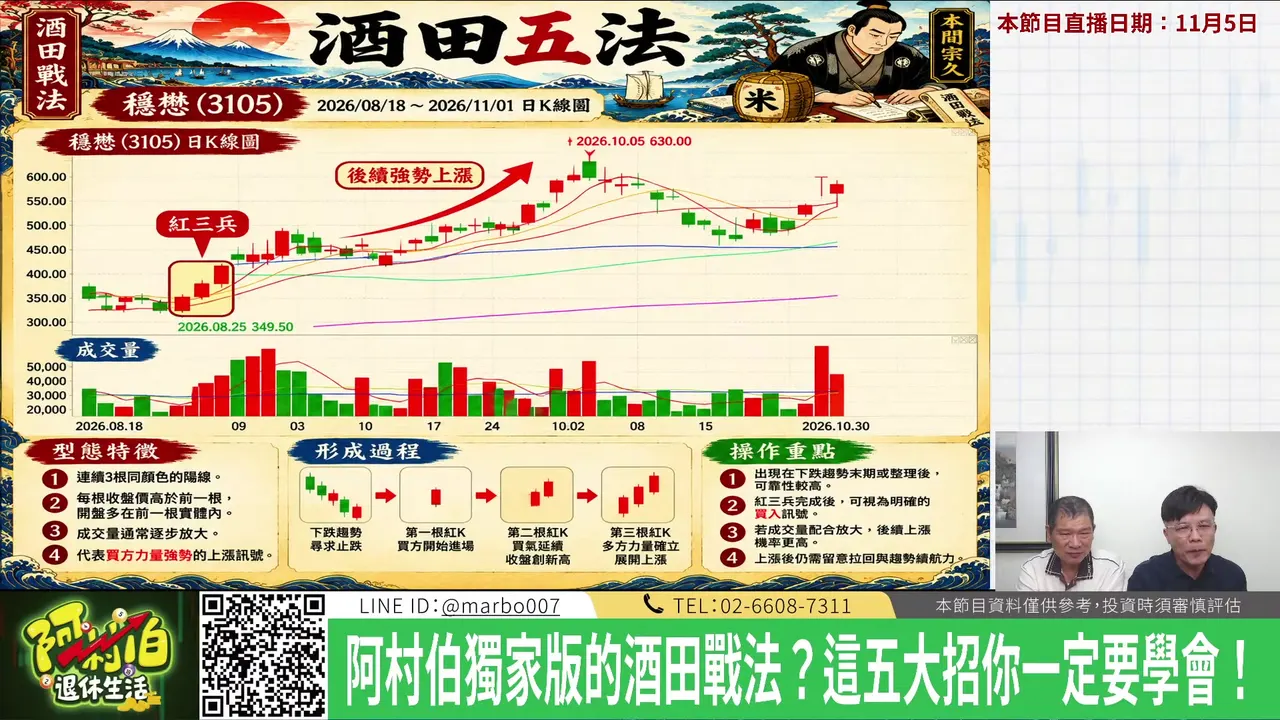
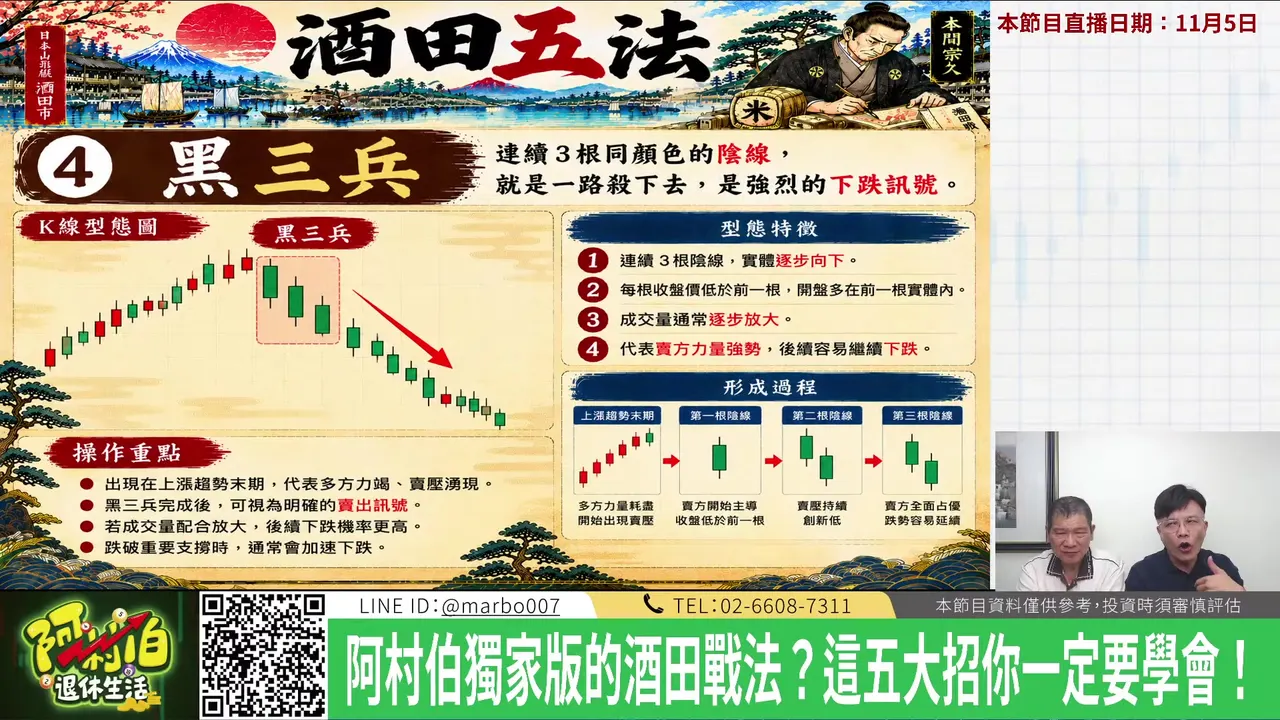
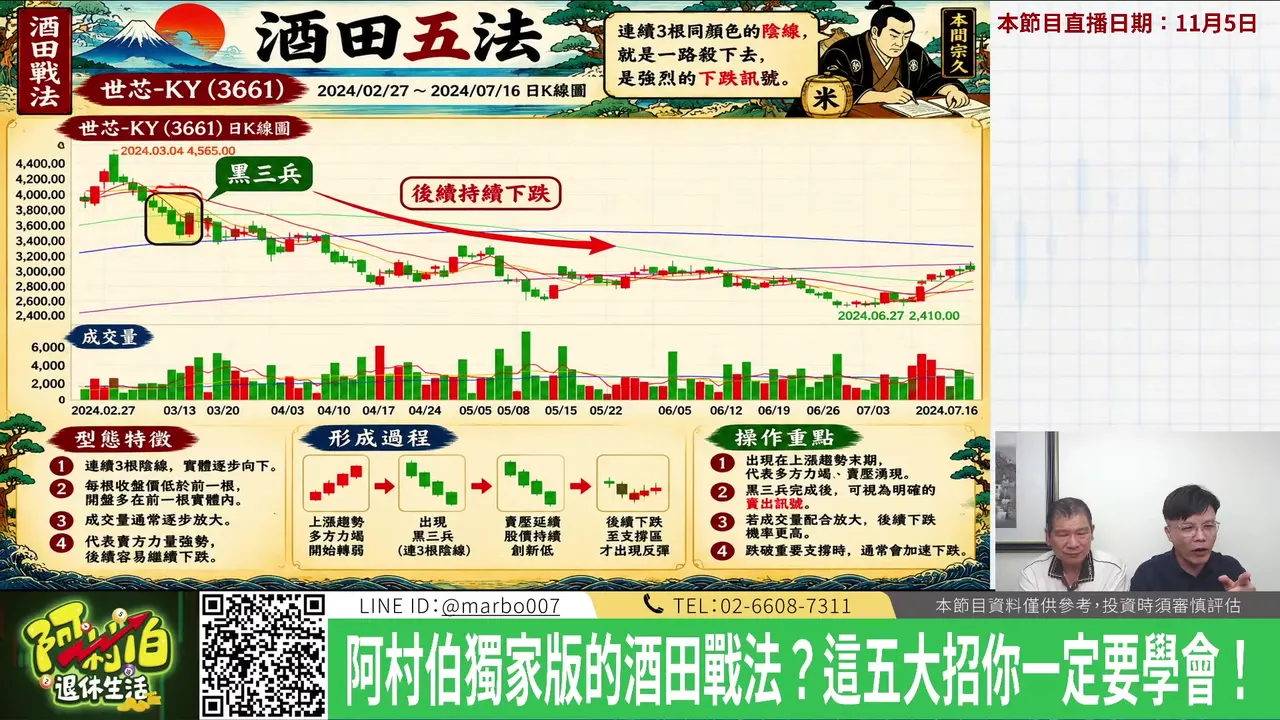
Three Red Soldiers must be 3 consecutive red candles closing above their opens, overlapping one another, with volume expanding step by step; a gap, doji or T-shaped candle in between disqualifies them. Win Semiconductors's Three Red Soldiers later kept rising, but its most recent set does not count because of a T-shaped lower shadow and a third candle with shrinking volume; Allring's 3 red candles overlapped with rising volume and it climbed steadily afterward. Three Black Soldiers is the reverse: 3 consecutive green candles with volume expanding step by step, meaning selling pressure continues; Quanta had 4 black candles in a row around December 18, 2024, and Alchip-KY also had several black days in a row, a clear downside signal, so exit quickly.
▶ Watch from here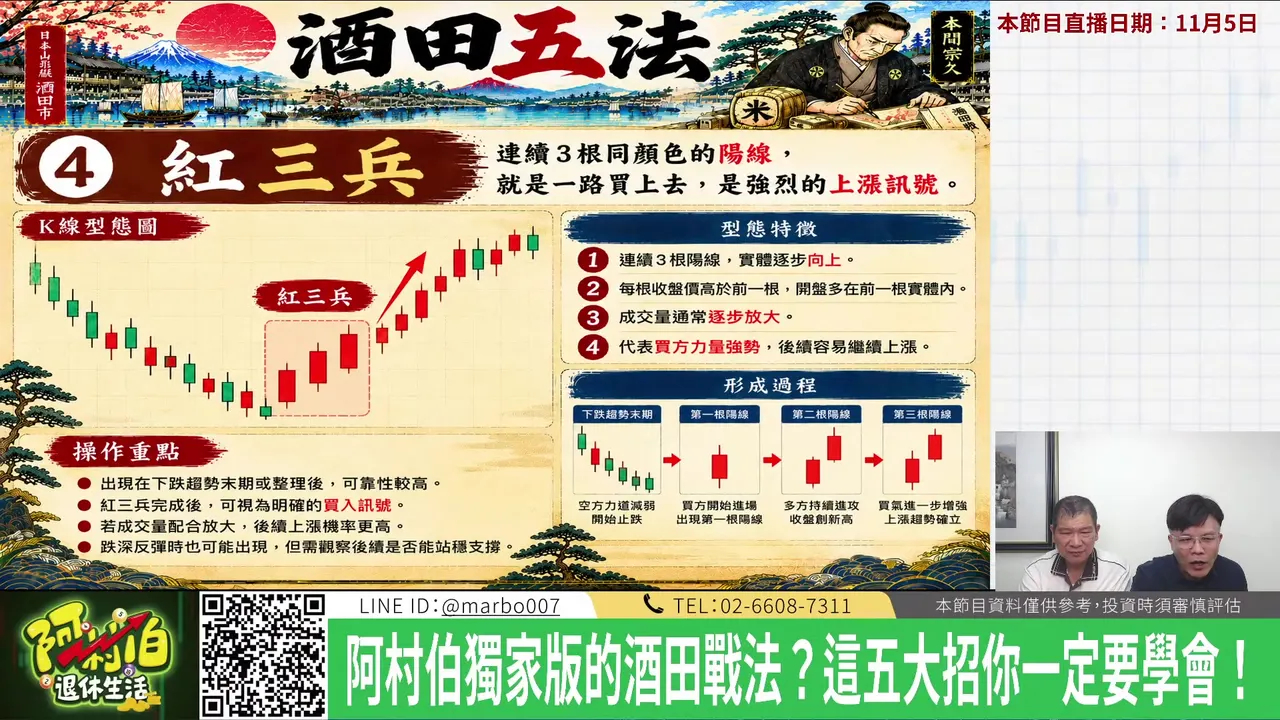
49:19Rising and Falling Three Methods in Practice
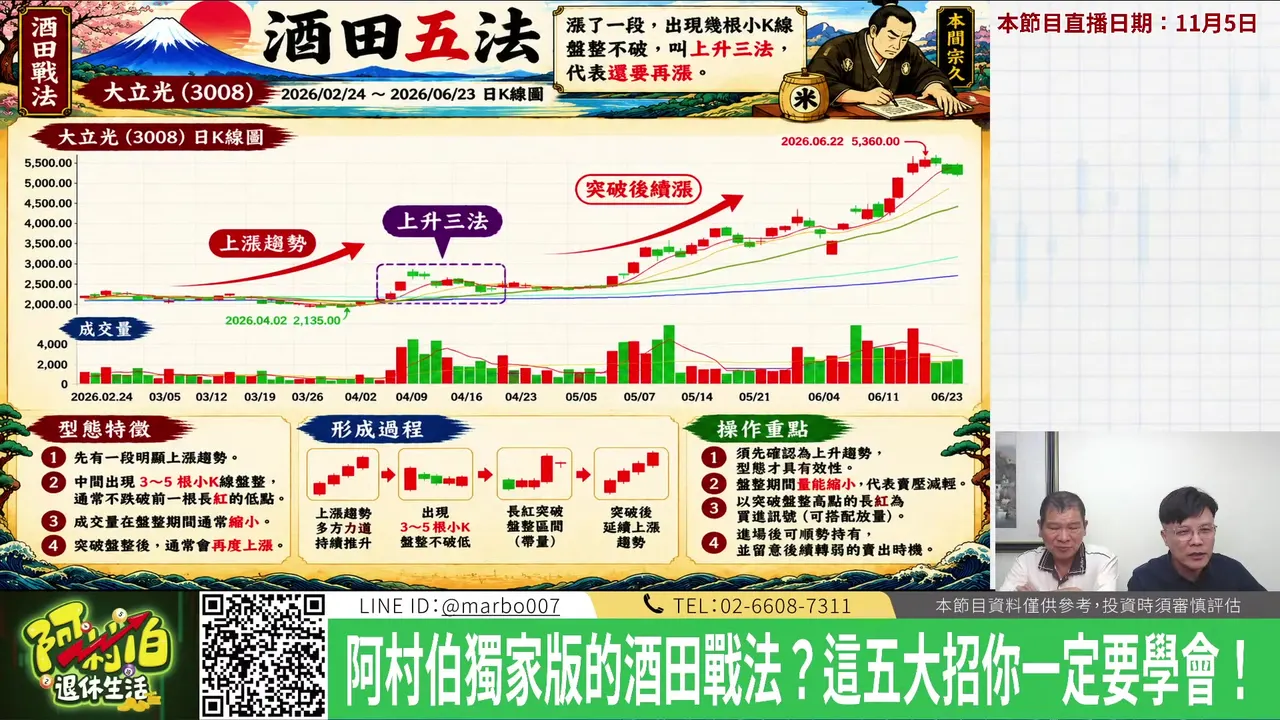
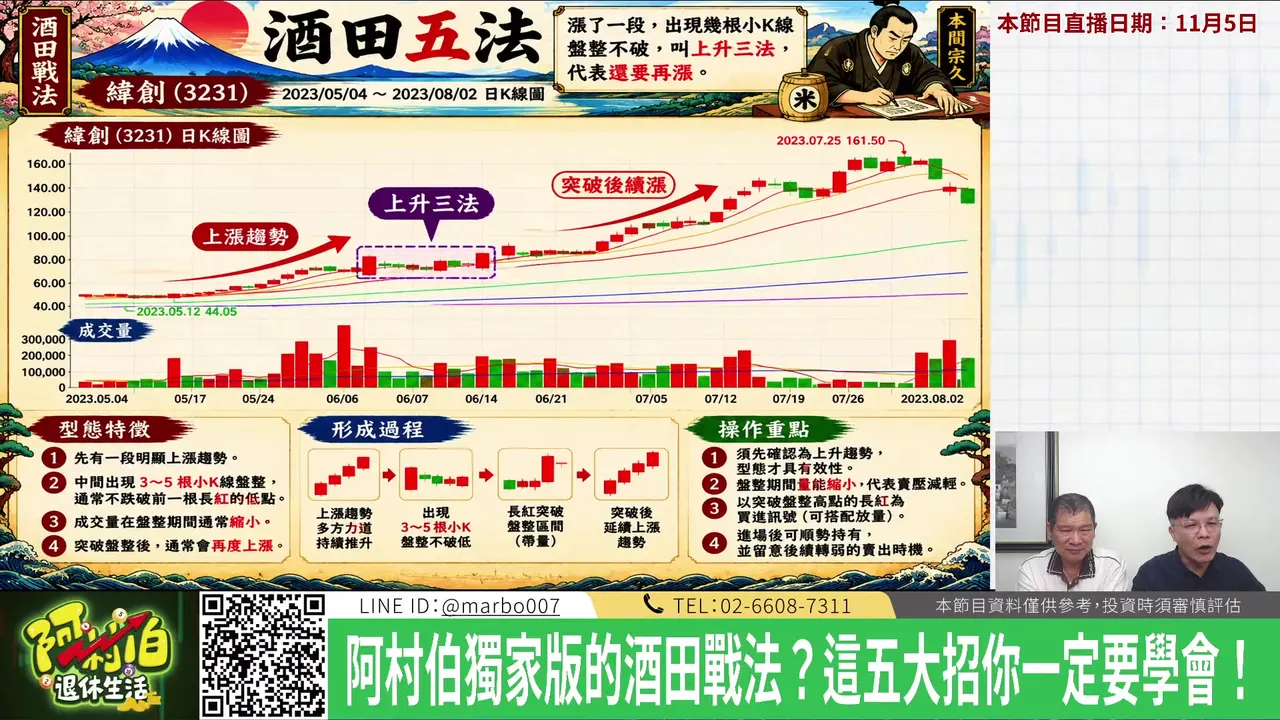
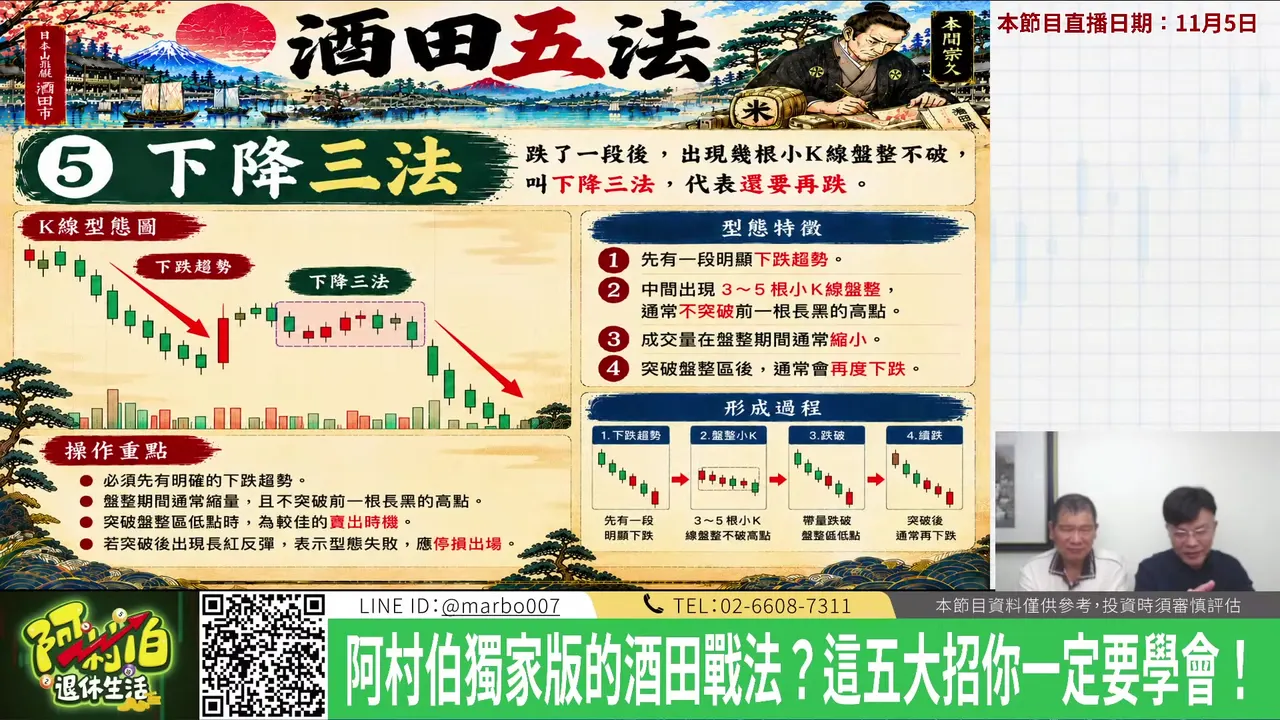
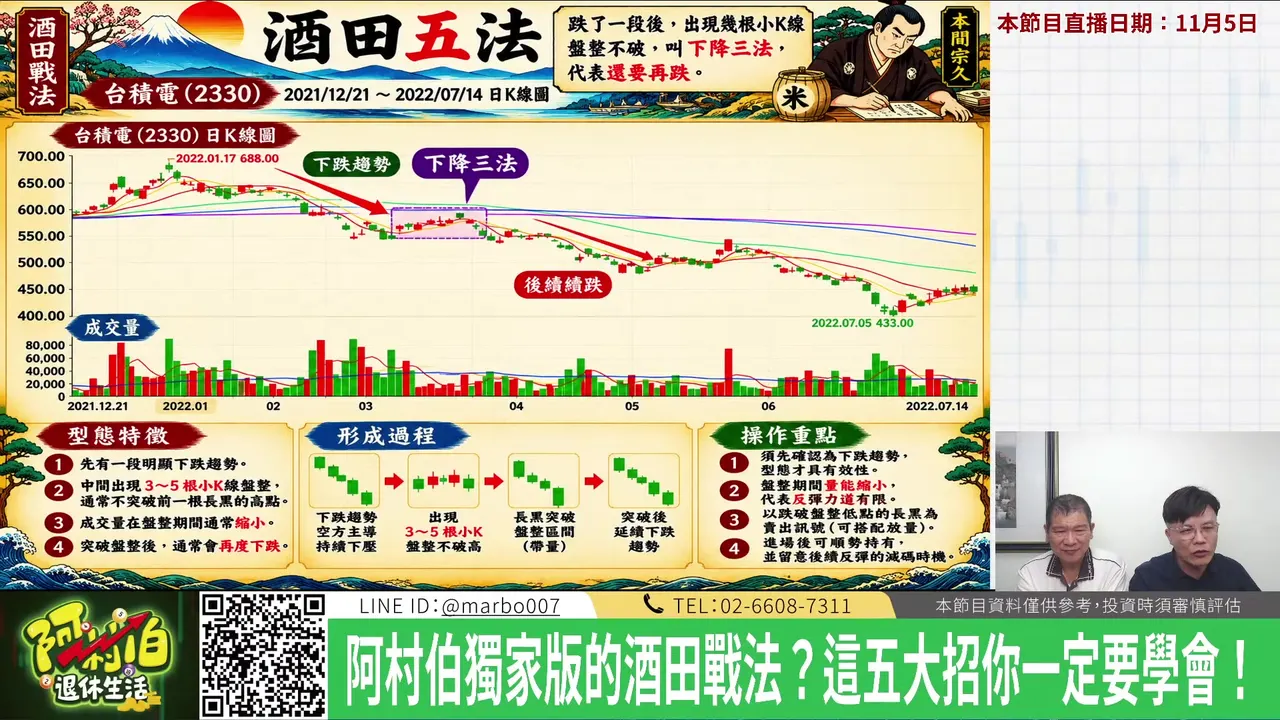
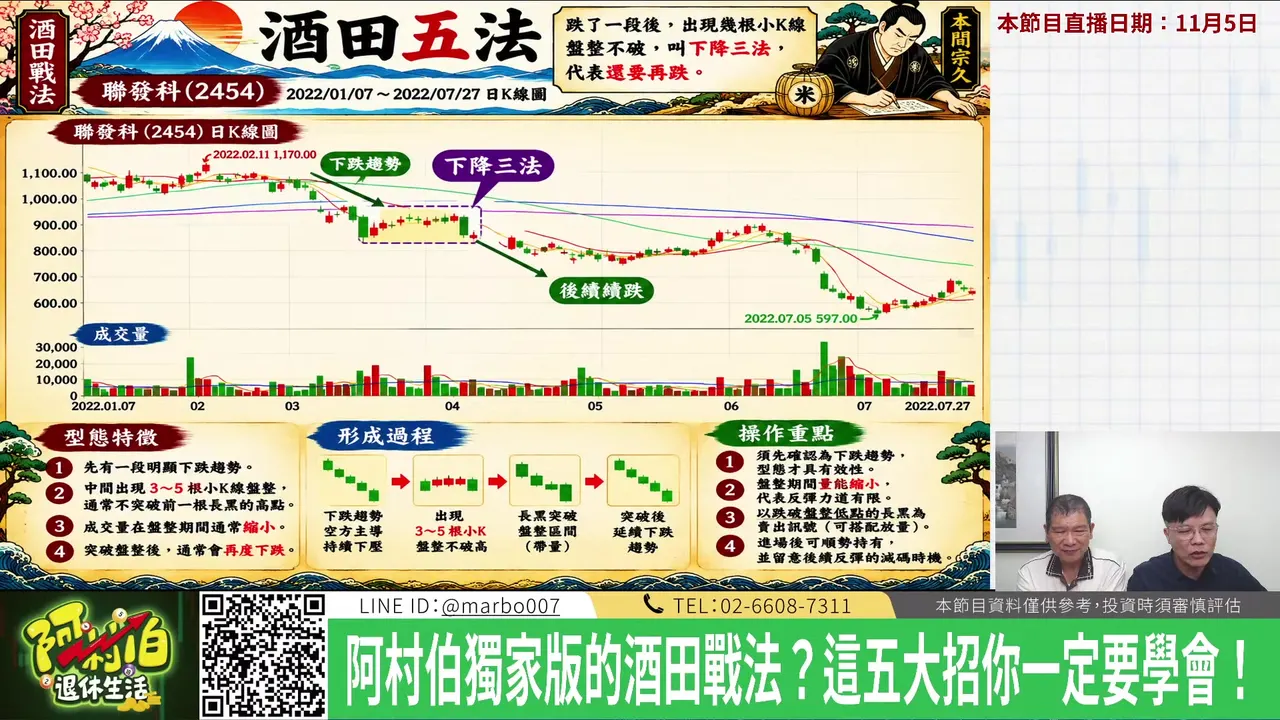
The Rising Three Methods is a rise followed by sideways consolidation of at least 7 days; on the 8th working day, enter when price breaks above the top of the consolidation range on volume; if you missed the earlier move you can enter, and if you were already in you can add. The speaker chose 7 days rather than 5 out of concern that cutting the days down makes one restless and less careful with oneself. The key is the 7 days of consolidation; the number of days of rise or fall before it is unrestricted. The Falling Three Methods is the reverse: after a decline, consolidate 7 days, and on the 8th working day, when price makes a new low and breaks the lower edge, sell or short. Wistron and Chicony Power are examples of the Rising Three Methods; TSMC and MediaTek are examples of the Falling Three Methods.
▶ Watch from here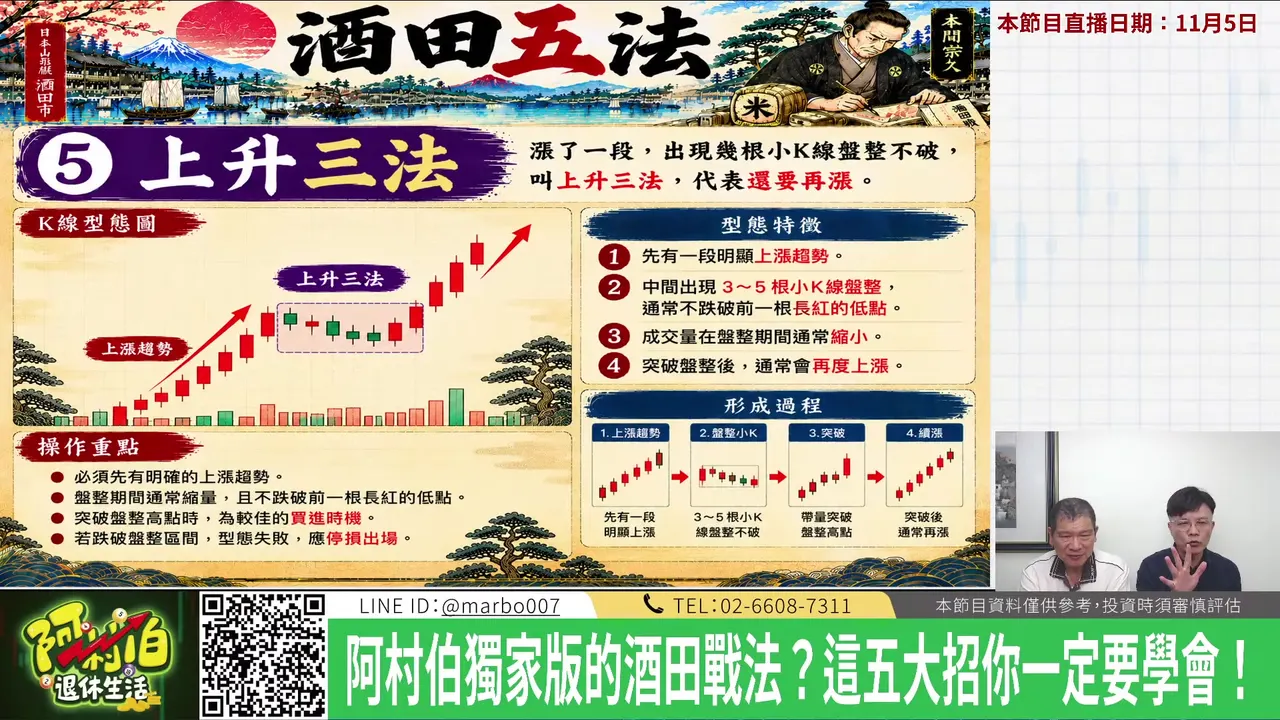
55:07Combined Examples and Trading Discipline
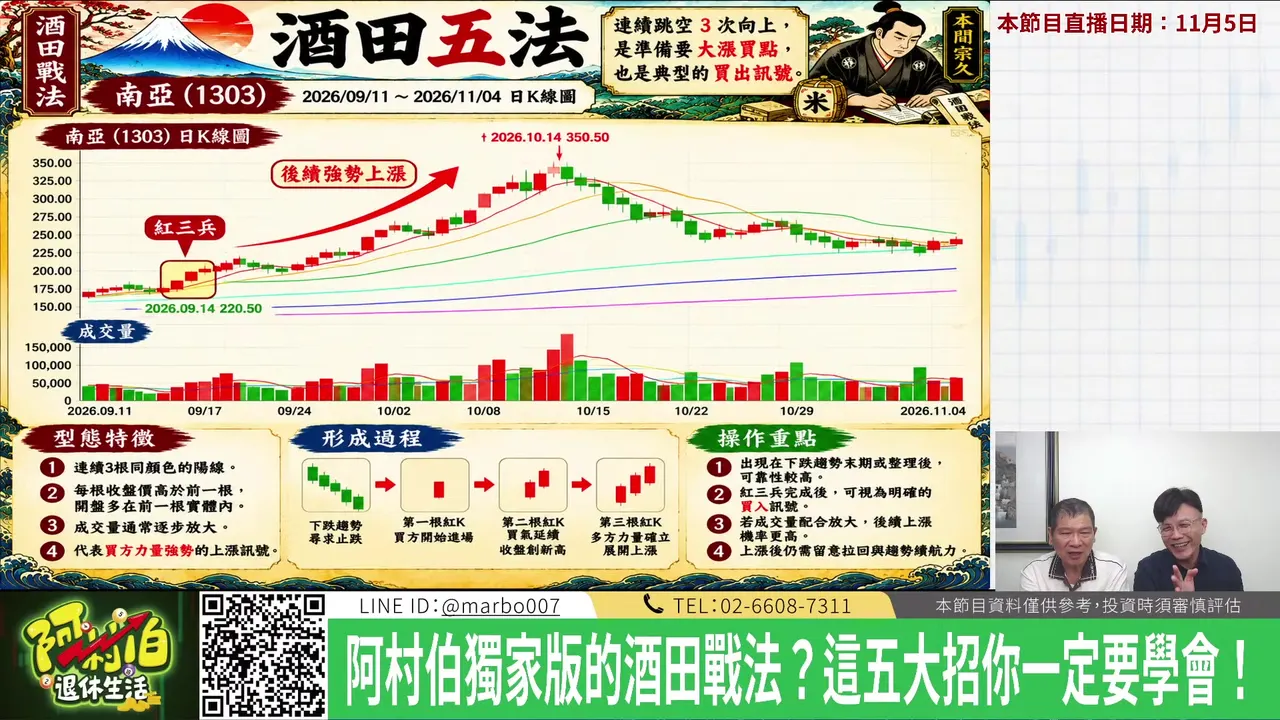
Nan Ya Plastics showed Three Red Soldiers in September and then rose all the way to a high of 350 on October 14; during that period Three Red Soldiers appeared 4 times, allowing 3 add-ons, and once the moving averages tangle and the 1st, 2nd and 3rd candles appear, you should lock on. Largan rose from February this year, consolidated in April with expanding volume, and continued higher after breaking out; before its high of 5,360 it gapped 3 times, and once the upper edge of the gap was filled it began to sell off. Win Semiconductors's left, middle and right bottoms were clear, it broke the neckline on September 3 with rising volume, and reached nearly 630. Sinotech Mineral Products formed Three Black Soldiers after its October 5 high of 1060, and today it even hit limit-down. Key points for use: first look at the trend and broader environment, patterns must be matched with volume, and the Rising/Falling Three Methods require waiting 7 days; do not fear false breakouts, and if price falls below the consolidation zone after entry, cut the loss; then combine with moving averages, control the position in any single stock, and do not overtrade.
▶ Watch from here