Following Investment Trusts: Using the Trust-to-Volume Ratio to Find Low-Priced Stocks They Have Adopted
TL;DR: To pick stocks adopted by investment trusts, look for a trust net buy/sell as a share of trading volume (trust-to-volume ratio) of 10% or more, for 2 or more consecutive days, with the share price still low, because a ranking by lot count alone misses high-priced stocks and a share-of-capital ratio distorts results for large-capital companies.
Key ideas
- A trust buying is not automatically good: open-type trusts only buy now and then, while nurturing-type trusts that buy for too long may have already earned enough and be ready to let go; consecutive buying also needs enough lots to matter, and you should check whether this trust's past big buys came at highs or lows.
- Lot-count rankings have a blind spot: high-priced stocks cannot make the list even when a trust bets heavily on them. Parade Technologies-KY had only 151 lots bought by the trust but about 15% of volume, and Fubon Media had 40 lots bought, which was 20% of volume; the trust-to-volume ratio uses lots in both numerator and denominator, avoiding distortion from share price and share capital.
- Enter when the trust has just started buying, has bought for 2 days, the trust-to-volume ratio is above 10% and the price is low; exit when, after the price has risen, the trust sells for consecutive days and its holding-ratio line turns down, so you get off the bus too, meaning you leave for the same reason you entered.
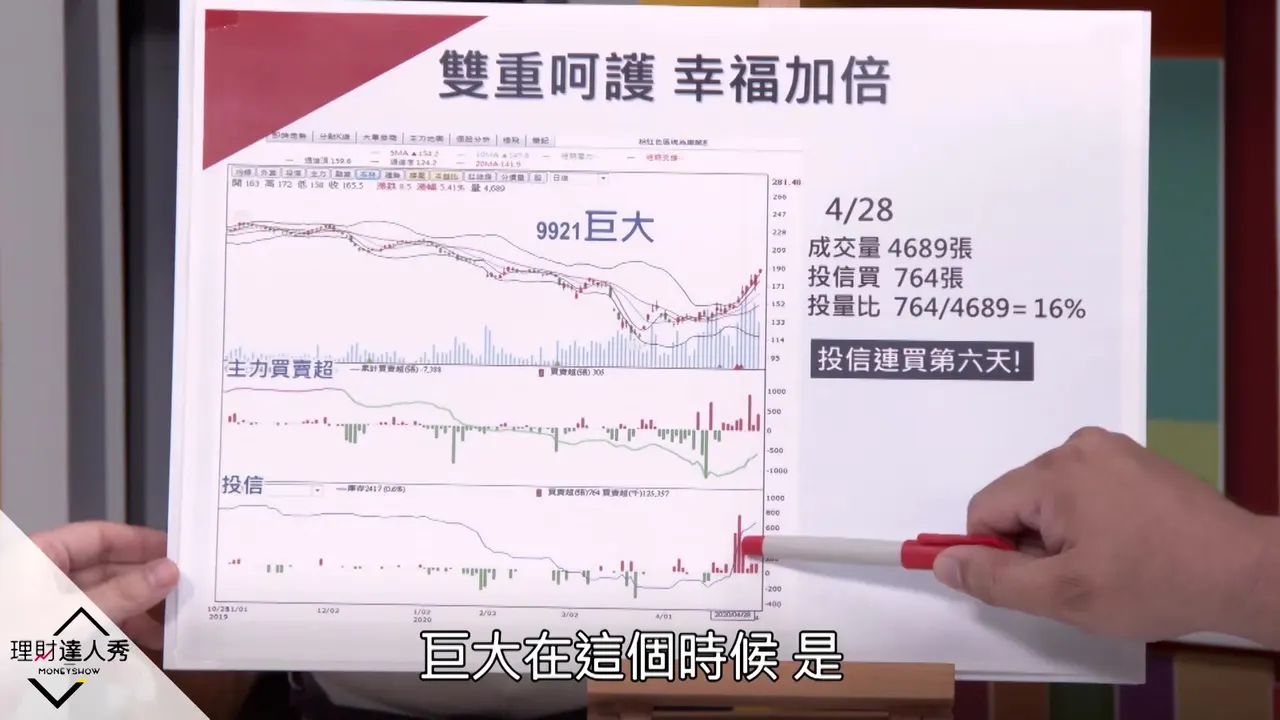
- Having a trust plus major players, the "2 mothers", buying together is safer: the trust-to-volume ratio threshold is 10% and major players only need to be buying, so at least you won't be dumped on; Giant Manufacturing, with 6 straight days of trust buying and a matching upper-band pattern, is an example, but the stocks shown only fit the selection logic and are not buy recommendations.
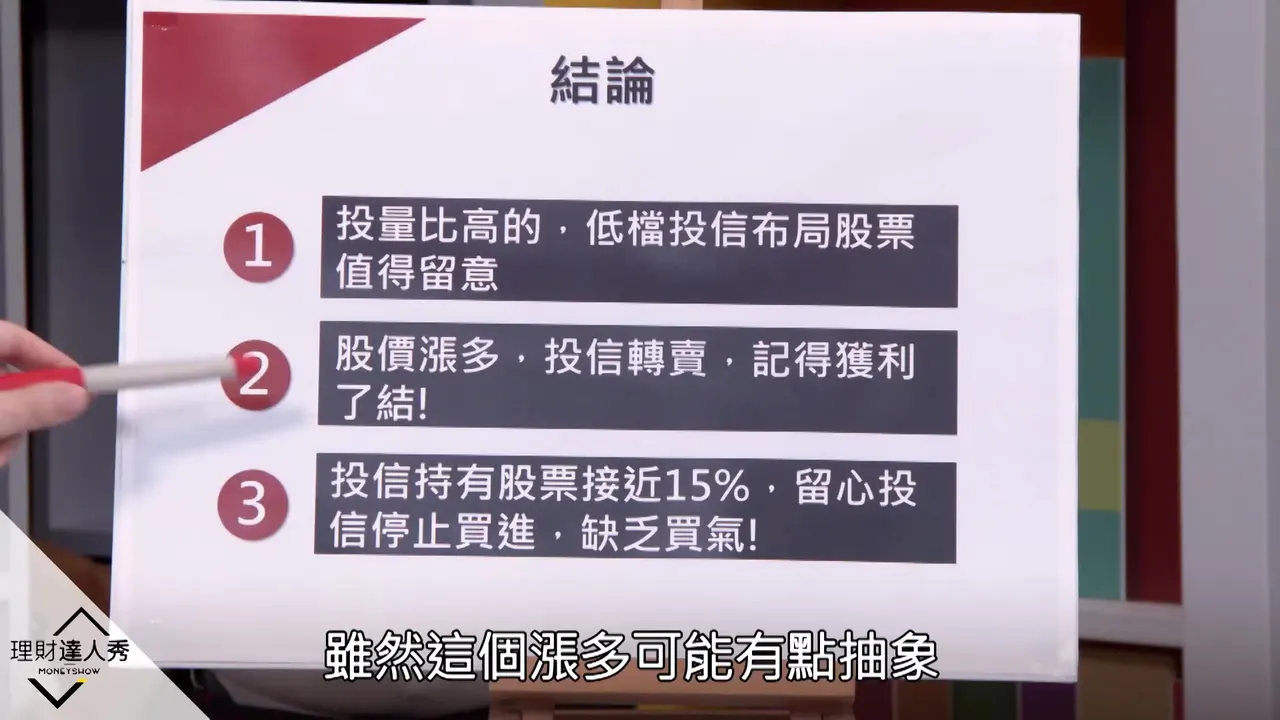
- Be careful when a trust's holdings approach 15%, as it may stop buying and the price may consolidate or fall; the speaker believes that in the recent Taiwan market rally, trust net buying and selling has been more accurate and more useful than that of foreign investors.
Section summaries
2:40Investment Trusts as Mothers: The Open-Type Trust
Using Mother's Day as a pretext, the host compares a trust adopting a stock to a mother caring for a child, and first introduces the open-type mother: a trust whose single-day net buying is very high but which only buys occasionally and may not keep paying attention afterward. He adds amusing asides about asking his mother to watch the market during the session and giving a monthly allowance.
▶ Watch from here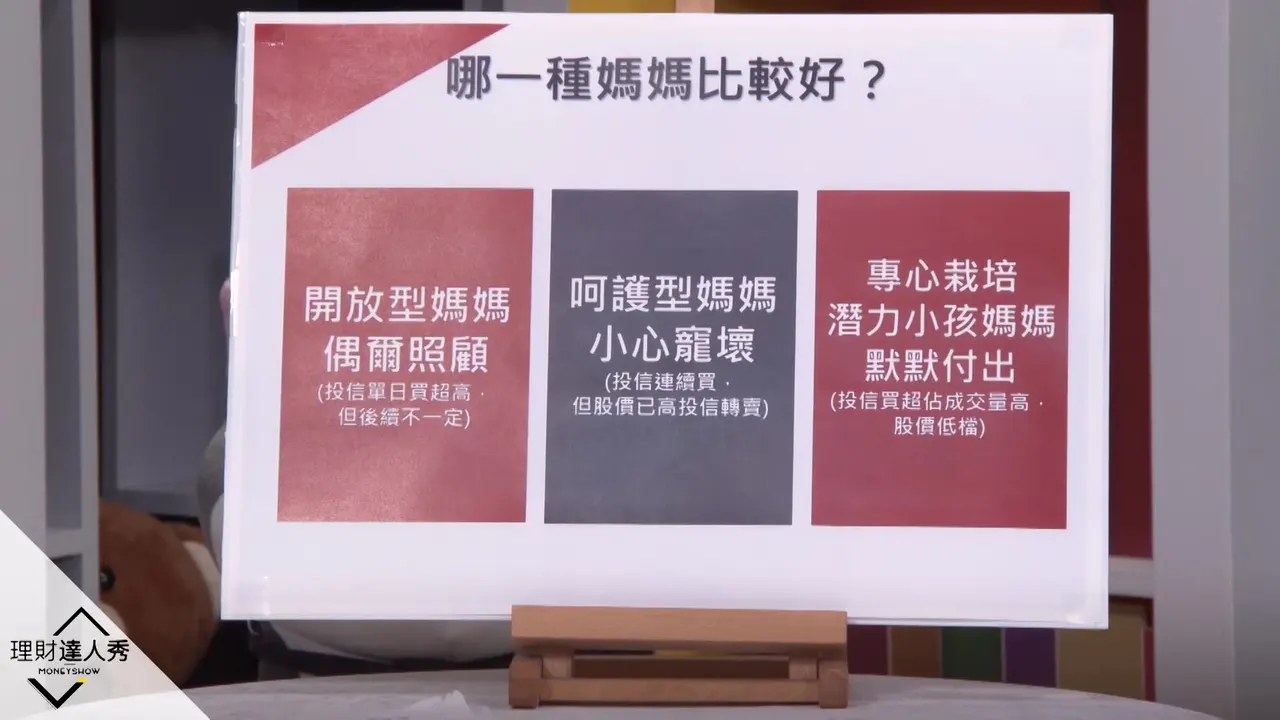
4:20Three Types of Trusts and the Blind Spot in Rankings
Of the 3 types of mothers, the open type buys occasionally, the pampering type buys consecutively until holdings get large and risks spoiling the stock, and the dedicated-nurturing type is one where trust net buying is a high share of volume and the price is low, nurtured from the start, which is the most worthwhile to find. He then points out the blind spot in net-buy rankings: Largan's price is so high that its lot count is never large, so the lists are often full of cheap stocks like AUO, Macronix and Taishin... rather, CDIB-type names such as Development Financial; instead, look for expensive stocks that are still being bought heavily, as they may have a story.
▶ Watch from here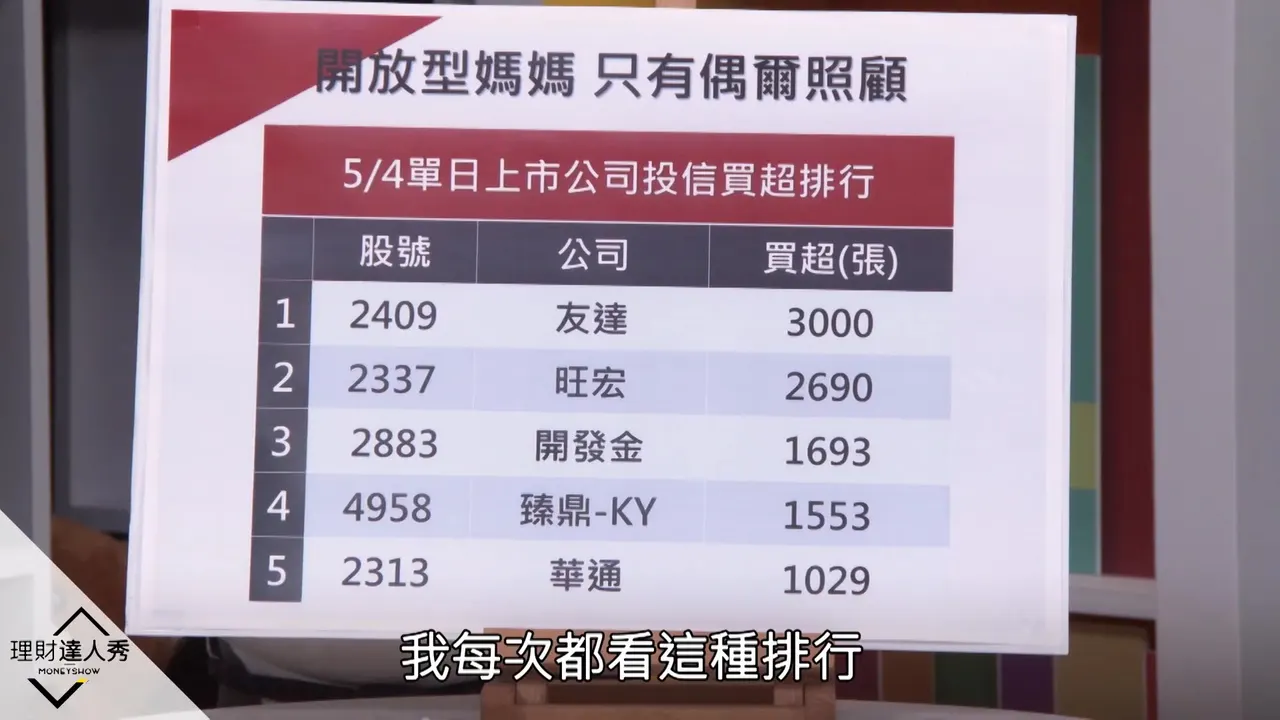
6:10Judging a Trust's Skill and Signs It Is Letting Go
Taking AUO as an example: on 5/4 the trust net bought about 3000 lots in a single day, having not bought the day before, so it is an open-type mother. Trusts differ in skill, so check whether its past big buys came at highs or lows; only big buying at lows is worth following, while big buying at highs is a mistake. AUO's mid-sized investors actually sold at highs and bought back at lows, which makes them even more worth following. Elan is used to illustrate the pampering type: the trust adopted it all the way up to a high, and if it stops buying, it has let go and the price may fall all the way down, so be especially careful with stocks that have already surged.
▶ Watch from here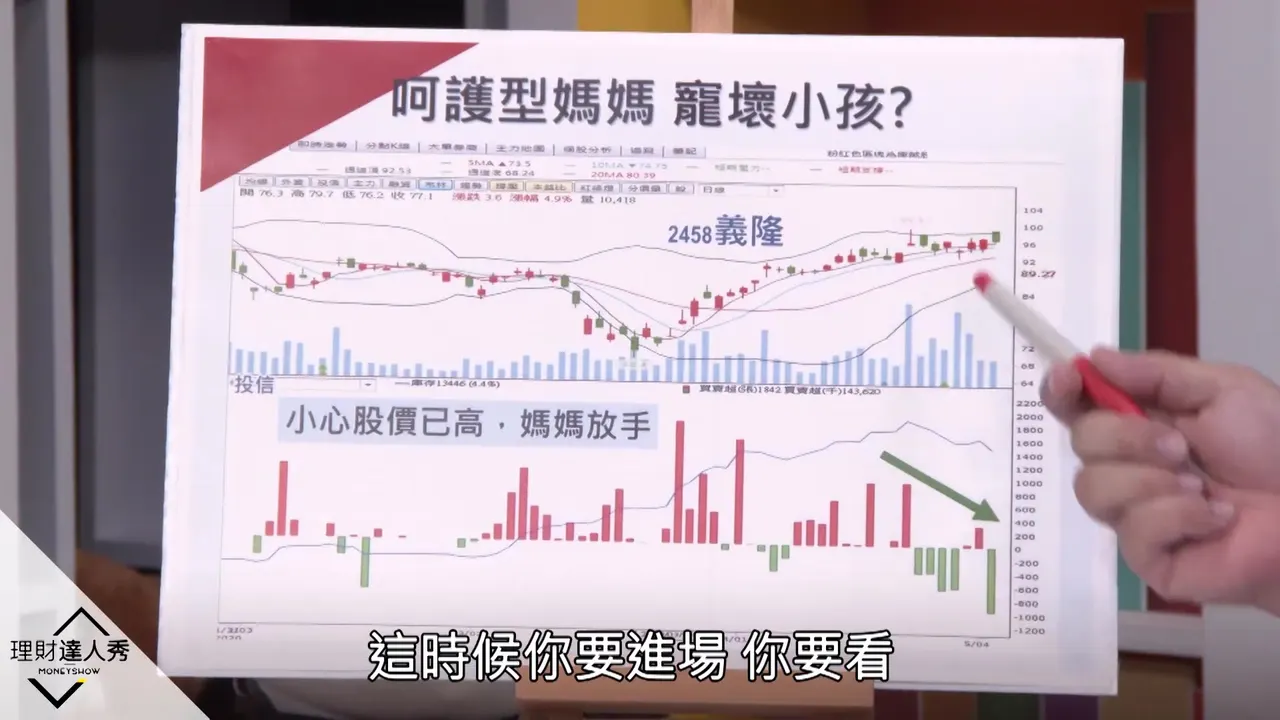
9:45Consecutive Buying Needs Enough Lots
Consecutive trust buying is not necessarily good: it may have bought for so long that it has earned enough and wants to let go, or the lot count may be so small that it is like nagging without a point. For example, Cheng Shin bought consecutively but only 169 lots, which does not look like real trust behavior. Consecutive buying only means something when the lot count is large enough; stocks nurtured by a trust have explosive potential, and the degree should be measured by trust net buying/selling as a share of volume.
▶ Watch from here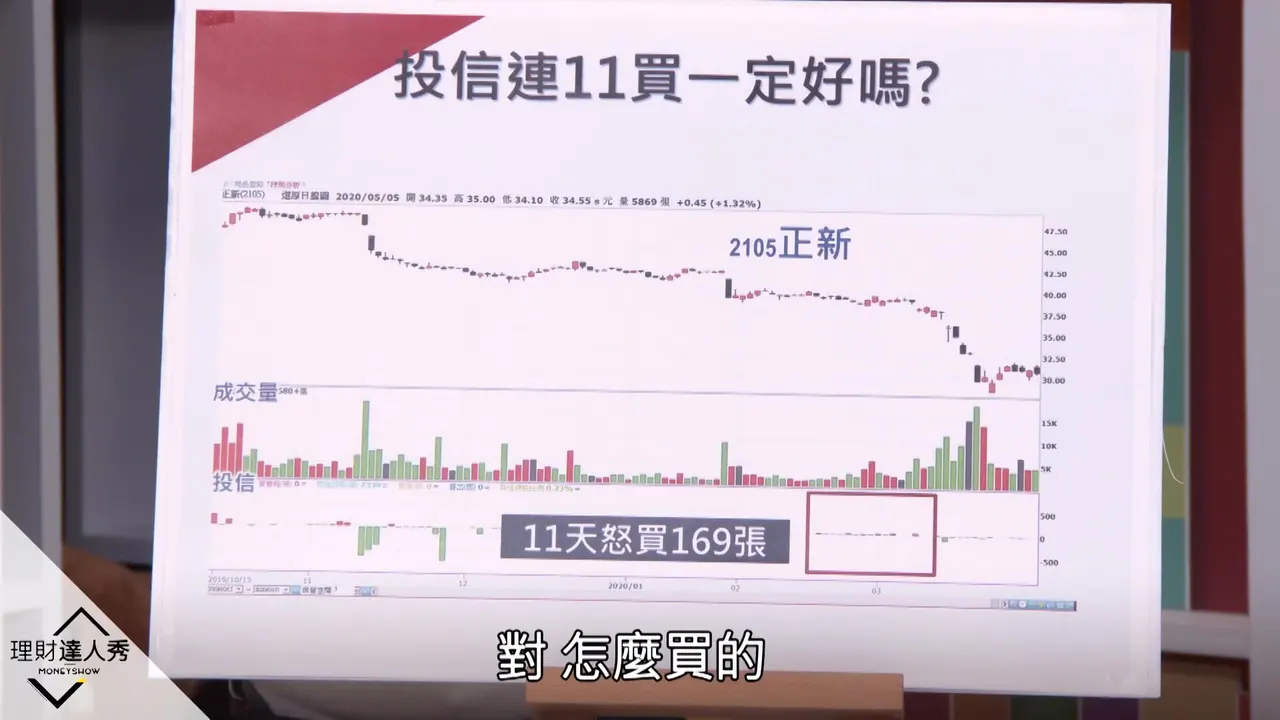
11:01Comparing the Trust-to-Volume Ratio and the Trust-to-Capital Ratio
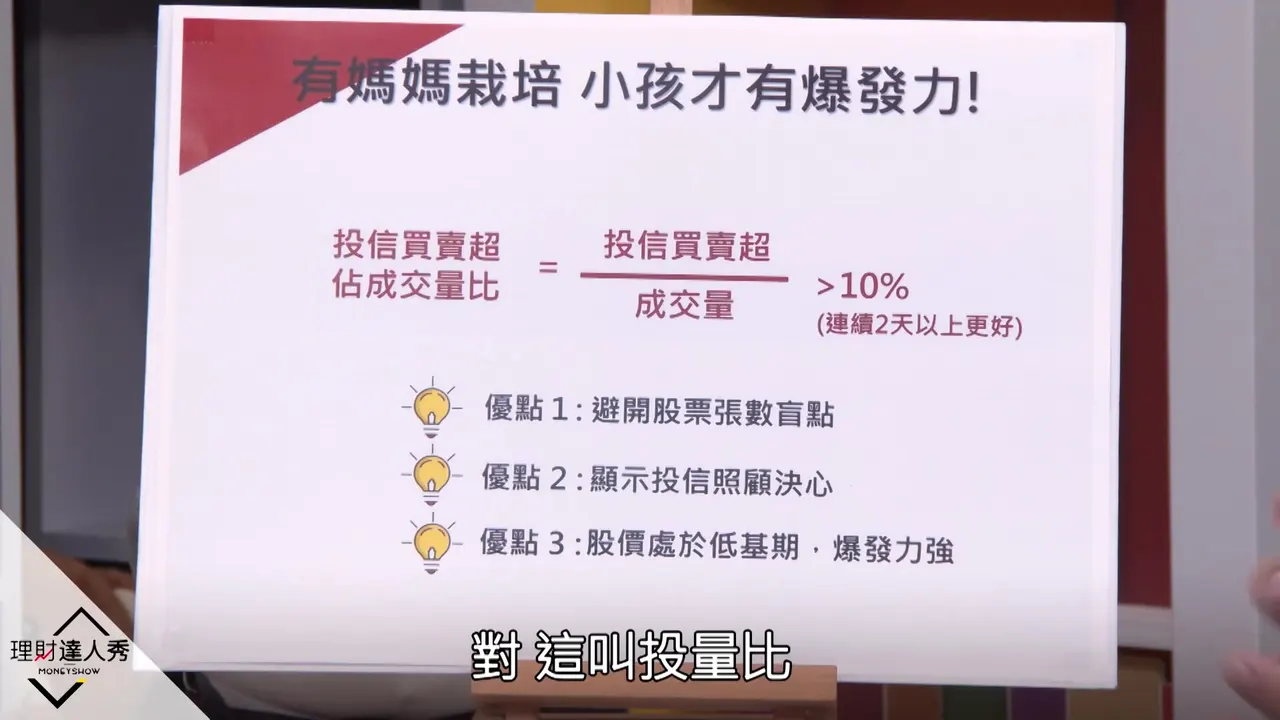
He introduces trust net buying/selling as a share of volume (the trust-to-volume ratio), whose denominator is that day's volume, with lots in both numerator and denominator, unlike the commonly seen share-of-capital ratio (trust-to-capital ratio). TSMC's share capital is so large that it can never make the trust-to-capital ranking, yet what actually moves the price is trading volume. The standard is a trust-to-volume ratio above 10% for 2 or more consecutive days, since 1 day may just be an open type while 2 days means the trust is paying attention; the price should also be at a low base. The advantages are avoiding the lot-count blind spot and showing the trust's determination to look after the stock.
▶ Watch from here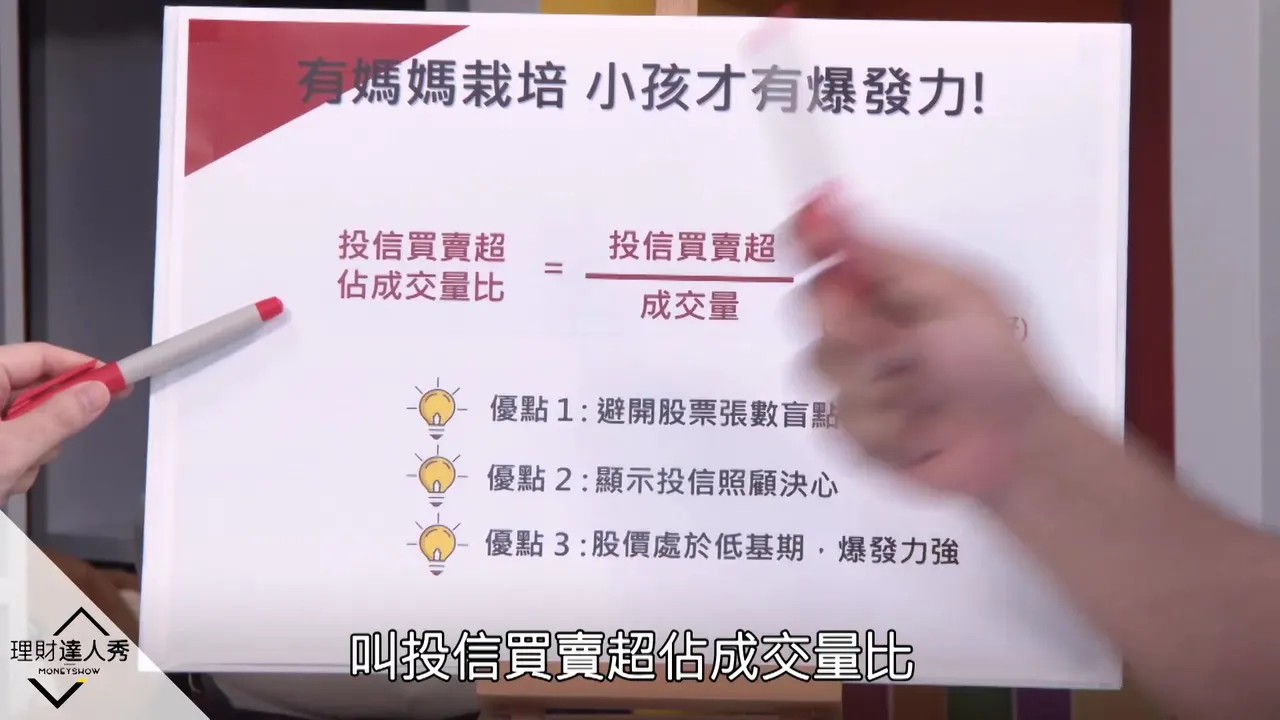
13:31Case Study: Parade Technologies-KY, a High-Priced Stock's Ratio
Looking at Parade Technologies-KY on 3/24: the trust bought 151 lots, which is few by lot count and misses the ranking, but that day's volume was only 991 lots, so the trust-to-volume ratio was about 15%, actually very high. Because it is a stock priced at 700-plus, its lot counts are naturally small, which is exactly the blind spot of volume rankings. The price rose from 598 to a new high of 785, and with a trust looking after it, it need not fear even the pandemic, though the price is too expensive.
▶ Watch from here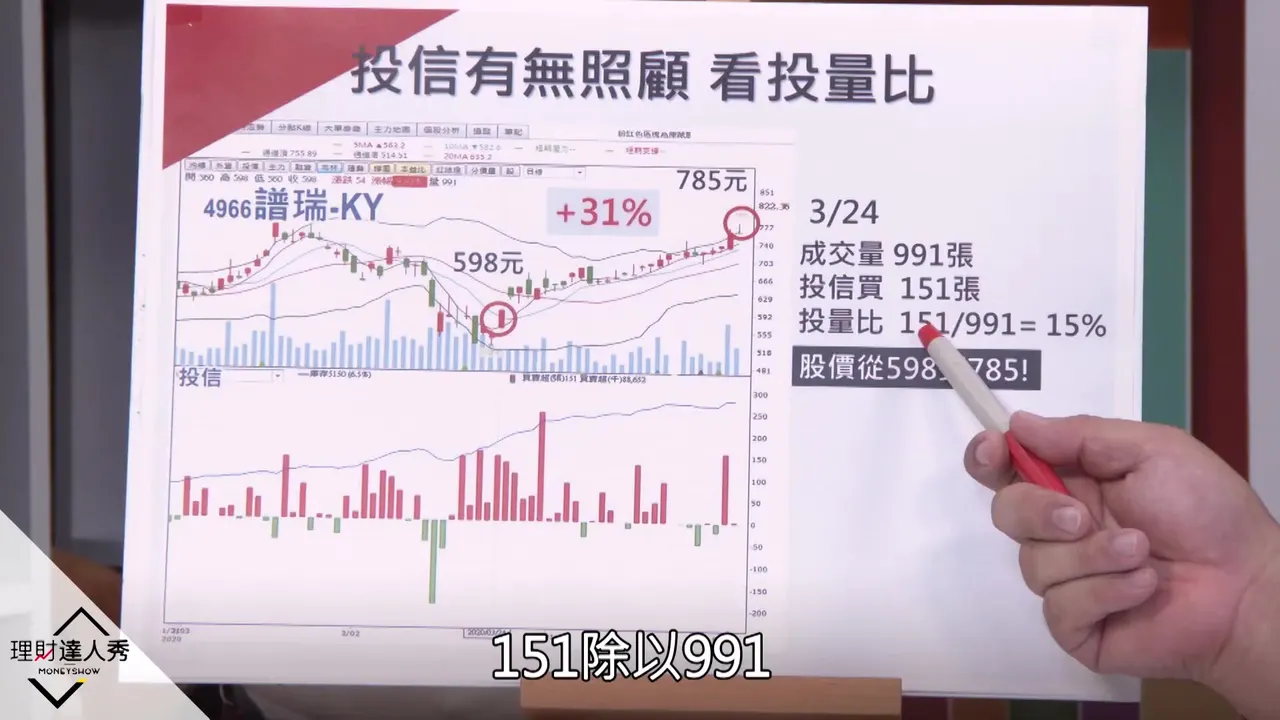
14:41Case Study: Fubon Media and the Stay-at-Home Economy Theme
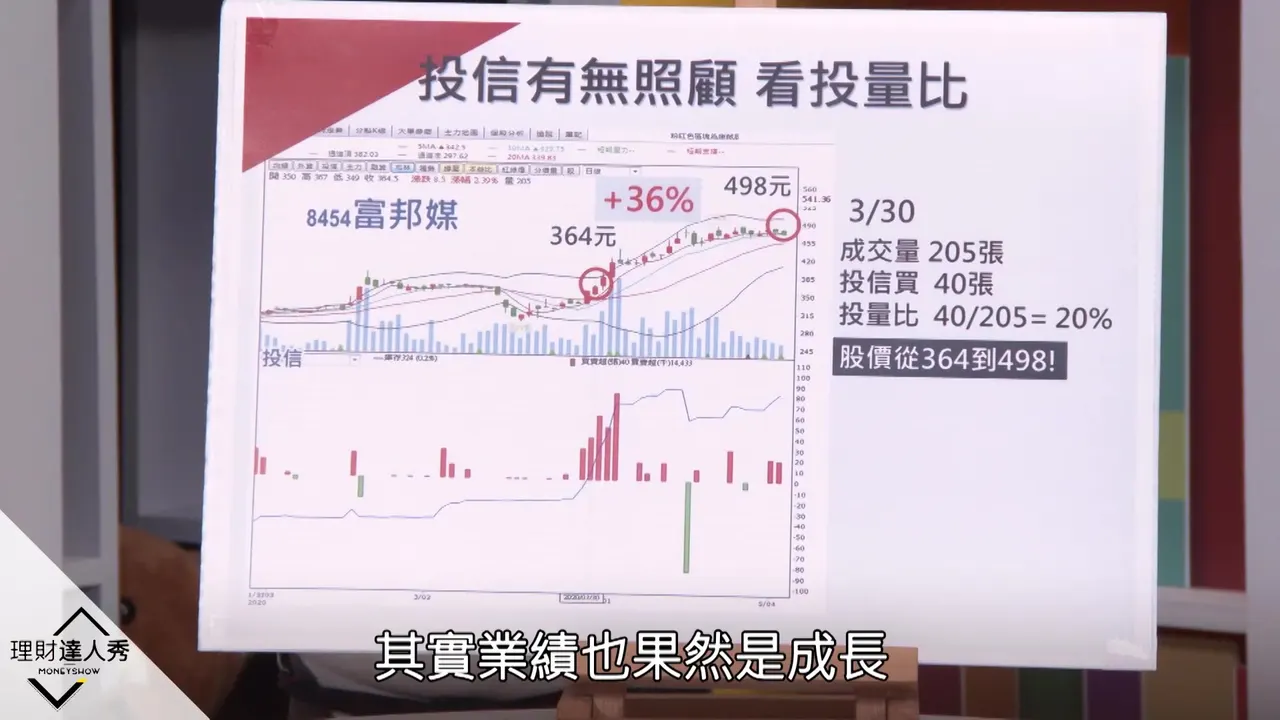
Fubon Media is a competitor of EUSA... that is, of ET Mall, and no longer has an equity relationship with Eastern Broadcasting; its customers are homebodies used to shopping on their phones at home, with delivery in 6 hours. On 3/30 volume was 205 lots and the trust bought only 40 lots, missing the ranking yet making up 20% of volume; the price rose from 364 to 498 and earnings did grow, though the price is still too expensive. Although the trust sold along the way, that was only a small reduction compared with its accumulated net buying.
▶ Watch from here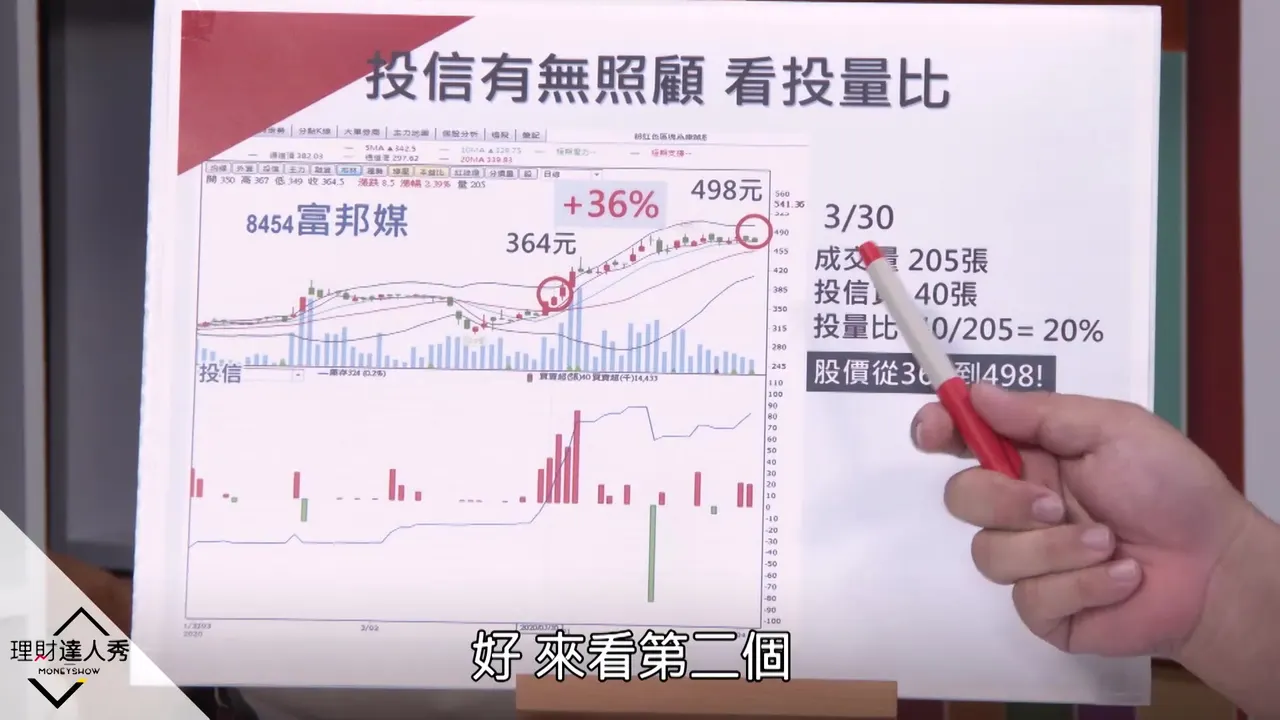
17:05Case Study: Yow Chyun and Follow-the-Trust Technique
Yow Chyun's price is somewhat cheaper: on the day of the trust's big buying, it bought 1700-plus lots, a trust-to-volume ratio of about 14%, and it was already the second consecutive day of buying, a very strong push. After the buying the price pulled back slightly, tested its low without breaking it and then rose, matching the "upper-band strength" pattern, with the price going from 72 to 102. The technique for following the trust is that chasing in is less worrying when your cost is the same as the trust's; when the trust sells consecutively, you can sell some along with it.
▶ Watch from here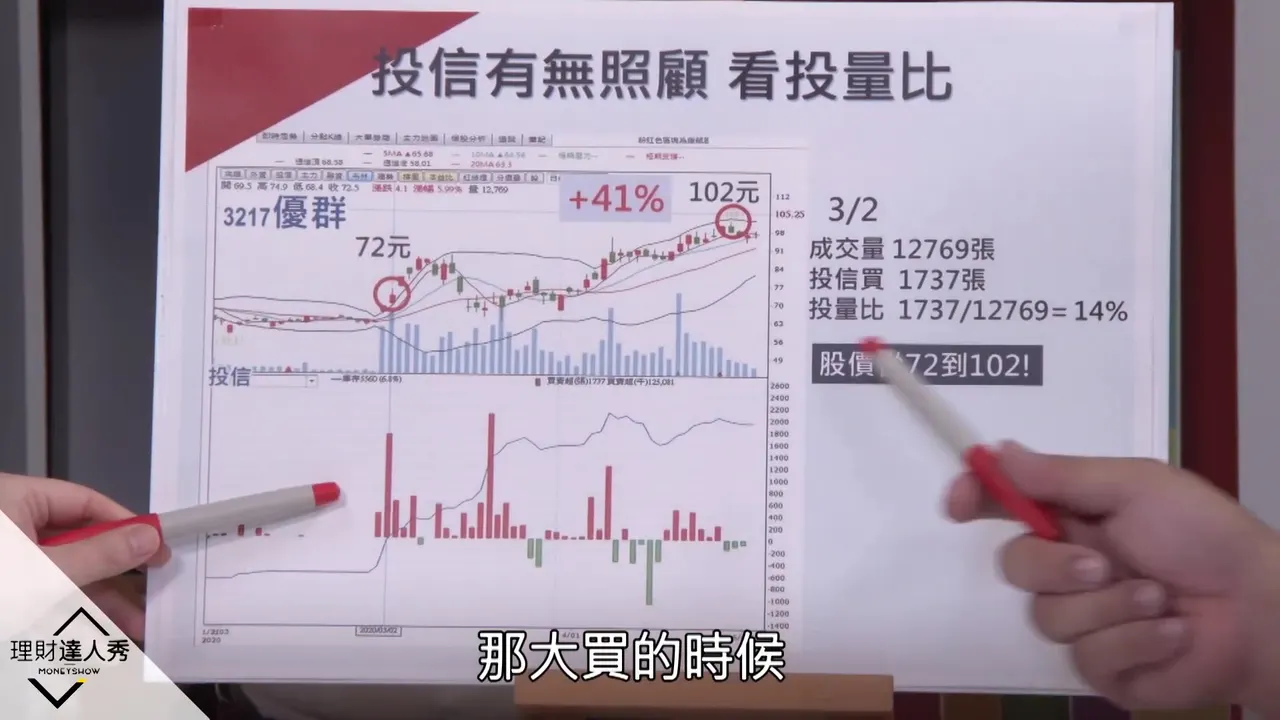
18:40Regulatory Limits and Timing of Entry and Exit
He stresses leaving for the same reason you entered, and cites the regulations governing securities investment trust funds: a single fund may not hold more than 10% of the total issued shares of any one company, and all funds under the same trust combined also may not exceed 10%, to keep trusts from becoming major shareholders. The speaker thinks a trust holding 10-odd% of share capital is already very high, so when you see it, prepare to retreat, and beware of the trust getting off while you become the child who gets slaughtered.
▶ Watch from here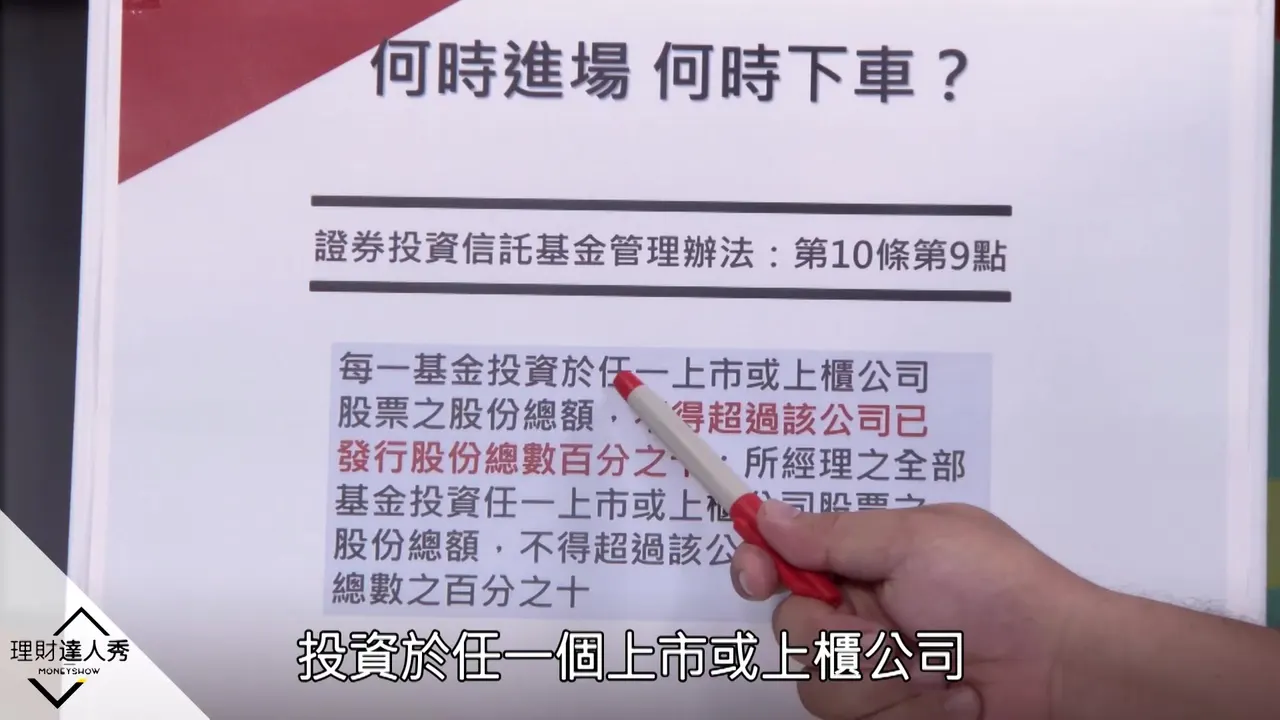
20:41Concrete Entry and Exit Signals
Entry signal: the trust has just started buying, has bought for 2 days, the trust-to-volume ratio is above 10%, and the price is still low. Exit signal: once the price is at a high, as soon as the trust net sells for consecutive days and its holding-ratio line starts to turn down, get off with it. If the trust's holding ratio has reached as high as 17%, close to the regulatory ceiling, and it keeps net selling, you should sell, and you needn't mind if the price still rises afterward, since you cannot profit from every leg.
▶ Watch from here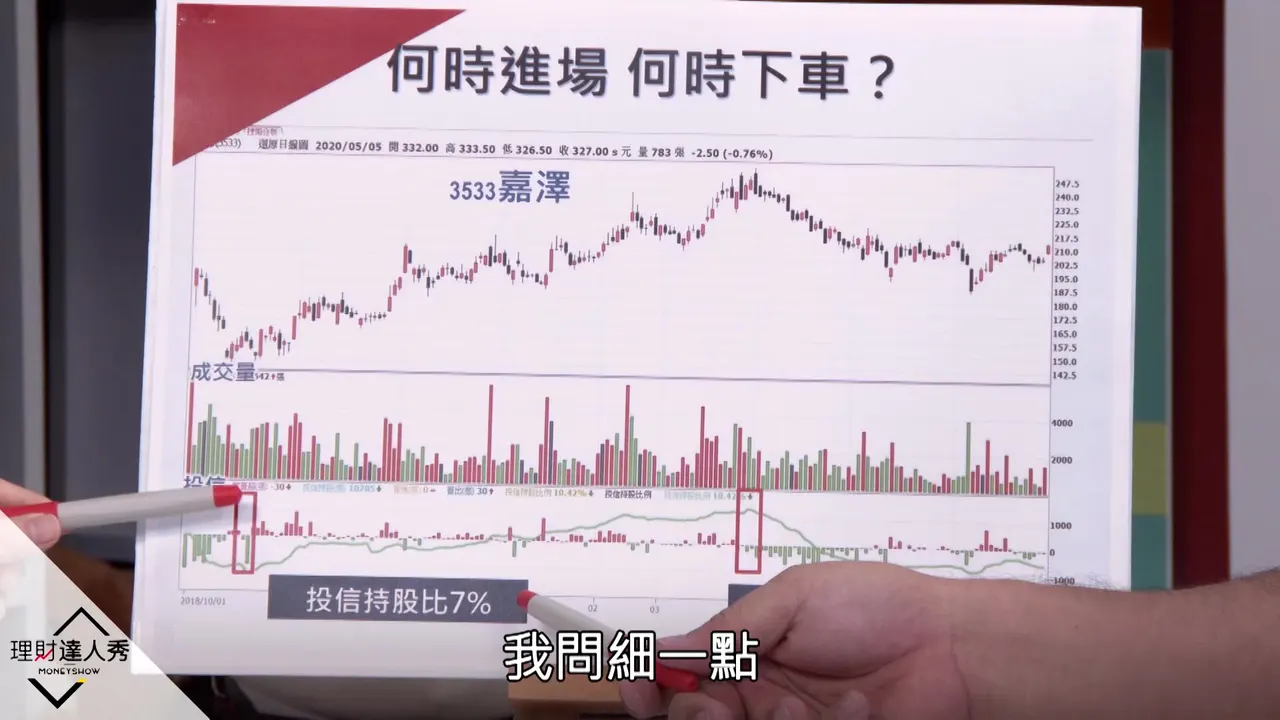
22:15Screening Objectively with the Trust-to-Volume Ranking
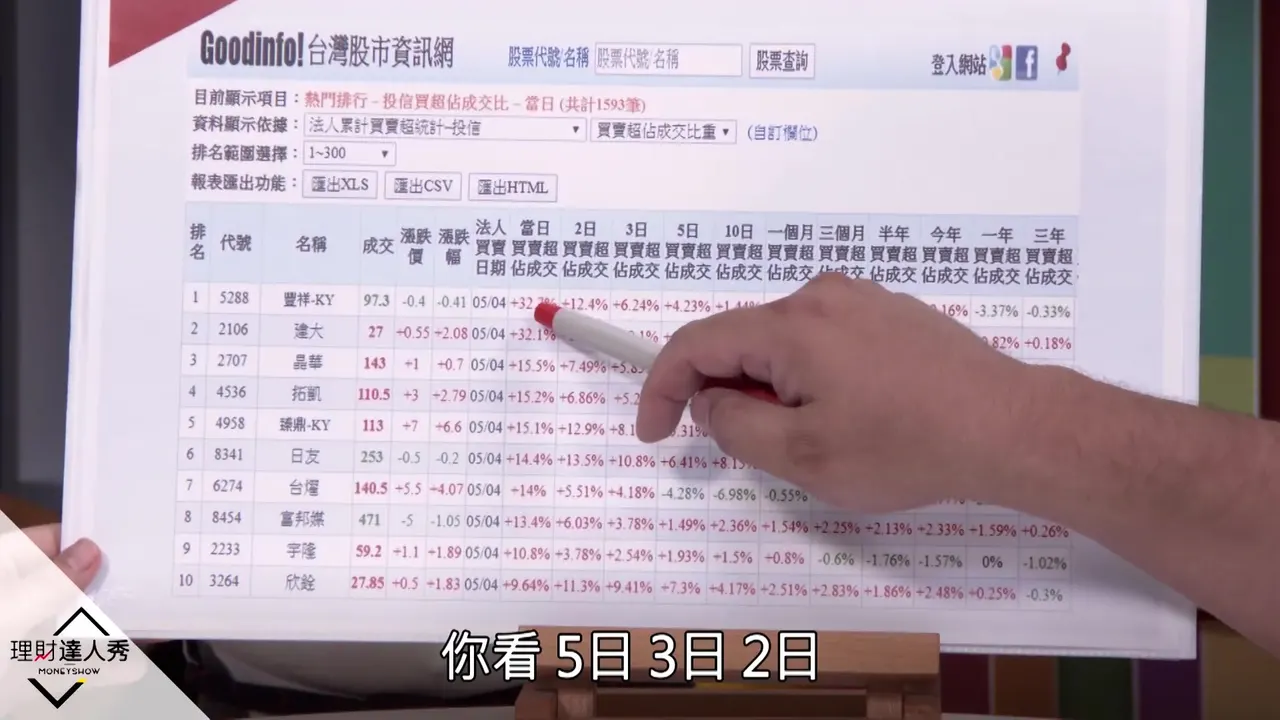
In the ranking of trust net buying as a share of volume (the trust-to-volume ratio), with 10% as the higher standard, only 9 stocks are above 10%, with the highest reaching 32%, meaning about 1/3 of volume was bought by the trust; the list includes Fortune Elite... namely Hsiang-KY, Kenda, Landis Taipei and Tuntex-like names such as Topkey, with prices from 27 to 400, so you can choose by your own price range. Using the trust-to-volume ratio is more objective than the lot-count-only view on TV. You can also check whether buying grows over 5 days, 3 days and 2 days, which is also a signal, but data within half a year is more useful, since after half a year a trust will not look after a stock that long.
▶ Watch from here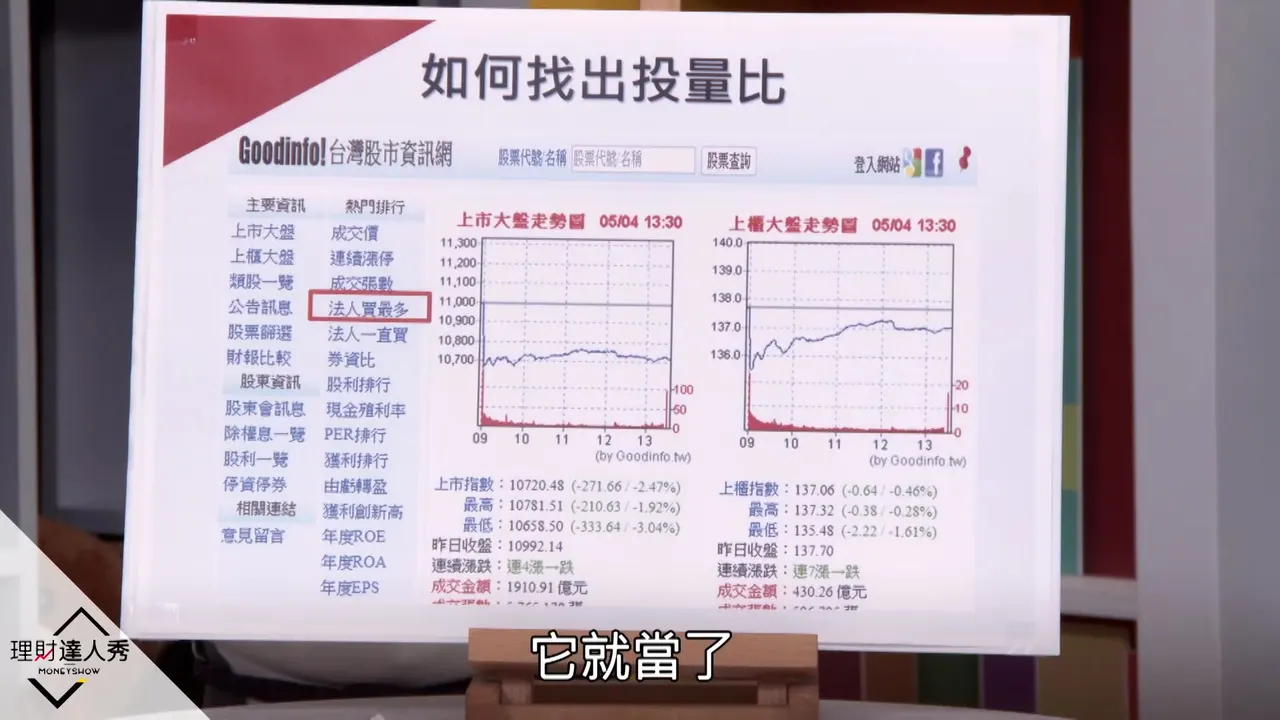
24:31Two Mothers: Trust Plus Major Players
He uses "2 mothers" as a metaphor for a trust plus major players looking after the same stock, with the major players like a godmother. Since there is a fear of being dumped on when the trust buys but major players sell, he prefers stocks where both the trust and major players are buying, which is safer. The method is to first find stocks that major players have bought over 1 day, 5 days and 10 days, then sort by trust-to-volume ratio; the threshold is 10% and major players only need to be buying, so at least you won't be dumped on, and of course a higher figure is better. For example, Zhen Ding-KY had 3 straight days of trust buying, fitting the early just-started stage.
▶ Watch from here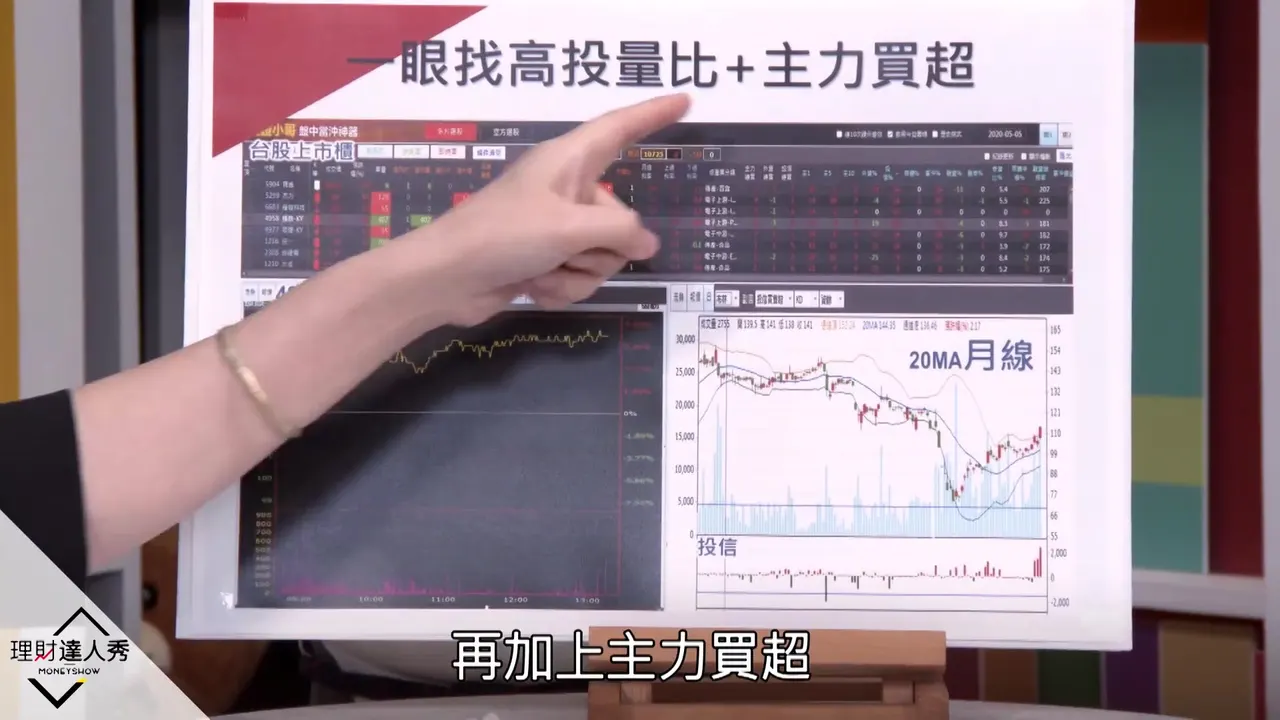
27:02Verifying Double-Buy Cases
He first states that the stocks only fit the selection logic and are not buy recommendations. For the stock on 5/5, the trust bought 2400 lots, a ratio of 15%, and major players were also buying, so both criteria were met. Giant Manufacturing traded 4600-plus lots on 4/28, with the trust buying 764 lots, a trust-to-volume ratio of about 16%, 6 straight days of buying already, and it also fits the upper-band pattern. Ho Run Enterprise on 4/27 had the trust buy 240 lots, a ratio of 11%, and afterward it accumulated 6000 lots of consecutive buying and is still buying. With the Taiwan market strongly bullish lately, be careful about shorting.
▶ Watch from here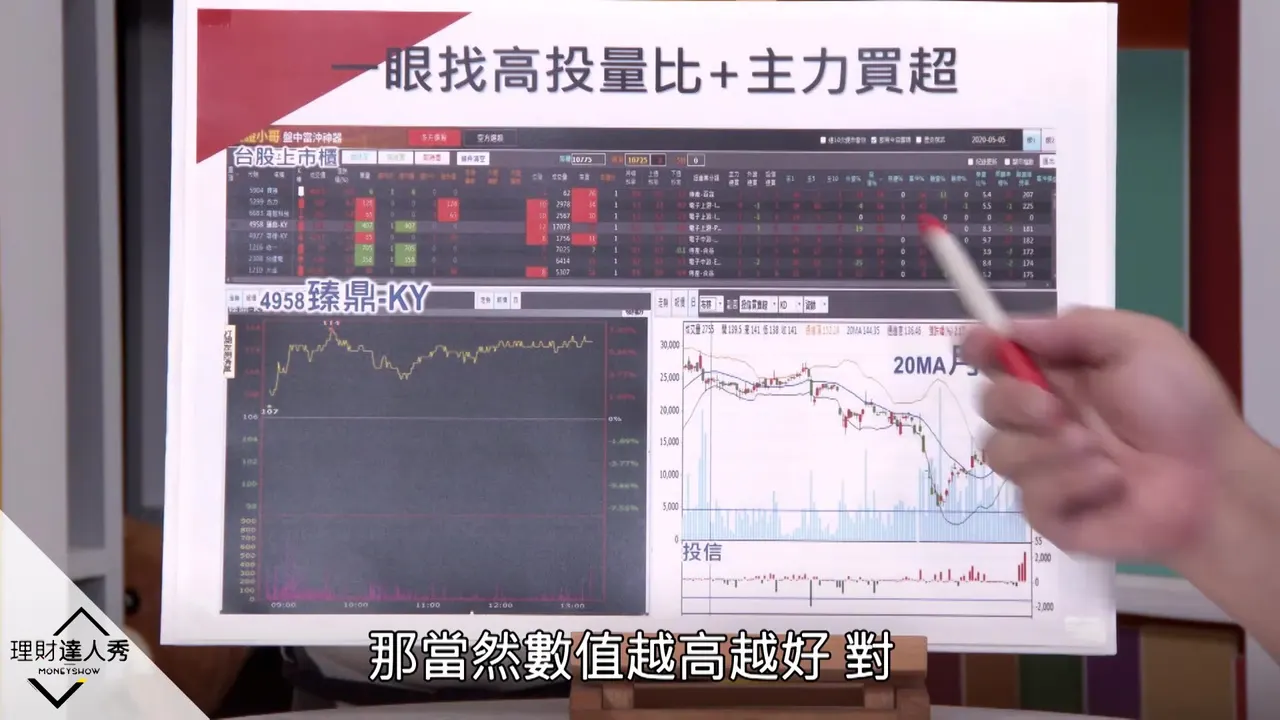
30:32Summary: Three Principles for Picking Stocks by Trusts
He sums up 3 principles: watch stocks with a high trust-to-volume ratio and a low price where the trust has just started positioning; once the price has risen a lot and the trust turns to selling, don't linger, and take profits; and be careful when a trust's holdings approach 15%, since it may stop buying and the price may consolidate or fall. The speaker also notes that in this recent Taiwan market rally, trust net buying and selling has played an important role and been more accurate than foreign investors'.
▶ Watch from here