Negative Oil Prices and Chip Flows: Why Local Mid-Size Investors Beat Trend-Chasing Foreign Funds
TL;DR: Negative oil prices reflect collapsing global demand, so crude-oil products are best watched from the sidelines, while in Taiwan stock flows local mid-size investors have long beaten trend-chasing foreign investors, so follow the mid-size investors rather than foreign funds.
Key ideas
- Negative oil prices do not mean you are paid to take oil; they are a financial result of futures traders having nowhere to store oil before settlement and having to sell to avoid physical delivery. Behind it are falling demand and Cushing storage nearly full, while spot oil was still about 10 USD, and the shock also toppled traders first and hammered oil stocks, so crude-related products are best watched from the sidelines for now.
- Speculative crude positions actually grew at the bottom because countries issued ETFs and retail investors rushed into oil; on the night of April 21 stop-losses could not be executed, one contract needs at least 12 wan TWD in margin (wan = ten thousand), and at negative 37 USD the loss far exceeded the margin, so the risk is far greater than most people imagine.
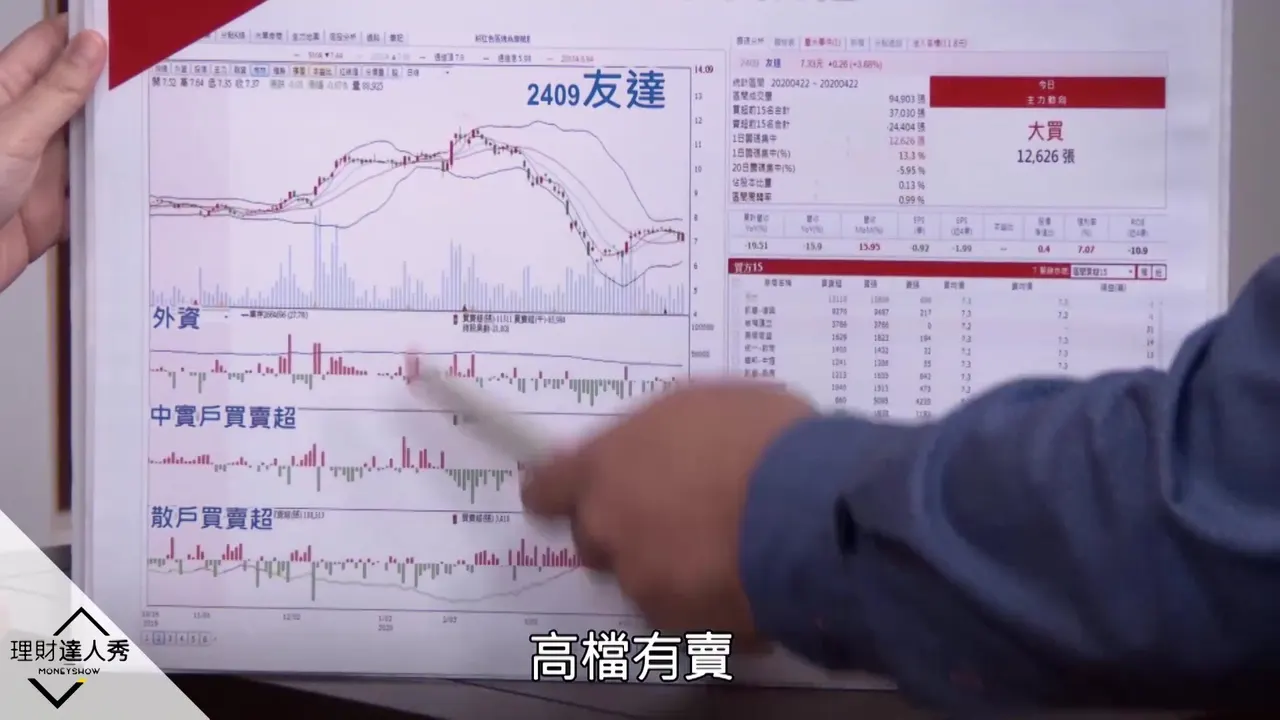
- Foreign investors are judged on relative performance and ranking, not on their own profit or loss, so they often chase highs and dump lows; among the top 10 branches by 10-year profit only 1 is foreign and almost all the rest are local branches in Taichung and Changhua, so watching local mid-size investors is more useful than following foreign funds every day.
- In examples such as TSMC, AUO and Foxconn, foreign investors chased at highs or sold heavily at lows while mid-size investors did the opposite; but mid-size investors in Compal and Vanguard have recently turned to selling, which deserves attention, and Compal's orders look full yet are dragged down by supply-chain disruption, so optimistic orders do not mean real optimism.
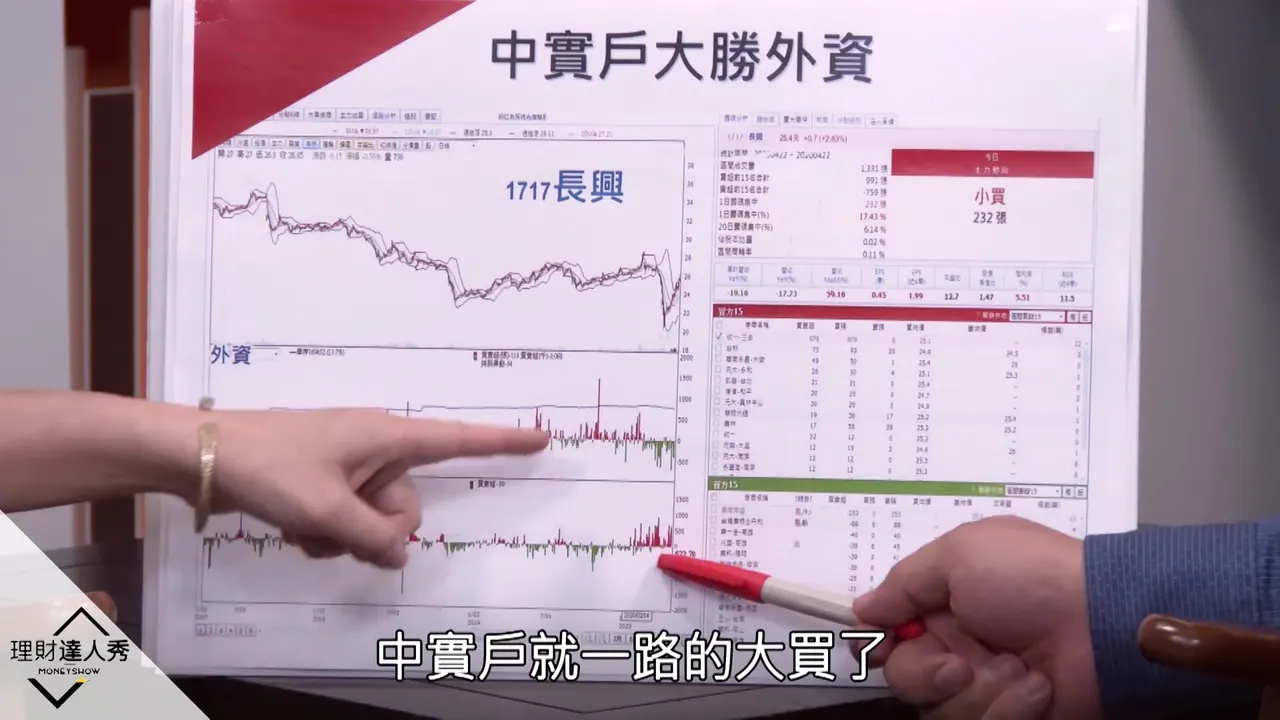
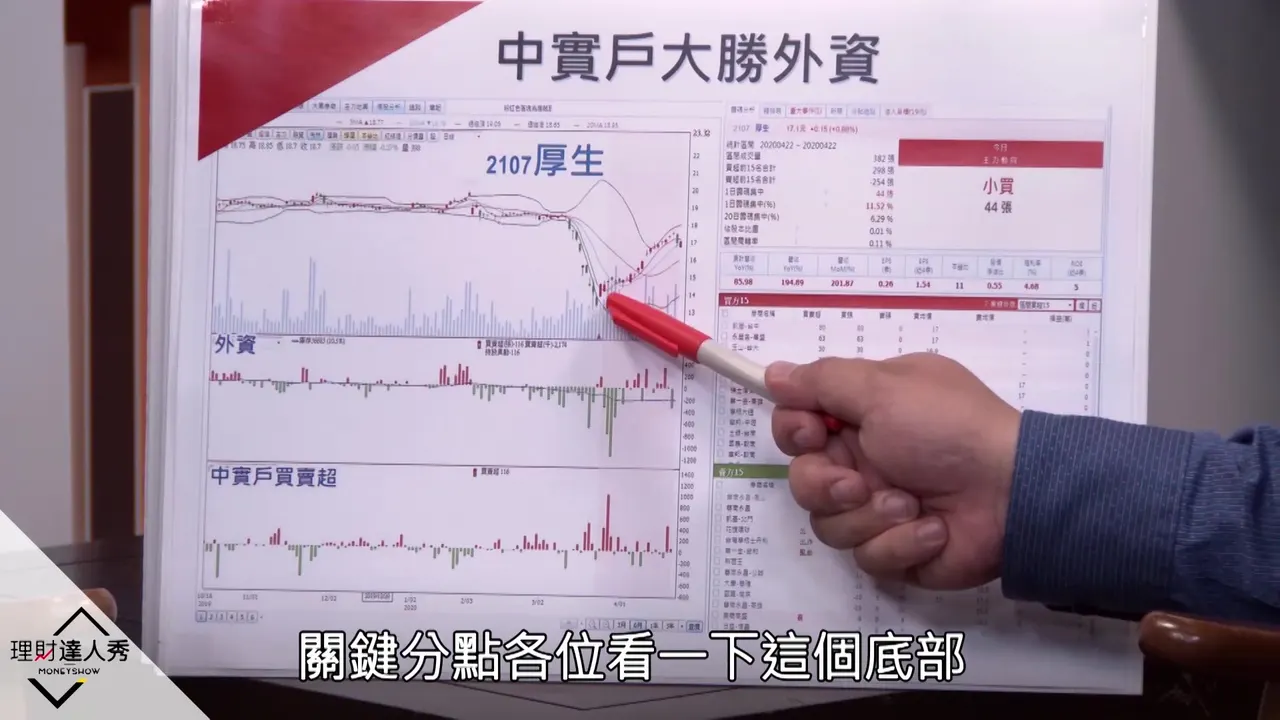
- Hotai Leasing, Eternal Materials and Hou Sheng are examples where foreign investors sold at lows and mid-size investors bought, corresponding to car-rental opportunities, downstream beneficiaries of falling oil prices and treasury-stock buying; the speaker stresses he is not telling people to follow and buy, but to learn to judge whose chips, mid-size investors' or foreign investors', will win.
Section summaries
3:50Causes of Negative Oil Prices and Full Storage
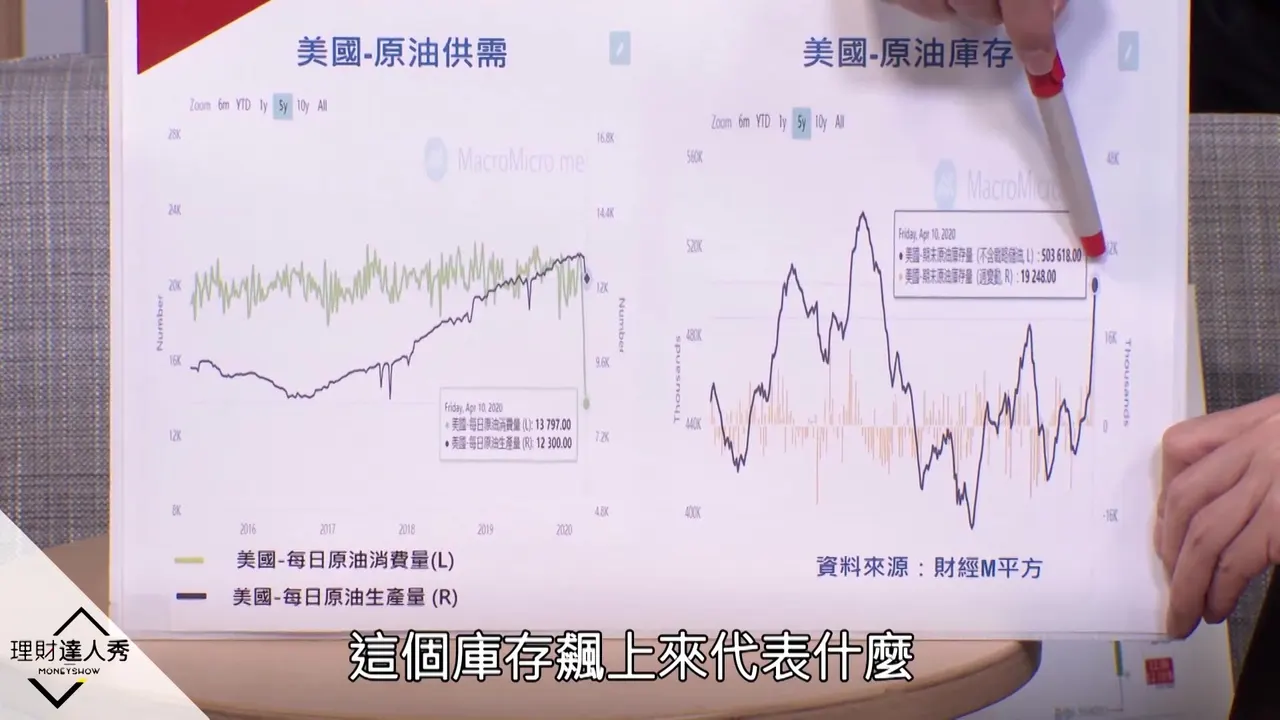
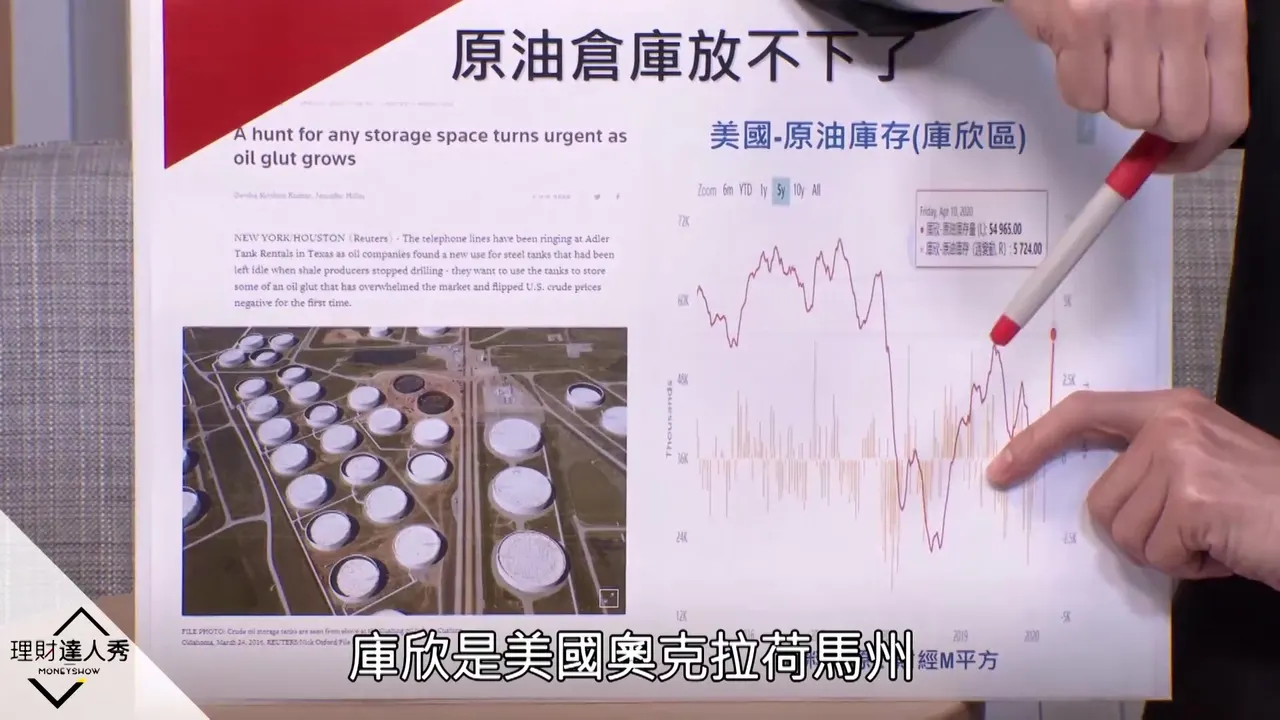
Even with oil at 0, there are still fixed costs of nearly 11 TWD per liter from items such as commodity tax. The main causes of negative prices are the global demand slump (airline passengers down to only about 3% of normal) and nowhere to put oil at futures settlement: Cushing's storage cap is 7500 wan barrels (wan = ten thousand), 6100 wan are already stored, and 600 wan more are added each week, so it is full in about 3 weeks. Traders had to dump futures before settlement to avoid physical delivery, pushing prices down to negative 37 USD. This is only the result of financial trading; spot oil is still about 10 USD a barrel. Daily rates for supertankers rose from about 3 wan USD to as high as 30 wan USD, a 10-fold jump.
▶ Watch from here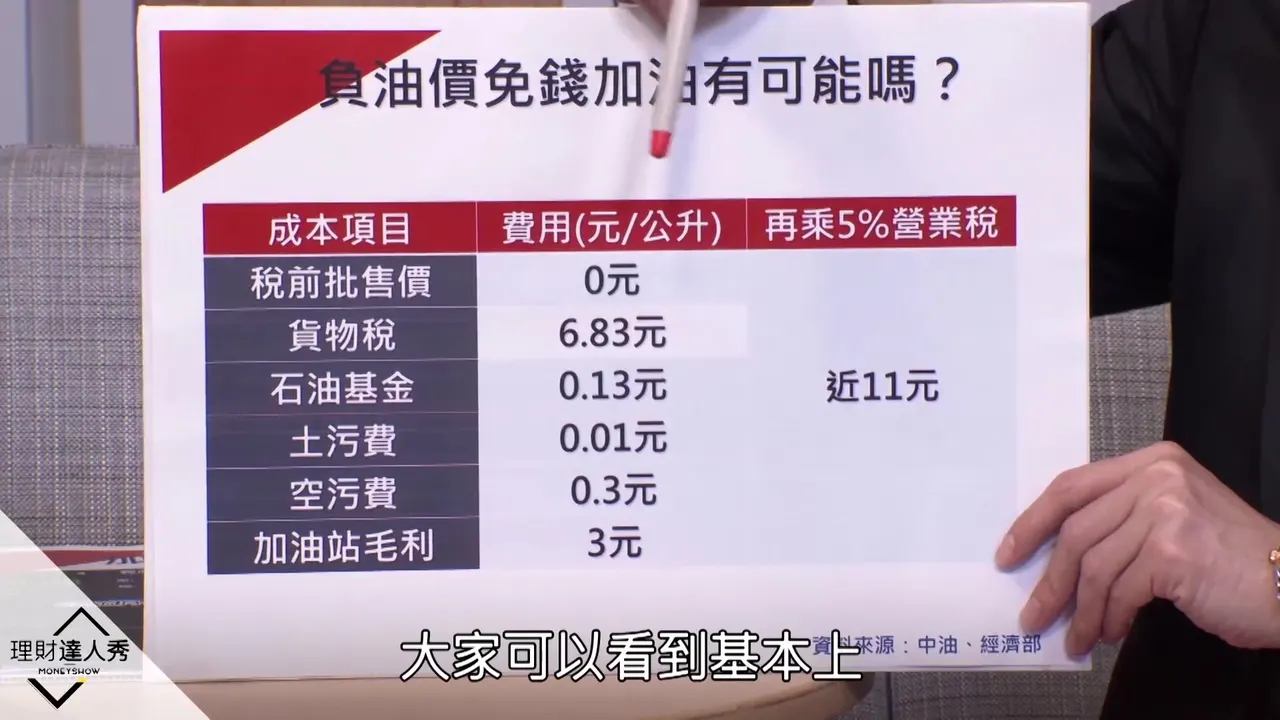
9:31Short-Term Rally in Supertanker Beneficiaries
Supertanker freight rates have climbed sharply, making shipping a beneficiary sector, and a Taiwanese shipping company, ticker 2605, owns 3 supertankers. The guest thinks this is only a short-term rally: once oil prices stabilize, freight rates will fall back, so it is not one to hold long.
▶ Watch from here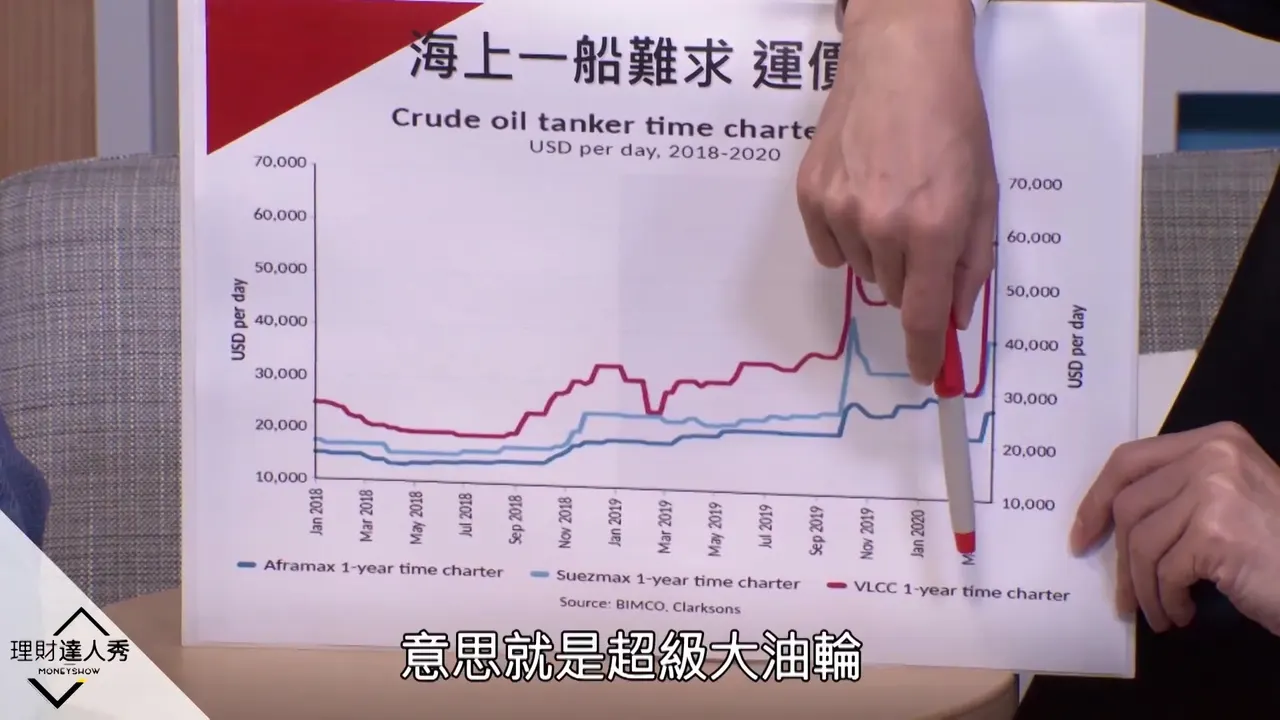
10:16Trader Blow-Ups and Oil Stocks Plunging
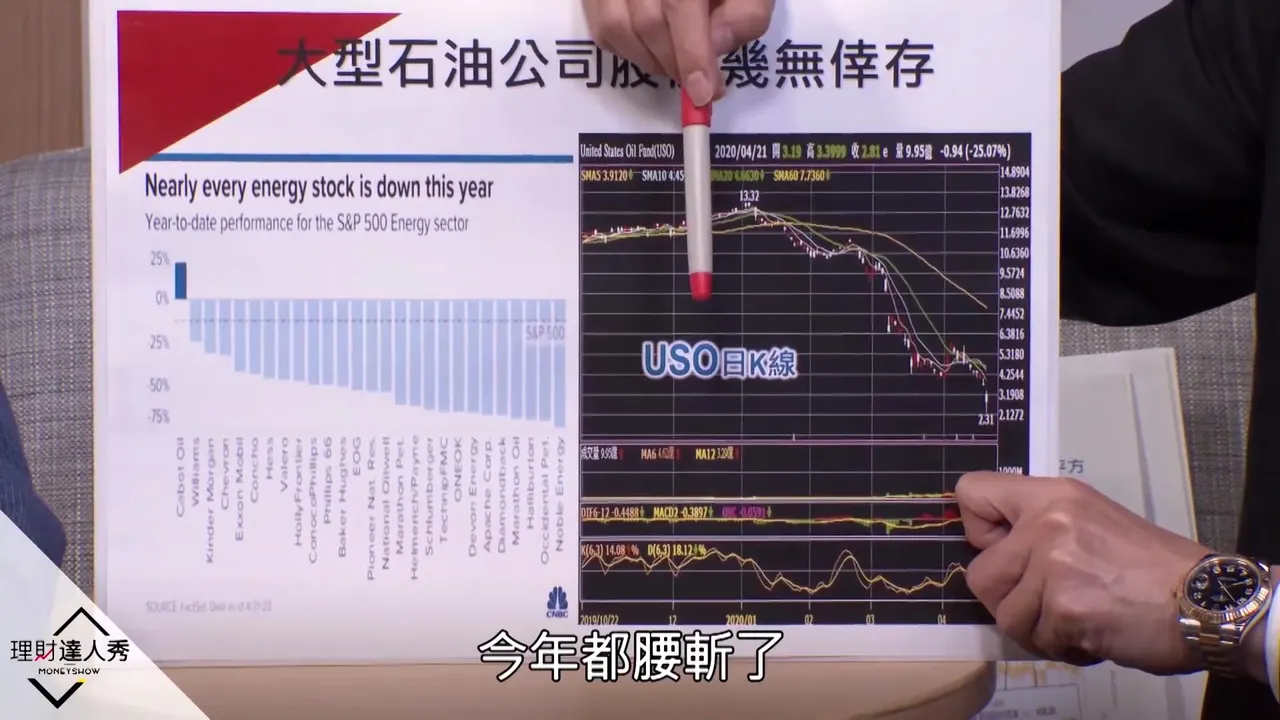
The traders collapsed before the oil companies: Zhongxing Financial Holdings was hit by the collapse of Singapore's Hin Leong, Asia's largest oil trader, losing 27 yi TWD (yi = hundred million); the biggest victim was HSBC Shanghai, which lent 6 yi USD, and the storm could resemble the structured-notes crisis of years ago. Large S&P oil companies fell as much as 70% at the deepest and at least 20-30% at the least, ExxonMobil has halved this year, and these companies' combined market value is only half of Microsoft's. USO, the world's largest crude ETF, also plunged, and the speaker thinks anyone wanting to bottom-fish energy funds should wait another 1-2 months.
▶ Watch from here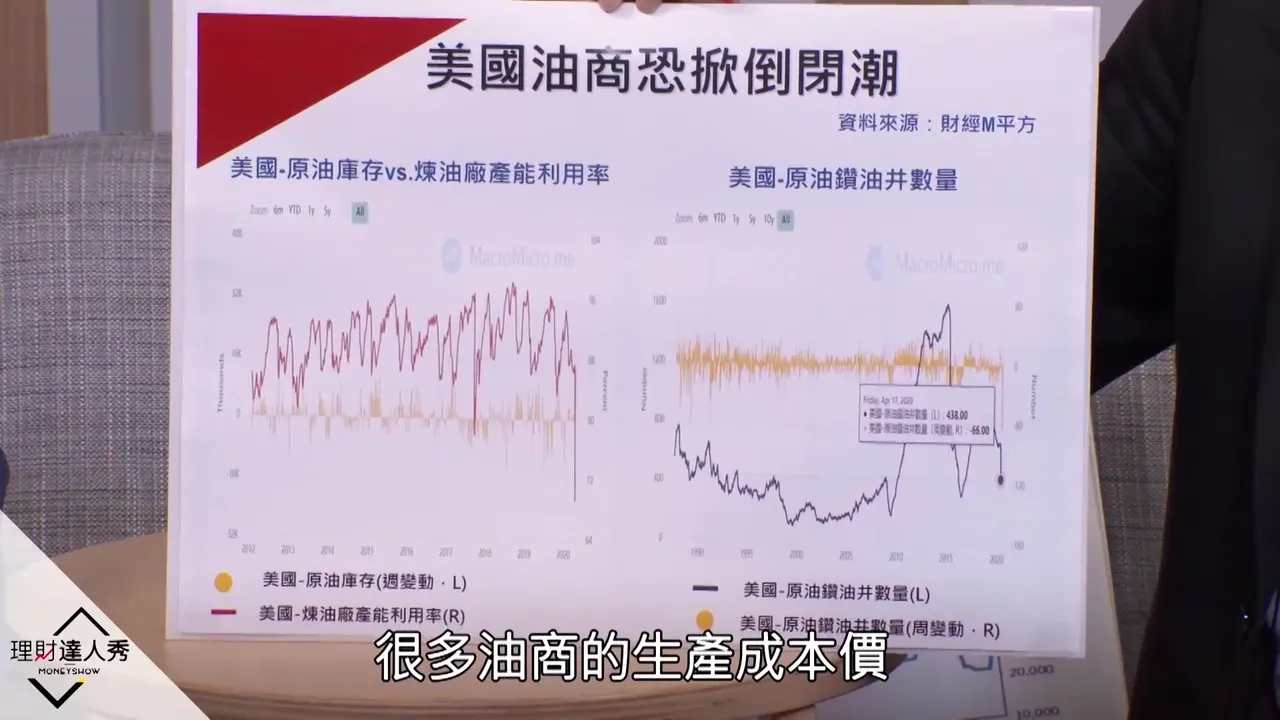
11:51Crude-Oil Products: Stay on the Sidelines for Now
USO was about 13 at the start of the year and fell to 2; Taiwan's leveraged crude product 2 is near delisting, while the inverse product 1 rose 4-fold, showing how risky leveraged and inverse products are. A PTT user bought oil at 0.25, thinking it was cheap enough, and the price kept falling to negative. The speaker advises watching crude-related products from the sidelines for now, since it is not yet time to step in.
▶ Watch from here12:51Analyzing Crude Speculative Positions (COT)
The crude COT index is speculative positions minus hedgers' positions (oil companies count as hedgers). Before 2010 it was very small, but over the past 10 years it has grown ever larger; in the past, rising index and bigger positions were still trend-following trades, but this time positions grew even at the bottom, because countries issued crude ETFs and everyone was playing oil, and even people around the speaker asked daily how to buy crude. On the night of April 21 stop-losses on crude futures could not be executed; one contract needs at least 12 wan TWD in margin, and at negative 37 USD the loss on one contract far exceeded the margin, and reportedly some people put in only a small sum yet lost a huge amount.
▶ Watch from here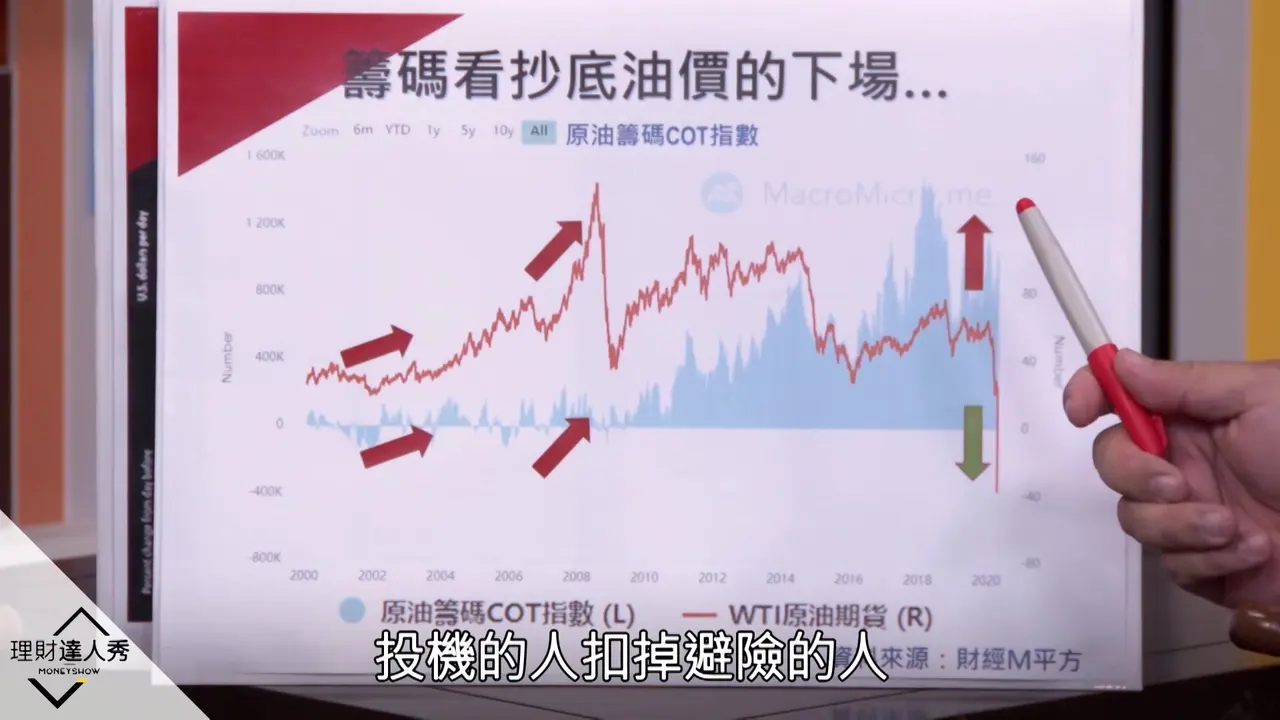
16:11Taiwan Stock Flows: All Five Bearish
Yesterday's flows: major players sold net, foreign investors sold too, investment trusts, previously the only buyers, have now turned to selling, mid-size investors also net sold, and only retail was long. The speaker calls this all five bearish, so flows should be read as bearish; the weighted index was also close to its quarterly moving average, and the next day it indeed opened high and closed lower. But Taiwan stocks, like pandemic control, are a national pride and the flows show anomalies, so next he introduces a strong stock.
▶ Watch from here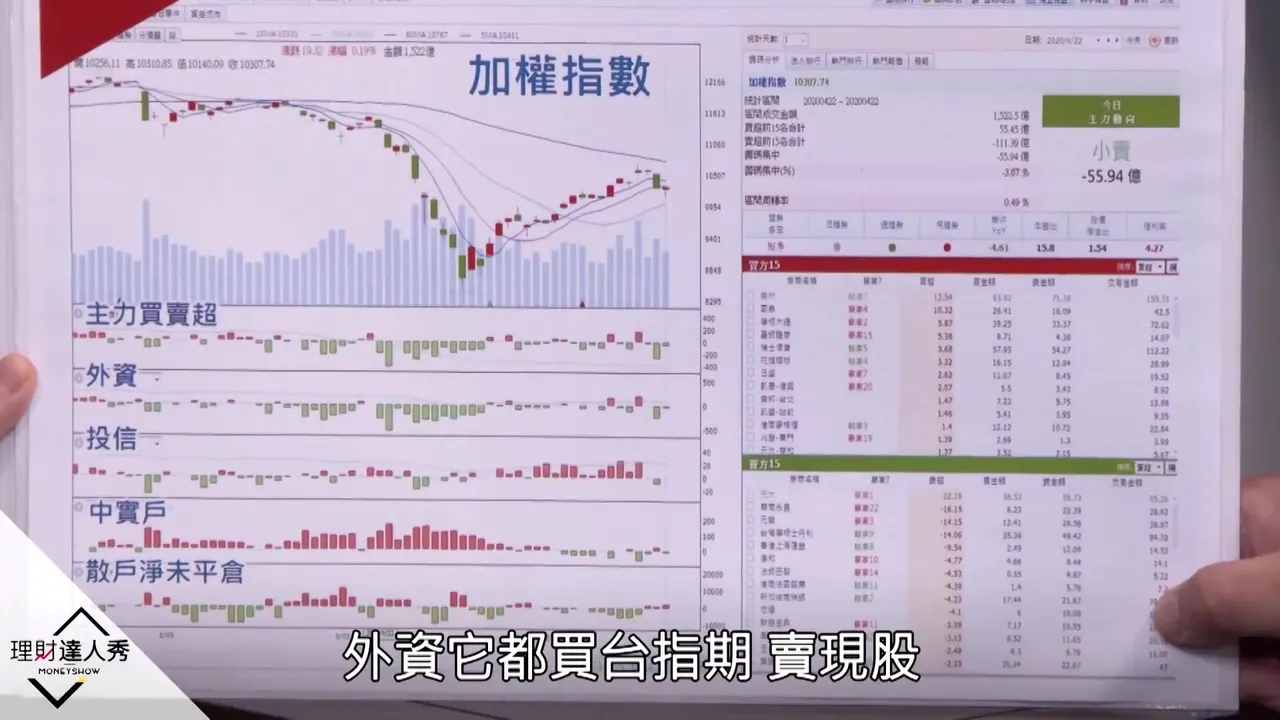
17:35Local Branches Out-Earn Foreign Investors
Looking back at the top 10 broker branches by profit over a 10-year span, only one is foreign, UBS Singapore, and the rest are all Taiwanese, almost all concentrated in Taichung and Changhua branches; the top, Mega-Lukang, earned over 6 yi TWD (yi = hundred million). The biggest loser was JPMorgan, followed by Yuanfu, HSBC Hong Kong, HSBC Taiwan, Nomura Hong Kong and Morgan Stanley Taiwan. The speaker calls it local small cannons against the foreign eight-nation alliance: foreign investors actually trade poorly, so there is no need to chase them daily, and local branch flows are more useful; he cites Walsin Technology hitting limit-up yesterday while foreign investors only traded short term.
▶ Watch from here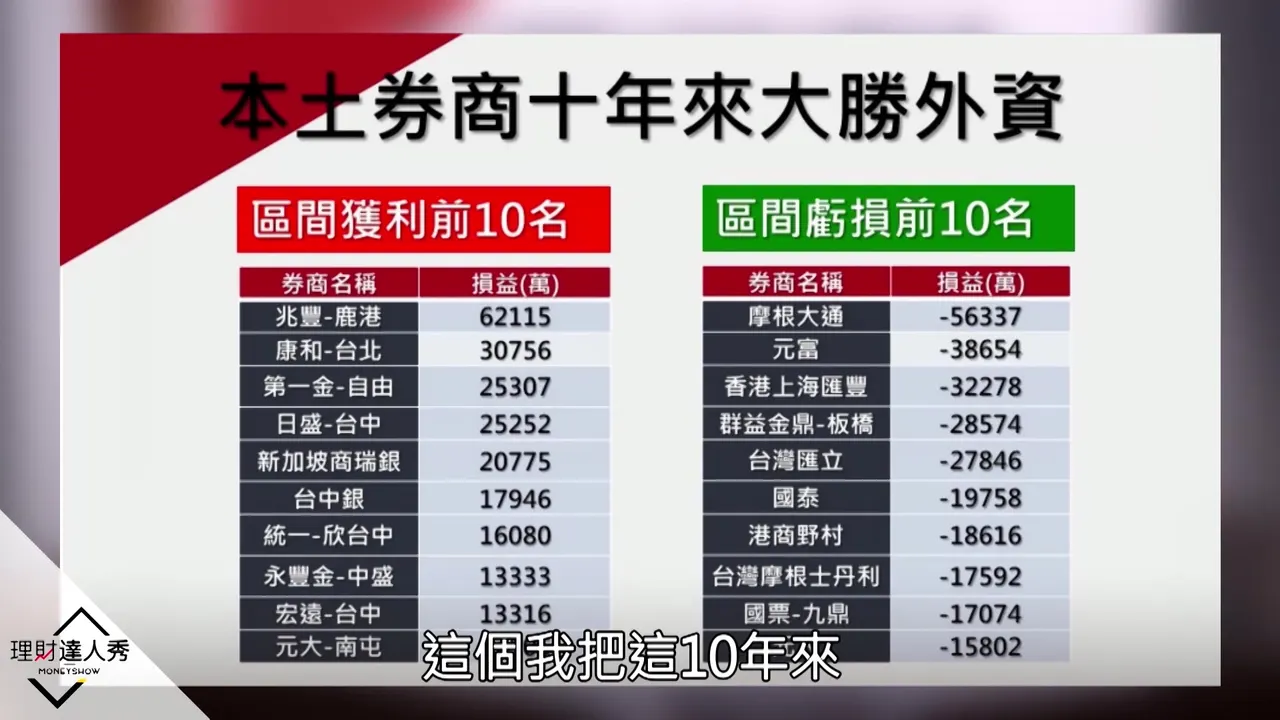
19:25Foreign Short-Term Positions and the TSMC Case
Foreign investors are not all long-term; they also hold short-term positions, and stocks they buy short term are often strong today and weak tomorrow; if retail investors push such stocks up, they are less durable and need great caution afterward. At TSMC's lows foreign investors sold heavily while local mid-size investors absorbed steadily and retail kept buying; the speaker also noted TSMC insiders were not optimistic about the economy, yet the stock still rose. On the day of the earnings call foreign investors covered 6 wan lots (wan = ten thousand) while mid-size investors dumped heavily on them, so with TSMC you should follow mid-size investors, not foreign investors.
▶ Watch from here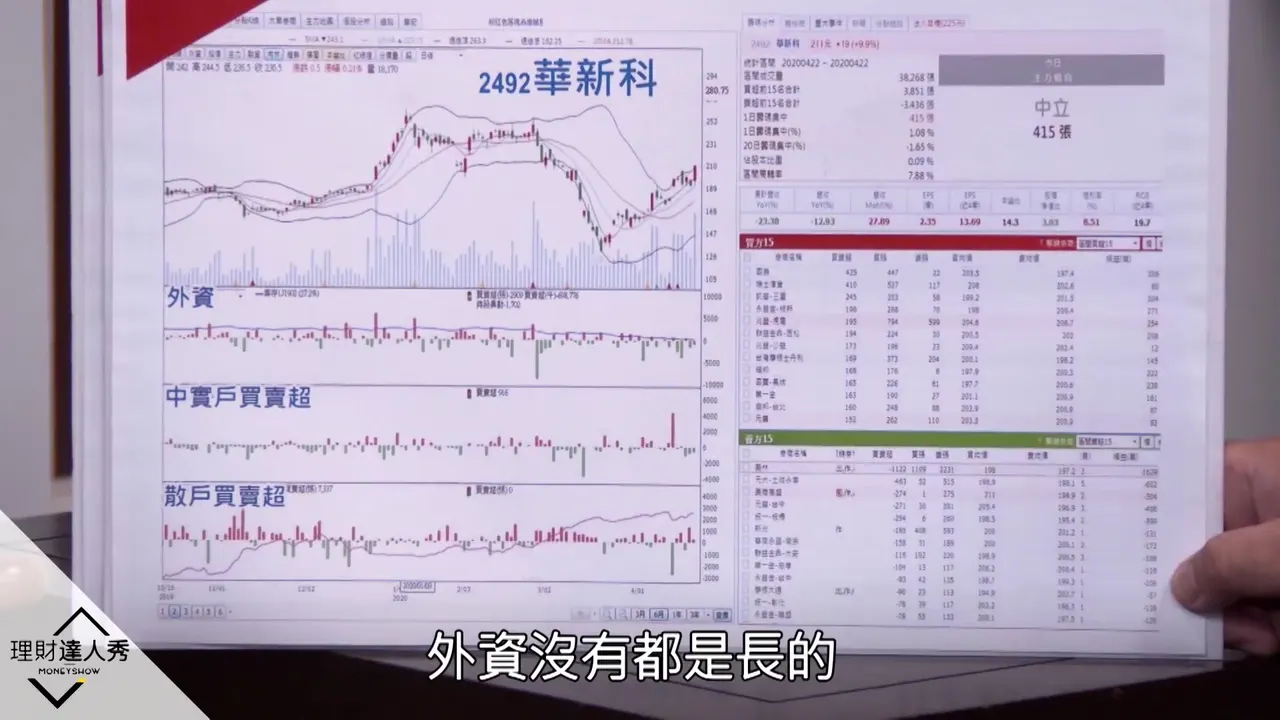
22:06Different Operating Logic: Foreign vs. Mid-Size Investors
Foreign investors are judged on relative performance and ranking, not on their own profit or loss, so they often chase highs and dump lows, and their orders should not be followed. At AUO's highs foreign investors kept chasing while mid-size investors sold heavily to them; retail sold at highs and sold again on the way down, yet did fairly well, because retail has experience and has learned not to hold too long. Foxconn too saw foreign investors chase hard at highs and dump as the price fell, and local money beat foreign money decisively.
▶ Watch from here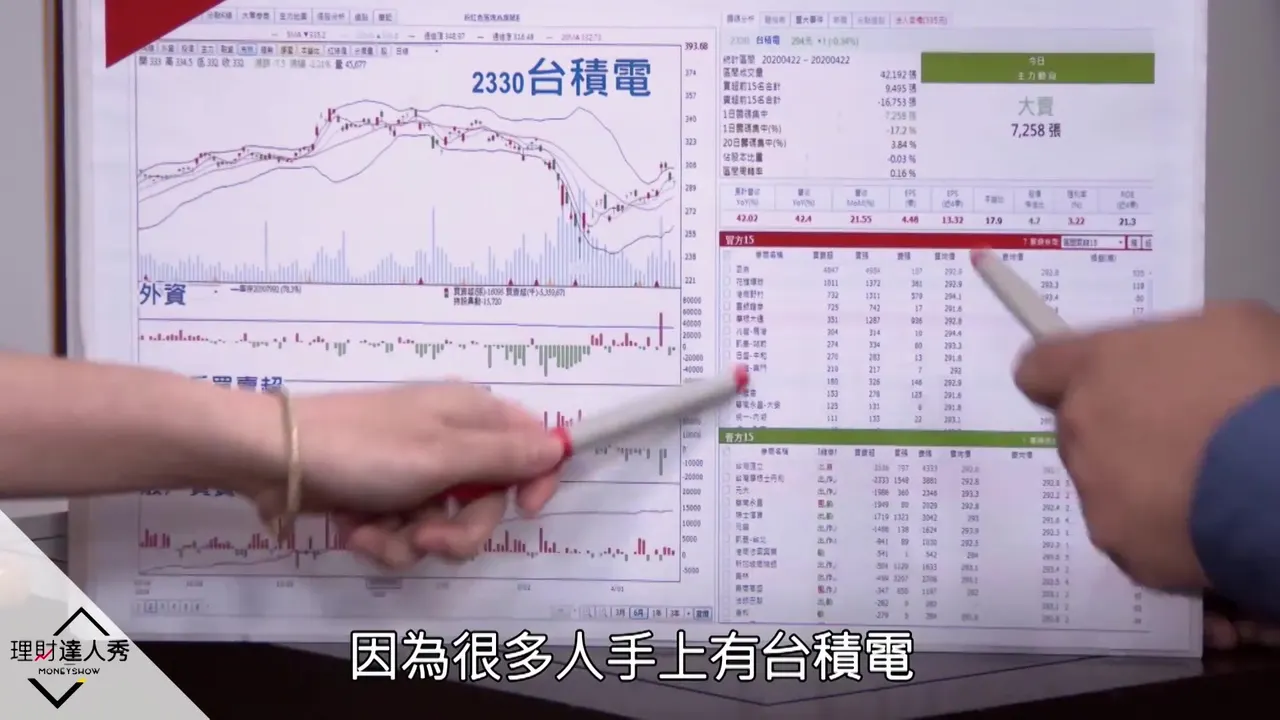
23:31Chip Lessons from Foxconn and Compal
Foxconn again shows local money decisively beating foreign money. The speaker mentioned that Chairman Gou has begun buying his own company's shares, 4000 lots in total; last time the stock rose only after he bought for 6 months in a row, so counting 6 months forward from now is the buy point, jokingly suggesting you can accumulate shares alongside Gou. Compal is another example: foreign investors sold at lows and mid-size investors bought, but recently mid-size investors have turned to net selling, and over a longer period they are selling too, which needs attention.
▶ Watch from here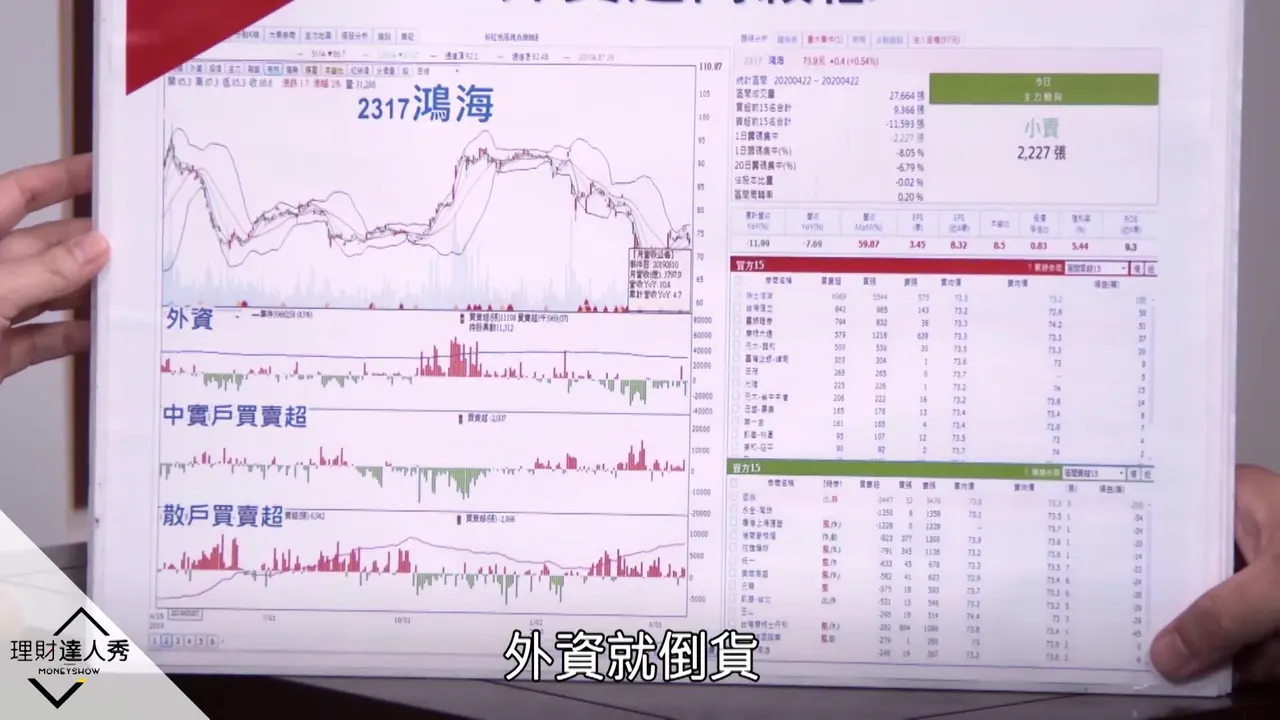
25:05Supply-Chain Breaks Distort Order Optimism
Compal insiders say orders are very full and they are very optimistic, but because of supply-chain breaks they cannot ship, and many industries will face supply-chain breaks later too, so optimistic orders are not truly optimistic and deserve special attention.
▶ Watch from here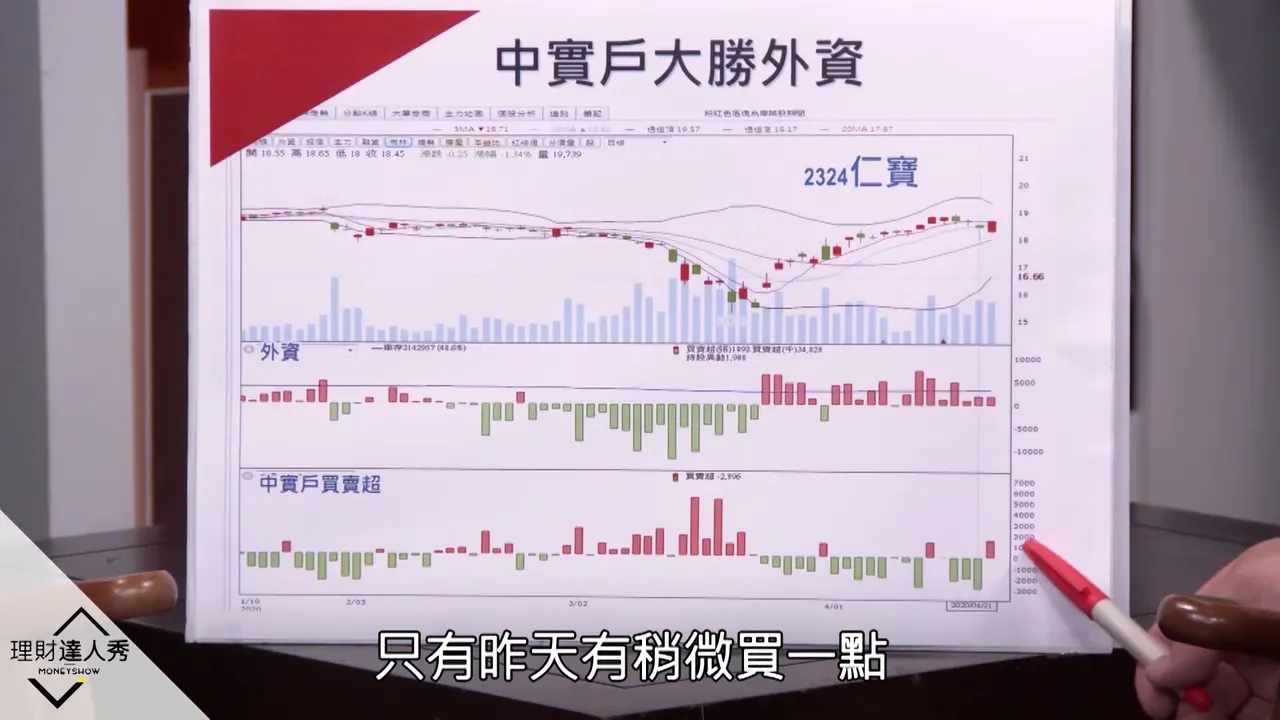
25:25Vanguard and Hotai Leasing Chip Checks
Vanguard is also a big stock: foreign investors again sold at lows and chased highs and dumped lows, while mid-size investors bought at lows, though after the rebound mid-size investors have recently been selling too, so be careful. Next, a historical check on what is being bought now: at Hotai Leasing mid-size investors have recently been buying while foreign investors dump; car rental was assumed to be hit hard by the pandemic, but last month's revenue still rose 21%, since some people avoid public transport and prefer renting cars, creating a business opportunity, and the flows are strengthening too.
▶ Watch from here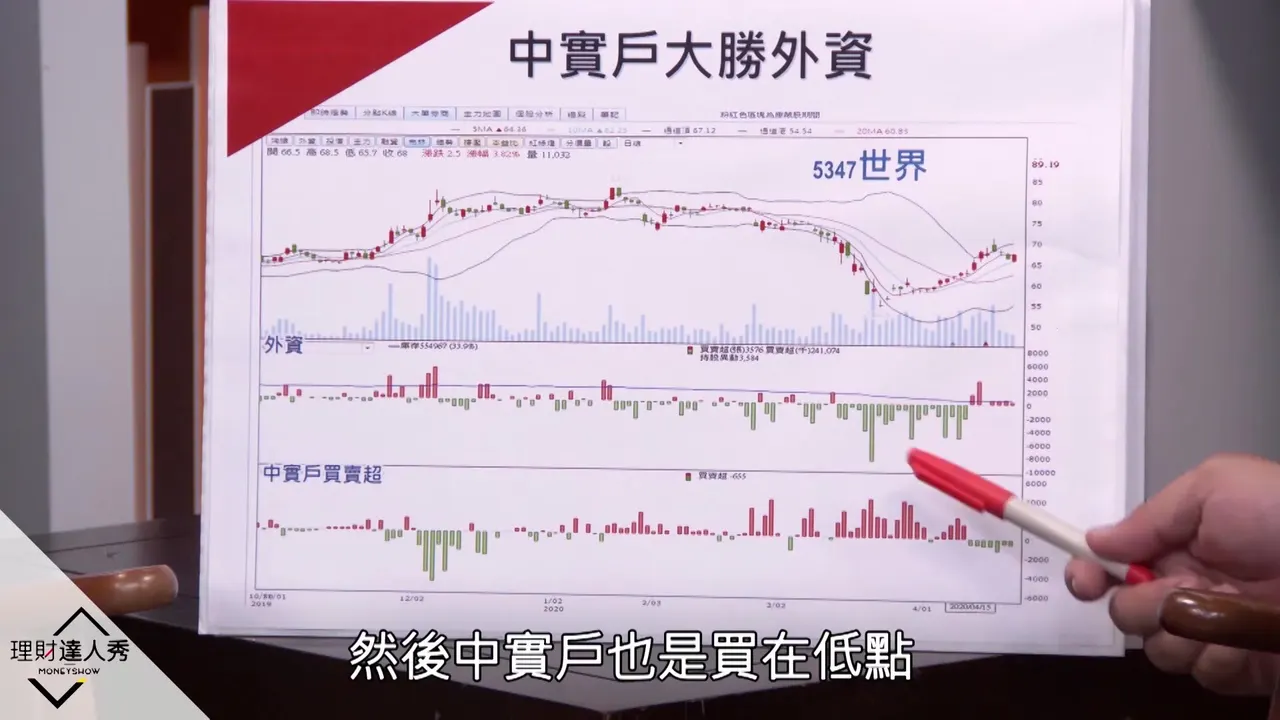
26:42Falling Oil Prices: Thin at the Top, Fat at the Bottom
When oil prices fall, industries tend to become thin at the top and fat at the bottom: upstream profits shrink and downstream costs get cheaper. Take Eternal Materials: foreign investors sold at the low and are still selling, while mid-size investors have bought heavily all the way, confirming the flow structure of downstream beneficiaries.
▶ Watch from here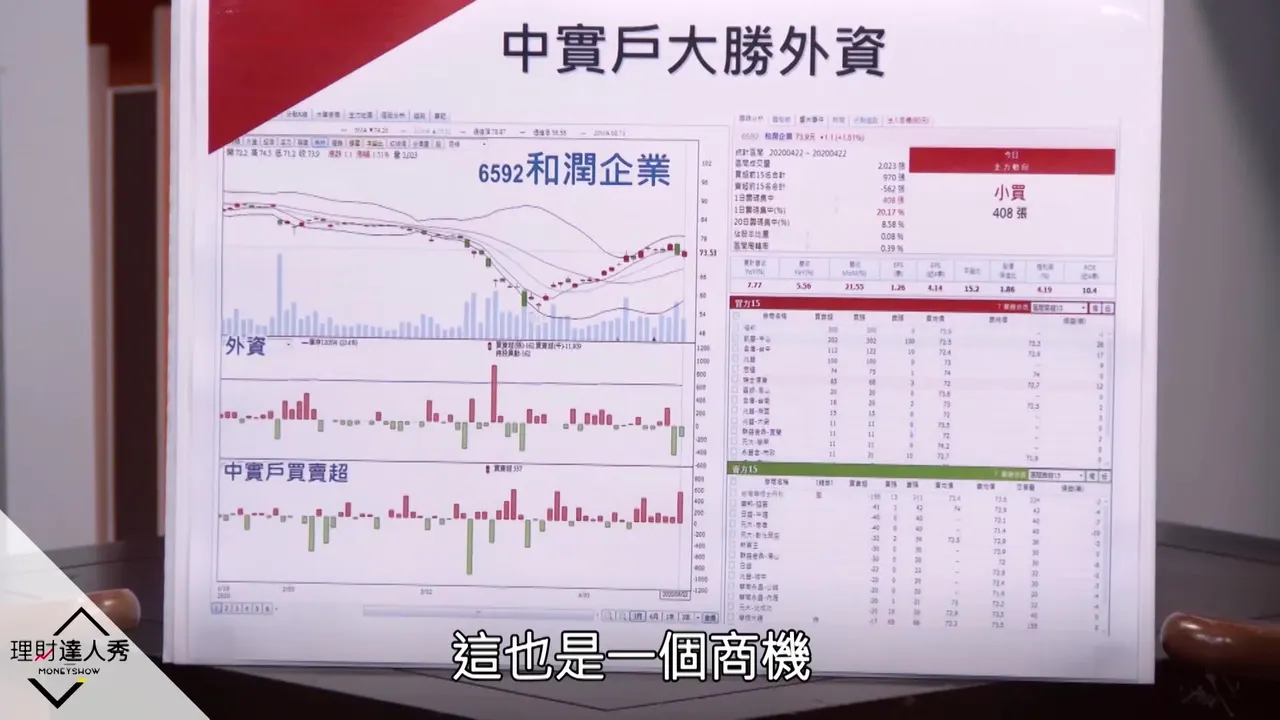
27:12Hou Sheng Treasury-Stock Case
The speaker stresses the show is not telling viewers to follow and buy, but to learn to judge whose chips, mid-size investors' or foreign investors', will win. Hou Sheng is running a treasury-stock buyback; at the bottom the key treasury-stock branch and mid-size investors bought heavily while foreign investors sold at the low, and now mid-size investors and the buyback keep net buying, consistent with the view that major shareholders are bullish and foreign investors do not grasp its merits, and the business is oil-related, so it is downstream and benefits from falling oil prices. Finally, he mentions the stock foreign investors bought hardest this year, asking viewers to watch whether foreign investors can win and do their own homework.
▶ Watch from here