Can You Follow Share Buybacks? How to Tell the 3 Types Apart and Screen Them
TL;DR: Only the first type of buyback is worth following: one launched at a low price, with major players buying in step and a record of doing what it says. Buybacks launched at highs are major players using the cover to sell out, and the fizzling type only yields a short-term gain during the buyback window.
Key ideas
- Buybacks fall into 3 types: Type 1 is launched at a low, major players are net buyers and the stock firms up once bought, making it one of the few with credibility; Type 2 is launched at a high, major players keep net selling and the stock does not firm up, mostly a fake price defense; Type 3 rises while buying is under way and turns weak once it ends, so it is only a short-term trade.
- To tell real from fake, check 3 things: how high or low the launch price level is, whether key broker branches are really buying, and how the planned buyback volume compares with average volume. An announced amount does not mean it is fully bought; a company often announces ten thousand lots but buys only 500 lots.
- Read revenue correctly: only 52 of more than 1700 companies posted record March revenue, mostly pandemic beneficiaries and companies with pulled-forward orders. When screening buybacks, March revenue almost always rises because of the Lunar New Year, so look at both month-on-month and year-on-year growth; only growth in both is complete.
- The driving force behind a buyback is profit: confirm that gross margin, operating margin and net margin are stable or rising, because a strong company hit by bad news is a good price. Flow-based and pure-stock investors approach it differently, but both care that the stock must rise.
- The trading approach: when major players are buying, the buyback broker branch is entering and the upper Bollinger Band is turning up, join the gain during the buyback window; the closer to the buyback deadline, the more you should get out. You can also add up the buying of the top branches and exit when it nears the planned buyback volume; conservative traders cash out after buying 2000–3000 lots.
Section summaries
5:55Chip Structure and Retail Psychology
On the chip (shareholding flow) side, major players are on the selling side and the only buyers left are investment trusts and retail investors; mid-sized holders who were previously trapped at the highs sold into the rebound. Retail investors buy stocks outright while shorting futures, and the many newly opened accounts lately mostly belong to novices who have never bought stocks, with little confidence, so they get scared easily on declines. Those with confidence instead sell into the rebound, which calls for special attention.
▶ Watch from here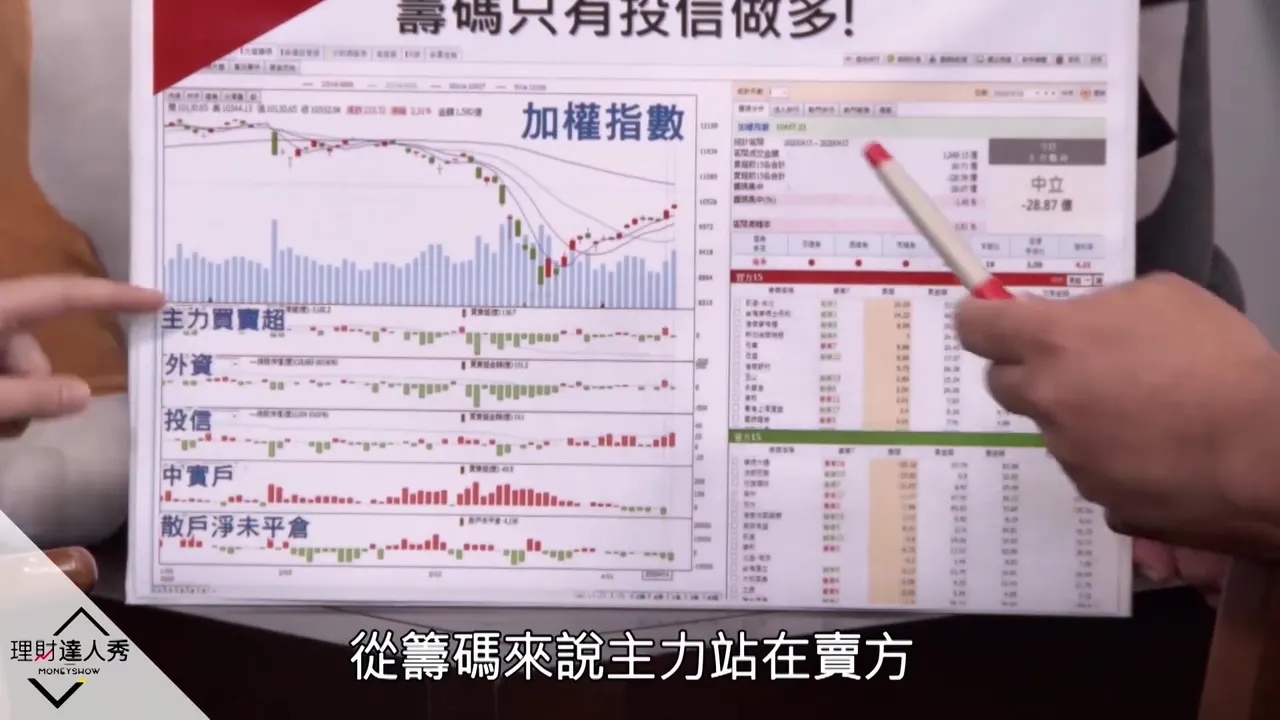
7:50The Truth Behind Record March Revenue
Whether a stock can keep rising depends on revenue, but only 52 of more than 1700 companies posted record March revenue, and most were beneficiaries: one group is pandemic beneficiaries such as masks and ear thermometers, which may fall back once the pandemic passes; the other is the semiconductor group that pulled orders forward for fear of supply-chain breaks, which already reacted in March.
▶ Watch from here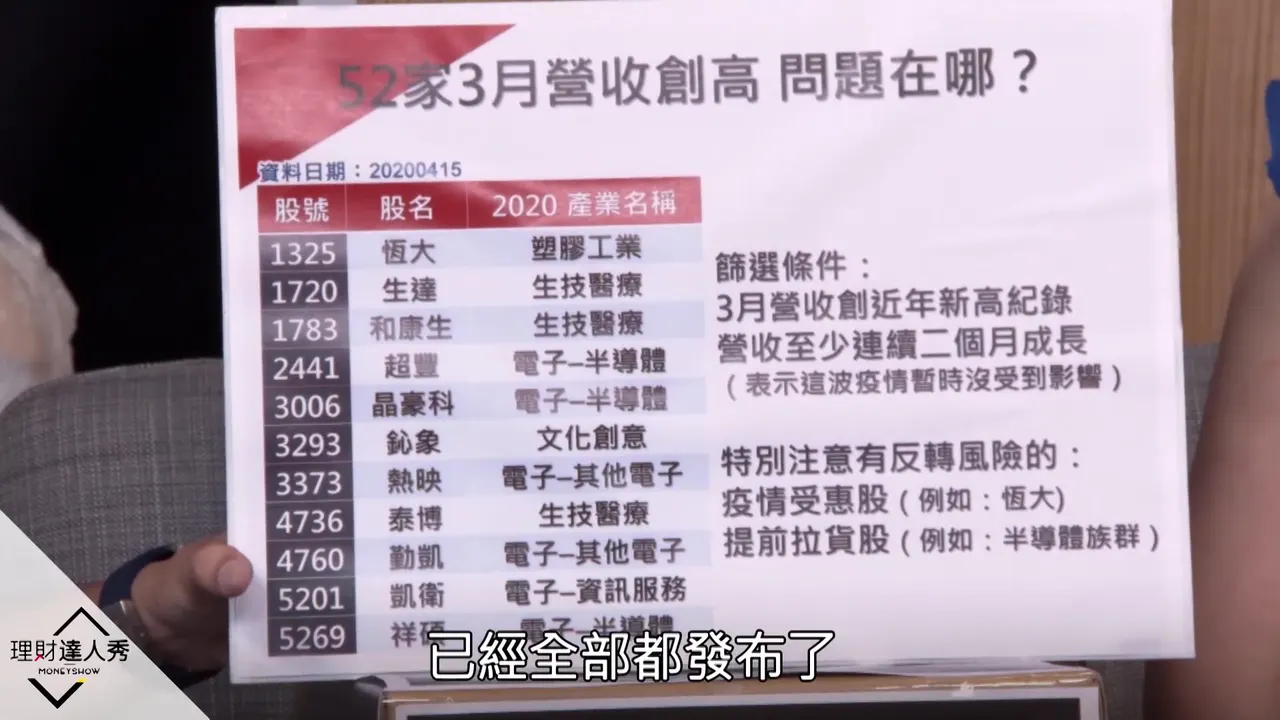
9:31Introducing the Buyback Showdown Topic
Once the pull-forward effect passes, April and May revenue may decline, so excessive optimism is unwarranted. The show then turns to a new topic: Xiaoge and Gu Yu discuss whether buybacks are worth following. Recent buyback announcements have grown from 6 companies, to 32, to 200, and Xiaoge thinks you must first look closely at what a buyback actually amounts to.
▶ Watch from here11:36The Nature of Buybacks and Their 3 Uses
Buybacks have 3 uses: transferring shares to employees, converting equity (issuing convertible bonds or using shares as collateral), and protecting the company's credibility. Most in this wave are about credibility, meaning major shareholders using company money to defend their own stock price; but their price-defense judgment is not necessarily good, and they often announce ten thousand lots but buy only 500 lots, not buying well or buying fully.
▶ Watch from here14:11How to Tell Whether a Buyback Is Real
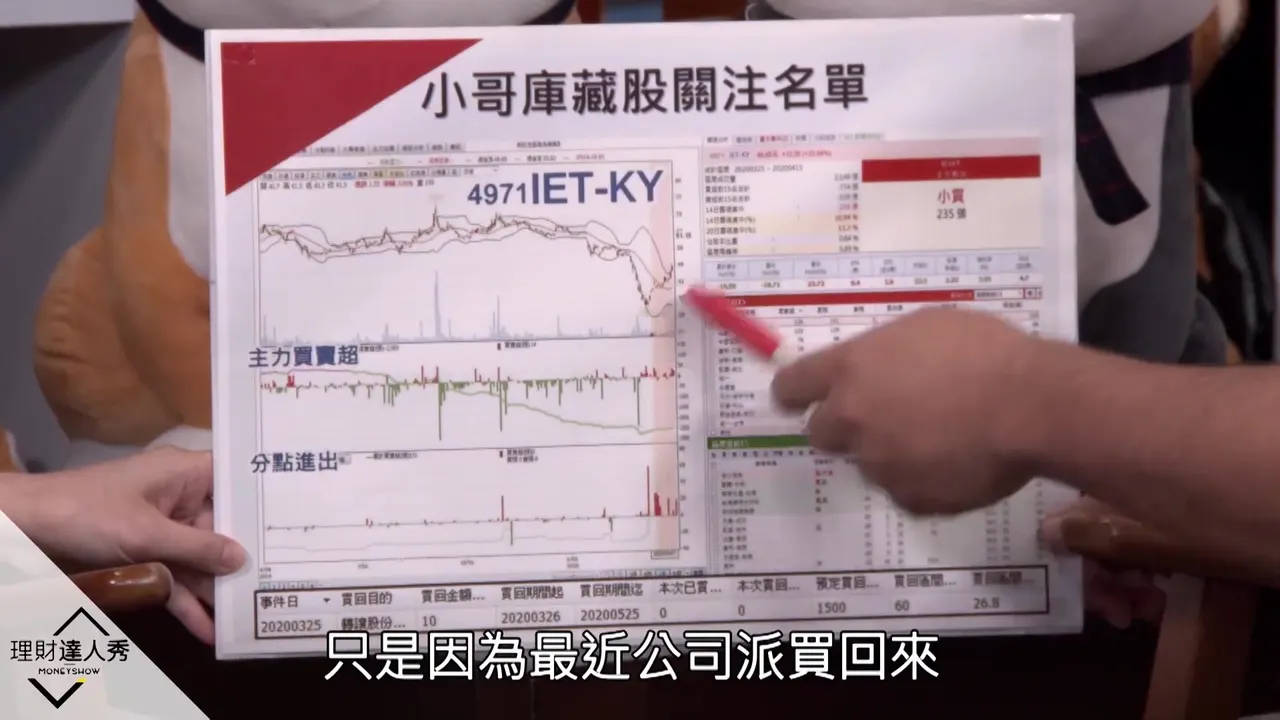
Three methods help tell whether a buyback is real: check how high or low the launch price level is, as with Yageo, which announced the buyback after falling a stretch from its high, still far from the low, so it may be the all-talk type; check whether key broker branches are actually buying; and compare the planned buyback volume with average volume to see if it is reasonable. The key is to verify whether the company that says it will buy actually buys.
▶ Watch from here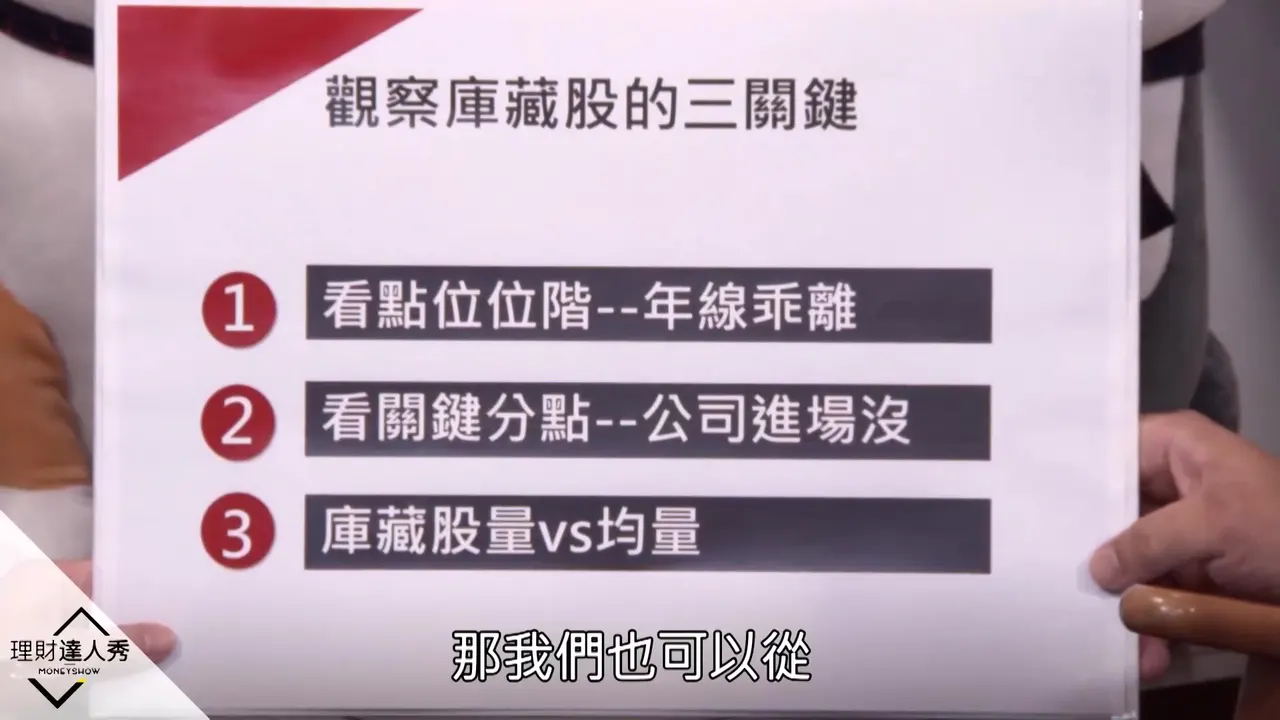
15:51Type 1: Real Buybacks Launched at Lows
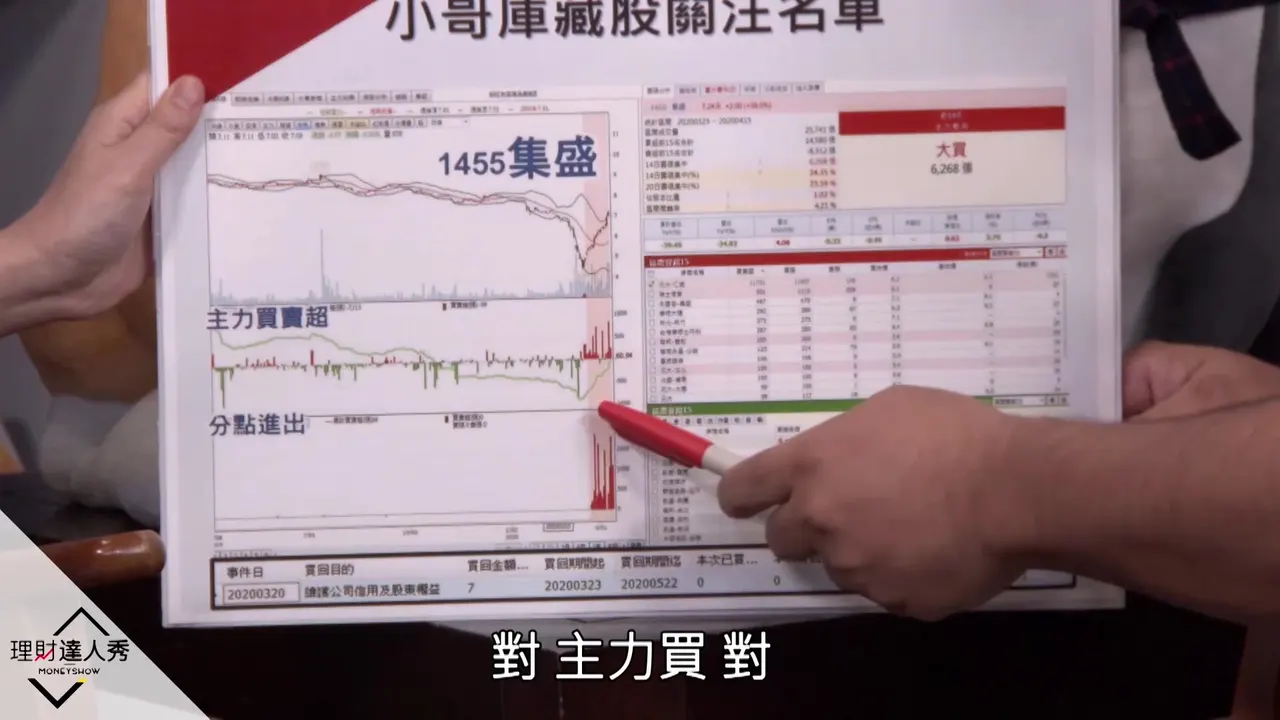
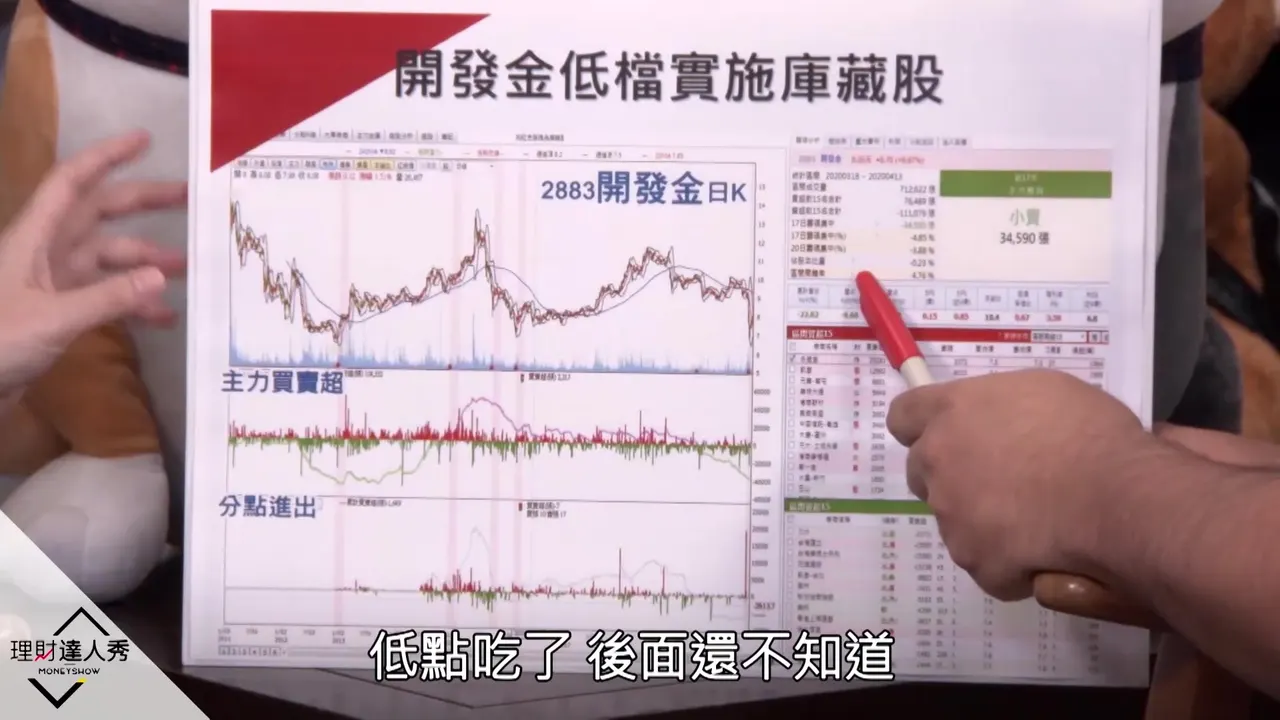
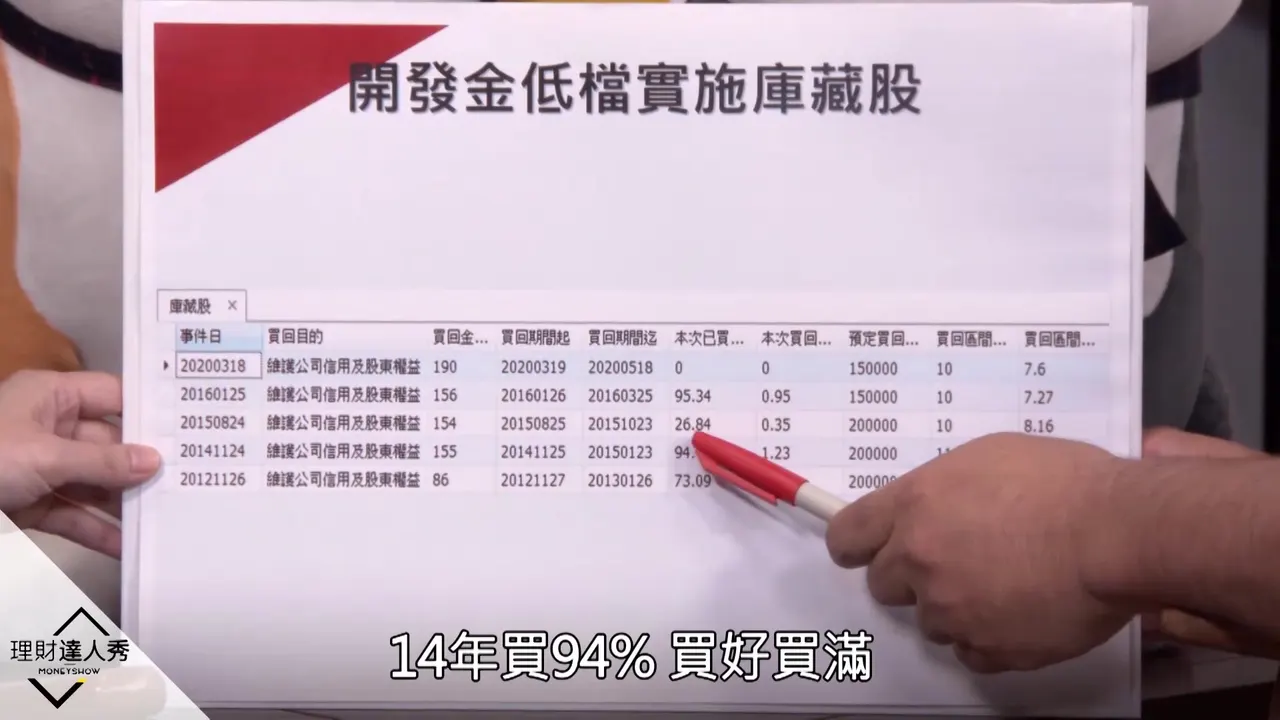
Type 1 is a buyback launched when the stock is at a relatively low point, with major players net buying in step; after the company absorbs shares, the stock firms up and moves higher, making it one of the few trustworthy types. Taking China Development Financial as an example, you can judge company credibility from past buyback completion ratios, which reached 73%, 94% and 95%, nearly buying well and buying fully; Walsin Lihwa is also launched at a low, with the Yuanta branch buying at the same time.
▶ Watch from here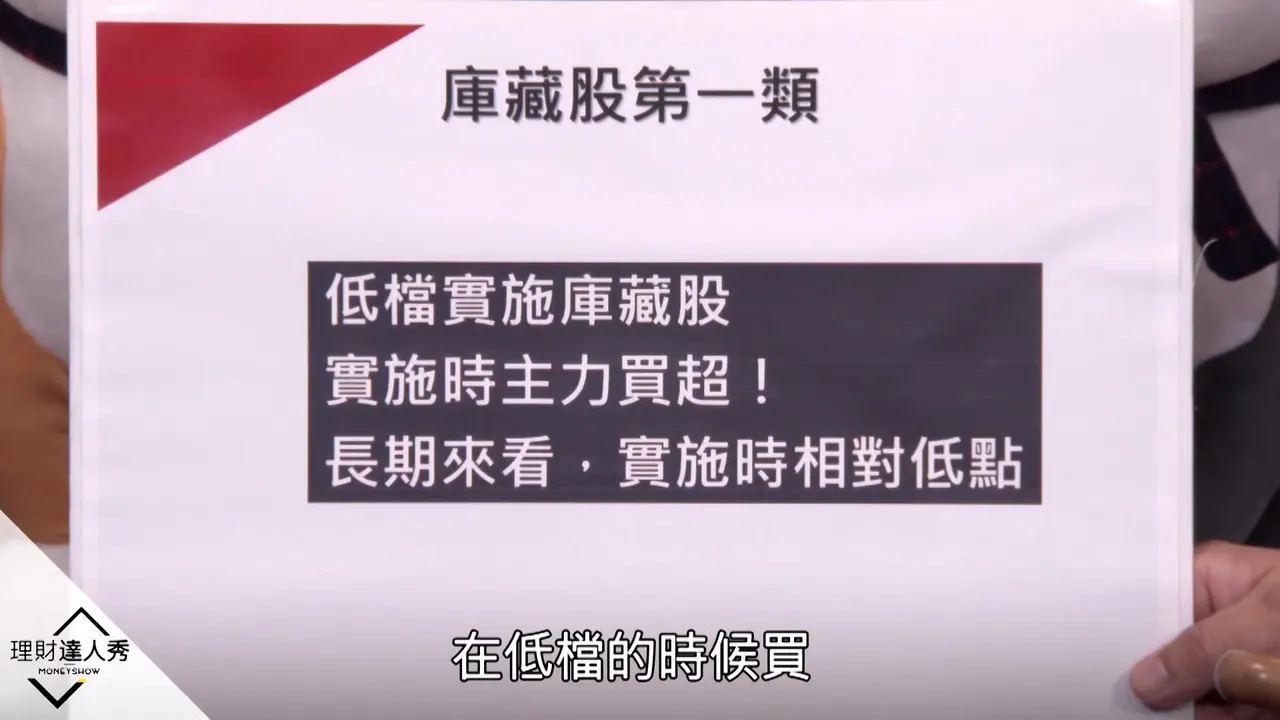
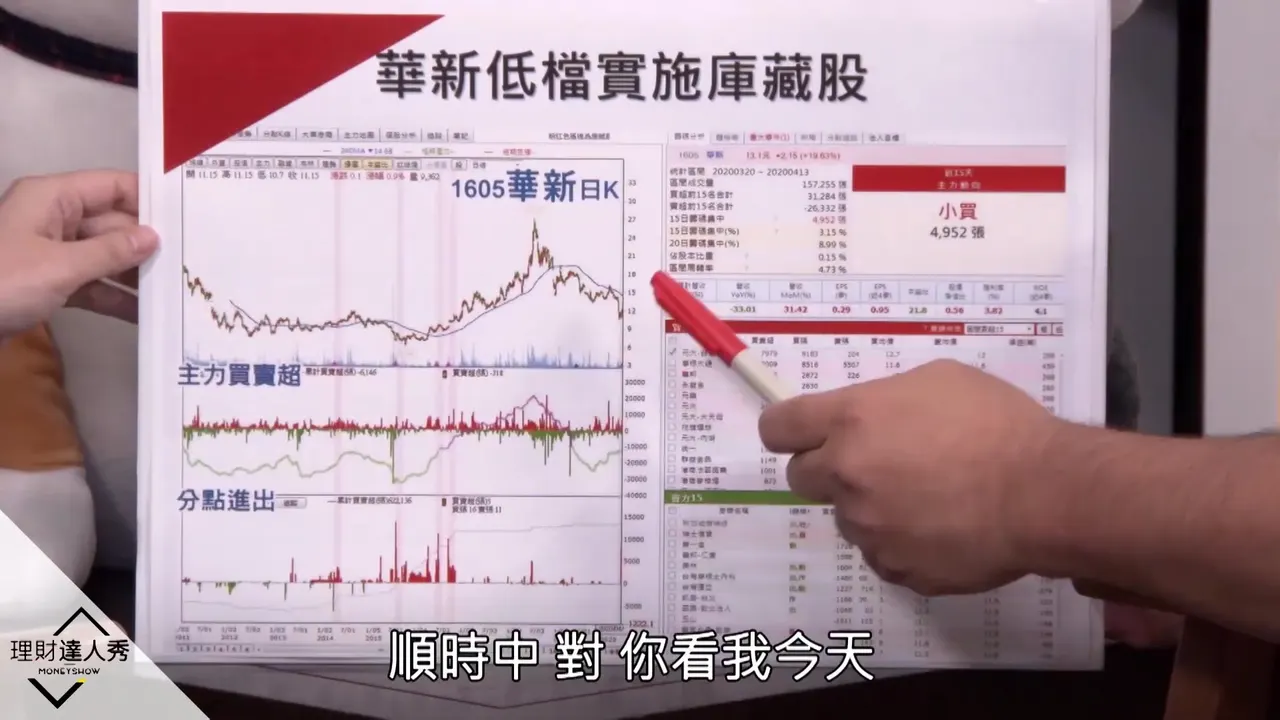
18:01Type 2: Fake Price Defense Launched at Highs
Type 2 is a buyback launched at a high, where major players keep net selling during the program, so the stock does not firm up after being bought. Take Yageo: during its buyback the stock fell all the way, and major players used the chance to sell out and get retail investors to take over; the buyback price range was clearly unreasonable and it was merely a declaration to placate retail investors trapped at the highs.
▶ Watch from here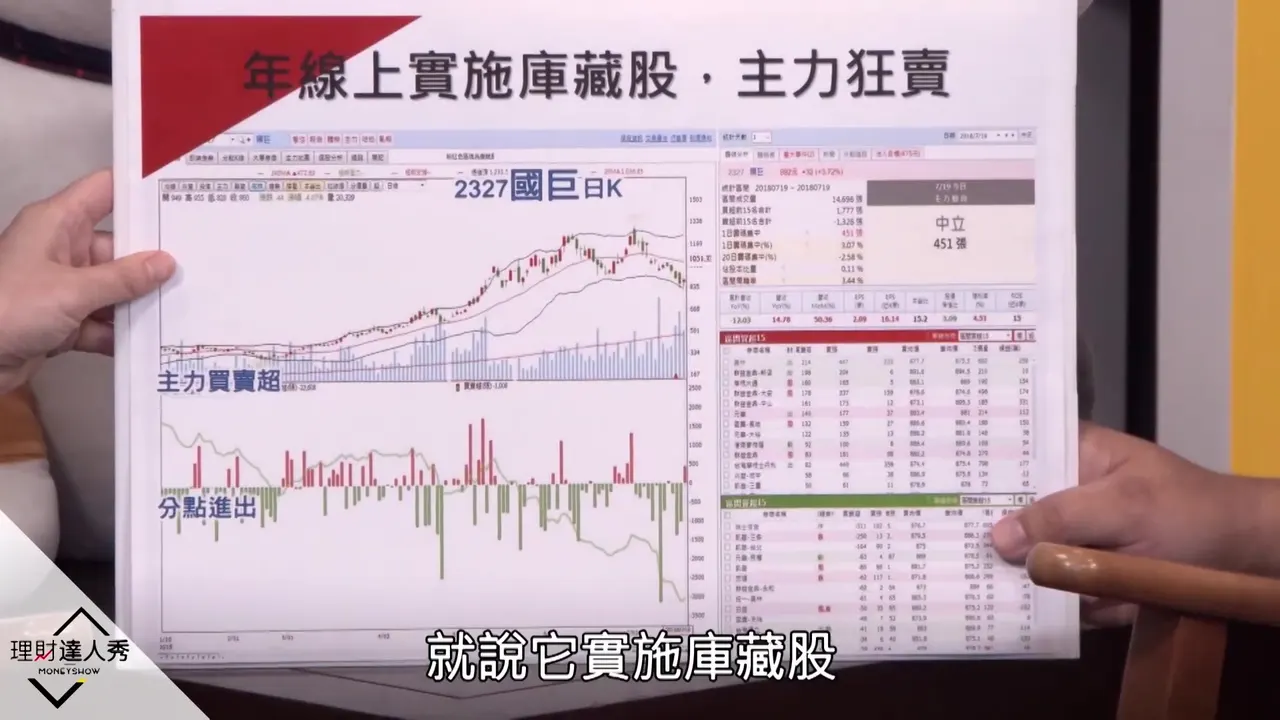
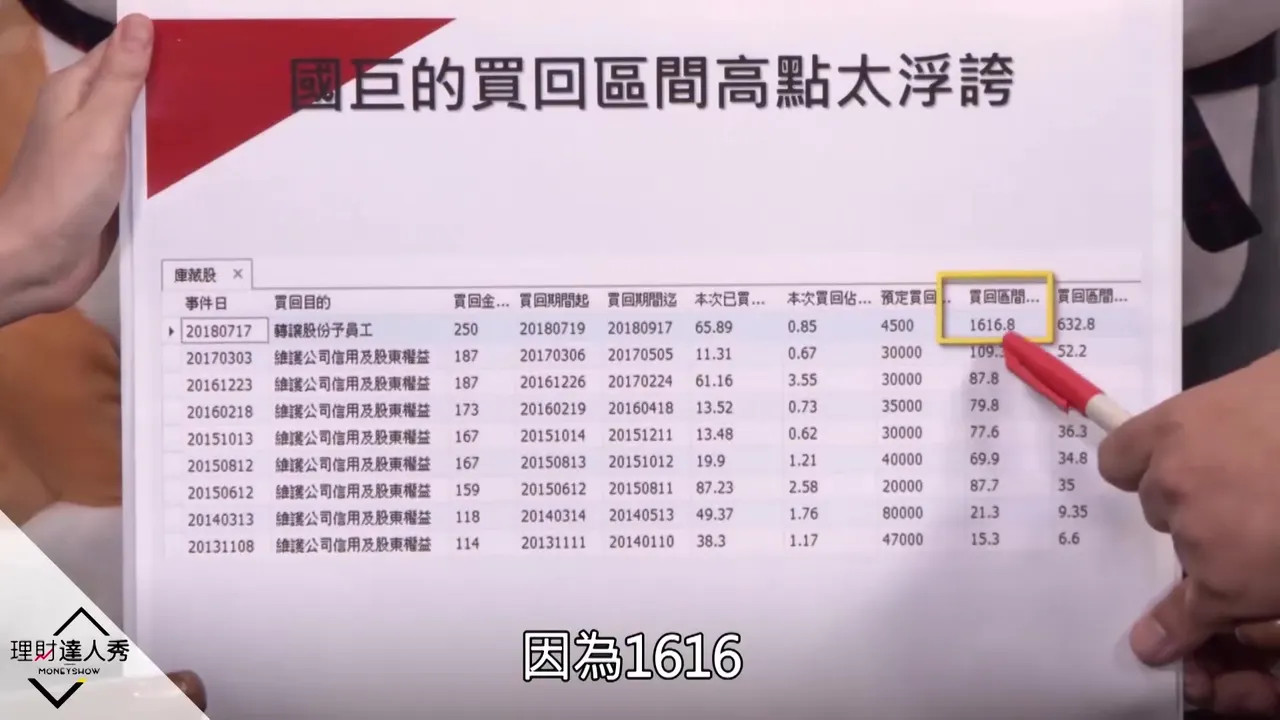
21:51Type 3: Rises Only While Buying
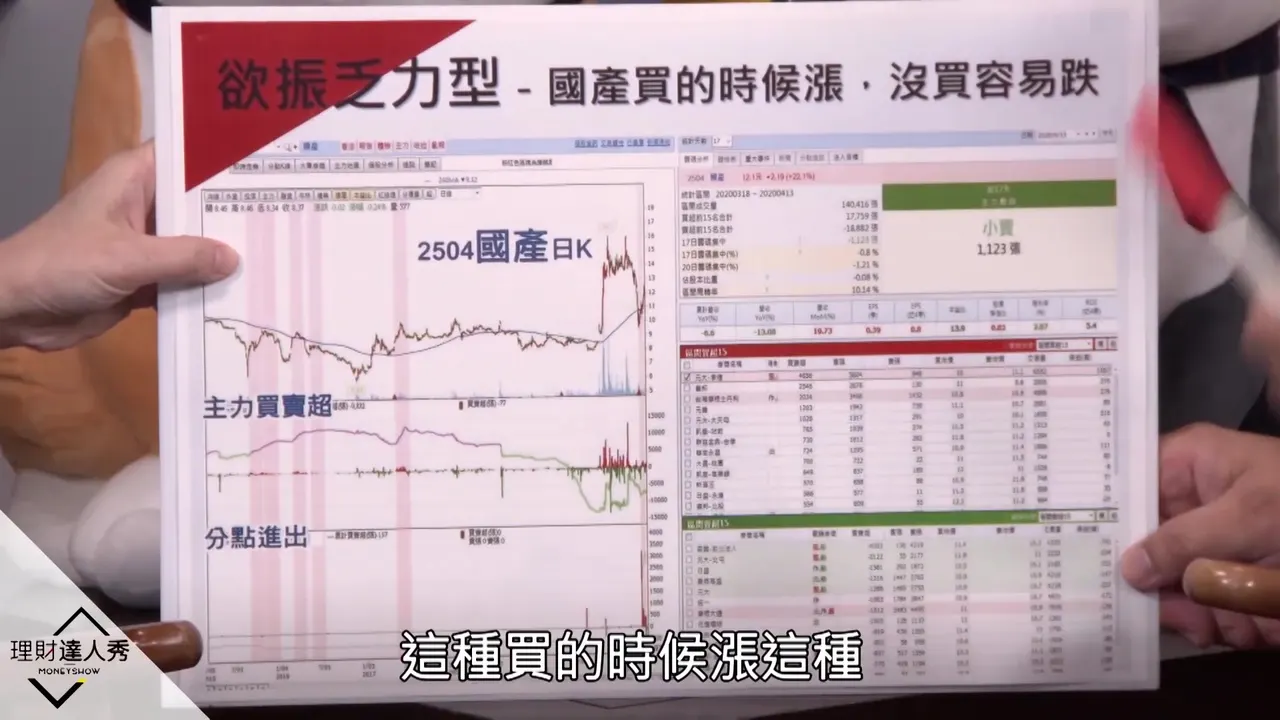
Type 3 buybacks show some sincerity: the stock does rise during the program, but turns weak as soon as it ends, the fizzling type. Guochan is an example, rising while buying and falling when not, so you can only use the 2-month program for short-term spread trading. To sum up the 3 types, pure-stock and chip-flow investors approach it from different angles, but both focus on the stock having to rise.
▶ Watch from here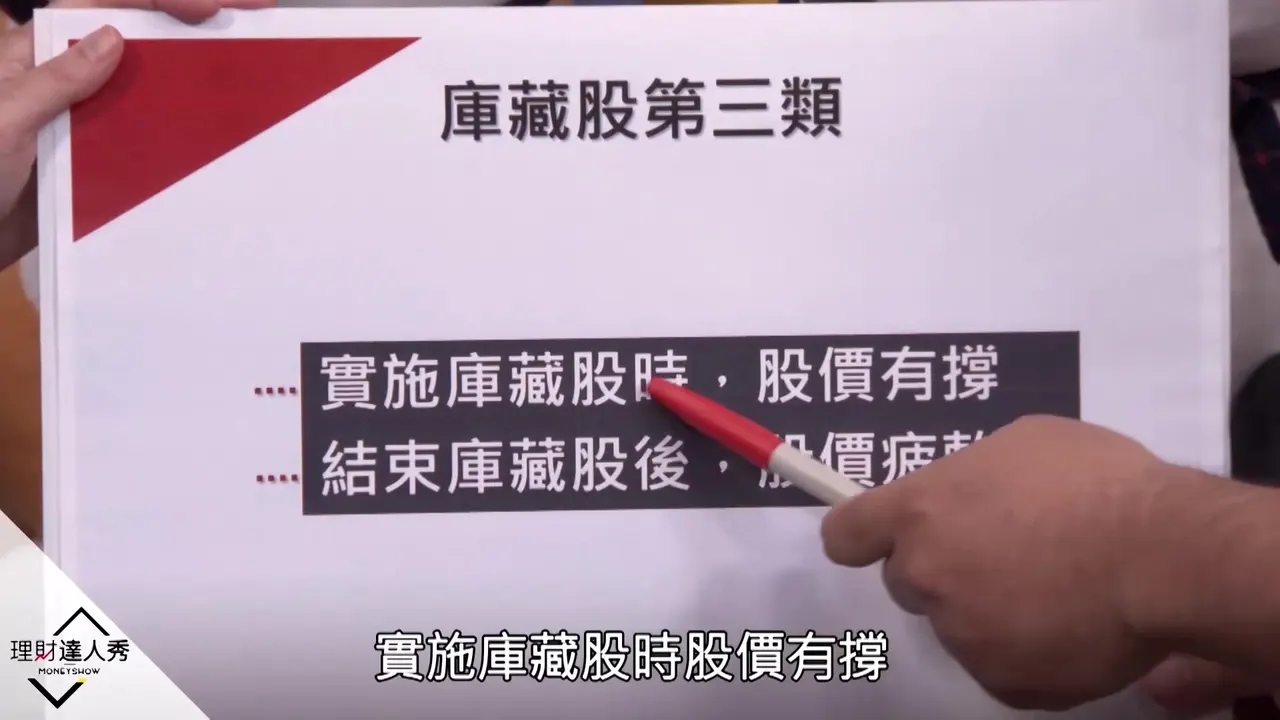
24:21Risks of Following and Doing What They Say
Buybacks act like a reassurance pill for retail investors, because big players buy in themselves and small ones feel they cannot lose by following; but of the 3 types, only Type 1 is worth following, so only 1/3 hit. The first priority in picking is doing what they say: buying fully whatever amount is announced, with execution status checkable in material announcements; add continued profitability, ideally with growth, as the 2 key fundamentals.
▶ Watch from here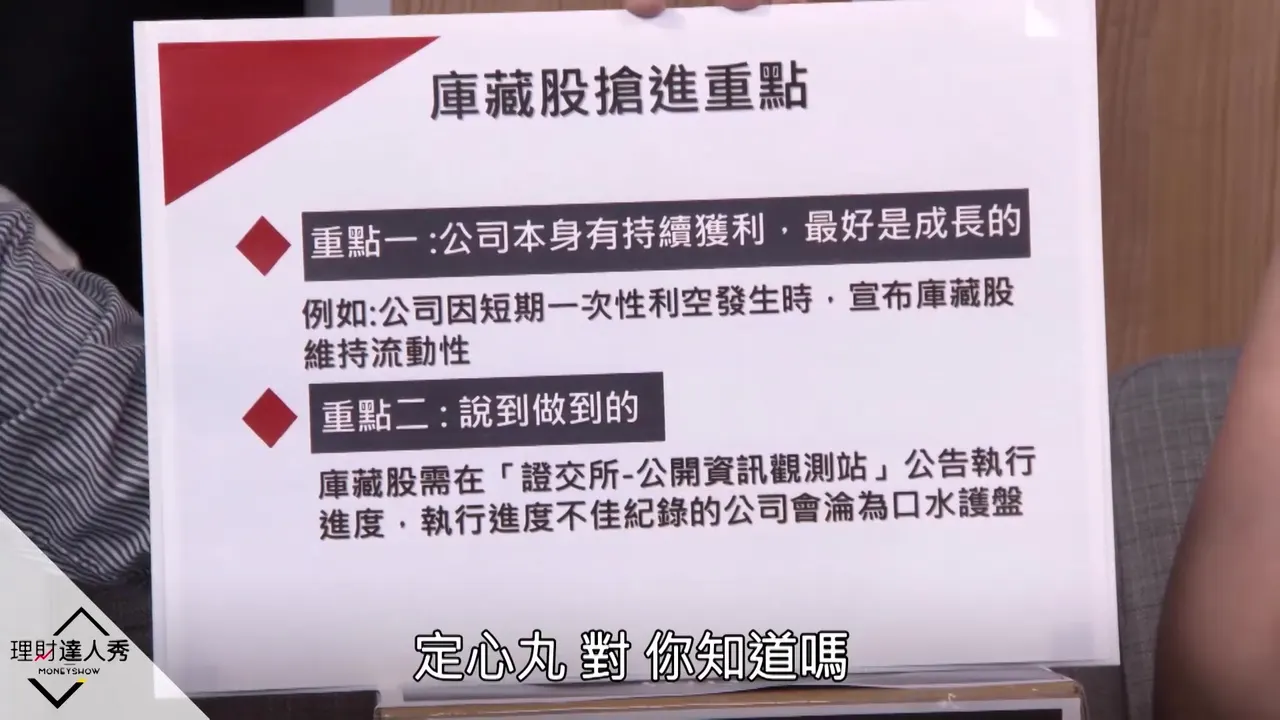
26:37Revenue Screening and the Year-on-Year Trap
When screening from 200-plus buyback companies, check that revenue grows both month-on-month and year-on-year. Many companies had a big jump in last month's revenue, yet it is actually a decline versus the same period last year; because of the Lunar New Year, March revenue almost always grows, so companies still declining in March can be dropped outright.
▶ Watch from here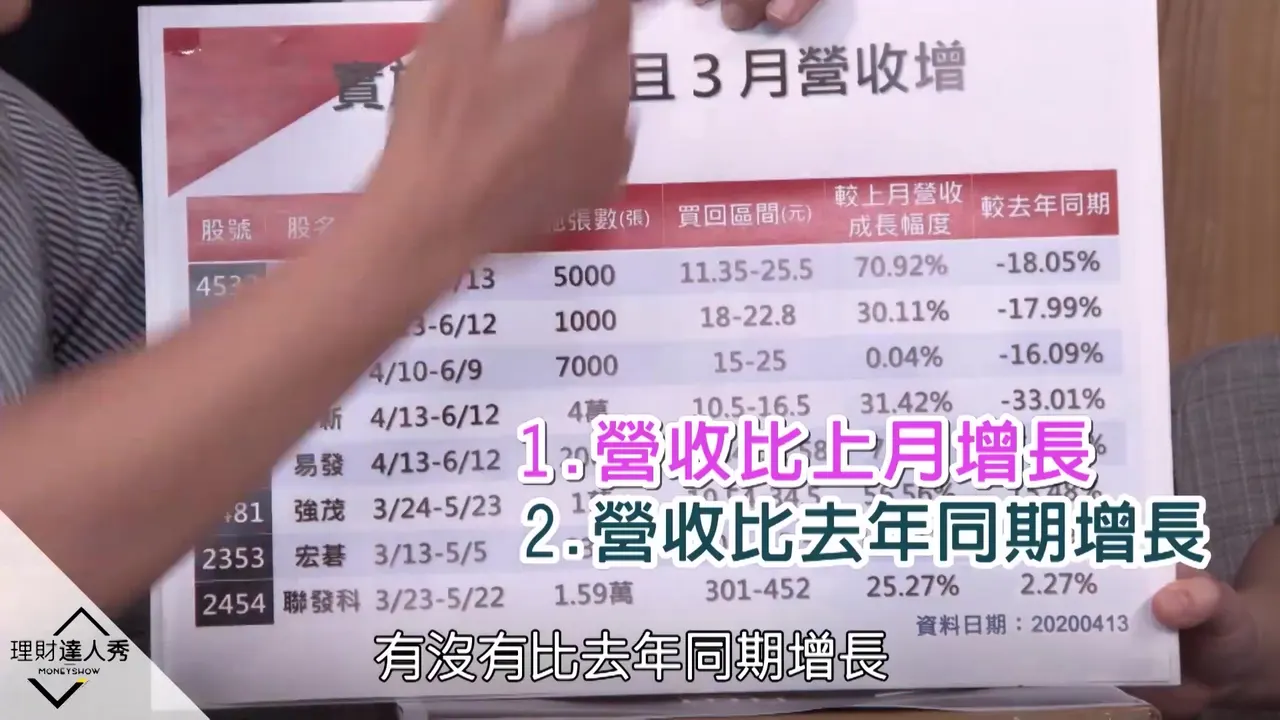
28:42Screening Results and Stock-Picking Logic
The full criteria are a buyback in place and March revenue growing both month-on-month and year-on-year; 3 companies qualify (Bo Wen, Taiwan Flexible and Quan Xin). The host stresses this is a teaching demonstration, not a recommendation, hoping viewers pick their own good stocks by the standard; the logic is that profit is the driving force behind a stock price, and if a company does not make money the price has no support.
▶ Watch from here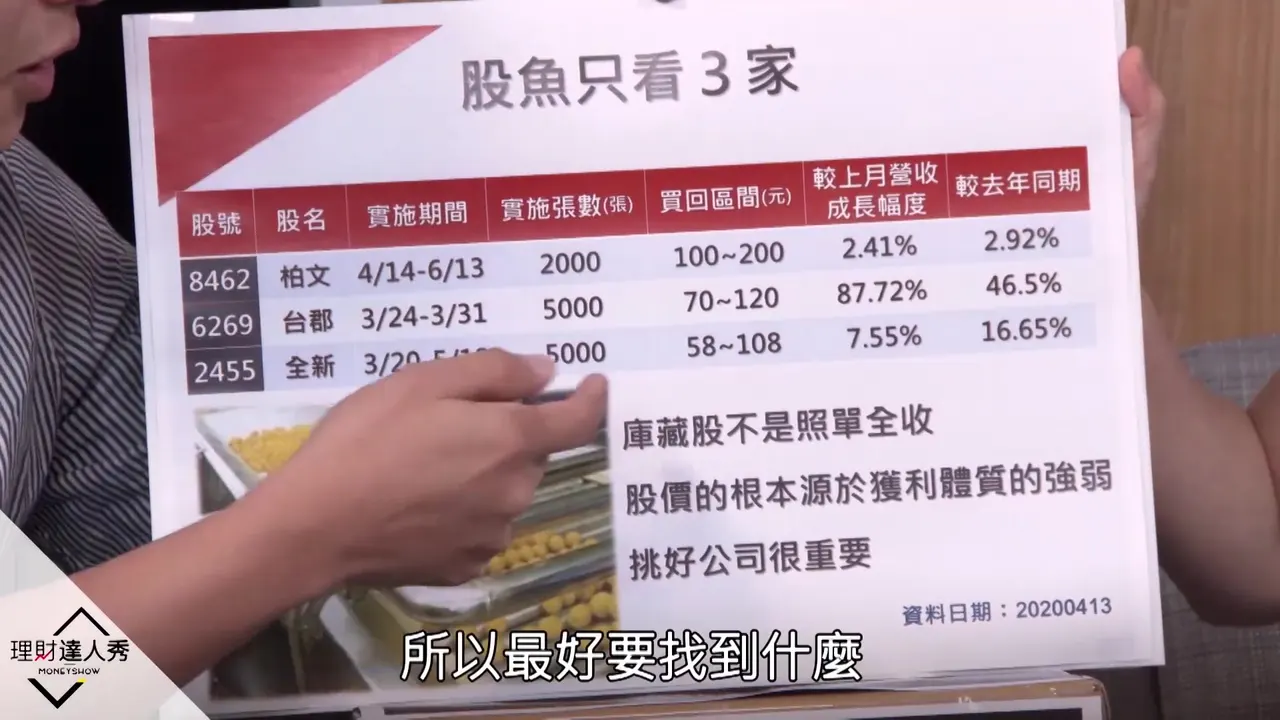
29:52Checking Strong Fundamentals with the 3 Margins
Using Bo Wen as an example, check whether it has made money all along; stable or rising gross margin, operating margin and net margin indicate good finances. The pandemic hit the stock price hard, and even with the Taiwan market rebounding, the relatively strong company is still at a good price; a strong company hit by bad news creates a good opportunity, and with the buyback and major players backing it, the price may recover faster. The remaining names are left for viewers to verify themselves.
▶ Watch from here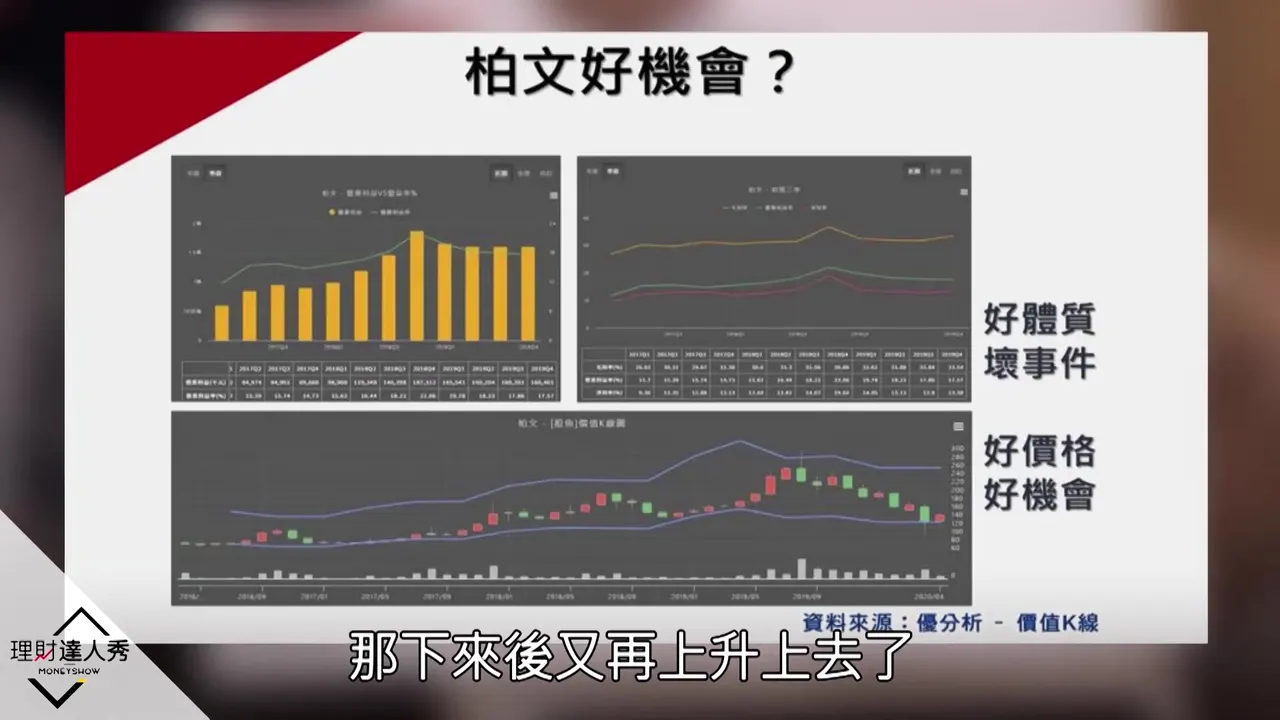
32:15Taiwan Flexible Case and Stock-Picking Conditions
Taking Taiwan Flexible as an example, gross margin, operating margin and net margin all climbed steadily, and the pandemic hit made the price correct, creating a good opportunity. Pure-stock investors wait several years between engagements; flow-based investors need only see major players buying, the buyback broker branch entering and the upper Bollinger Band turning up to enjoy the gain during the buyback period.
▶ Watch from here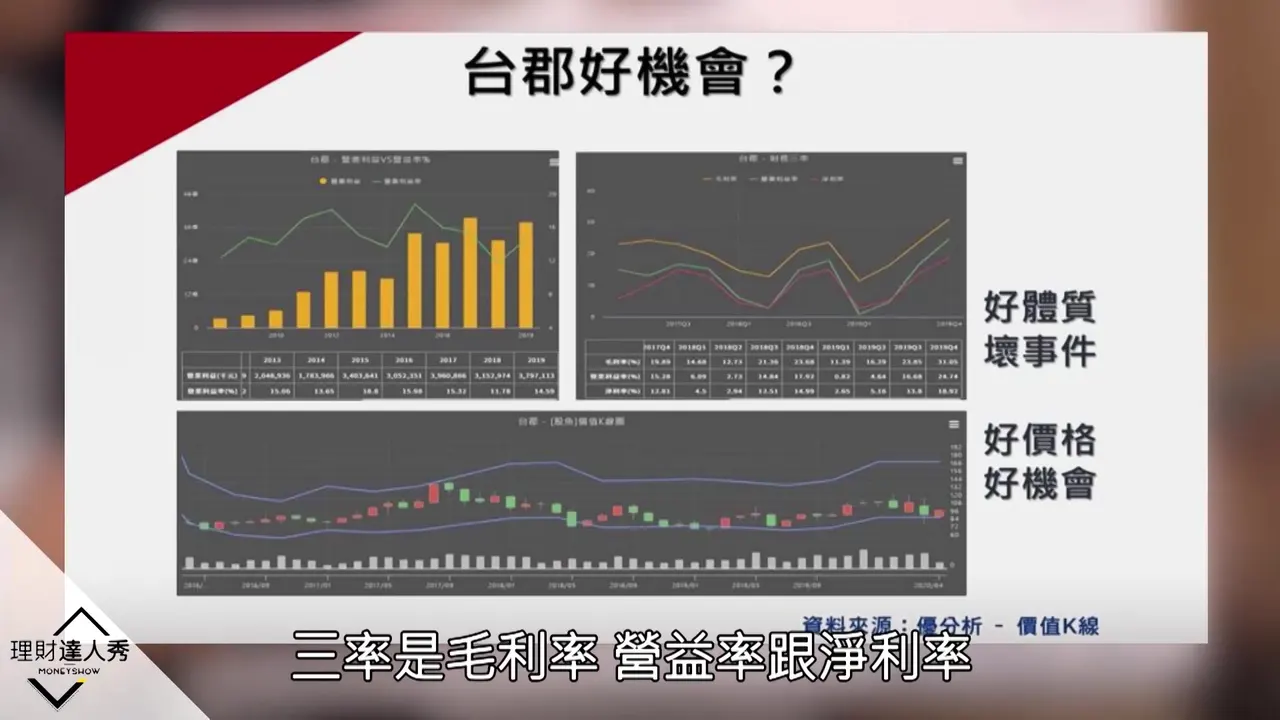
33:37Trading Approach and Exit Timing
The buyback trading approach is to join the short-term gain during the program whenever conditions are met, and leave once the fun ends. Buy and sell windows are announced, usually about 2 months, for example March 26 to May 25; the closer it gets to the end, the faster you should run, because over the long run these stocks see major players selling, and they show up as major-player net buying only because the company camp has recently been buying back.
▶ Watch from here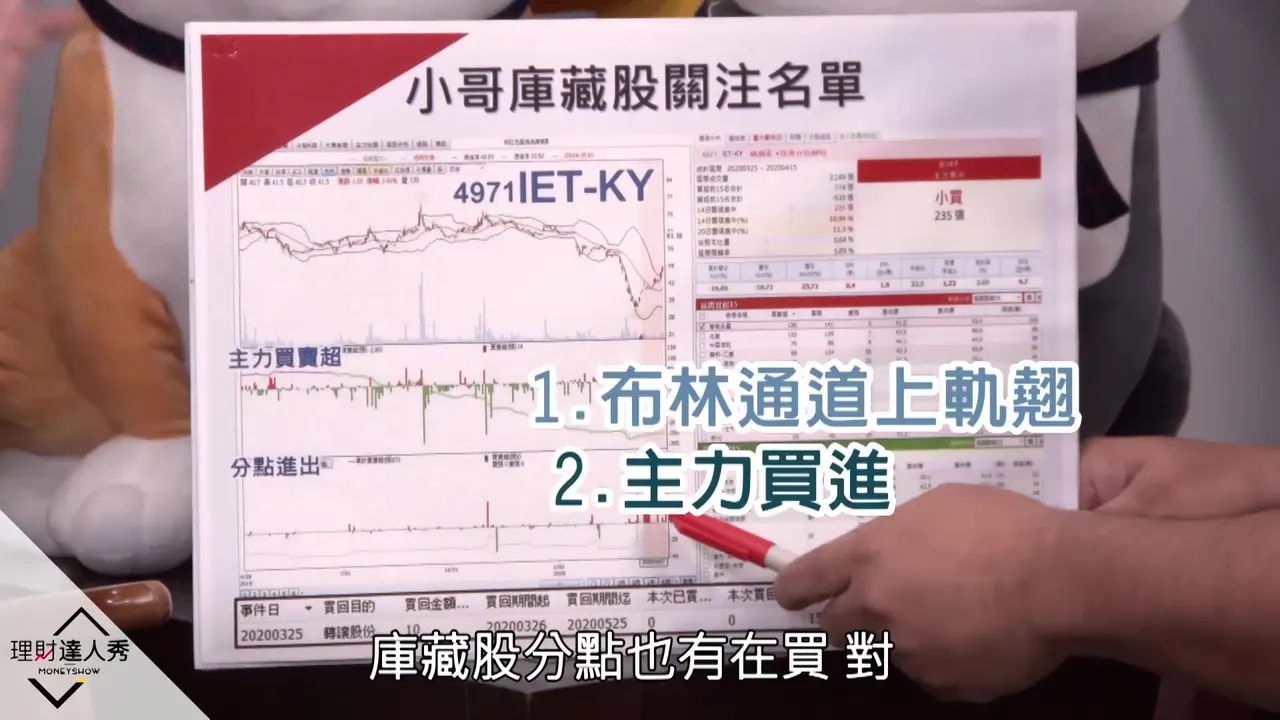
34:32Jisheng and Another Buyback Example
Taking Jisheng as an example, the Yuanta branch was originally the major player selling out, but after the buyback announcement it turned into big buying of more than ten thousand lots, and the upper band also turned up, so joining at a low can enjoy a short-term gain; another stock rises when it buys back and weakens when it does not, so watch whether the company keeps buying back after May 26.
▶ Watch from here