Avoid the Crowded Places: Reading Whale and Retail Holding Changes to Time Trades
TL;DR: To find good stocks, stay away from where retail investors crowd and watch how large holders' and retail holders' stakes change: a 3% increase by whales is a buy signal, while whales falling, retail rising and a high-level share-transfer filing is a short signal, because company insiders know the business better than retail does.
Key ideas
- Holders with 100 lots or fewer count as retail and those with 400 lots or more count as whales; retail crowding and high-level volume spikes are warning signs, and Chinese Petrochemical stalled because it had more retail than whale holders; Gold Circuit Electronics has high whale holdings and concentrated shares, but price level still matters, and at a high level the speaker still wouldn't buy.
- Three reasons to short: whale holdings falling, retail holdings rising, and a share-transfer filing at a high level; with all 3 in place it is probably safe, because the boss has already given the signal; a 3% change in whale holdings is the reference threshold for getting in or out.
- With share-transfer filings, check the transfer method: gifts and trusts have no effect on the price, and only ordinary trades are real selling; the filing is usually not the peak and the price keeps rising after the sale, because the best time to unload is while pushing the price up.
- Stocks suited to positioning are those where major players keep adding during sideways trading and the pandemic crash while bored retail investors leave; stable shares tend to rise; at Chiao Chun, a key broker branch bought heavily for years, whale holdings rose to about 67% and retail fell to 20%.
- Don't be led by faith or good news: the group slogan 'never sell a lot and a miracle will come' is faith, not flow data; for dividend news, check whether big shareholders sold before the payout and whether dividends are paid steadily every year, and Darwin Precision, which never filled its dividend gap after paying out, is an example.
Section summaries
5:30Defining Crowded vs. Empty by Holding Tiers
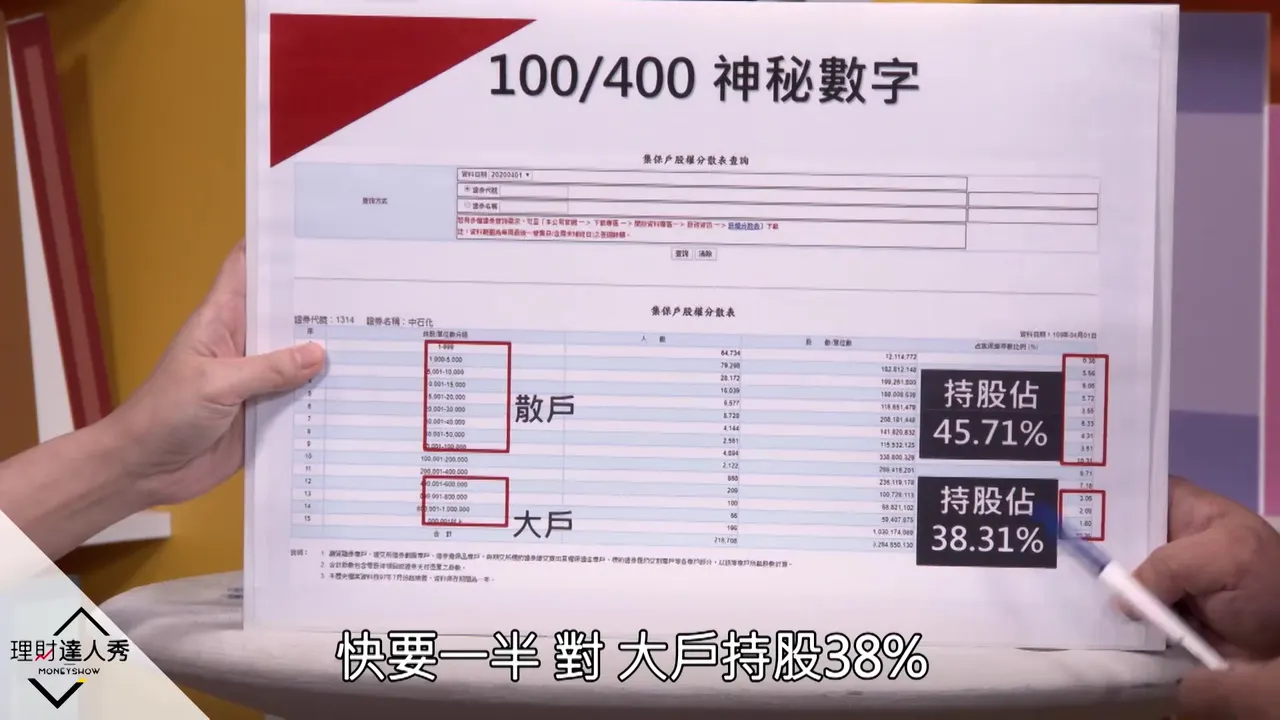
Explains that places where retail investors gather are easily poisoned and that high-level volume spikes are a warning sign, then defines market structure by lots held: 100 lots or fewer is retail and 400 lots or more is whale. It contrasts Gold Circuit Electronics, where whales hold 74%, with Chinese Petrochemical, which has more retail holders, to show how concentrated shares relate to price performance.
▶ Watch from here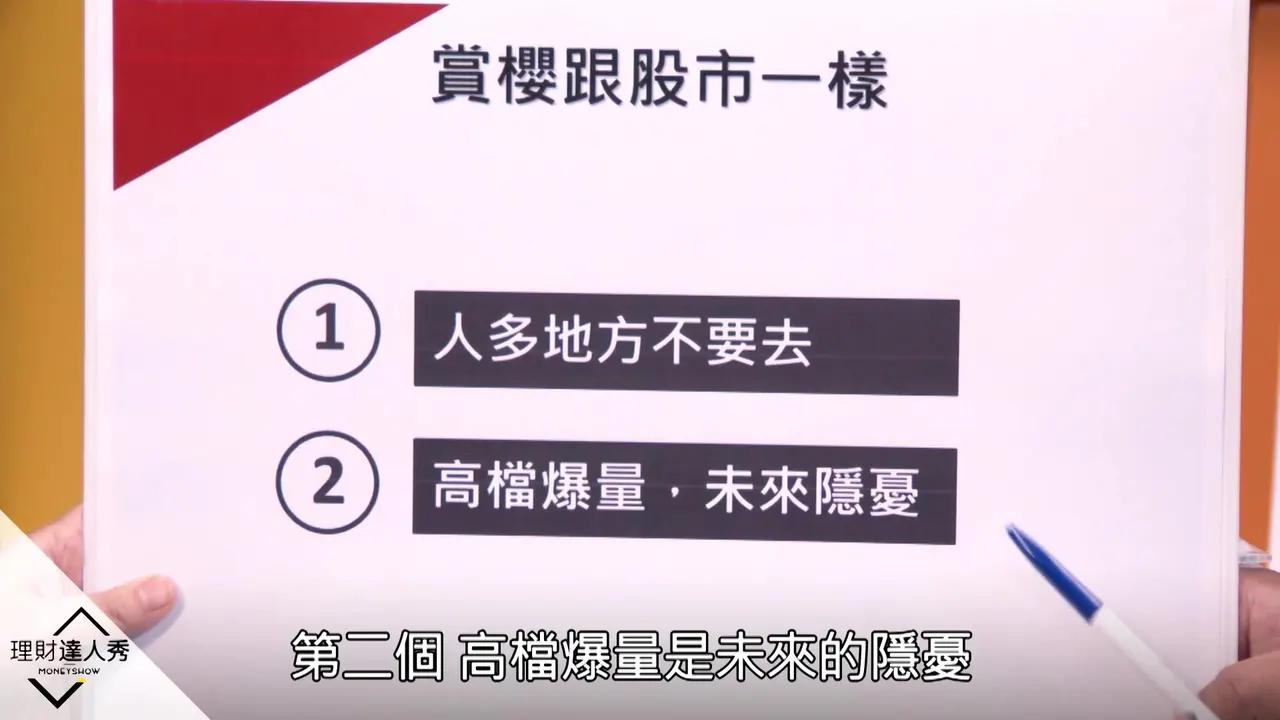
8:20Retail Mindset and Faith-Based Holding
Trapped retail investors often hold the mindset 'never sell a lot and a miracle will come', and the host admits he bought in around 8700 points and still hasn't sold. The phrase was originally the slogan of a financial community group; many such groups take a religious approach, which is about faith rather than share flows. When prices churn at a high level, believers always think 'it's not that the reward won't come, the time just hasn't arrived', and the result is often a decline.
▶ Watch from here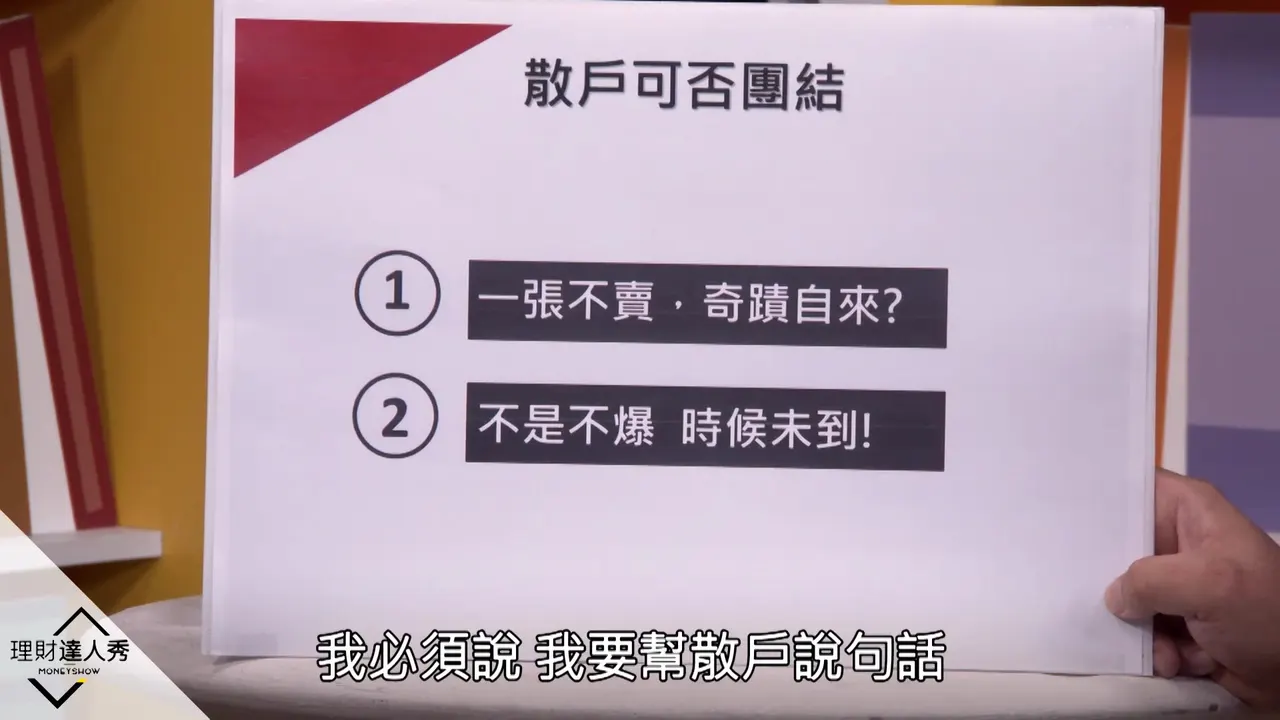
10:26Which Vehicle Do Major Players Pick: Sports Car or Indian Train
Which vehicle should major players drive? Using a Tesla sports car (accelerating in just 1.9 seconds) and an Indian train (packed with people, where even those without tickets can climb aboard) as a metaphor, the speaker says major players of course should drive a vehicle like the Indian train to run fast, and previews which stock is this kind of vehicle.
▶ Watch from here
11:15Classic Case: Whales Down, Retail Up at Crystal Colors
Take Crystal Colors as an example: during high-level churning, whale holdings (400 lots or more) fell from 45% to 40%, while retail holdings surged from 3-40% to 65%. Retail was chasing in on news that EPS for the first 4 months was 2.19 yuan, but stocks look to the future; meanwhile the parent company disposed of 5000 lots and a vice president also filed to transfer shares. The speaker argues that whales down, retail up and a high-level transfer filing, with all 3 signals present, means you can short, because the boss has already signaled the unloading; whales selling just 3% is already extreme.
▶ Watch from here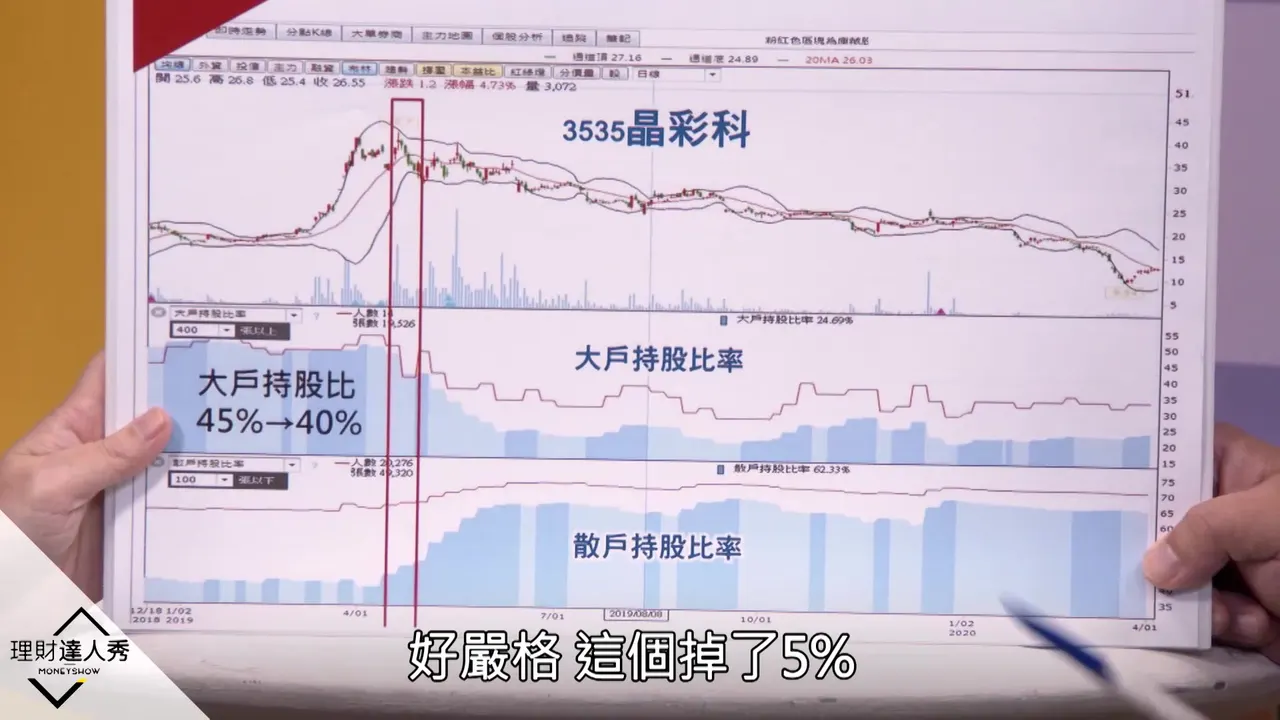
14:41Gold Circuit Example: A 3% Increase by Big Holders Is a Buy Signal
Using Gold Circuit Electronics to look at big-holder changes: the number of shareholders fell from 4 wan 8 to 4 wan 2 (wan means ten thousand), average holding per person rose from 11 lots to 12.8 lots, and holdings by big holders of 400 lots or more rose from 33 wan lots to 40 wan lots, an increase of about 7 wan lots, lifting their share to 64%. The speaker's rule is that a 3% increase in big-holder stakes is a buy signal and a 3% decrease is a warning, and Gold Circuit fits this pattern.
▶ Watch from here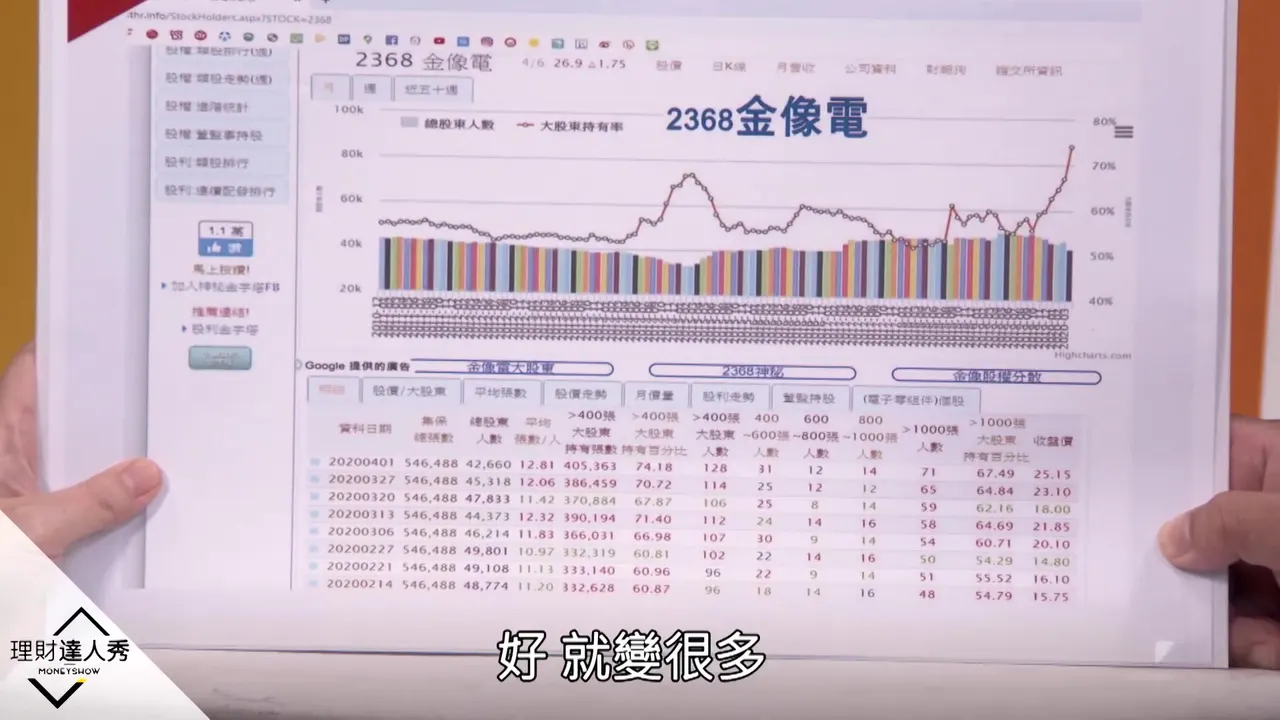
19:41Reading Share-Transfer Filings and Cases
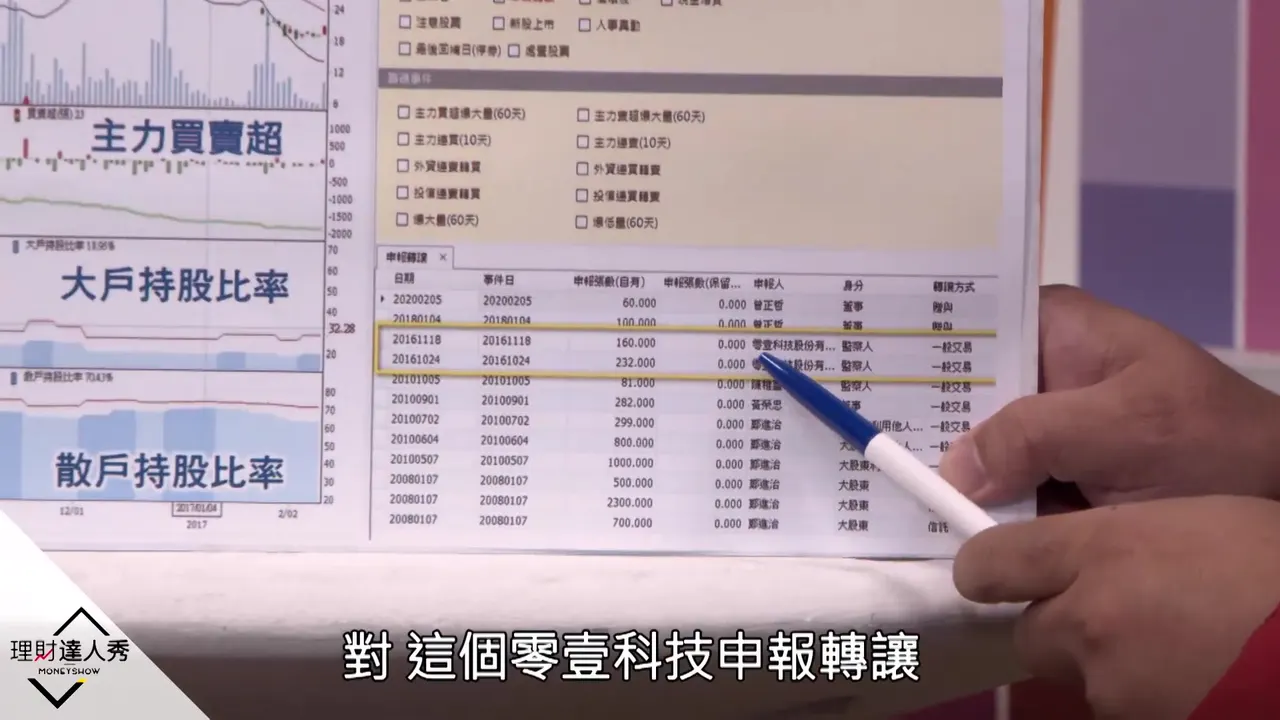
Take Kaiwei as an example: during its rise, whale holdings kept falling while retail holdings grew from 20-something % to 6-70%; stocks recommended by community groups and driven by faith tend to crash afterward. A big shareholder filed a transfer at a high level; the filing is usually not the peak at that moment and the price keeps rising after the sale, because the best time to unload is while pushing the price up, and afterward the price was lower than the selling point. You must distinguish transfer methods: gifts and trusts have no effect on the price, while an ordinary trade means shares are sold, and seeing one easily leads to a decline. Another example, Adimmune, is a pandemic-concept stock retail loves to chase; whales began selling before it rose, when there was no volume, since unloading is easier once the price is up with volume, while retail bravely bought in hoping for a vaccine.
▶ Watch from here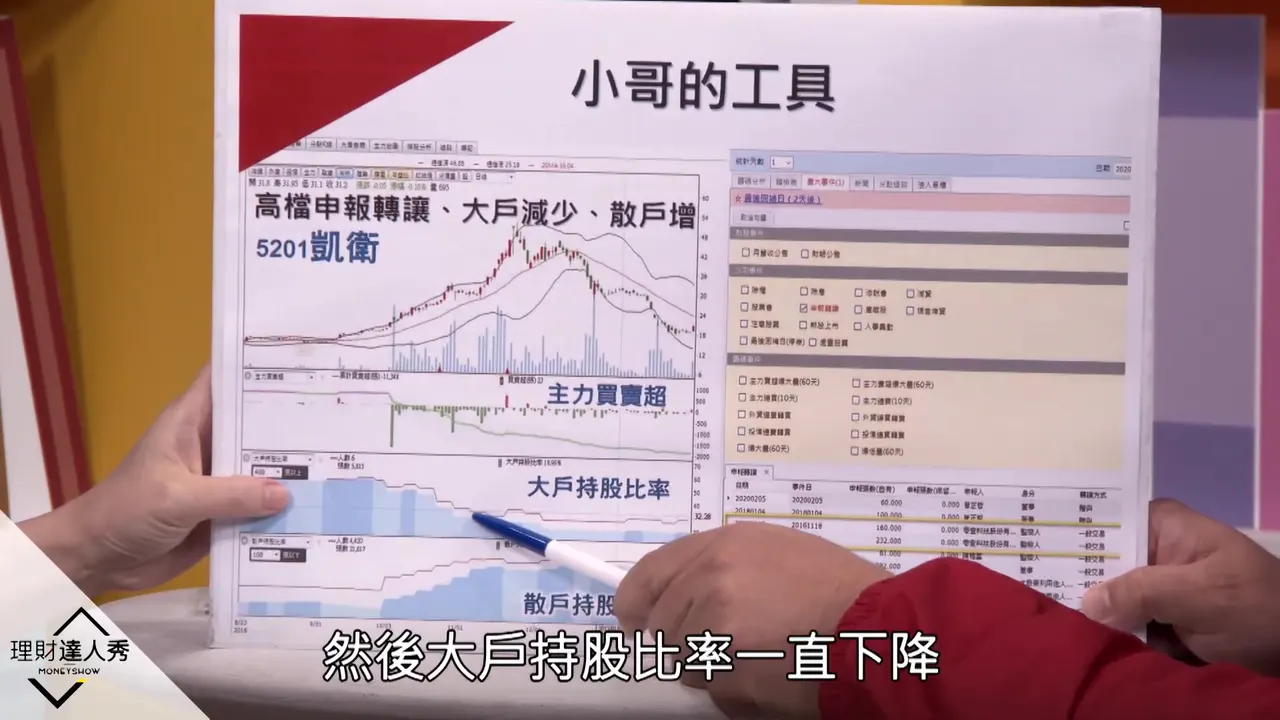
24:25Major Players Accumulating: Getting Ahead During Sideways Trading
Take Yieh Phui as an example: this steel stock slept for a long time, with daily swings of only about 3%, and holders found it boring; when the pandemic crash pulled the price down, major players not only didn't sell but bought more, whale holdings rose from 73% to 75%, and retail kept falling. Another old company showed the same pattern, with major players accumulating while swings were small, still buying during the pandemic selloff, whales increasing and retail decreasing; it then rebounded to a new high of 19 yuan and even broke through the Wuhan gap, because stocks with stable shares tend to rise.
▶ Watch from here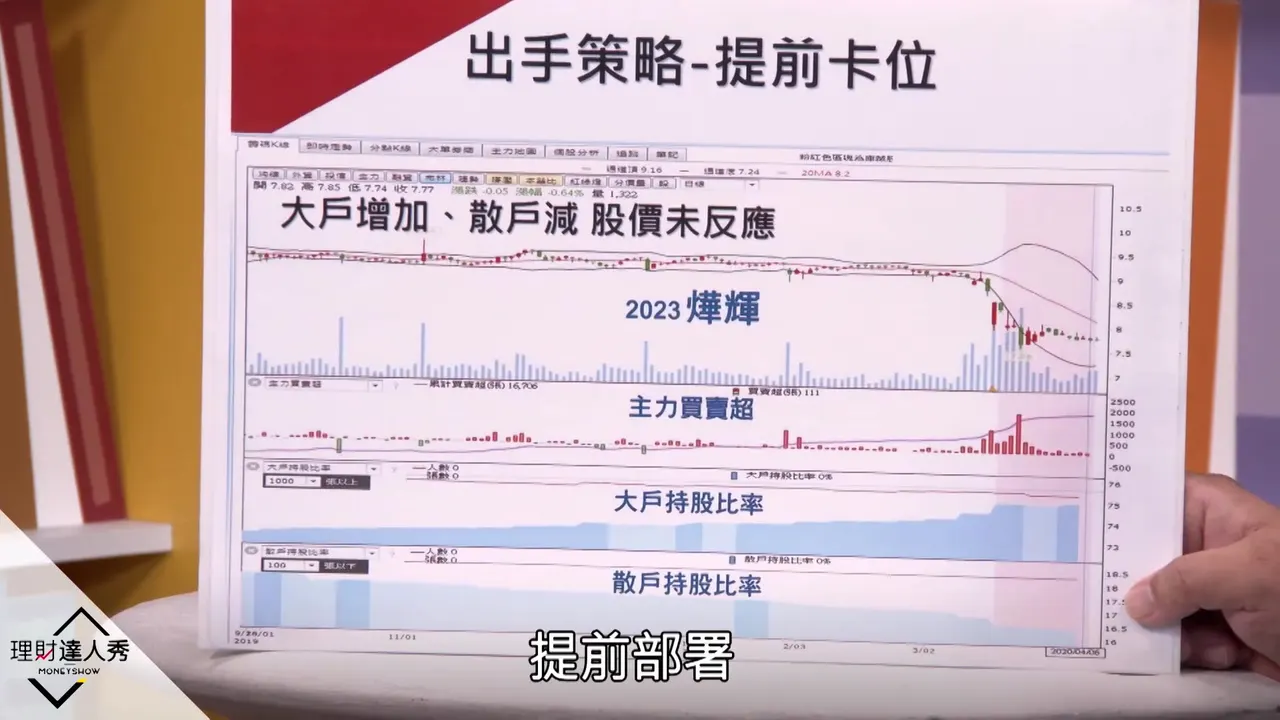
27:22Tsangho and Chiao Chun: Whales Reducing vs. Whales Positioning
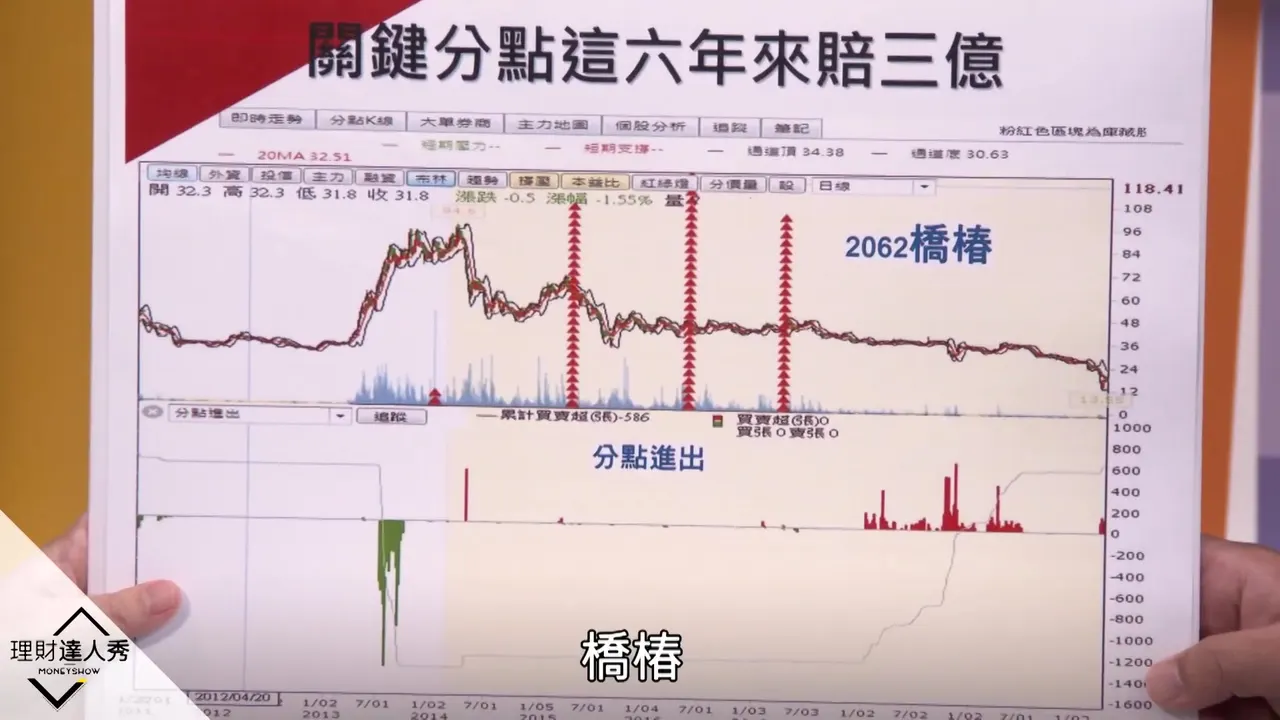
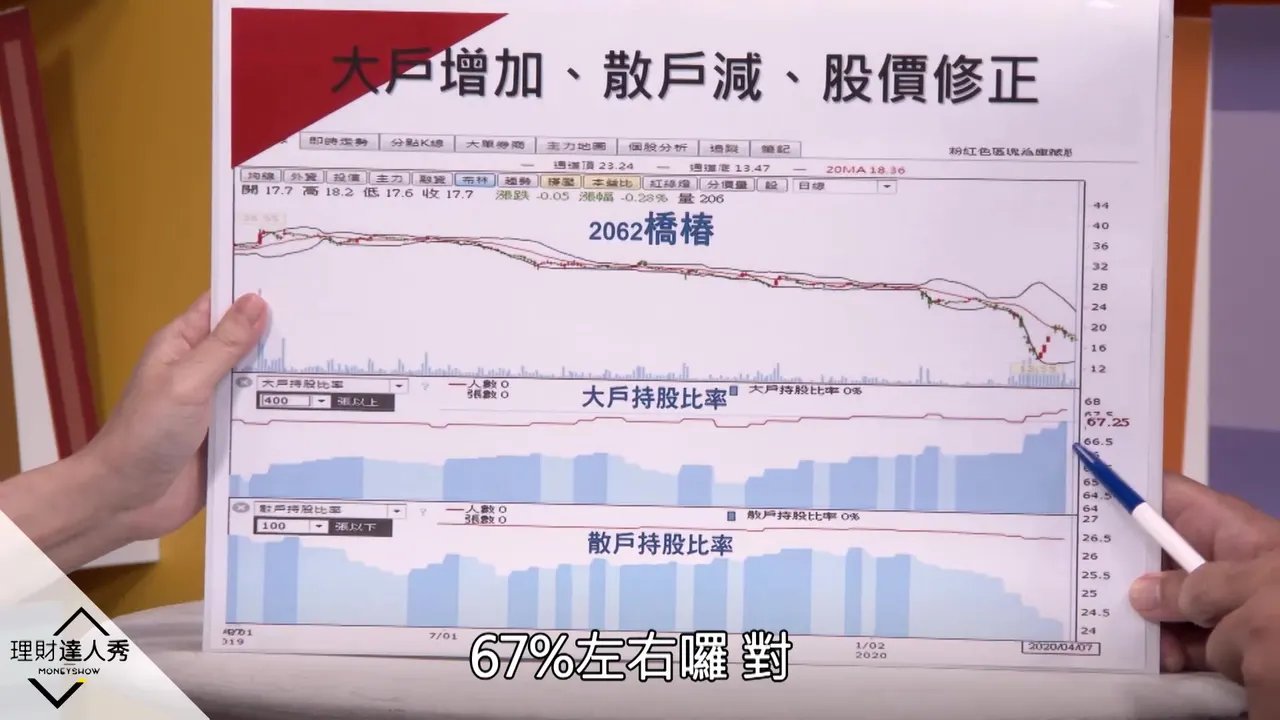
Tsangho was the strongest stock last year, but whale holdings fell from 23-4% to nearly 16% while retail slowly increased, so the share structure worsened; holders should look for a chance to take profits, and those without positions can put it on a watch list. Chiao Chun peaked at 94 yuan; a key broker branch suspected to be the boss filed a transfer and sold at 90-something about 6 years ago, then kept buying heavily at 30-something and 13 yuan. The speaker calculates that these 6 years of purchases are down about 3 hundred million, but for whales this is called positioning, while retail being trapped is called averaging down stubbornly. Whales now hold about 67% and retail has fallen from 26% to 20%, so shares keep concentrating.
▶ Watch from here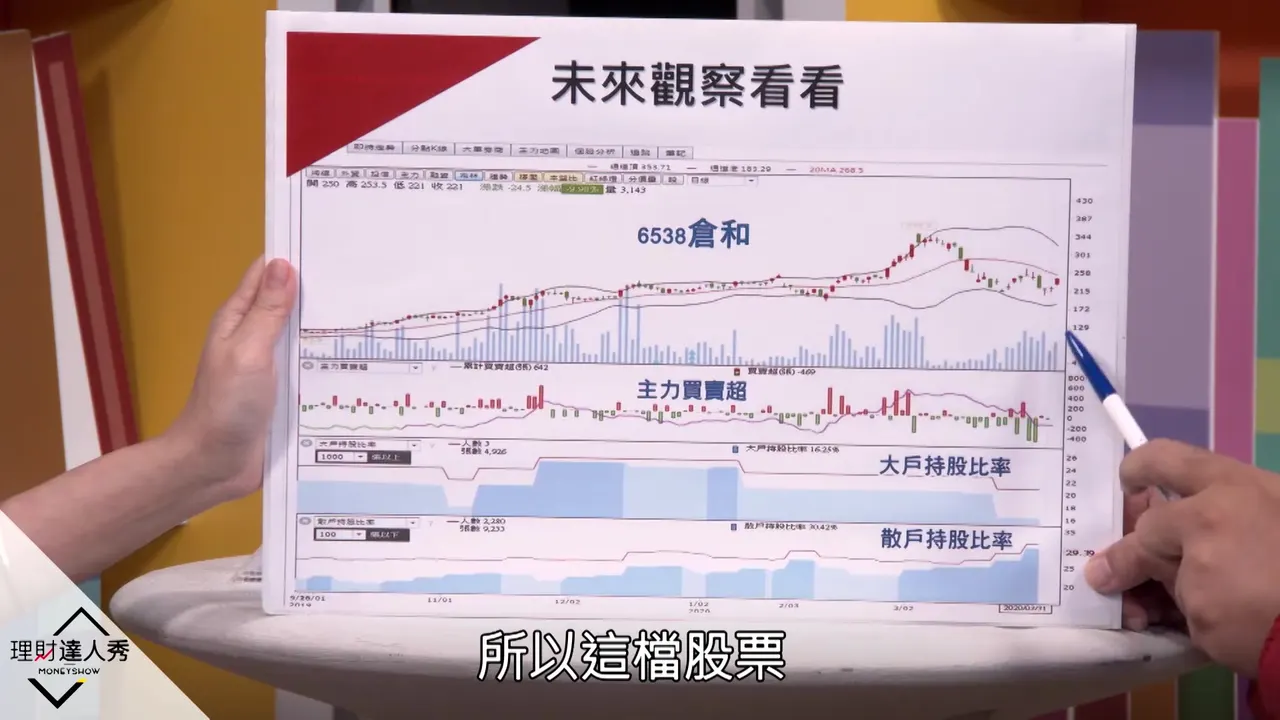
31:02Darwin Precision: Unloading and Shorting Under Dividend News
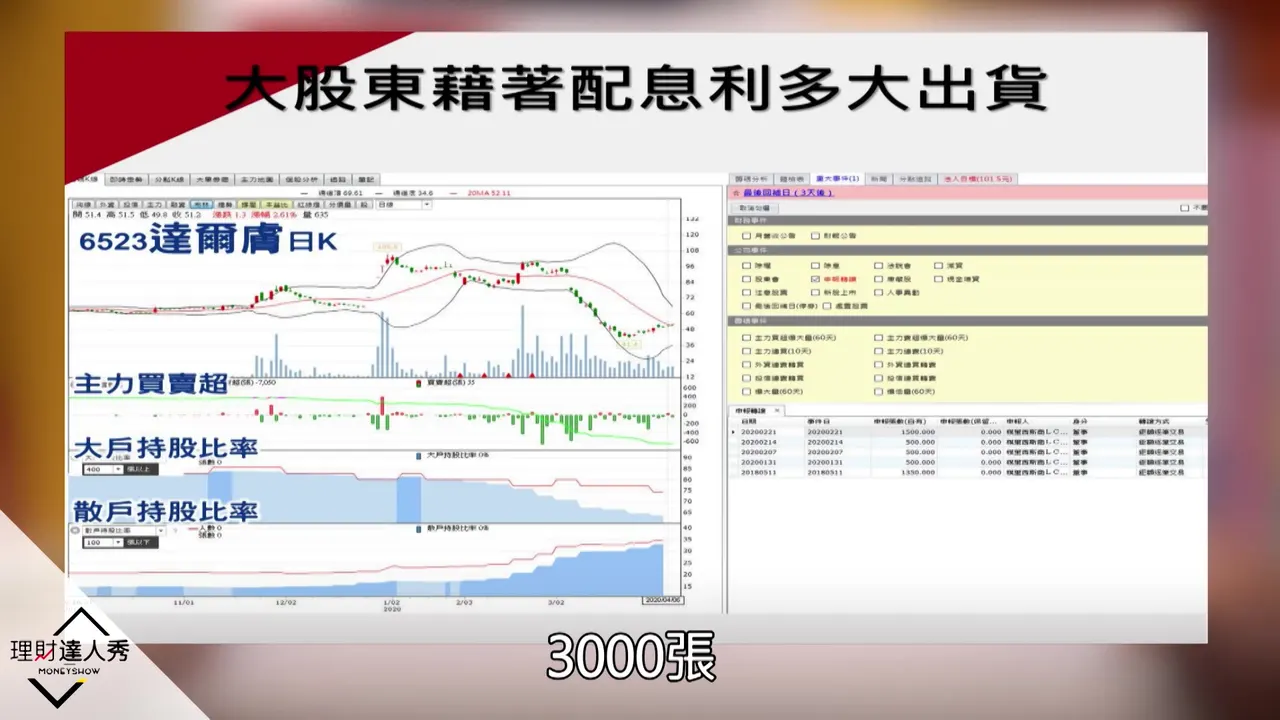
At Darwin Precision, big shareholders sharply cut holdings and retail surged, while dividend news pushed out 4 gap-up limit-up days. Before the payout, Morris sold a total of 3000 lots over 4 weeks through round-number block trades, and the speaker questions whether the dividend was paid from inventory rather than earned money. After the payout the gap was never filled and the price kept falling; the speaker's short was forcibly covered at the ex-dividend date, and later he grabbed 1 lot and shorted again, earning 30 yuan, more than the 10 yuan ex-dividend participants hoped to make. The speaker reminds viewers that on dividend news, check whether dividends are paid steadily every year, and if it's only one year, forget it.
▶ Watch from here