Two Types of "Goodbye Stocks": Using Key Broker Branches and Major Player Flows to Decide Whether to Hold or Leave
TL;DR: A stock where major players or key broker branches are buying at a low price is a good goodbye worth watching, while one where major players and key branches are selling heavily at a high price is a bad goodbye to exit quickly, because in past cases the former mostly saw a rally afterward and the latter mostly dropped sharply.
Key ideas
- After heavy key buying at a low price, be patient: a local broker branch may build its position for 1-2 years before moving the stock, and by the time good news appears at a high price and retail wants to jump in, those branches may already want to sell.
- Branches have different styles: the Beitun branch in Taichung for Cheng Uei (2387) trades fast and efficiently, while the Kaohsiung branch holds for a long time; the same branch in Walsin Technology has been mentioned on the show for 4 years without changing.
- With no key branch, major-player net buying at a low price plus a monthly moving average about to turn up can also bring a big rally, but if the company does not make money the stock eventually falls back; that stock once rose to nearly 500 and later fell below 100.
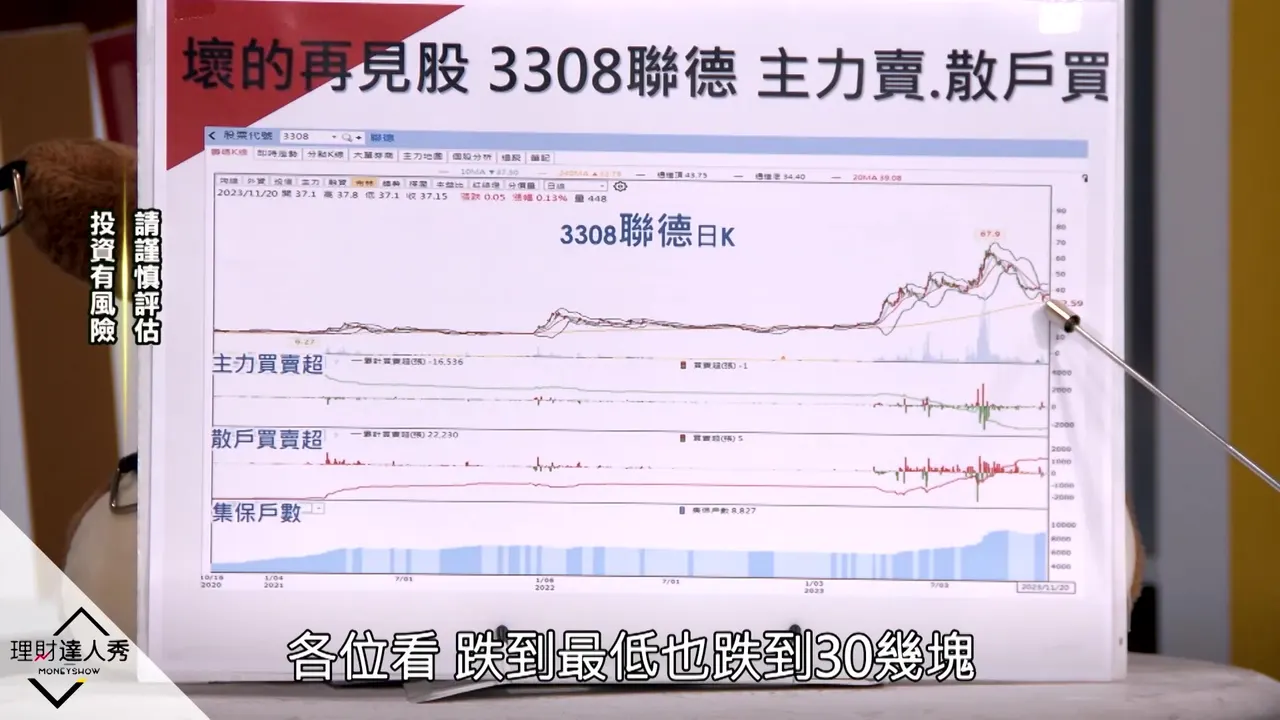
- The common pattern of bad goodbyes is a sharp surge followed by distribution at a high price: Eastern (東森) rose 5 times then fell back from 70, Leader Electronics (3308) fell to the 30s after major players sold heavily around 68, and Scientech (3583) was hammered from 266 to below 200.
- This does not mean never touch these stocks, only that their flows have turned bad; however optimistic a company sounds at an investor conference, if specific branches sell at a high price and institutions are dumping in small pieces, raise your guard.
Section summaries
2:00Defining Good and Bad Goodbyes
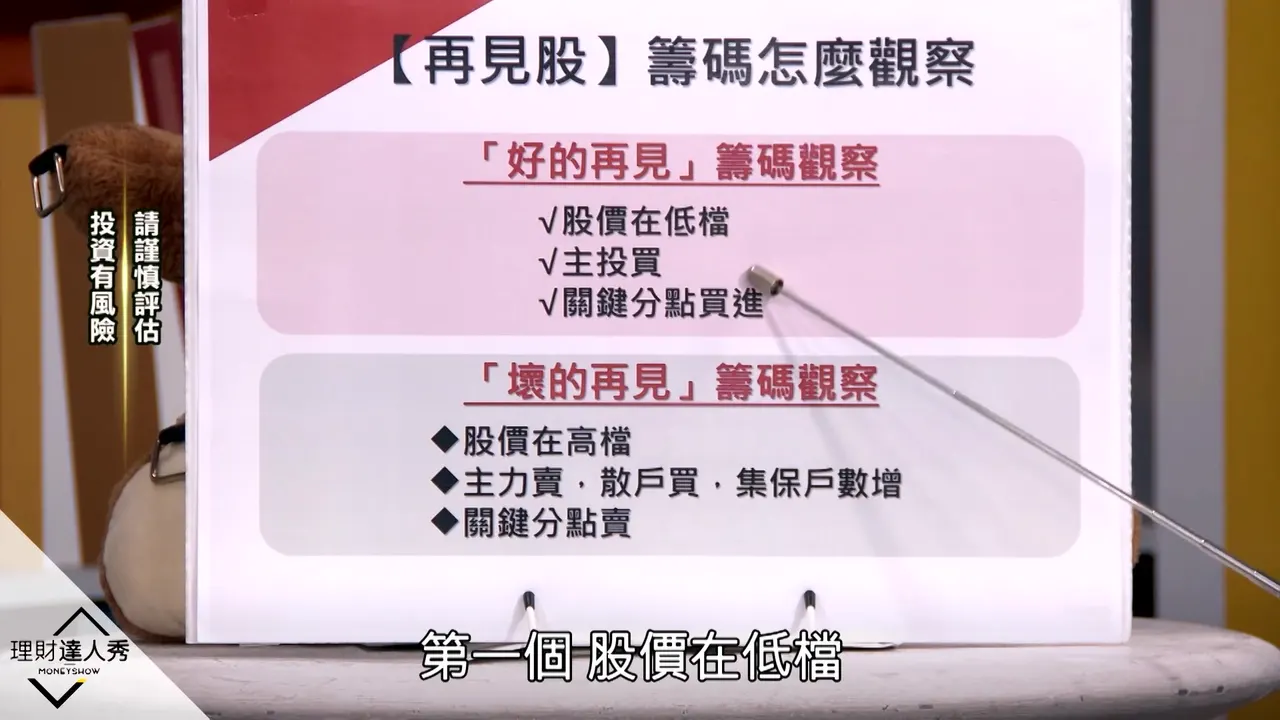
The opening sorts "goodbye stocks" into two types: in a good goodbye, major players or key broker branches buy while the stock is at a low price, and it is worth continued watching; in a bad goodbye, the stock is at a high price, major players sell more than they buy and key branches sell heavily, so you should exit quickly. It previews that real cases will first illustrate good goodbyes.
▶ Watch from here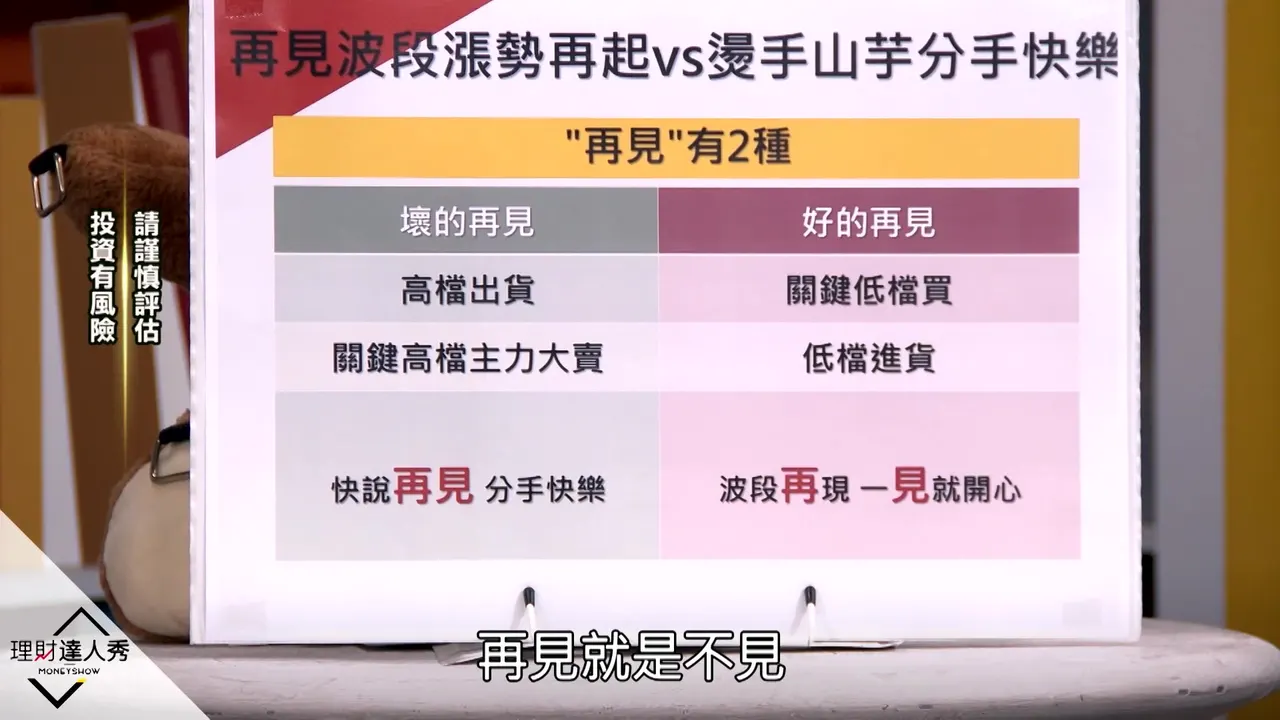
4:00PCB Blue Chip Bought at a Low Price
Taking PCB blue chip Tripod (健鼎) as the example, last year's dividend yield was about 7%, and a specific Taoyuan branch bought 100-200 lots a day at low prices, with amounts of roughly eight-odd million to ten-odd million NT dollars. When you see heavy net buying at a low price you should get in; the stock was also included in the show's own 08888 ETF and later rose by two and a half times. Only recently, when a specific branch took profits at a high price, did it turn into a bad goodbye.
▶ Watch from here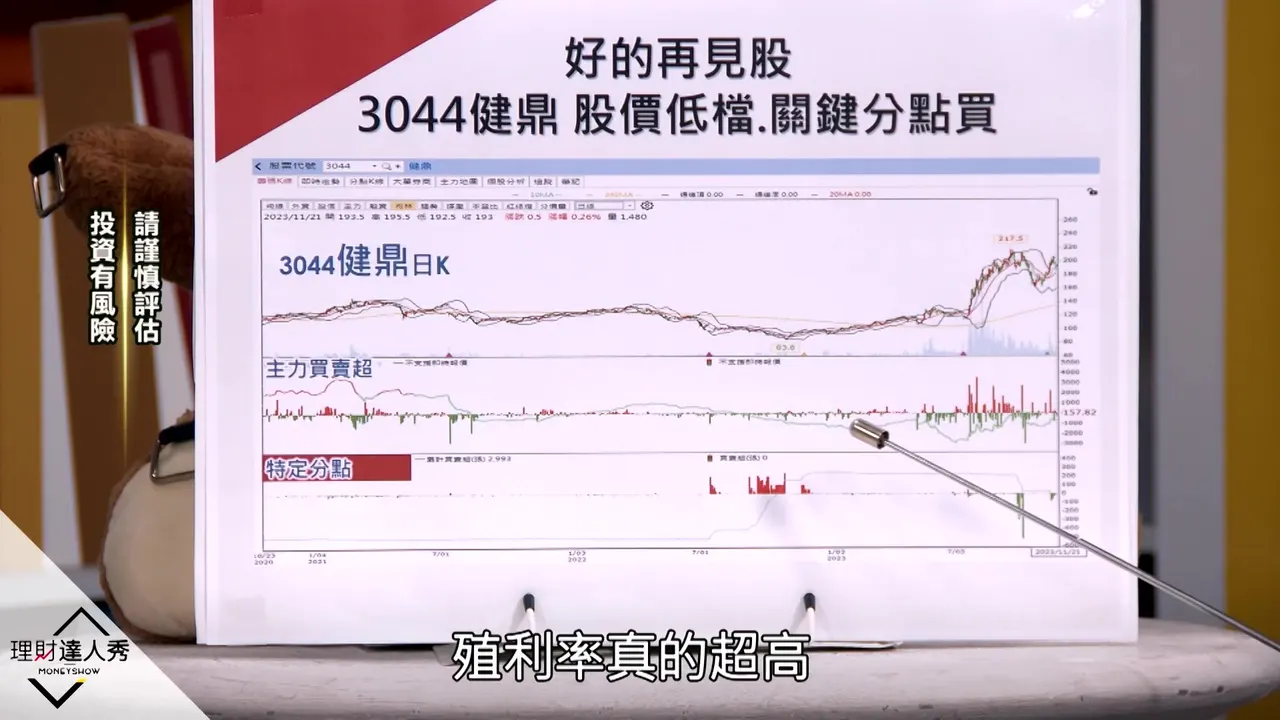
6:40Ye Hui (2023): A Good Goodbye Revisited
Looking back at Ye Hui (2023), mentioned when the show started: a specific Kaohsiung branch kept buying heavily at a low of 7-something, a classic good goodbye stock, and the price then shot up. That branch held for a year and a half, during which steel and shipping stocks ran their "One Piece, Iron Man" rally, and the stock rose 5 times from low to high; the branch has now rested for a year and a half, so observation can start again.
▶ Watch from here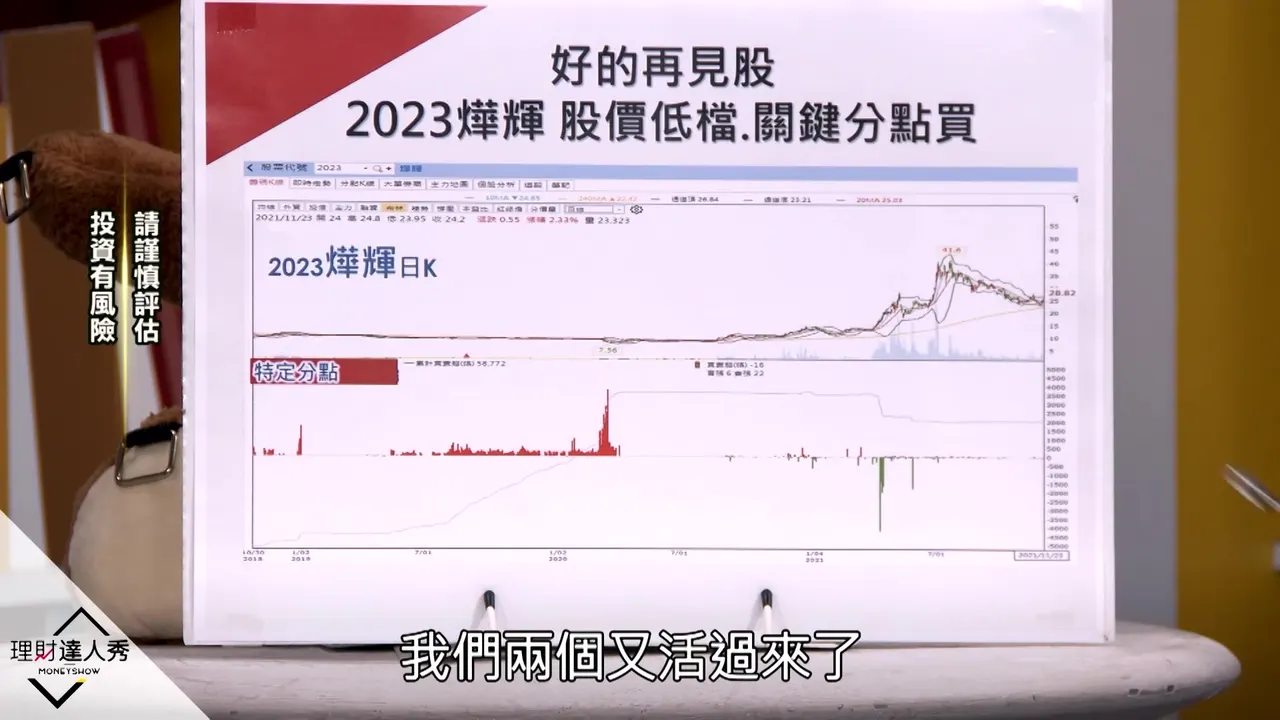
8:20Patience With a Long-Held Casing Stock
Using a student's long-held casing stock as an example, the speaker explains that after heavy key buying at a low price you need patience, since a local broker branch may build its position for 1-2 years. He says he doesn't look at revenue or earnings for this stock but at its cash and net asset value of about 230; he believes with that much cash there's no worry about paying dividends, and the gain is already near a round-number level.
▶ Watch from here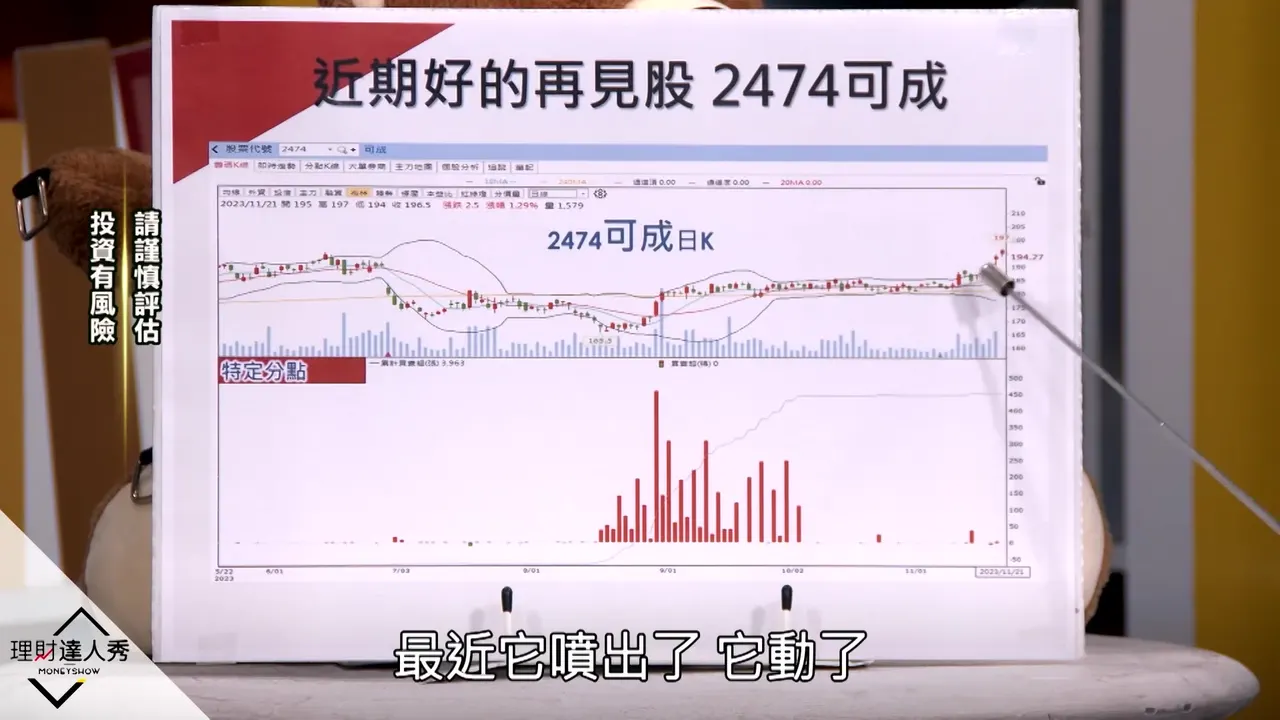
9:46Cheng Uei's Scissor-Legs Accumulation Pattern
Introduces 2387 Cheng Uei, a recent good accumulation stock with a scissor-legs accumulation pattern; the company is in the northern part of Taichung, and after the Beitun branch buys at low prices the stock often rises for a stretch. It buys and sells alternately but very efficiently: it buys and the stock quickly takes off, it sells and the stock starts to fall, and the speaker especially likes this pattern.
▶ Watch from here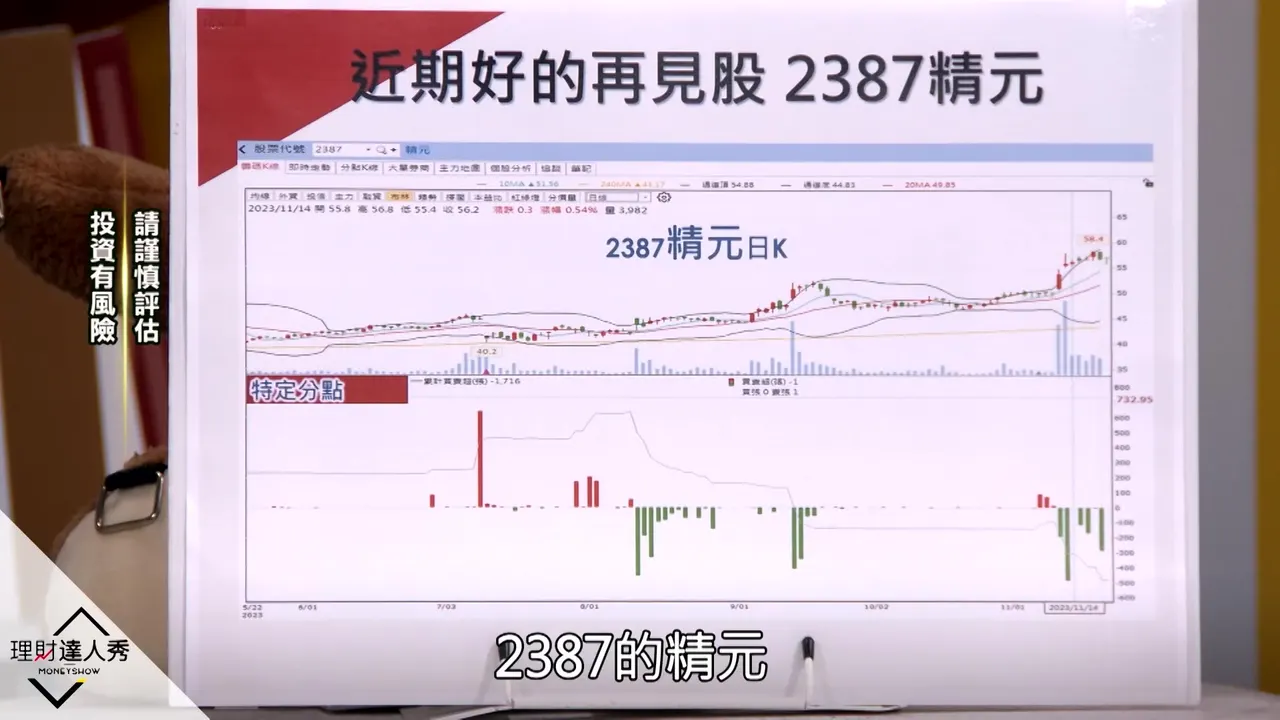
11:30Walsin Technology's Branch, Unchanged for 4 Years
Introduces 2492 Walsin Technology, whose company is near the speaker's office. A specific branch bought heavily at low prices and never sold, and the stock recently rose to a high of 127; the same branch has been mentioned on the show for 4 years without changing, and the speaker jokes that they have developed feelings for each other.
▶ Watch from here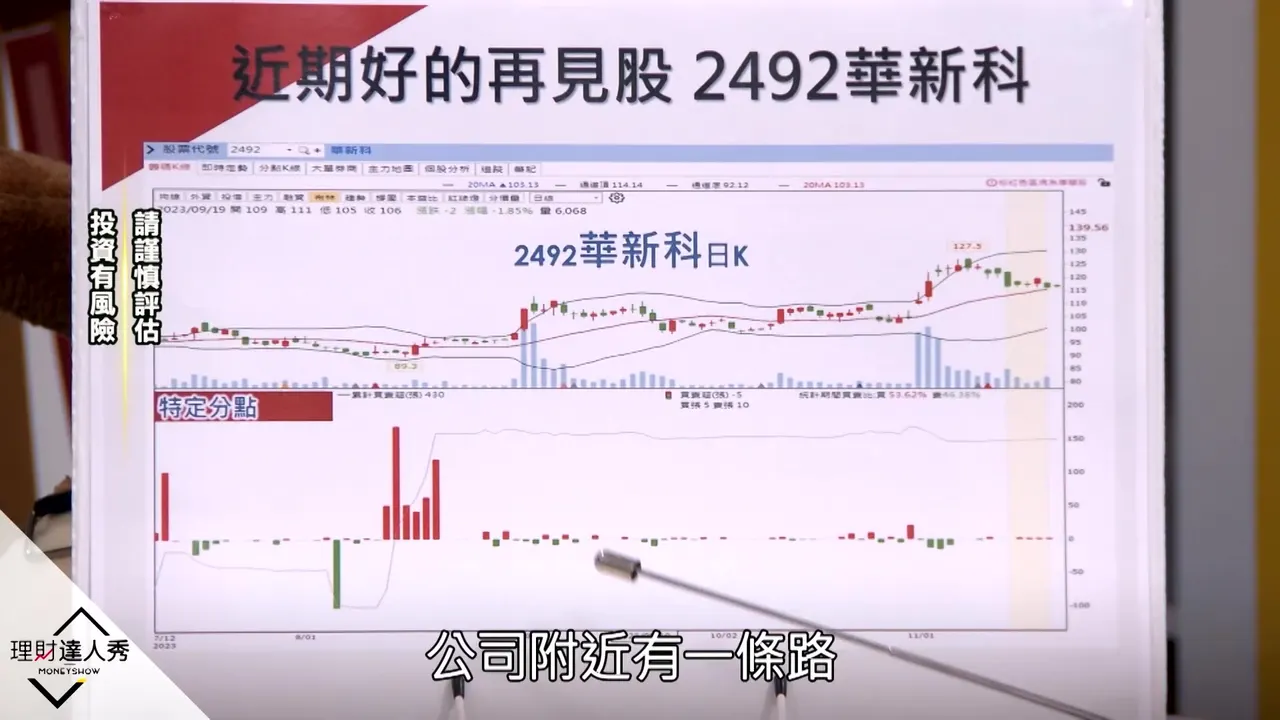
12:45Major-Player Buying With No Key Branch
A special case: this stock has no key branch but has major-player net buying at a low price. When major players net buy at a low price and the monthly moving average is about to turn up, a big rally is quite likely. This stock once reached nearly 500, but the company didn't make money, it later fell below 100, and recently it rebounded by more than 100%.
▶ Watch from here14:50Checking Last Month's Homework Picks
Reviewing the homework done on 10/29: the stocks then trading below the yearly moving average were listed, and a month later some are up 30-40%, with Jinli Tech (金麗科) the most striking; the advice is to watch those that haven't rallied yet.
▶ Watch from here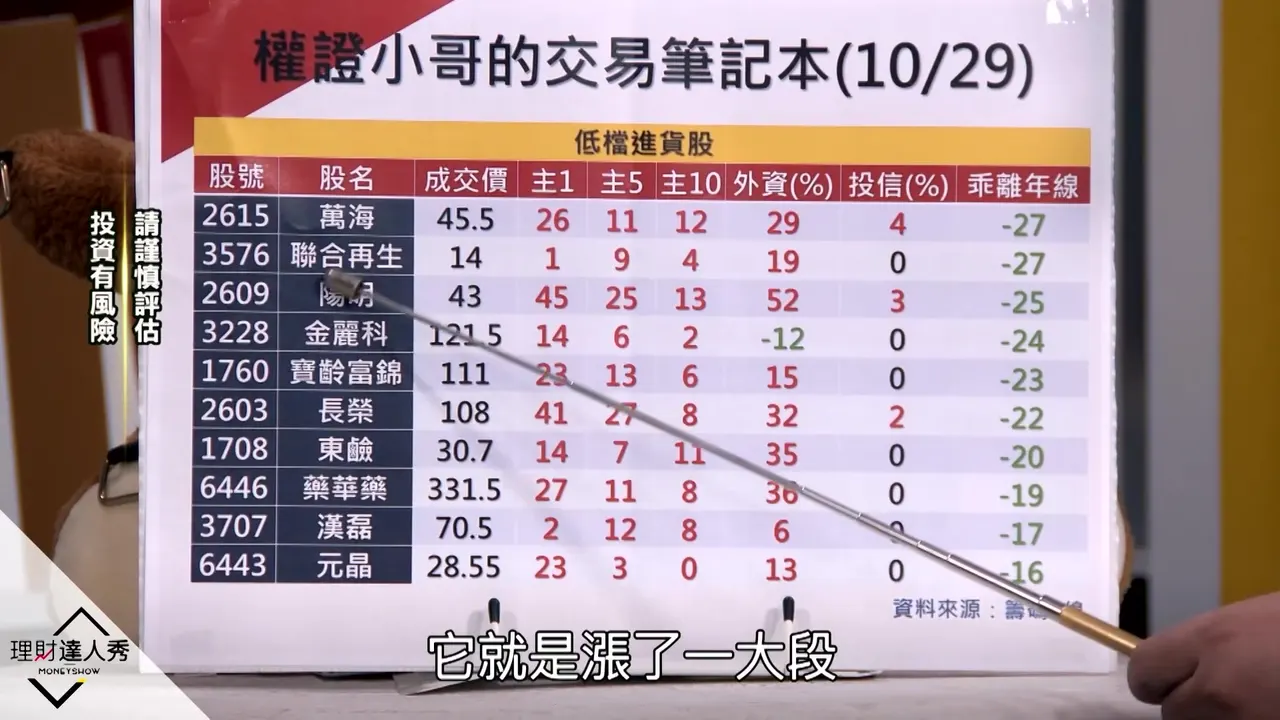
15:50Eastern: A Fake Shipping, Real Direct-Sales Warning
First a clarification that Eastern (東森) has nothing to do with Eastern Television; it is a bad goodbye stock, which the speaker jokingly calls "fake shipping, real direct sales." After surging 5 times following the shipping stocks, major players and specific branches sold heavily and the price fell back from 70; if you see major players and specific branches selling at a high price, exit quickly.
▶ Watch from here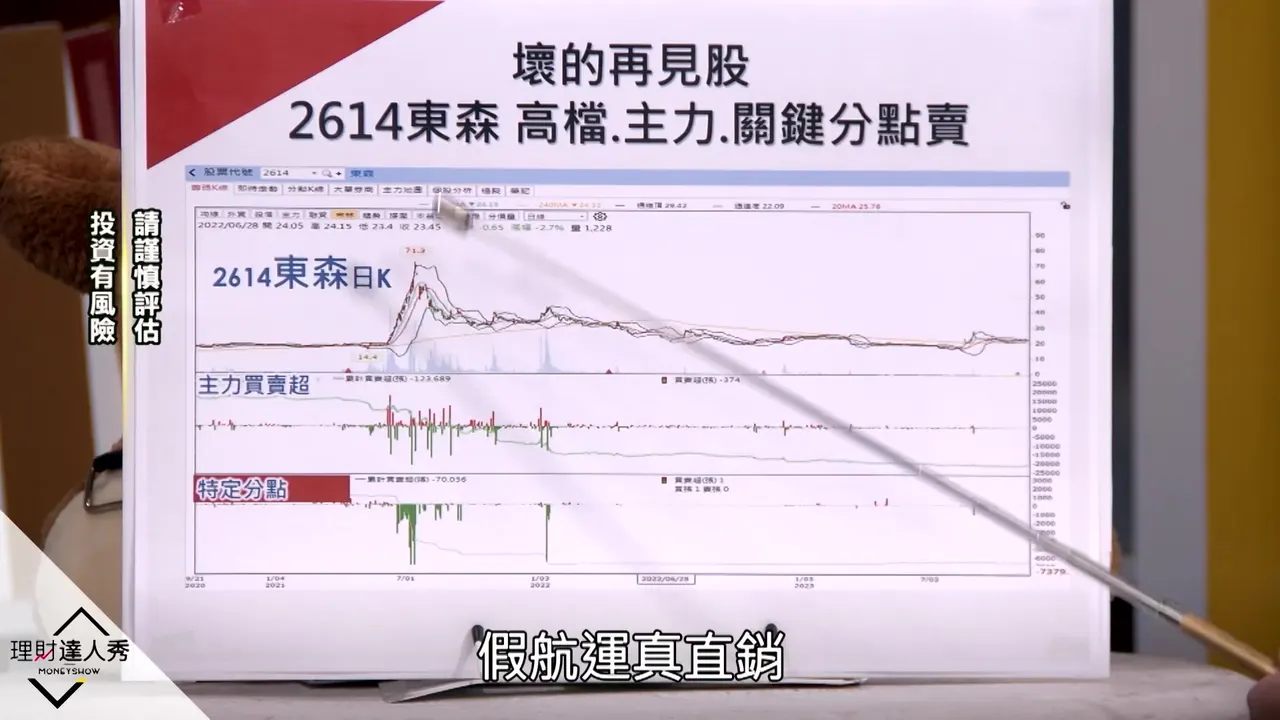
17:26Price Drops After Major Players Sell High
Another stock often mentioned on the show, "fake shipping, real department store," also fell a long way after major players and key branches sold at a high price. A recent example is 3308 Leader Electronics, where major players sold heavily when it hit a high of about 68, and in under half a year it dropped to the 30s, cut in half right away, which leads into the case of 3693 Aivres (營邦).
▶ Watch from here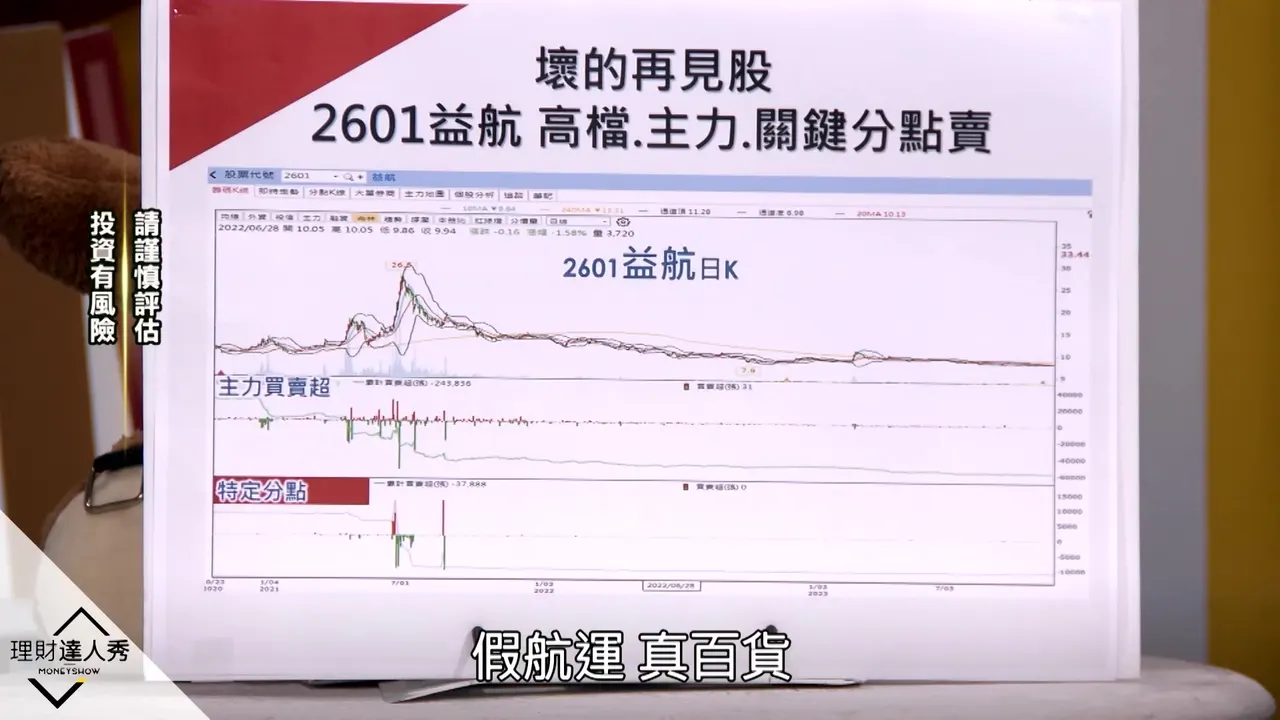
18:26Aivres and Scientech: Corrections From the High
3693 Aivres (營邦) was hot not long ago, but its P/E ratio was too high, and it pulled back after major players sold heavily at a high of 62. 3583 Scientech (辛耘) was hit by heavy major-player selling at a record high of 266 and was knocked below 200 at once, showing that major players selling at a high price is a danger; still, it holds an industry position in semiconductors and may climb again after the short-term correction.
▶ Watch from here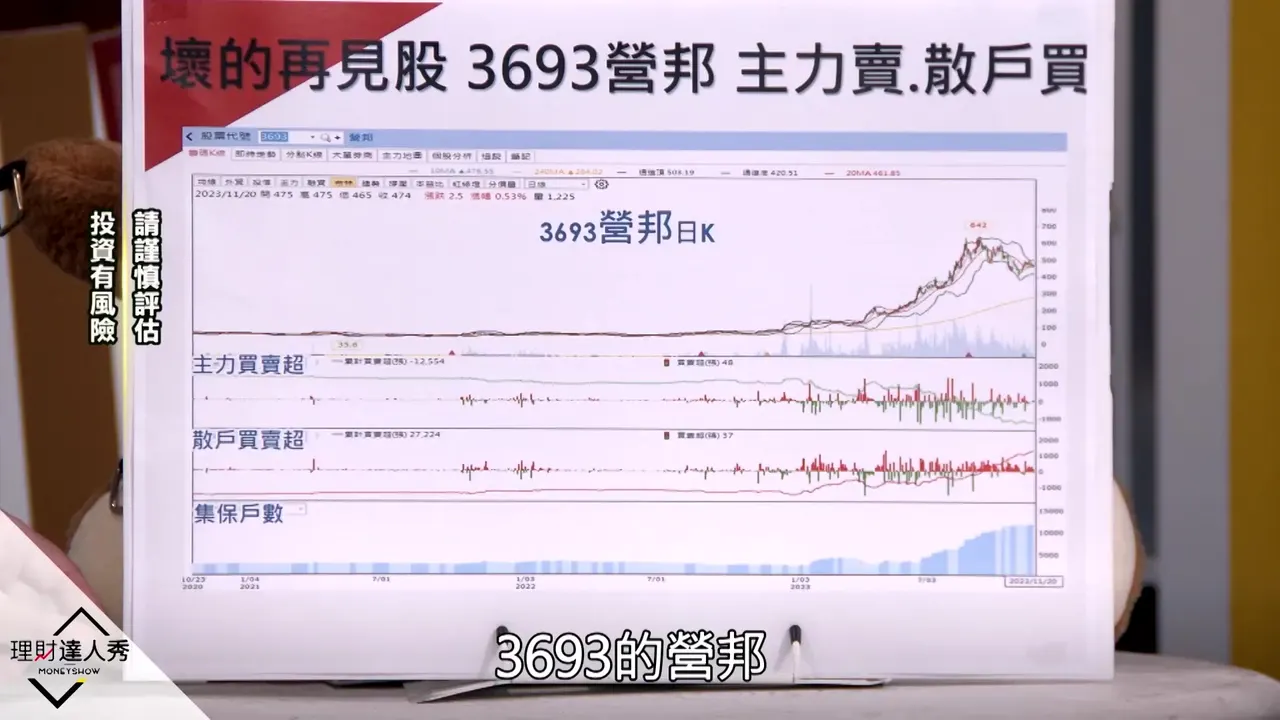
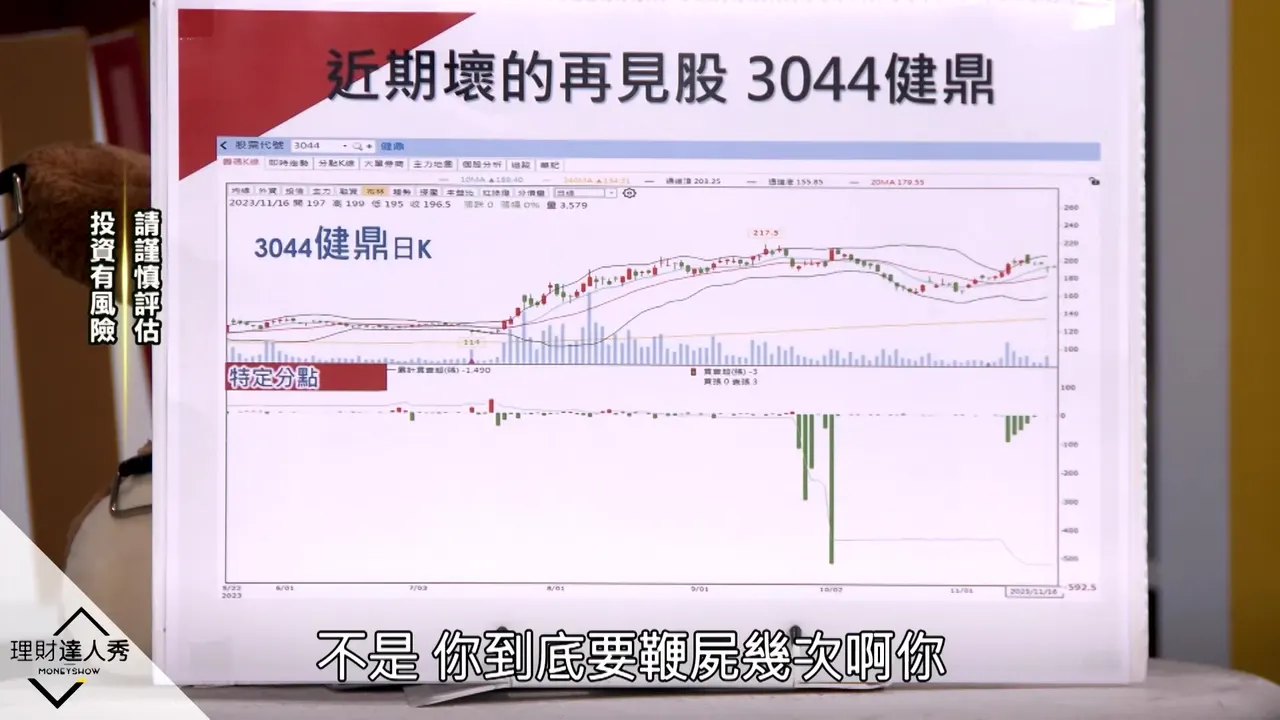
19:41Tripod and Eclat: Warning Signs of Branches Turning to Sell
A reminder to be careful with stocks where key branches have recently turned sellers. First Tripod (健鼎), where major players and key branches have recently turned to selling, making it a bad goodbye; then Eclat Textile (儒鴻), where a specific branch sold heavily with the price near 600, and at the investor conference the boss sounded optimistic while institutions were dumping in small pieces. The speaker relays what institutional friends say: in their experience this is about the top, so be careful when specific branches sell at a high price.
▶ Watch from here