Reading Pre-Open Simulated Matching: Spotting Bull Traps and Distribution Using Major Player Flows, Order Cancellations and the Futures Spread
TL;DR: Pre-open simulated matching does not equal the actual opening, so it must be judged together with major player flows, whether the price holds until the last moment, the real volume after orders are pulled, and the futures-spot spread, in order to tell a genuine limit-up from a bull-trap fake-out.
Key ideas
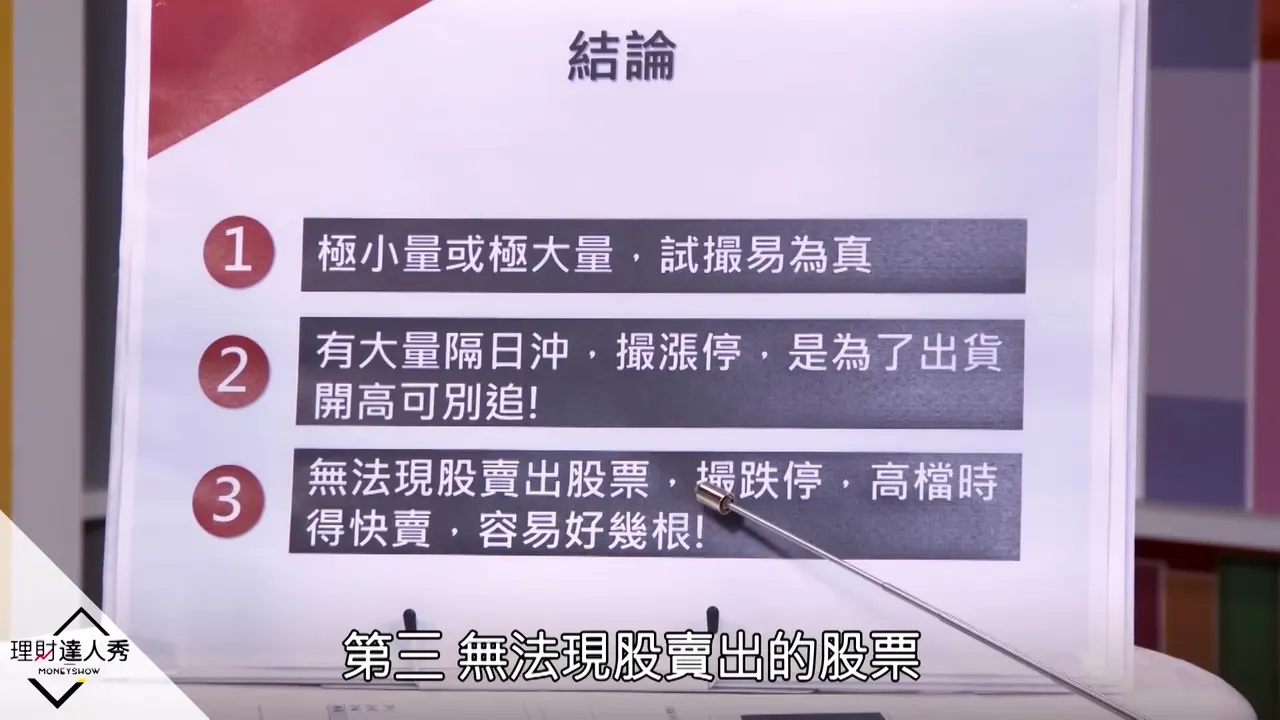
- Simulated matching is like guessing exam questions before a test, but it often differs from the actual open: a limit-up in simulation driven by next-day-flip traders, with orders pulled in the last seconds or a limit-up that cannot hold at the open, is a distribution 'fake suitor' stock; only one that holds and stays locked until 8:59:59 is truly strong.
- Whether simulated matching rises or falls, go back and check major player flows: to avoid the top 15 broker branches, major players spread their holdings to rank 16 and beyond; a simulated drop while major players are still buying may be price suppression to accumulate, and only a drop with no major player buying is a real drop.
- At 8:50 futures have already truly traded: if futures are pricier than spot and the simulated spot price is pushed down, someone is accumulating; if futures are cheaper and spot is pushed up, someone is dumping. Futures simulated matching is very accurate because controlling players are behind it, and the same holds for single-stock futures on large-cap heavyweights such as TSMC.
- Telling real from fake simulated volume: orders keep being pulled during the process, and the fewer the lots, the closer to the true price; small volumes of 1–2 lots and huge volumes of 10-plus wan lots (wan = ten thousand) are more likely real, while hundreds to thousands of lots may be fake orders.
- Disposition stocks match at long intervals, so if simulated matching shows limit-down, run on the 1st candlestick, and do not rush to buy a popular stock at limit-down; this method has a win rate of about 80%, but you still need to cut losses quickly.
Section summaries
0:20Opening: The Traps and Value of Simulated Matching
The opening sets out the theme: some stocks show a limit-up in simulated matching to lure chasers, then fall at the open, a distribution trick by major players. Simulated matching is like guessing exam questions before a test, and it lets you estimate the opening price range; the exchange has disclosed trading information in the 30 minutes before the open since 2015, but without learning how to read it, you are likely to misread it.
▶ Watch from here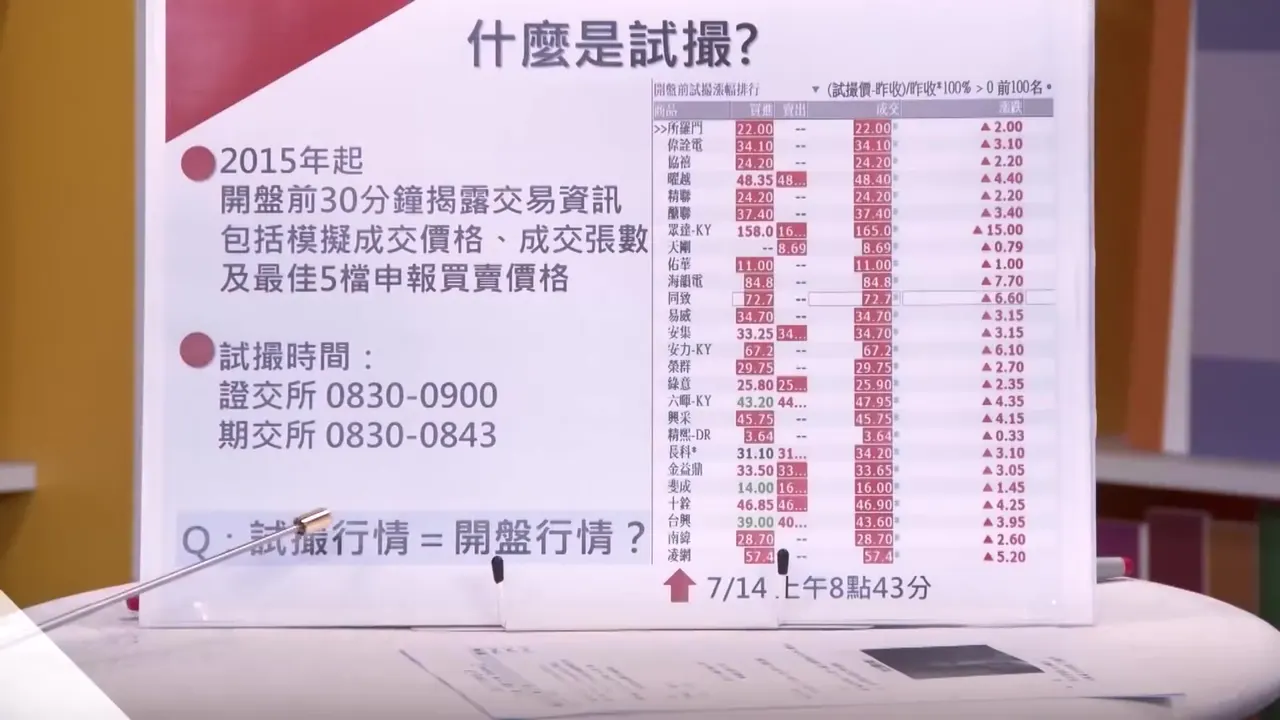
4:20Simulated Matching Time Rules
The exchange's simulated matching runs from 8:30 to 9 o'clock, and for futures from 8:30 to 8:45; orders cannot be canceled after 8:43, so futures simulated matching after 8:43 is quite accurate. Stock simulated matching continues until 8:59:59 before the open, and simulated prices do not necessarily equal the actual opening, so there are traps hidden in it.
▶ Watch from here5:30The Simulated Matching SOP and Bull-Trap Tactics
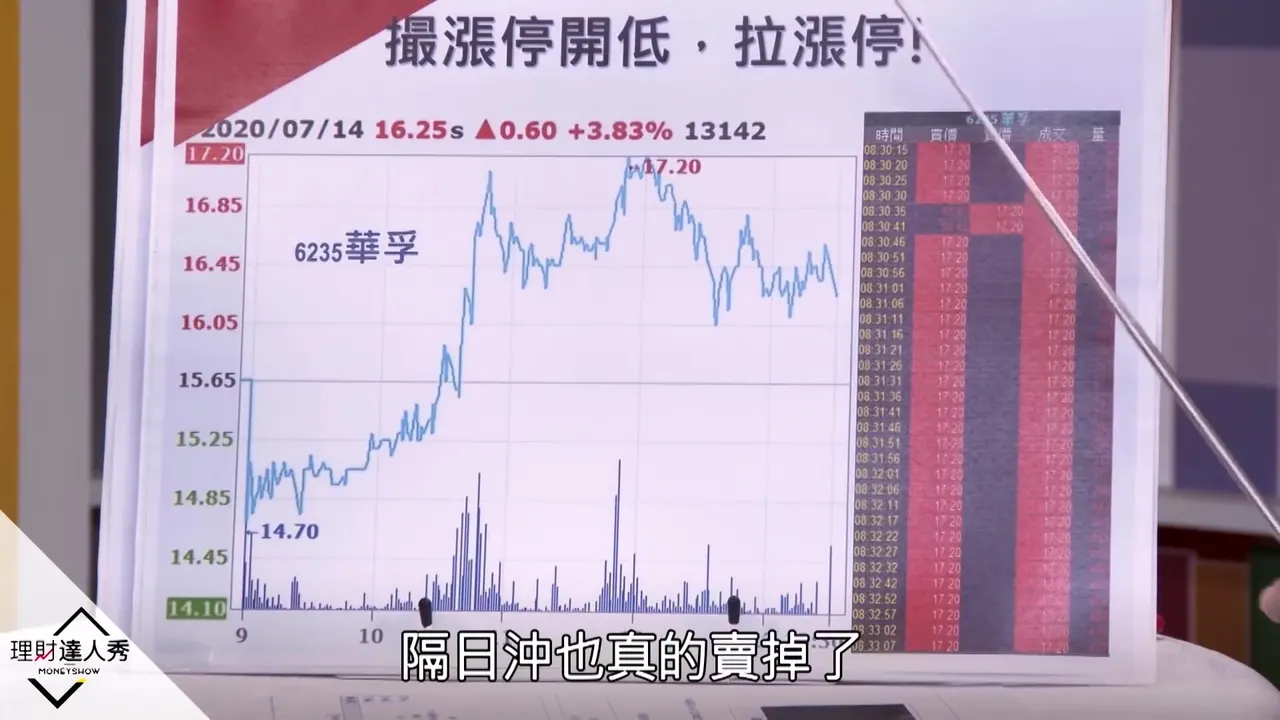
Step one of the reading SOP is to look at the stocks with the most extreme simulated limit-ups and limit-downs that day; those near the flat price need no attention. For stocks showing a limit-up, check whether next-day-flip traders hold the positions; if a simulated limit-up is driven by next-day-flip traders, it tends to open high and close lower, which is a bull-trap tactic. The simulated gain should not be too large, and you need to confirm major player holdings for the stock to have a chance of really rising at the open.
▶ Watch from here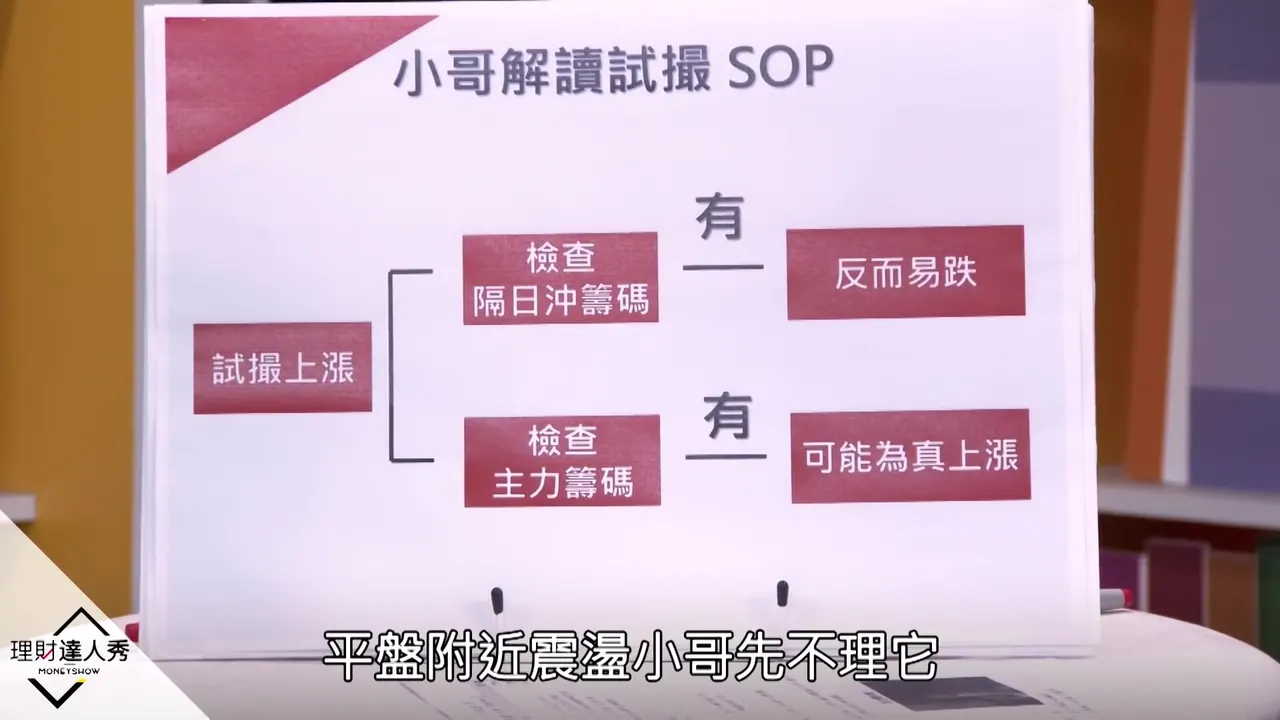
7:55Fake Order Case and the Warning Sign of Failing to Hold
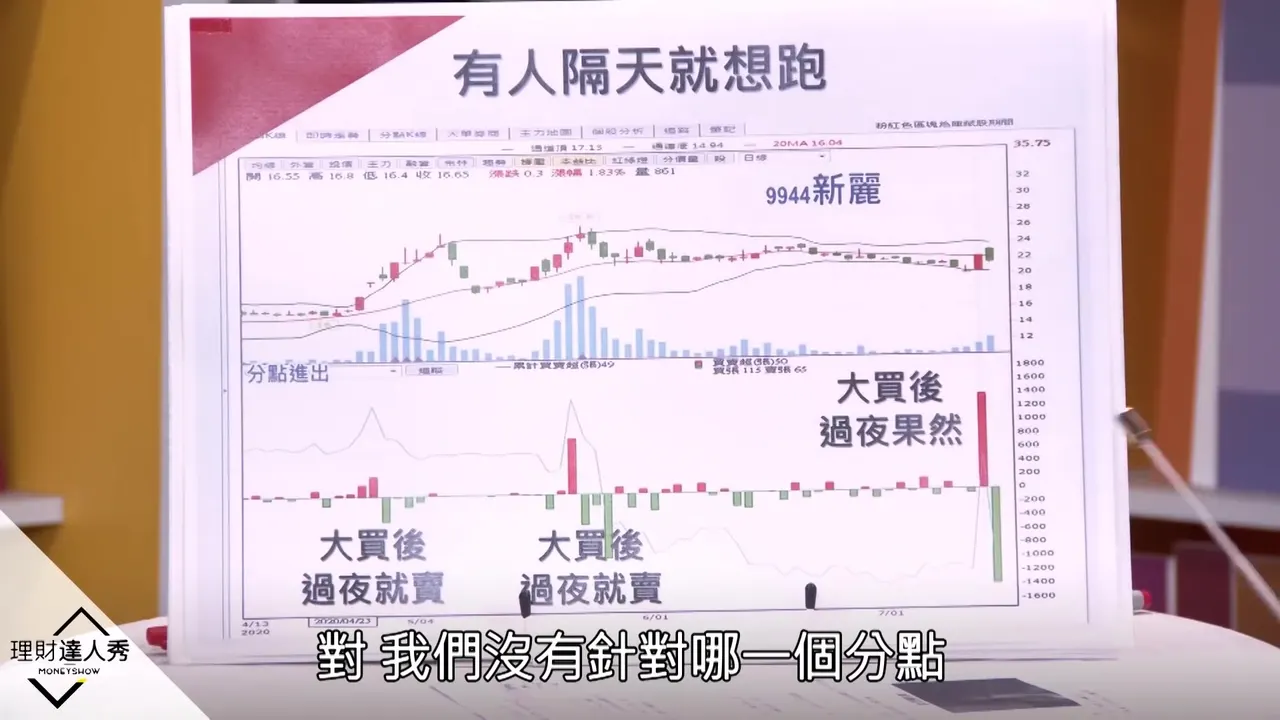
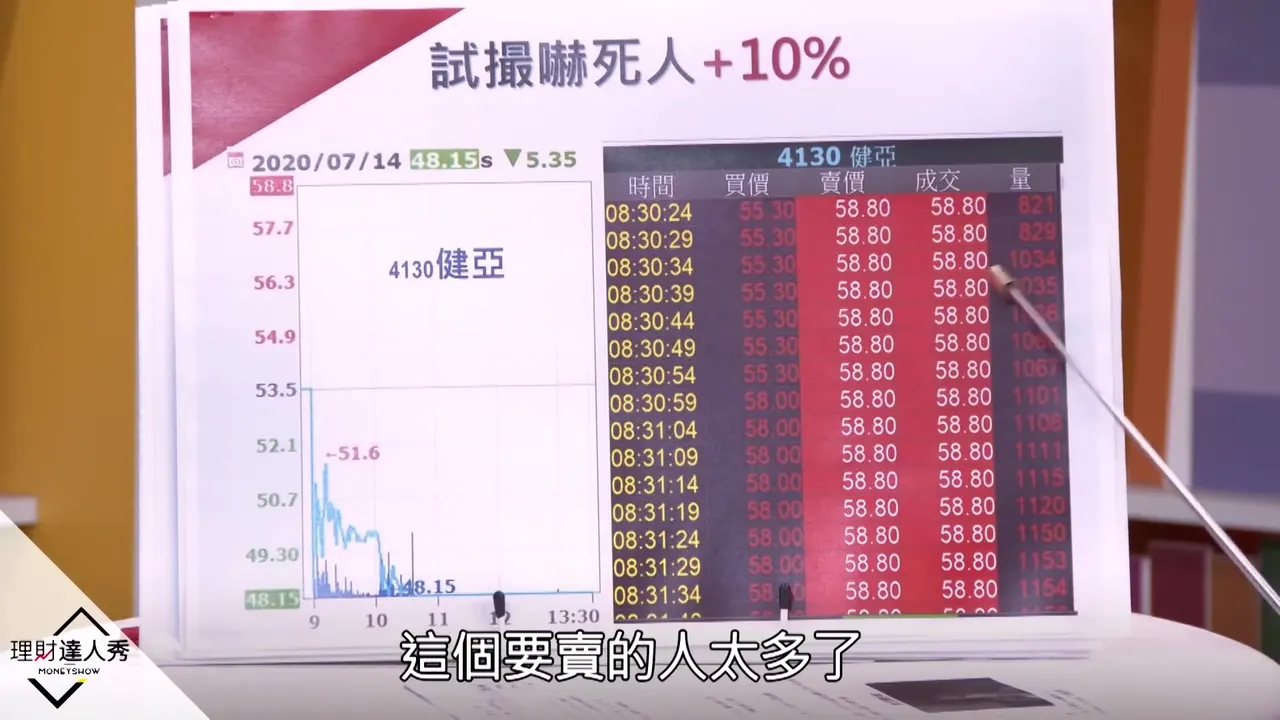
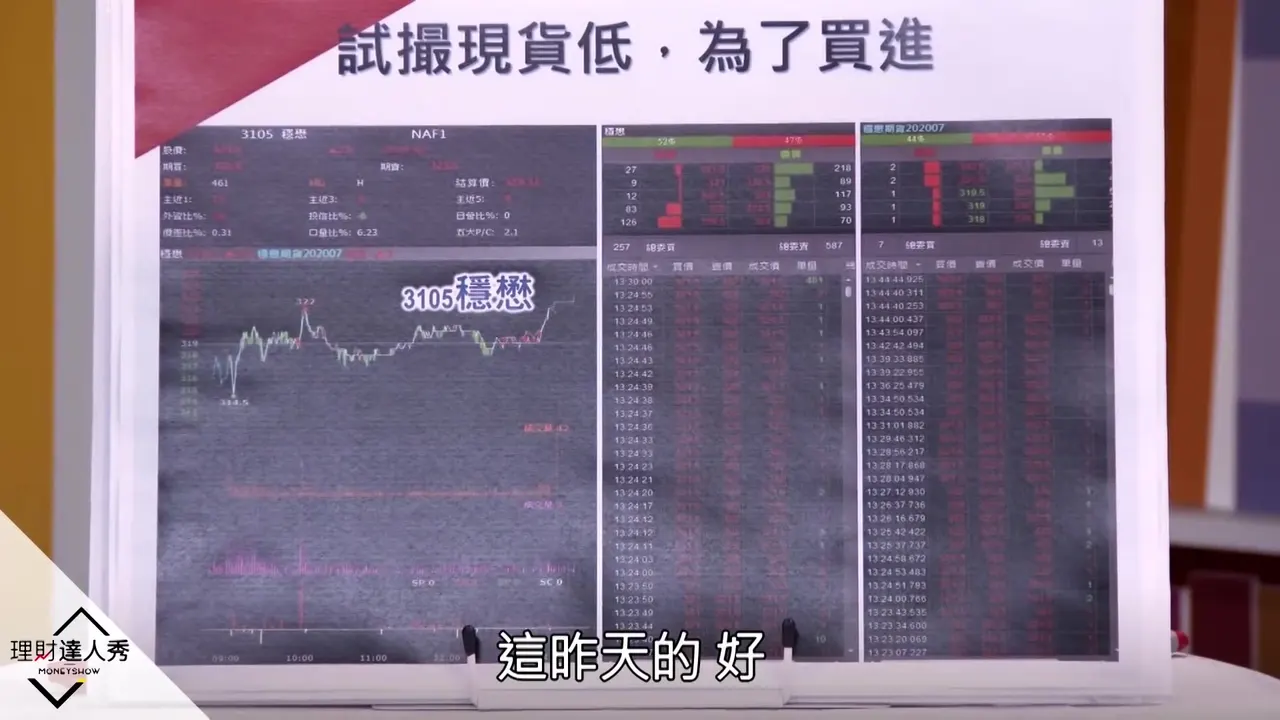
Take Shinli on July 14 as an example: simulated matching kept showing limit-up orders, but in the last 5 seconds the limit-up orders fell from 1500 lots to 314, about 1200 fewer, which means they were fake orders; a stock that does not hit limit-up at the open is a 'fake suitor' stock getting ready to distribute, so the speaker chose to short it. The combined top 15 branches showed next-day-flip traders buying heavily and wanting to run the next day. Another stock, Kenmec, showed a simulated limit-up that failed to hold and fell sharply at the open; failing to hold is also an important warning sign.
▶ Watch from here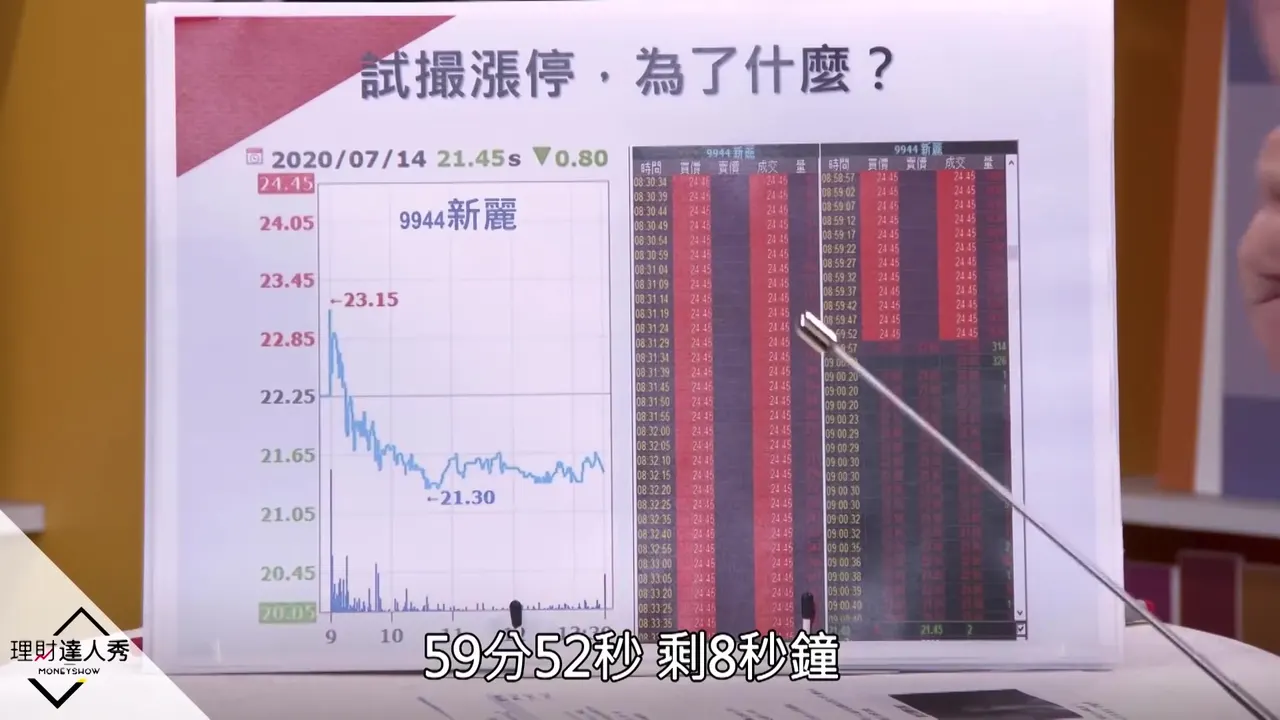
11:55Comparing Opening Moves and the Impact of the New Rules
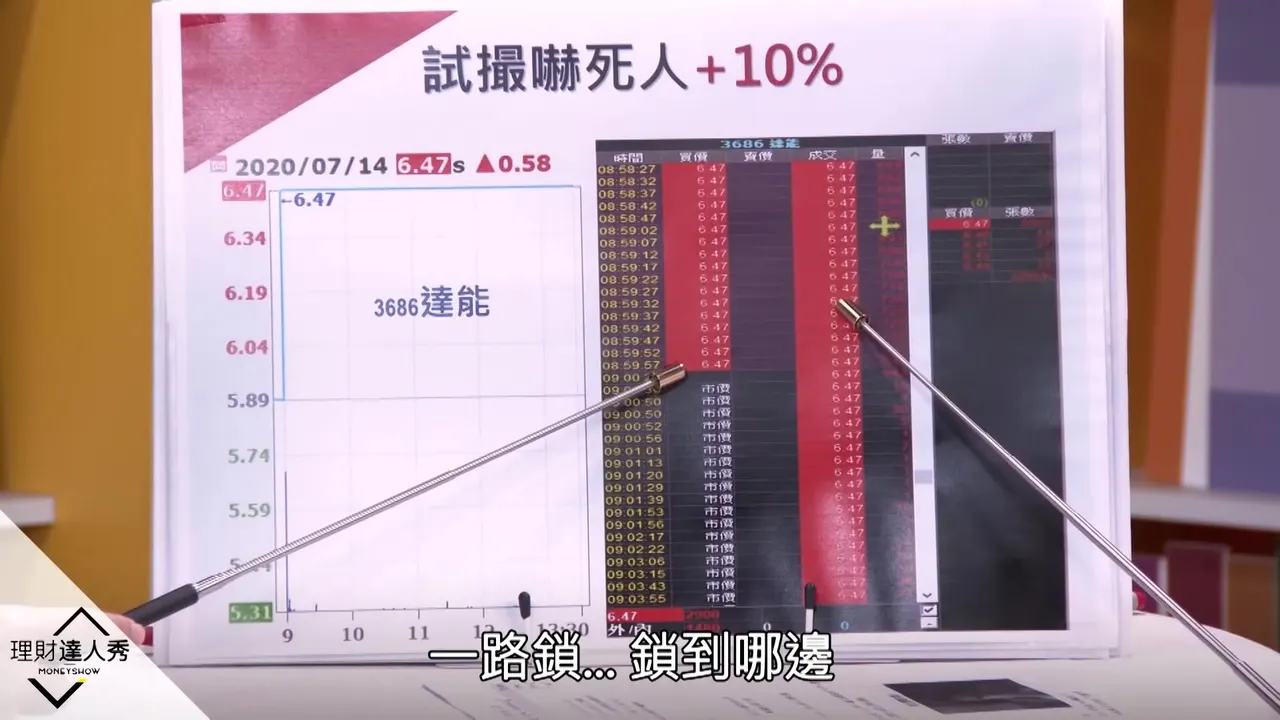
Kenmec opened down 8% and then dropped to limit-down, with no room to survive, so buying at the open is very dangerous; but some do keep rising, such as Darfon, whose simulated limit-up held all the way to 8:59:57, and 943 lots traded in the first round. Simulated matching is most accurate at 8:59:59, and 8:59:57 is also very accurate. Under this year's new rules, trades after simulated matching give priority to the simulated orders, so if you did not catch the limit-up at the open you should cancel your order, because by the time you get filled the price often starts to fall.
▶ Watch from here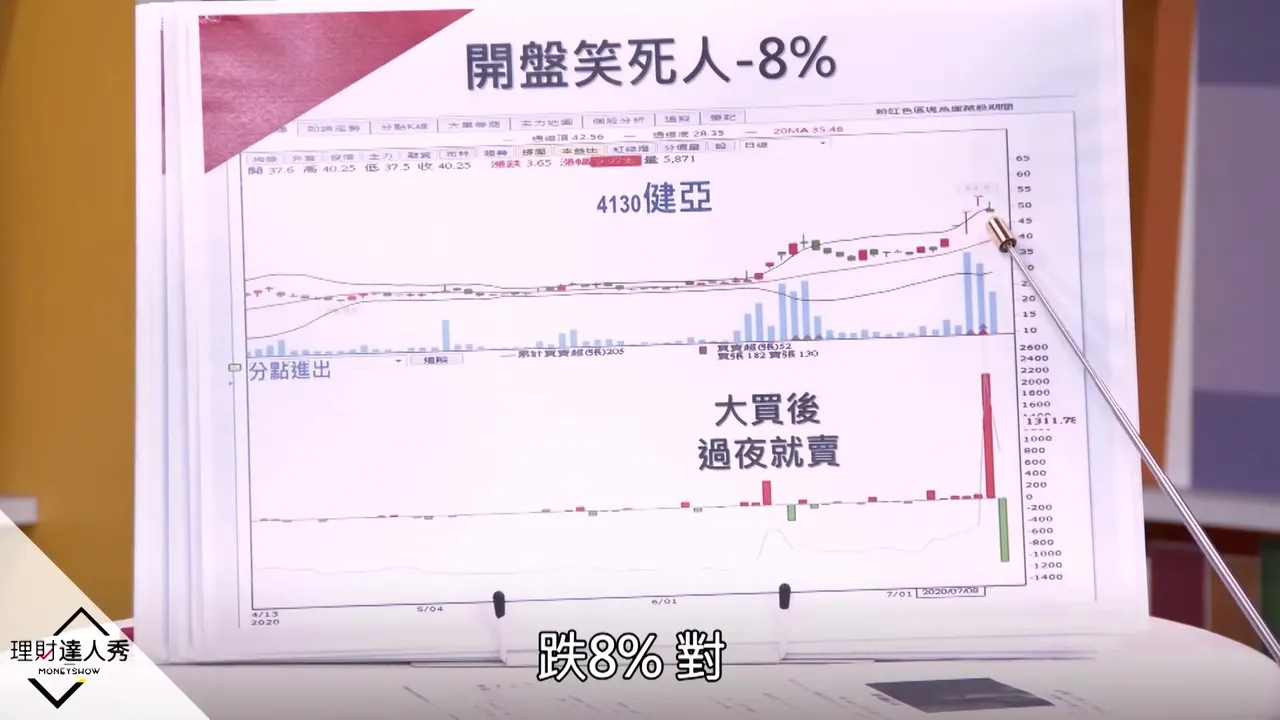
13:46Major Players Spreading Holdings and Unpopular Targets
Strong stocks that truly hit limit-up often have major players operating behind them. To evade chip-analysis software, major players sell heavily on the first big red candle during consolidation, spreading holdings to rank 16 and beyond so they stay out of the top 15; the more users the software has, the more they evade. Only those that hold until the last moment are truly strong, and those that go soft in the last 3 seconds before the open are fake suitors.
▶ Watch from here15:31Two Ways to Read a Simulated Decline
When simulated matching shows a decline, check major player flows first: if major players are still buying, it may be price suppression to accumulate, and you can actually be optimistic. Simulated limit-downs are far rarer than limit-ups because short selling requires borrowed shares and has more restrictions, unless the major player has a very large quota. If major players are not buying, it may be a real decline, and you can ignore it.
▶ Watch from here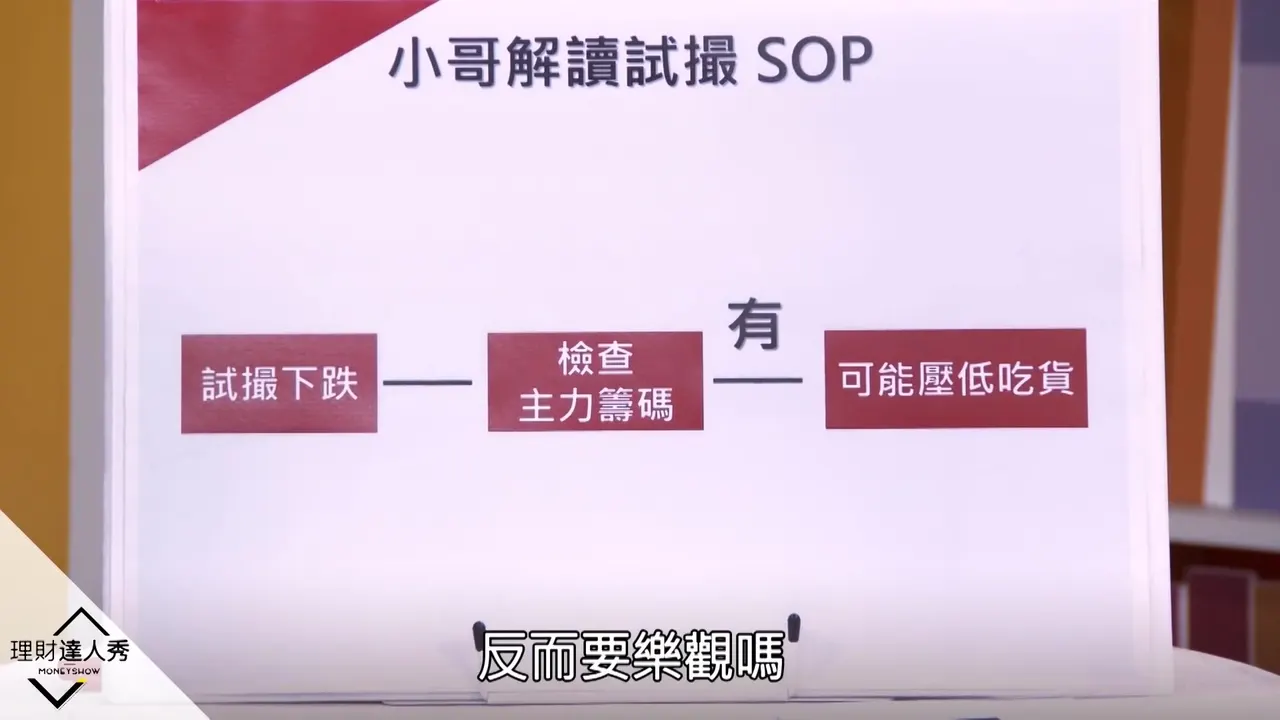
16:51Positive Spread and Futures Price-Limit Divergence
When comparing the spread, look at the percentage gap, not the number of dollars. A positive spread means the single-stock future is pricier than spot; use the 8:50 data, since by then futures have opened and traded with real money while the simulated spot price may be fake. If futures are pricier while the simulated spot price is pushed down, someone is suppressing the price to accumulate; if futures are cheaper while spot is pushed up, someone is dumping. Red means someone wants to buy, and green means someone wants to sell.
▶ Watch from here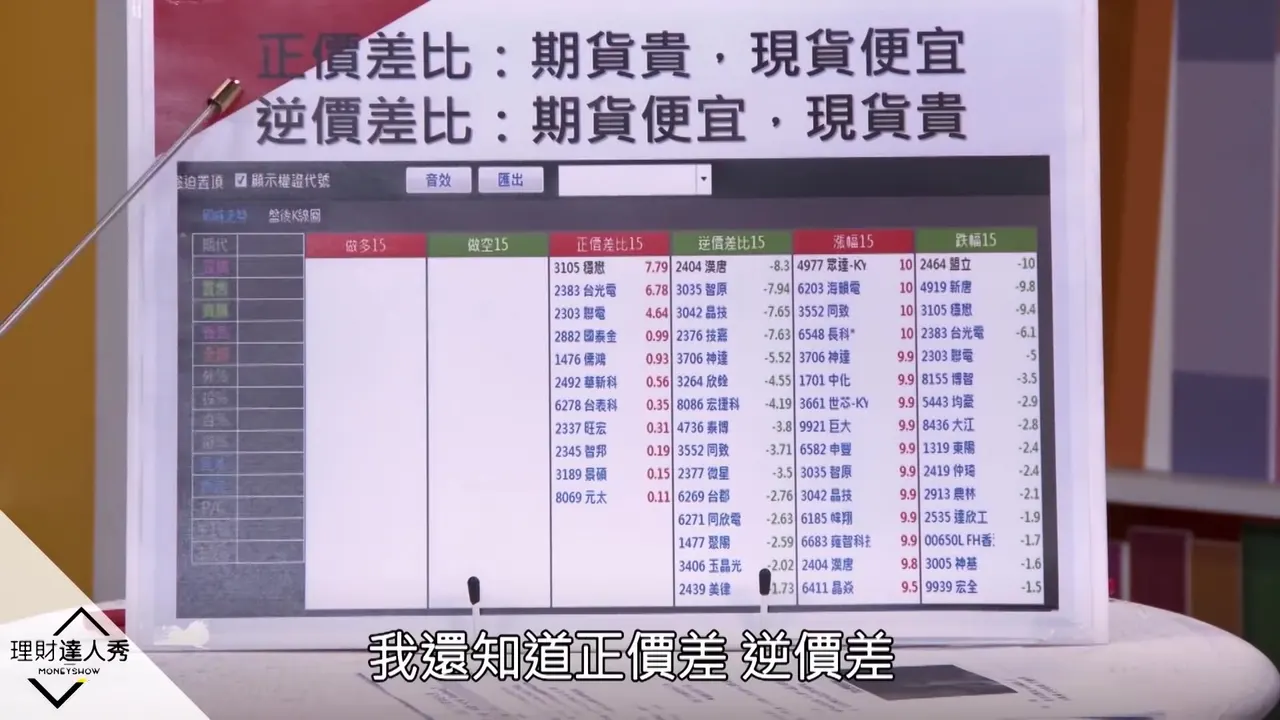
18:35Spread Tool Examples and Signal Verification
Using an example where futures were 7.79% above spot: WIN Semiconductors' futures were higher while its simulated spot price was pushed down, meaning someone wanted to accumulate; for Hantang, someone wanted to sell. WIN's spot opened lower and then did move up, and with major players having bought recently, all the conditions lined up, confirming the spread reading.
▶ Watch from here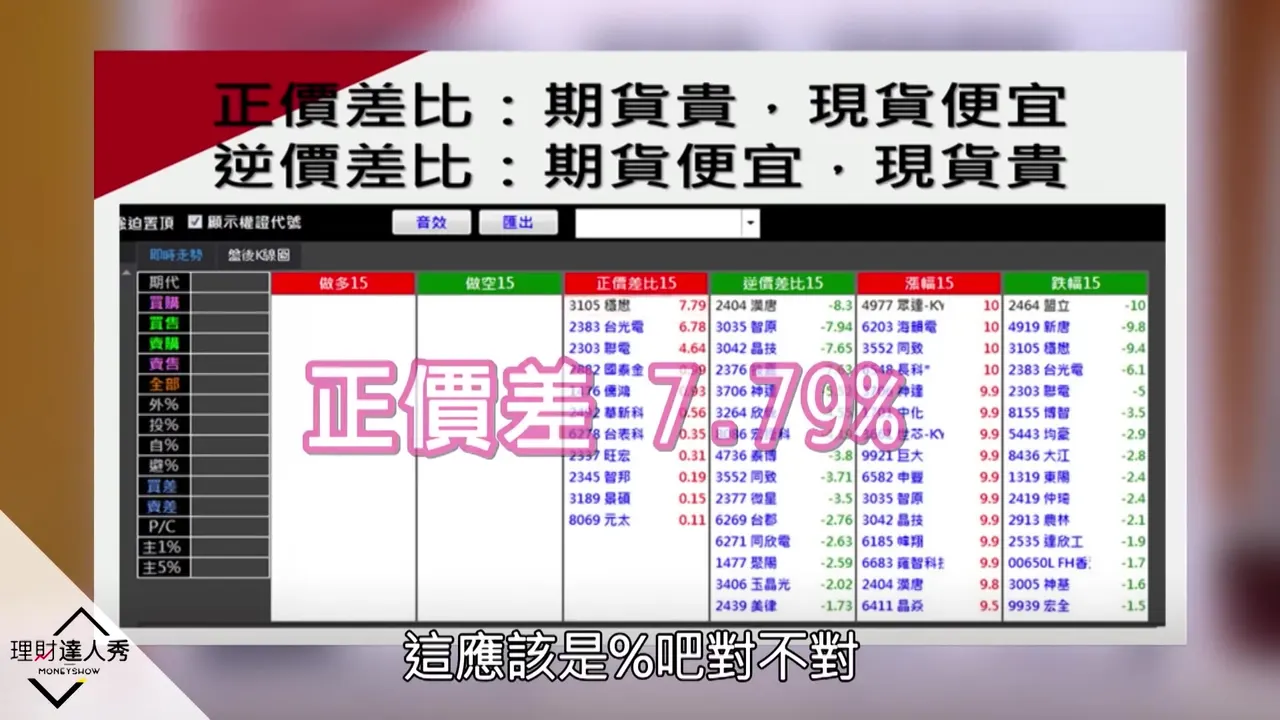
19:51Risks of Four-Round Matching for Disposition Stocks
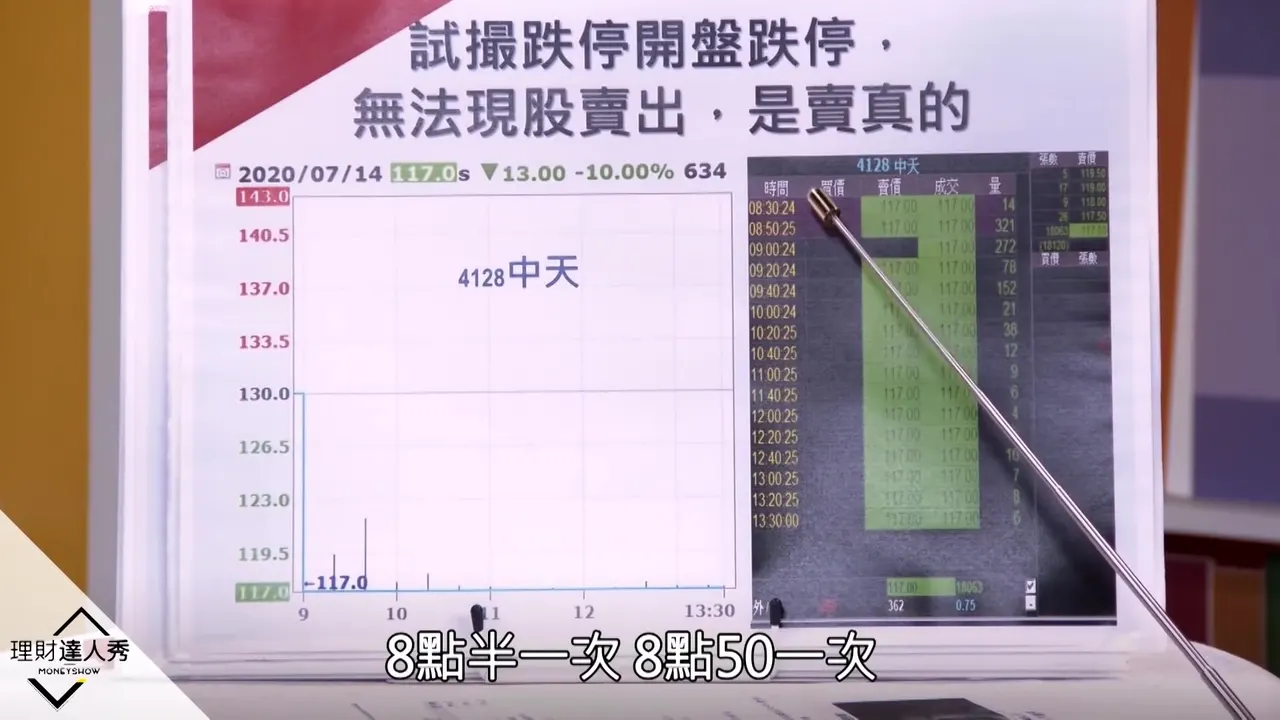
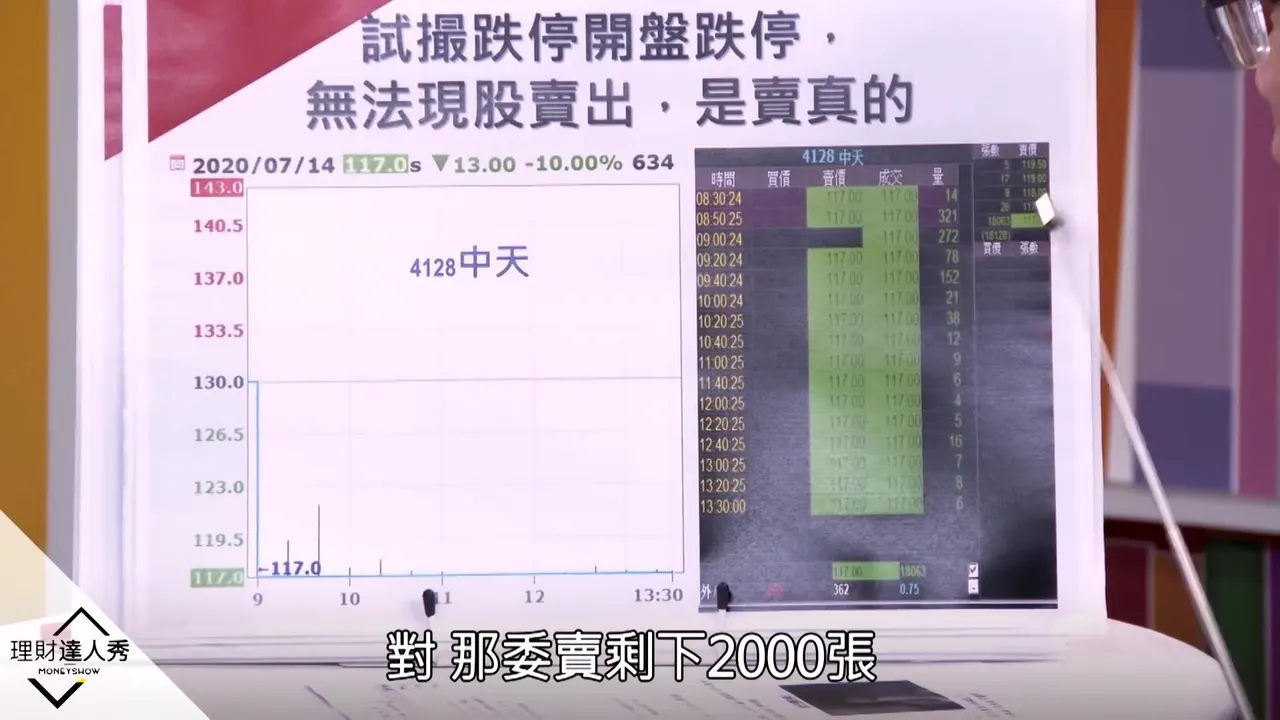
CTi and Unitech are parent and subsidiary companies; because they were placed under disposition, they fell in a flat limit-down line every day. Disposition stocks match about once every 20 minutes, and simulated matching has only 2 rounds; when the lots left unsold at the close are large, anyone holding shares should sell first. To wait for a rebound, watch whether matched volume expands: 300-odd lots in a single round is not big enough, but if one day reaches 1 wan lots (wan = ten thousand) and the leftover sell orders fall to 2000, the limit-down could open; right now, though, nobody wants to buy, it is limit-down on no volume, and shares cannot be sold in cash either.
▶ Watch from here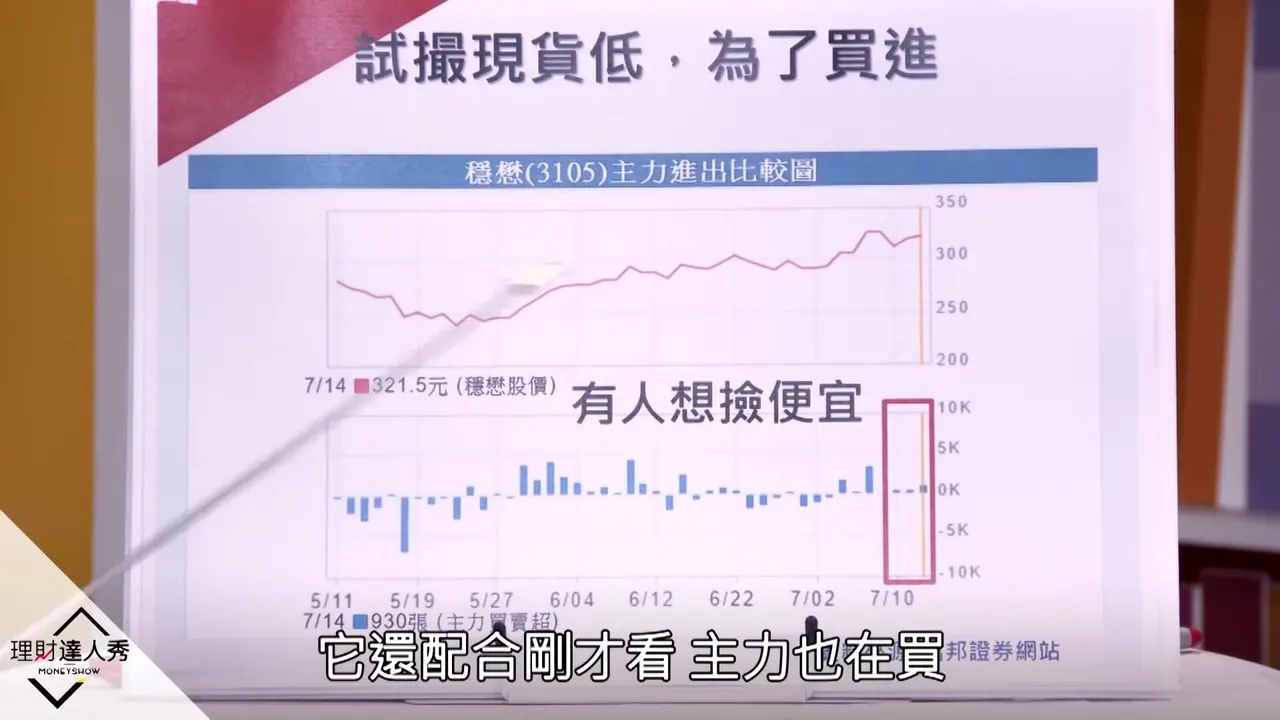
21:41How to Respond to a Popular Stock at Limit-Down
A reminder to small investors: do not rush to buy a popular stock at limit-down; some people saw 18000 lots queued at limit-down and still bought, betting it would open the next day, but those people will keep placing sell orders the next day. If you hold a popular stock that hits limit-down, place sell orders quickly on the 1st and 2nd candlesticks; the 3rd and 4th are less certain. Most people sell on the day the limit-down opens, and that day is actually the time to buy; the key is whether volume appears, and if volume does not come, with only a few hundred lots, it will keep hitting limit-down. Major players distribute in batches on the way up, producing a staircase-like pattern.
▶ Watch from here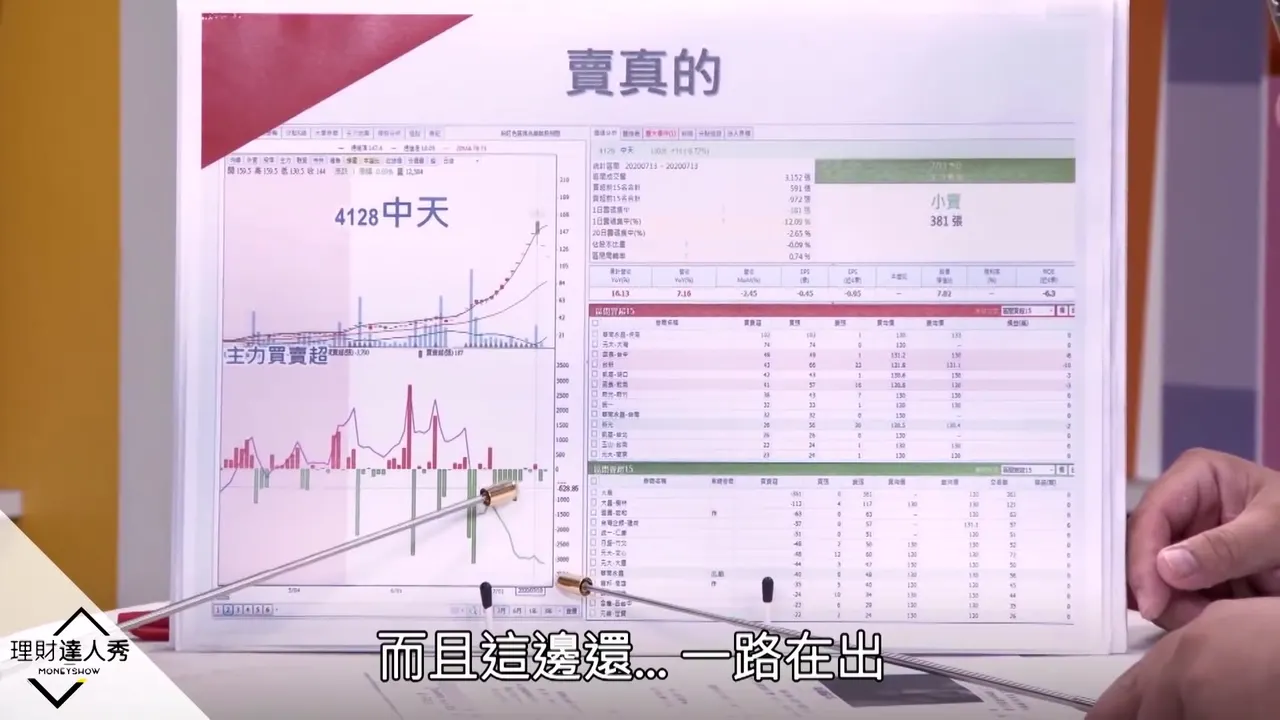
24:11The Unitech Case: Reading Volume Round by Round
Retail investors cannot buy during the flat-line rise, and when they do get filled it is often during a staircase decline, so do not touch a limit-up that opens up and turns red-to-black. Take Unitech as an example: 389 lots at the first simulated round is not enough, with more than 7000 lots still left unsold at the close; as long as volume in each round does not surge, it stays locked at limit-down, and buying is unwise. Only buying after the leftover sell lots shrink and matched lots grow is meaningful, otherwise you are just rescuing the people inside.
▶ Watch from here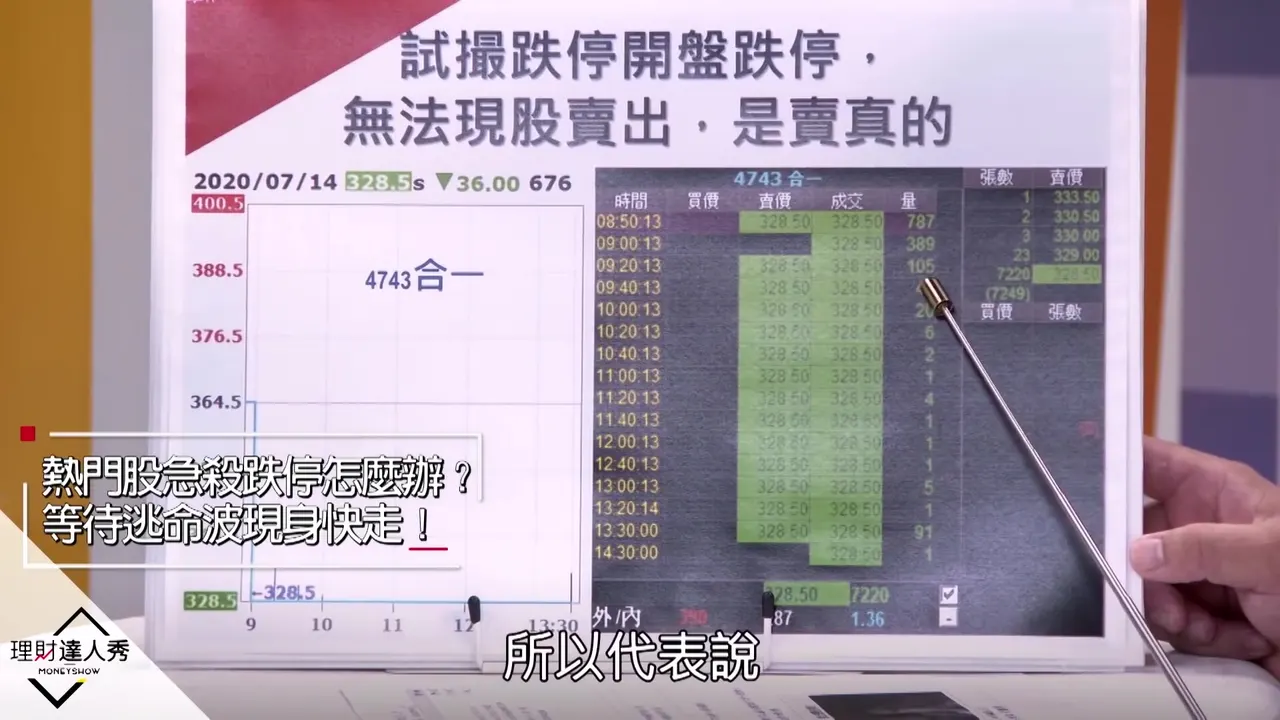
25:32Futures Simulated Matching and the Accuracy of Heavyweight Stocks
Futures simulated matching is very accurate because there are controlling players behind it (possibly foreign investors or other big players) who control the market using futures and heavyweight stocks; wherever TSMC's single-stock future opens, the stock opens there too, and large-cap heavyweights are already as accurate as the broad market. The most valuable moment for reference is the open itself at 8:59:59. When TSMC's simulated price is down but its futures are up, it will open higher.
▶ Watch from here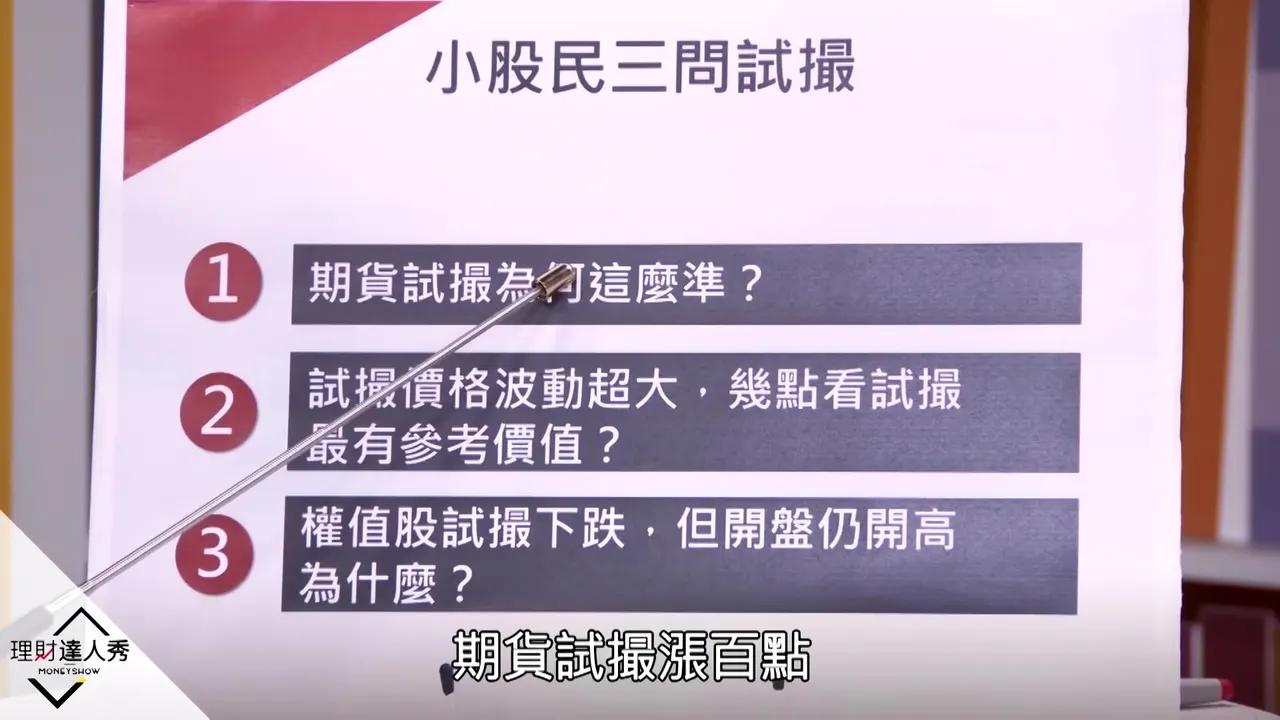
28:25The Big Trick: Volume Changes and Win Rate with Stop-Losses
The big trick is to watch how the middle volume changes during simulated matching: people keep pulling orders, and the fewer the lots, the closer to the true price, as fake orders keep shrinking; if someone pushes the price up and then pulls the buy orders, it is to lure bulls and distribute. After study the win rate can reach 80%, but that does not mean 100% correct; for example, one stock was pushed to limit-up by next-day-flip traders but another group then entered and pulled it up to limit-up again. When you meet a pump-and-distribute, cover quickly, cut losses fast, and the shorter your trades, the higher the win rate.
▶ Watch from here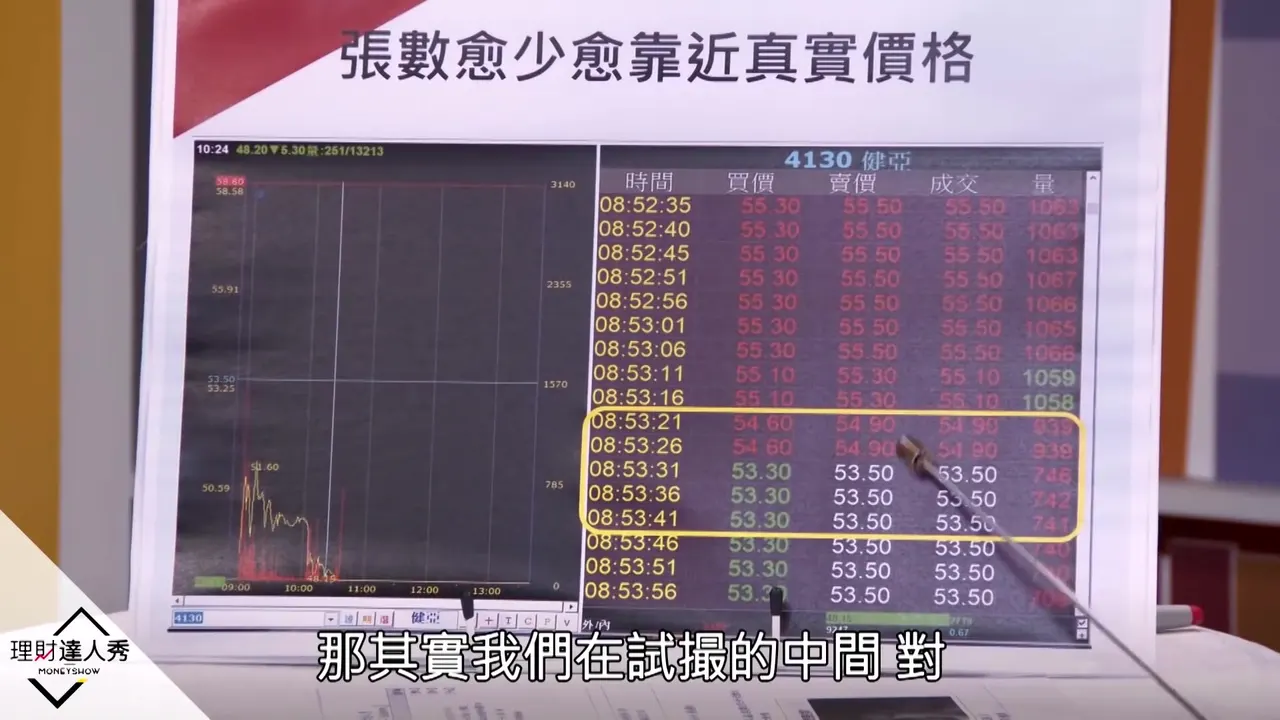
31:32Judging Real vs. Fake by Simulated Volume Size
Small volumes of 1–2 lots are actually real sell orders, because hardly anyone is playing with them; 300, 500, or even thousands of lots can all be fake. Huge volumes of 10-plus wan lots (wan = ten thousand) are real, because ordinary people cannot place that many and the exchange watches them too. A limit-up with large next-day-flip volume is often for distribution, so do not chase a high open.
▶ Watch from here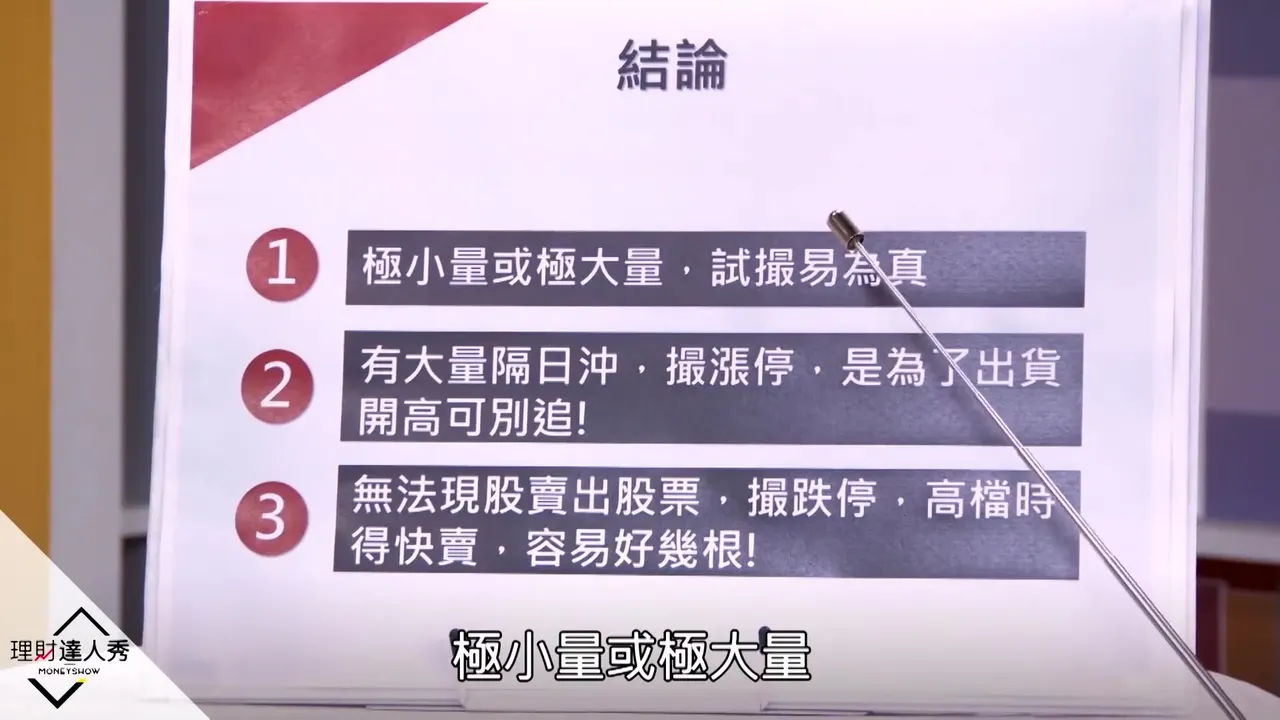
32:32Summary: Run Fast on a Simulated Limit-Down in Disposition Stocks
For disposition stocks that cannot be sold in cash, if simulated matching shows limit-down you must run quickly and sell on the first candlestick, otherwise consecutive limit-downs make it hard to escape. There are especially many disposition stocks this year, matching only about once every 20 minutes, so once one locks at limit-down it becomes a big problem.
▶ Watch from here