Local Key Broker Branches: A 4-Step SOP to Find Central and Southern Taiwan Big Players
TL;DR: Broker branches near a company often buy heavily at lows and sell first at highs, and statistically beat foreign investors, so a 4-step SOP for finding key local branches in central and southern Taiwan captures low-level positioning better than reading the news.
Key ideas
- The chip-flow pecking order is: insiders with a connection, major players, investment trusts, foreign investors, and retail last; core insiders learn of good news first, buy at lows and sell when the news is released, while foreign investors and investment trusts often enter only at highs.
- Local branches arise because employees, nearby residents and merchants are the first to notice the company getting busy; Wei Sheng is in Lukang, and at its lows, among 900-plus branches nationwide, 8 of the top 15 net buyers were very close to the company, while key branches for Changhua companies often appear in Taichung.
- About 2500 days of statistics show that most of the top 15 profit-making branches for Wei Sheng were in Lukang and Taichung, with the best earning 6 hundred million, while the top 15 losers were all foreign investors, so the speaker argues local branches beat foreign investors by a wide margin, and central and southern Taiwan is more accurate than Taipei.
- The 4-step SOP for finding key branches is: big selling at highs, big buying at lows, profitable branches, and local branches; local heavy buying means ranking in the top 5 net buyers with at least 2 local branches among them, while branches in Taipei's downtown broker cluster are hard to judge.
- The Jing Yuan and Catcher cases both show that at lows with bad news, foreign investors and investment trusts sell while local branches buy, and at highs with good news, institutions buy while key branches sell; so ignore the news, watch key branches, and record your own notes and verify the next day.
Section summaries
3:35Chip Ranking and the Idea of Connected Insiders
Whether retail investors can buy at the low depends on whether they have a connection with the company's boss. The speaker ranks chip-flow order as: connected insiders, major players, investment trusts, foreign investors, with retail last. Core insiders know the good news first and buy at lows, then sell to retail investors who chase the price once the news is released.
▶ Watch from here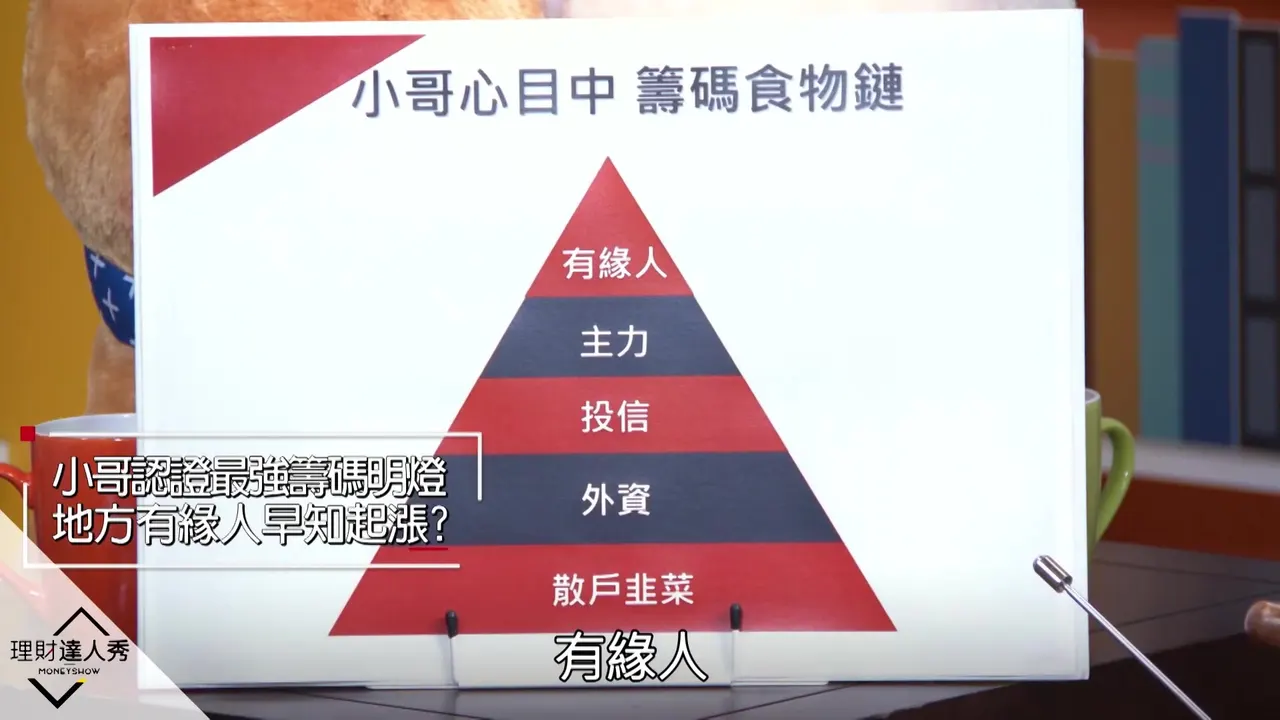
7:05Key Branches vs. Institutions: Opposite Trades
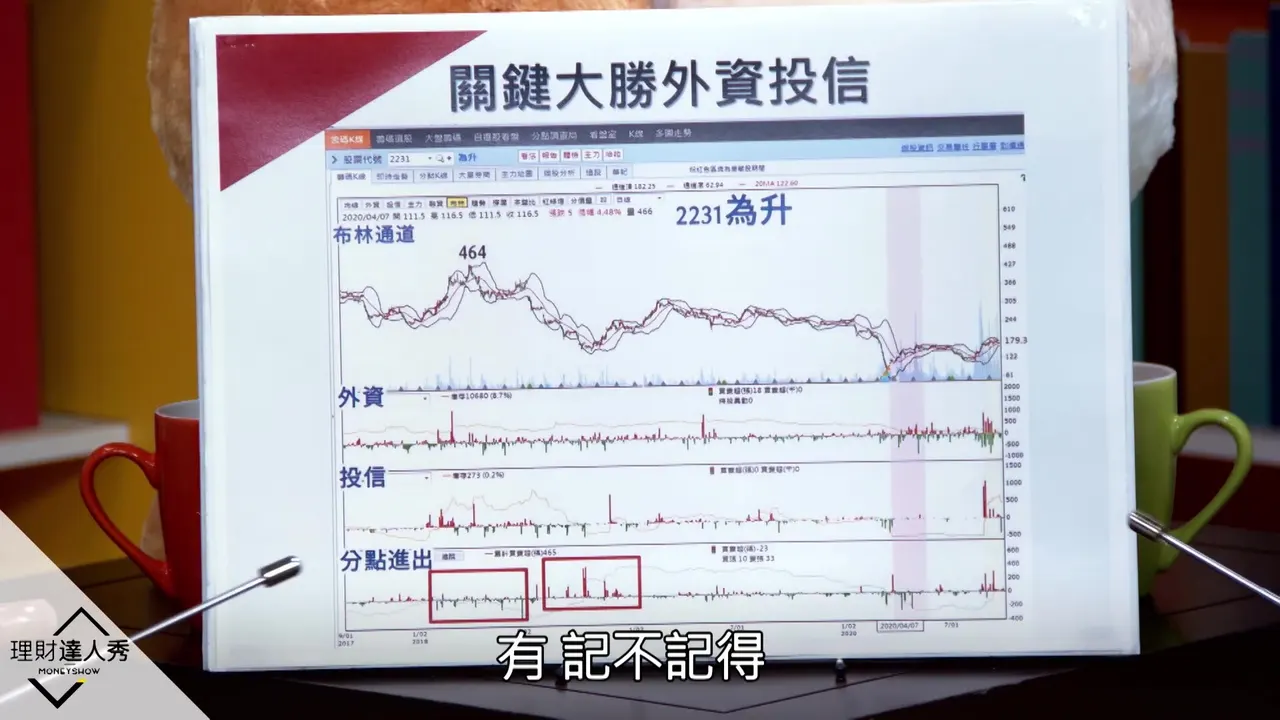
Take Wei Sheng as an example: at low prices key branches buy heavily while foreign investors and investment trusts sell; at high prices foreign investors and investment trusts buy while key branches gradually sell out. The speaker has analyzed 200-plus companies, and in all of them key branches beat foreign investors by buying low and selling high, but he deliberately keeps the list of key branches secret.
▶ Watch from here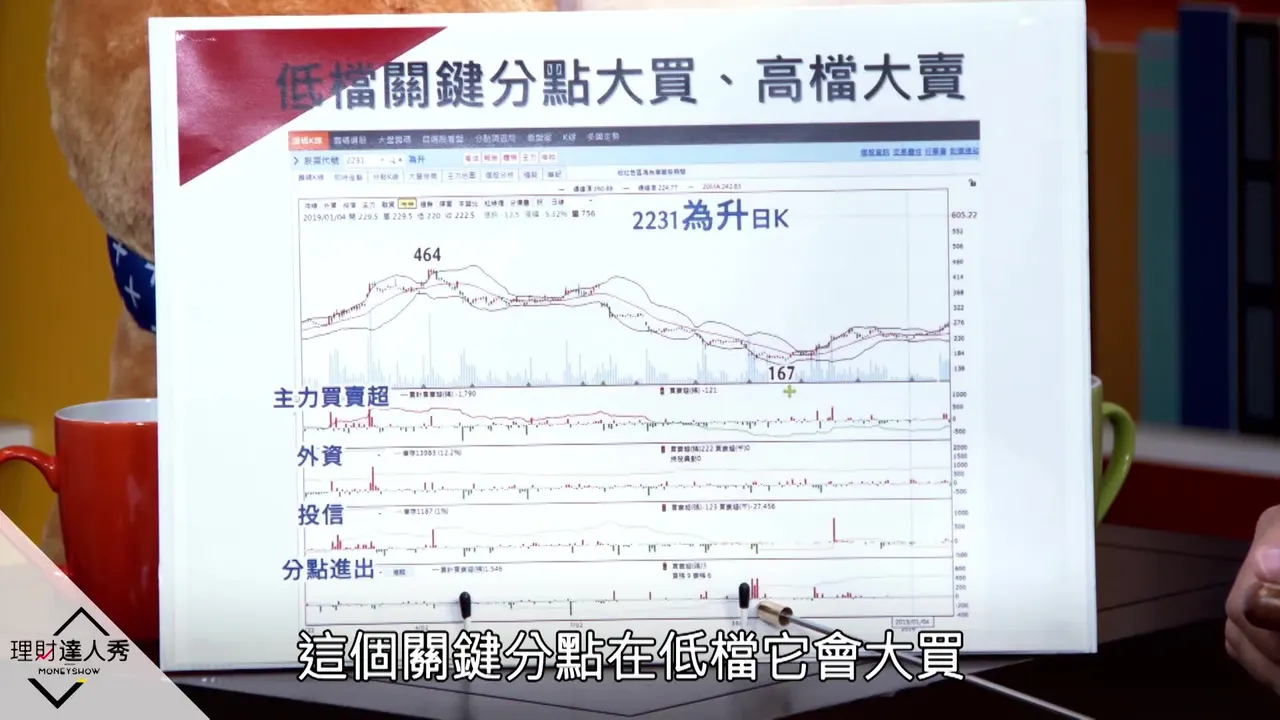
7:55Why Local Branches Form
Wei Sheng is located in Lukang, where there is an auto-related industrial zone; employees, nearby residents and merchants are the first to notice the company getting busy and rush to buy the stock. At the price lows, among 900-plus branches nationwide, 8 of the top 15 net buyers were branches very close to Wei Sheng; and because Changhua people often go to Taichung to spend money and buy homes after earning it, key branches for Changhua companies often appear in Taichung.
▶ Watch from here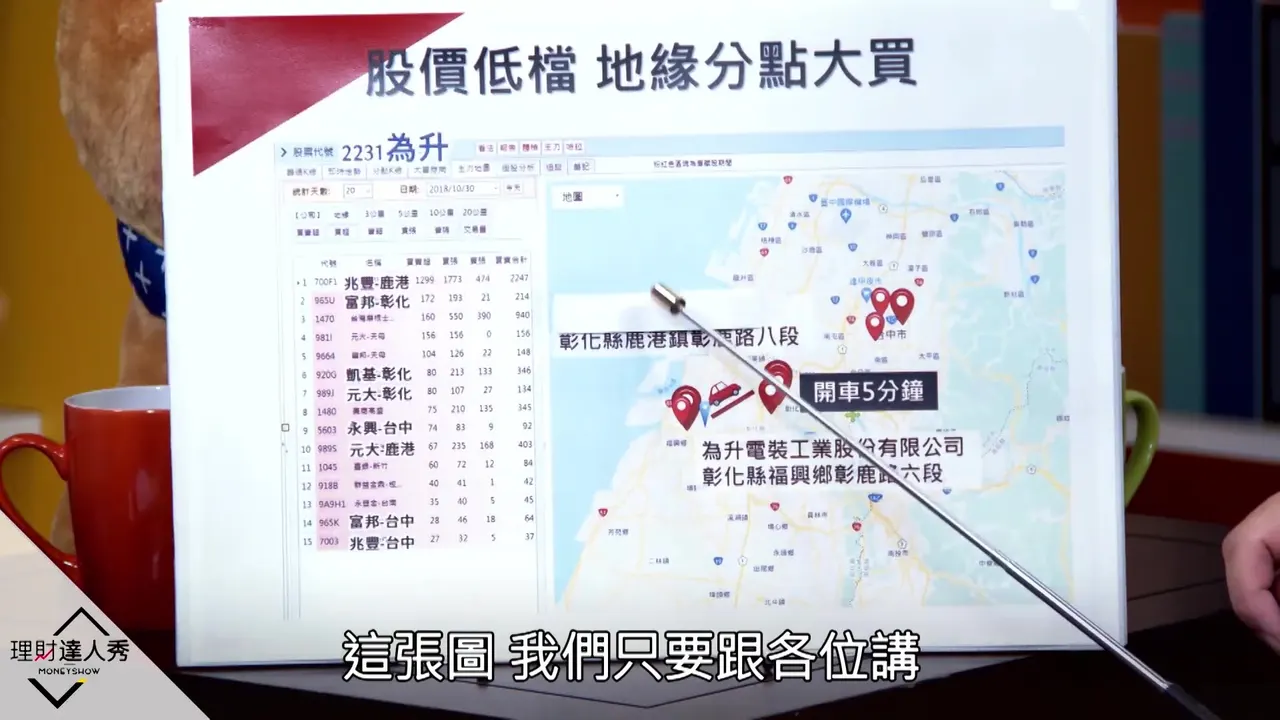
10:1110 Years of Statistics Validate Local Branches
The speaker compiled about 2500 days of data since 2011 and took the top 15 profit-making branches over the Wei Sheng period; the list is kept secret, but the branches are mostly in Lukang and Taichung, and the highest earned 6 hundred million. The top 15 losing branches over the period were all foreign investors, such as JPMorgan, HSBC, Morgan Stanley and Nomura, so the speaker says local branches beat foreign investors by a wide margin.
▶ Watch from here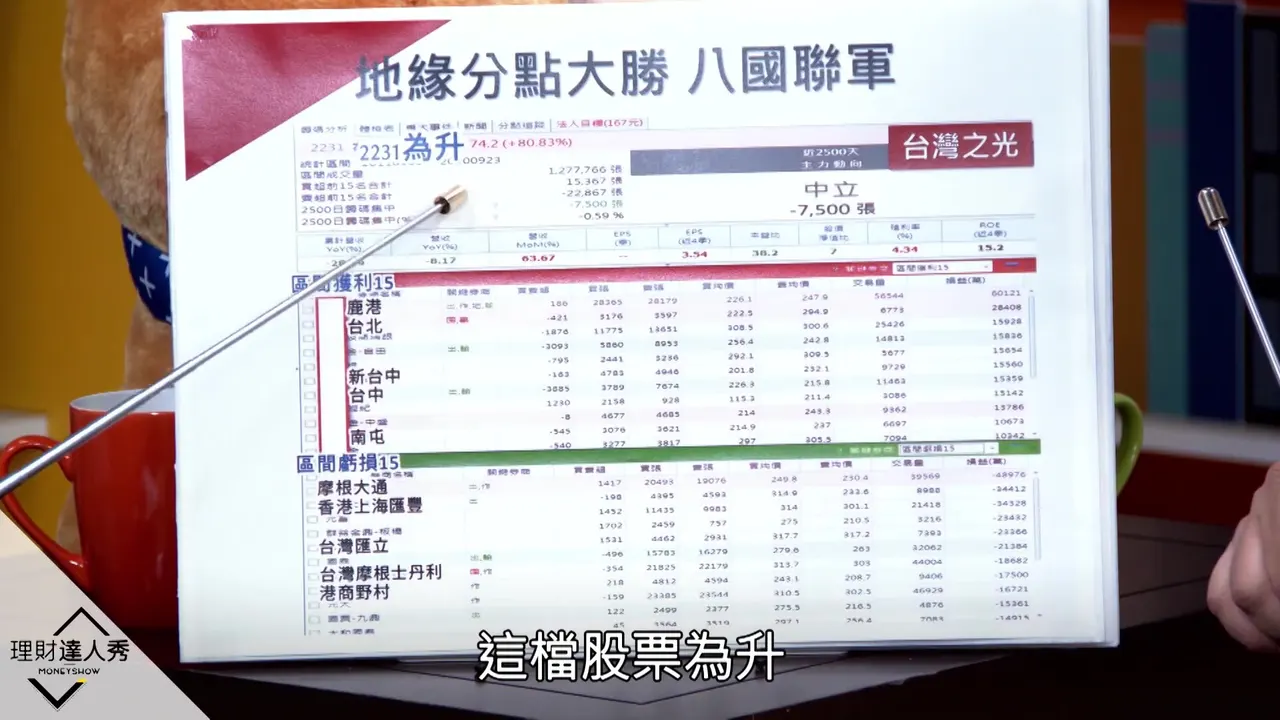
12:31The 4-Step SOP for Finding Key Branches
The speaker stresses that key branches are not hindsight: you research the day before and verify the next day, describing what is happening without predicting stock prices. The method is a 4-step SOP: find branches that sell big at highs, buy big at lows, are profitable, and are local; since a branch that sold big at highs does not show when it bought, a profitable branch seen buying at lows and selling at highs is ideal. Local branches are easier to identify outside Taipei, while the downtown Taipei broker cluster is hard to judge. The condition for local heavy buying is ranking in the top 5 net buyers with at least 2 local branches among those 5, out of 900-plus branches nationwide.
▶ Watch from here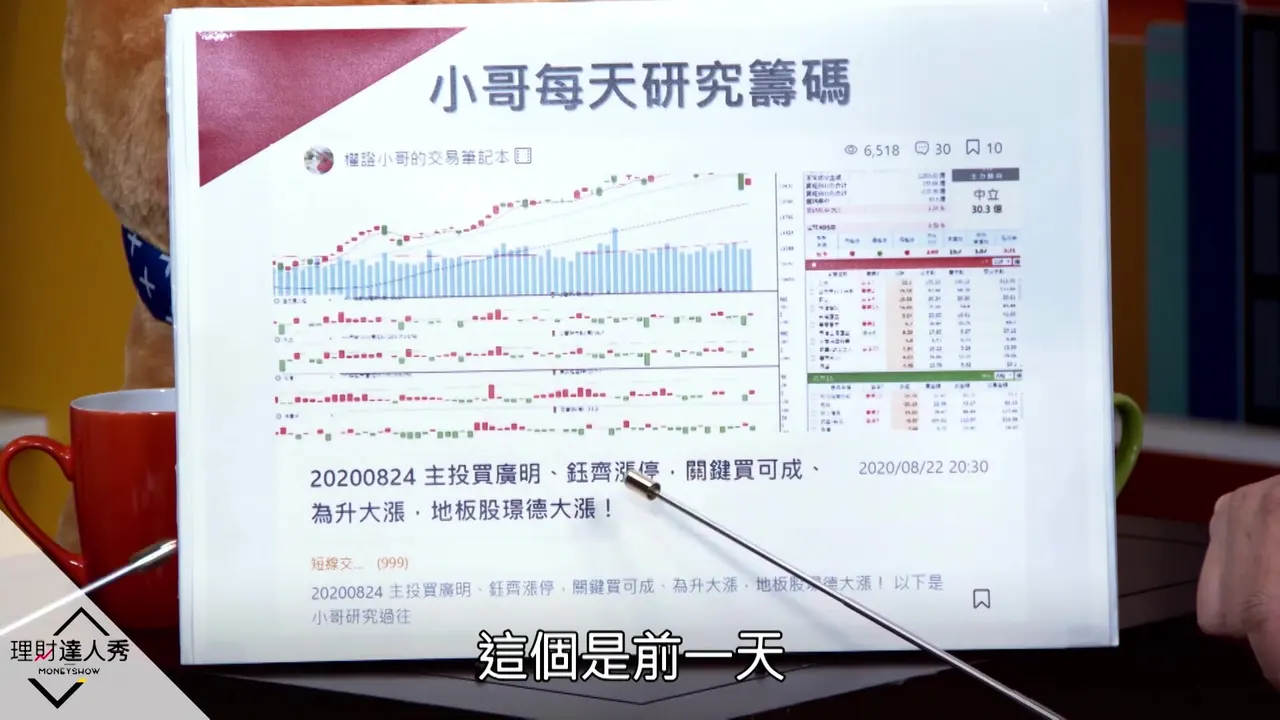
17:11Jing Yuan Case: Heavy Buying on Bad News at Lows
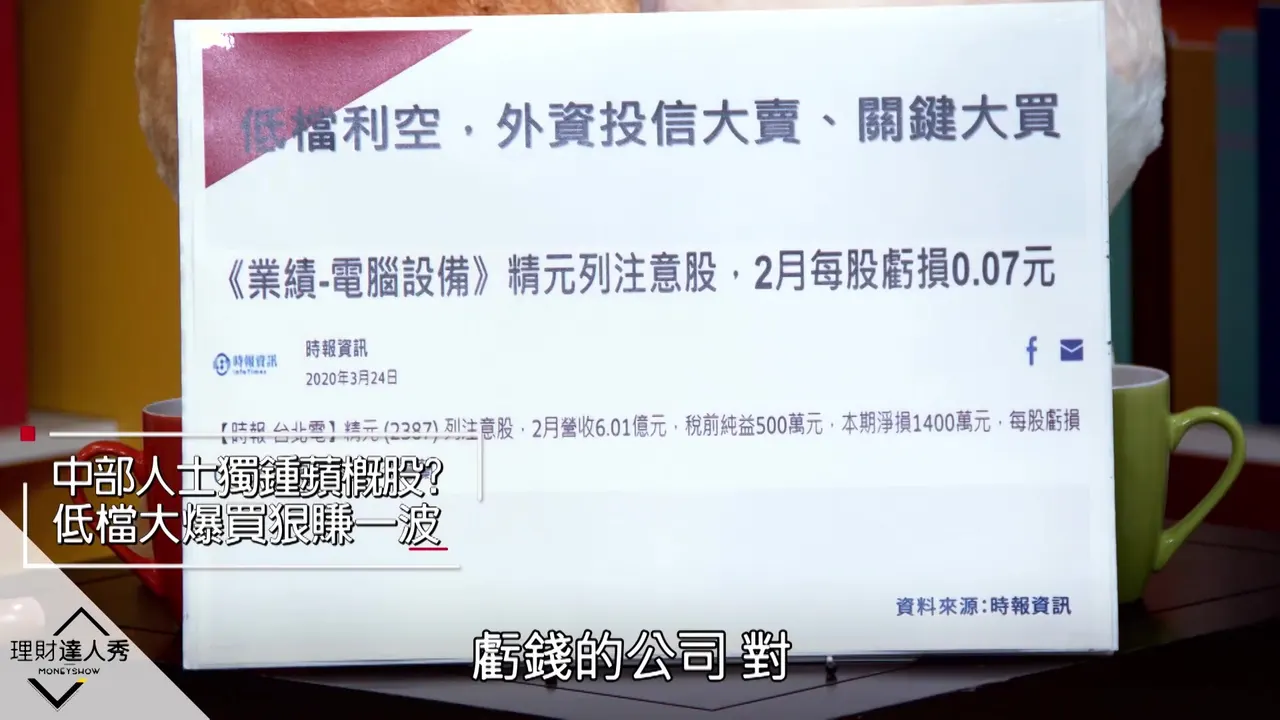
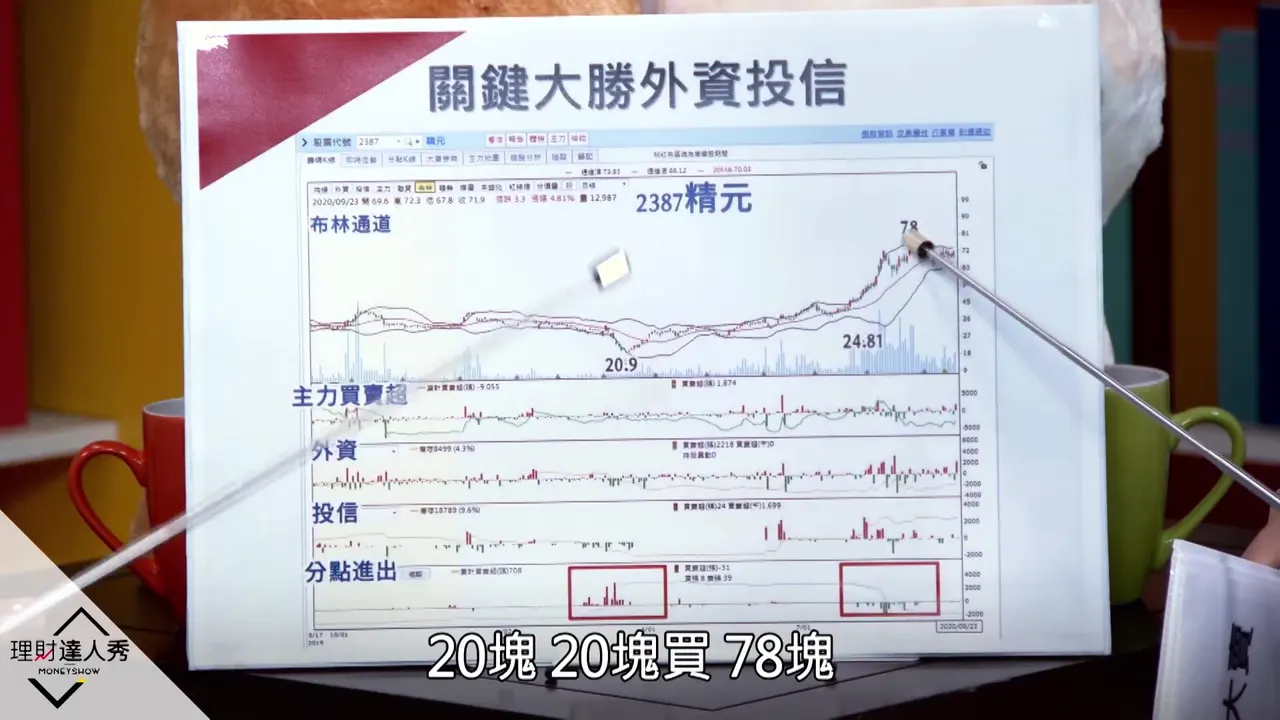
The speaker believes central and southern branches are more accurate than Taipei: Taipei has many foreign investors, is densely populated with many easy marks, and is often fleeced by central and southern branches. Take Jing Yuan, a keyboard maker in central Taiwan: at lows foreign investors and investment trusts sold heavily and key branches took it all; there was also bad news, namely being listed as an attention stock and a February loss of 0.07 per share, but the speaker thinks bad news is mostly released by the company itself, and releasing bad news at lows means quietly buying. The stock rose from 20 to 78, nearly 4 times; when Q2 EPS hit a record and institutions cheered and bought heavily, key branches dumped into the good news, so when you see institutions buying big and key branches selling big, press sell, not buy.
▶ Watch from here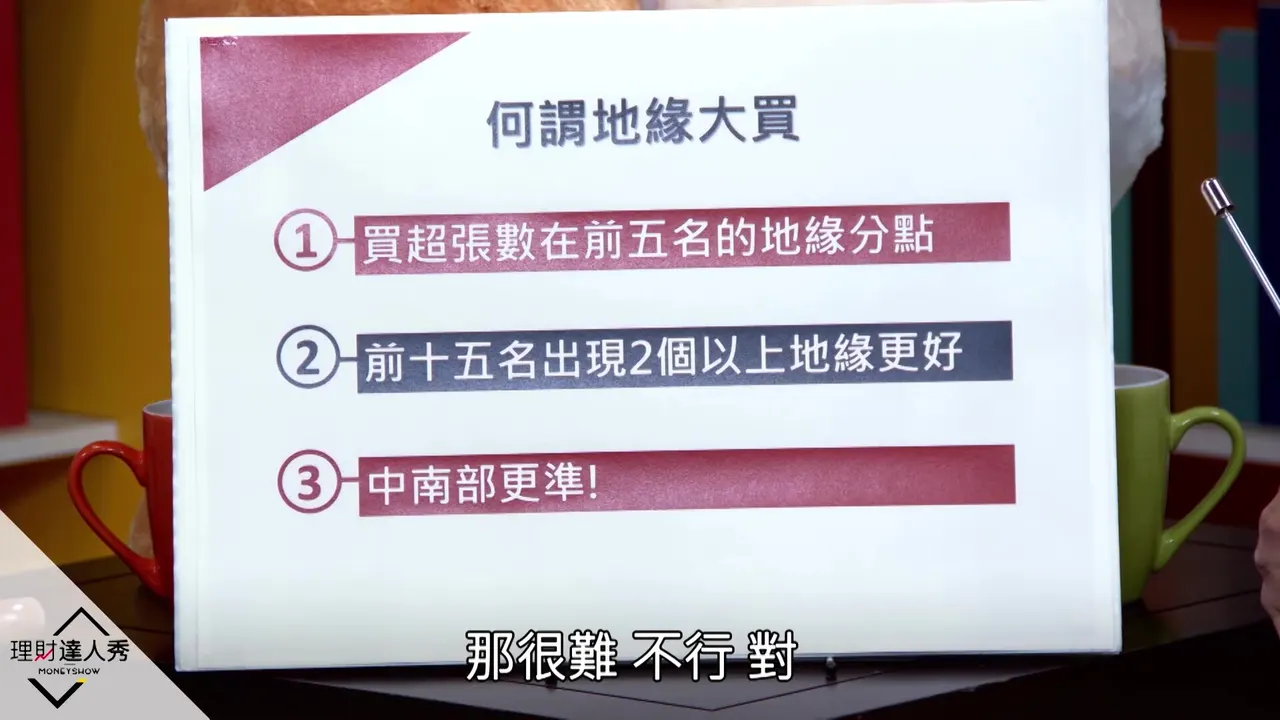
20:55Lookup Tools and Judging Locality
Jing Yuan's key local branches are the Taichung Beitun branch and other Taichung branches, about 20 minutes' drive from the company, so someone can place an order after stepping out for lunch. When searching, first look at the brokers with the biggest net buying that day, then check whether they are local and buying heavily; those that match may be key branches. Taiwan's chip data is the most transparent in the world, but you have to organize it yourself in a spreadsheet, which is laborious.
▶ Watch from here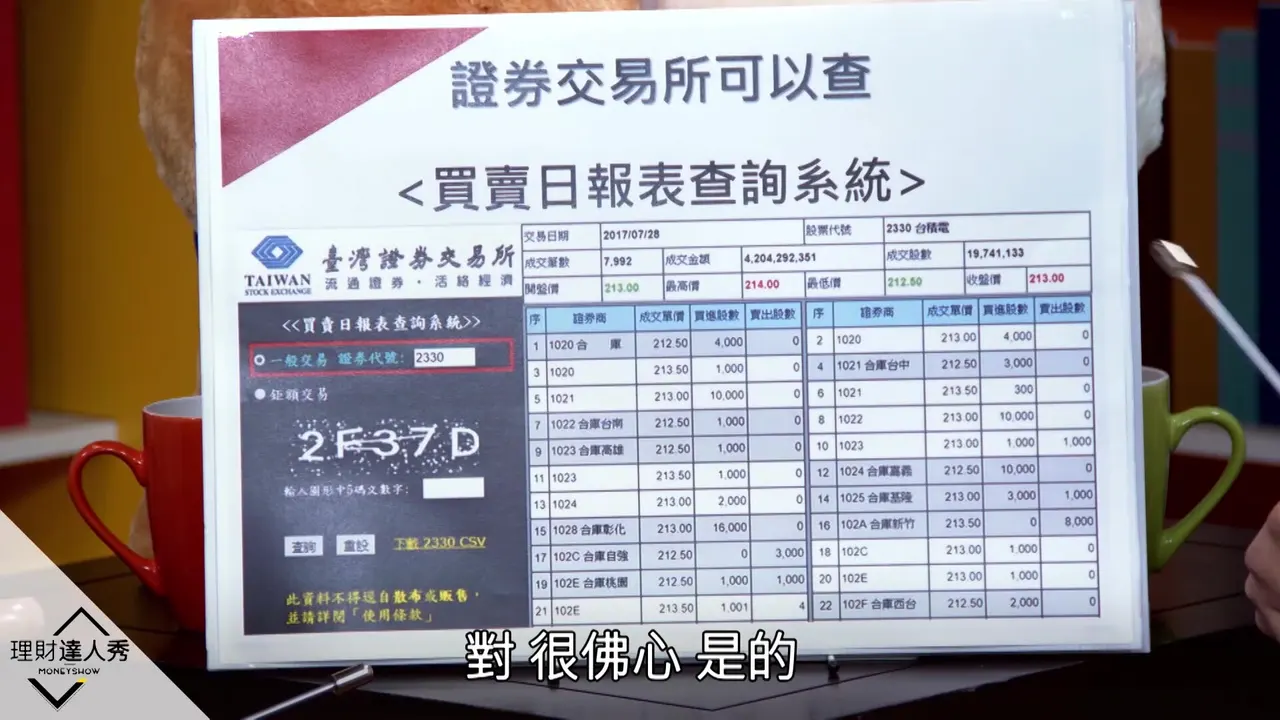
23:21Catcher Case: Tainan Locals Provide Long-Term Support
Branches that recently net bought Catcher are mostly in Tainan; the broader market is weak and the stock has pulled back, but it has not dropped sharply because Tainan people are buying. At highs of 300-plus, close to 400, foreign investors and investment trusts bought while a key branch sold 1500 lots in a single day; selling big at 390 and buying big at 170 suggests positioning may go back nearly 1 year and a half. Compared with the news: at highs with good news, foreign investors and investment trusts bought heavily, and at lows near 100-plus, a US foreign broker downgraded and foreign investors and investment trusts sold heavily, yet the positions were all bought by Tainan people, so never follow the news. The speaker suggests writing your own notes on observations and verifying 1–2 days later; after a few months you will have confidence.
▶ Watch from here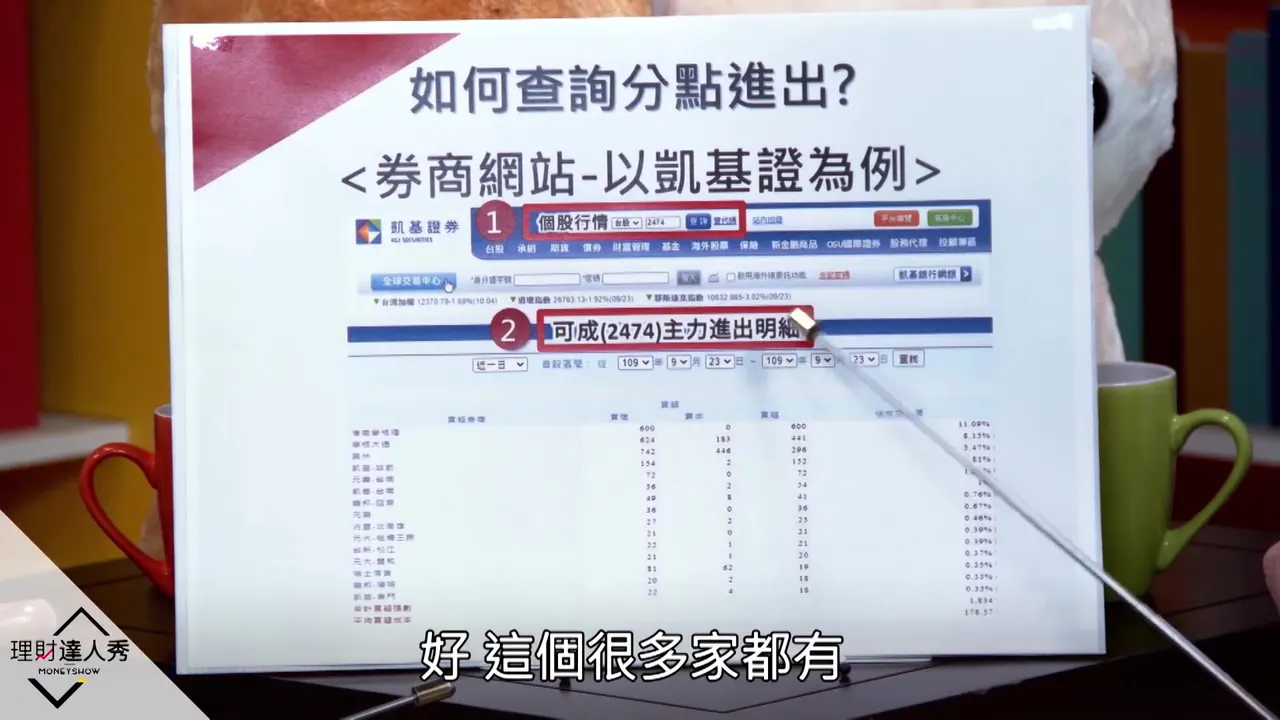
27:55Reading the Flows on Catcher's Plant Sale
On September 22, Catcher sold a plant to a Chinese company, which was read as a competitiveness problem for the casing maker, and foreign investors sold heavily; the speaker's reading is that the company sold an unprofitable plant, and after booking it, that quarter's EPS will actually surge. Branches that net bought over the last 30 days include North Kaohsiung, Yuanta Jinding, KGI Dongmen, Yuanfu Tainan and KGI Tainan, mostly in Tainan and Kaohsiung. Although the stock has performed weakly lately, he still suggests putting it on the watch list to see who wins.
▶ Watch from here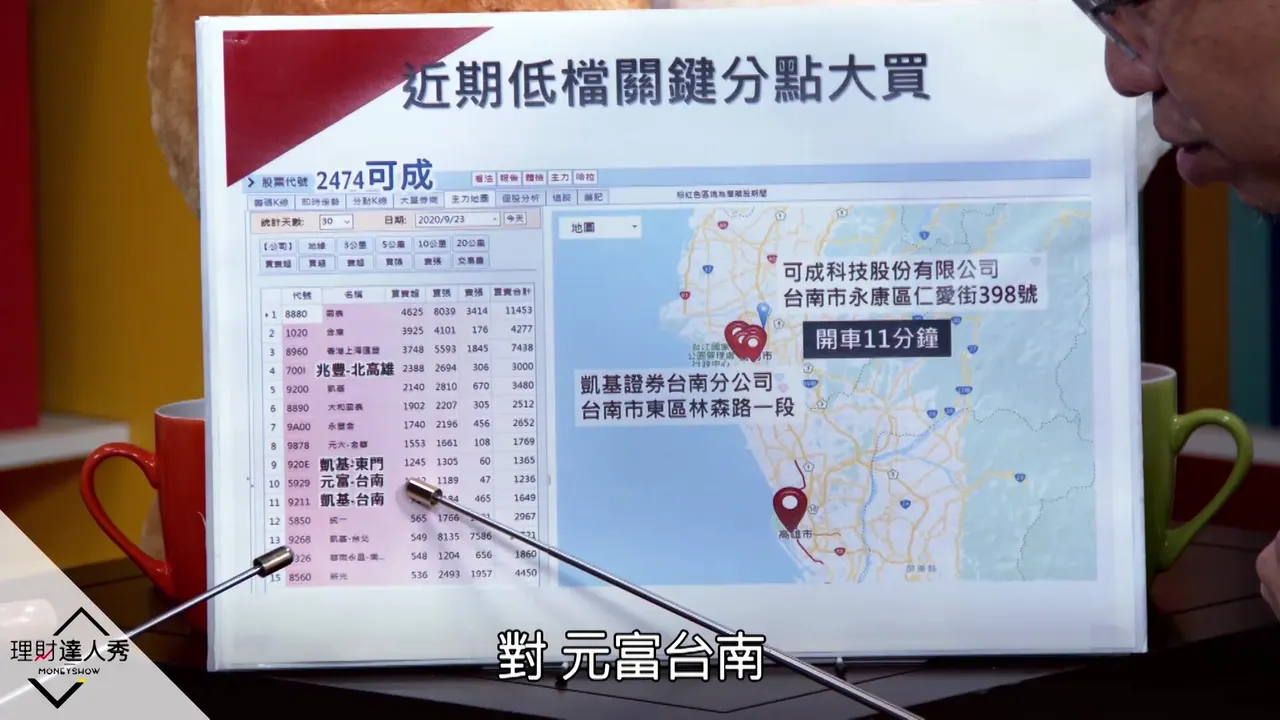
30:32Historical Validation: Merida and Wei Sheng
Take Merida: a floor-price stock mentioned early in the year at about 60–70 was bought by branches around Changhua and later rose to 200-plus; the speaker stresses he is not telling anyone to buy, only observing. Then take Wei Sheng in April 2018, when Q1 EPS was 2.4 per share: most people saw the good news and bought excitedly, foreign investors and investment trusts followed, but key branches sold heavily and dumped their shares onto foreign investors and investment trusts. In October that year foreign investors cut the target price from 376 to 167; the speaker reminds viewers that on seeing such bad news at lows, they should add the stock to their watchlist and observe local branches' moves rather than rush to turn pessimistic.
▶ Watch from here