How to Pick Short-Squeeze Stocks: 3 Conditions, the Short-to-Margin Ratio, and Telling Squeezes from Real Shorts
TL;DR: Short selling has capped profit and unlimited risk, so rather than get squeezed, find squeeze candidates with 3 conditions (riding the upper Bollinger band, major players buying in waves, and margin and short interest rising together with a high short-to-margin ratio) and tell them apart from true short candidates, where major players sell heavily at highs and short interest jumps.
Key ideas
- Short selling means borrowing shares from a broker to sell; when the price surges against shorts they are forced to cover, creating a squeeze. 撼訊 was squeezed from 69 at year-end to 420 in April, about 6 times; after 3 consecutive limit-up candles the 4th opened another 8% higher, shorts could not cover, and on the forced-cover date the broker covered for them, filling at 420 at the open.
- Shorting in Taiwan is heavily restricted: forced covering around shareholder meetings and ex-dividend dates, borrow fees when shares are scarce (the speaker once paid 9 wan yuan), capped profit with unlimited risk, and leverage of about 1.1 times that can still lose 3–4 times your capital; if you must short, wait for the monthly moving average to turn down and short on the right side of the mountain.
- The 3 squeeze conditions are riding the upper Bollinger band, key broker branches' major players buying in waves, and margin and short interest both rising; when they are met, do not short even if the flows and fundamentals are poor, because without a stop-loss you will get blown up. The short-to-margin ratio is short lots divided by margin lots; above 30% counts as high, and it also carries borrow-fee risk.
- A true short candidate is the opposite of a squeeze: major players sell heavily at highs and short interest jumps, plus cult-like slogans show up on discussion boards, as with Medigen-DR (美德醫療-DR), which fell hard for consecutive days; the sign of a squeeze ending is margin falling, short interest falling, and major players net selling, but the stock is still on the left side of the mountain, so wait for the monthly average to turn down before shorting.
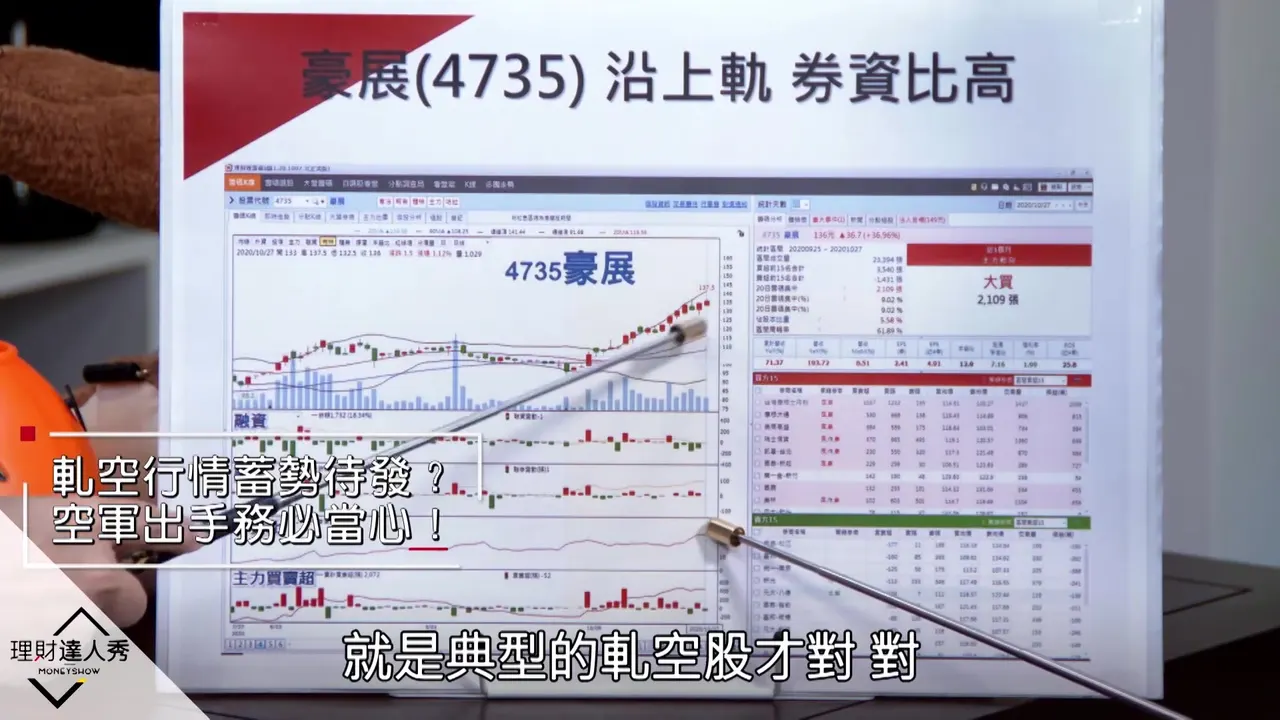
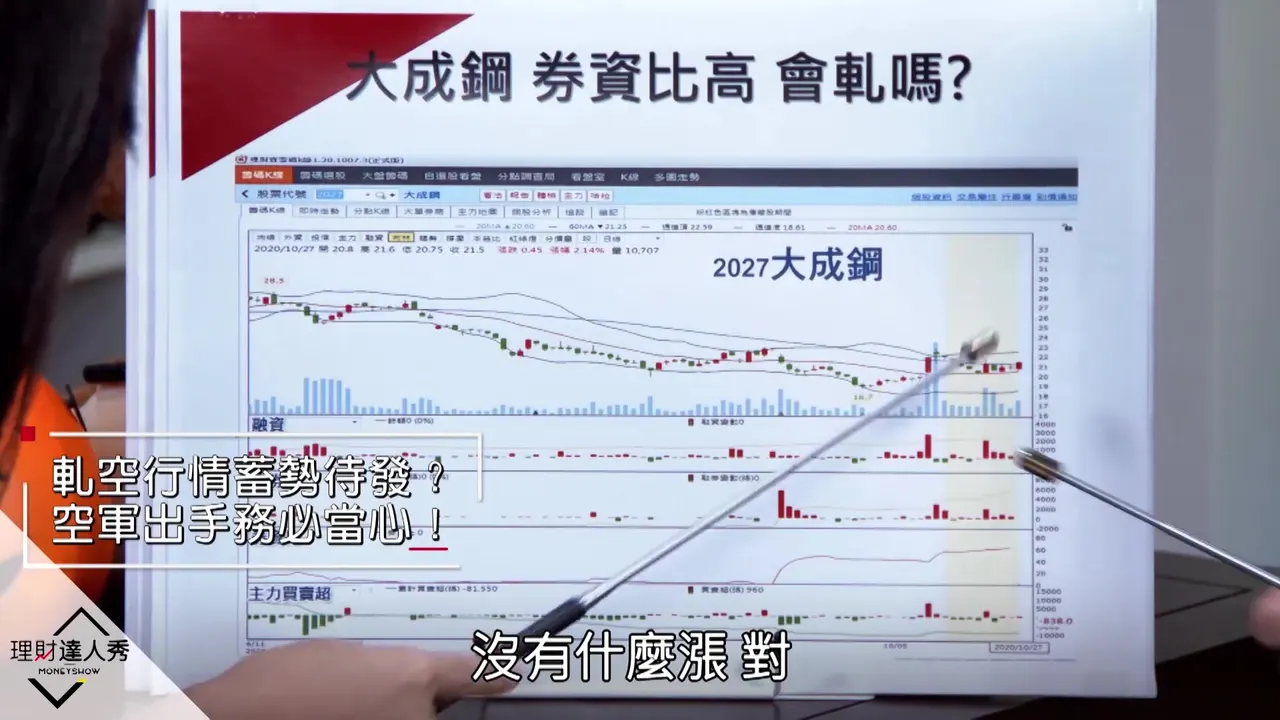
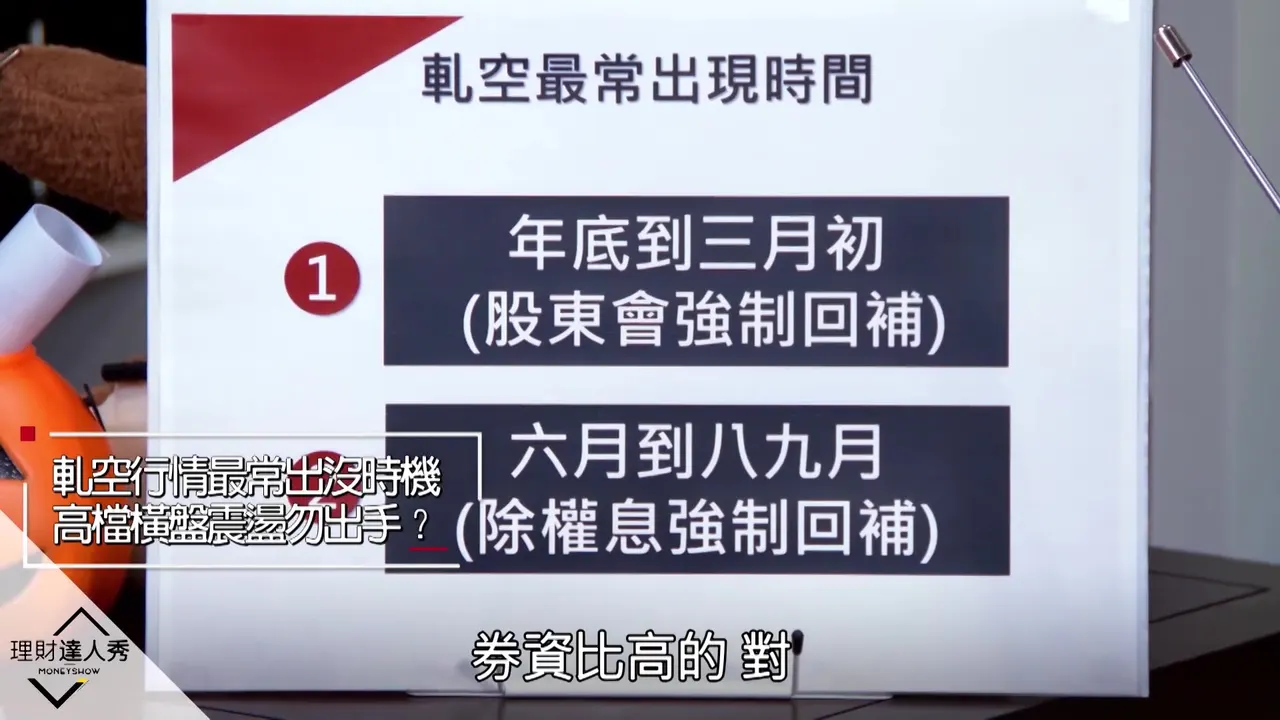
- High short interest does not always mean a squeeze: Ta Chen Steel (大成鋼) rose little with both margin and short interest falling, which is a capital-raise arbitrage, while Hotron (豪展) riding the upper band with a rising short-to-margin ratio and major players still buying is the textbook squeeze. Squeeze peaks come from year-end to early March (shareholder-meeting covers) and from June through August and September (ex-dividend covers).
Section summaries
2:50How Short Covering Works, with an Example
Explains that short sellers believe a stock has risen too much and short it, for example shorting at 20 after a rise from 10, then being squeezed to 40 and forced to cover; the recent worst case is the freight stock Wan Hai (陸海), which had not yet earned money this quarter yet kept soaring.
▶ Watch from here
3:45Squeeze Traits and the Stop-Loss Mindset
Squeeze stocks are typically unprofitable companies with ugly flows that rally anyway, and they are especially brutal to people who follow flows, always punishing them. When you are being squeezed, cut your loss quickly because nobody knows where the peak is, and trying to pick the top is the worst habit; ugly flows with a big rally may mean a cult stock pushed by social groups or teachers. Using a solar stock as an example, once you see a Bollinger short signal open, surrender rather than stubbornly defend your pride.
▶ Watch from here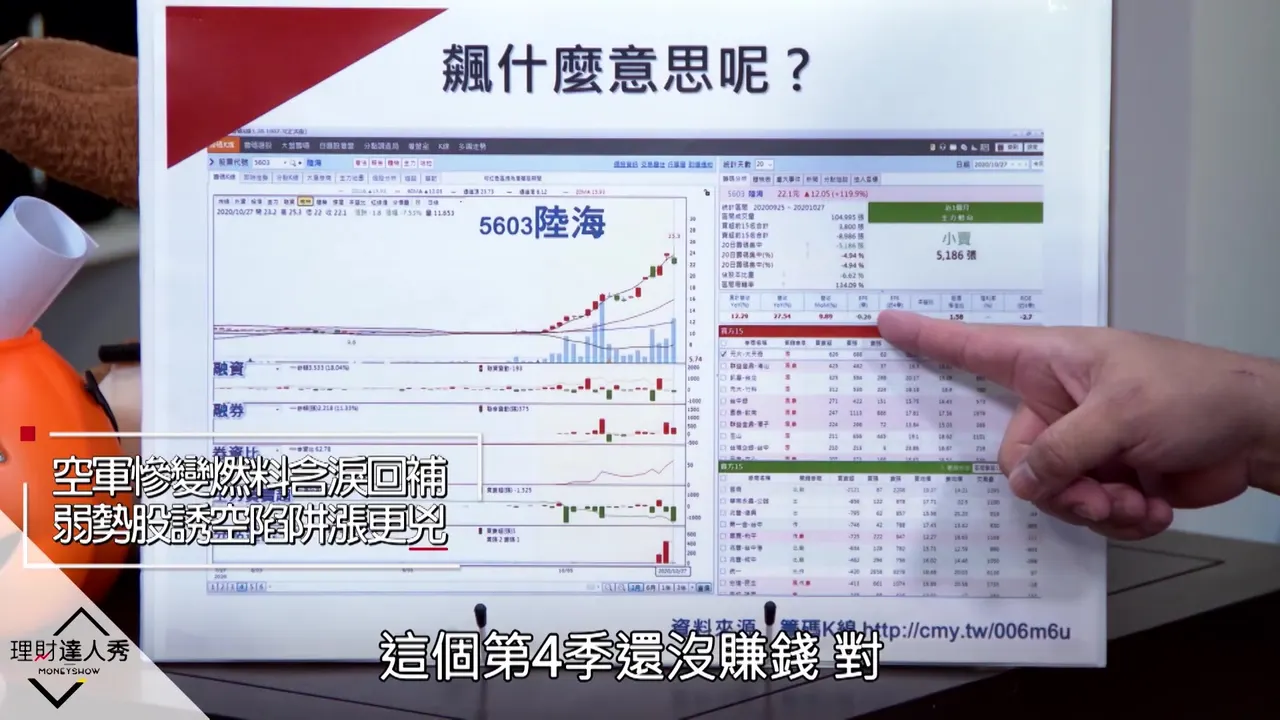
6:00What Margin Short Selling Is
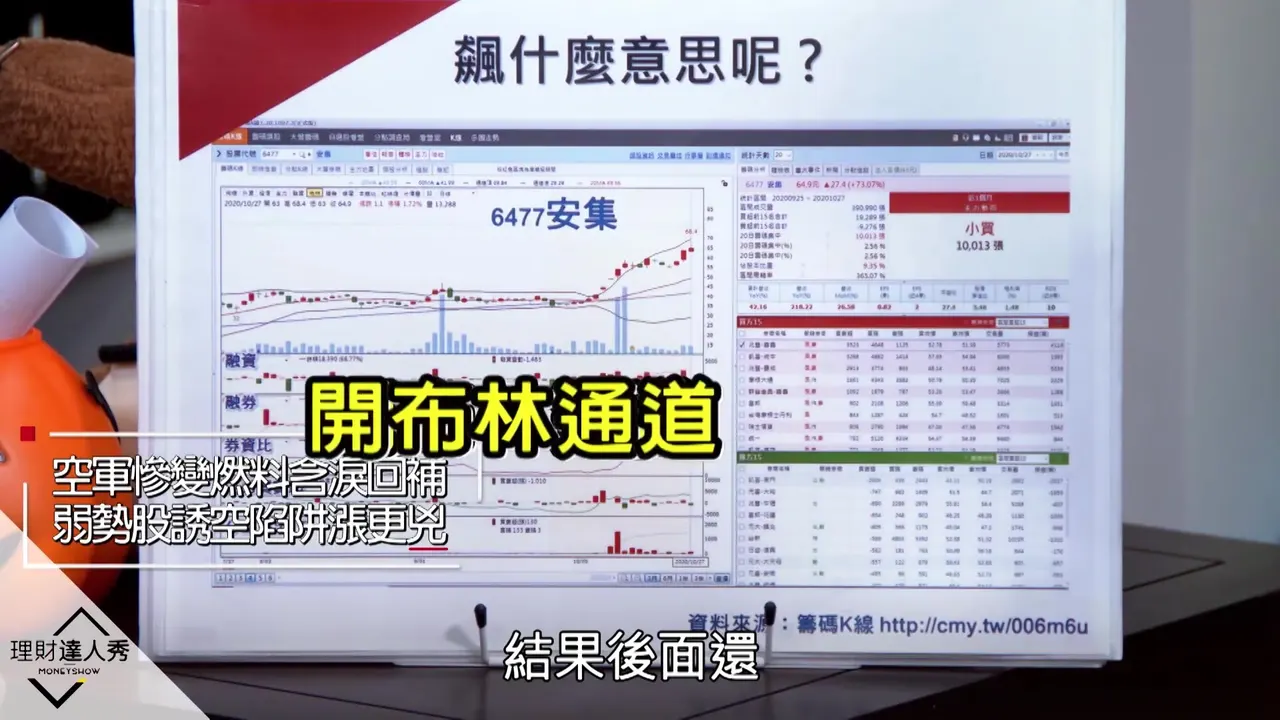
This stock has risen 4–5 times or more from this year's low, with shorts selling all the way up and being squeezed all the way. Short selling means borrowing shares from a broker to sell, expecting the price to fall; it is best done on weak stocks after the monthly moving average turns down, while the average person likes shorting strong stocks and gets squeezed. You put up 90% yourself, so leverage is about 1.1 times, but shorting at 100 and being squeezed to 400 could lose 3–4 times your capital, so the risk is very high.
▶ Watch from here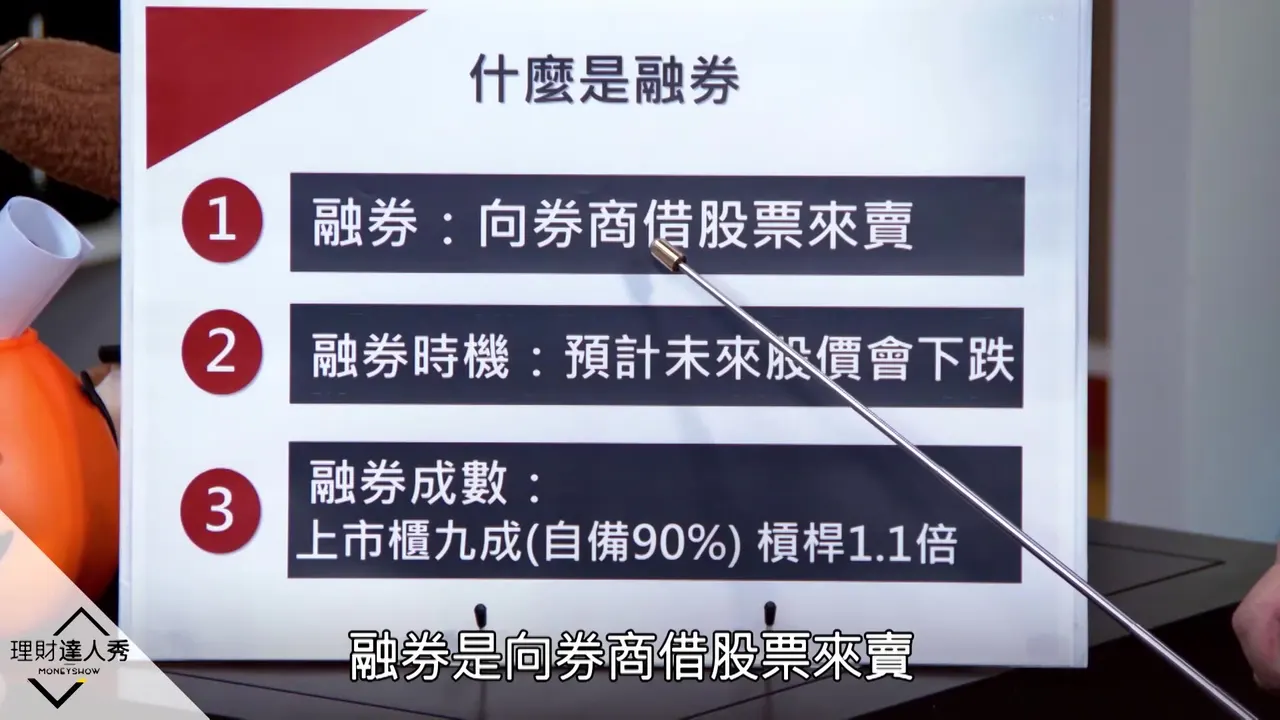
8:35Pros and Cons of Short Selling
The upside is that declines are usually faster than rallies, so profit efficiency is good, and shorting can hedge and balance long positions to avoid systemic crash risk. The downside is that shorts in Taiwan have "no rights": forced covering is required around shareholder meetings, ex-dividend dates or extraordinary shareholder meetings; when borrowable shares are scarce there is borrow-fee risk, with fees possibly as high as 9 wan yuan; and profit is capped at about 80-90% at most while risk is unlimited.
▶ Watch from here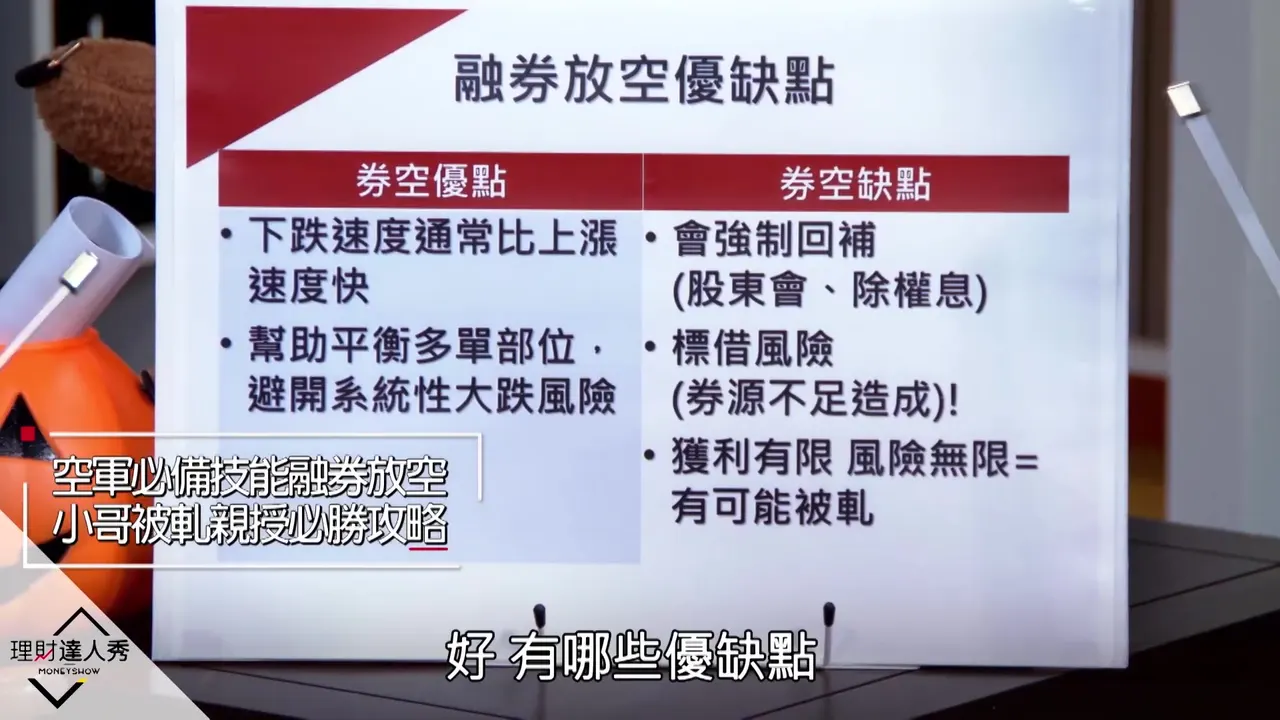
12:11Three Conditions for Picking Squeeze Stocks
Offers 3 conditions for picking squeeze stocks. First, the price rises strongly along the upper Bollinger band; then do not short even if flows and fundamentals are poor, because major players may deliberately net sell to show flow-watchers, and if you short, short on the right side of the mountain. Second, key broker-branch major players are buying in waves, meaning flows are decent, so do not short either. Third, margin and short interest rise together in a fierce fight, with a high short-to-margin ratio.
▶ Watch from here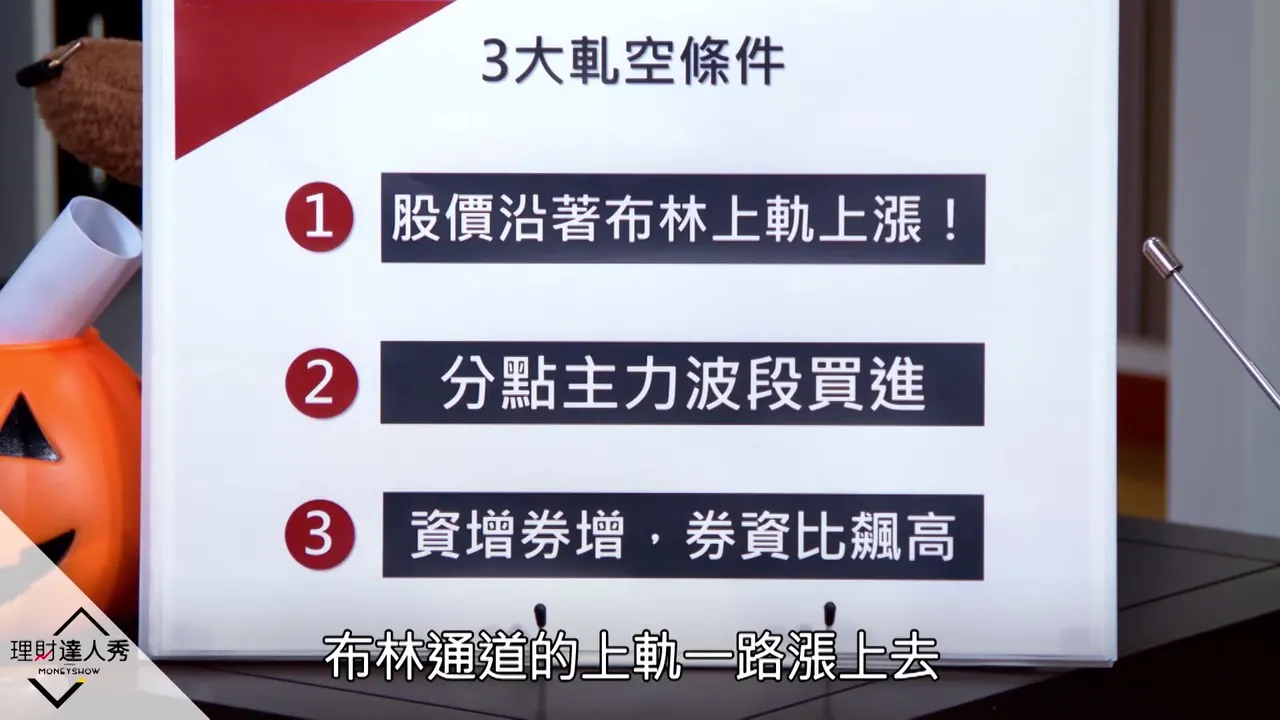
14:26Margin-and-Short Fights and the Short-to-Margin Ratio
A fight where margin and short interest both rise causes a squeeze because shorts cannot stand the psychological pressure as the price climbs and cover; if margin holders start leaving, the squeeze is near its end. The short-to-margin ratio is short lots divided by margin lots; for example 30 short lots against 100 margin lots is 30%, and above 30% counts as high. Because margin and short positions are spread across different brokers, places with fewer lendable shares get squeezed more easily; a high ratio means squeeze potential, but also borrow-fee risk.
▶ Watch from here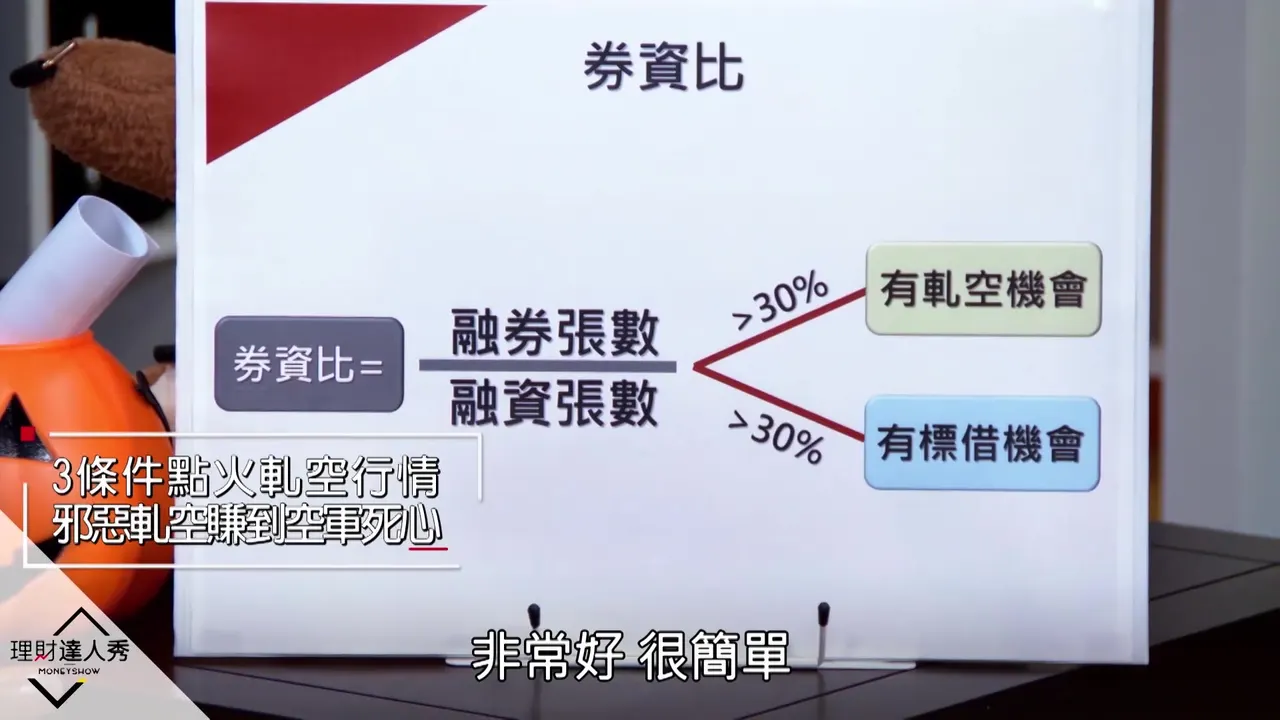
16:21The 撼訊 Squeeze Case
撼訊 was once a Foxconn-group concept stock, always called "demonic" and with many haters. The price was squeezed from 69 at year-end to 420 in April, about 6 times. If you shorted after 3 consecutive limit-ups, the 4th candle opened another 8% higher; when you tried to cover, 5 minutes later it locked limit-up again so you could not, and the next day it jumped 8% and locked limit-up again, blowing up shorts one after another. It was later put on disposition (trading restricted to periodic matching) and kept rising.
▶ Watch from here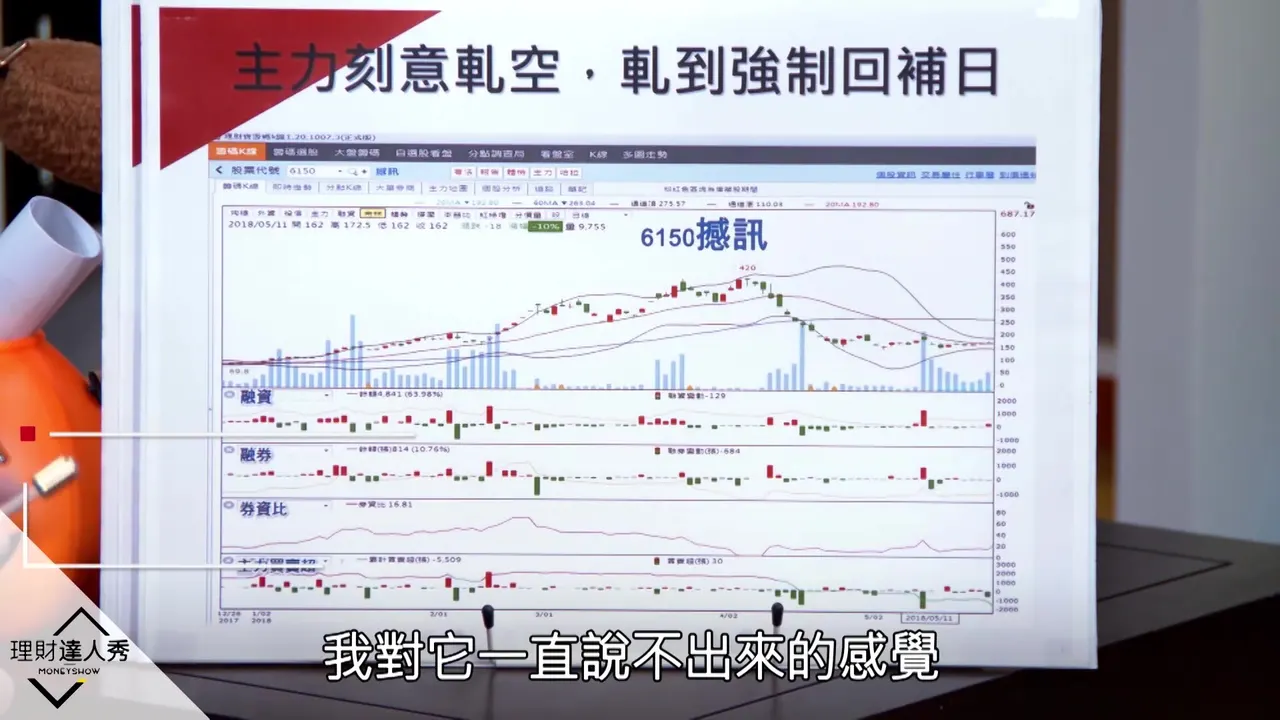
18:25撼訊: Short Ratio Goes to Zero and Forced Covering
Earlier this year many biotech stocks were put on disposition, with matching intervals up to 20 minutes; recently solar stocks under disposition fell first then rose, with only 5 minutes. 撼訊 rose from the 60s to 420, meeting the conditions of a rising short-to-margin ratio, major-player net buying and riding the upper band, so without a stop-loss 1 times your capital would be squeezed into a 3 times loss. The key to the top was the short-to-margin ratio going to zero: forced covering came 2 months before the shareholder meeting, a big red candle the day before it made shorts surrender in tears; on the forced-cover date you can choose not to cover, but the next morning the broker covers for you by force, filled at 420 at the open. Squeezed 6 times in 4 months, it was the worst case for shorts.
▶ Watch from here22:21Medigen-DR (美德醫療-DR): A True Short Stock
Medigen-DR (美德醫療-DR) moved differently from 撼訊: major players were selling. Before the high there was little short interest; only when it topped at a high did short interest start heavy shorting while major players sold hard, which is called major-player shorting at highs, skilled people entering short. When slogans like "miracles are coming" appeared on the discussion board, the speaker treated it as a crash guarantee because such slogans follow a faith route; the stock later fell 9 consecutive candles and shorts profited very fast. Seeing short interest jump at a high with major players selling heavily marks a true short stock, not a squeeze stock; other DR stocks showed the same pattern.
▶ Watch from here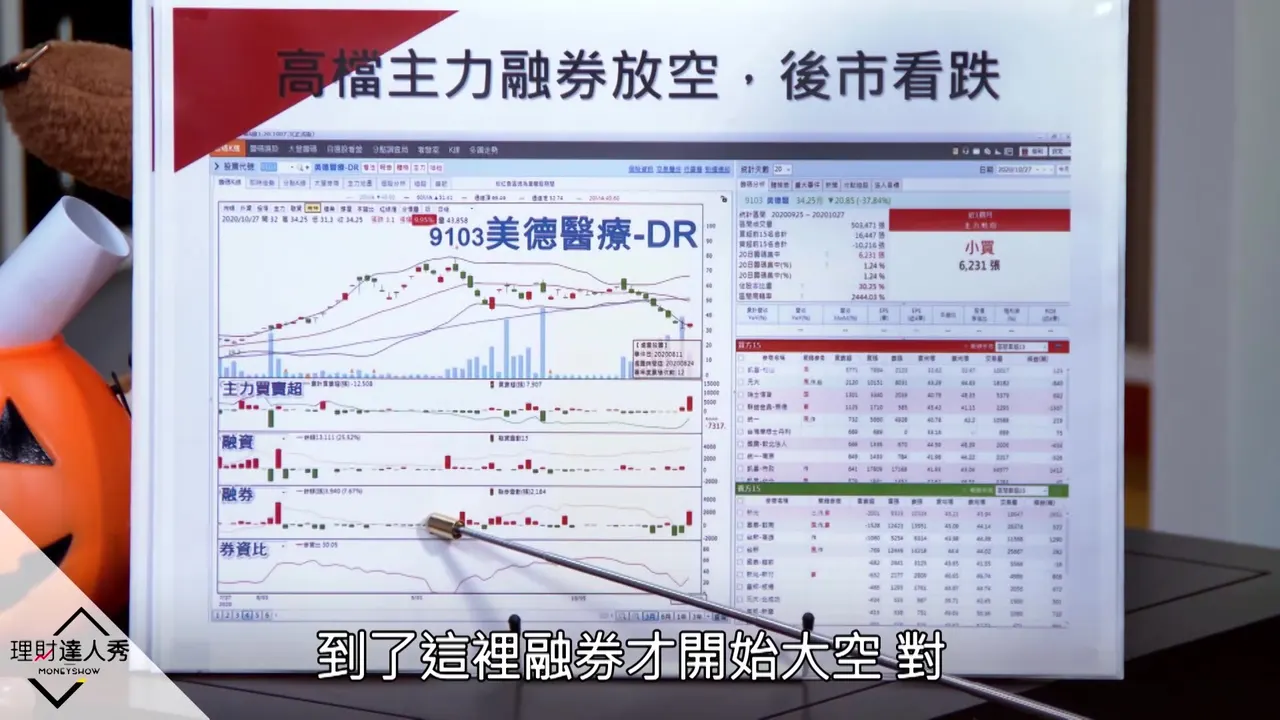
24:01Telling Squeeze Stocks from Short Stocks
Learn to tell squeeze stocks from true short stocks that will fall hard, so you do not mistake one for a squeeze and stubbornly hold. When people on the discussion board push shorting, a rise is coming; when they push going long, a fall is coming, and the more annoyed you are watching it, the easier you get squeezed. There are 2 squeeze peaks: forced covering for shareholder meetings from year-end to early March, and forced covering for mid-year ex-dividend from June to August and September, when squeeze stocks are especially numerous.
▶ Watch from here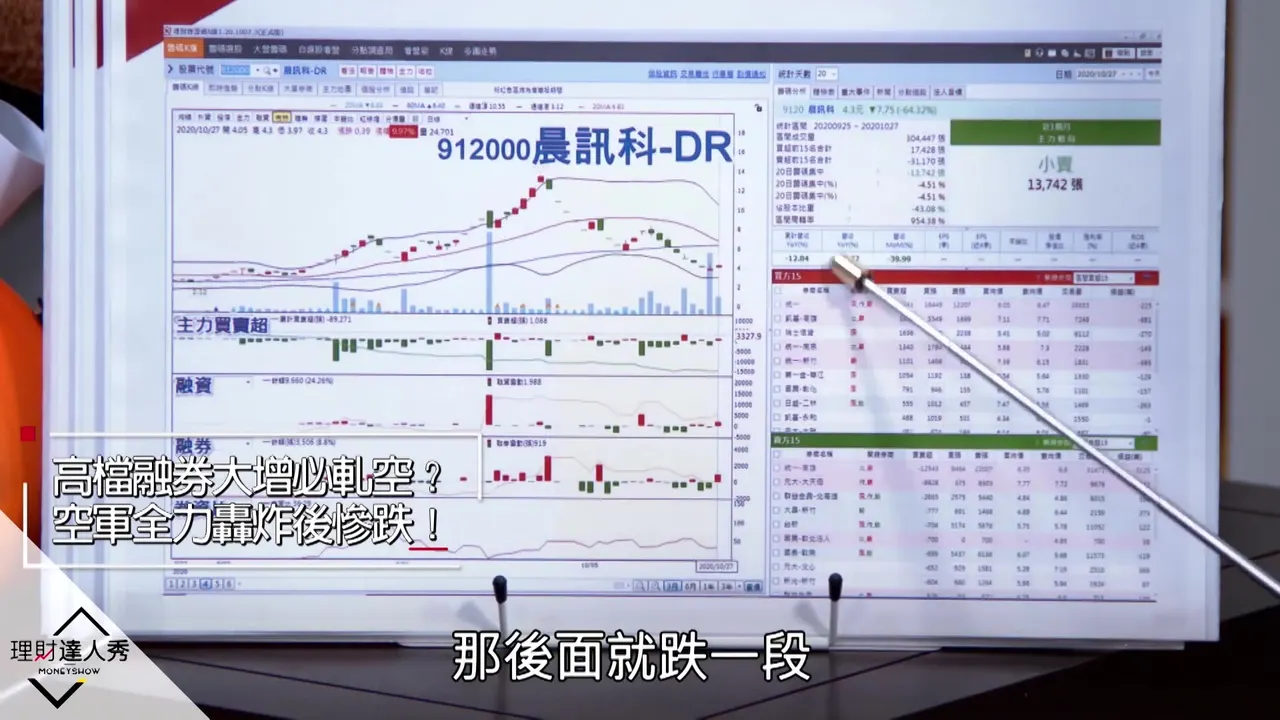
25:12Exam Question 1 Explained
The exam asks viewers to tell which are squeeze stocks and which are fake ones. Stock 1, 麗清, has margin up sharply and shorts bearish, but major players are selling; with major players net selling it can keep squeezing along the upper Bollinger band, and once it leaves the band and shorts surrender, the move is about over. The key is margin falling and short interest also falling, meaning margin holders have made enough and shorts have surrendered; with major-player net selling, it is a squeeze nearing its end, to put on the watch list. Shorting then is not necessarily good, since shorts may re-enter and get squeezed again; it is still on the left side of the mountain, so wait for the monthly average to turn down before shorting.
▶ Watch from here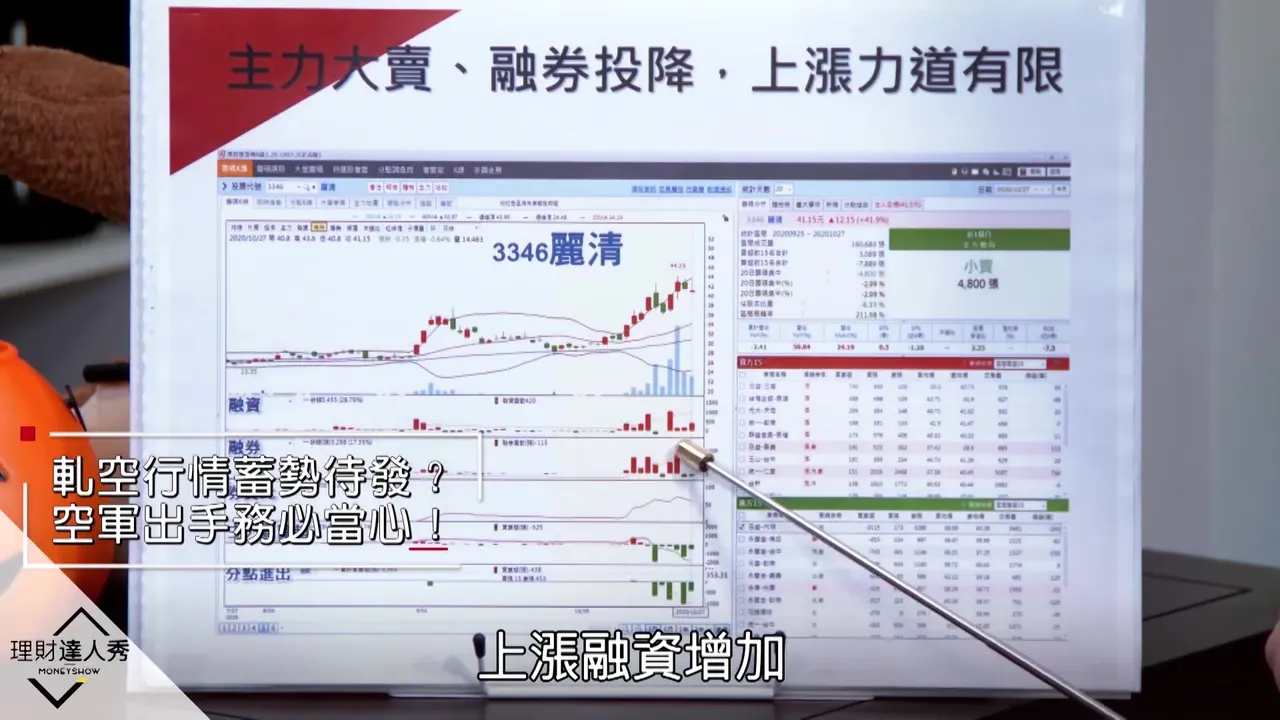
27:42Questions 2 and 3 and the Arbitrage Idea
Stock 2, Hotron (豪展), rides the upper Bollinger band, its short-to-margin ratio keeps rising and major players are still buying, a textbook squeeze stock, so never short it; those not on board should not chase either, since no one knows how far it will be squeezed. Stock 3, Ta Chen Steel (大成鋼), also has a high ratio, but it rose little, margin and short interest are both falling and major players are idle, so it should not squeeze. High short interest is not always for squeezing; it may be a company's cash capital increase, shorting first and repaying with the shares, an arbitrage to be taught next time. Only 1 of the 3 is a squeeze stock.
▶ Watch from here