How to Trade, and Escape, a Rebound After a Sharp Selloff, and What to Do If You're Trapped
TL;DR: A high-volume rebound after a sharp drop is a chance to escape and cut risk, and the only sign of a bottom is trading volume; buying floor stocks that crashed on heavy volume shrinks losses, whereas averaging down or doing nothing does not.
Key ideas
- A rebound is a chance to escape, not a signal to add positions: with the epidemic, China has not yet resumed work, and once it does it will face fears of person-to-person transmission and sharply lower orders, so the time bomb is still ahead; the outlook is conservative and near-term trading needs care.
- The only standard for a bottom is trading volume, not the index: only floor stocks that first spike in volume, then fall sharply with a large deviation from the moving average can be bought for a rebound, entering when they are sold down at the next day's open; volume must be 2–5 times the 20-day average volume, and the larger the volume, the higher the odds of a rebound.
- A limit-down stock with no volume is a knife you must not catch; wait for volume before buying, and chasing it after it has already risen is also wrong.
- If you are trapped, don't think about breaking even or averaging down; sell part of the position into a floor-stock rebound to lower your cost. Even selling at a loss only shrinks the loss, and losing less is a gain, while doing nothing lets you get trapped deeper, even down 50%, 60%, 70%.
- One line for staying alive: hold both long and short positions, and when you make money, sell some of your losing positions at the same time, which is booking losses; focus on next-day-exit short-term trades, as the index rebounds first and then builds a base, and only when the epidemic ends and orders return is there a chance of a big rally.
Section summaries
0:25What a Rebound Means and the Right Mindset
After consecutive declines, a rebound comes easily once heavy volume appears. But the host warns that the current rebound is a chance for you to escape and cut risk, not a signal to enter and add positions.
▶ Watch from here0:30A Conservative Outlook and Epidemic Risk
The host is conservative on the market ahead: China is still on holiday and has not resumed work, and once it does it will face fears of person-to-person transmission on production lines, while orders have already become very few. The time bomb is still ahead, and fundamentals will get worse later. Chinese stocks have reopened, but he thinks artificial factors are large; the securities regulator has rolled out many measures that only delay the decline, so trading recently needs to be done with care.
▶ Watch from here1:10Next-Day-Exit Warrant Trades to Catch the Rebound
Short-term trading centers on next-day exits, and warrants suit a volatile market best. The host says the standard for a bottom is only one thing: trading volume. A volume spike first, a big price drop, and a large deviation from the moving average make a floor stock that can be bought for a rebound; enter when it is sold down at the next day's open, looking only at this and not at the index. Plenty of stocks sold down the previous day were caught this way for profit that same day.
▶ Watch from here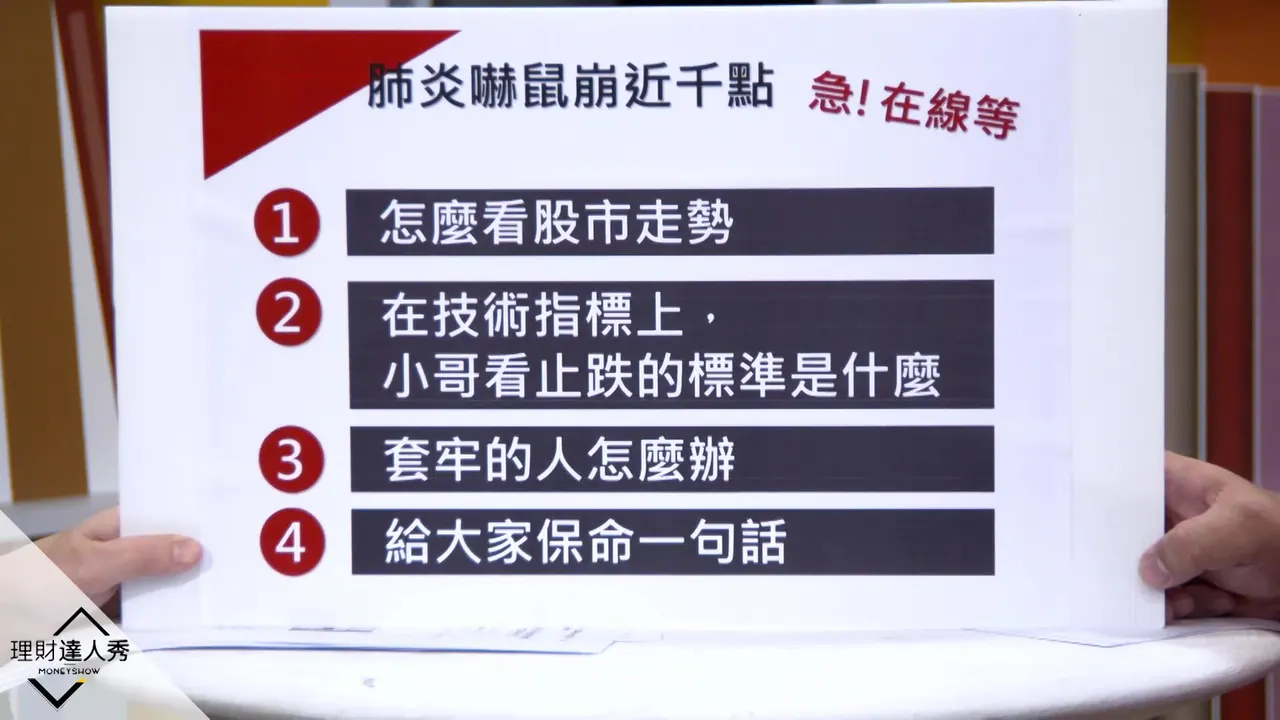
2:40What to Do When Trapped, and the One Line for Staying Alive
After the index rebounds it must first build a base; only when the pneumonia outbreak ends and orders return is there a chance to look for a big rally again. The host thinks the question "what do I do when I'm trapped" is itself wrong, and the word "trapped" shouldn't be in your dictionary, because thinking about breaking even or averaging down easily gets you trapped deeper. Averaging down is acceptable if you do it by buying floor stocks that crashed on heavy volume, but not if you chase after seeing them rise, and you must never catch a limit-down stock with no volume. The standard for volume is trading volume above 2–5 times the 20-day average volume, and the larger the volume, the higher the odds of a rebound. Sell part of the position into a rebound to lower your cost; even selling at a loss only shrinks the loss, and losing less is a gain, while leaving it alone may mean falling all the way 50%, 60%, 70%. The final line for staying alive: your positions must hold both long and short, and when you make money, sell some of your losing positions at the same time, which is called booking losses. Later lessons will teach how to short and trade short term.
▶ Watch from here