Predicting Moving-Average Direction with Dropout Values, Then Timing Trades with Major-Player Net Buying and Selling
TL;DR: A moving average's direction can be worked out in advance from its dropout value, but this only improves the win rate by about 10%, so it must be combined with major-player net buying/selling and whether the price is high or low, to avoid the trap of major players unloading shares on good news.
Key ideas
- A moving average is like a class average: the new price coming in must be higher than the old price dropping out for the average to rise. The 5-day line has few members and is hard to predict, while the quarterly line has 60 days of members, so its direction can be judged ahead of time from the dropout value; what is predicted is the average's direction, not the next day's rise or fall.
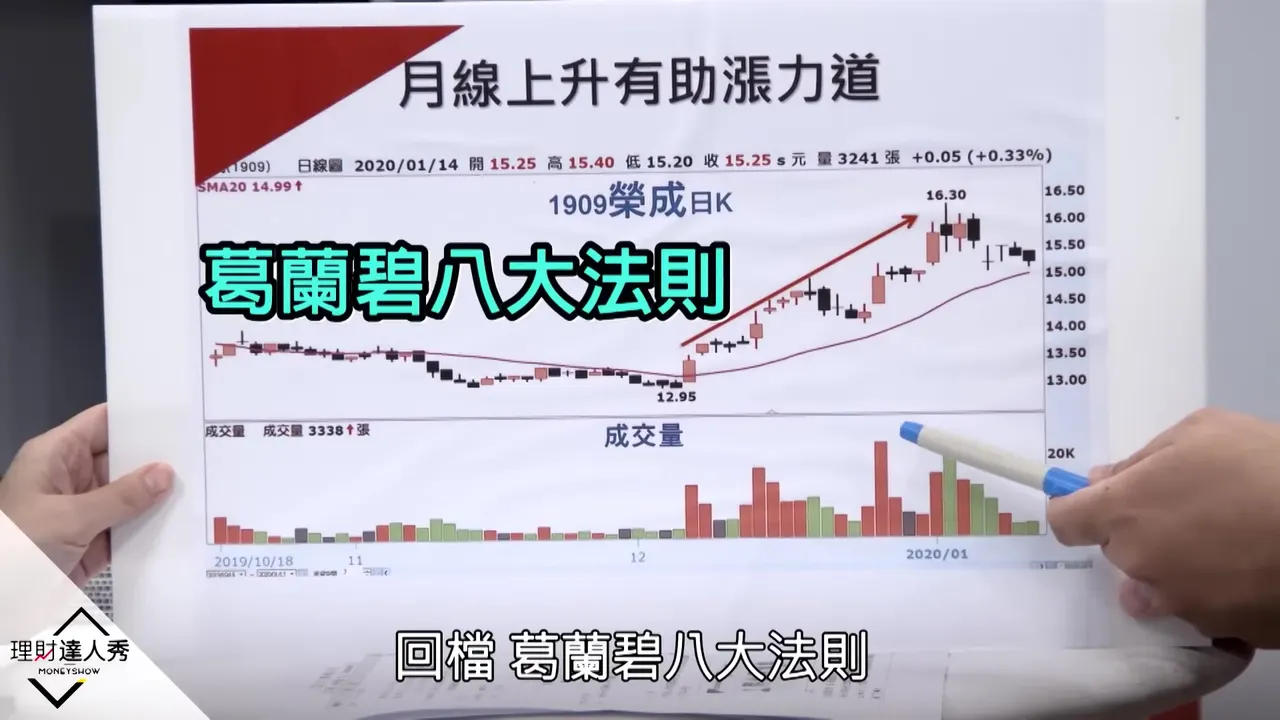
- The monthly line's dropout value is the price 20 days back: breaking above the monthly line on a long red candle with heavy volume is a buy signal, and once the monthly line is rising, every pullback is a buying point; building a position early while the monthly line is still turning down got the Rong Cheng example trapped.
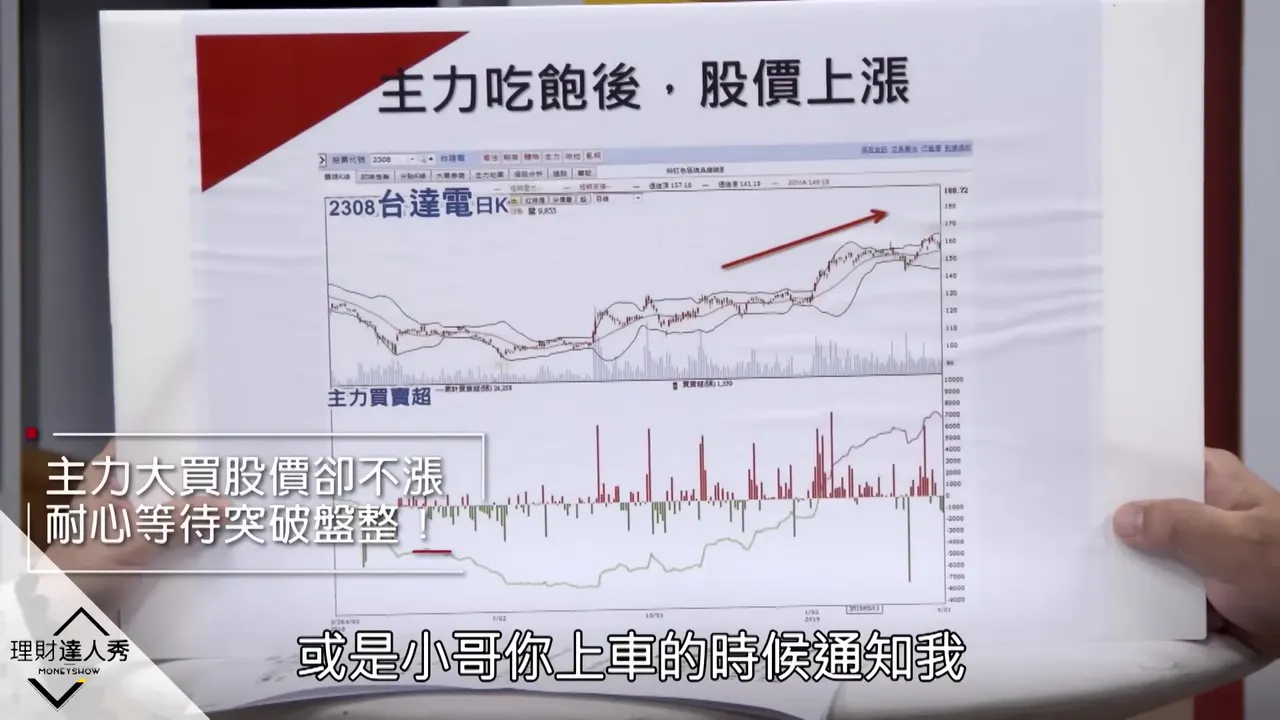
- Major-player net buying/selling is the net buying minus selling of the top 15 broker branches in Taiwan: the safest case is major players buying while the price is still consolidating (such as Delta Electronics), and you wait for the launch day before buying; when major players keep buying and the monthly line is rising (such as Giant), you can buy, but set a stop-loss, which the speaker suggests at 5% below the high.
- Good news you can see is not good news: Taigen Biopharmaceuticals-KY opened high, closed lower and printed a black candle on the day of its good news, and a major shareholder of Crystal Media filed share transfers to unload on the good news; both are examples of flows moving ahead of the price.
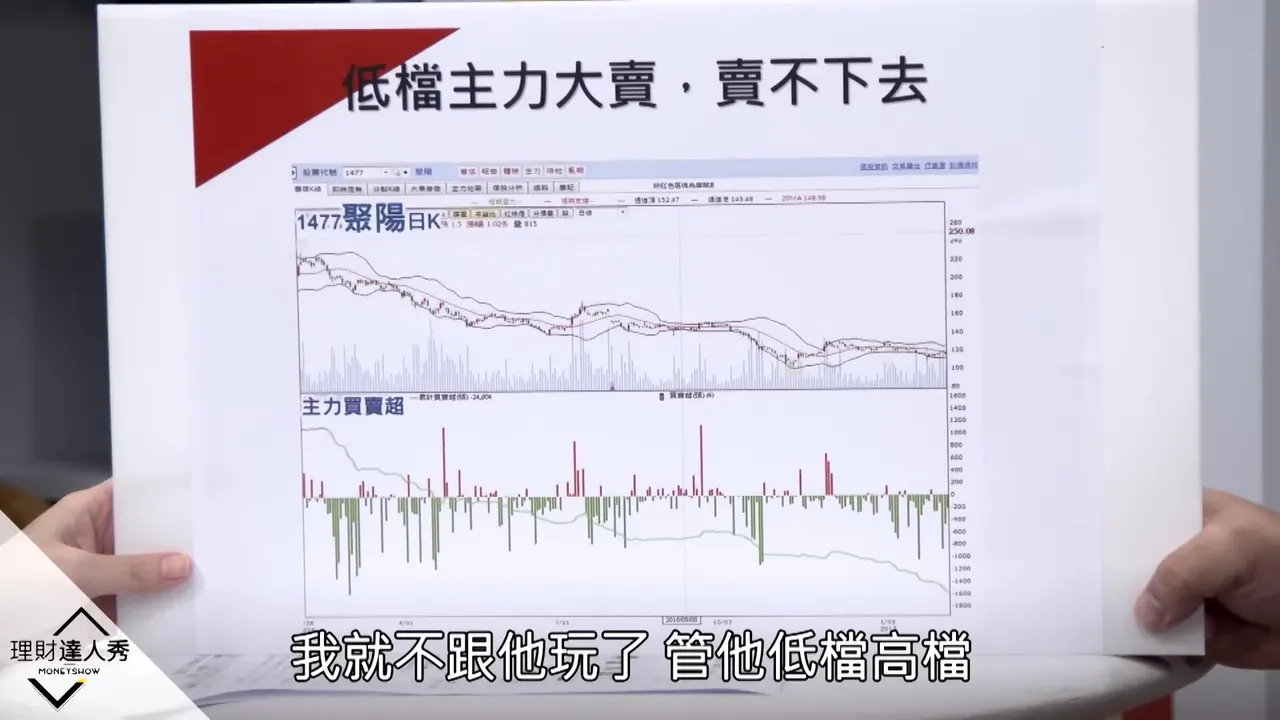
- When major players sell heavily at a high level, if the price has not made a new high within 20 days after the peak, the monthly line easily turns down, and it is best to exit within those 20 days; conversely, when major players can no longer keep selling at a low level, switch to buying and the average rises (such as Makalot), it is instead a good time to buy heavily.
Section summaries
0:10Opening: The Idea That Moving Averages Can Be Predicted
The episode opens by previewing that a moving average can be calculated in advance: good news you can see is not good news, and when major players are accumulating, the price often has not risen yet. It then explains how members of a moving average get replaced with the analogy "kick out the bad students, add good ones, and the class average rises," and states the goal of the lesson: predicting whether the average will turn up or down, in order to raise the win rate.
▶ Watch from here3:50Predicting the Quarterly Line's Direction and the Dropout-Value Concept
Predicting a moving average's direction can be verified 100%, whereas predicting the next day's rise or fall is not 100% accurate; the recording day was January 14, so viewers can check the candlesticks the next day. The 5-day line has few members and is heavily affected by tomorrow's move, so it is harder to predict; the quarterly line has 60 days of members, so its direction can be judged from the dropout value. In the demonstration the dropout value sat at a relatively low level, so the quarterly line was predicted to keep rising the next day.
▶ Watch from here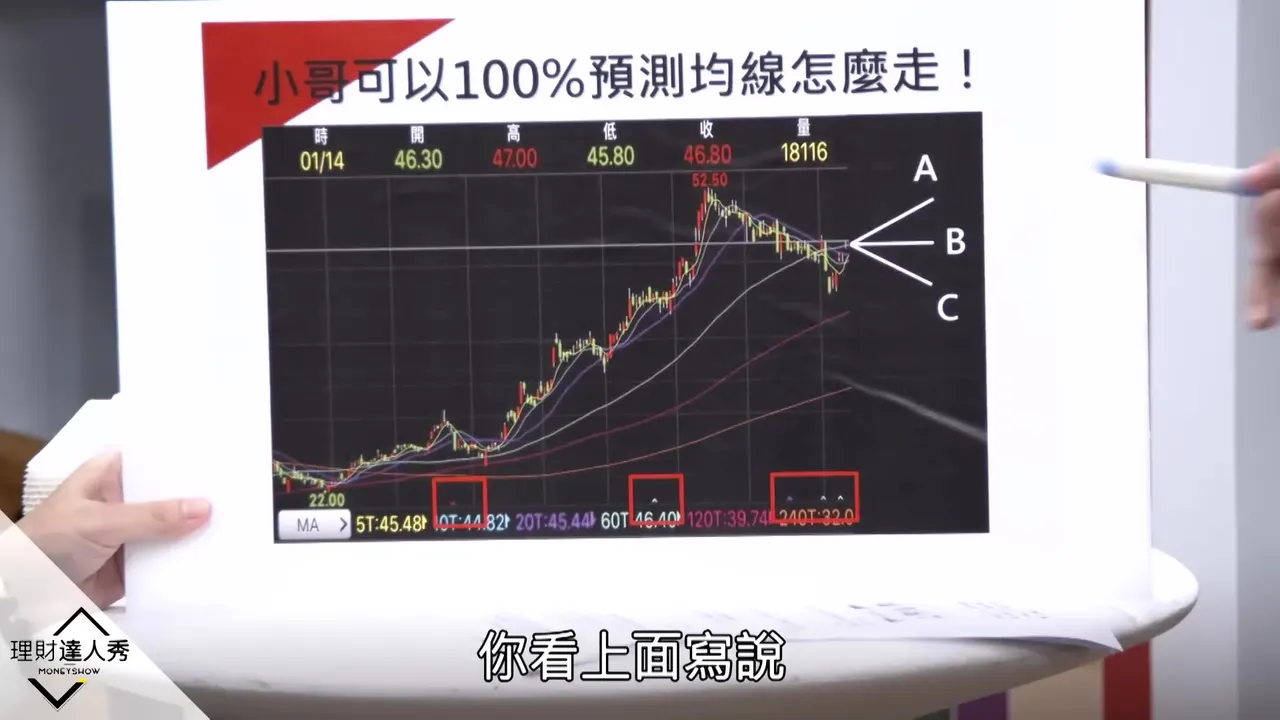
5:20Calculating the Dropout Value and an Early-Entry Case
Take a 5-day average price of 104: the dropout-value idea is that the "student" priced at 107 on February 1 is being transferred out, so the next day's close must be above 107, that is 108, for the average to rise; closing at 105, though above the average price, still makes the average fall. Next, a red candle on Rong Cheng (1909) is used as a demonstration: although it had not yet broken above the monthly line, the lower shadow showed buying interest, so a position was built early; but there was still selling pressure overhead, the monthly line kept turning down, and the buyer ended up trapped.
▶ Watch from here10:51Monthly-Line Dropout and Buy Signals
The monthly line's dropout value is the price 20 days back: if the price being dropped is higher, the monthly line has a hard time rising. A price that breaks above the monthly line on a long red candle with heavy volume is a buy signal, and once the monthly line is rising, every pullback is a buying point, echoing Granville's eight rules. However, looking at the dropout value alone only improves the win rate by about 10%, so it must be paired with flow data.
▶ Watch from here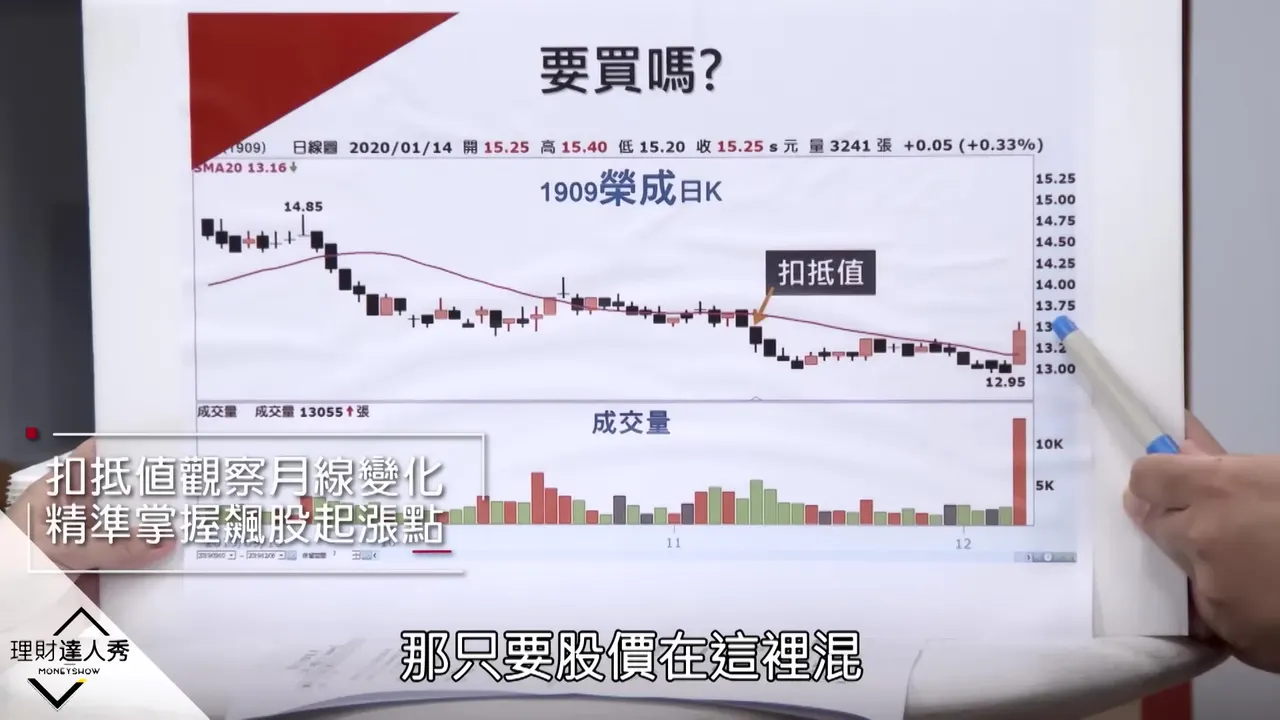
15:31Definition and Lookup of Major-Player Net Buying/Selling
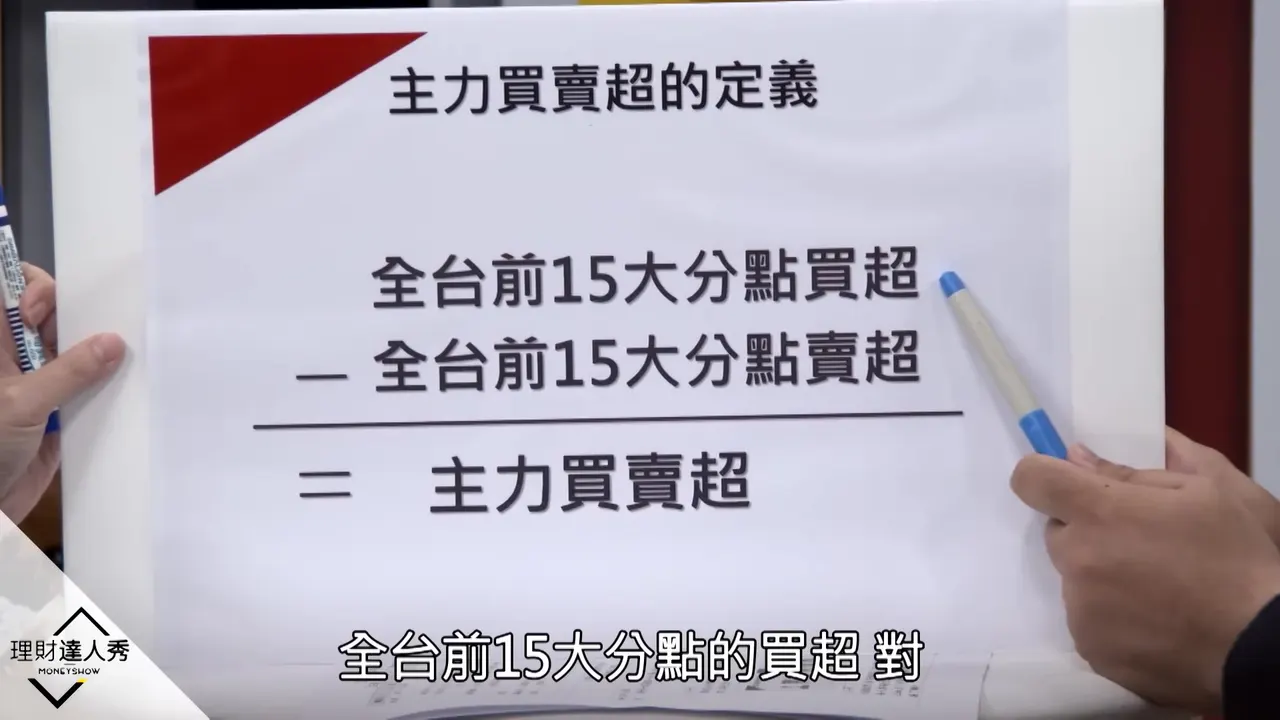
Take a stock whose previous high was 86.8: if the price has not exceeded the prior high on the 20th day after the high, the monthly line easily turns down; if major players are also selling heavily at the high while good news keeps appearing, that is the classic pattern of unloading shares. Once the monthly line turns down 20 days after the high, shorting is less likely to get squeezed. Major-player net buying/selling is defined as the net buying minus selling of the top 15 broker branches in Taiwan, and many charting programs on the market can look it up.
▶ Watch from here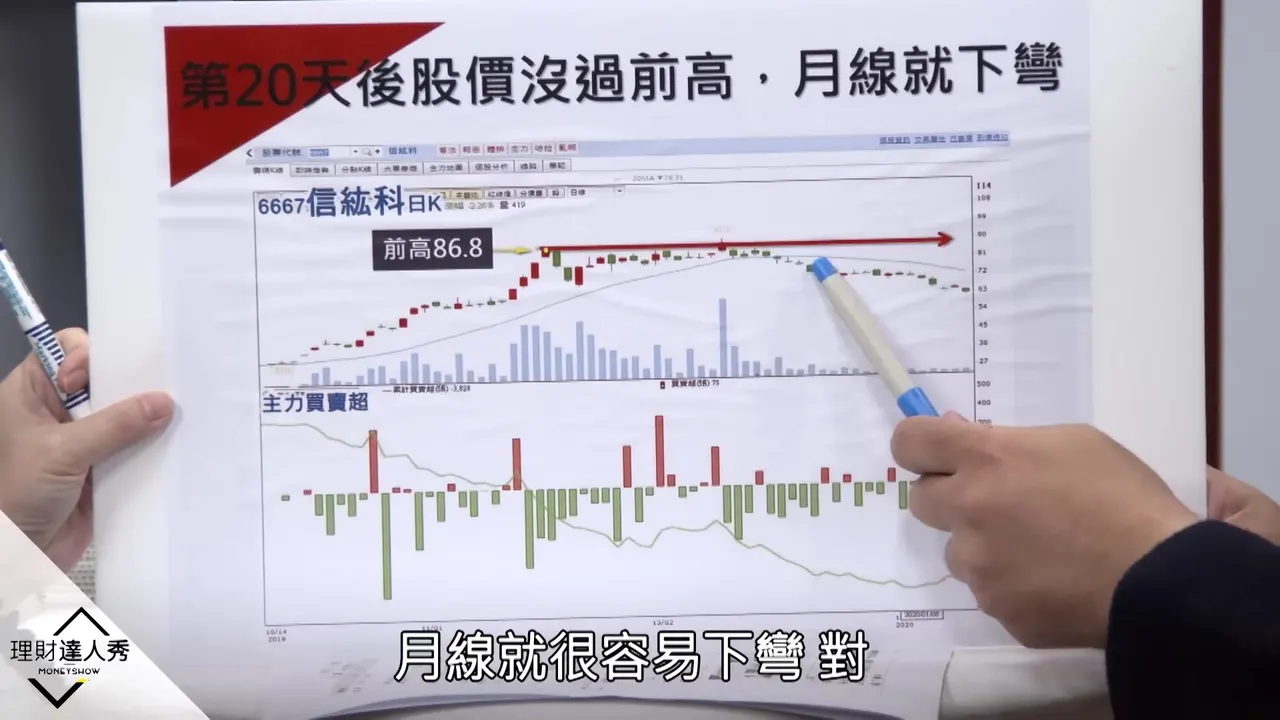
17:15Flows Move Ahead of the Price
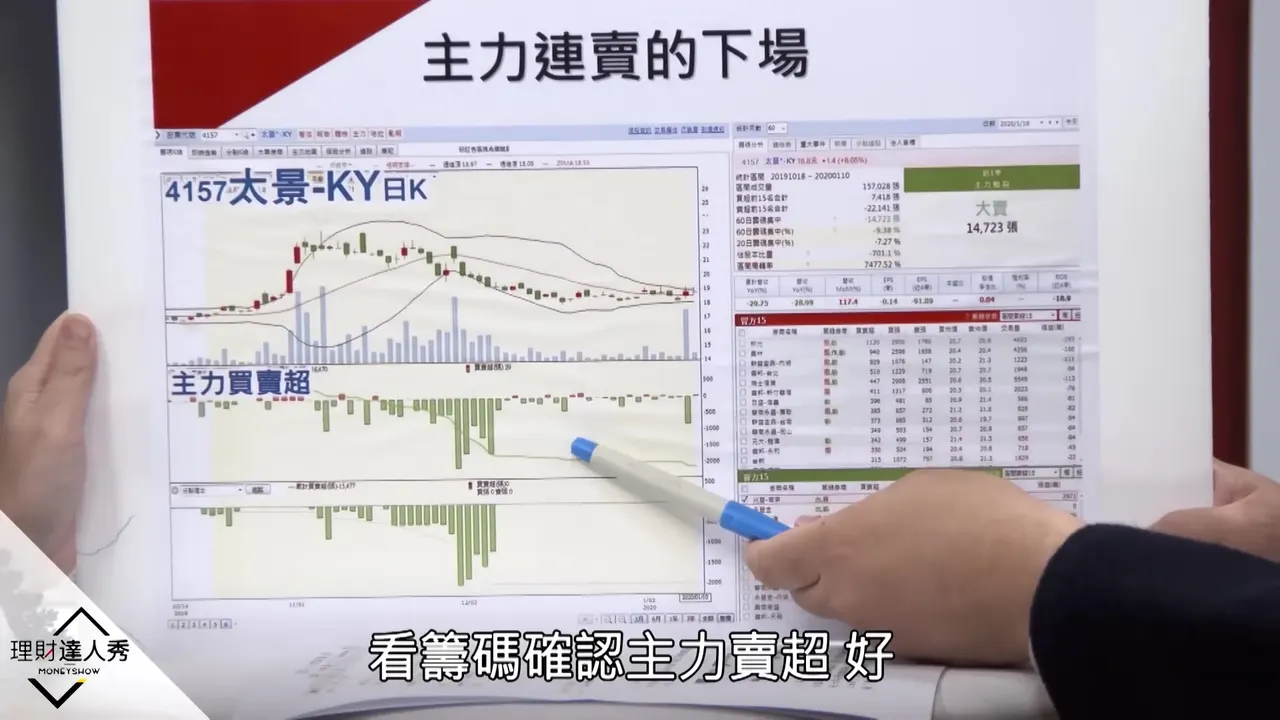
Take the board-reelection rally in Rong Gang: major players kept buying heavily, and the top buyers were concentrated in branches in Chiayi, Tainan and similar places that like swing trading board-reelection themes, which was a signal to get on board. Compare Taigen Biopharmaceuticals-KY: on the day of major good news, its antibiotic being included in China's national medical insurance, the stock opened high, closed lower and printed a black candle, and when the flow data was checked that evening, major players were indeed selling. The conclusion is that flows move ahead of the price, and good news you can see is not good news.
▶ Watch from here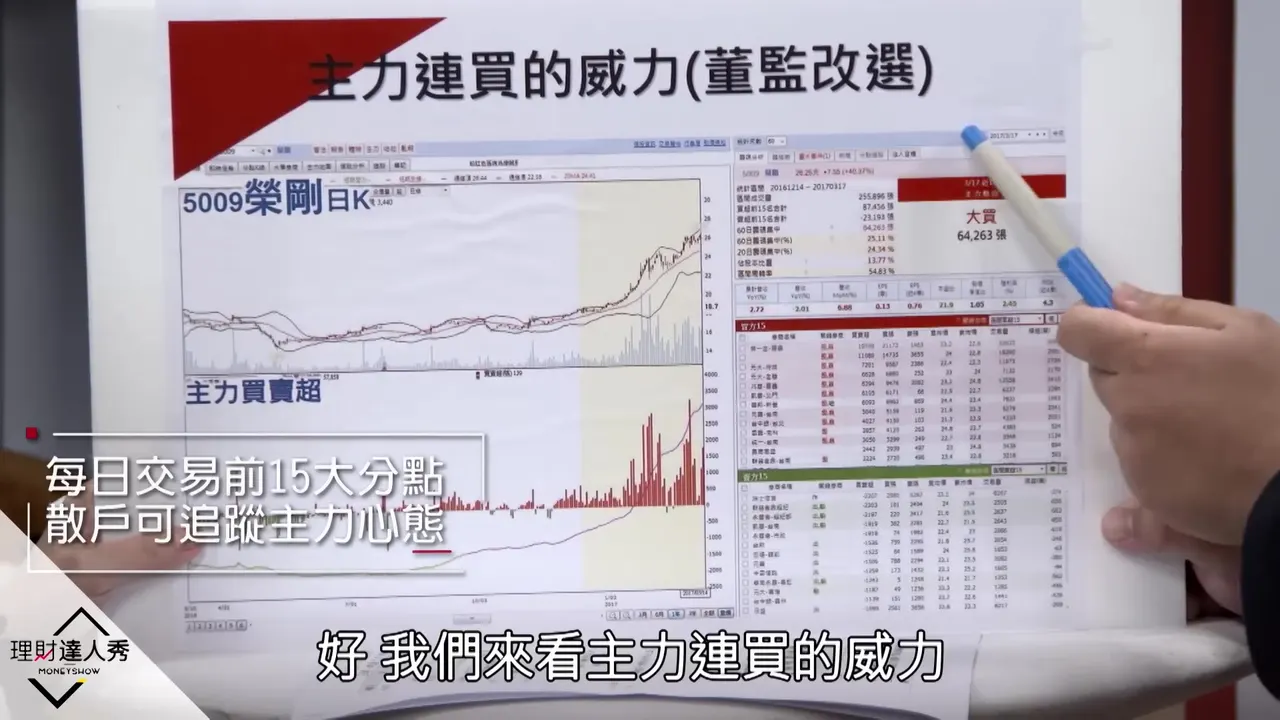
20:51Catching Major-Player Unloading Through Share-Transfer Filings
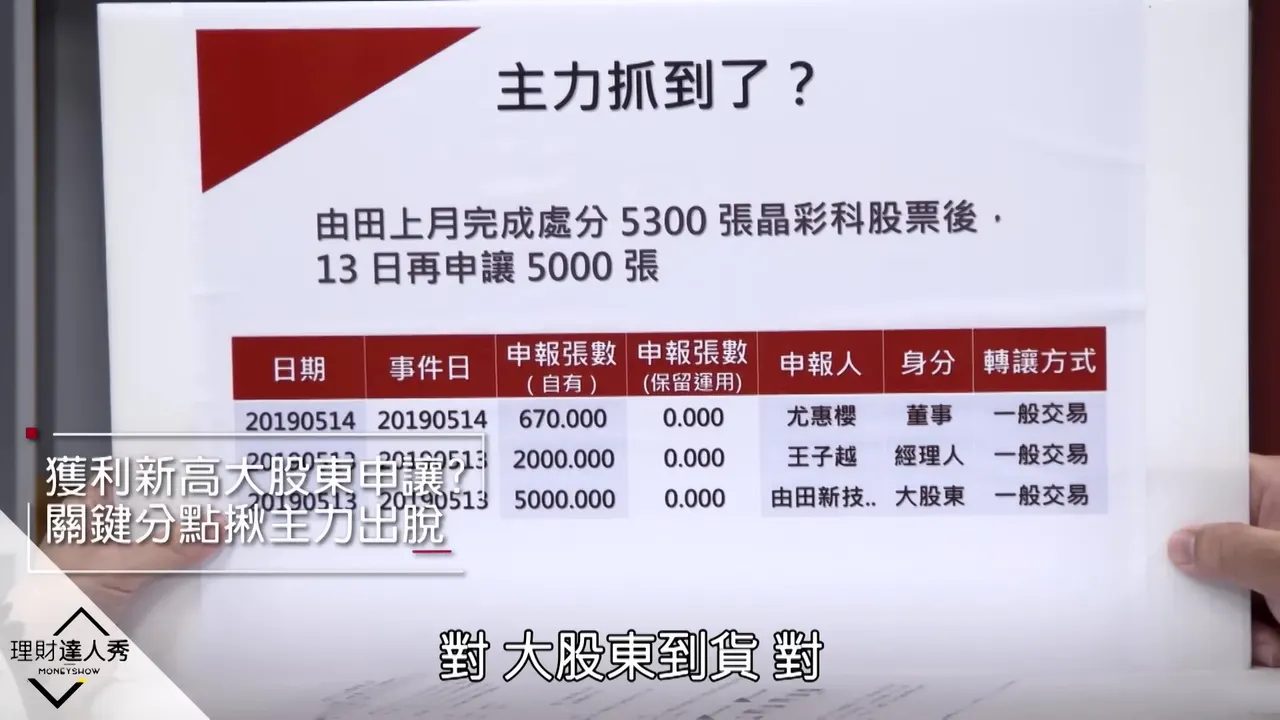
Crystal Media's EPS for the first 4 months was 2.19, so the fundamentals looked bright, but major players already knew revenue would weaken afterward. The share-transfer filings show that major shareholder You Tian disposed of 5,300 lots, and several directors also filed transfers, unloading on the good news; the stock fell from 30 to 40 all the way down to 20, and retail investors who followed along lost heavily. The point is not whether the company is good or bad, but that you should watch the flows when major players are unloading.
▶ Watch from here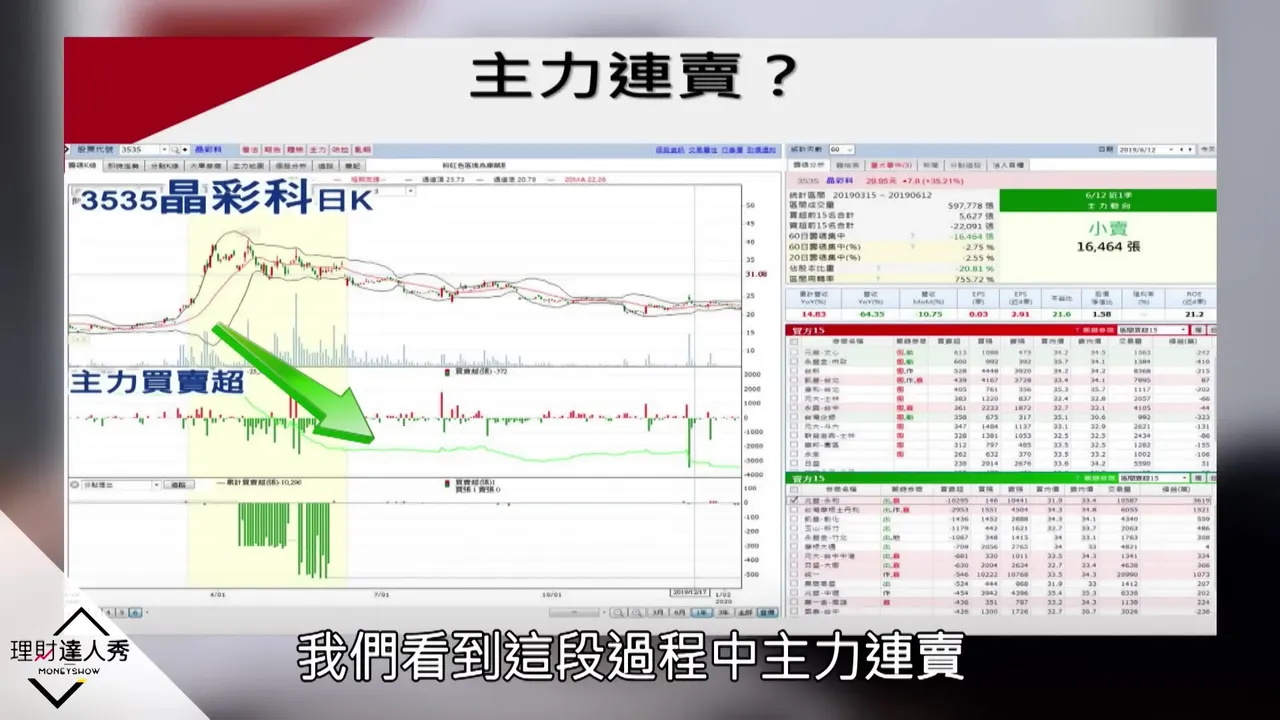
23:05Practice Question: Rising Monthly Line and Major-Player Net Buying
The question: in a chart with a rising monthly line and major-player net buying, every position can be bought. Taking Giant as an example, a stop-loss must always be set when buying, suggested at 5% below the high, because a 5% intraday drop usually means something is wrong; major-player net buying is the reason the price has already risen, and if major players turn to net selling, the price may fall afterward, which is exactly what the revealed answer showed.
▶ Watch from here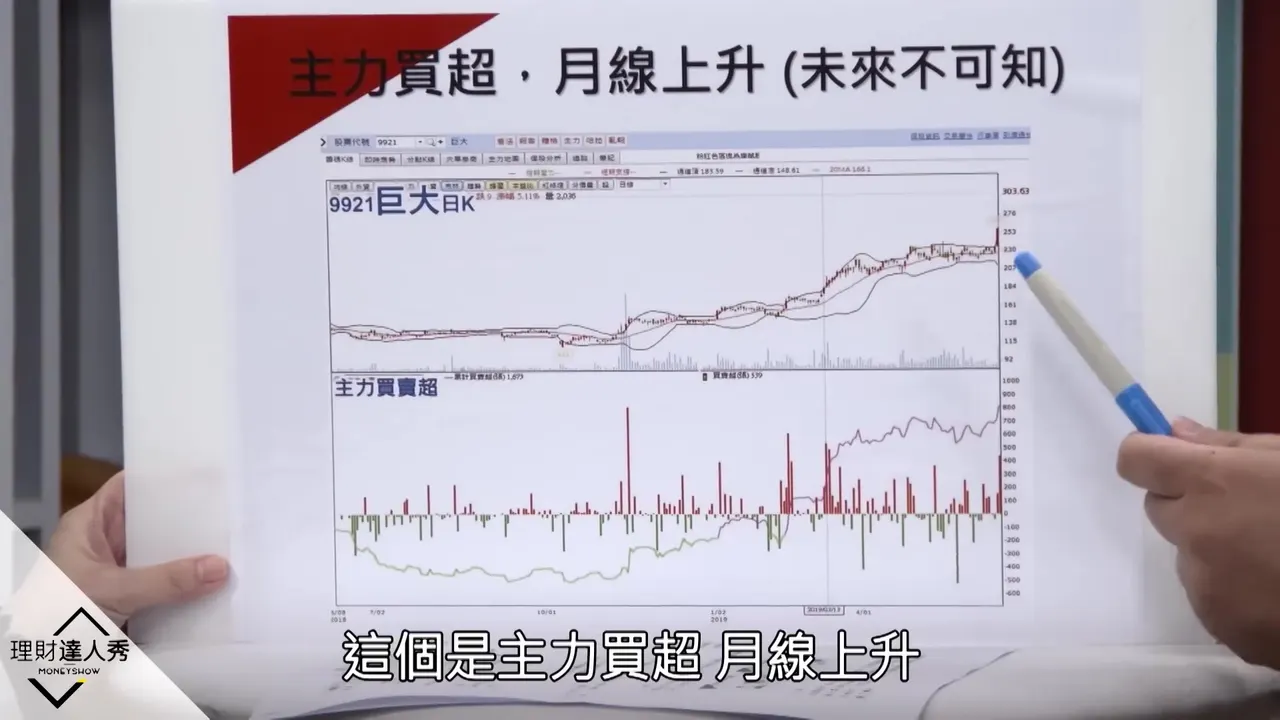
25:48Major-Player Accumulation Patterns and Entry Timing
Take Delta Electronics: a good company whose price is consolidating while major players keep accumulating is the most beautiful entry point, because you are with the major players and it is relatively safe; but wait for the day it launches before buying, and do not buy warrants (you don't know when it will launch), though buying to hold long term is also fine. As for when major players have finished accumulating, the next episode will use Bollinger Bands to judge; for now, only a hint: watch whether the upper band is curling up.
▶ Watch from here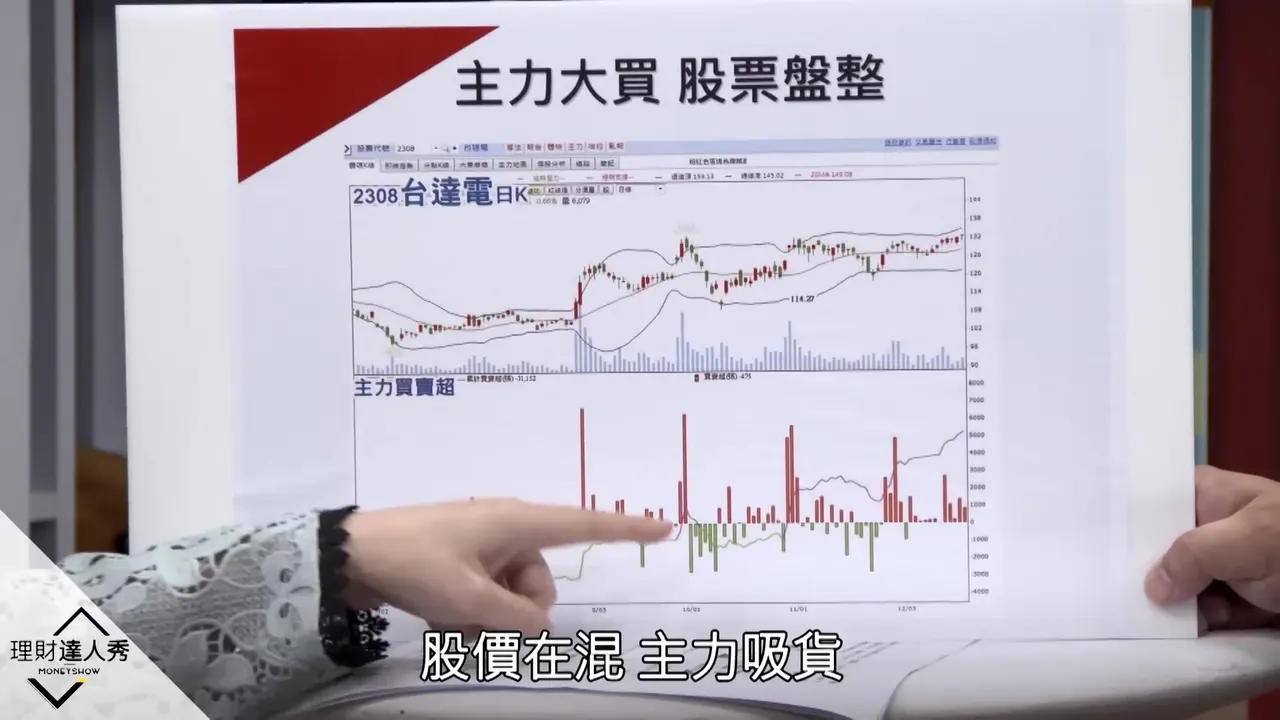
27:15Special Case: Major Players Sell Heavily but the Price Rises
Next is a special case: major players sell heavily yet the price surges, because a mysterious group and two forces, major players and institutions, are crossing each other. The key is to find the stock's high: if the price has not made a new high 20 days after that high, the monthly line easily turns down, and checking confirmed the monthly line did turn down.
▶ Watch from here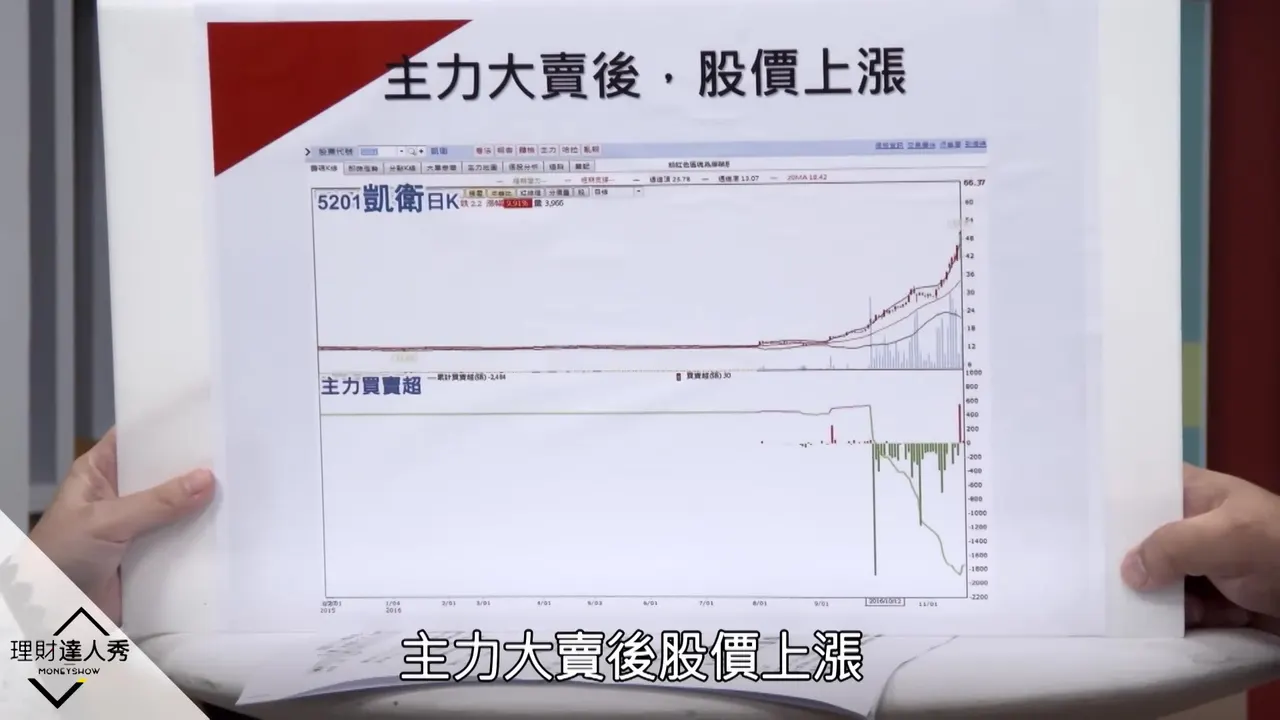
28:28Judging a Falling Monthly Line Together with Flows
A falling monthly line does not mean a stock is certainly finished, but a falling monthly line plus heavy major-player net selling gives a very high chance of decline, because those chasing in at that point are mostly retail investors, major players have already cleared out, and the slightest disturbance can trigger a sell-off. So it is best to exit within 20 days after the high appears: sell when you should, cut losses, and shift the money to stocks major players are buying.
▶ Watch from here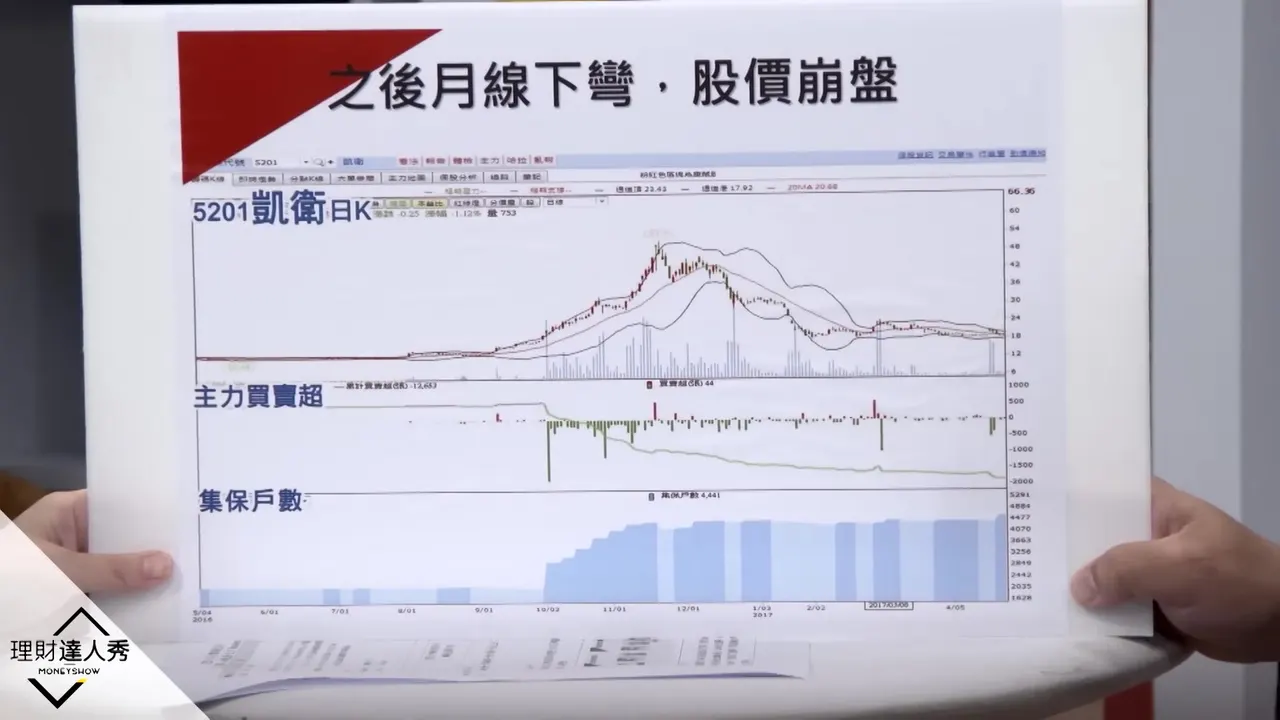
30:52Major-Player Selling and the Timing of Heavy Buying at Lows
The stock mentioned earlier, where a major shareholder filed share transfers, fell from 38 to nearly 20; the conclusion is not to gamble when major players are net selling, but to sell. By contrast, at Makalot, although major players sold heavily at a low level, they could no longer keep selling, and once major players turn to buying and the average rises, it is instead a time to buy heavily at the low. The episode also demonstrated using a chip-data candlestick app to look up major-player net buying/selling.
▶ Watch from here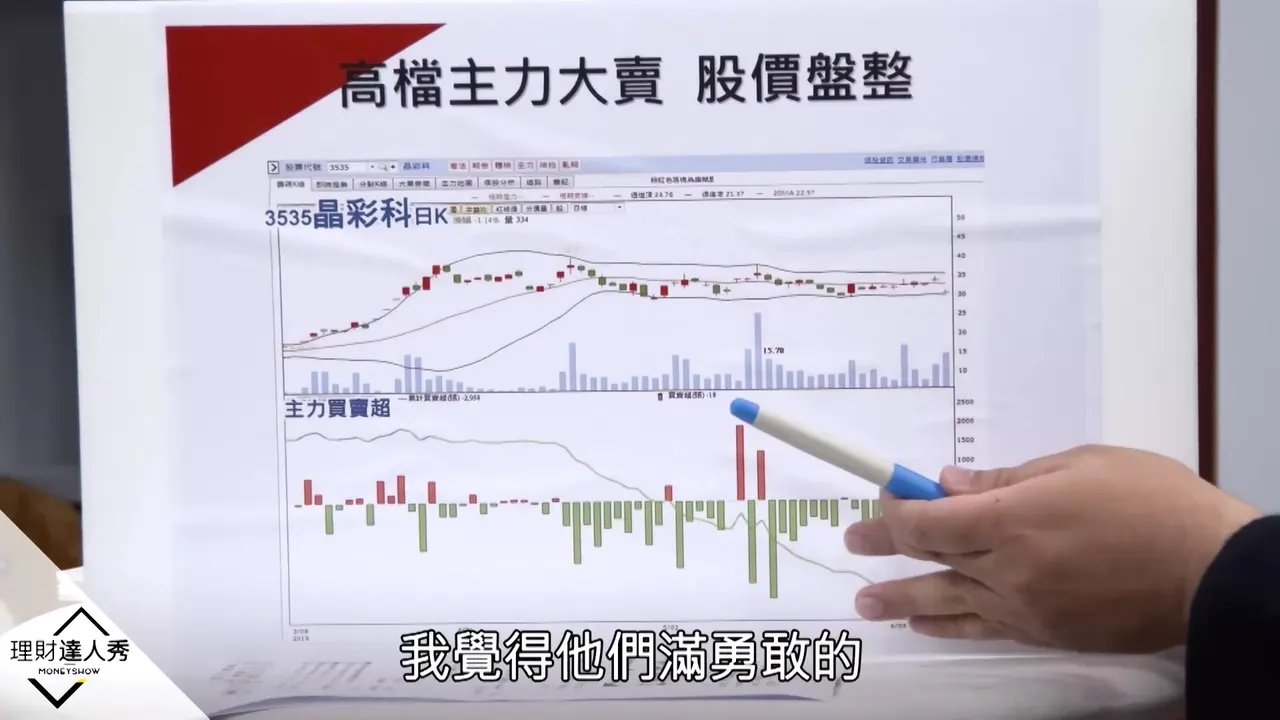
33:22Key Broker Branches and Summary
Key broker branches are the unshared secret of flow analysis; some can be discussed and some cannot. For example, the key branch for Asia Cement is the head office of Yuanta-style Asia Orient Securities, linked to Douglas Hsu. In summary: learn to use dropout values to work out when a moving average will turn up or down, pair it with major-player net buying/selling, and pay attention to whether the price is at a high or low level; only when all three work together can the win rate of your trading improve.
▶ Watch from here