Short-Term Strong Stocks via Short-to-Margin Ratio and Major-Player Buying, Plus a Buy-and-Hold Approach to Staples and Recovery Stocks
TL;DR: For the short term, screen for strong stocks using a high short-to-margin ratio plus major-player buying; for the long term, pick high-gross-margin consumer-staple companies with moats, because the former relies on a short squeeze driven by chip flows while the latter is unafraid of the pandemic and benefits from a recovering economy.
Key ideas
- The short-to-margin ratio is short interest divided by margin balance, times 100%; above 30% counts as high, meaning short sellers may get squeezed. Do not short strong stocks riding the upper Bollinger Band; if you chase, set a stop-loss and exit once the price leaves the upper band, so you are not the last mouse.
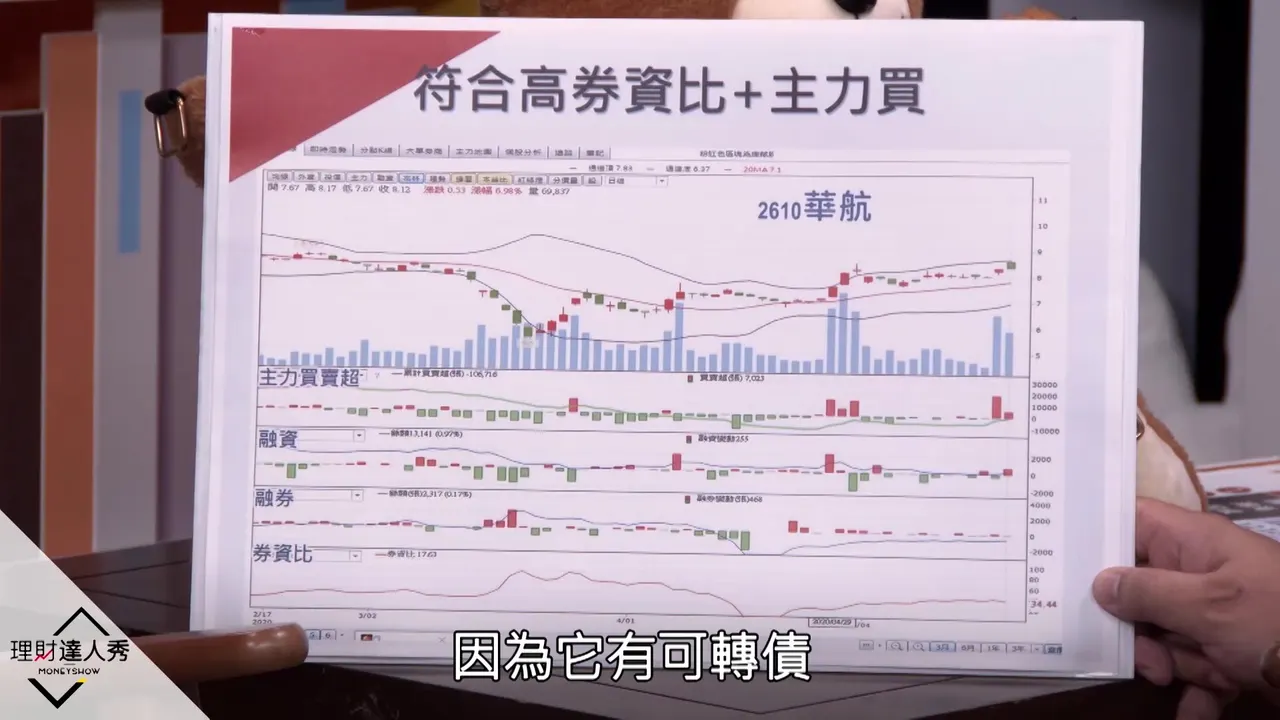
- A high short-to-margin ratio plus major-player buying is only a starting point for screening: Young Optics has swing-trading major players fighting short sellers, so just watch without chasing; China Airlines has issued 2 convertible bonds, and some people run dynamic hedges and profit from big rises and big falls, so avoid stocks with convertible bonds.
- Warren thinks anti-pandemic concept stocks currently carry too high a dream premium, and chasing them could mean a limit-down in one day and being unable to sell; for buy-and-hold, choose consumer staples tied to eating and excreting that you are confident in, and judge for yourself the industries the president names, since panels, solar and LEDs have all left people stuck in the past.
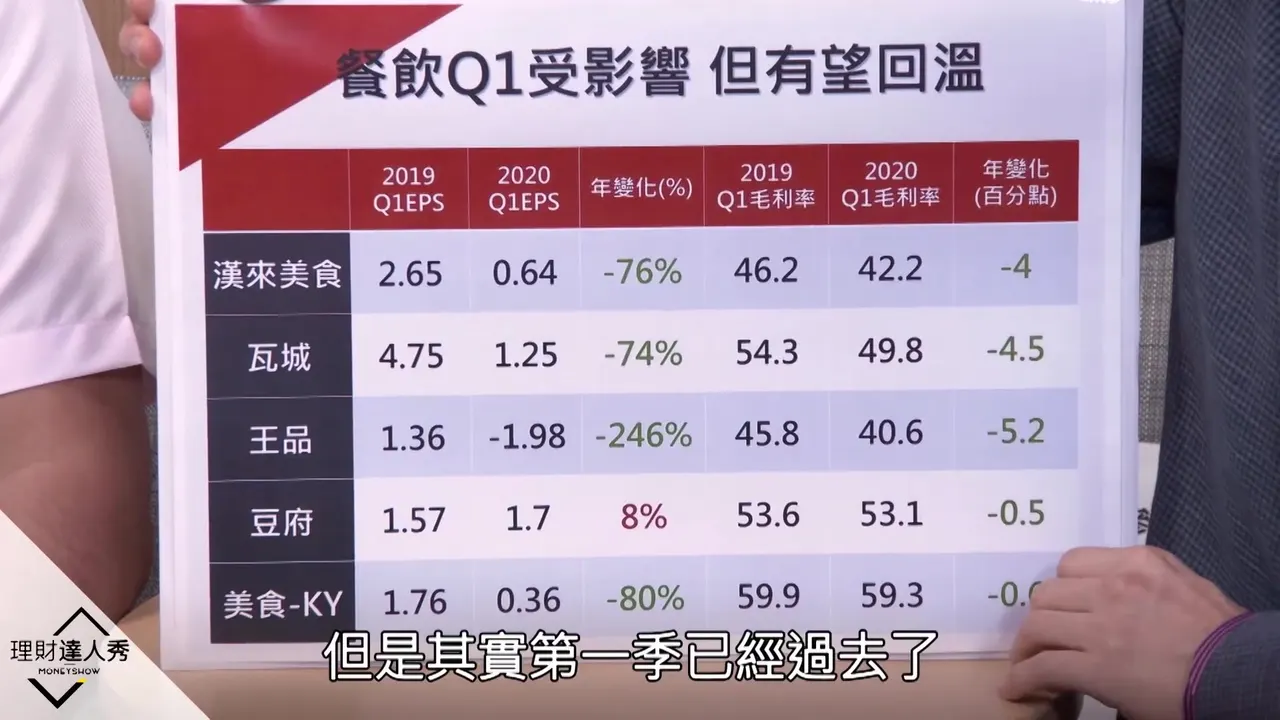
- For restaurants and hotels, look at gross margin and market share: when market share is hard to grow, a gross margin above 20% is better; avoid hotel stocks, which were badly hurt in the first quarter, while restaurant stocks have passed their first-quarter hit and prices are still low, so profits should recover after the pandemic.
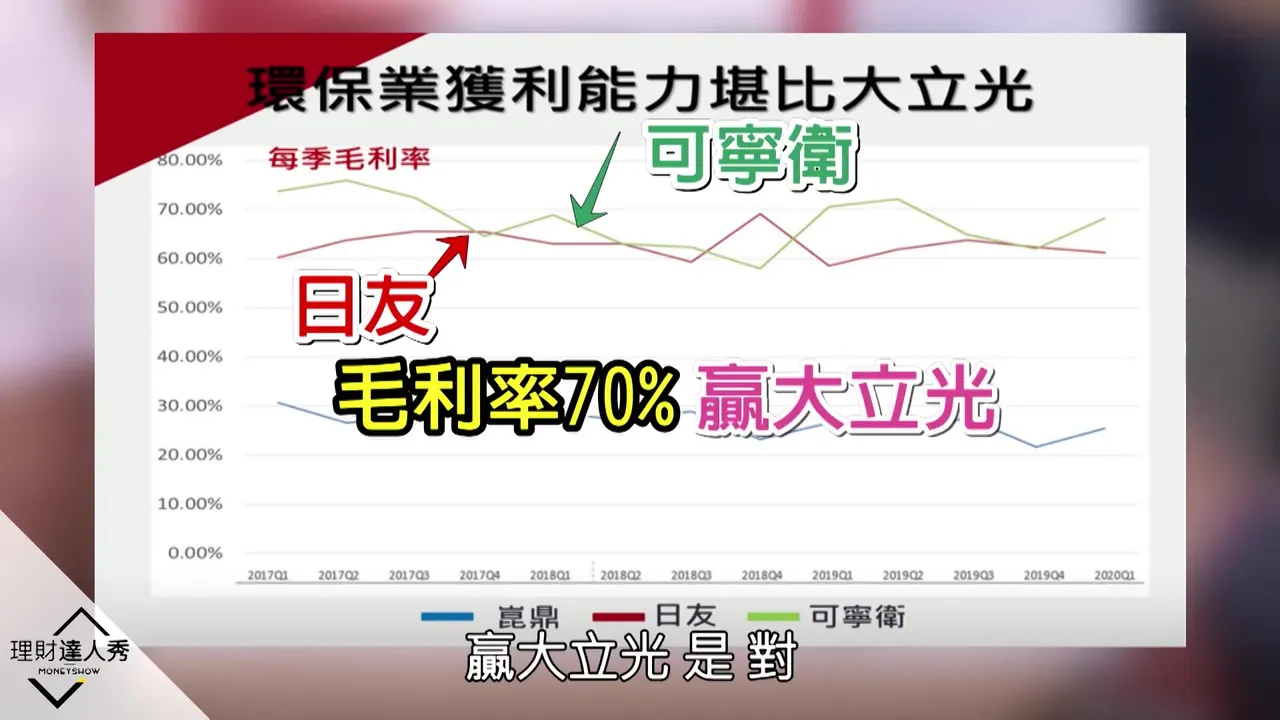
- Rixin and Canning Health have gross margins in the 70s%, are licensed industries with entry barriers, and have a moat and pricing power, which Warren calls an "alternative gold"; weak first-quarter profit does not mean a weak full year, and economic-recovery stocks are recovering.
Section summaries
0:10Opening and the Strong-Stock Theme
Science teacher Xiaoge and Warren discuss the six major industries mentioned in the 520 inaugural address, including digital, 5G, cybersecurity, biotech, defense and aerospace, and renewable energy. Xiaoge likes IC design and uses mask concept stock Hengda as an example of a strong-stock run; Warren cautions that revenge spending after reopening is not a lasting plan, and previews that he will teach viewers how to find strong stocks like Hengda.
▶ Watch from here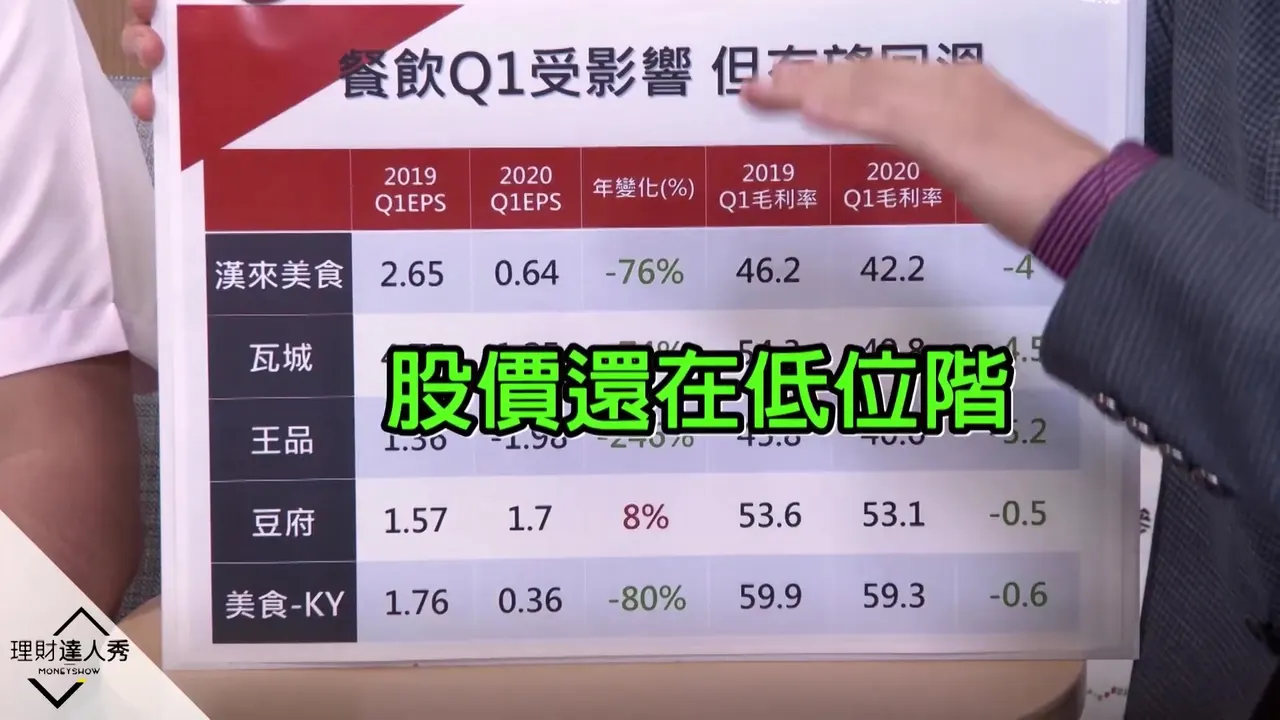

7:30Short-to-Margin Ratio Formula and Squeeze Logic
Xiaoge explains the formula: short interest divided by margin balance, times 100%; above 30% is a high short-to-margin ratio, meaning short sellers may be squeezed and forced to cover. Using Hengda and Adimmune as examples, do not short high-ratio strong stocks walking along the upper Bollinger Band; if you chase, set a stop-loss and exit once the price leaves the upper band, so you do not become the last mouse.
▶ Watch from here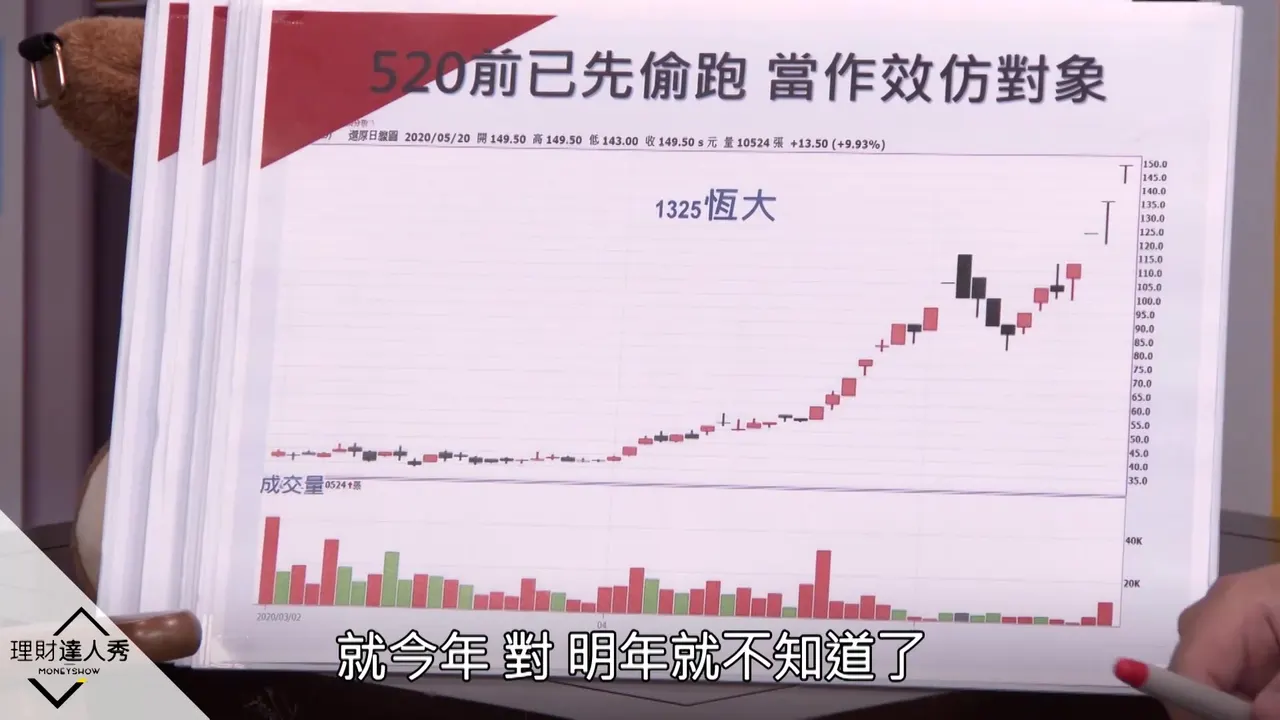
11:25IC Design Stocks and National Team Flows
Xiaoge introduces IC design stock Alchip-KY, which has a high short-to-margin ratio and recent major-player buying, but because it issued many warrants its price moves in a red-then-black rhythm, and retail investors can wait for a black candle to enter; MediaTek has heavy major-player buying and a ratio of 45%. The national team's purchases of Yageo and Foxconn have poor chip flows, while its buying of Adimmune and Hengda fits the biomedical theme.
▶ Watch from here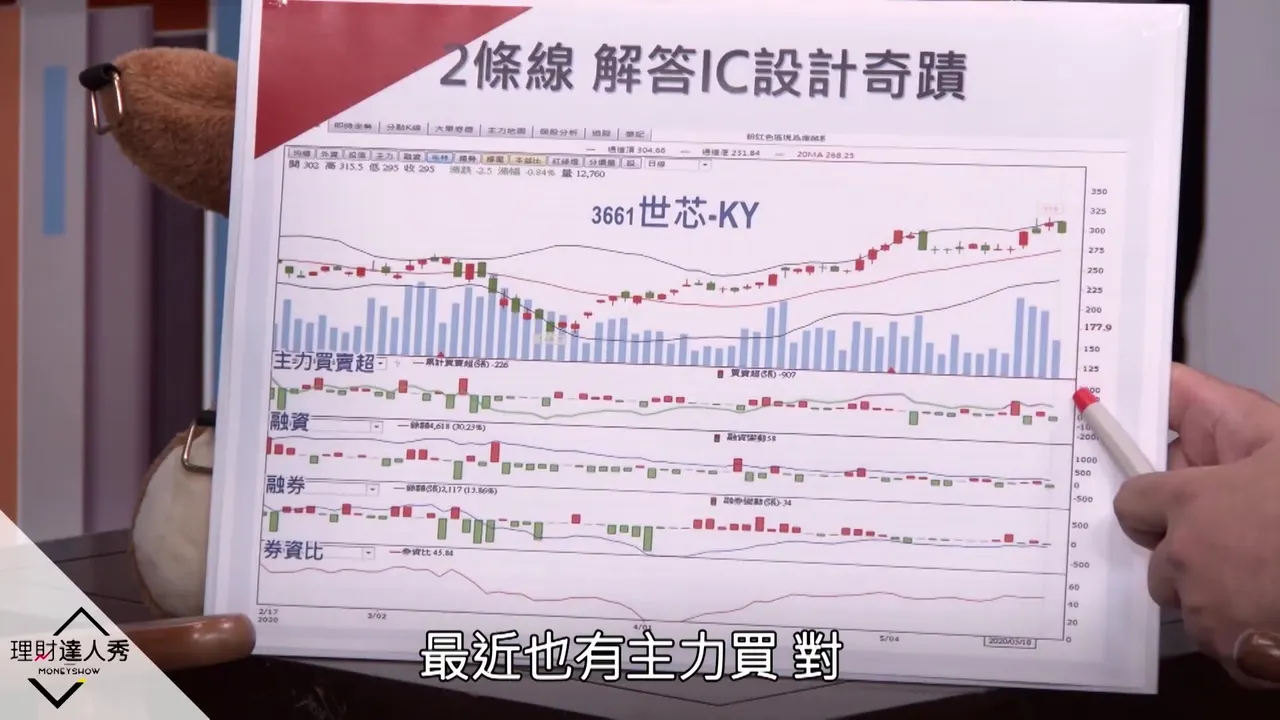
15:06Warren Questions Anti-Pandemic Concept Stocks
Warren points out that Hengda's first-quarter profit this year exceeded the total of the past 4 years, but chasing mask stocks now could mean being stuck for life if the pandemic does not return; Adimmune has never made money, so the investment case is unclear. He thinks anti-pandemic concept stocks currently carry too high a dream premium, and retail investors often hit limit-down on the very day they decide to enter and cannot sell; for buy-and-hold, pick something you are confident in and put in a large sum at once, rather than buying one lot and living in anxiety every day.
▶ Watch from here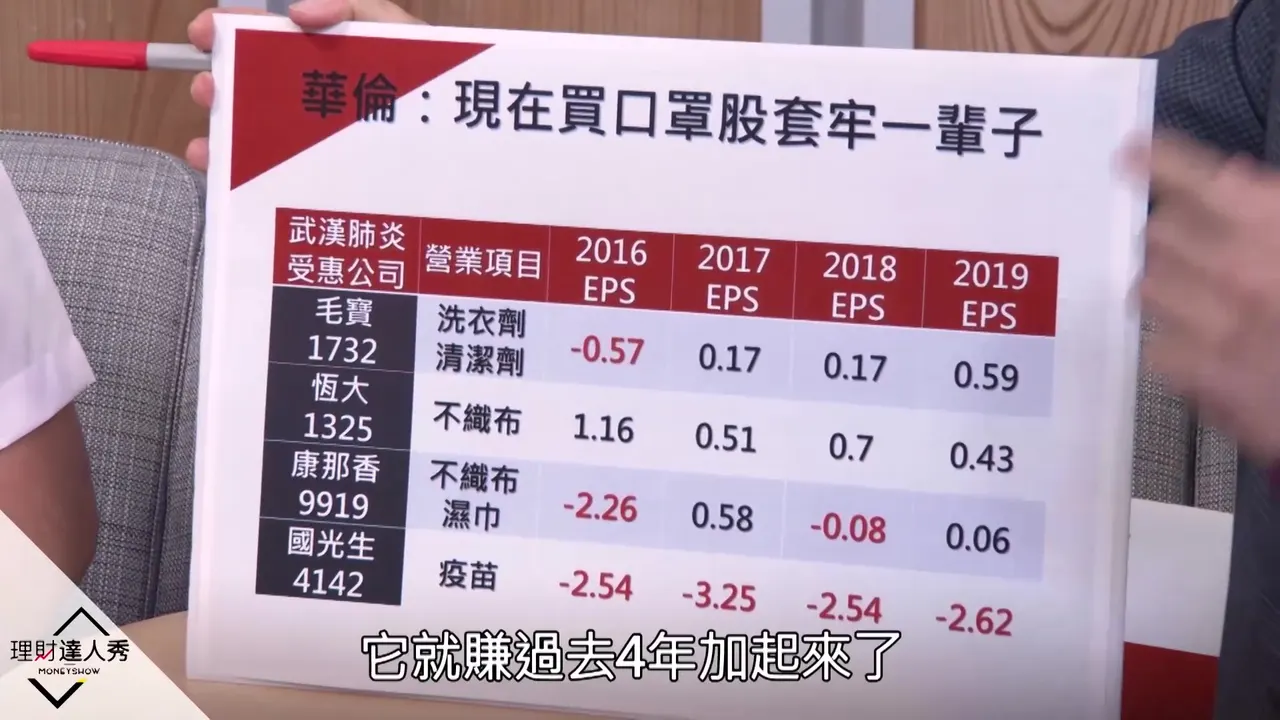
16:36The Eat-and-Excrete Buy-and-Hold Logic
Warren shares his logic: even in a downturn people still need to eat, and after eating they must excrete, so most holdings in Warren's ETF are food stocks and garbage-collection stocks, unaffected by the economy and the virus; the ETF's market value has exceeded 4000 wan (ten-thousands). He also reminds viewers that the panel, solar and LED industries named by past presidents left buyers stuck for life years ago, so you should still judge for yourself and choose carefully among the industries the president names.
▶ Watch from here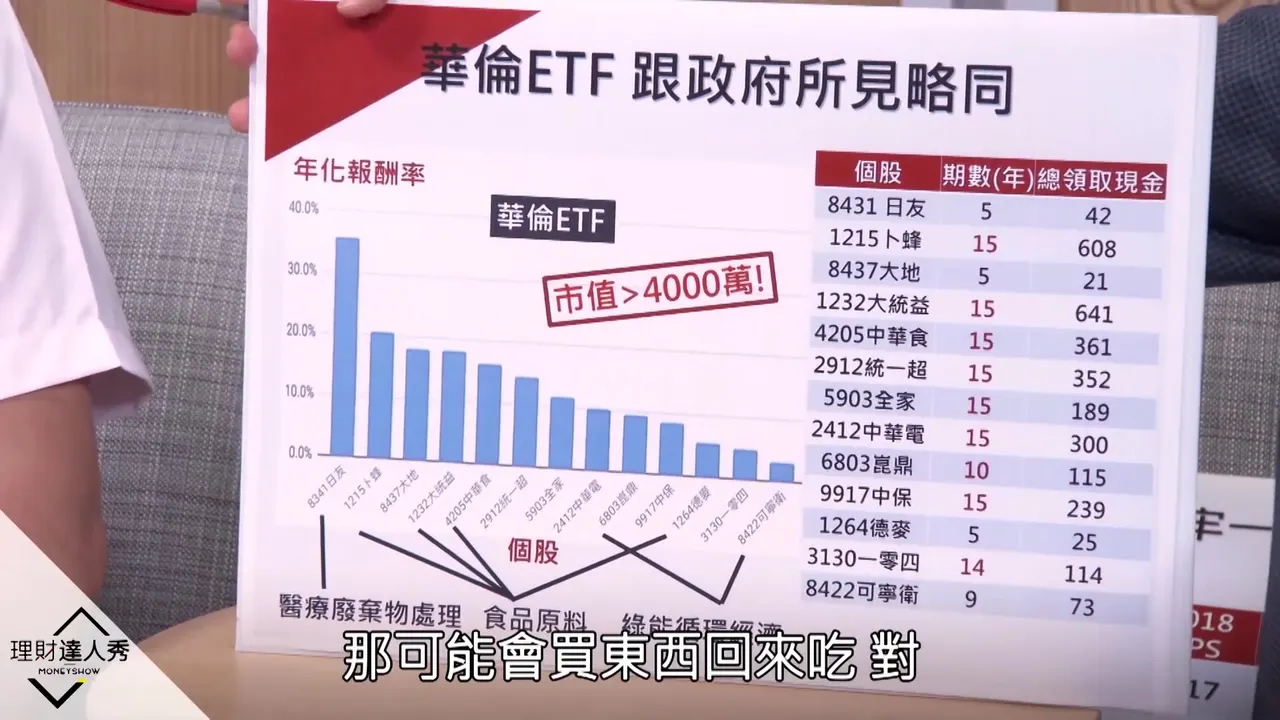
18:21Everyday Observations of the Restaurant Recovery
Food stocks such as Great Wall Enterprise, Chunghwa Food and Dah Mai have long broken above pre-pandemic highs, and Warren's ETF is currently issued at a premium; by contrast, hotel and restaurant stocks are still low, while after the lifting of restrictions people, cooped up too long, have an explosion of demand for dining out. From daily observation, Warren saw a chain brand in a department store with a 40-minute wait, showing the restaurant recovery; but some hotels could not last until the recovery, such as Ambassador's hotels in Tainan and Taichung.
▶ Watch from here19:31Picking Stocks by Gross Margin and Market Share
Hotels that went under before the recovery are a pity, but it was because they lacked competitiveness. Warren says when picking restaurant and hotel stocks, look at gross margin and market share: Chunghwa Food and Great Wall Enterprise have market share of 50–60% and may be bought repeatedly every day; hotels and restaurants find it hard to build large market share, but a gross margin above 20% is better, and gross margin shows the health of companies in fiercely competitive industries.
▶ Watch from here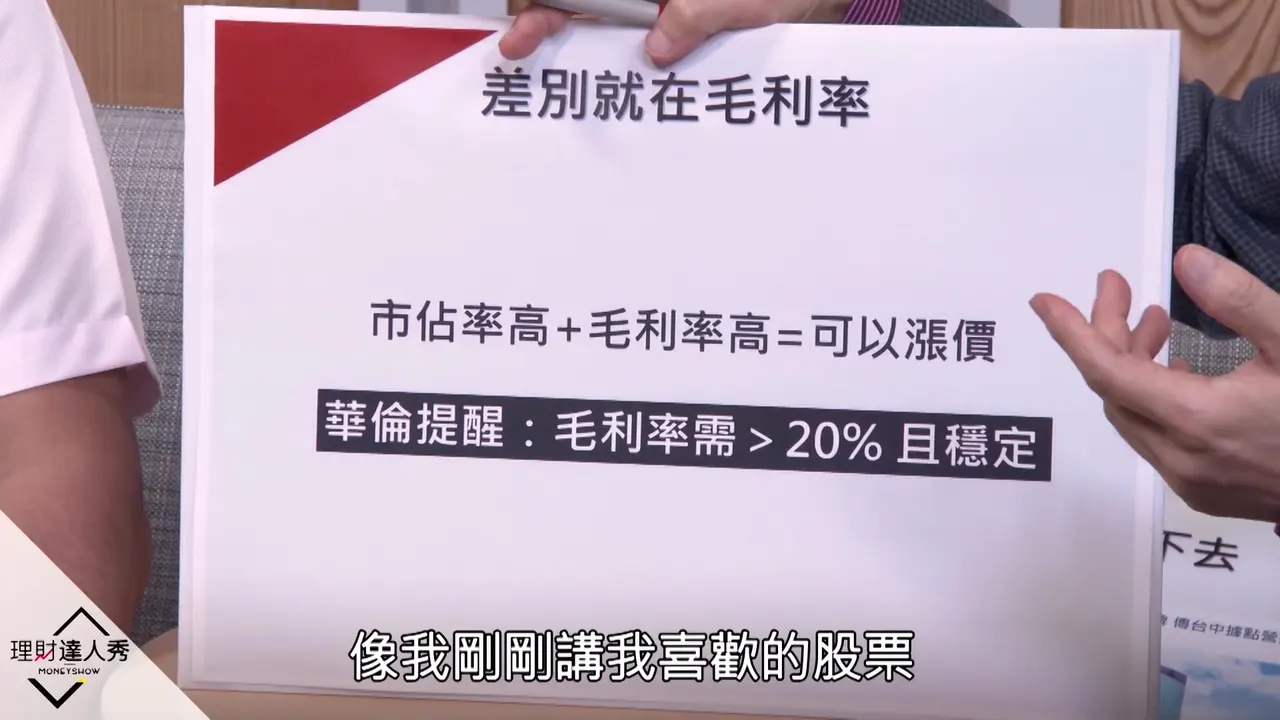
20:21Do Not Chase, and Avoid Hotel Stocks
Even if these stocks surge in the short term, he does not recommend chasing, since Warren prefers companies with moats. Hotel stocks lost heavily in the first quarter and may lose money this year, so he does not recommend them for the long term; restaurant stocks were hit in the first quarter but that has passed, and with prices still low they offer more opportunity. Warren's ETF trades at a premium because people still eat tofu, chicken and bread during the pandemic, so demand for daily necessities is unaffected.
▶ Watch from here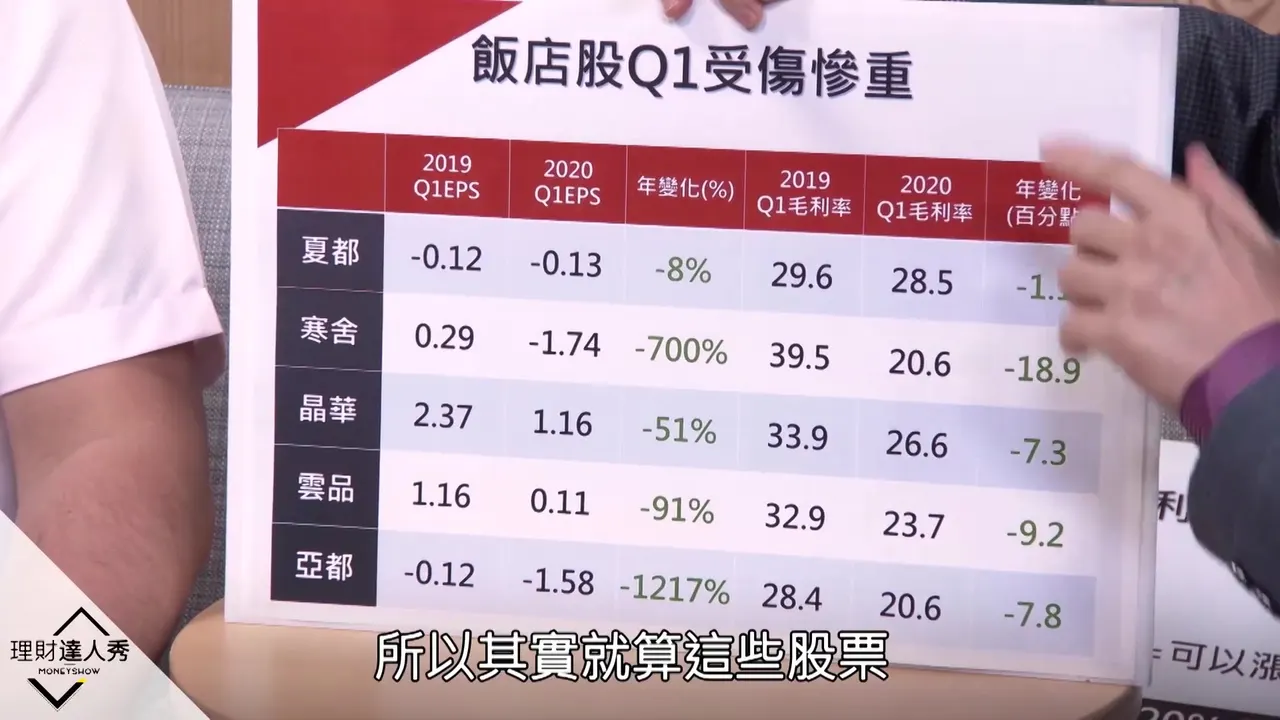
21:11Reviewing Food Stocks' First-Quarter Profits
CP Pork makes chicken, Chunghwa Food sells tofu and Dah Mai sells bread, and their first-quarter profits mostly hit same-period record levels: Chunghwa Food grew 48%, Dah Mai grew 2%, while Fresh Juice fell 87% because the pandemic was more severe in mainland China. Warren believes total food volume will not fall whether or not there is a pandemic; Xiaoge trades on shorter horizons, so the two represent long-term and short-term styles.
▶ Watch from here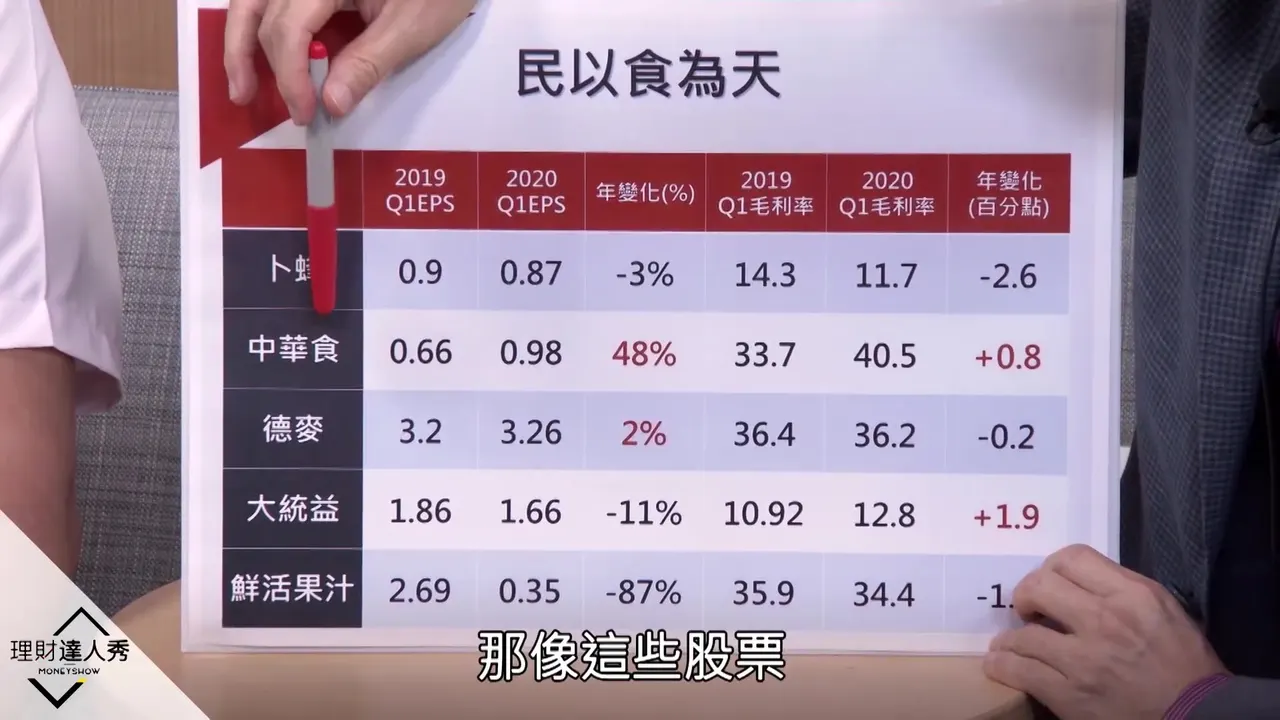
22:21Live Stock-Screening Demonstration
From more than 1700 stocks, Xiaoge applies the method taught earlier: a high short-to-margin ratio plus major-player buying. Techpoint-KY has a short-to-margin ratio of about 26%, close to 30%, major players have been buying recently, and it hit limit-up that day; Young Optics has a fairly high ratio and major players are still in but the price has barely moved, so it goes on the watchlist.
▶ Watch from here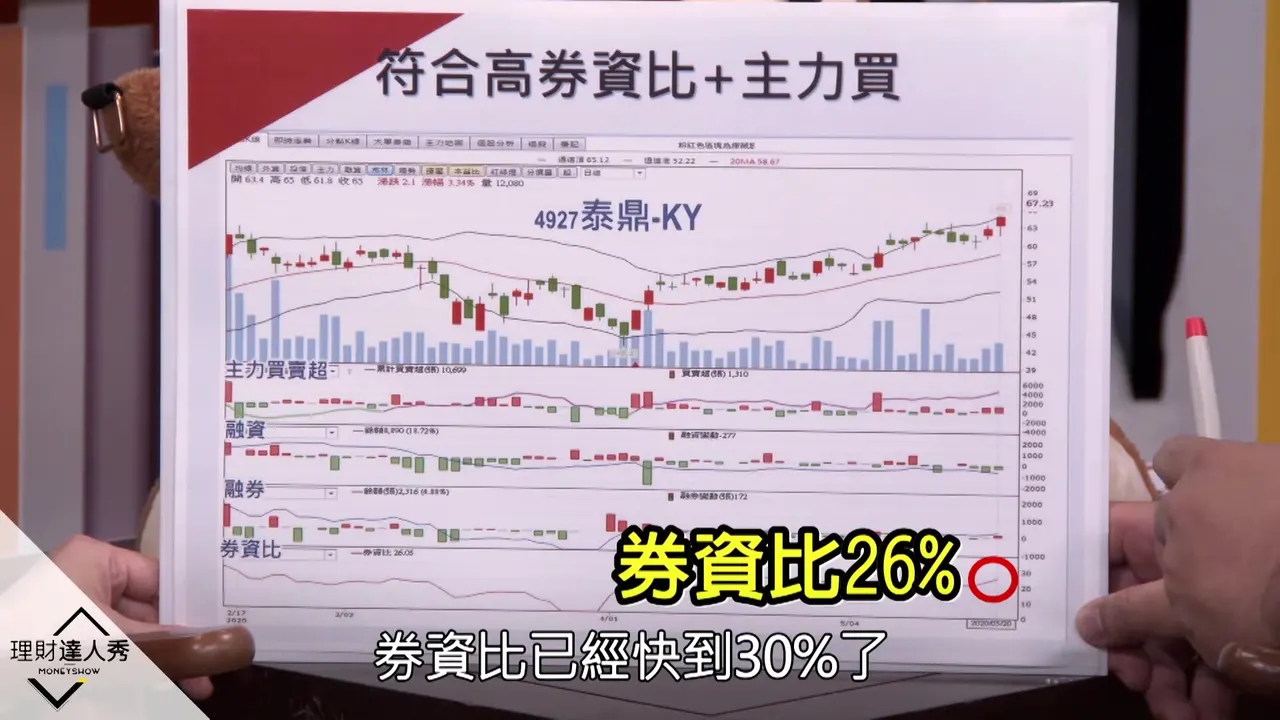
23:21The Convertible Bond Trap
Young Optics has swing-trading major players fighting short sellers, so he suggests only watching, not chasing. China Airlines meets the high-ratio-plus-major-buying test but has issued 2 convertible bonds; some people buy the convertible bonds while shorting the stock as a dynamic hedge and profit from big rises and big falls, so the stock will not necessarily rise. The conclusion is to avoid high-ratio stocks that have issued convertible bonds; also, investing looks to the future, so let the poor pre-pandemic EPS pass.
▶ Watch from here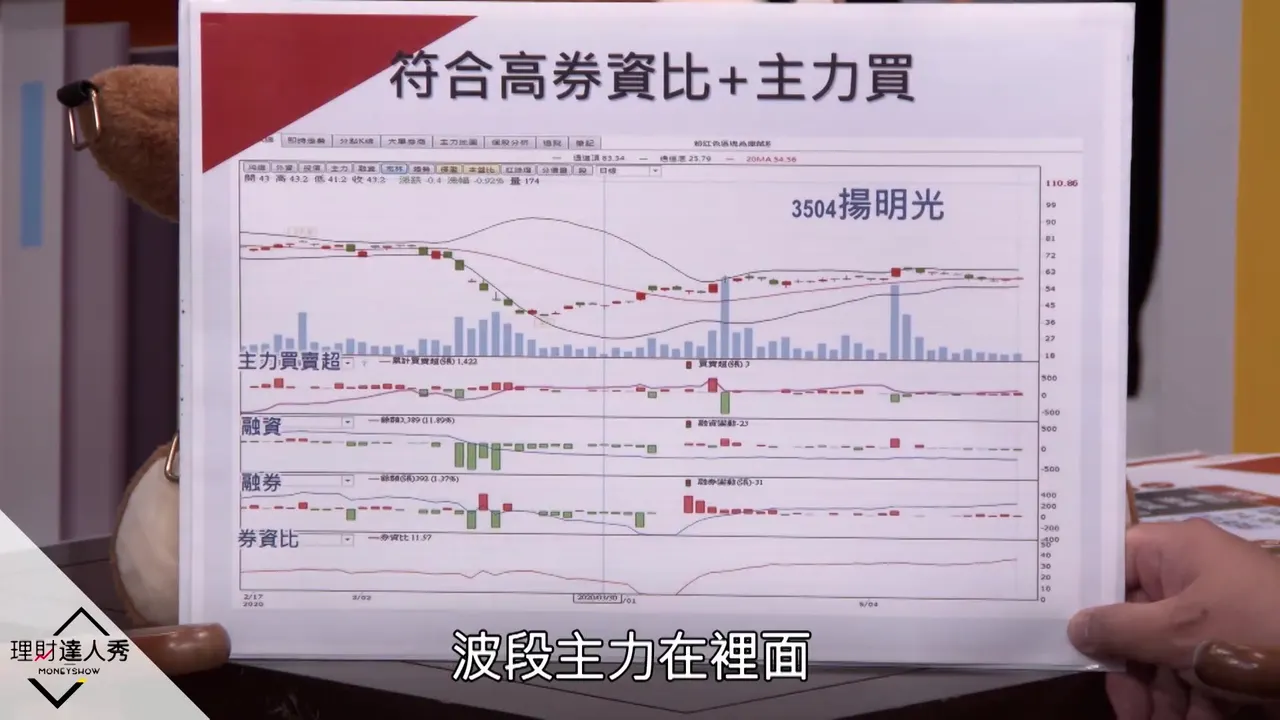
26:12Wowprime's Recovery Logic
Take Hengda: when people are not wearing masks, EPS is only 0 point something, so if post-pandemic EPS returns to the past, the stock price will fall back too. Conversely, Wowprime's first quarter was poor, but once the pandemic ends and people go back to eating out, EPS and share price will both recover; over the past 6 years Wowprime's EPS has grown year by year, from 10 dollars to 15 dollars. Warren then mentions another restaurant stock, famous for tofu hot pot and common in department stores.
▶ Watch from here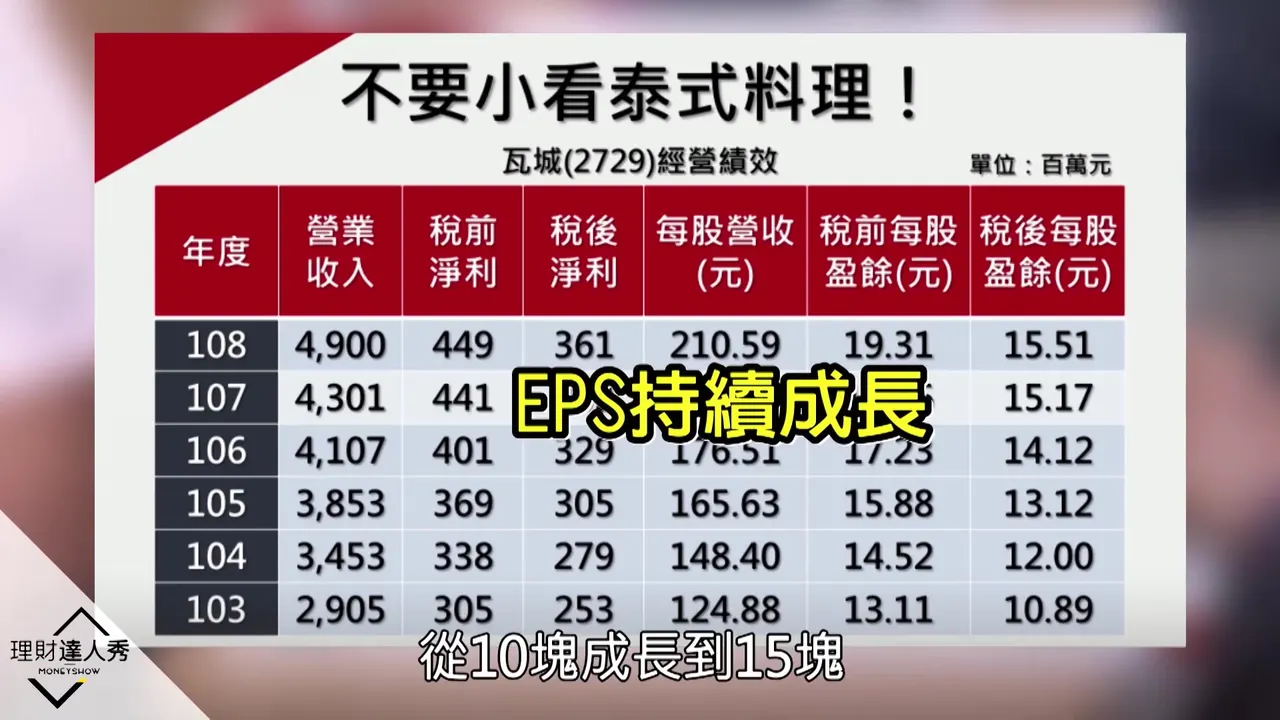
27:05Buy-and-Hold Means Watching Long-Term Profit Growth
Buy-and-hold means looking at past profit. Tofu House has about 40-some stores across Taiwan and is in an expansion stage; share capital inflation distorts EPS, so look at net profit after tax instead: it grew from 6900 wan (ten-thousands) in year 104 to 1.3 yi (hundred-millions) last year, and the first quarter was also unaffected by the pandemic. He also mentions that Rixin has a gross margin in the 70s% and its share price hit an all-time high, showing how to judge long-term holdings.
▶ Watch from here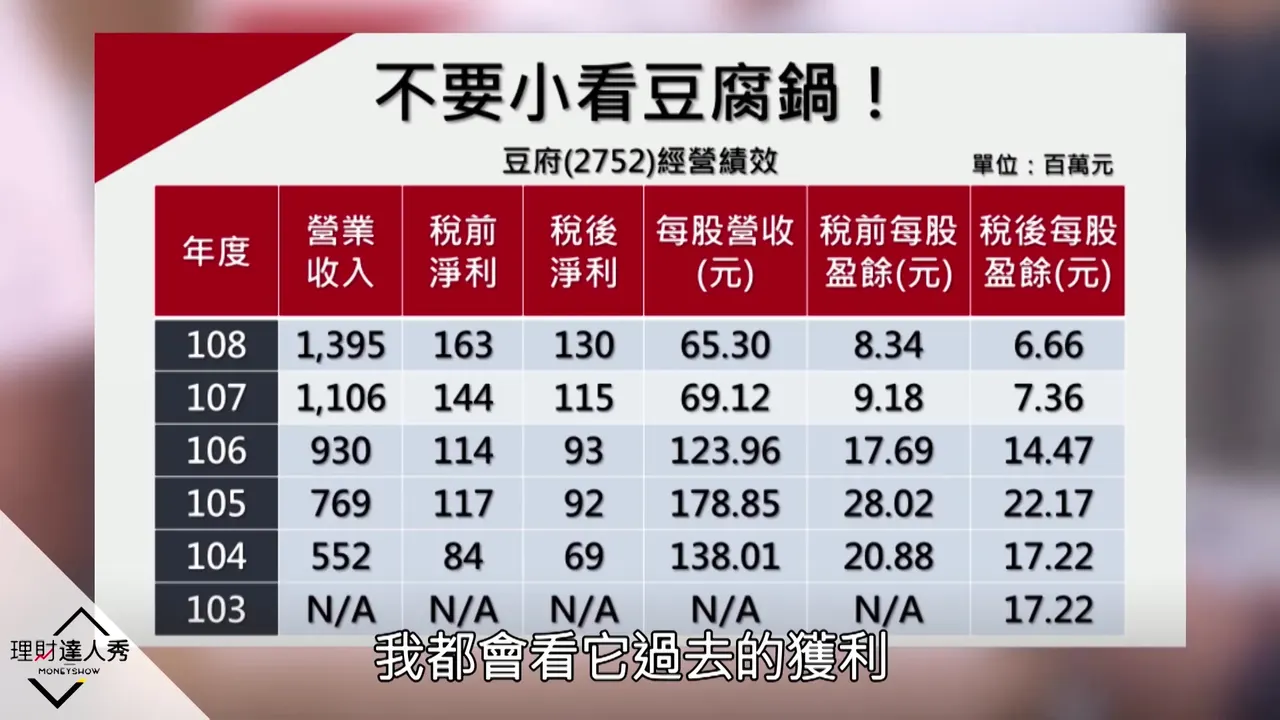
28:37Moat Industries and Wrap-Up
Rixin and Canning Health have gross margins in the 70s%, and Kunding in the 30s%; as licensed industries with entry barriers that keep others out, they have a moat and pricing power and are jokingly called "alternative gold." To sum up on the six major industries: Xiaoge screens with the short-to-margin ratio plus major-player buying, while Warren stresses that weak first-quarter profit does not mean a weak full year and that economic-recovery stocks are recovering.
▶ Watch from here