A Beginner's Guide to Short Selling: Eligibility, Costs, Risks and Conditions for Shorting at the Top
TL;DR: Short selling should rest on logic, not emotion: consider it only when a stock is more than 30% above its yearly moving average, major players are selling heavily, retail is buying heavily and the stock has made no new high for a month, and first understand limits such as the 90% margin requirement, forced covering and margin calls, because losses on short selling can be scarier than on margin buying.
Key ideas
- Short selling has higher entry requirements and costs than margin buying: you must be at least 20 years old, have had the account for at least 3 months, and have made more than 10 trades, with 90% of your own funds, plus a short-selling fee and a borrowing fee (which can reach 3% per day); positions are force-covered before ex-dividend dates and shareholder meetings each year, and shorting a 100-yuan stock gets a margin call after a rise of about 46%, so stops must be quick, and the speaker sometimes prefers single-stock futures instead.
- Finding shorts at the top requires clear conditions: at least 30% above the yearly moving average, major players keep selling, retail keeps buying, and the number of shareholders on record rises sharply; Chi Shin when it hit 340 yuan, with insiders filing share transfers while retail piled in, is a textbook example, and the speaker made the most on the right half after the peak, not by chasing the steepest left side.
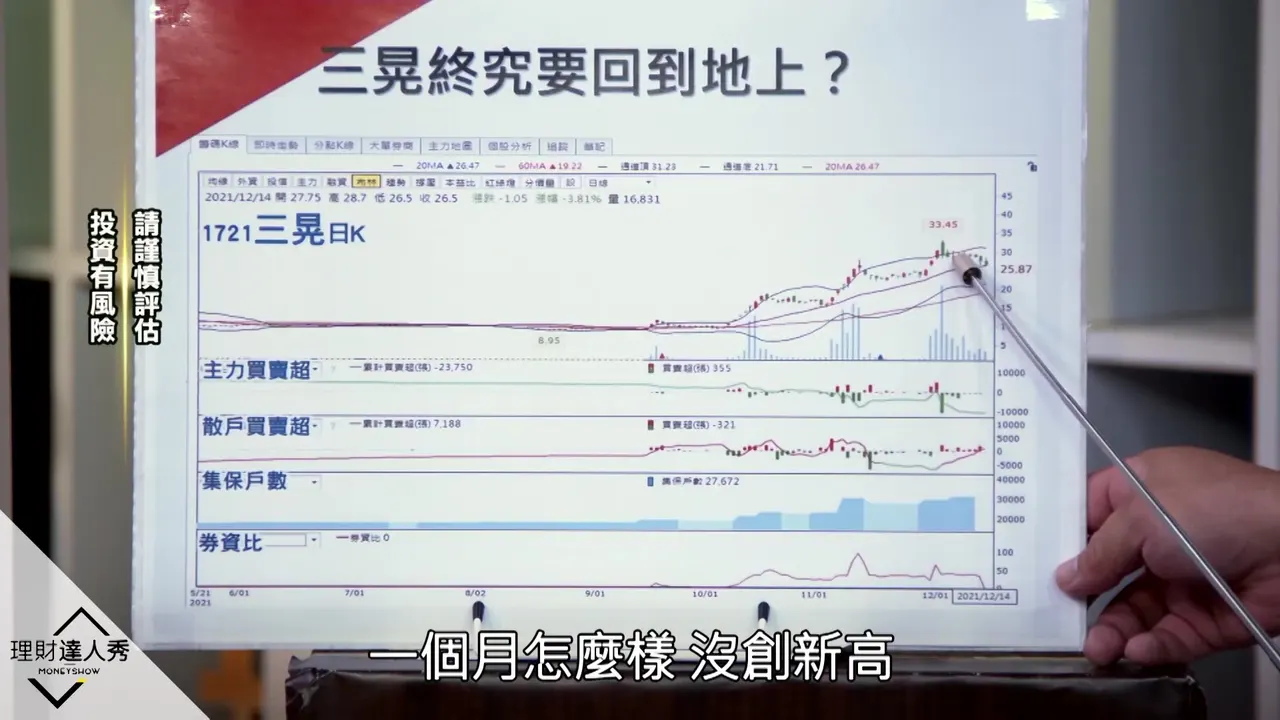
- To catch the turning point, wait until there is no new high within a month and the monthly moving average is about to turn down, then short only on rebounds that do not go too high, and cut the loss if a rebound makes a new high; short targets also move with their sector, with Everlight moving with chemical stocks such as Chunghwa Chemical and Chi Shin with bulk shipping, and picking stocks with a low short-to-margin ratio is suggested as safer.
- A short-to-margin ratio above 30% counts as high, meaning heavy shorting that may keep pushing the price down or may get squeezed; do not short stocks with a high ratio and a very steep monthly average (such as Wantai Tech), and instead look for chances to go long and enjoy the short squeeze.
- Order details affect costs: same-day covering uses a margin buy, while covering from the next day onward uses a short-cover buy; for ordinary stocks, shorting and margin buying carry higher transaction tax, so ask your broker to switch to same-day cash-stock day trading, which greatly cuts the tax.
Section summaries
3:25Short Selling Basics and Maintenance-Ratio Margin Calls
The teacher opens the topic of short selling, explaining that it means borrowing shares to sell first when you expect the price to fall, then buying them back later. A rising short balance means bearish views, while a falling one means covering is coming. The teacher also briefly introduces the short-selling maintenance ratio: if it cannot be maintained, the broker issues a margin call or even forced liquidation.
▶ Watch from here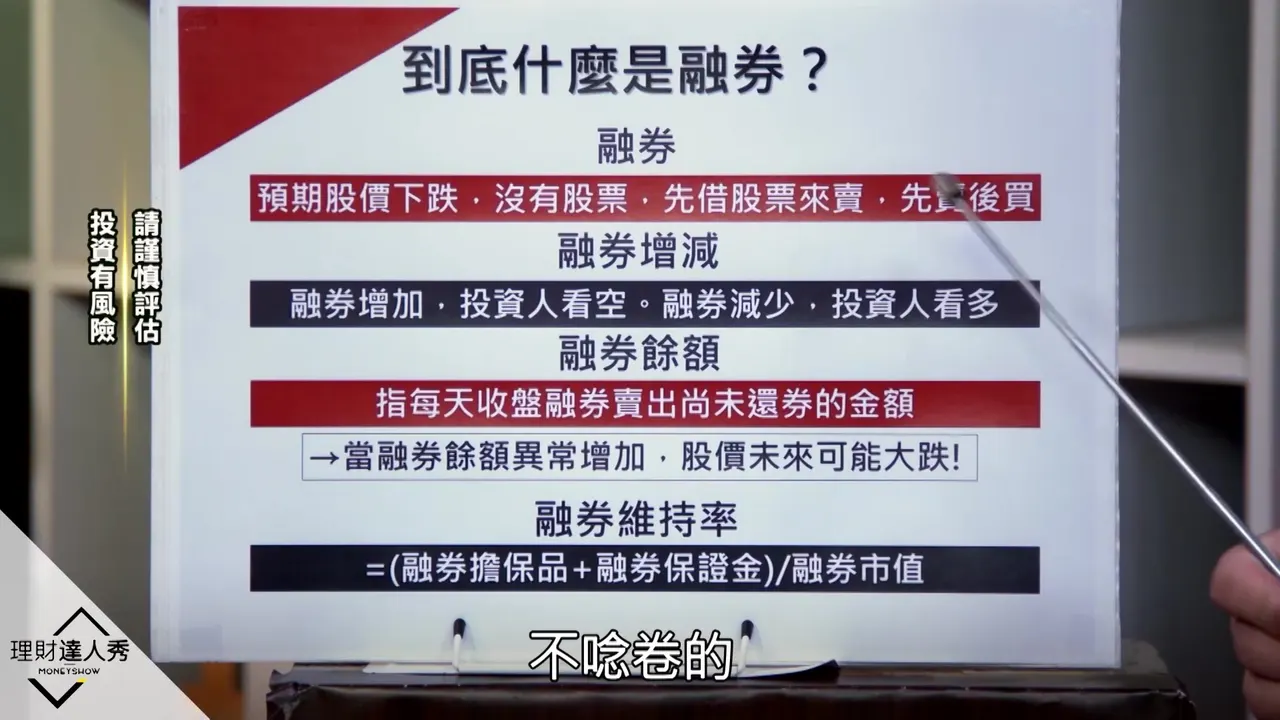
5:05Eligibility, Risks and Costs of Short Selling
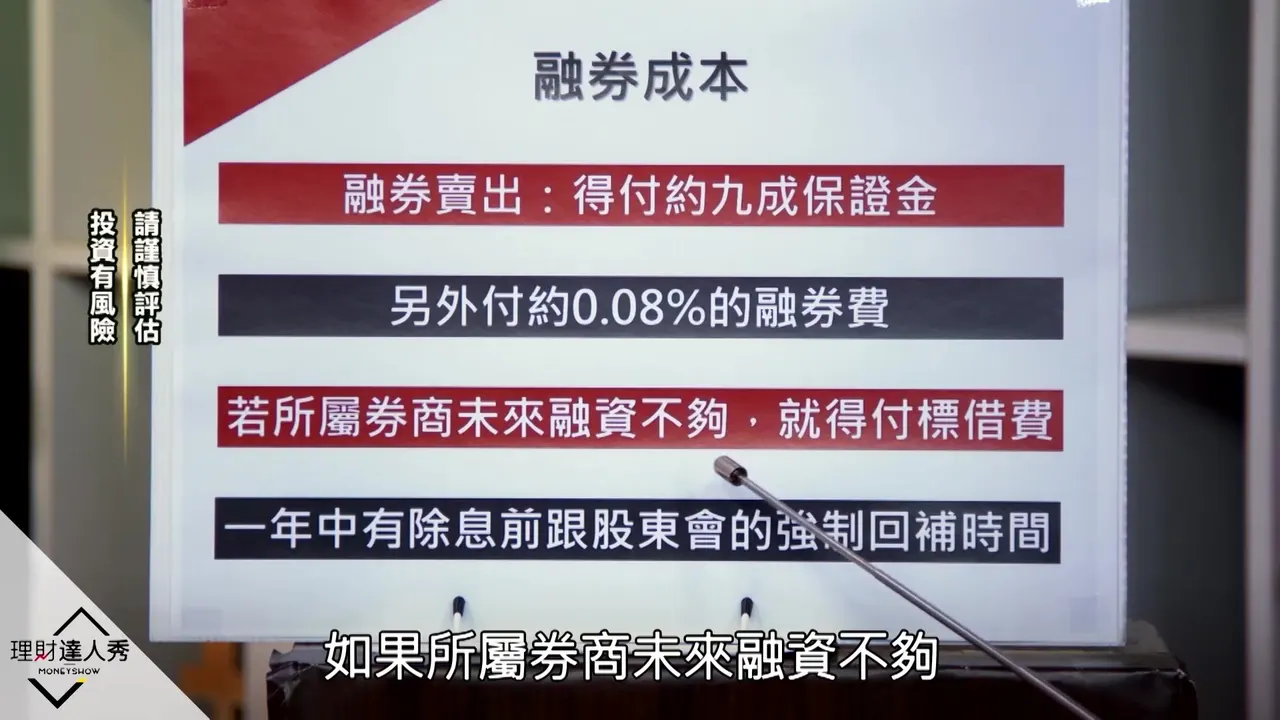
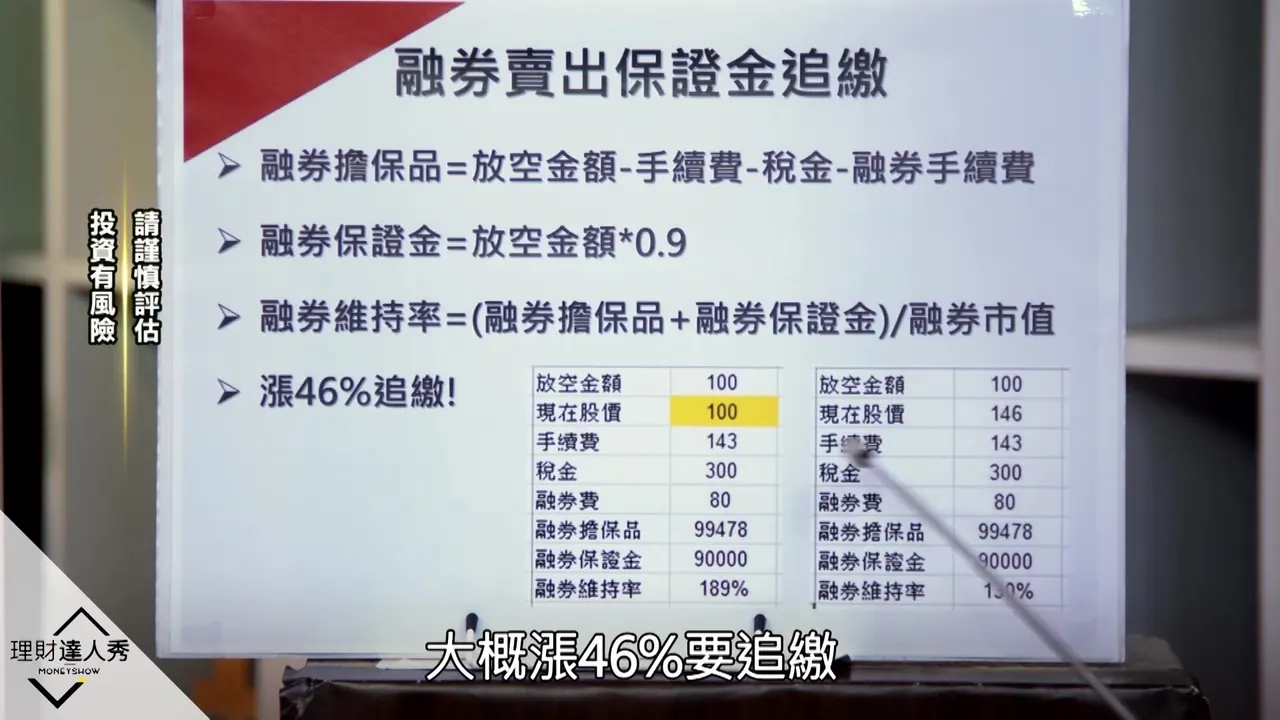
Eligibility: you must be at least 20 years old to open a margin account, have had the account for at least 3 months, and have made more than 10 trades. Shorting requires 90% of your own funds (margin buying mostly needs only 40%), because a short has no upside limit on losses, which can reach 3–5 times. The borrowing fee is sometimes as high as 3% per day, positions are force-covered before ex-dividend dates and shareholder meetings each year, and shorting a 100-yuan stock gets a margin call after a rise of about 46%, so stops must be quick.
▶ Watch from here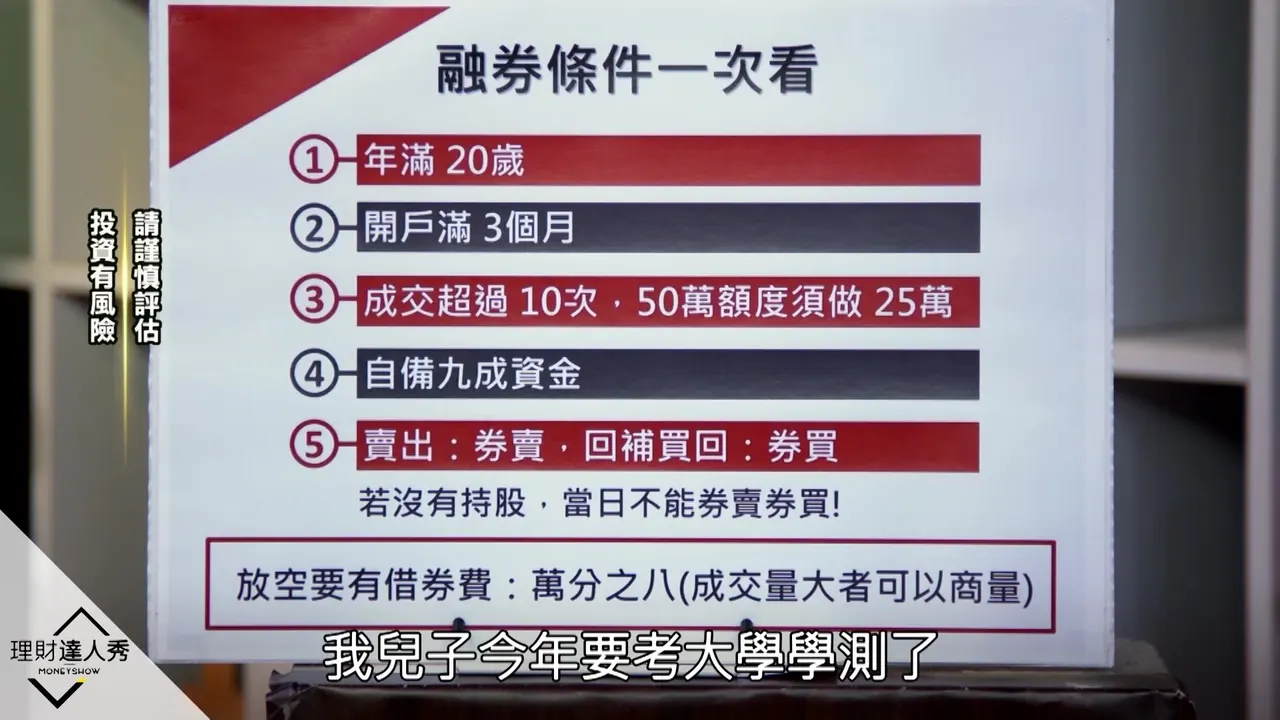
11:25Demo: Placing Short and Margin Orders on Mobile
Using Medigen as the example, the stock fell from a high of 78 yuan to 15 yuan; after news about the pandemic lifted the price for a few days, the speaker looked for a chance to short. To cover on the same day after a drop, you press margin buy; to cover from the next day onward, you press short-cover buy, meaning same-day covering uses a margin buy and next-day covering uses a short-cover buy. Medigen is a second-tier stock with lower transaction tax, so not switching to day trading does not matter; for ordinary stocks, shorting and margin buying carry higher transaction tax, so it is recommended to ask your broker to switch to same-day cash-stock day trading, which greatly cuts the tax.
▶ Watch from here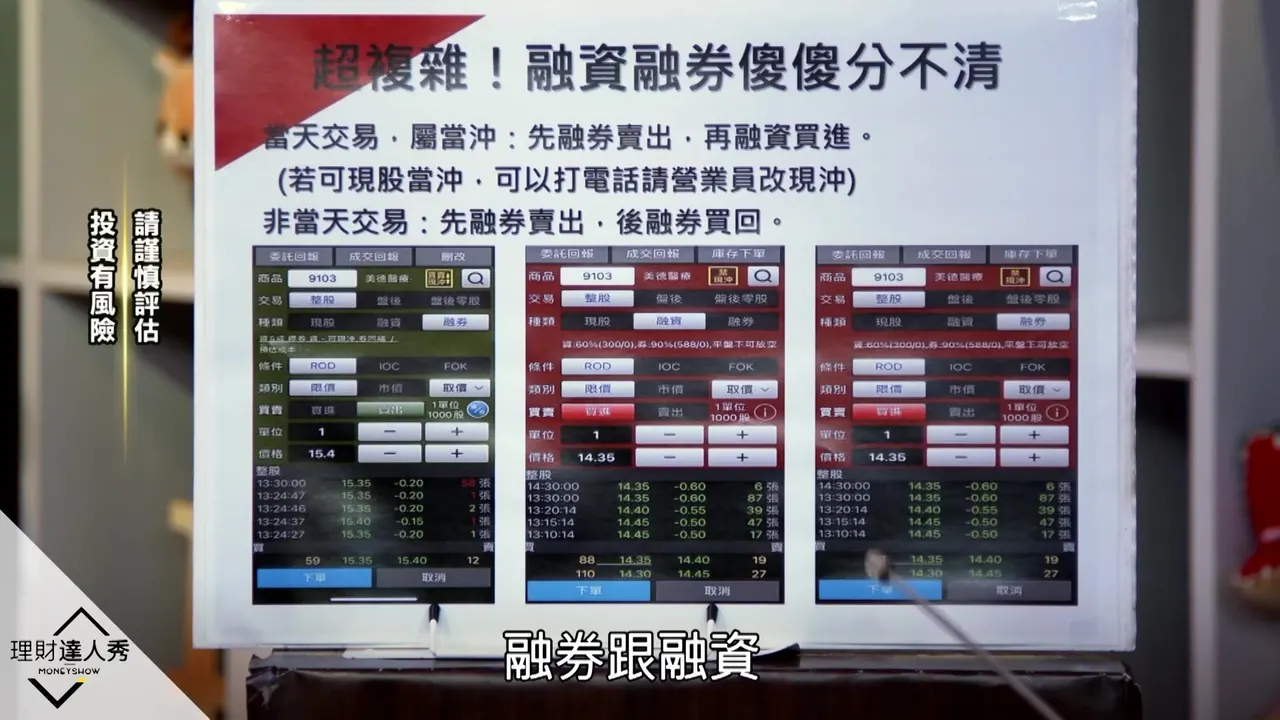
13:31Short-Selling Logic and Defining the Top
Shorting cannot rest on mere dislike of a stock; it needs logic and conditions. In Medigen's case, the parent company is listed in Singapore and the core entity is worth only 7 yuan, yet Taiwan sells it at 15 yuan, which gives a reason to short. Definition of a top: the price is at least 30% above the yearly moving average (about 130 yuan or more if the yearly average is 100 yuan), with major players continuing to sell heavily, retail continuing to buy heavily, and the number of shareholders on record rising sharply; this year's example that fits is Chi Shin (2611).
▶ Watch from here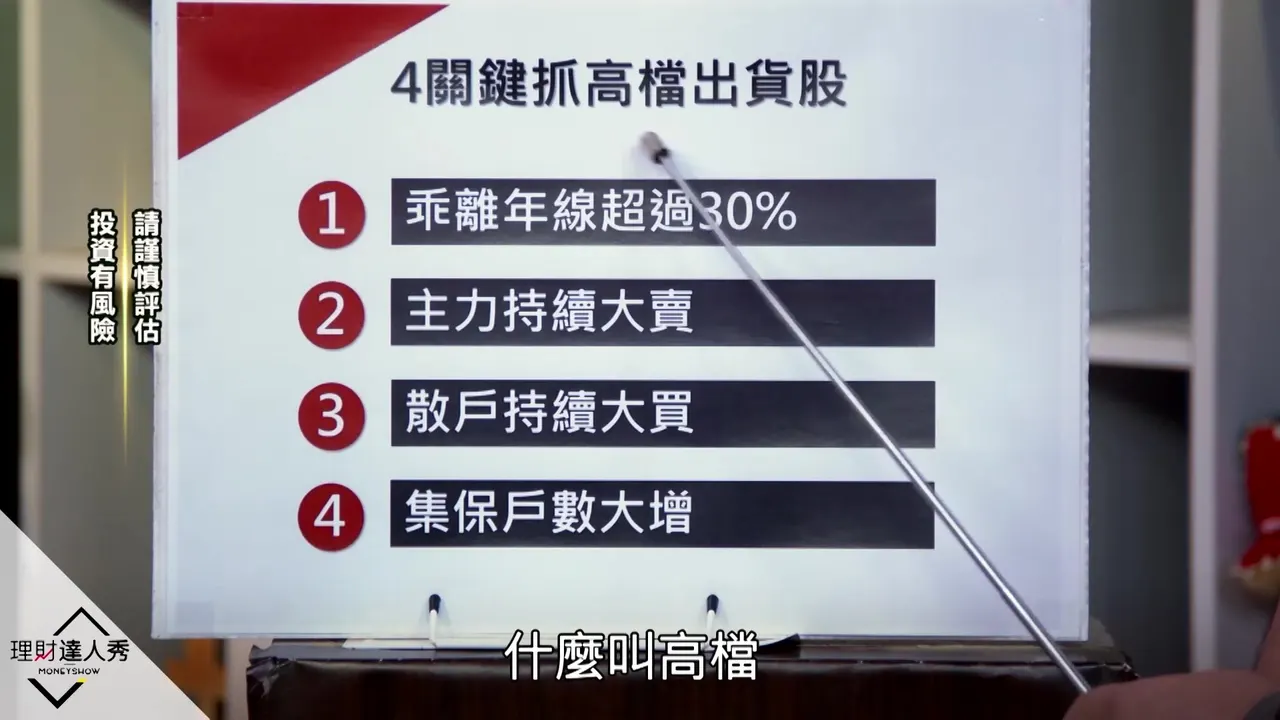
17:15Top Signals and Judging the Turning Point
Taking Chi Shin as the example, when the stock rose to 340 yuan insiders filed share transfers one after another, while retail bought frantically, major players dumped heavily and the number of shareholders on record jumped, a classic top signal. On the "left side of 3", avoid shorting if you can, because the price rises too fast to get on board, and the right side is actually where the most money is made. To catch the turning point, look for no new high within a month and a monthly moving average about to turn down, then short when a rebound does not go too high; if a rebound goes too high, cut the loss, ideally combined with share-transfer filings and heavy major-player selling.
▶ Watch from here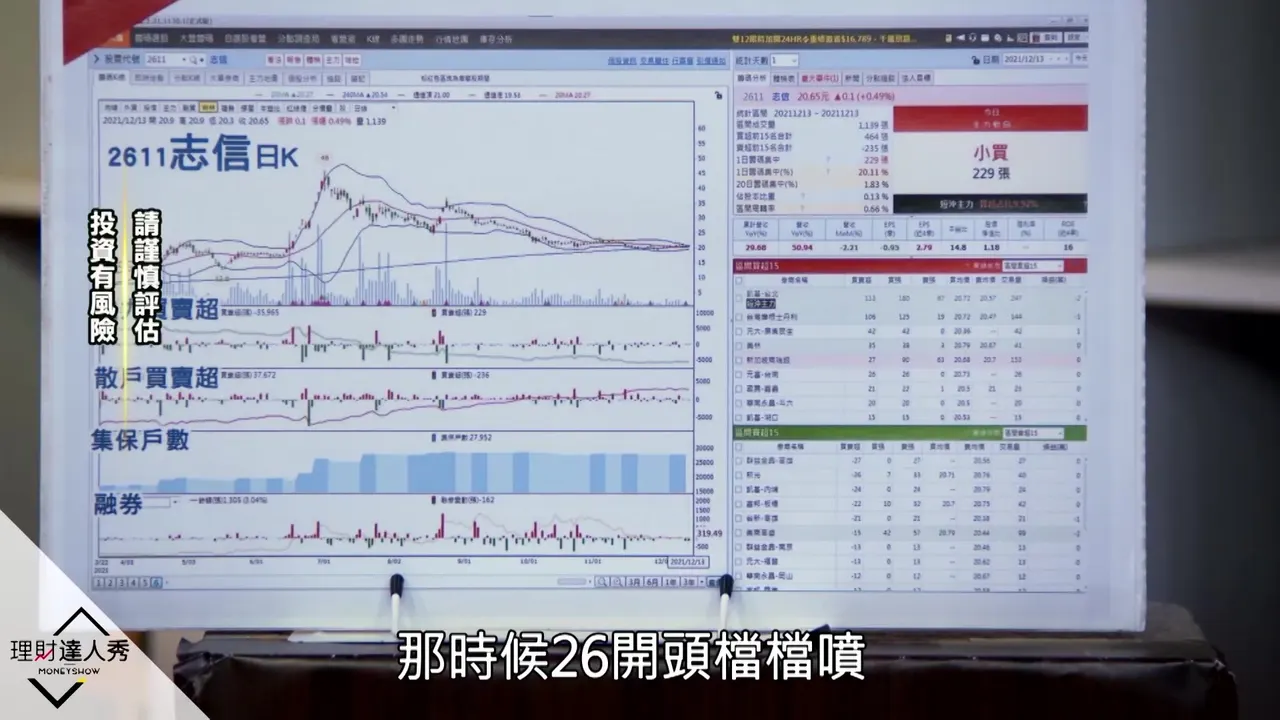
19:51Sector Linkage and Screening Targets
Short targets also move with their sector: Chi Shin rose along with bulk shipping stocks, while Everlight (1711) rose along with chemical stocks led by Chunghwa Chemical. Everlight has gone a month without a new high and is in a slow-decline phase, and its major-player and retail positioning also meet the shorting conditions, but it is safer to find a target with a low short-to-margin ratio. San Fang in the same sector has likewise had no new high for a month and its major-player positioning looks ugly, so it can go on the watchlist, but as soon as it makes a new high you must cut the loss.
▶ Watch from here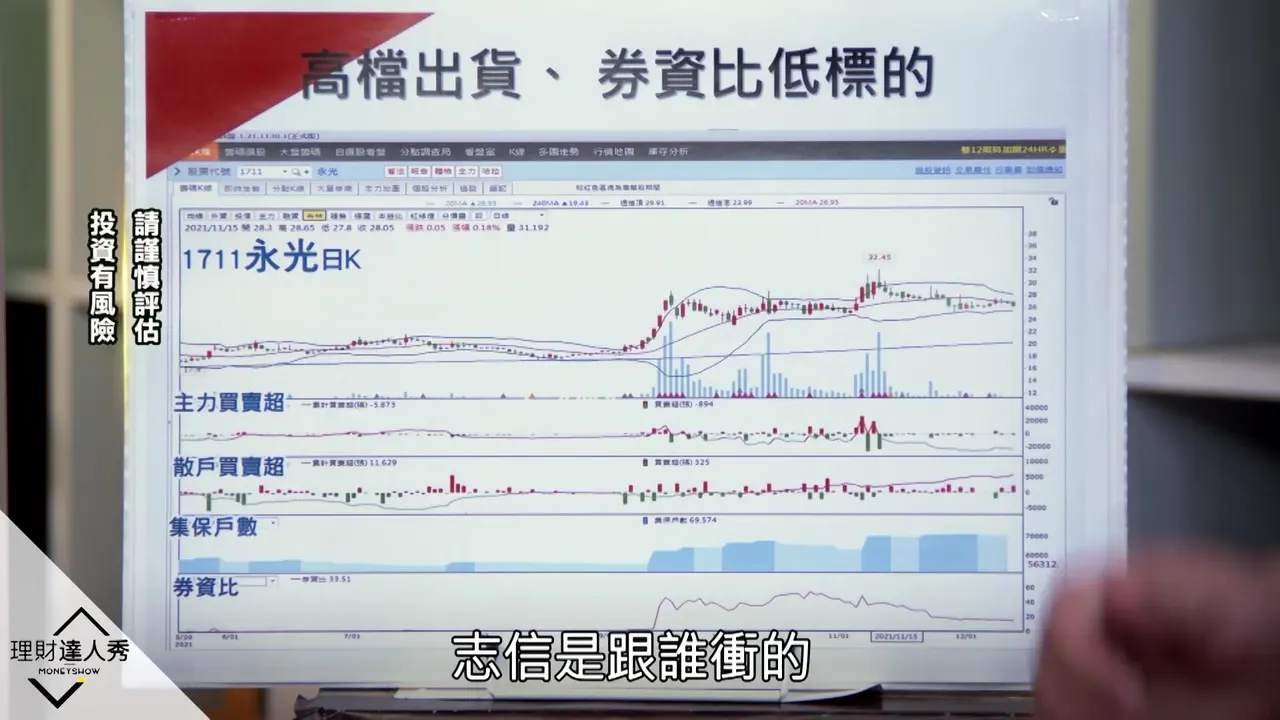
21:51Short-to-Margin Ratio and Shorting Cases
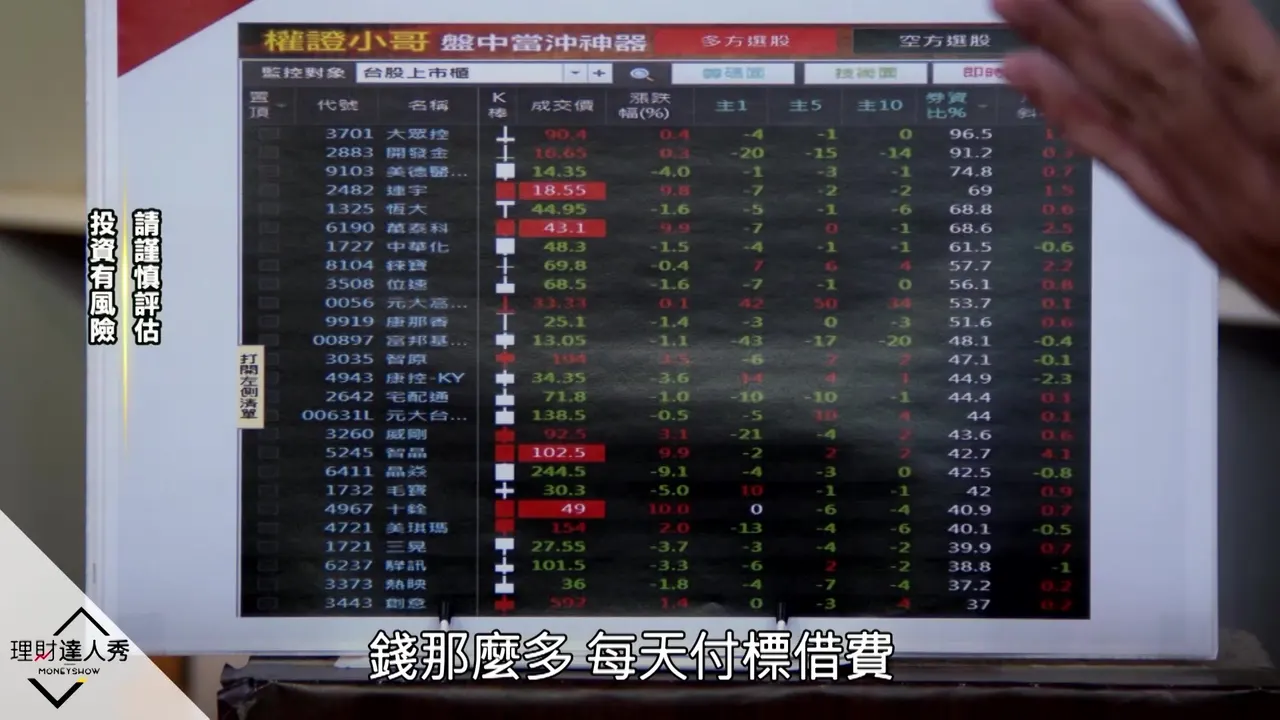
The short-to-margin ratio is the short balance divided by the margin-financing balance; the higher it is, the more people are shorting. Above 30% counts as high, and a high ratio may get squeezed or may keep falling. Examples: Dazhong Holdings (3701) has a short-to-margin ratio as high as 96.5%, because it has risen 4–5 times or more and its convertible bonds trade at a 20% discount, so the market is waiting for it to collapse; at China Development Financial some people arbitrage the merger theme while others hedge; Medigen and Hengda are shorted because they were hyped on the pandemic theme and future revenue may fall short of this year's.
▶ Watch from here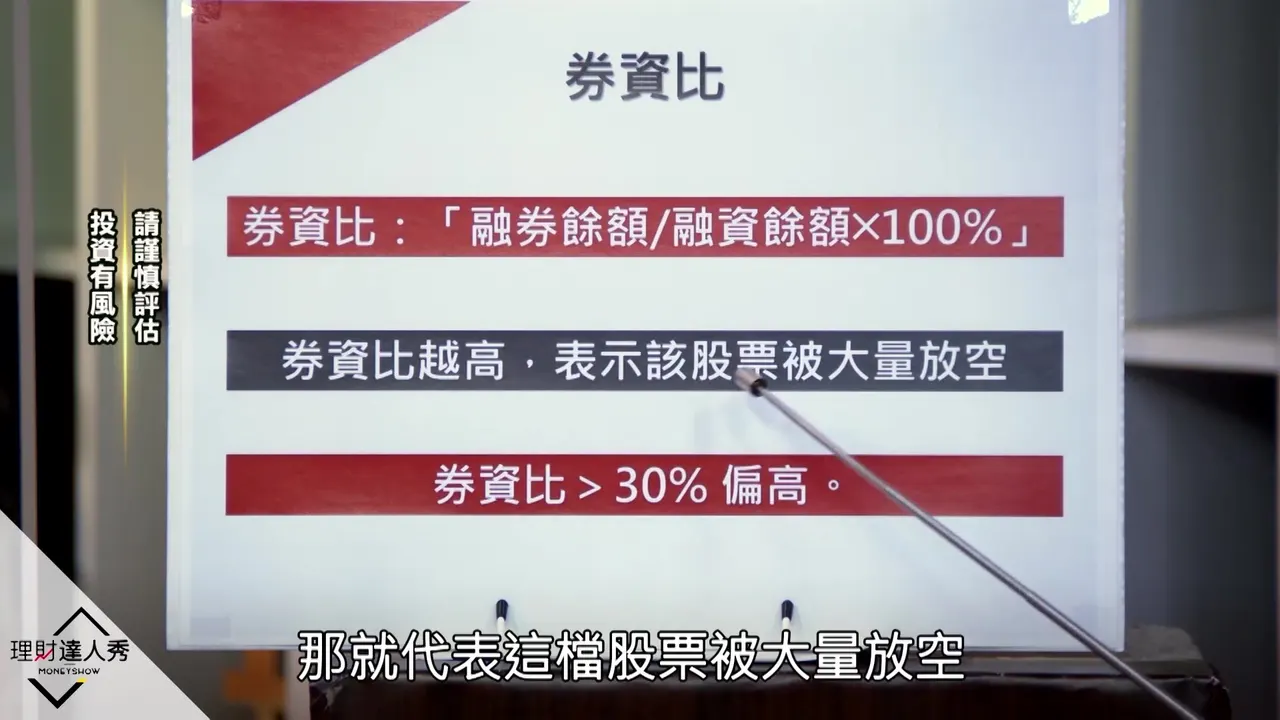
24:21Short-Selling Wrap-Up
Taking Wantai Tech as the example, its short-to-margin ratio is as high as 68 and its monthly average slope reaches 2.5, very steep, which readily produces a short squeeze. Do not short a stock with a high short-to-margin ratio and a very steep monthly average; instead look for chances to go long, even just to catch one limit-up candle. Summary: if you are bearish on a stock, borrow shares and sell first, then buy back cheaper after the fall to return them and earn the spread; but there are limits such as forced covering around ex-dividend dates and shareholder meetings, and the 90% margin requirement. The market or a stock at a high always pulls back eventually, and trading both long and short can sometimes protect long positions.
▶ Watch from here