Convertible Bonds Basics: Dual Stock-and-Bond Traits, the Issuance Hype Playbook, and Reading a Company's Intent
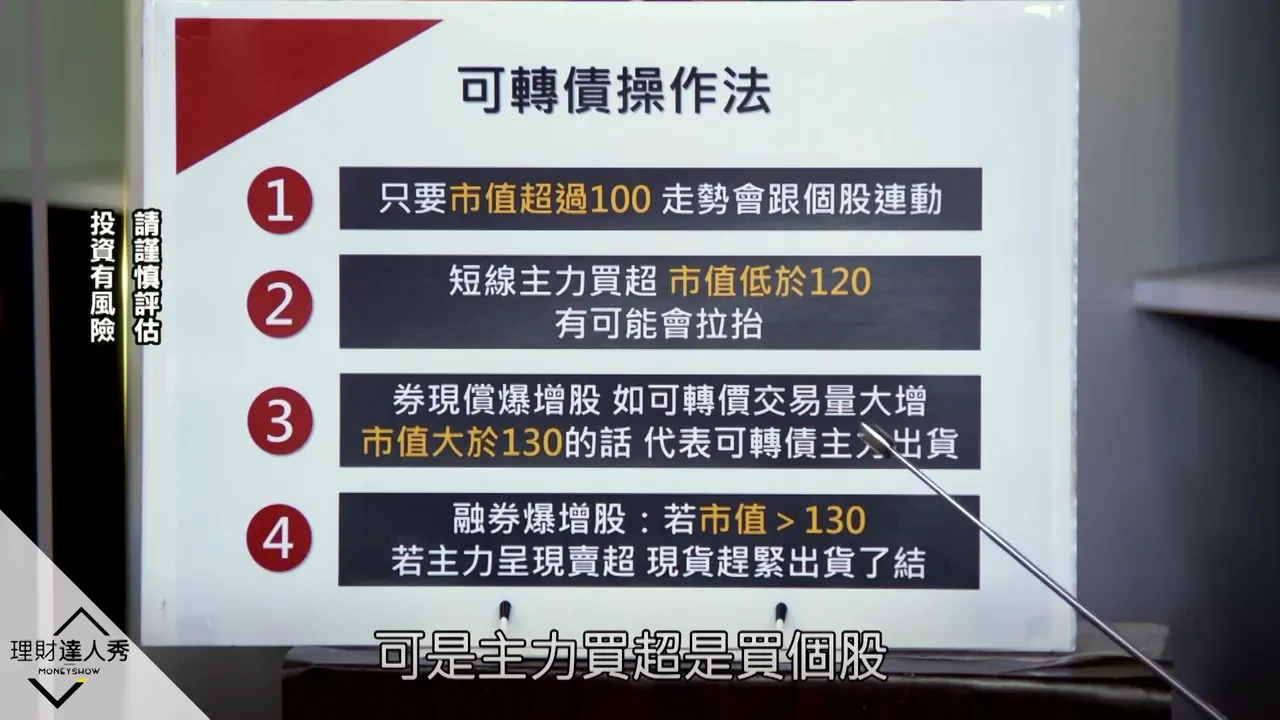
TL;DR: Convertible bonds combine principal protection of a bond with a chance to convert into shares, and most companies issue them hoping to repay with stock rather than cash, so they often issue at a low price and then pump the stock; the conversion price and the bond's market price reveal their intent, which can be paired with short-term major-player net buying.
Key ideas
- A convertible bond is one product with two uses: when the stock falls you are a creditor and get back at least 100 at maturity, but only secured bonds are guaranteed principal protection (unsecured ones, like Far Eastern Air Transport before it collapsed, fell to just 40 or 50); when the stock rises above the conversion price you convert and become a shareholder.
- The advantages are low trading costs, no transaction tax, and rising along with the stock; the drawbacks are possible early redemption above 130 (Yang Ming could have reached 2200 at most but was redeemed at a little over 200), bankruptcy and liquidity risk, so avoid low-priced bonds at 60–70.
- Companies with poor credit cannot borrow from banks when short of cash, and most issue convertible bonds to avoid repaying; the process is to issue at a low price, show a sudden revenue increase during the 3-month period when conversion is not allowed (not necessarily fabricated), find a story theme, get people to hype the stock, and push the conversion value above 120; the ones who lose out are small shareholders facing a bloated share capital and diluted EPS.
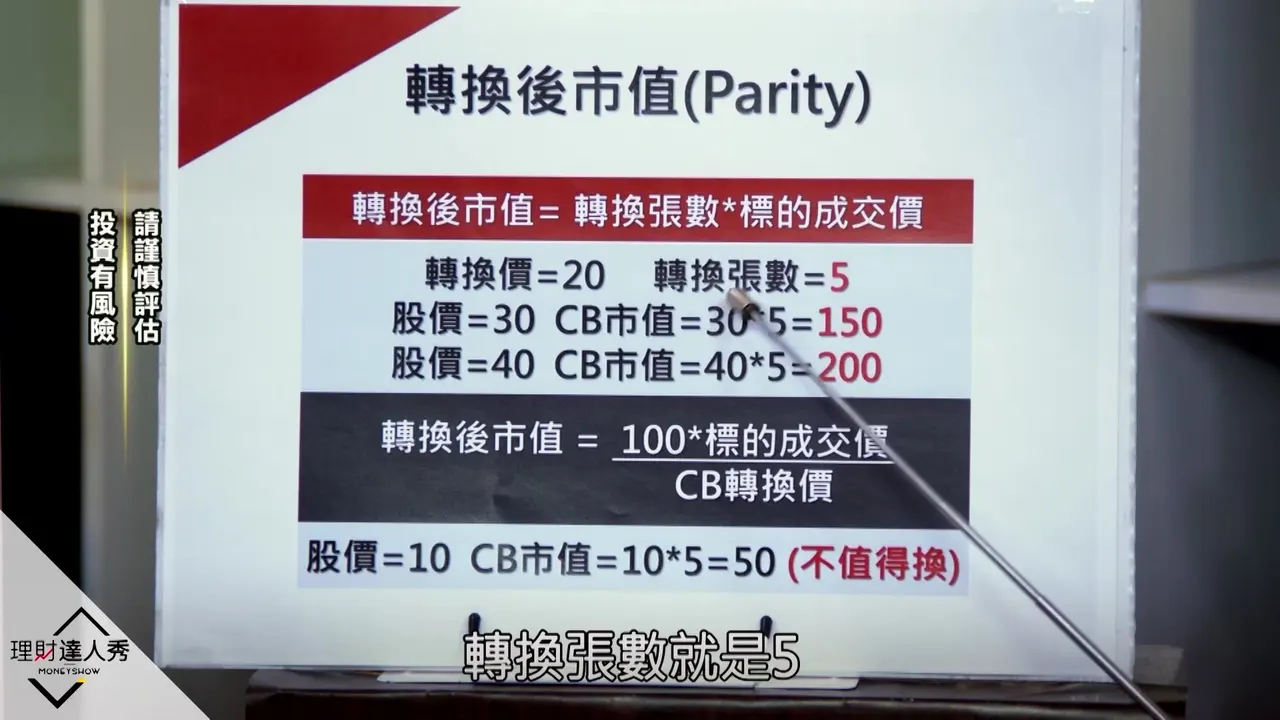
- How to read it: conversion lots = 100 ÷ conversion price, and conversion value = stock price × conversion lots; when the bond's market price is higher than its conversion value, the specific holders expect the stock to be pushed up, which lets you guess the company's intent.
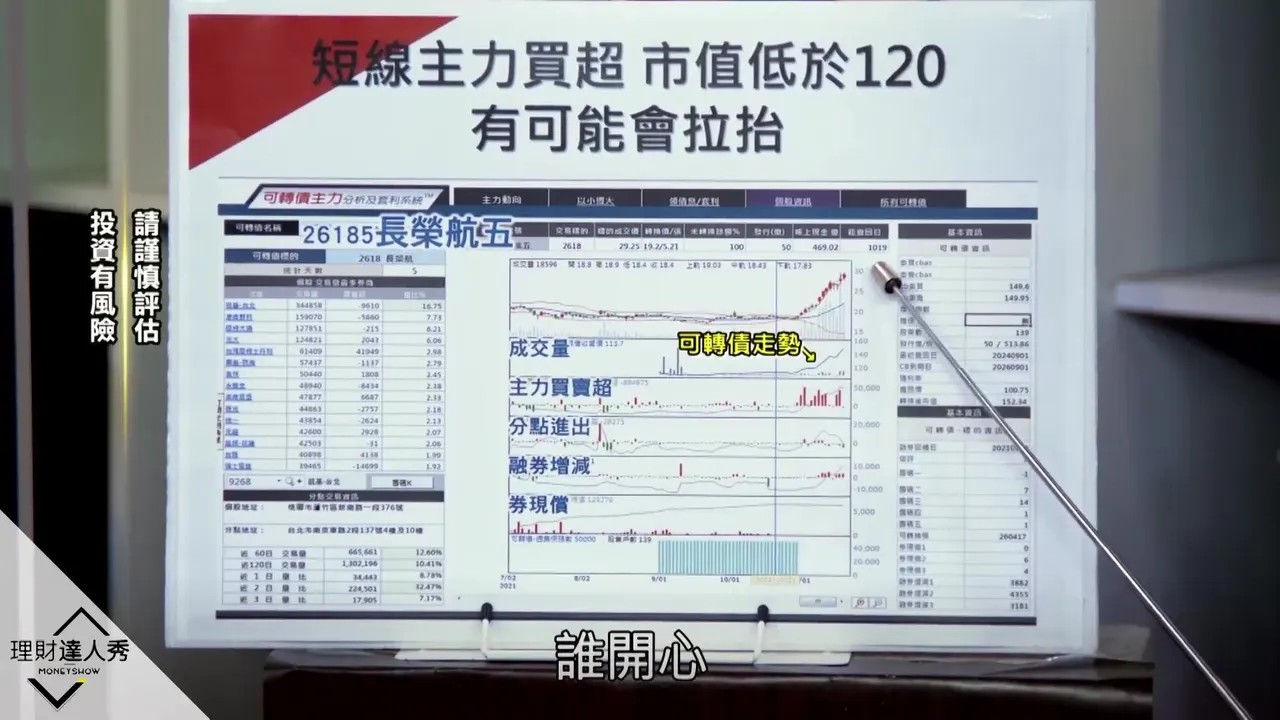
- In practice, look for stocks whose conversion value is below 120 and that have short-term major-player net buying, such as Evergreen Airlines, whose bond jumped from over 110 to nearly 160 after the stock passed the conversion price; convertible bonds have a floor but are small in scale, so use the stock itself for large positions.
Section summaries
4:05Basic Definition and Guarantee of Convertible Bonds
Introduces the convertible bond (CB) as a bond guaranteed by the issuing company that can be converted into shares. It stresses that the guarantee comes from the issuer itself, so if the company is in poor shape the guarantee is unreliable, and it warns readers to watch recent names with consecutive limit-down days and questionable fundamentals.
▶ Watch from here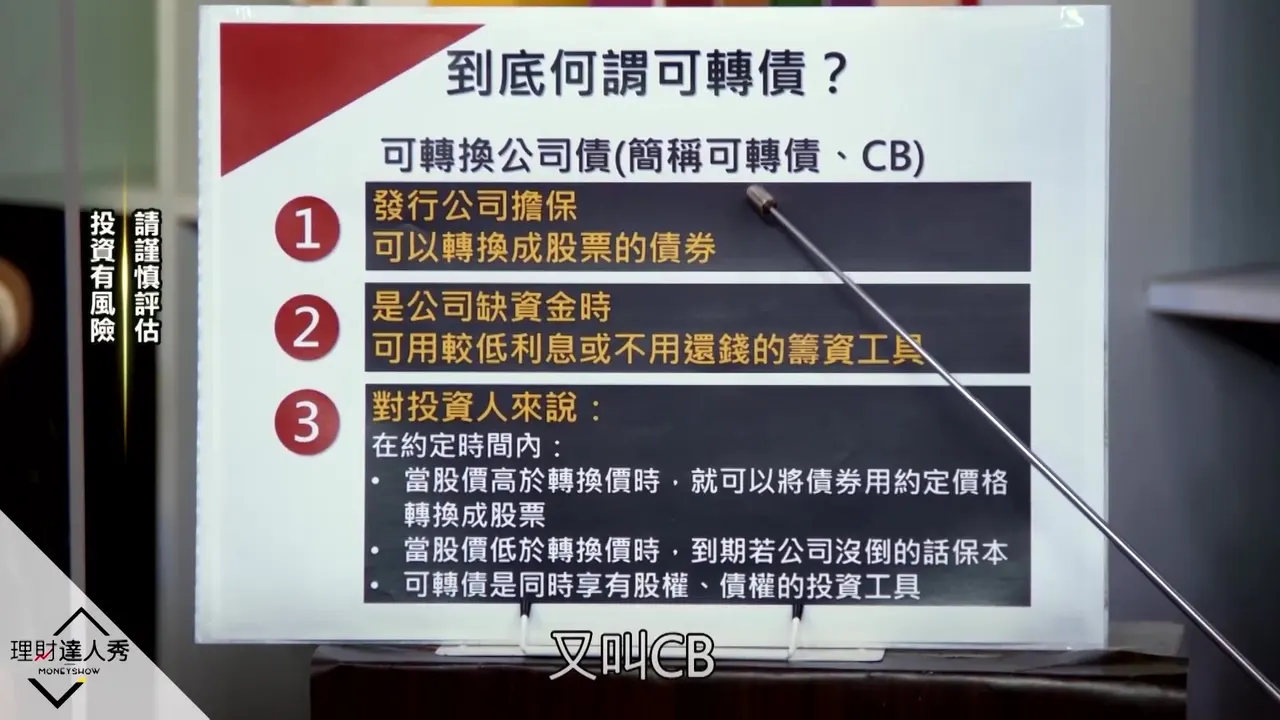
5:00Types of Guarantee and Principal Protection
Explains that convertible bonds are either secured or unsecured; unsecured ones are cheaper but riskier. Companies issue them to raise money at low interest or even to avoid repaying, while investors hope the company pushes the stock up so they can convert. At maturity, if the company has not collapsed you get back at least 100; secured bonds are always protected, while unsecured ones are not necessarily, as Far Eastern Air Transport fell to just 40 or 50 before it collapsed.
▶ Watch from here8:05Advantages of the Dual Stock-and-Bond Nature
In summary, a convertible bond is an instrument with both equity and debt features: when the stock falls you are a creditor with principal protection, and when it rises you are a shareholder and profit, so one product serves two purposes. If you worry about losing money on stocks, you can pick a secured bond priced at 98 or 99, which gives a floor of at least 100, provided the company is run honestly.
▶ Watch from here9:05How to Look Up Bonds at the TPEx
Convertible bonds are managed by the Taipei Exchange (TPEx), and the information is in the bond market section of its website rather than at the Taiwan Stock Exchange. Bond codes are 5-digit numbers, and the page lists the issuer, issue and maturity dates, term (usually 3–5 years) and issue amount, with issuance documents available for further reading.
▶ Watch from here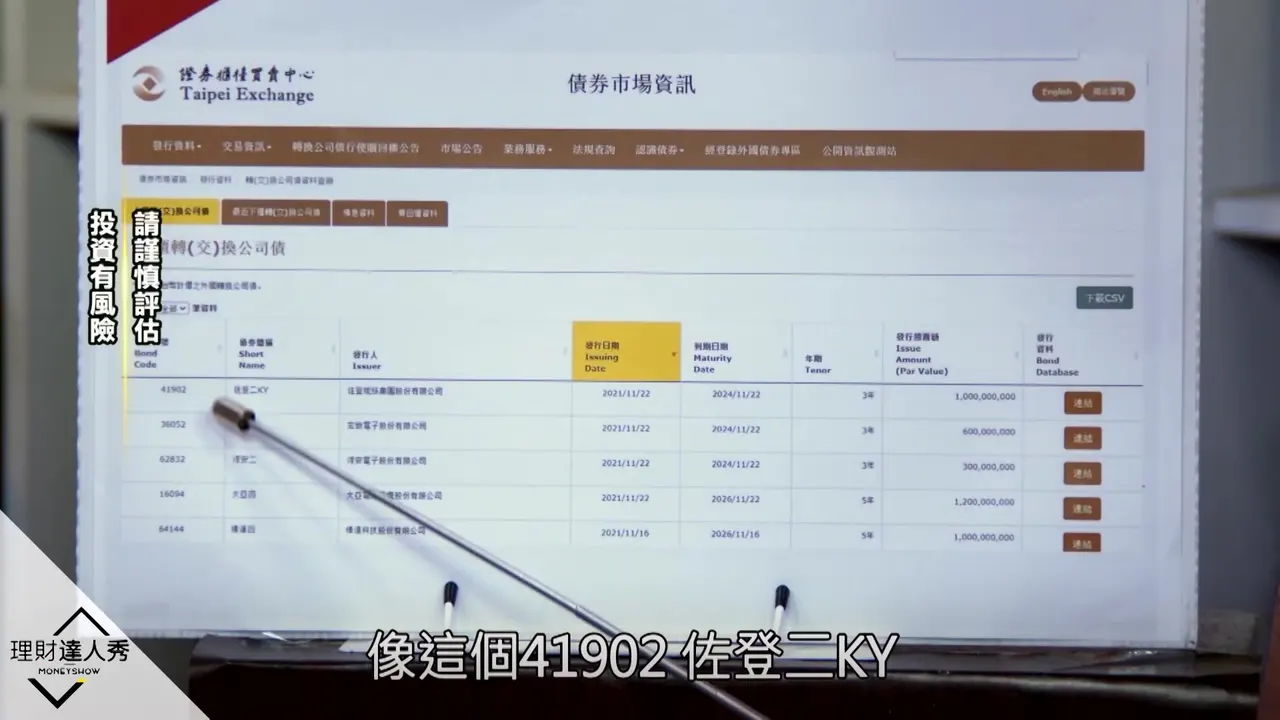
10:15Pros and Cons of Convertible Bonds
The advantages are low principal risk and low trading costs: there is no transaction tax on trades, and the bond rises when the stock rises, though day trading is not allowed. The drawbacks include possible early redemption by the company above 130, such as Yang Ming's bond, which could have reached 2200 if not redeemed but was actually redeemed at a little over 200; there is also bankruptcy risk, as in the LEE case, though owners go to prison if a company collapses, so companies usually dare not let it happen, and it is advisable to avoid low-priced bonds at 60–70; there is also liquidity risk, as thin trading volume may make it impossible to sell.
▶ Watch from here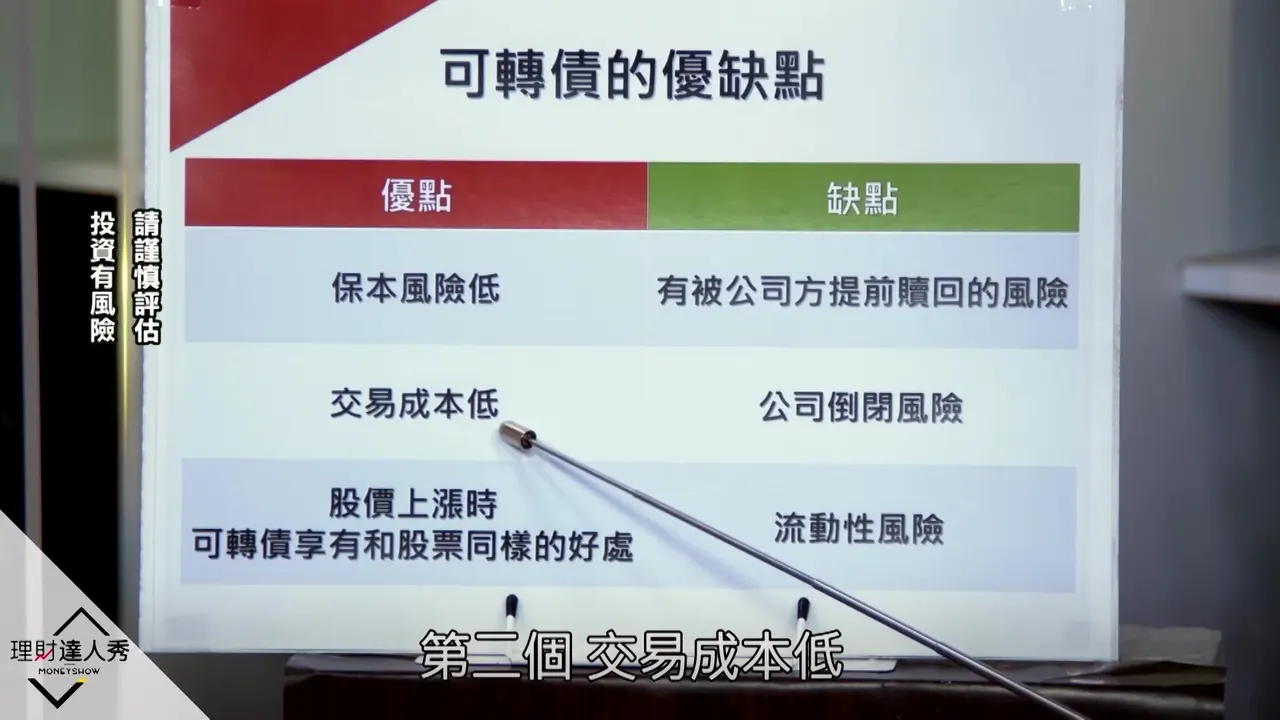
14:25The Calculation Behind Poor-Credit Companies Issuing Bonds
Banks are unwilling to lend to poor-credit companies (credit rating 7–9), and most issue convertible bonds to avoid repaying, pushing up the stock so the bonds convert into shares, which benefits both the specific holders and the company. The speaker shares his own experience buying a convertible bond as an option: with a conversion price of 69 and a stock price of 68, he bought the bond at 100.5, but the company actually repaid the money and he lost. In the end the small shareholders lose out: share capital swells from 5 hundred million to 10 hundred million and EPS shrinks.
▶ Watch from here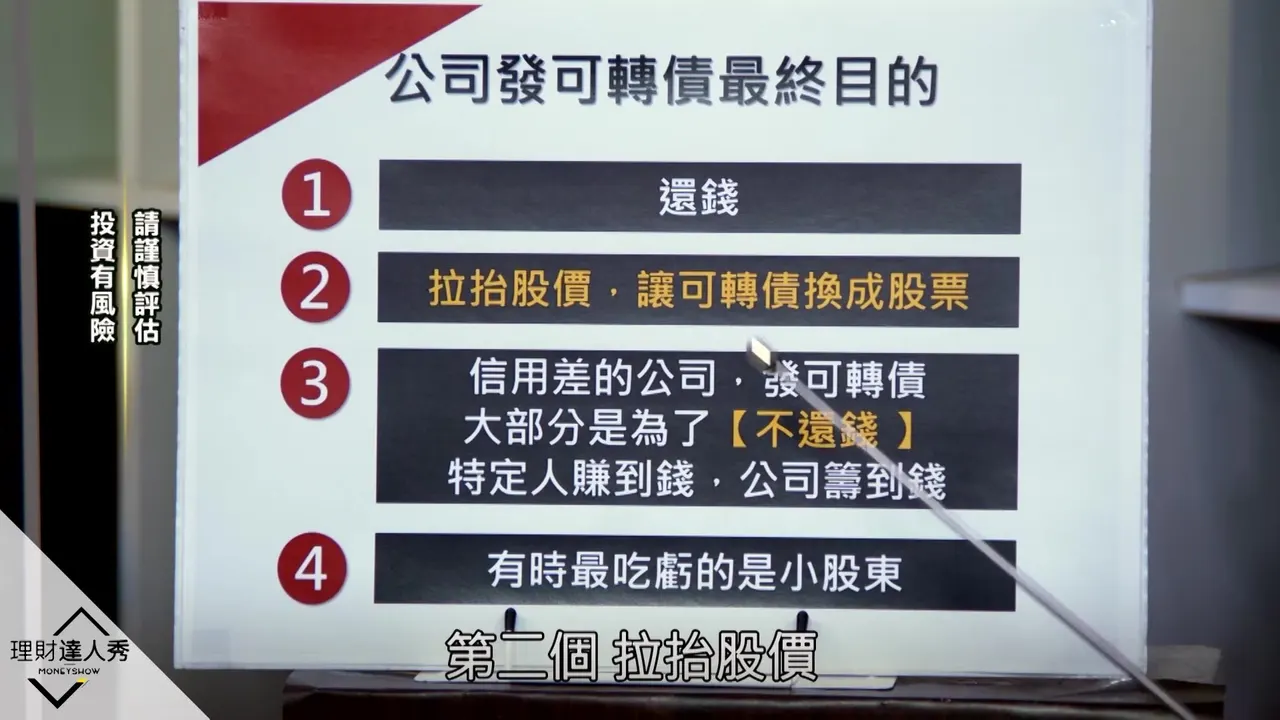
18:41Issuance SOP: Low-Price Issuance and the Lock-Up Period
The first step of the issuance SOP is usually to issue the convertible bond when the stock price is low; issuing at a high price means the finance staff are not up to the job. Conversion is not allowed within 3 months after issuance, but the stock is often pushed up during this period.
▶ Watch from here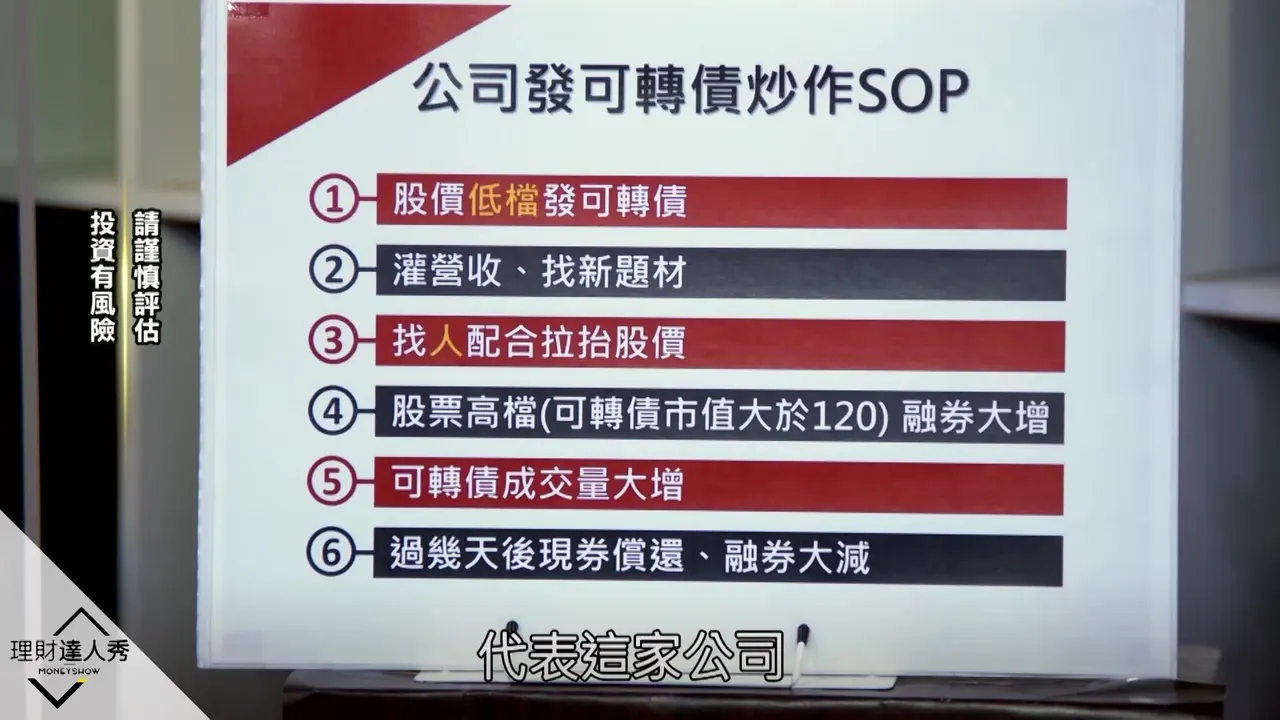
19:11Pumping Tactics and Exit Signals
Tactics for pushing the stock within 3 months of issuance include a sudden revenue increase or good news appearing at just the right time, finding a new theme (such as a chemical or textile company shifting into construction), and getting people to hype it in the media. At the high point the conversion value goes above 120, and skilled operators can push it to 150 or 200; a surge in the bond's trading volume means hands are changing; short selling the stock first and then converting the bond into shares to offset it is called cash-in-kind repayment (現券償還), so when it appears at a high, it means they have cashed out and the rally may be over.
▶ Watch from here22:45Calculating Conversion Lots and Value
Conversion lots = 100 ÷ conversion price, because a bond has a face value of 100 and one lot is 10 wan (ten-thousand) yuan; a conversion price of 20 converts into 5 lots, and 50 into 2 lots. Conversion value = stock price × conversion lots: with a conversion price of 20 and 5 lots, if the stock rises to 30 the value is 30 × 5 = 150. Conversion value is not the market price, so when you cannot sell, set your ask a bit lower.
▶ Watch from here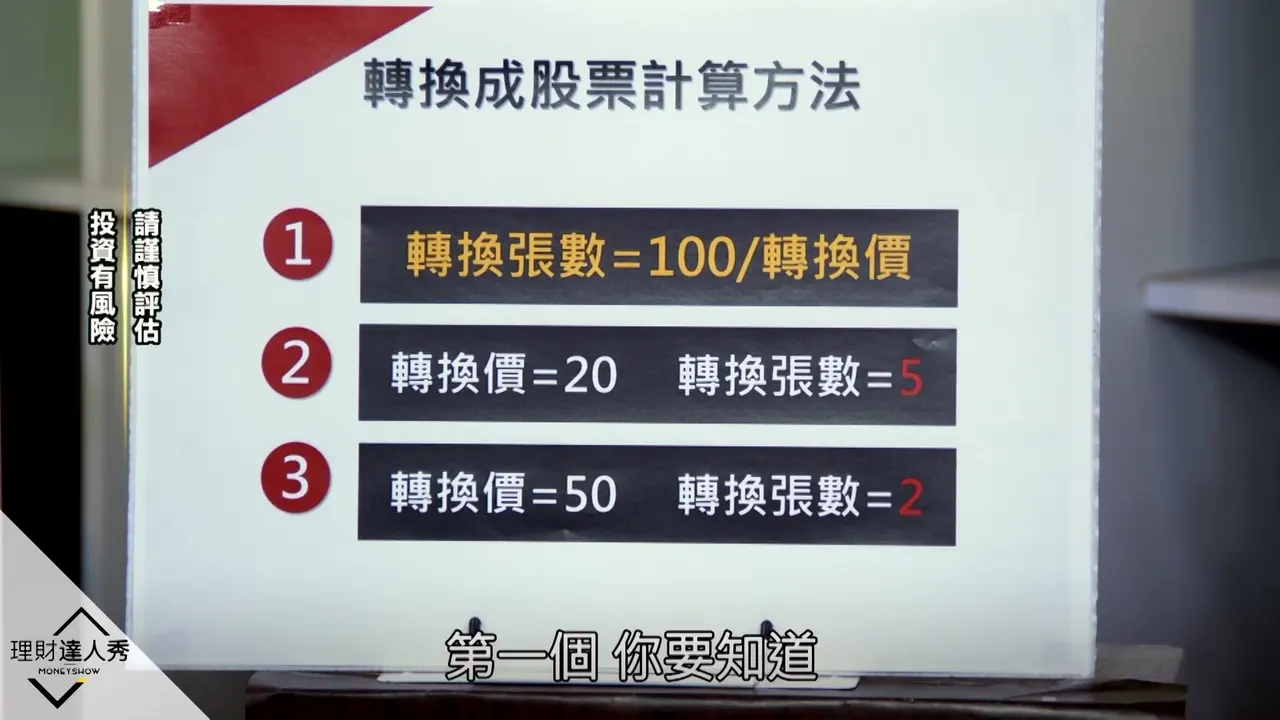
25:22The Conversion Option and Odd-Lot Cases
If the stock doubles, the conversion value doubles too; if the stock falls to half the conversion price you can choose not to convert and take your principal back, converting only when the stock rises, which is the benefit of convertible bonds. Taking Ennoconn III (64143) as an example, the bond often hits limit-up once before the stock is pushed, to show the market; its conversion price is 223.2, converting into 0.45 lots, less than one lot.
▶ Watch from here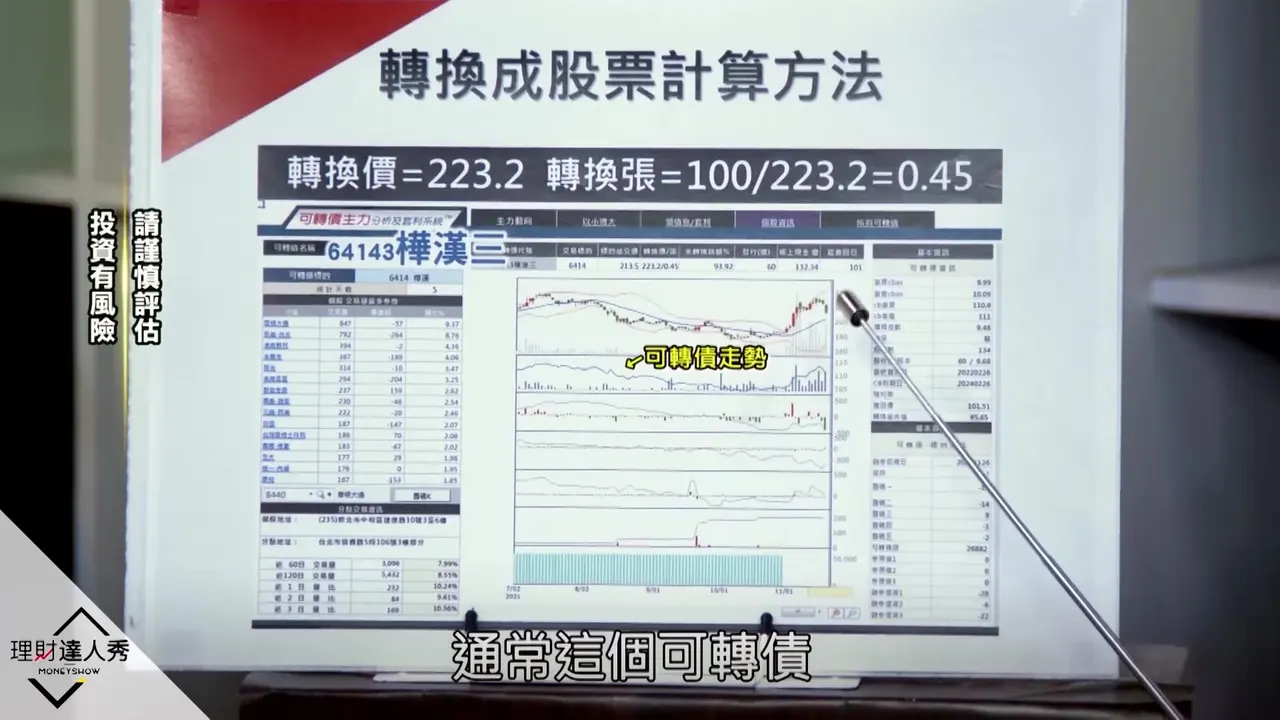
26:45Reading a Company's Intent from the Bond Price
In the same example, the conversion value is about 95, and once the stock is pushed past the conversion price the value will break above 100; but the bond's market price is already 111, higher than its conversion value, which means the specific holders expect the stock to be pushed up, otherwise with a value of only 90-something they would not still be holding at 120 or 130. So you can guess the company's intent from the bond price, and learning to read this is very helpful when looking at stocks.
▶ Watch from here28:52Put Rights and Risk Cases
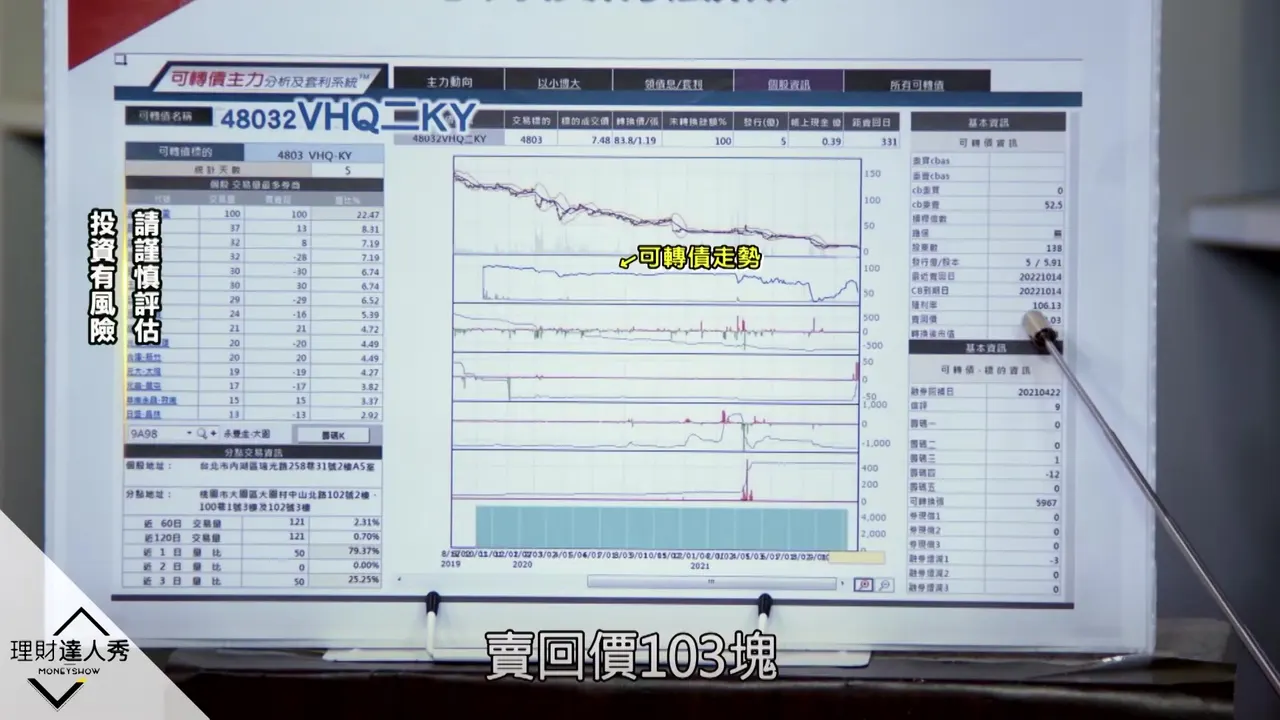
The bond in this example can be put back to the company at 101.51 at the end of next February, but it can be sold on the market at around 110, so no one will put it back; put rights are usually granted to companies with weaker fundamentals, like Far Eastern Air Transport. VHQ II KY (48032) issued its bond at 100 and it is now at 52, with a put price of 103 not available until October 14, 2022; a price this low usually means the company may not be able to repay, so it is not recommended, although there are historical cases where the company later did repay; one that could not repay was the LEE case, where Hsu Chin-lung went to prison. Finally, a simple method is introduced: when the conversion value exceeds 100 the bond moves in step with the stock, and you watch for short-term major-player net buying.
▶ Watch from here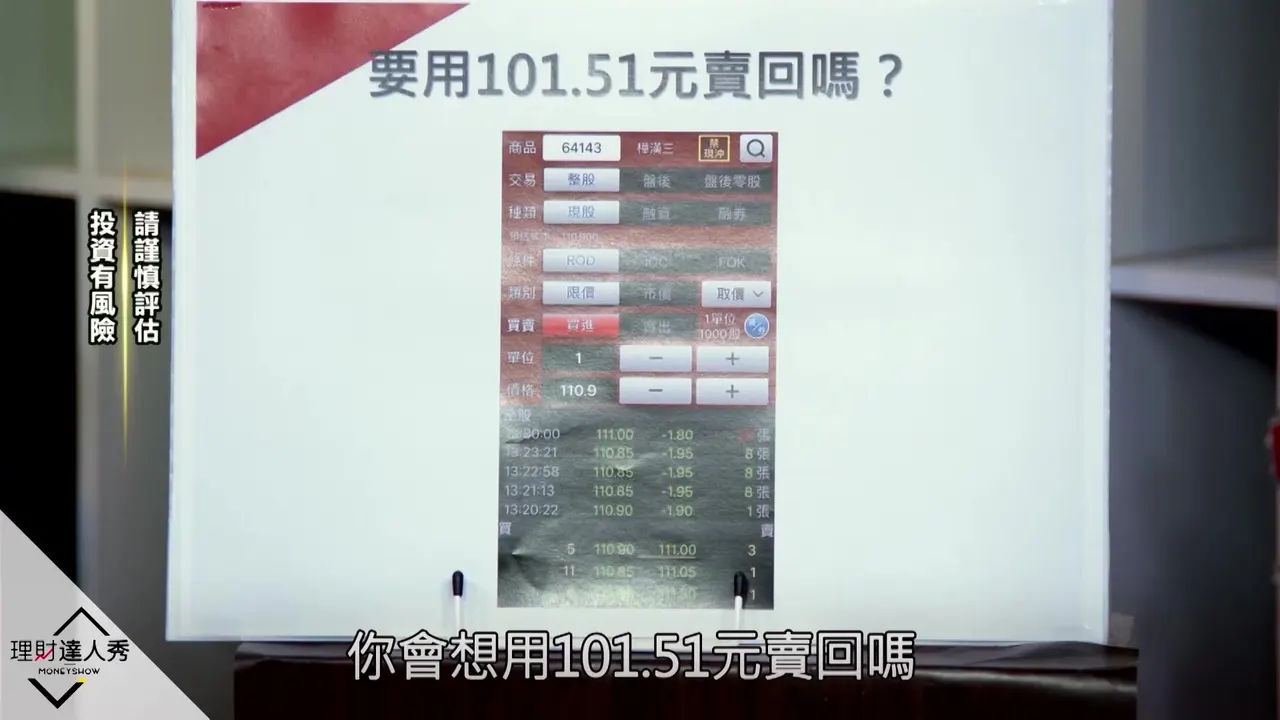
31:32Worked Example of the Method and Summary
When there is short-term major-player net buying and the conversion value is below 120, the stock has a chance of being pushed up; what you watch is the major players' net buying in the stock, not in the bond. Taking Evergreen Airlines as an example, with a conversion price of 19.2, after the stock passed the conversion price the bond jumped from over 110 to nearly 160, a gain of nearly 50%; another one with a conversion price of 19 also jumped from 110 to 160. Convertible bonds have a floor, but their trading size is far smaller than the stock's, so if your position is very large, trade the stock, and buy the bond only if you want a floor. In summary: most companies issuing convertible bonds hope to repay with shares rather than cash, and buyers hope so too.
▶ Watch from here