Reading Margin Financing: Is Retail Money Truly Washed Out?
TL;DR: Rising margin financing only shows that the individual investors borrowing to buy are bullish; the retail flow counts as washed out only when margin falls about 70% from its peak and falls by more than the share price does, and cyclical stocks often need 2-3 years, so falling margin does not mean you can buy right away.
Key ideas
- Margin financing reflects the views of individuals who borrow to buy stocks, and may even be a contrarian indicator; market-wide margin retreated from a peak of 3000 yi (hundred million) to about 2400 yi, a 20% drop versus a 10% index decline, which is seen as relatively healthy.
- Margin risk is judged by three indicators: high utilization (watch out above 20%, 70% is a deadly barrier), low maintenance ratio (the legal margin-call level is 130%; for individual stocks below 120% be careful), and major players selling continuously for about 1 month; when all three stack up, longs easily kill longs.
- Using Evergreen as a worked example: buying 1 lot at 92.4 with 60% margin gives a maintenance ratio of 166%, and a margin call comes when the price is multiplied by 0.78; when single-stock futures margin was raised to about 40%, both futures accounts and margin accounts had to be cut.
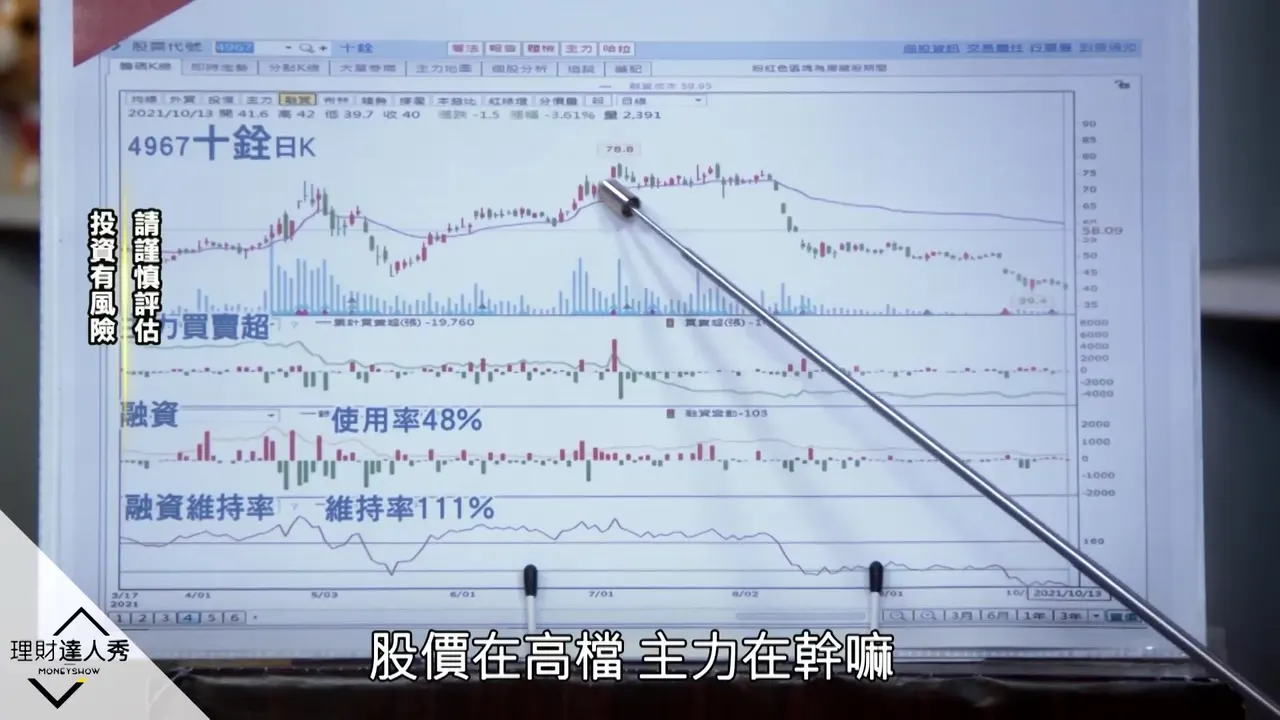
- Team Group and Annuo Fa are both cases where major players dumped at the top and margin buyers were left holding the bag, with maintenance ratios down to 111% and utilization still at 48% and 26%, so extra caution is needed going forward.
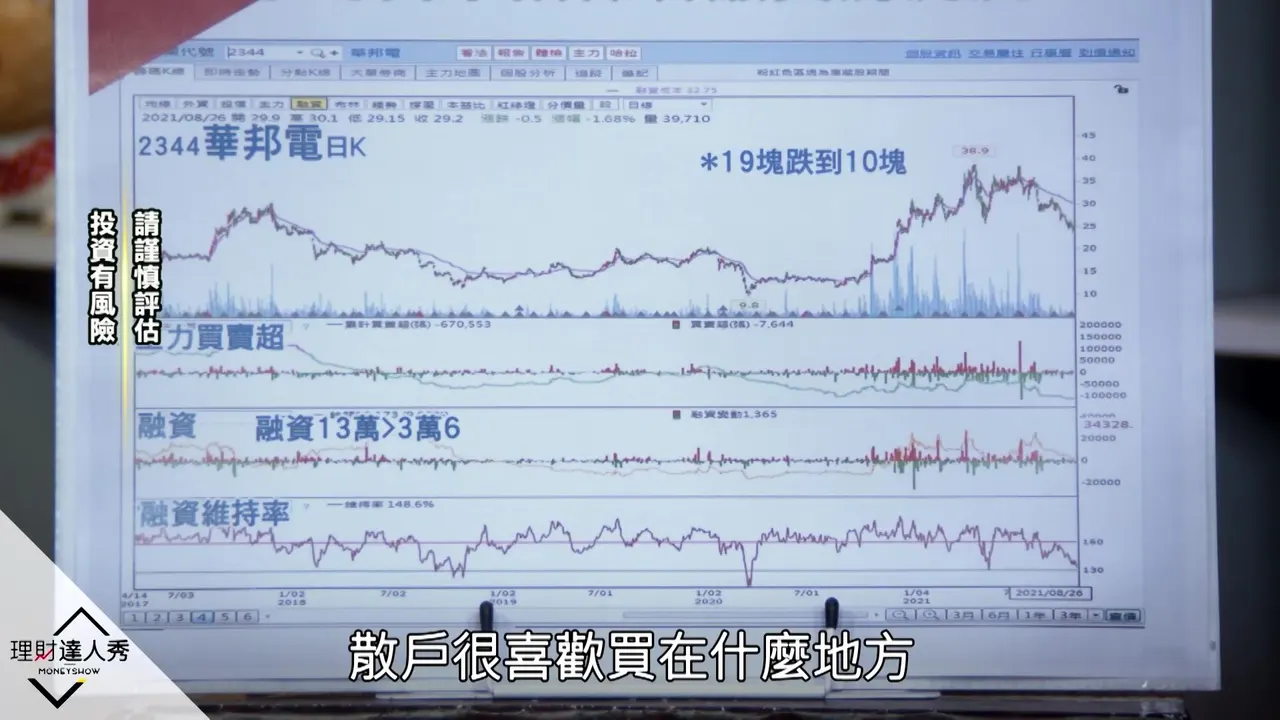
- AUO's margin fell from 40 wan lots (wan = ten thousand) to 6 wan lots and Winbond's from 13 wan lots to 36000 lots; only after the washout did major players buy back in and trigger a rally, but margin has recently risen again, so the cycle may repeat.
Section summaries
4:55Overheating Warning in the Shipping Stock Frenzy
Looking back at the shipping stock frenzy in late June, even people who knew nothing about stocks, such as the speaker's gym trainer, were asking whether to buy. The speaker sees this as an overheating signal of retail investors piling in across the board. Prices then fell all the way down, and market-wide margin peaked in early July.
▶ Watch from here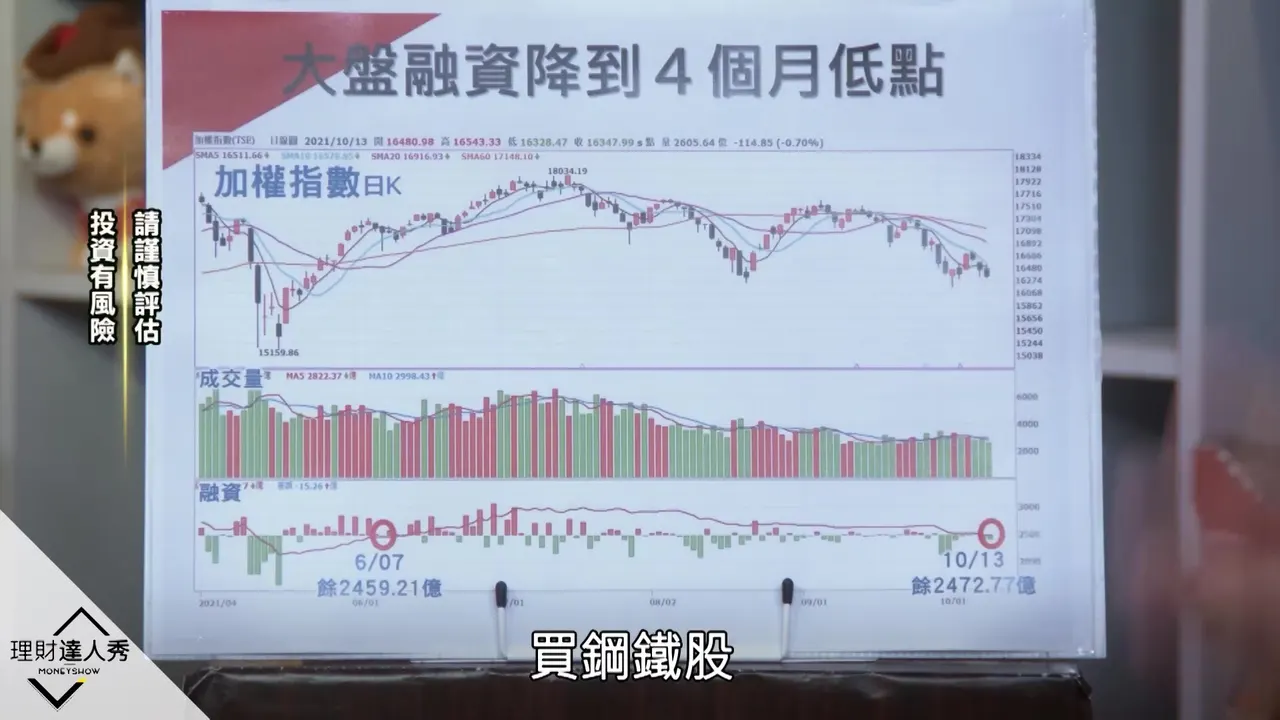
5:40The Margin Peak and the Recent Retreat
Margin once surged to 3000 yi (hundred million) at its peak, with many people cashing out time deposits or borrowing money to buy shipping stocks. Recently it has retreated sharply: many received margin-call letters and could not hold on, either cutting positions themselves or being force-sold by brokers, leaving about 2400 yi. Margin fell about 20% while the index fell only 10%, and a retreat larger than the price decline is considered relatively healthy. The speaker also sympathizes with retail investors, noting that major players sold at the top and harvested them.
▶ Watch from here8:05What Rising Margin Really Means
Starting with the terminology: rising margin only means the person buying stocks on margin is bullish, not that more people are bullish; margin selling means that person is bearish. Margin reflects the view of individual investors and may even be a contrarian indicator, so it does not represent the overall bullish or bearish direction.
▶ Watch from here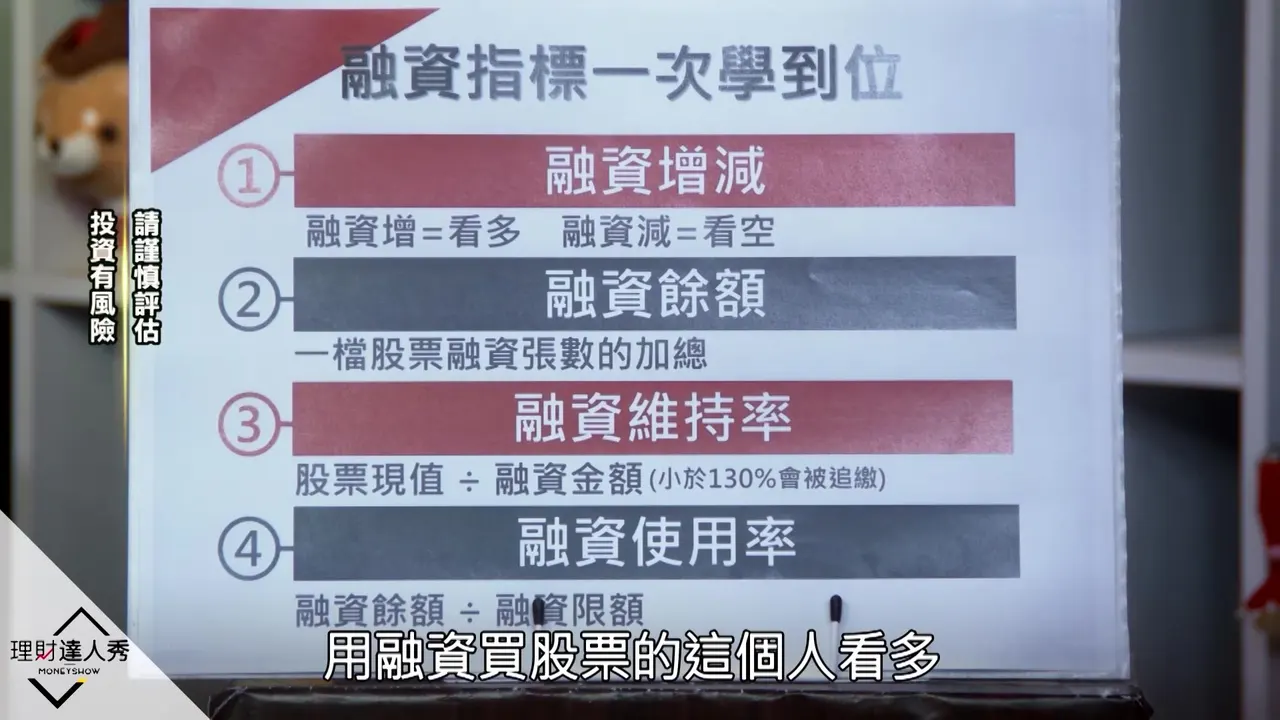
8:51Definition of Margin Balance
The margin balance is the total number of lots of a stock bought on margin. The high-balance names are mostly large stocks such as AUO and Innolux, where many investors felt the price had fallen cheap and entered on margin to catch the drop.
▶ Watch from here9:25Maintenance Ratio and the Margin-Call Threshold
The margin maintenance ratio is the current value of the stock divided by the amount borrowed, and by law a margin call is triggered below 130%. The threshold was originally 120%; the government raised it to 130% to protect investors, so that they stop losses earlier and at least keep part of their capital.
▶ Watch from here10:11Margin Utilization and the 70% Deadly Barrier
Margin utilization is the margin balance divided by the margin limit. A very high utilization means those who want to average down no longer have any margin quota, which is bad for the price. Above 70% is a deadly barrier, and if the maintenance ratio is also low, longs easily kill longs. The speaker once shorted a stock with 99% utilization; after trading was halted, it fell limit-down repeatedly to 3 before reopening.
▶ Watch from here12:45Worked Example: Evergreen's Margin Cost and Maintenance Ratio
Taking Evergreen's price of 92.4 as an example, buying 1 lot costs 92,400, with 60% borrowed and 40% self-funded, giving a maintenance ratio of about 166%. The margin-call point is easy to remember: multiply the price by 0.78 and a margin call is triggered. For example, if you bought at 100, it is triggered when the price falls to 78.
▶ Watch from here13:51Single-Stock Futures Margin and the Three Danger Indicators
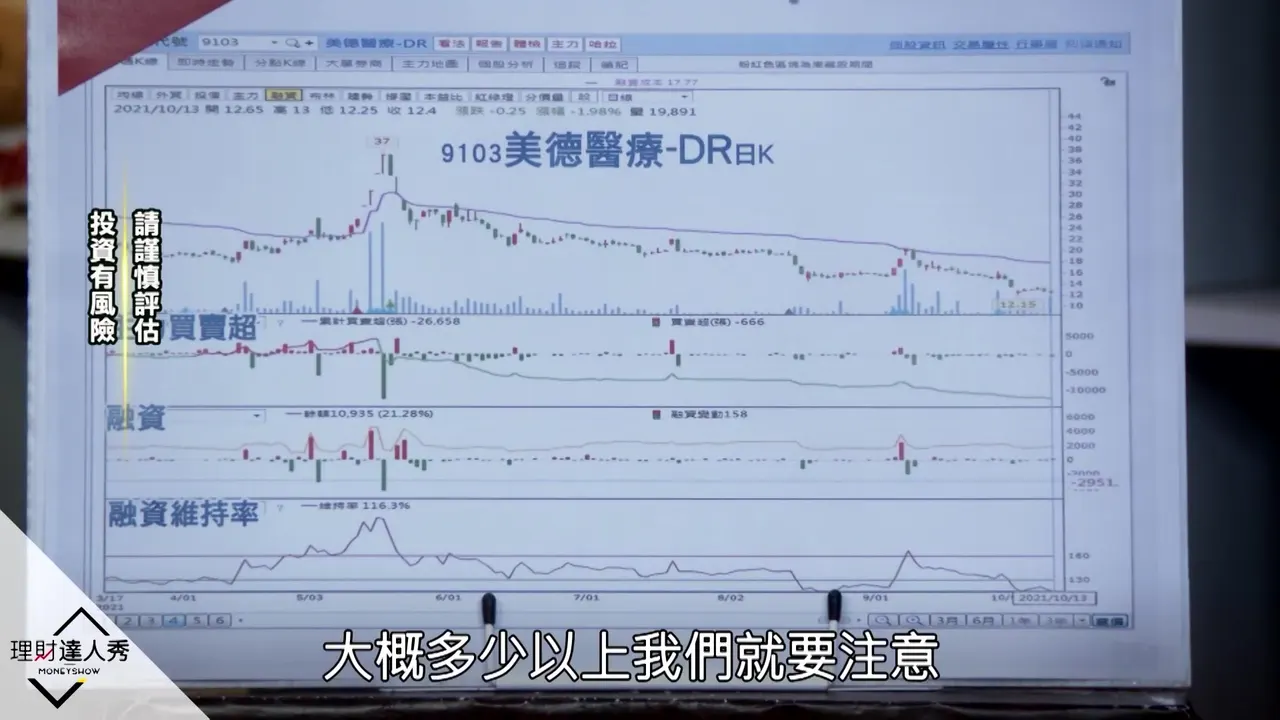
Some people bought Evergreen at over 200 and were margin-called; at that time single-stock futures margin was raised to about 40%, close to margin financing, so both futures accounts and margin accounts had to be cut. The speaker summarizes three danger indicators: high margin utilization (watch out above 20%, 70% is a deadly barrier), low maintenance ratio (an individual stock below 120%), and major players selling over a long period. The speaker cites Medigen, whose price fell from a high all the way to around 12, as an example of longs killing longs.
▶ Watch from here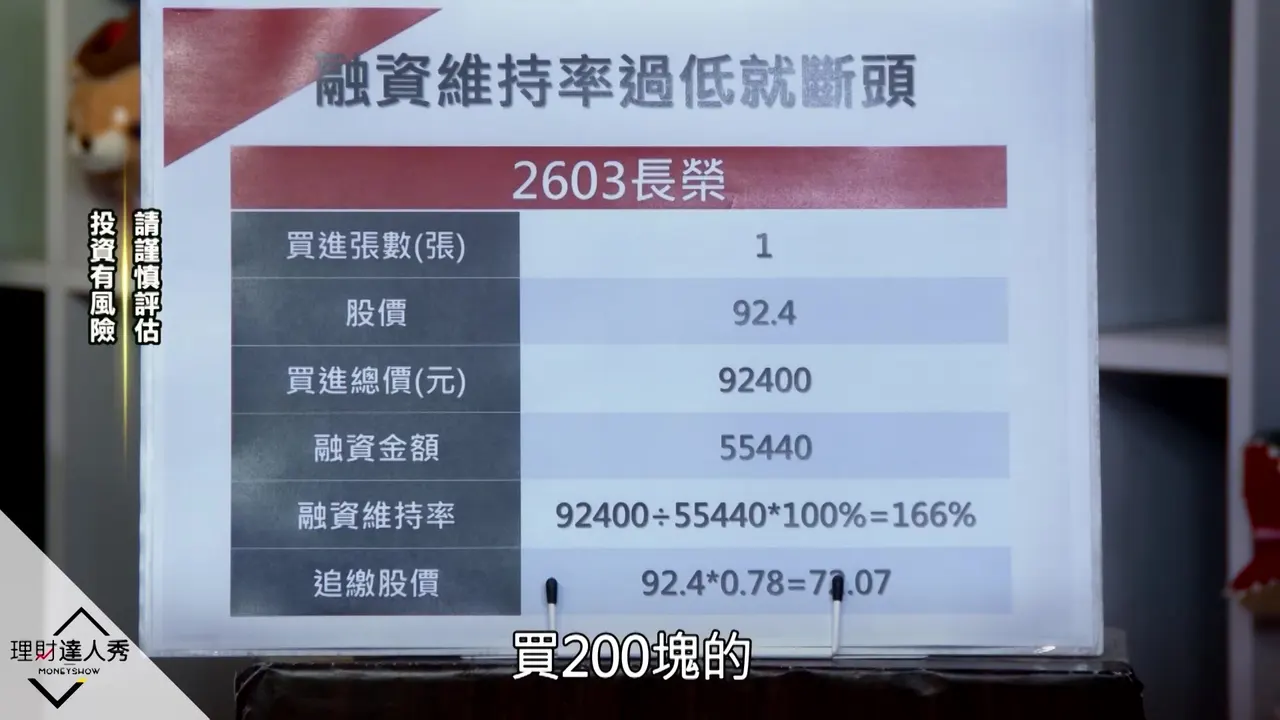
16:01Case 1: Team Group's High Margin Risk
The speaker pulled out stocks to be careful about using big data. The first is 4967 Team Group, a stock with a high margin ratio when memory was hot. At the price peak, major players dumped while margin buyers bought in; retail investors were lured up the mountain and then the price fell. The average margin cost is now about 59.95 while the price is 40, with the maintenance ratio down to 111% and utilization at 48%, so caution is needed. The speaker also reminds that revenue peaks often come one month after the price peak.
▶ Watch from here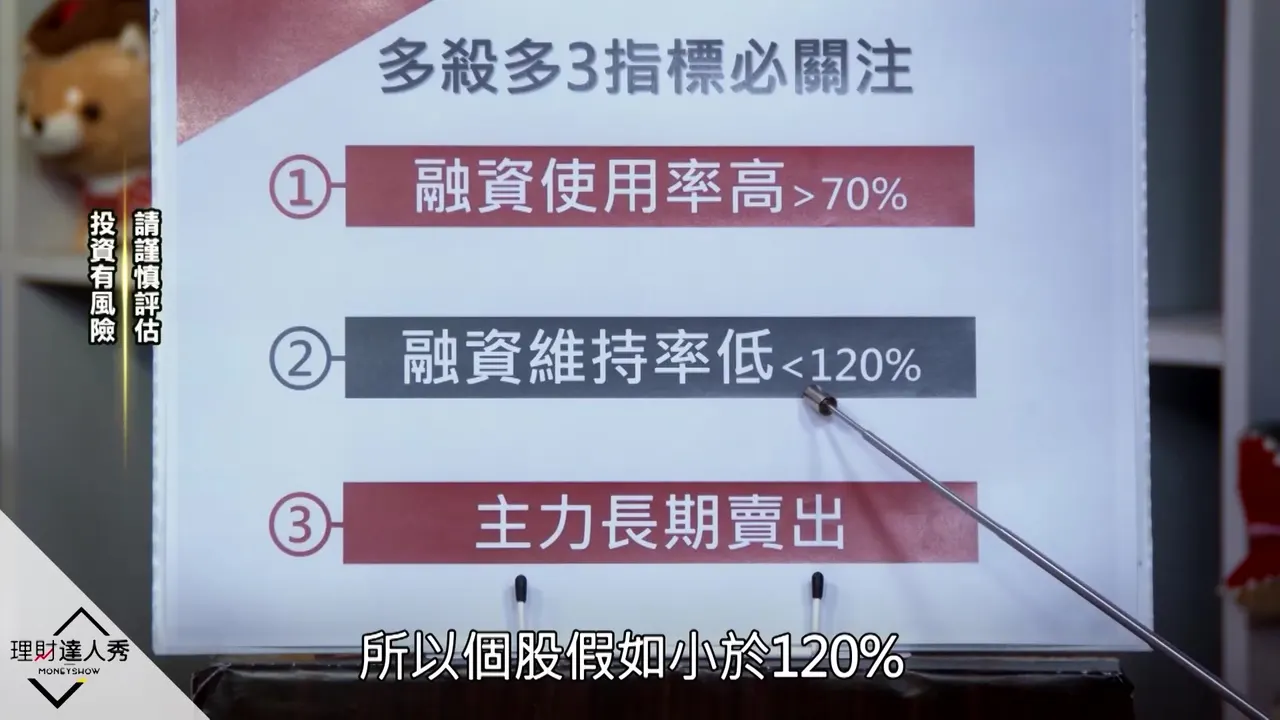
18:51Case 2: Annuo Fa, a Pandemic Beneficiary at Risk
Margin buyers of 4133 Annuo Fa were lured in at 80, and the price is now 35. Margin has not fallen much, with utilization still at 26% and the maintenance ratio down to 111%. As the pandemic eases and vaccines become widespread, the outlook for such pandemic-beneficiary stocks calls for extra caution.
▶ Watch from here19:31Major-Player Margin vs. Retail Margin
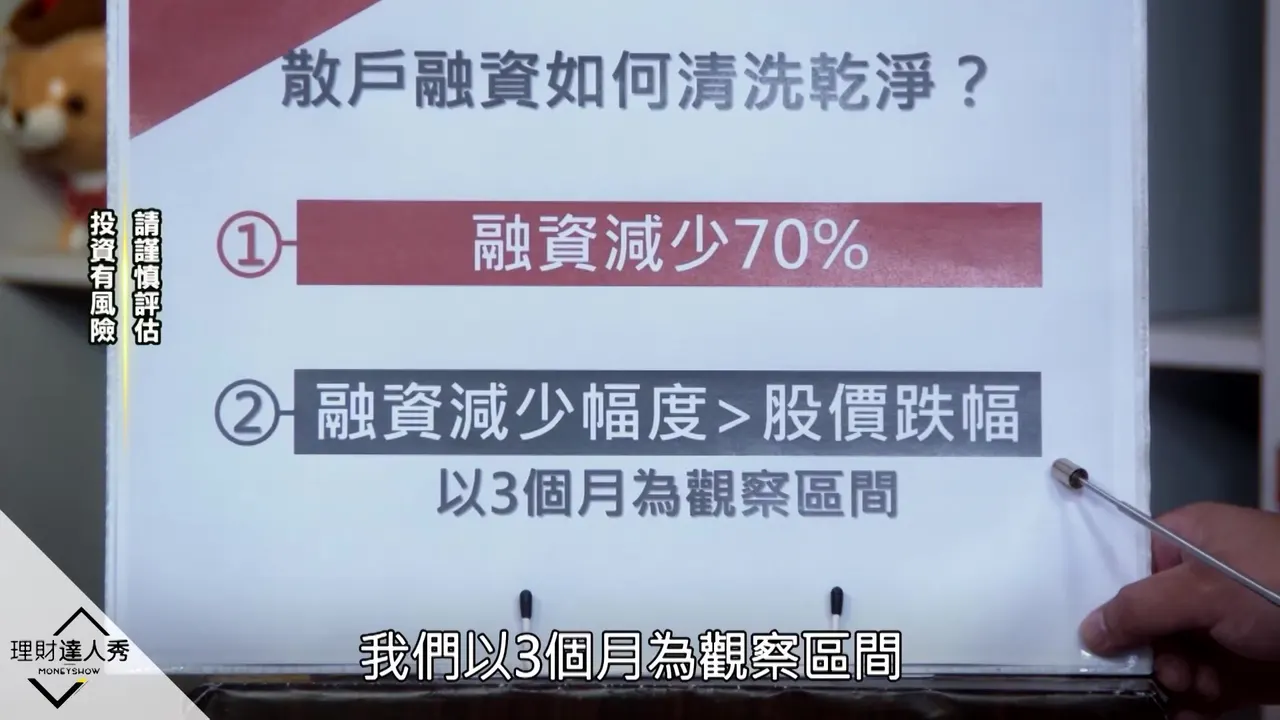
Borrowing to buy stocks can also be a smart major player's tactic: rising margin with major players buying and chip concentration increasing is major-player margin; rising margin with major players selling and chips dispersing is retail margin. Big-data research found that margin can be considered washed out when it falls 70%, and that a three-month observation window makes washouts easier. Using AUO as an example, major players were net sellers at the peak while margin buyers took over and were trapped at the high.
▶ Watch from here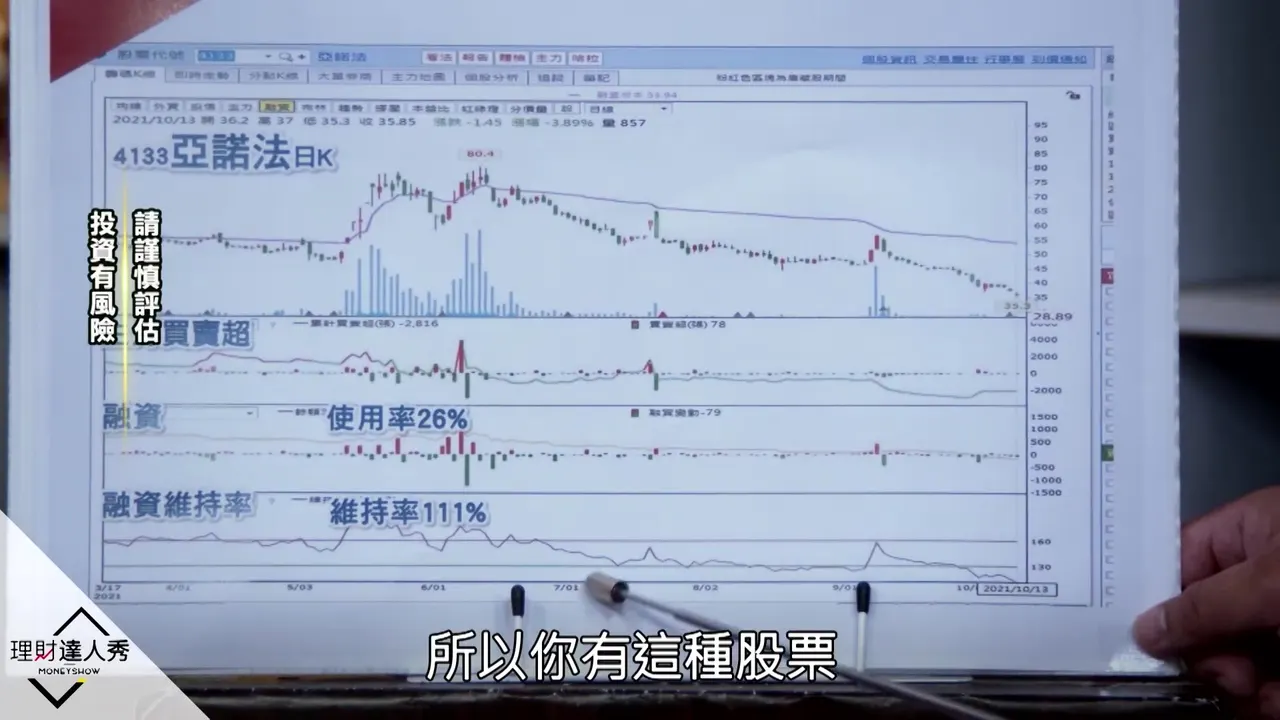
22:15Long-Term Margin Washouts in Cyclical Stocks
After cyclical stocks hit a low, they often consolidate for a long time at a price of just a few dollars. AUO's price was once beaten down to 6, and margin fell steadily from 40 wan lots (wan = ten thousand) to 6 wan lots, washing out from 2017 to 2019. Precisely because the chips were cleanly washed out, major players later bought, margin returned, and the price rallied strongly, a classic case of a renewed advance after a washout.
▶ Watch from here23:35Case 3: Winbond's Cycle Repeats
When the cycle is turning up and margin buyers come in, everyone makes money; when the cycle turns down and margin surges again, be careful. Retail investors like to buy after a stock hits a new high, thinking the P/E is low and it is cheap, but major players are selling just as it makes new highs. Winbond's margin peaked at 13 wan lots (wan = ten thousand) and fell to 36000 lots, a 70% decline; the price dropped from 19 to around 10, then fell to 9.8 during the pandemic, and later rose nearly 4 times. Recently major players have again sold at the high while margin has entered again, so the cycle is repeating.
▶ Watch from here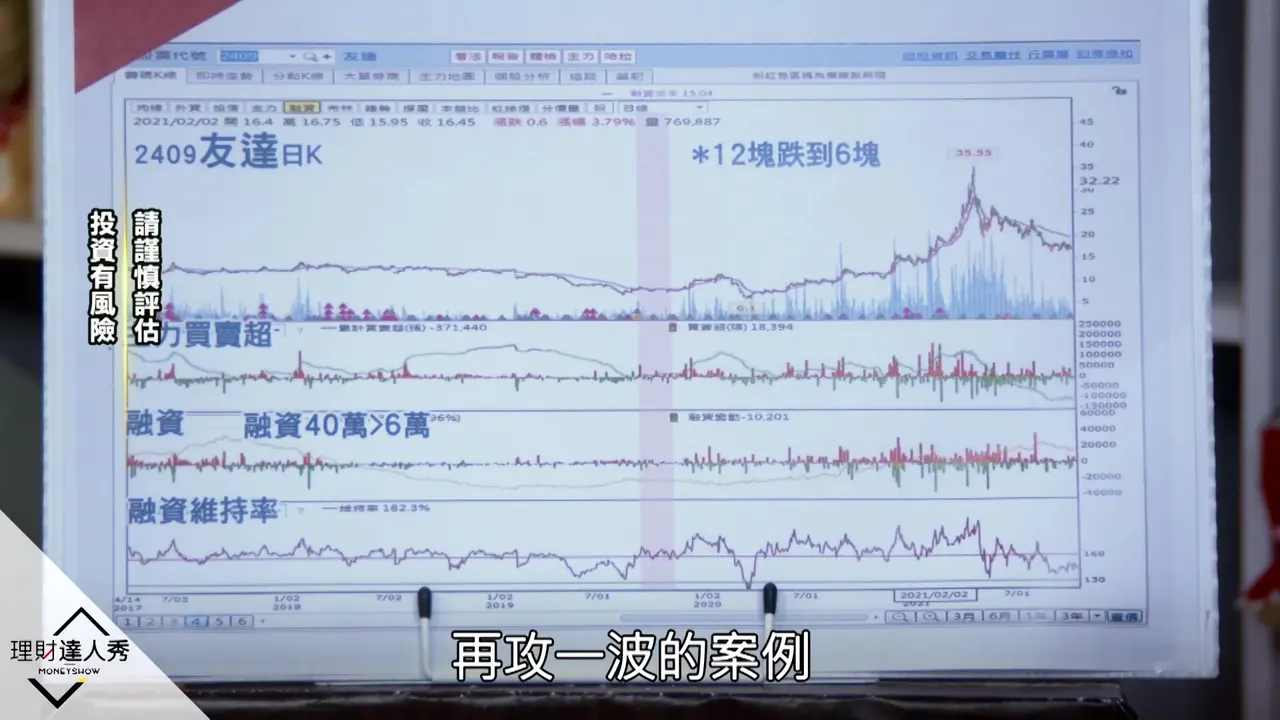
26:02Summary and Key Takeaways
For cyclical stocks, a margin washout can take as long as 2-3 years, and falling margin does not mean you can buy right away; for example, some passive component stock took 18 years to wash out. Margin reflects retail optimism, and under information asymmetry retail investors are easily harvested; the advanced course will teach how to read the four combinations of margin and major-player trading.
▶ Watch from here