Director and Supervisor Election Rallies: Judging 1–2 Month Swing Trades from Holdings, Broker Branches and Consecutive Major-Player Buying
TL;DR: Director and supervisor election rallies are 1–2 month swing trades: pick companies where directors and supervisors hold few shares and the price-to-book ratio is low, confirm the rally exists through consecutive major-player net buying, and exit before the share-transfer suspension date.
Key ideas
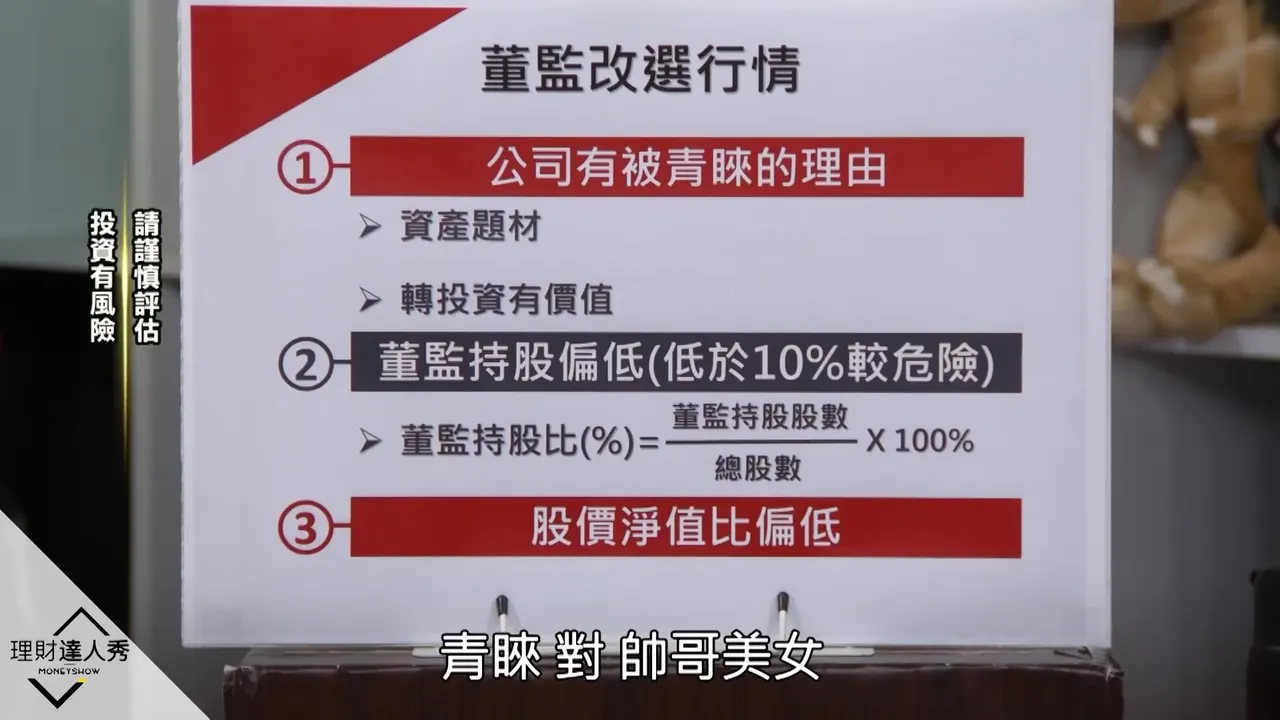
- A director and supervisor election rally needs 3 conditions: the company has a reason to attract interest (such as asset themes), directors and supervisors hold relatively few shares (below 10% is riskier, above 50% is safe), and the price-to-book ratio is low. Fights for a company come down to votes and money; when the price-to-book ratio is low, buying the stock is worthwhile even if you cannot win votes.
- Elections happen once every 3 years, so about 1/3 of companies come up each year. You can first find companies with low insider holdings using the shareholding ratios required under the Securities and Exchange Act, but the election year must be cross-checked yourself.
- In the 2017 Ronggang case, the top net buyers over the period were concentrated in Tainan and Chiayi broker branches. 50 consecutive days of major-player buying meant the market camp and the company camp would not yield to each other. Signs that buying is ending are a big intraday black candlestick and heavy major-player selling after the close; while major players are still buying, a black candlestick is just a small pullback. Two big black candlesticks about 2 weeks before the voting-rights date were the exit signal.
- The D-Link case shows that even when someone is accumulating shares, it cannot withstand the systemic risk from the pandemic. The election was still held as scheduled afterward, and the stock rose from 8 to 20, only with its rhythm disrupted.
- 3 trading points: a 1–2 month swing trade must not be held long; major players must be buying continuously (no buying means no rally); and choosing a low price-to-book ratio is safer. Price peaks tend to fall 1–2 weeks before the share-transfer suspension date, and rallies are mostly concentrated in January and February, so sell before the suspension date and don't mind earning a bit less.
Section summaries
3:15Basic Rules of Director and Supervisor Elections
Article 217 of the Company Act provides that a director's term may not exceed 3 years and that directors may be re-elected, so about 1/3 of companies come up for election each year, roughly 566 in 2022. But an election does not always bring a rally. First confirm whether the company is holding an election this year (once every 3 years, which can be worked out from the last election year) and check the directors' and supervisors' shareholding ratio as the first step in judging whether a rally exists.
▶ Watch from here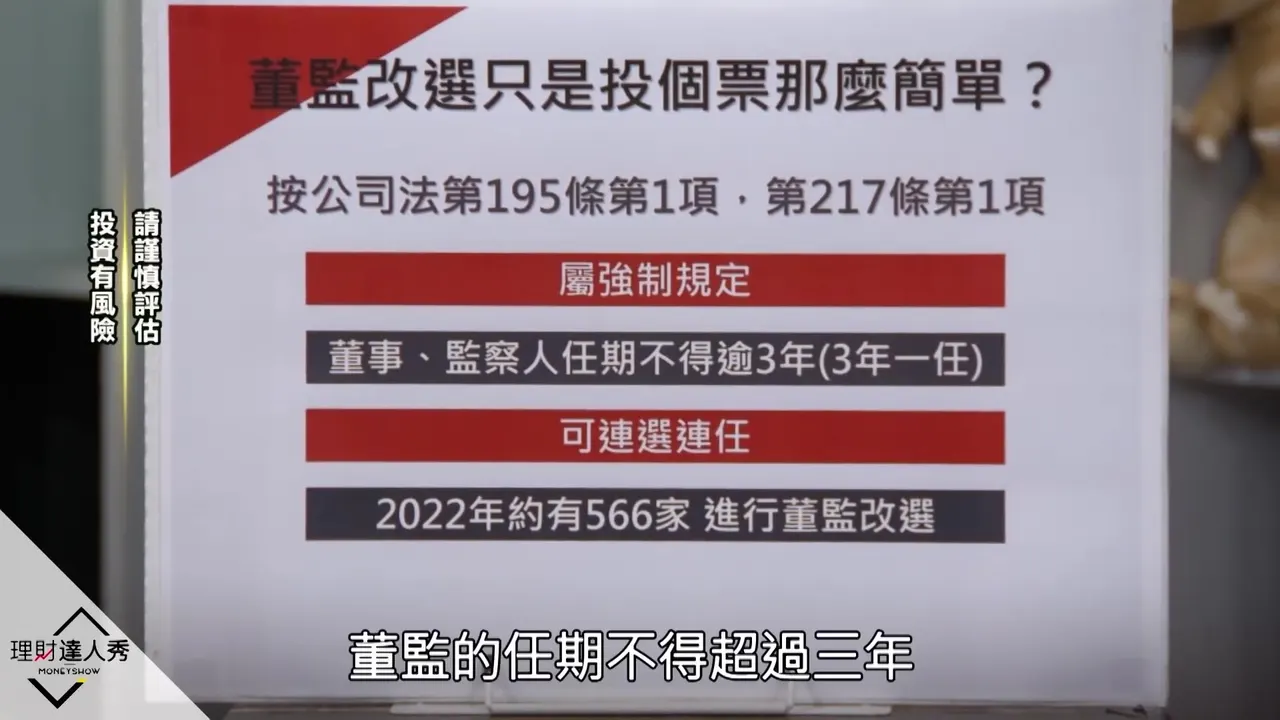
4:45Conditions That Create an Election Rally
When directors and supervisors hold too much (for example 50% or more), control is secure and there is usually no election rally. A rally needs 3 conditions: the company has a reason to attract interest (such as asset themes or valuable investments in other companies), directors and supervisors hold relatively few shares (below 10% is riskier), and the price-to-book ratio is low. Fights for a company come down to 2 things, votes and money; when the price-to-book ratio is low, buying the stock is worthwhile even if you cannot win votes.
▶ Watch from here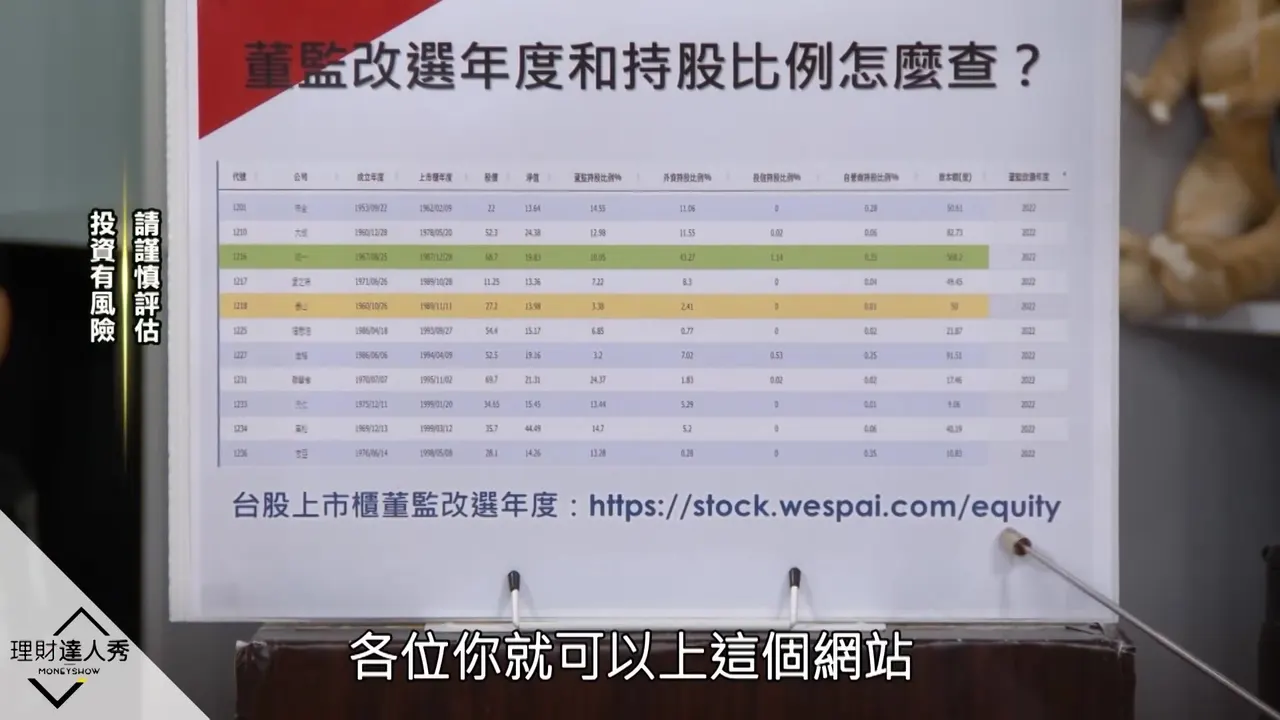
9:11Shareholding Requirements for Directors and Supervisors, and How to Look Them Up
To judge which side will win, first understand the minimum shareholding requirements for directors and supervisors under Article 26, Paragraph 2 of the Securities and Exchange Act, which are tiered by paid-in capital: 15% for directors at 3 hundred million or less, 10% at 3–10 hundred million, and only 1% for directors above 1000 hundred million, with supervisors' ratios lower still. Shareholding ratios can be looked up in public data, but for the election year you must cross-check yourself.
▶ Watch from here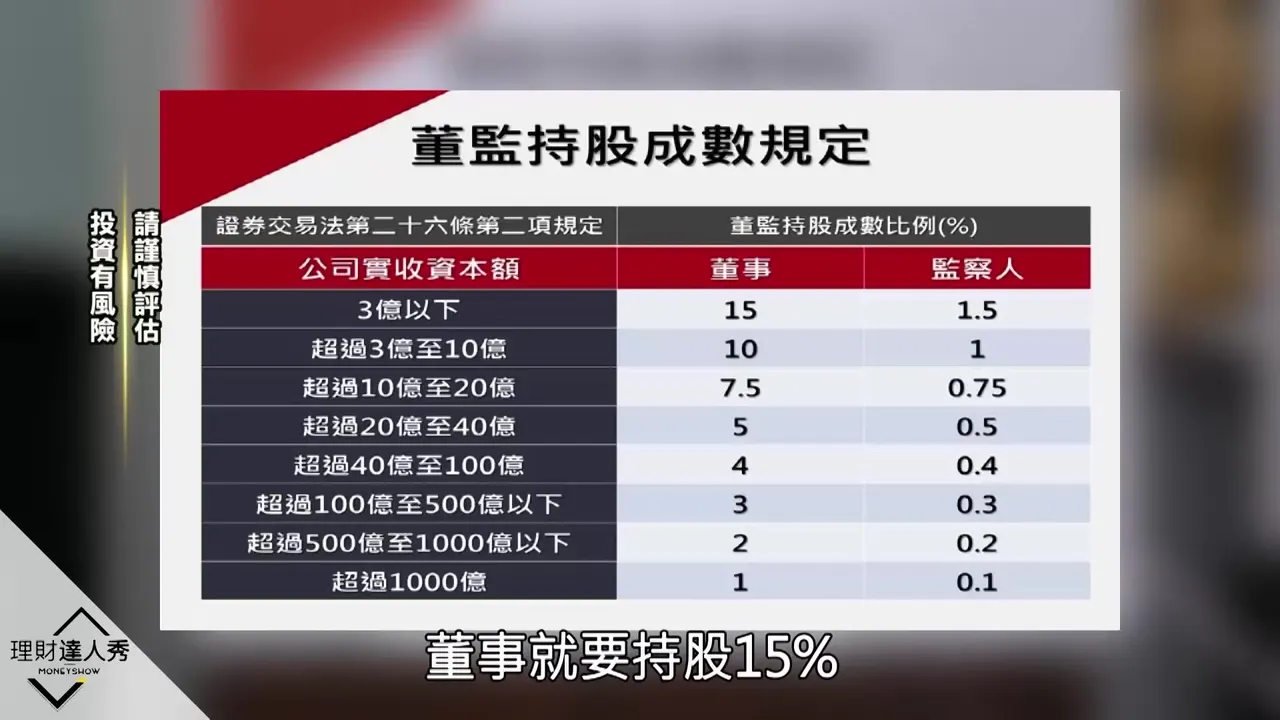
11:01Hidden Holdings and the Opening of the Classic Battles
A company whose listed director and supervisor holdings look low may still have a hidden holder of control, and in an election year this does not show up in the shareholding table, so you must confirm it yourself. The speaker compiled the most classic election battles over the years, starting with Ronggang in 2017 as a demonstration for the later analysis of chip flows.
▶ Watch from here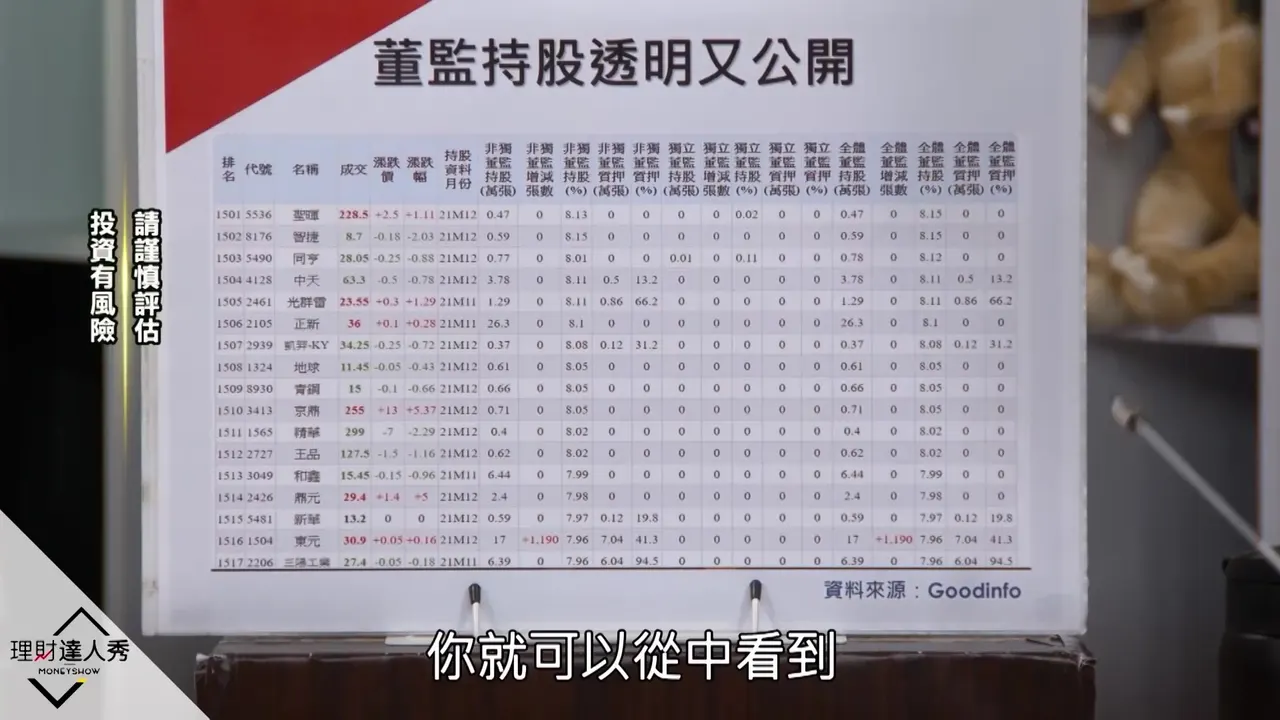
11:51Ronggang Case: Clues from Broker-Branch Net Buying
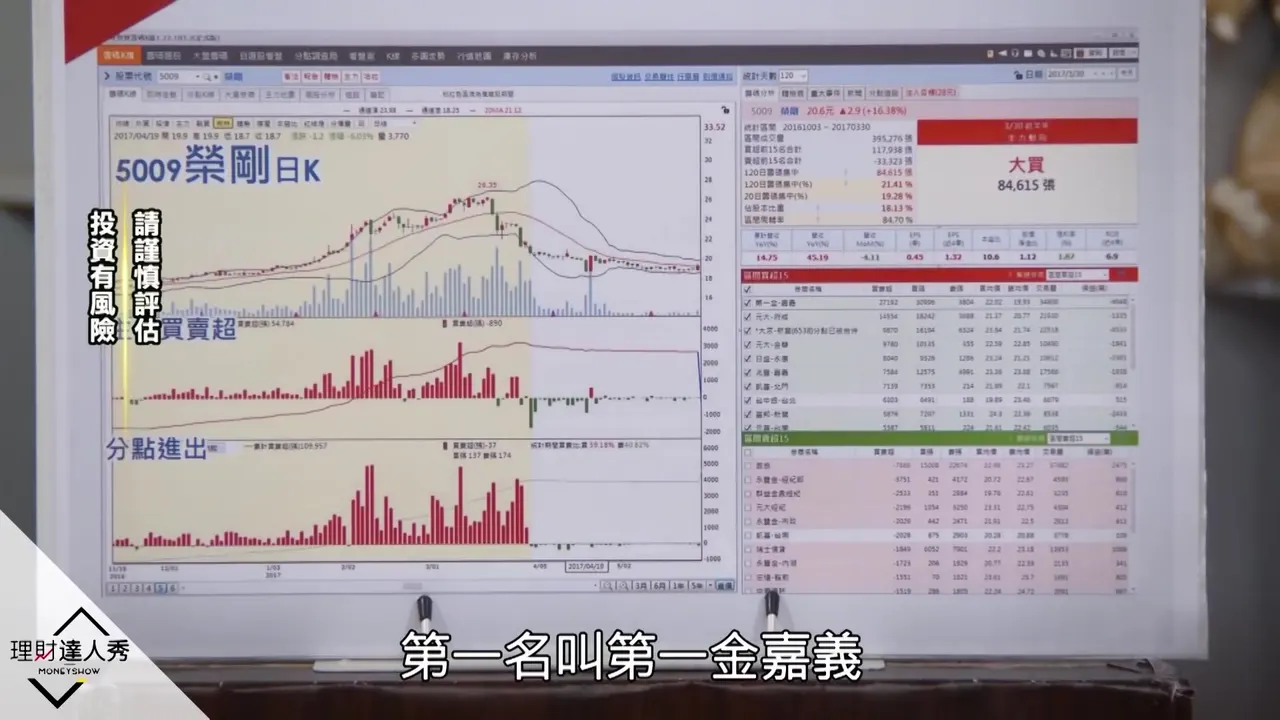
In the 2017 Ronggang case, the speaker had already told his class in 2016 to buy, because the top 15 net buyers over the period from late 2016 to early 2017 gave it away: No. 1, First Securities Chiayi, bought 27000 lots; No. 2, Yuanta Fucheng, 14000 lots; No. 3, 9800 lots; and No. 4 was Yuanta Jinhua, with the top of the list concentrated in Tainan and Chiayi branches. Ronggang is based in Tainan, so it is hard to tell whether the buyers were the company camp or nearby market-camp players; the speaker judged it to be both sides fighting it out locally, as reflected in the chip data.
▶ Watch from here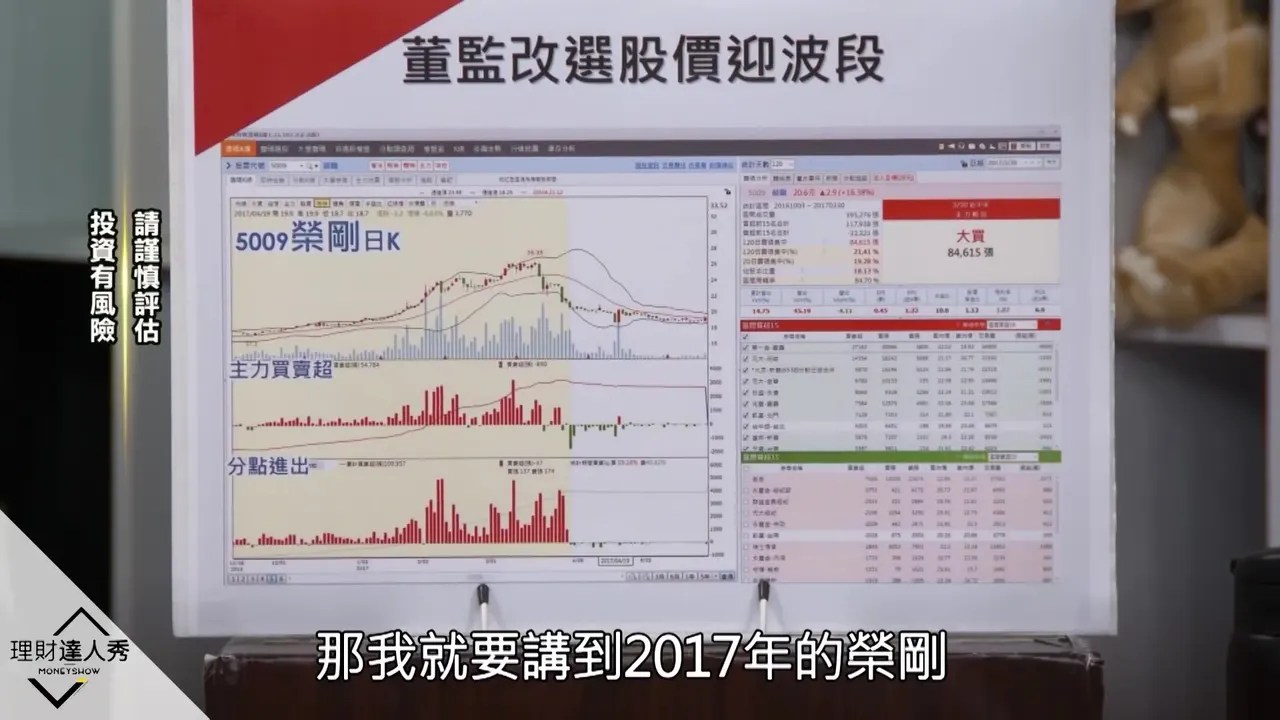
13:26Ronggang Case: Reading Major-Player Buying and Black Candlesticks
Ronggang showed a rare 50 consecutive days of major-player net buying, with the major-player buying line rising all the way, meaning the market camp and the company camp would not yield to each other. The stock rose from around 17 to 26, and the speaker earned quite a bit through single-stock futures. Buying usually ends with 2 major signs: a big black candlestick during the session, and heavy major-player selling seen after the close. Neither appeared at the time. One black candlestick midway made many people nervous, but checking the chip data showed major players were still buying, and it was only a small pullback after a big rise; the stock later made new highs.
▶ Watch from here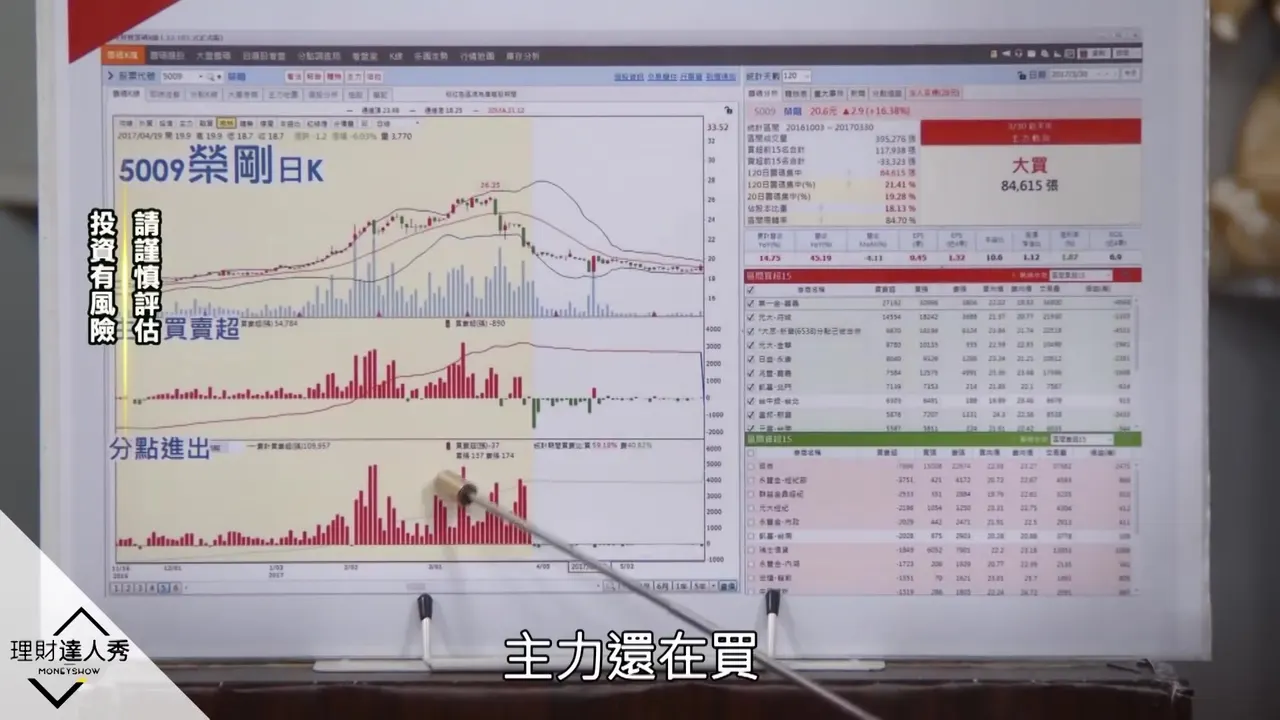
15:31Voting-Rights Date and Exit Timing
The two big black candlesticks later on appeared close to the voting-rights date. The voting-rights date is about 3 days before the forced cover of short margin positions; you must hold the shares that day to have voting rights, and once you have them you can sell. Some stocks also see a post-election rally in which the price is pushed up again after the new board takes office, letting those who bought low exit high. In Ronggang's case, two big black candlesticks about 2 weeks before the voting-rights date were the exit signal; those who bought low should reduce positions on seeing a big candlestick, and earning a bit less is fine, since there is no need to insist on selling at the very top.
▶ Watch from here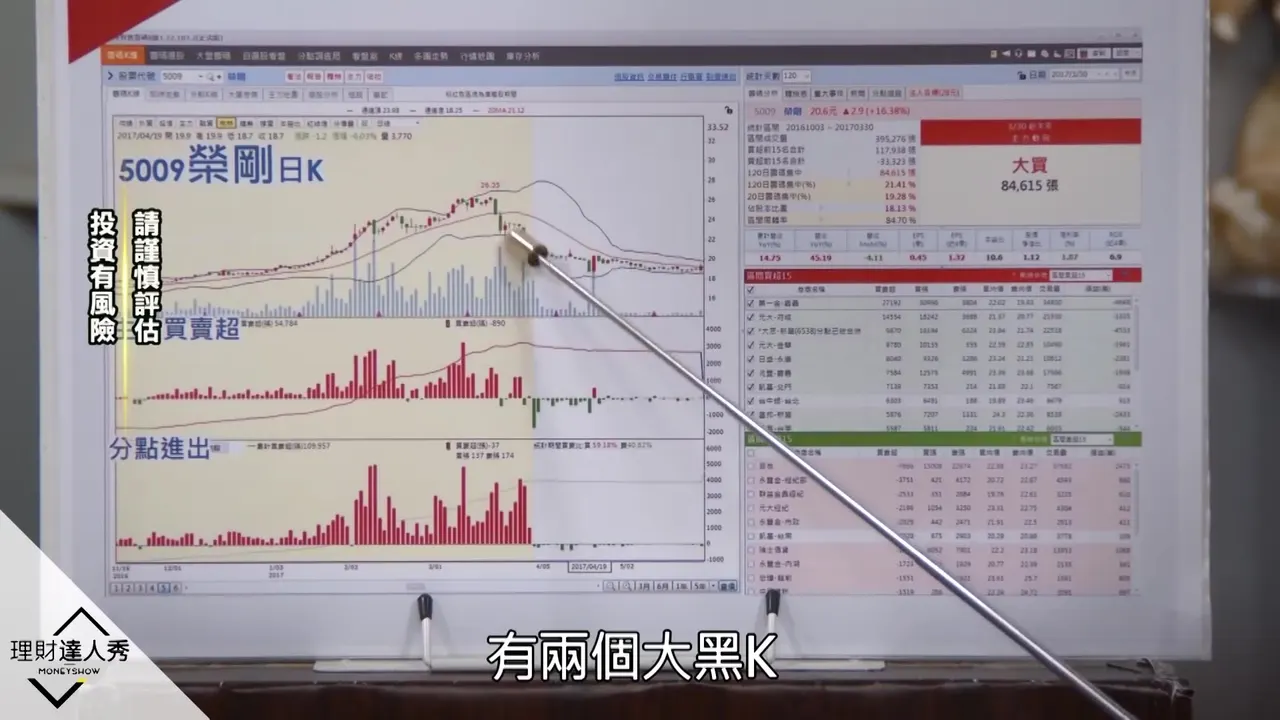
18:31D-Link Case: Broker-Branch Groups and the Pandemic Test
Another case is D-Link (2332), where the original company camp was driven out and became the market camp, then came back to retake control, which was quite famous in 2020. The speaker spotted traces of an election rally from the broker branches very early: the Cathay branch was the hype-builder in stock futures, and the speaker chose to buy stock futures and not interfere; southern branches such as KGI Beimen, Yuanta Dawan, Yuanta Jinhua and Yuanta Fucheng were considered part of one group that specializes in director and supervisor elections, so seeing these branches enter was a cue to follow. Unfortunately, that year the Wuhan coronavirus pandemic hit, the market opened sharply lower after the Lunar New Year, and the stock fell from over 10 to 8; systemic risk beat even those accumulating shares. The election was still held as scheduled afterward, and the stock rose from 8 to 20, only with its rhythm disrupted.
▶ Watch from here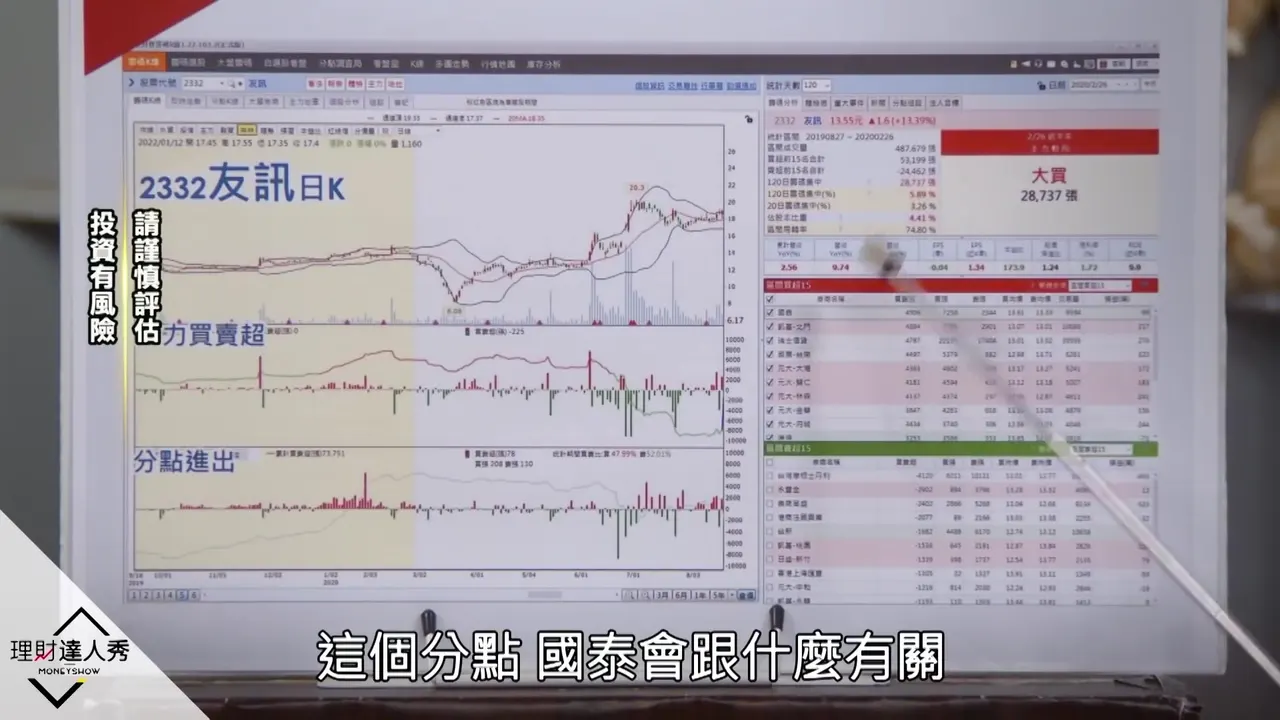
20:31Trading Point 1: Swing Trade, Not a Long Hold
Point 1 for trading election rallies: this is a 1–2 month swing trade and must never be held long. Election votes are mostly at the end of March, when a pile of forced short-margin covers occurs, so you should finish trading 2 weeks before the cover; rallies are mostly concentrated in January and February.
▶ Watch from here22:11Trading Point 2: Watch Major-Player Net Buying Closely
Point 2: the major players in an election rally are certainly buying continuously and steadily accumulating shares; if you find major players are not buying, there is no election rally.
▶ Watch from here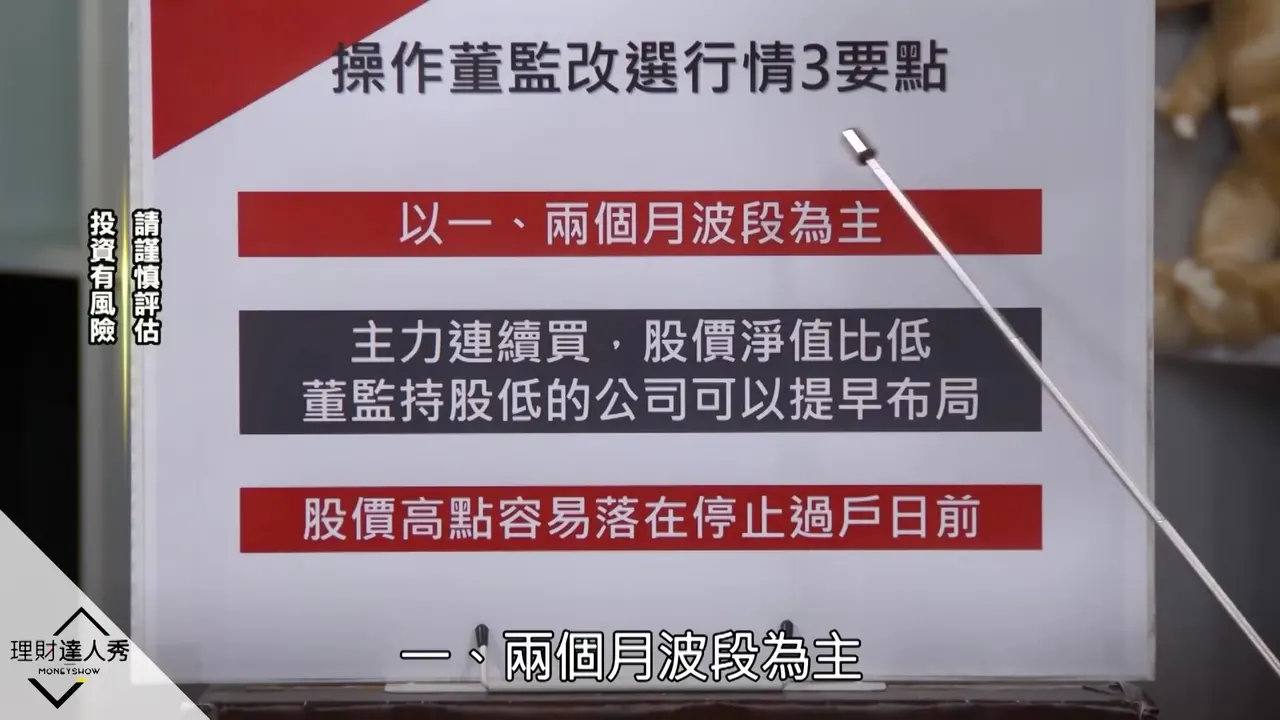
22:20Trading Point 3 and Closing Reminders
Point 3: choosing companies with a low price-to-book ratio is safer, because if the price falls you will not lose too much. Price peaks tend to fall 1–2 weeks before the share-transfer suspension date, which is mostly at the end of March because shareholder meetings are held in early June. January and February are the hot season for elections each year, but not every company will stage a fight for control; first find companies with low director and supervisor holdings, then judge using media news and the chip pattern of consecutive major-player net buying. Sell before the suspension date and don't mind earning a bit less.
▶ Watch from here