Chip-Flow Stock Picking: Whales and Major Players Up, Retail and Margin Down
TL;DR: Pick stocks by the "two ups, two downs": whale holdings and major-player net buying should rise while retail holdings and margin financing recede, because chip flows move ahead of price, and rebounds in stocks with deteriorating chip flows are mostly escape waves.
Key ideas
- Check the daily major-player net buy/sell first, then the weekly whale and retail holdings; whales are holders of 400 lots or more, retail is 100 lots or less, and the observation window is half a year to a year. If margin falls along with retail it is retail margin; if retail falls while margin rises it is major-player margin.
- Strengthening example: after consolidating, Eli Technology (2497) showed a major-player buy with the upper band turning up, whales increasing, retail falling, and margin moving with the major players. UPI Semiconductor's major players buy one day and sell the next in a next-day-flip rhythm; you can board at the close on a sell-off black candlestick, but after the short-term run-up be careful.
- Warning signs repeatedly appeared in EBC, Eastern Air, China Chemical and Sunrise Trading: at high prices whale holding ratios fall, retail rises, major players net sell and margin surges. A declared share transfer by Eastern Air's chairman is not necessarily an immediate peak, but there is definitely a problem.
- Rebounds to the monthly moving average in long-term downtrending stocks are mostly escape waves, and retail buys falling stocks like bargain items; investing is about who laughs last, so when whales are unloading while the price rises, be alert and act fast.
Section summaries
1:35Core of Stock Picking: The Two-Up, Two-Down Rule
For long positions, whale holdings and major-player net buying should rise together while retail holdings and margin financing recede: the "two ups and two downs." It also teaches how to tell whose margin it is: if retail falls and margin falls, it is retail margin; if retail falls while margin rises, it is major-player margin, which is the basis for reading chip flows.
▶ Watch from here2:55Defining Major Players, Whales and Retail
Look at major-player net buy/sell first, because it is published daily while whale data comes once a week. The major players are defined as the result of the top 15 broker branches nationwide going head to head on net buying and selling, updated after 4 p.m.; whales hold 400 lots or more, and retail is 100 lots or less.
▶ Watch from here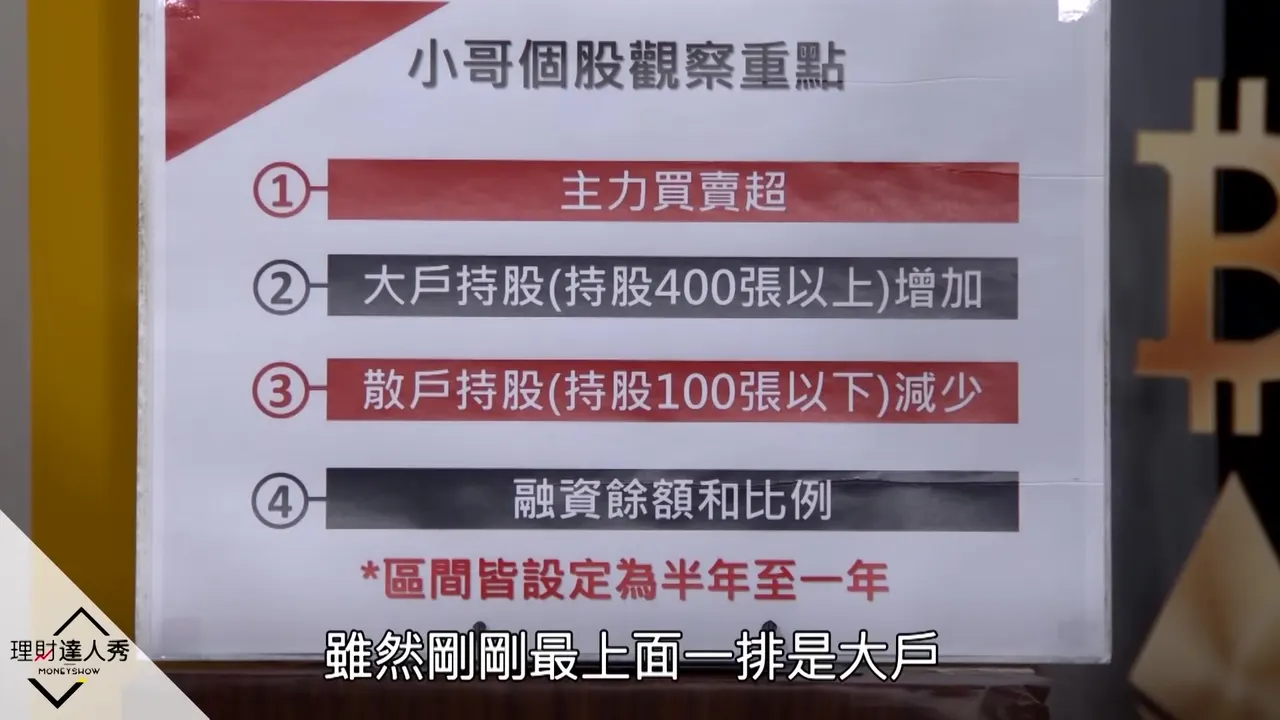
5:00The Margin Indicator and Observation Window
The fourth indicator is margin financing, to judge whether it is major-player or retail margin: if whales and margin increase together, it is major-player margin. Set the observation window to half a year to a year, because major players do not finish working a stock all at once, as shown by auto-electronics stock Eli Technology (2497), where major players slowly added during consolidation.
▶ Watch from here5:45Eli Technology Example: The Major-Player Buy Upper-Band Turn-Up Signal
After consolidating, Eli Technology showed a major-player buy with the upper band turning up, and major players kept buying every day during the turn-up. A week later, whales had clearly increased and retail had fallen; retail sold as soon as it turned up and missed the later gains. Margin moved in the same direction as the major players, meaning they used margin and the stock was strengthening. The whale holding ratio had once dropped when major players unloaded at high prices, but in the latest week whales holding 400 lots or more jumped by over 3%, close to 5%, while retail fell sharply, showing major players entering; next, watch whether whales keep increasing, since the previous high has been surpassed.
▶ Watch from here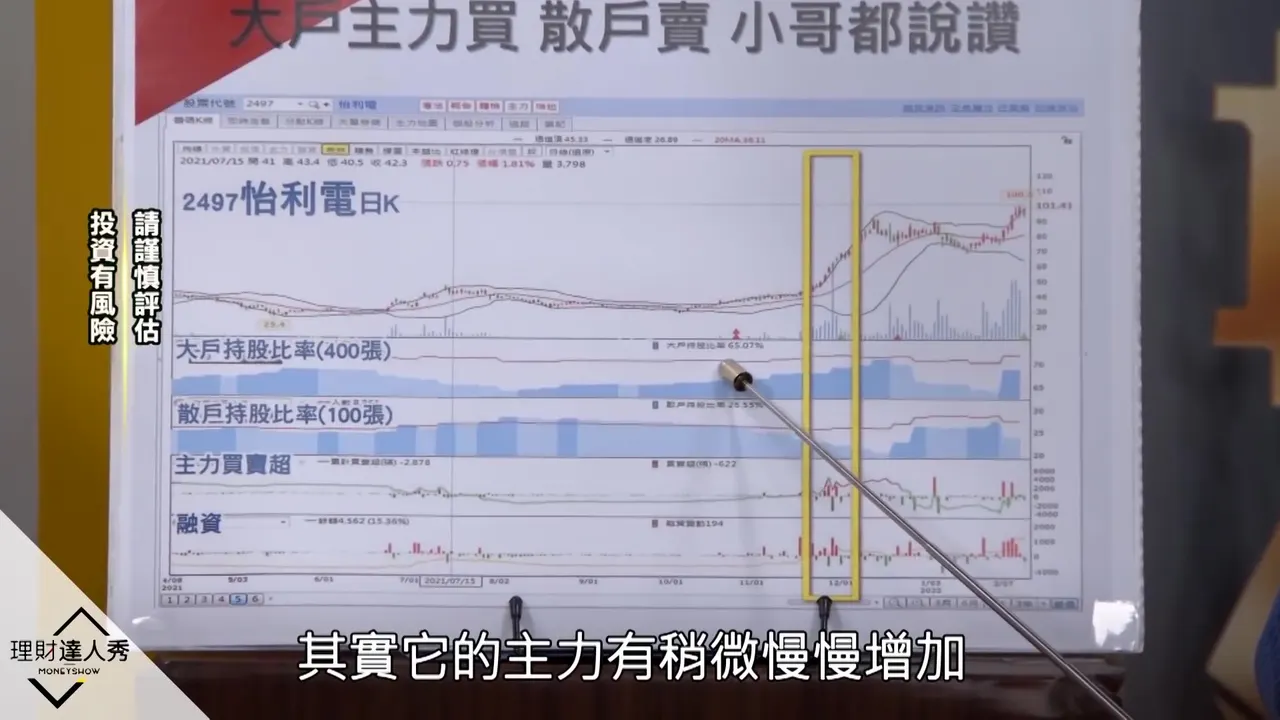
8:00After the Disposition Period, and the Question of Retail Becoming Whales
Eli Technology is taking a short rest because of disposition (trading restrictions), and there may be another rally once it comes out of disposition. In response to a viewer's question, the speaker thinks retail is unlikely to become whales just because major players are adding, since going from 100 lots to 400 lots takes 40 million in capital, which is not an ordinary person.
▶ Watch from here8:25UPI Semiconductor Case: The Next-Day-Flip Rhythm
Taking high-speed transmission stock UPI Semiconductor as an example, the whale holding ratio is rising slowly and retail is falling, while major players follow a buy-one-day, sell-the-next next-day-flip rhythm; to board, you can wait for a sell-off black candlestick and enter at the close. Major players recently bought with margin, showing they are bullish and efficiency-minded, but margin interest is about 6%, so it is not suited to long-term holding. UPI has risen more than 4 times from nearly 60 last year, so be very careful after the short-term run-up.
▶ Watch from here9:51EBC as a Negative Case: Scam-Style Hype
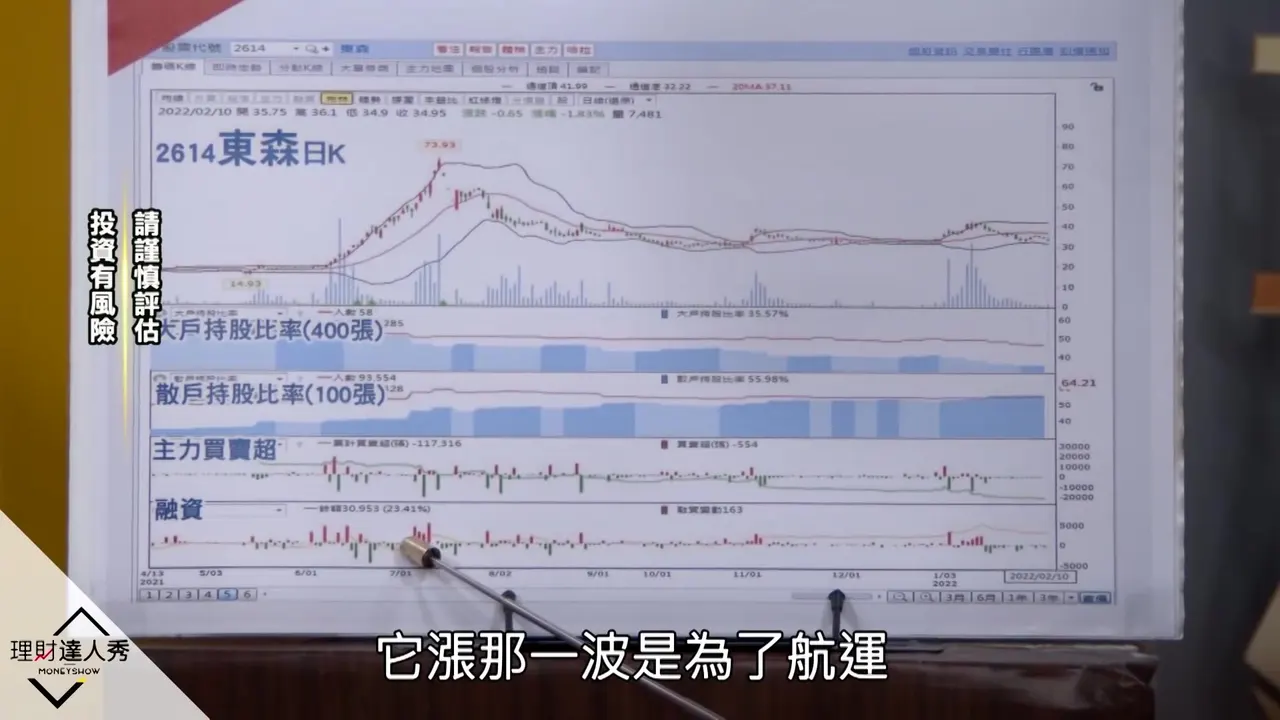
EBC is a negative case: scam rings often use it for hype, luring people to download their own app, then after deposits you cannot withdraw, and they may ask for additional margin transfers. With the price at a high of 73, the whale holding ratio fell, retail rose, major players net sold and margin surged, which was already a warning sign; that rally talked first about shipping and then about direct sales, which the speaker calls "fake shipping, real direct sales." Some branches sold tens of thousands of lots, and the price is now just over 30; any rebound in a stock with bad chip flows is an escape wave. The speaker also urges people not to hand money to others to trade for them.
▶ Watch from here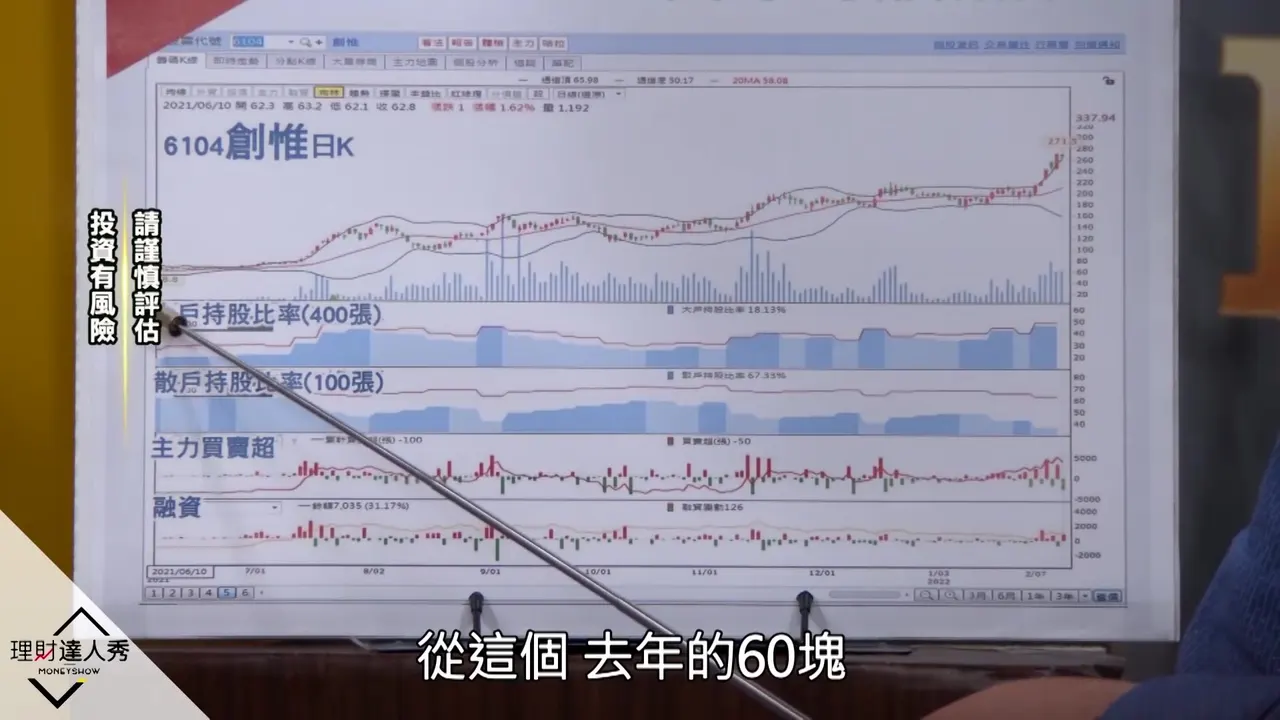
15:31Eastern Air: The Risk of the Chairman's Share Transfer
Eastern Air's chairman sold at 4 price points through declared share transfers, leaving only 57 lots; the show warned people not to chase at the time and was scolded by viewers for being bearish, and the price is now 11. The speaker stresses that warning of risk based on the declared-transfer data published by the stock exchange is not bad-mouthing: a declared transfer is not necessarily an immediate peak, but there is definitely a problem. At the high, the whale holding ratio fell and retail holdings rose from 40% to nearly 70%; once a major piece of bad news hits and retail dumps in a panic, the chairman can buy back.
▶ Watch from here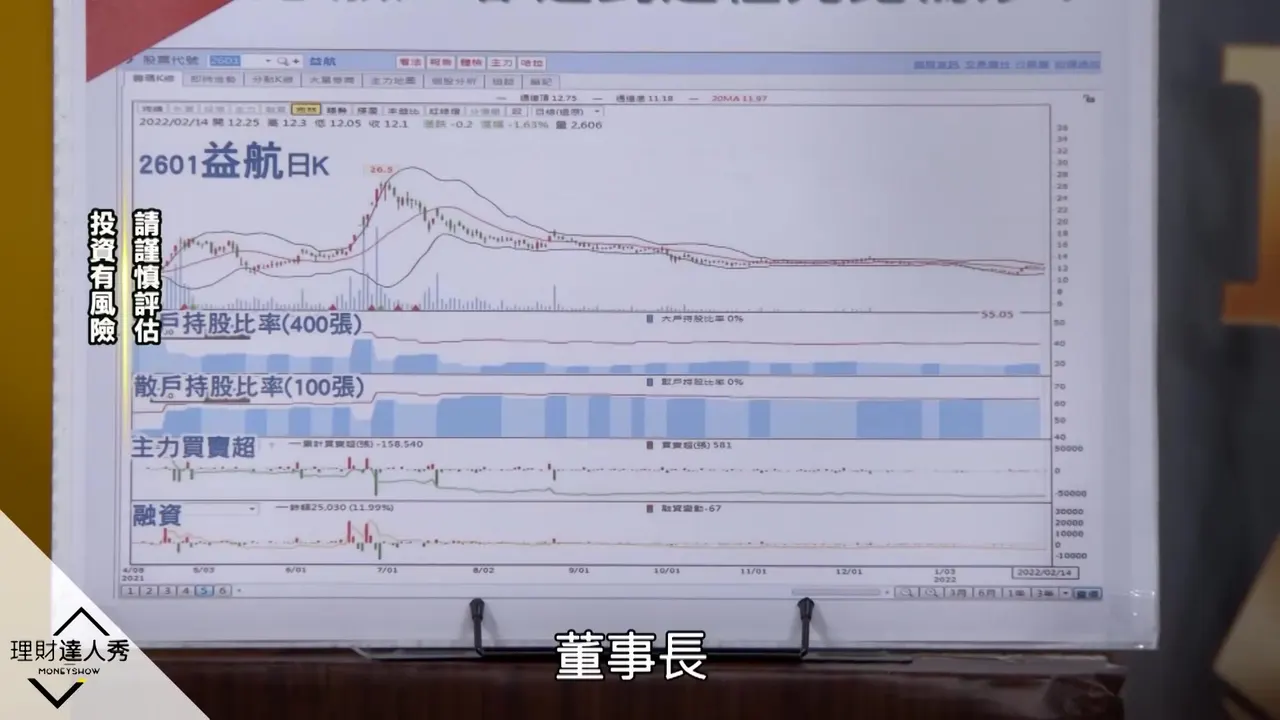
17:21China Chemical: Next-Day-Flip Unloading at the High
Seeing heavy retail buying and a surge in margin at the high, together with the declared share transfers, Eastern Air did fall, which shows chip flows move ahead of price. Next, the chemical stock China Chemical: last winter chemical stocks rallied sharply, and at a relatively high price major players did next-day flips; they bought so much at limit-up that they became 400-lot whales, but not out of real conviction, and the price fell right back the next day, then slowly sold off. When you see a sudden one-wave surge, check whether next-day flips caused it.
▶ Watch from here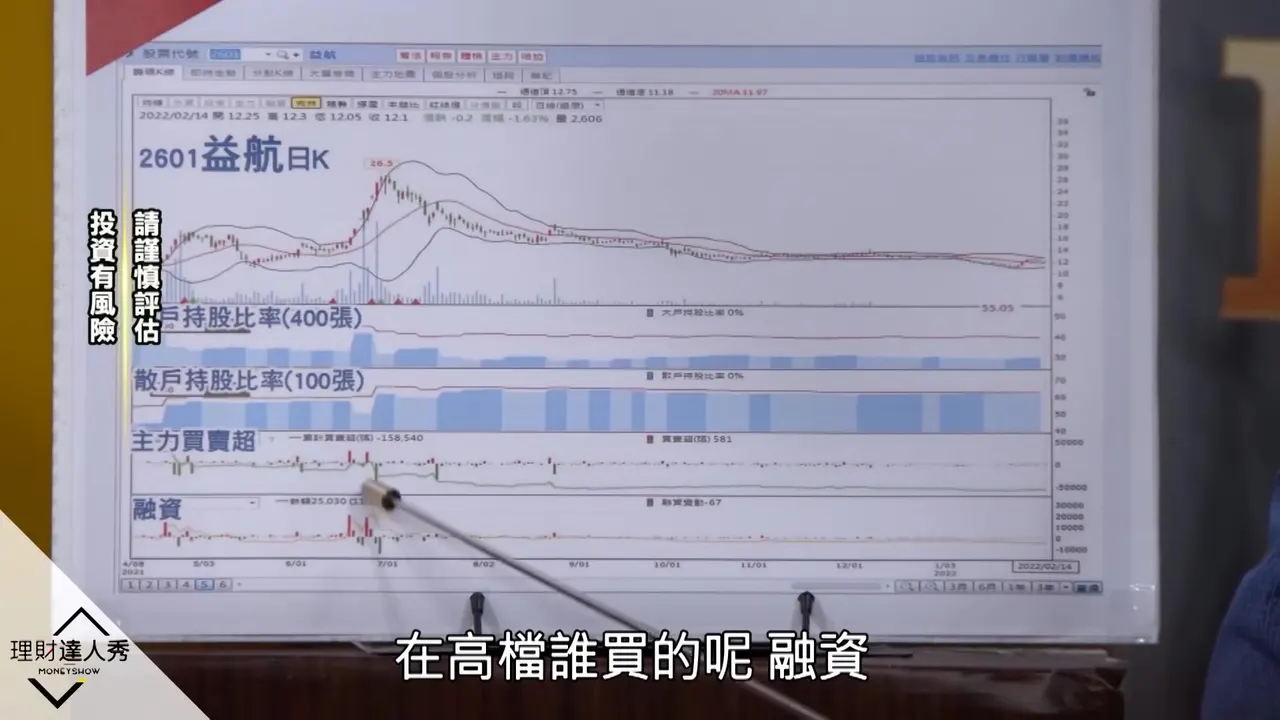
19:01Rebounds in Long-Term Downtrending Stocks Are Escape Waves
China Chemical is in a long-term downtrend with the retail holding ratio rising and major players net selling all the way; heavy buying one day followed by heavy selling the next is a typical next-day flip. Rebounds to the monthly moving average are all escape waves, and retail, like buying bargain items, wants to buy more the more it falls; another stock whose ticker starts with 17 is mentioned for further observation.
▶ Watch from here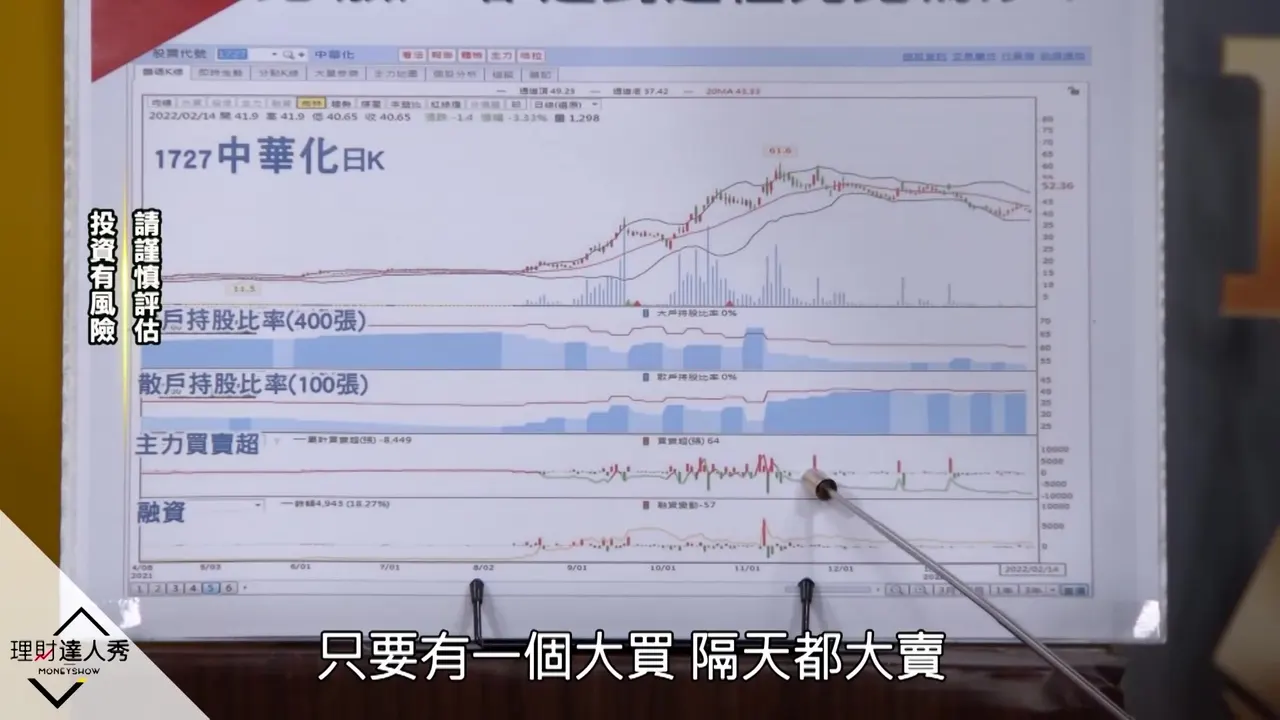
20:21Sunrise Trading: Chip Flows Had Already Turned Bad at the High
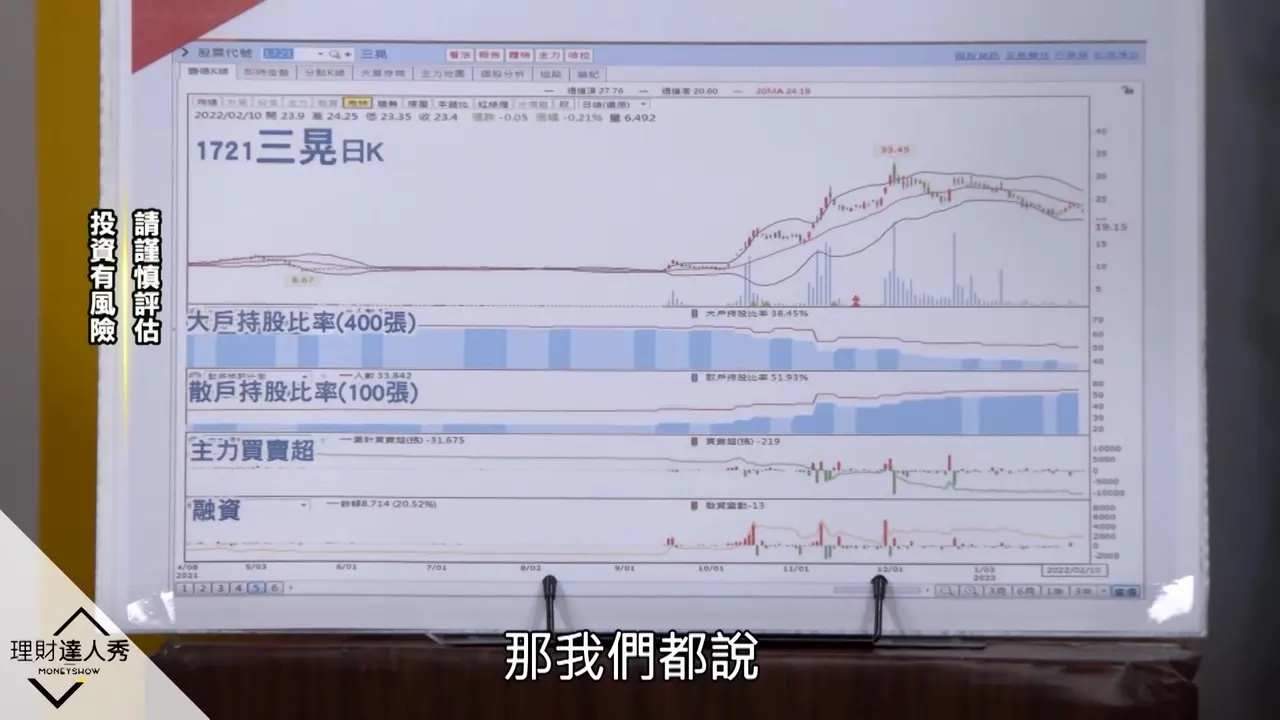
Sunrise Trading (1721) peaked at 33.45 last winter; when the price hit its high, the whale holding ratio had already fallen from 60–70% to a little over 40%, while retail rose from a little over 20% to 50%. The price then fell into a descending channel and rebounded to the monthly moving average; margin came in at the high and has still not receded, so a rebound to the monthly line is a chance to exit. Sunrise Trading and China Chemical share a pattern: whales leave faster while the price is still rising.
▶ Watch from here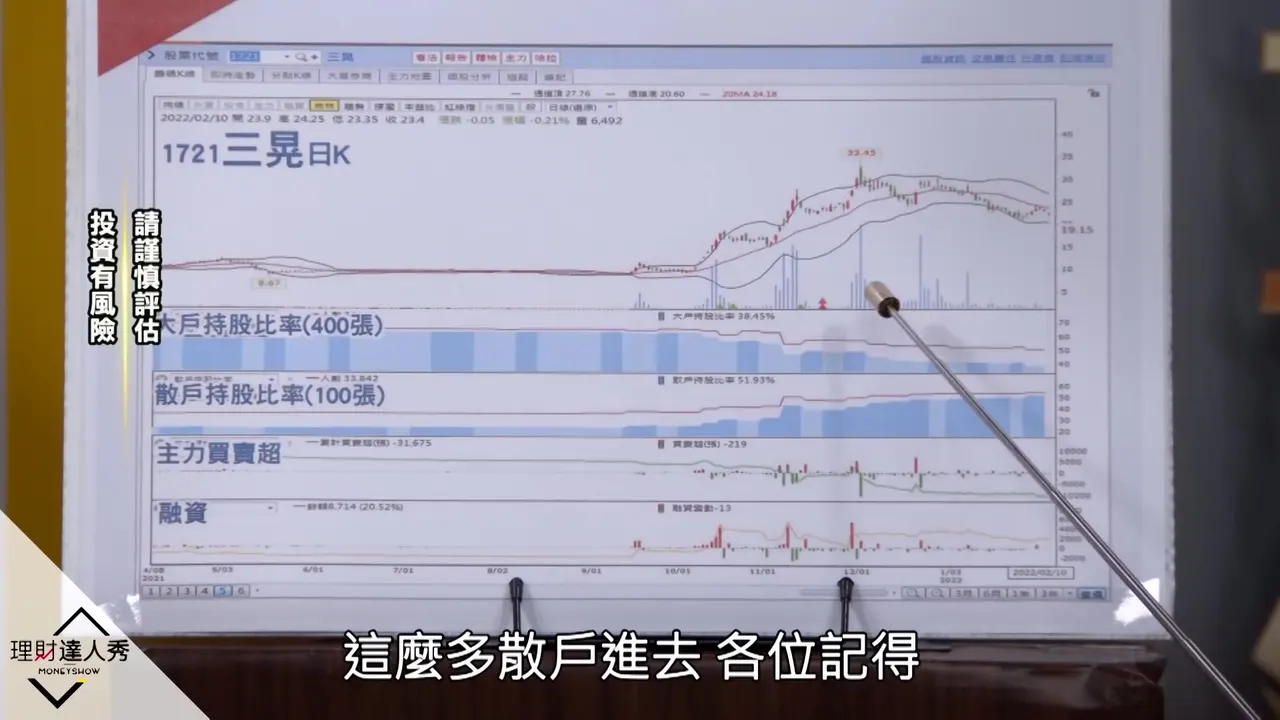
21:31Closing Principle: Who Laughs Last
Using EBC and Merida as examples, whales began selling at a little over 40 and were laughed at when selling up to over 70, but investing is about who laughs last, not who laughs loudest at the moment. When you see whales unloading while the price rises, be alert and act fast. Finally, the operating principle is distilled into two things that should go up and two that should go down.
▶ Watch from here