Using Single-Stock Futures for Dividend-Style Investing: Leverage Control, Stock Selection and Ex-Dividend Tool Comparison
TL;DR: Single-stock futures can be used for dividend-style investing if you keep leverage at about 2x, hold half your capital in reserve, and pick stocks that have single-stock futures, high dividend yields and stable price swings, which lets you withdraw profits and receive the full dividend on the ex-dividend day.
Key ideas
- The original margin on a single-stock future equals 7x leverage, but if you do not deposit the full amount, actual leverage can be very low. For dividend-style investing, about 2x is suggested: put 50% of your funds into the position and keep the other 50% in reserve so you can top up if the stock price is cut in half and avoid being liquidated. Also look at your true position size, since depositing 100 wan (wan means ten thousand) could mean operating a 700 wan position.
- The benefit of dividend-style investing with futures is that profits are settled daily and can be withdrawn without selling the position, and the dividend is paid in full cash on the ex-dividend day. The downside is that after making money it is easy to open too much leverage; when equity falls below 76% of the original margin you receive a margin-call text, and if you do not act, the position gets liquidated.
- Dividend investing needs discipline: the speaker publishes his account statements, only rolls over contracts without trading the spread, and keeps one short futures contract on Hsinfu (Highwealth) so that in a systemic crash the long positions are not all liquidated. The mindset is that if prices fall you can buy more at a higher yield, and if they rise you can take profits, so either way you should be happy.
- When choosing targets, look at dividend yield, revenue and major-player flows, and watch rollover costs. After the speaker publicly named MediaTek, many people followed, and the spread turned from negative to positive. If it gets more expensive every month, rolling for 12 months would cost 30 points, so he plans to see whether he can roll smoothly at settlement and otherwise switch to the cash stock. For Catcher, he plans to switch out when the price rises above 200 and the yield falls below 5%.
- For ex-dividend participation, stocks have large trading volume but you pay taxes and fees and receive dividends later. Single-stock futures give you the dividend right away but come with spreads and contract-switching issues, and warrants pay no dividend and may be quoted unreasonably. The speaker thinks futures are simpler for dividend-style investing, and you can also play one-day ex-dividend moves like Foxconn.
Section summaries
2:15Leverage Characteristics and Risks of Single-Stock Futures
The original margin on a single-stock future equals 7x leverage, but if you do not deposit the full amount, your actual leverage may be none at all or only 2x. For dividend-style investing, it is suggested to open about 2x leverage, with 50% of funds for the position and the other 50% in reserve, topping up if the stock price is cut in half so you are not liquidated. It is also a reminder that futures are still leverage: depositing 100 wan (wan means ten thousand) may mean operating a 700 wan position, and if your idle funds are only 100 wan and you use full leverage, one swing could wipe you out, so assess the risk and your true position size before using them.
▶ Watch from here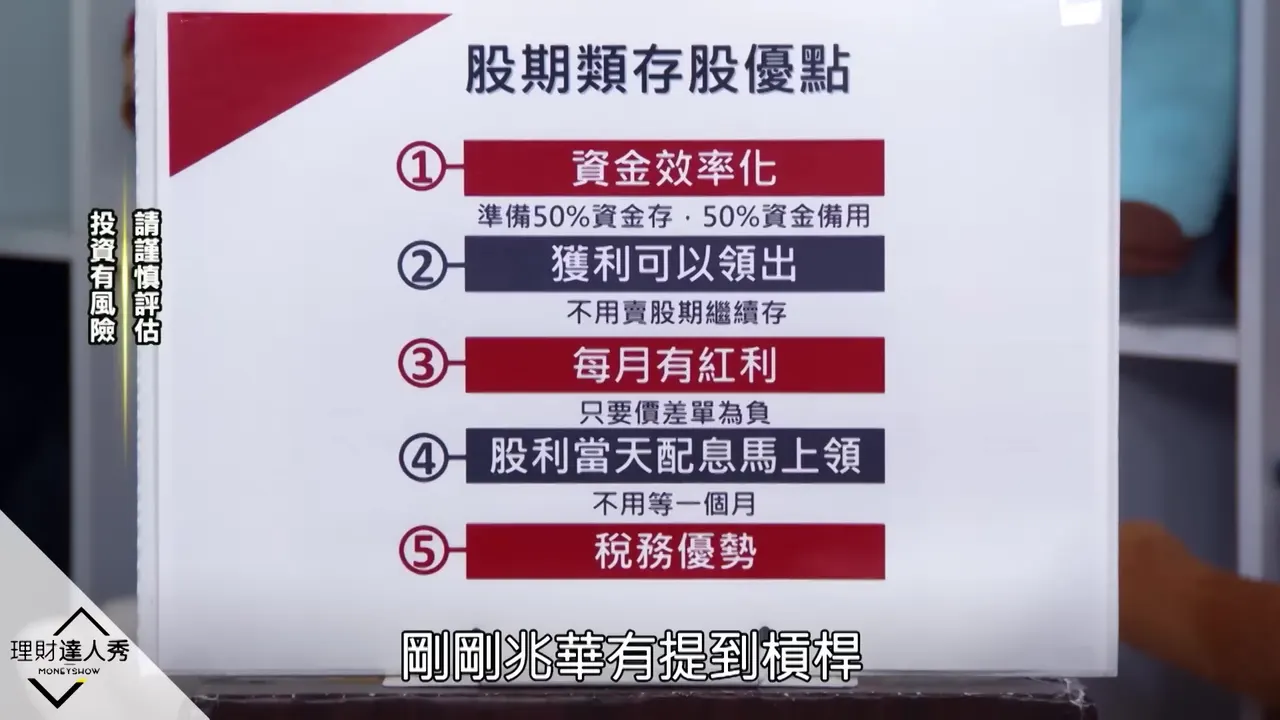
4:10Advantages of Dividend-Style Investing with Futures
Profits can be withdrawn after daily settlement at 2 p.m., so you can take out money without selling the futures while keeping the position, but don't spend it right away, since you would have to top it up again if prices fall back. There is a monthly dividend component, which you can only understand by looking at the spread order; some stocks no longer pay dividends, so you stop rolling them and switch to the cash stock. Dividends are paid in full cash on the ex-dividend day, whereas cash dividends on cash stocks usually arrive half a month to a month later.
▶ Watch from here7:25Drawbacks of Futures-Based Dividend Investing and Margin Calls
There are drawbacks: after making money it is easy to open too much leverage, like spending foreign currency abroad and feeling no sense of the amount. Once the stock price drops, futures deduct from your equity, and when it falls below 76% of the original margin you receive a margin-call text, and if you do not act the position is liquidated. Some single-stock futures also have weaker liquidity; rolling is usually fine but trading spreads intraday is not easy, and illiquid cash stocks have the same problem. The speaker stresses the dividend-investing mindset: if prices fall you can buy more at a higher yield, and if they rise you can take profits, so you should be happy either way.
▶ Watch from here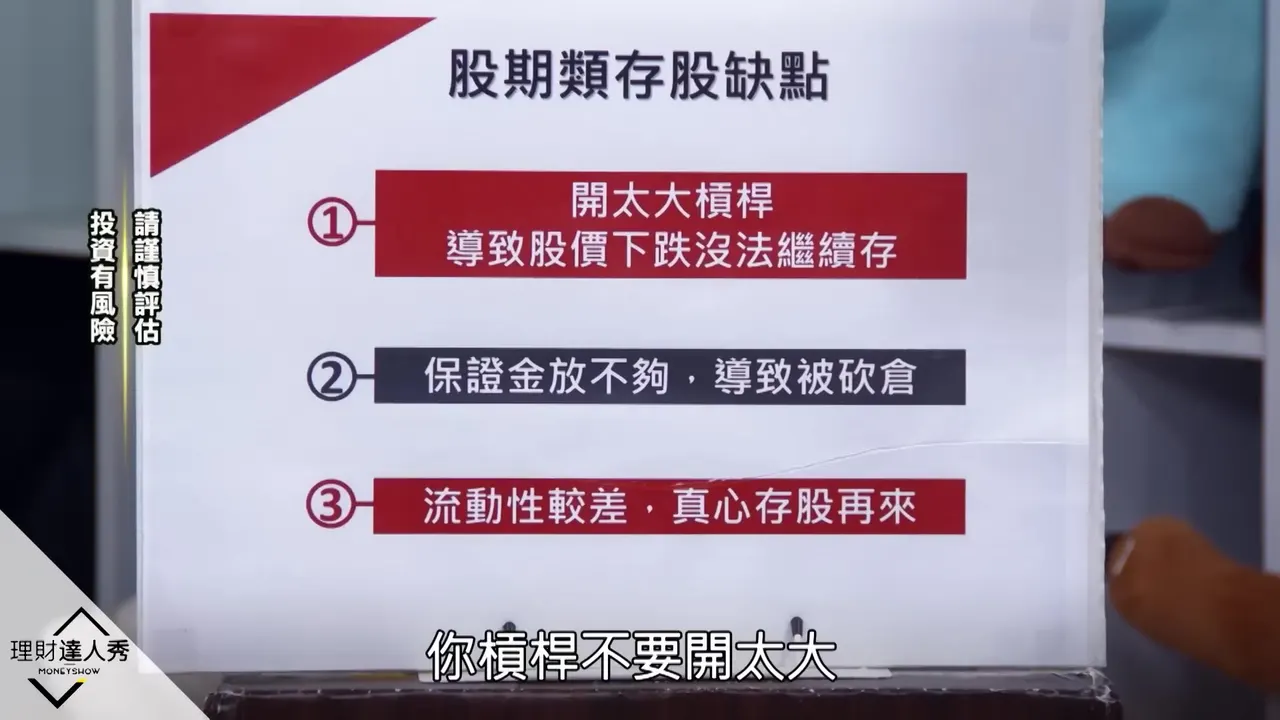
10:51Hsinfu Short Hedge and Account Statements
Since April 27, the speaker has posted account statements on his fan page. On that day the market dropped sharply, and long positions in MediaTek, Catcher, Powertech and Taiflex all lost money; the only profit came from the short position in Hsinfu. The purpose of the short is to maintain margin, so that in a systemic crash with widespread limit-downs the long futures positions are less likely to be all liquidated, which is why a dividend portfolio should hold a few short positions. A few days later the market rebounded and the long positions went from losses to gains; the Catcher contract count is fixed, staying at 81 contracts through May, June and recently.
▶ Watch from here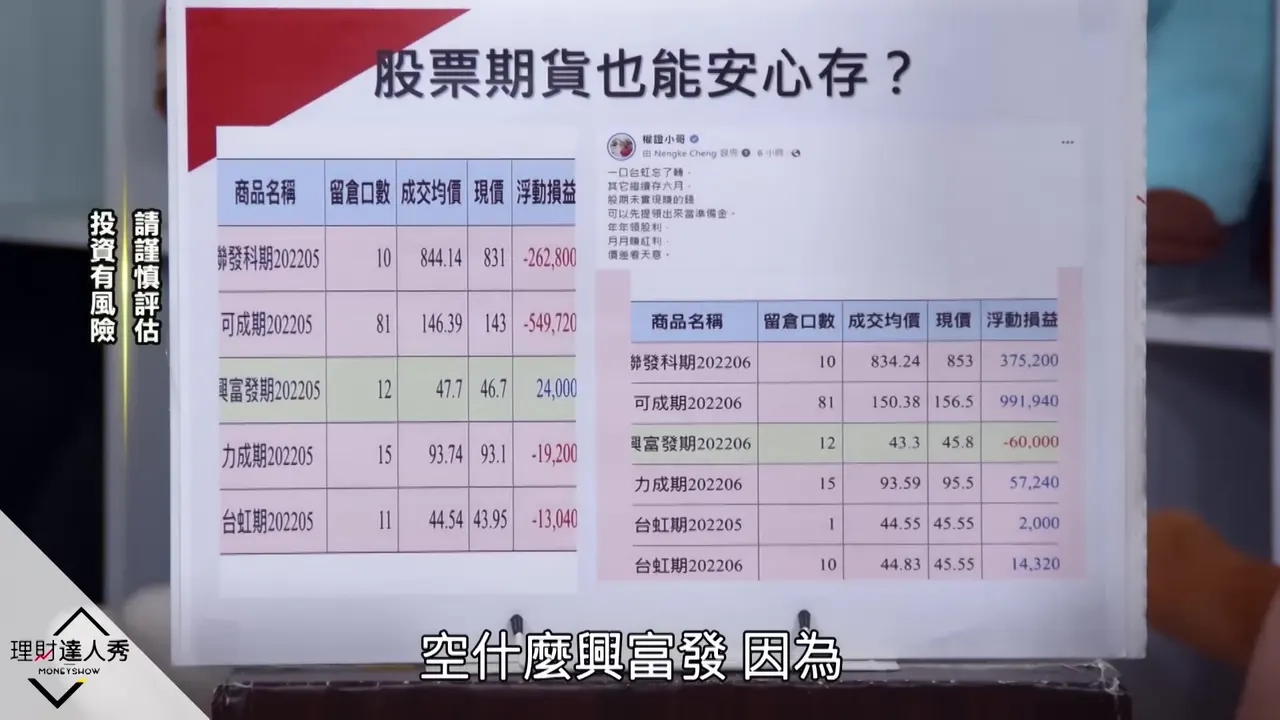
13:41Putting Dividend-Investing Discipline into Practice
The speaker says that if you say you are investing for dividends, you really have to do it, and not say so while trading spreads, which is why he posts statements regularly. During this period he only rolled contracts, and one contract was forgotten and ended up settled. He also admits that after the rebound his profit and loss grew, but he still worries that if Catcher fell to 150 the results would look ugly; yet dividend investing is about the long term.
▶ Watch from here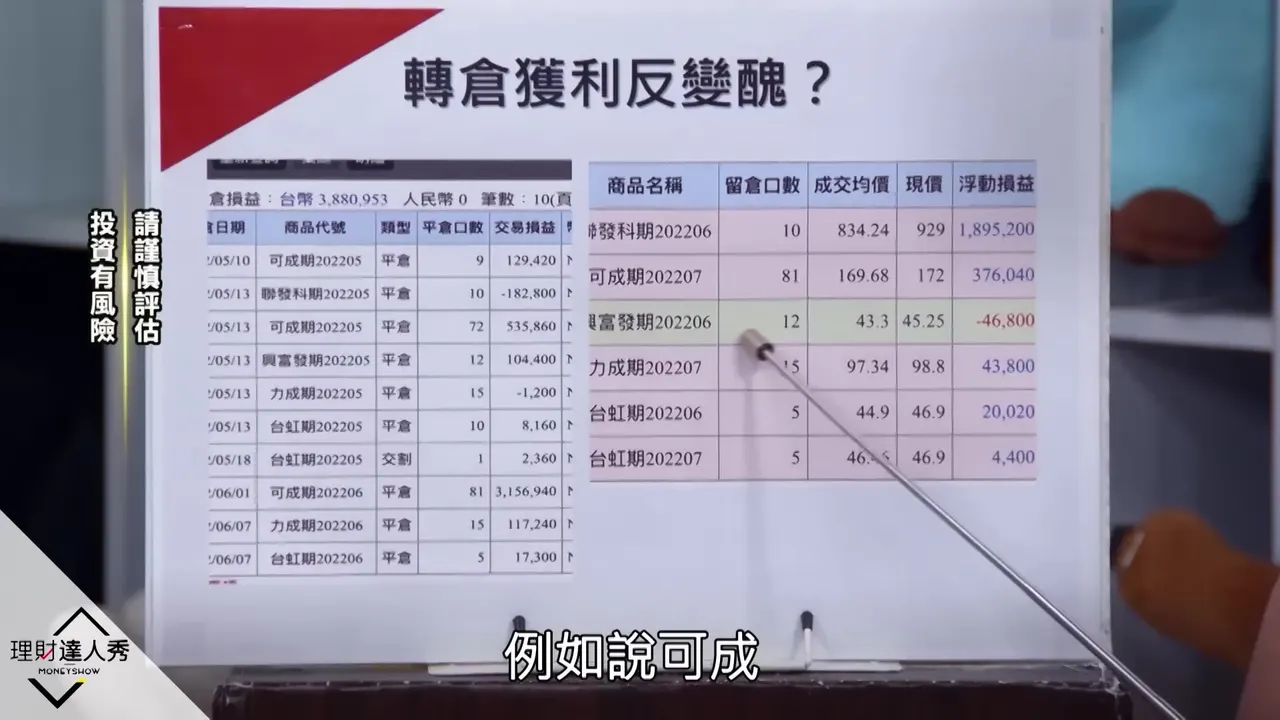
14:21Analysis of MediaTek as a Target
The speaker explains why he chose MediaTek: it once fell as low as 797, he started at the 800s, the yield was 7.85%, and at 800 it was close to 9%. A high yield also requires checking whether revenue is declining; there has been no major decline so far, but Q4 needs attention. After he publicly started the position, many people followed, turning the spread from negative to positive; if it gets more expensive every month, rolling for 12 months would cost 30 points, a cost too high to bear. So he plans to see at settlement whether he can roll smoothly, and if the cost is too high he will not hold it in futures and will switch to the cash stock. On flows, major players, investment trusts and broker branches are all buying.
▶ Watch from here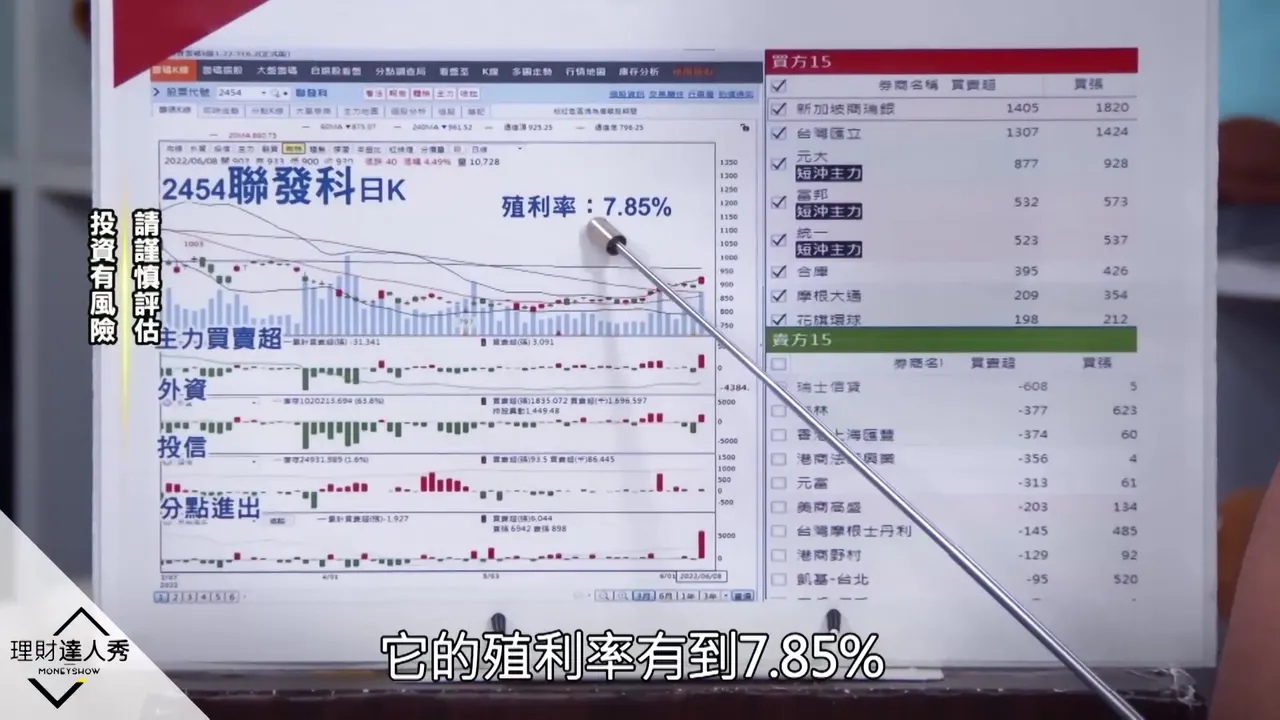
17:41Catcher Position and Switching Plan
He introduces Catcher, which has kept rising recently, with investment trusts continuing to add. The speaker deliberately posted his record when the price was at the lower Bollinger Band. Although Catcher once showed a paper loss, it later rose all the way to a high of 176.5, with major players including the National Stabilization Fund and the 00878 investment trust building positions. Since it pays 10 per year, he plans to switch out when the price rises above 200 and the yield falls below 5%.
▶ Watch from here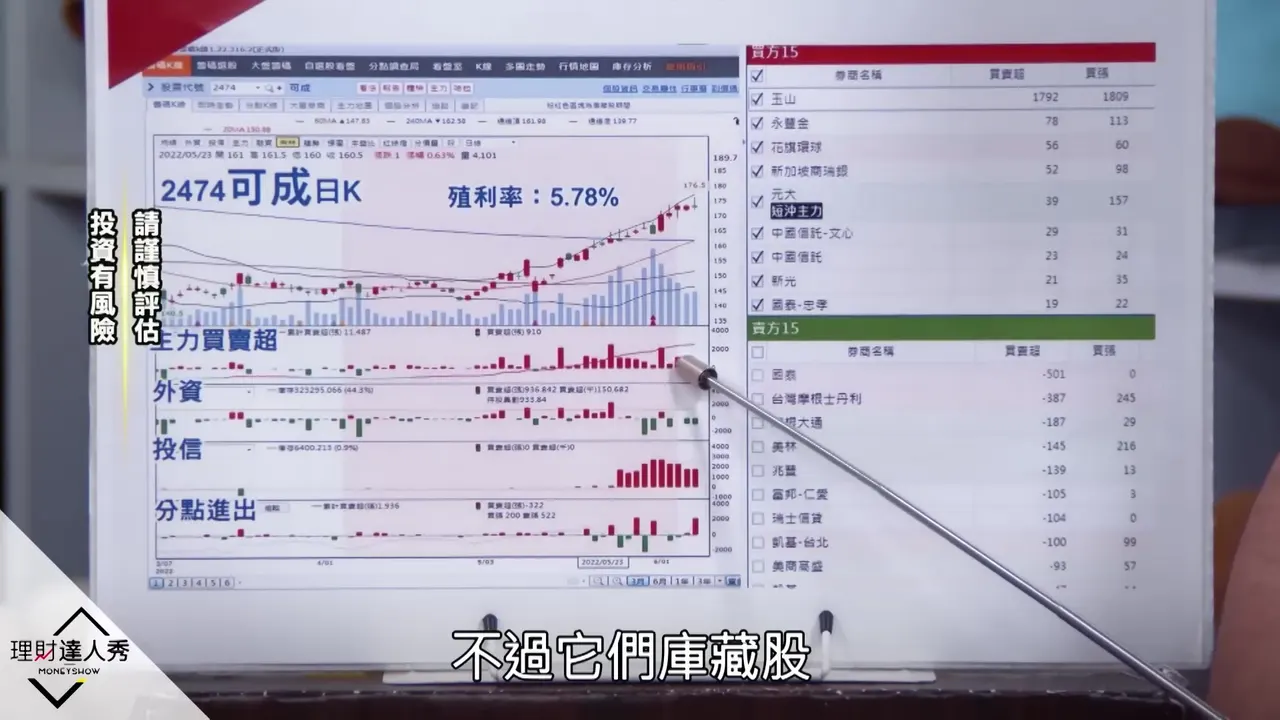
20:11Reviewing Taiflex and Powertech
Taiflex has a yield of 5.33%, recent flows are good and the price has not surged, and the spread is negative, so rolling each month even brings a bit more dividend, which makes holding it more comfortable. Powertech's yield is even nicer at 6.85%, major players have been buying all the way, and foreign investors, investment trusts and broker branches are all buying, so both fundamentals and flows are strong.
▶ Watch from here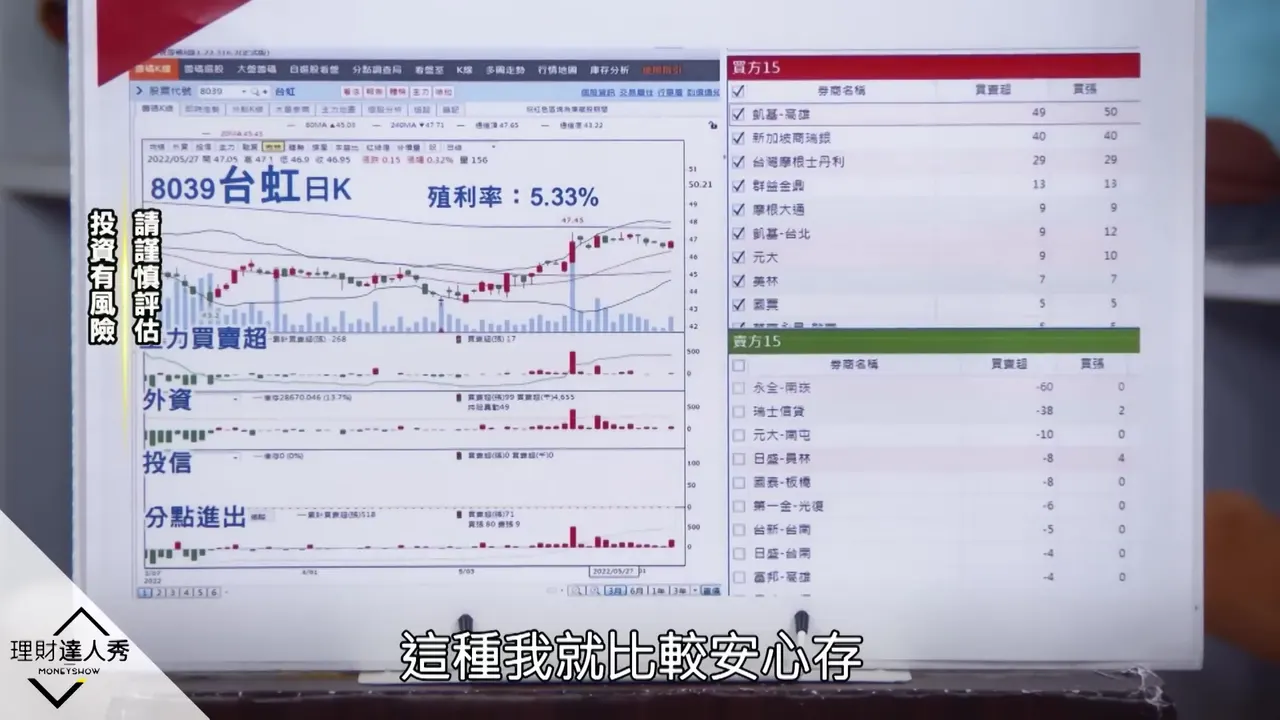
20:31Summary of Stock Selection Principles
The speaker says his selection of dividend stocks is very simple, and he prefers low-volatility names like Powertech; MediaTek is volatile, so an ordinary dividend investor might not choose it, and holding it is more thrilling. This leads into the topic that dividend investors usually want to take part in ex-dividend events.
▶ Watch from here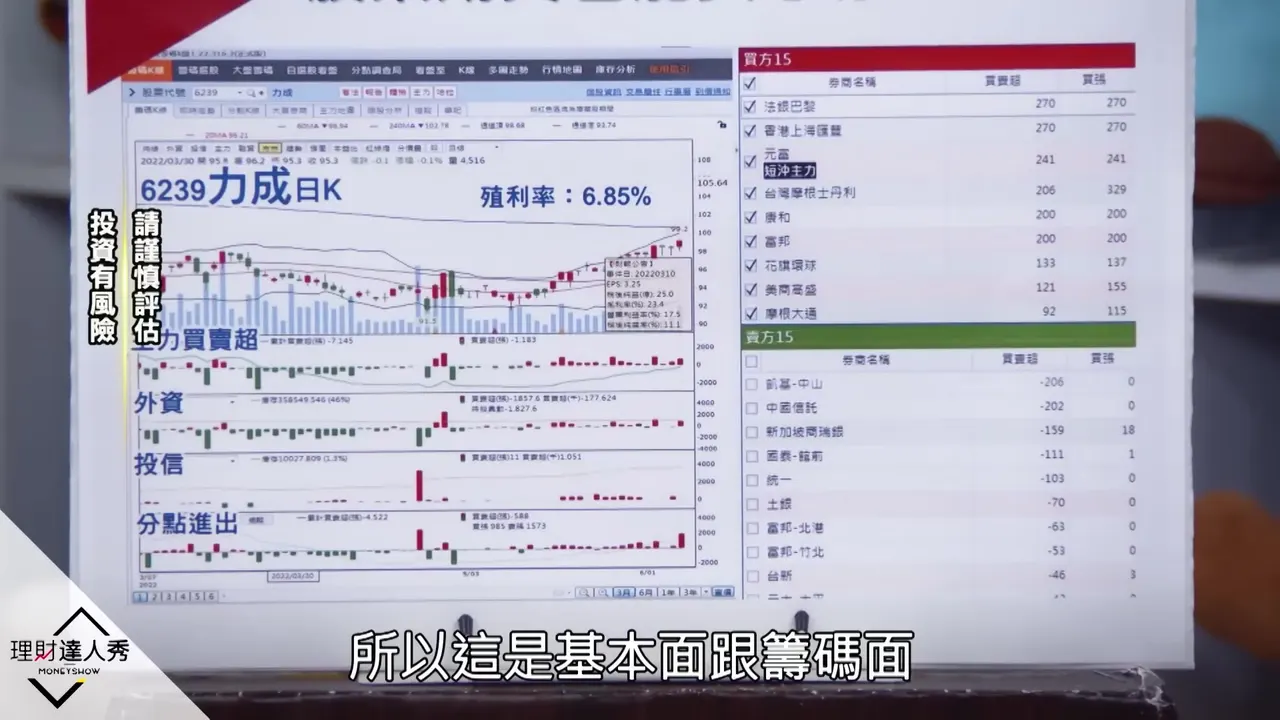
21:11Comparing Single-Stock Futures and Stocks for Ex-Dividend Participation
Taking part in ex-dividend with stocks has the advantage of large trading volume, but you pay income tax and supplementary premium and wait 2–3 weeks to receive the dividend. Single-stock futures let you receive the dividend immediately and are not affected by suspended stock lending, but have smaller volume and the hassle of contango, backwardation and switching contracts. Warrants pay no dividend and only adjust the strike price and exercise ratio, and when the issuer does not want to sell, the quote spread widens, making it easy to buy at an unreasonable price. The speaker therefore thinks using futures for dividend investing is simpler, and mentions that issuers have been hit hard by short-term traders, making warrants harder and harder to run.
▶ Watch from here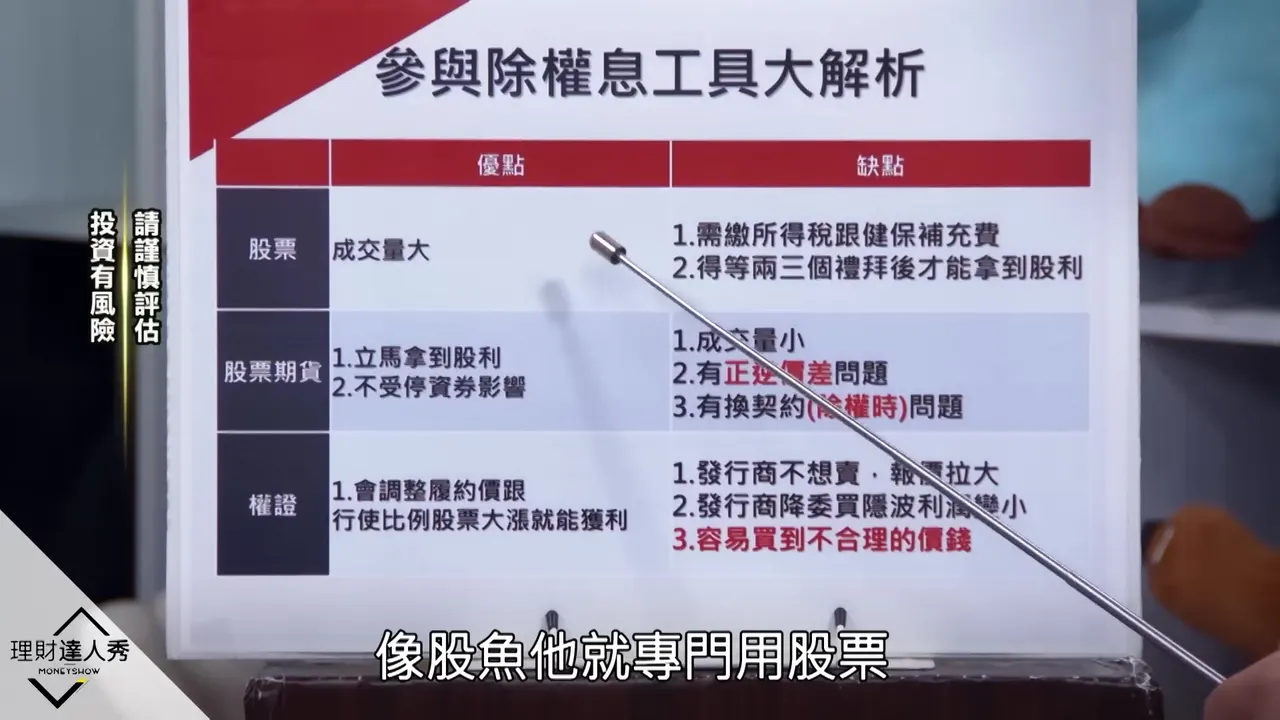
23:41Foxconn One-Day Ex-Dividend Strategy
Using Foxconn as an example of a one-day play: the probability of a rise on the ex-dividend day is 90%, with gains in 9 of 10 years, an average gain of 2.2% when it rises, and an 80% chance of opening higher. The approach is to buy the day before ex-dividend and bet on a higher close the next day; if it opens higher you can sell part first, and selling at the close is even better, so this is short-term spread trading. The speaker stresses that he is not using Foxconn for dividend investing but to take part in the one-day move.
▶ Watch from here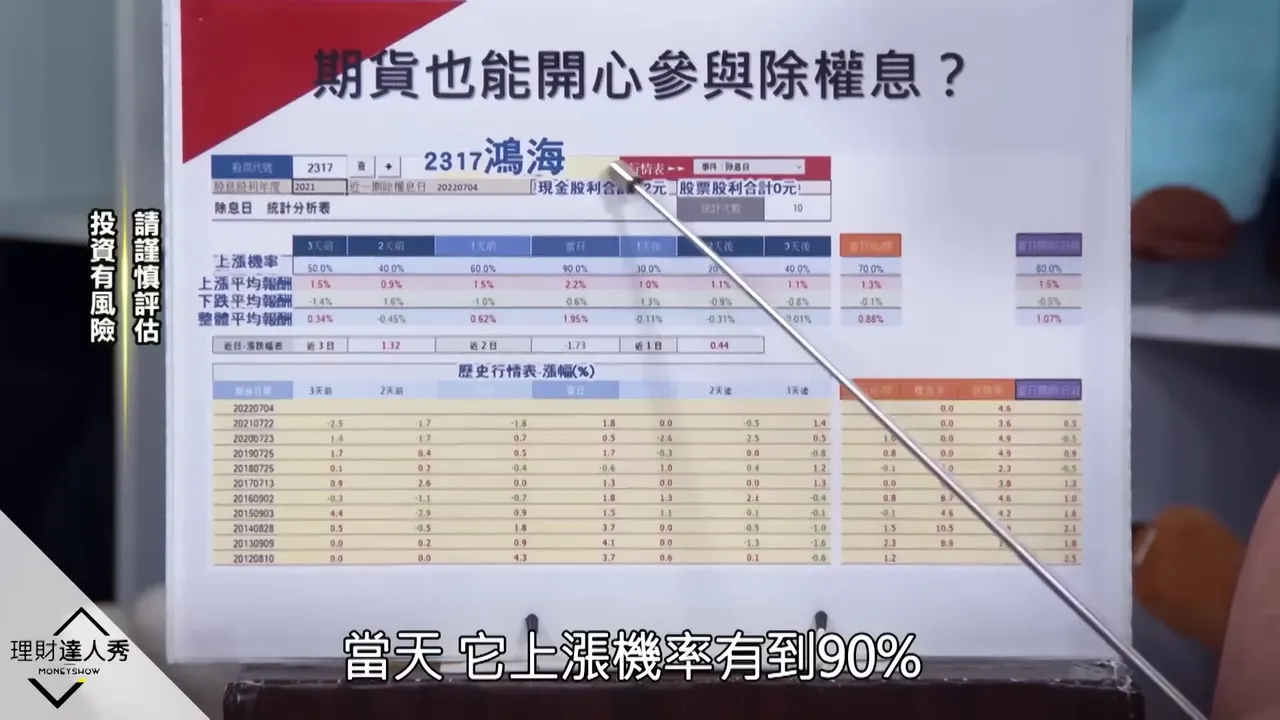
24:26Course Summary and Advice on Choosing Targets
In summary, single-stock futures can be used for short-term spread trading or for dividend-style investing, but they are a leveraged tool, so you must first understand the pros and cons. Choose targets that have single-stock futures, a dividend yield and stable profits, and avoid highly volatile stocks so you don't often face margin calls, which lets the dividend strategy run steadily.
▶ Watch from here