Warrant Whales' Overnight Flips: Reading Selling Pressure from the Net Buy/Sell Rankings
TL;DR: Warrant whales mostly trade for just one day, so warrants they buy today turn into selling pressure the next day; stocks at the top of the warrant net-buy ranking should be sold first thing in the morning rather than chased at 9 a.m., and the net-sell names deserve attention instead.
Key ideas
- Overnight warrant flips create two layers of selling pressure: whales sell the warrants they bought the day before, and issuers, who had bought the stock to hedge, then sell it too once the whales sell. The two forces stack up and weaken the next day's move; only when the market is strong enough might it stretch into a three-day flip.
- Heavy whale buying of warrants forces issuers to buy stock to hedge, and as the price rises they buy even more, creating a virtuous cycle. So a strong stock that issuers are buying heavily intraday can be traded from the long side, but it should be sold quickly the next morning.
- The warrant net buy/sell ranking should be read in reverse: broker branches at the top of the net-buy list are mostly short-term players who often sell before 10 a.m. the next day, while net sellers may buy back the next day and become the main drivers of a rally. One student chased ranks 1 to 5 every day at 9 a.m. and was losing money by half past 9 because he did it backwards.
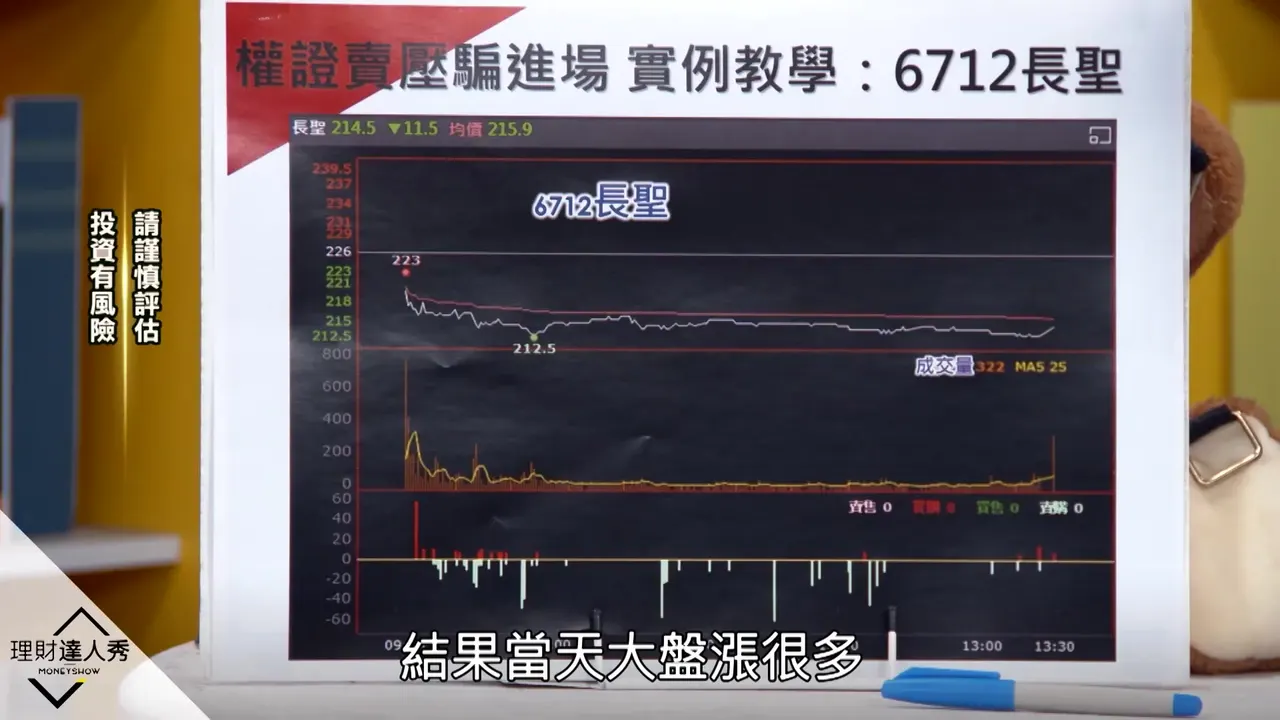
- The cases of TECO and Gold Long (長聖) show that even when the broad market surges, a stock heavily bought in warrants by whales the day before still weakens early the next morning; holders can take profit at 9 a.m. and buy back at 10 a.m. after the dip, keeping the same share count, while those who chase in the morning are easily trapped.
- The rhythm also has to be read together with the three major institutional investors and proprietary dealers: dealers often move differently from foreign investors and investment trusts, when all three major institutions flip overnight a black candlestick the next day is very likely, and whale branches are not swapped out easily, so they can be remembered and tracked over the long term.
Section summaries
1:30Two Causes of Overnight Warrant Flips
Overnight warrant flips have 3 causes. First, warrants whales buy today become selling pressure the next day. Second, heavy whale buying of warrants forces issuers to buy stock to hedge, and as the price rises they buy even more, creating a virtuous cycle. Third, when whales sell the warrants the next day, issuers no longer need to hedge and sell the stock, creating selling pressure and weakening the move. This is not an iron rule: when the market is strong enough it can become a three-day flip, while a red candle followed by a black one every day means it is not that strong; if it is very strong, after being sold down at 9 a.m. people will buy it back again.
▶ Watch from here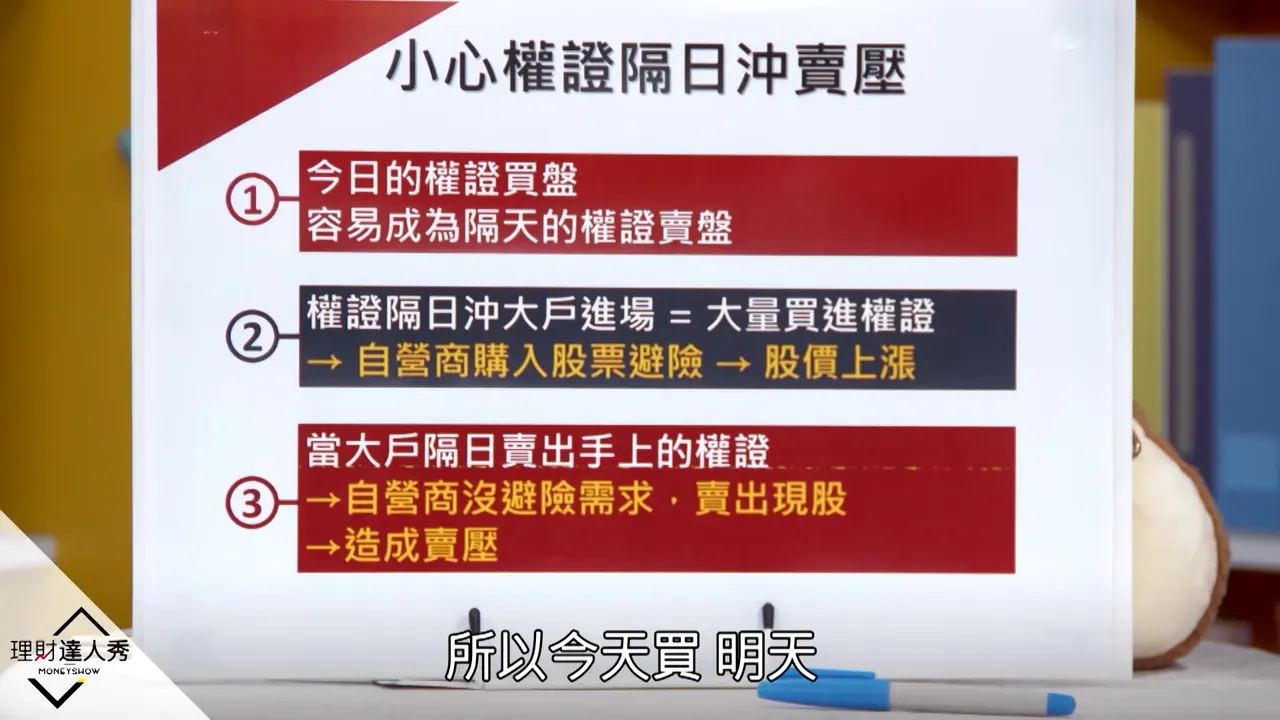
4:10Common Broker Branches of Warrant Overnight Whales
This introduces the common broker branches of overnight warrant whales, such as the five major branches including the Yuanfu and Yuanta groups. The branches show how good a broker's system is, because whales exploit the time lag to take advantage of issuers. The conclusion: if a rally is caused only by dealers' hedging purchases, sell first the next morning; when the market is not strong it usually goes red one day and black the next. Whales do not switch branches easily because of commissions and system habits.
▶ Watch from here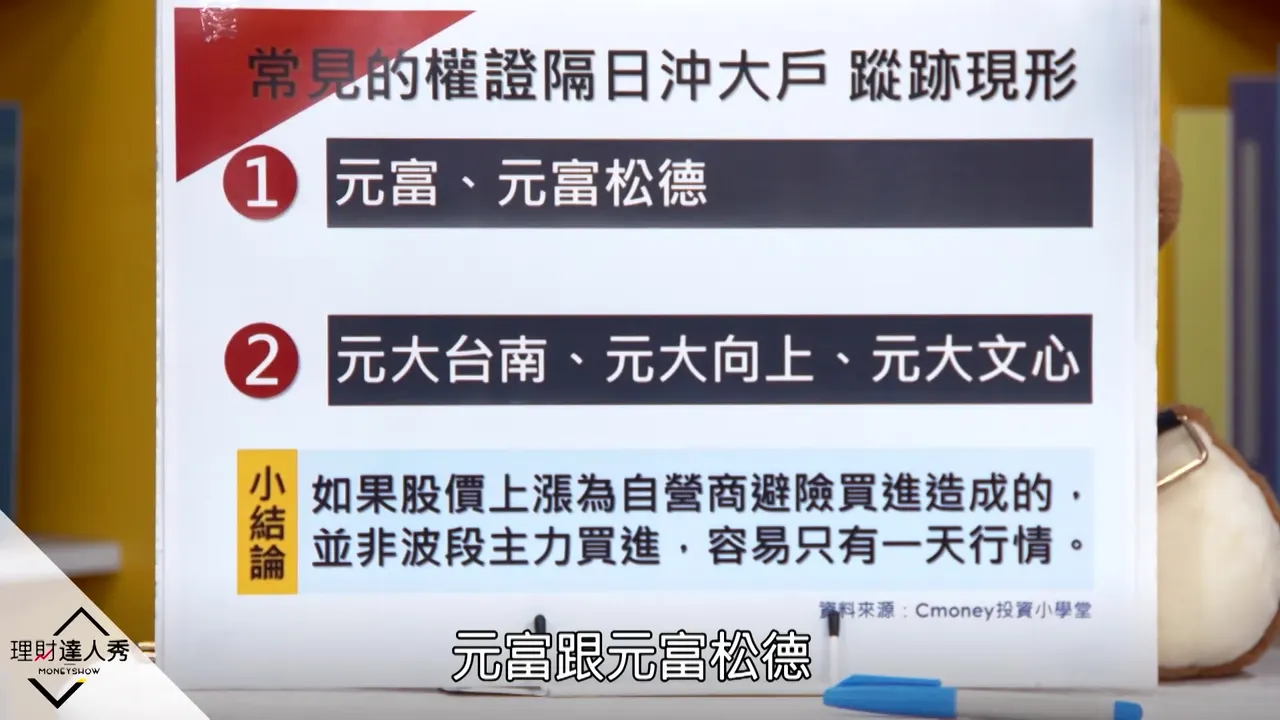
8:25How to Read the Warrant Net Buy/Sell Rankings
This explains how to read the warrant net buy/sell rankings: swing-trading whales are split into strong and weak, so follow the strong and avoid the weak; net buyers who flip overnight often create selling pressure before 10 a.m. the next day, while net sellers may buy back the next day and become the main drivers of a rally; when call and put warrants both see huge volume, a high is near. It also warns against chasing at 9 a.m.
▶ Watch from here12:06TECO Case: A Weak Stock on a Big Up Day
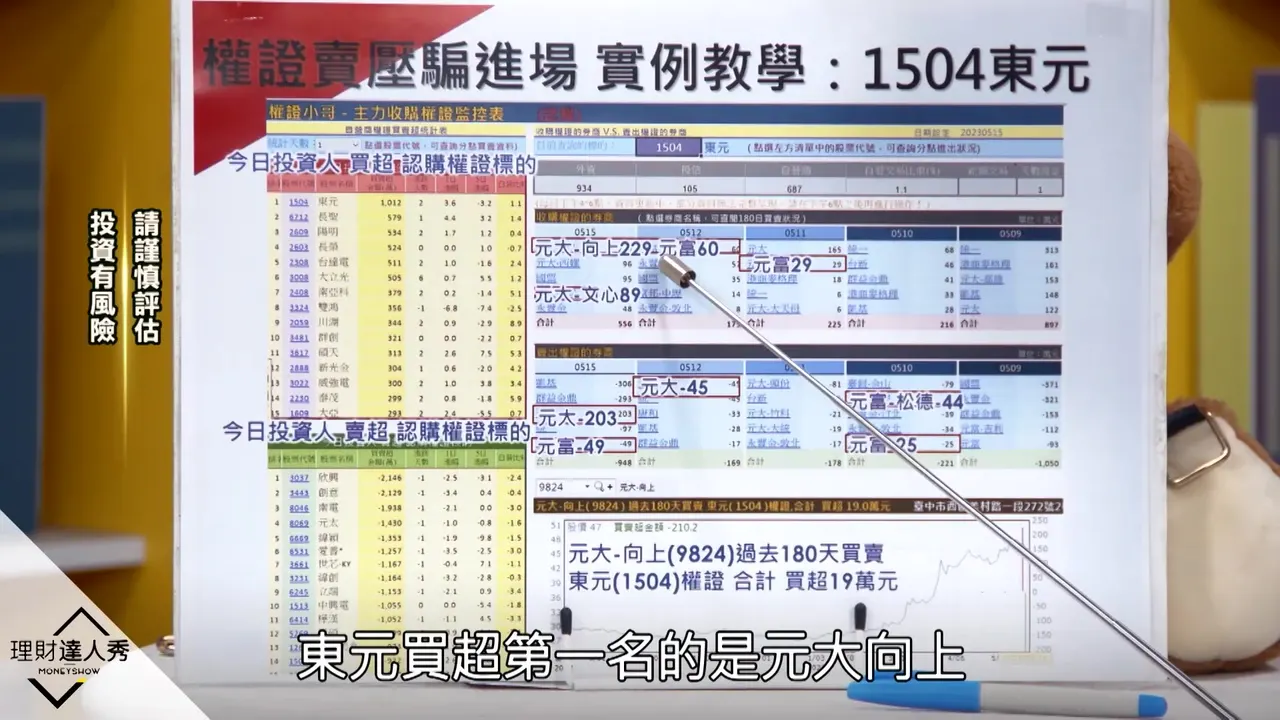
On May 15, the top warrant net buy was TECO, and the second place had only a little over five million NT dollars, meaning the market was weak that day; in a good market the top 15 would all be above 1000 wan. On the morning of May 16, TECO showed a row of sell-and-buy signals, and even though the broad market rose more than 200 points, the stock was hit from 47.45 down to 46.2. The largest net-buy branch in TECO warrants was Yuanta Xiangshang; the speaker guessed that Xiangshang, Xiluo, Wenxin and other branches may be the same person, buying heavily the day before and unloading the next day, a textbook overnight flip.
▶ Watch from here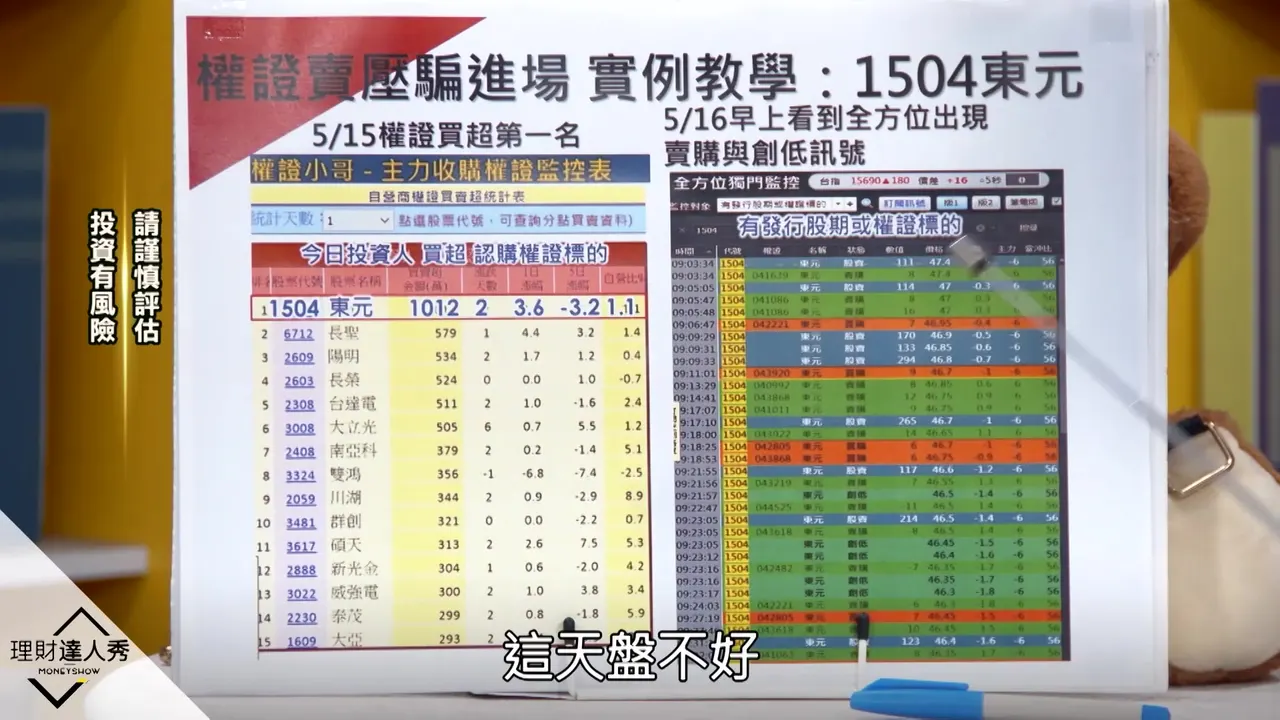
13:50Timing of Selling Pressure and Candlestick Patterns
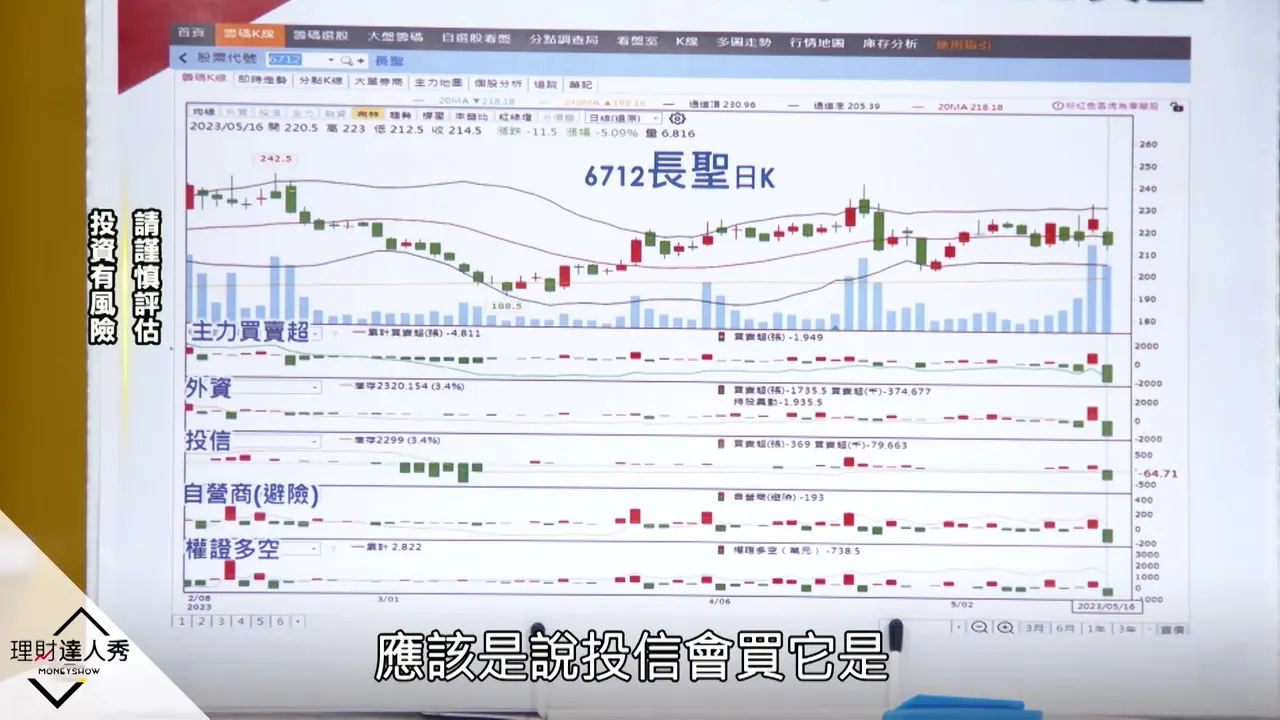
Warrant sell orders are usually finished before 10 a.m., after which the day's market decides; TECO still rose because it opened low and climbed, with the broad market surging. Holders are advised to take profit at 9 a.m. and buy back at 10 a.m. after the dip. In candlestick terms, after heavy warrant buying the next day often shows an upper shadow or a black candle, and the speaker uses second-place Gold Long (長聖) as an example, where the net-buy amount is not large but already substantial for that stock.
▶ Watch from here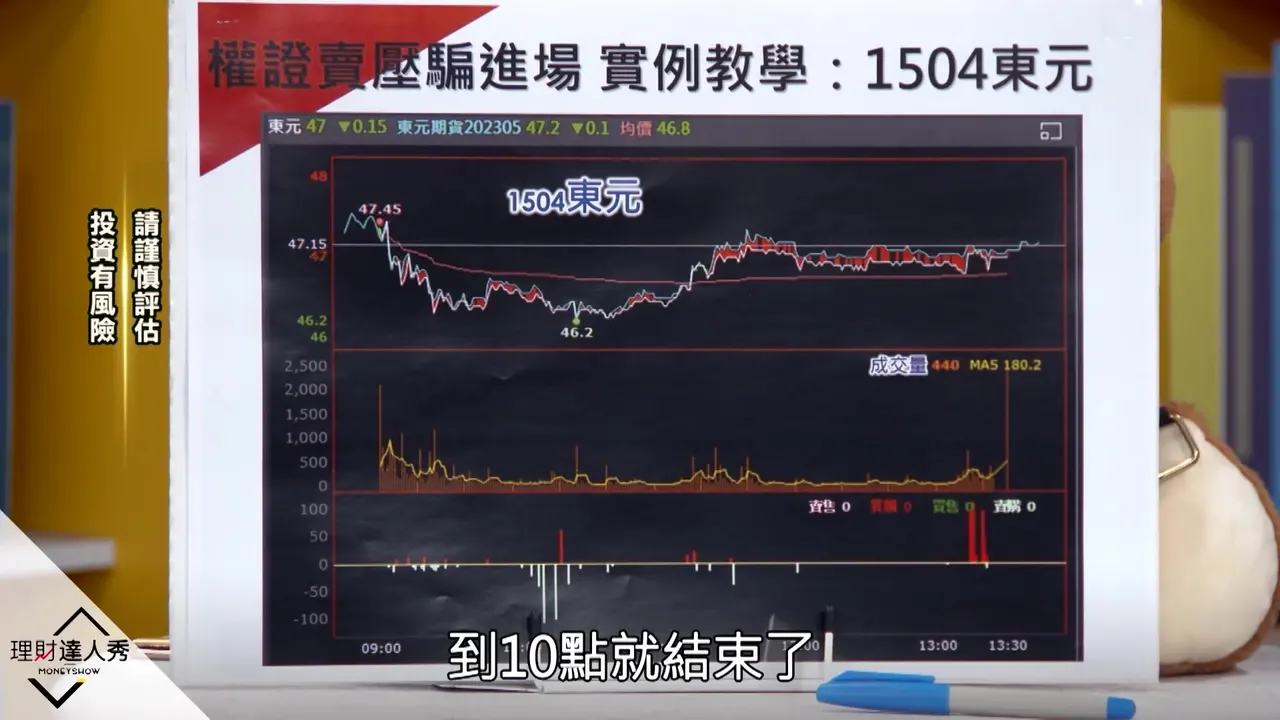
15:31Gold Long Case and How to Respond
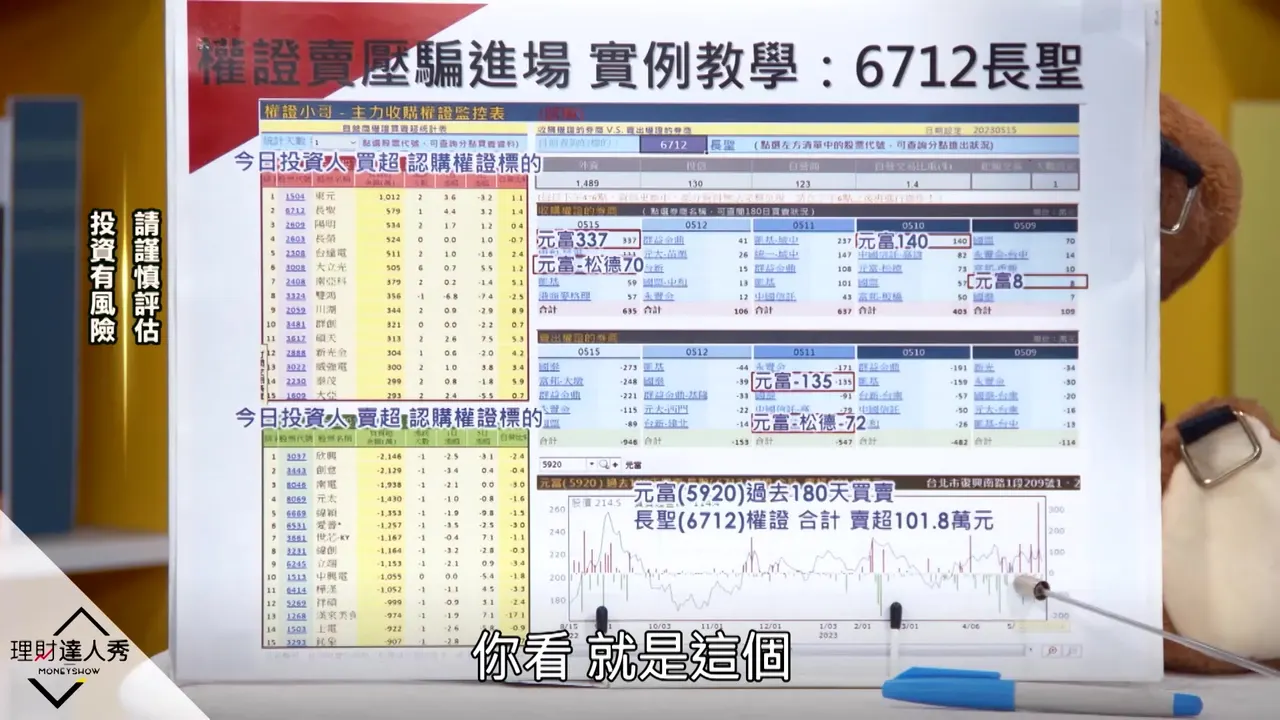
Gold Long (長聖) has a small share capital and low volume. After the warrant net buying on May 15, a pile of sell-and-buy signals also appeared early the next morning, with short-term branches such as Yuanfu on the buy side, while Taiwan index futures rose 180 points that day. Once you understand that these branches often flip overnight, if you hold the stock, you can act first when it opens high the next morning.
▶ Watch from here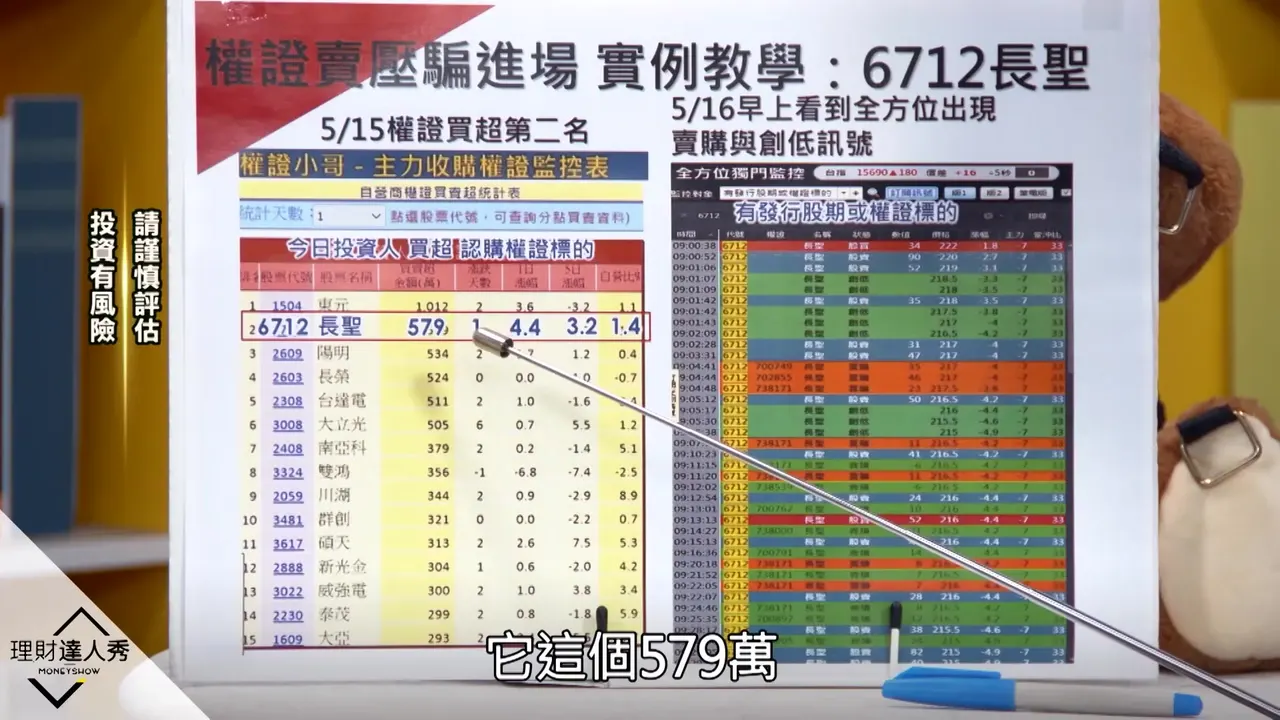
16:16The Rhythm of Overnight Flips by the Three Major Institutions
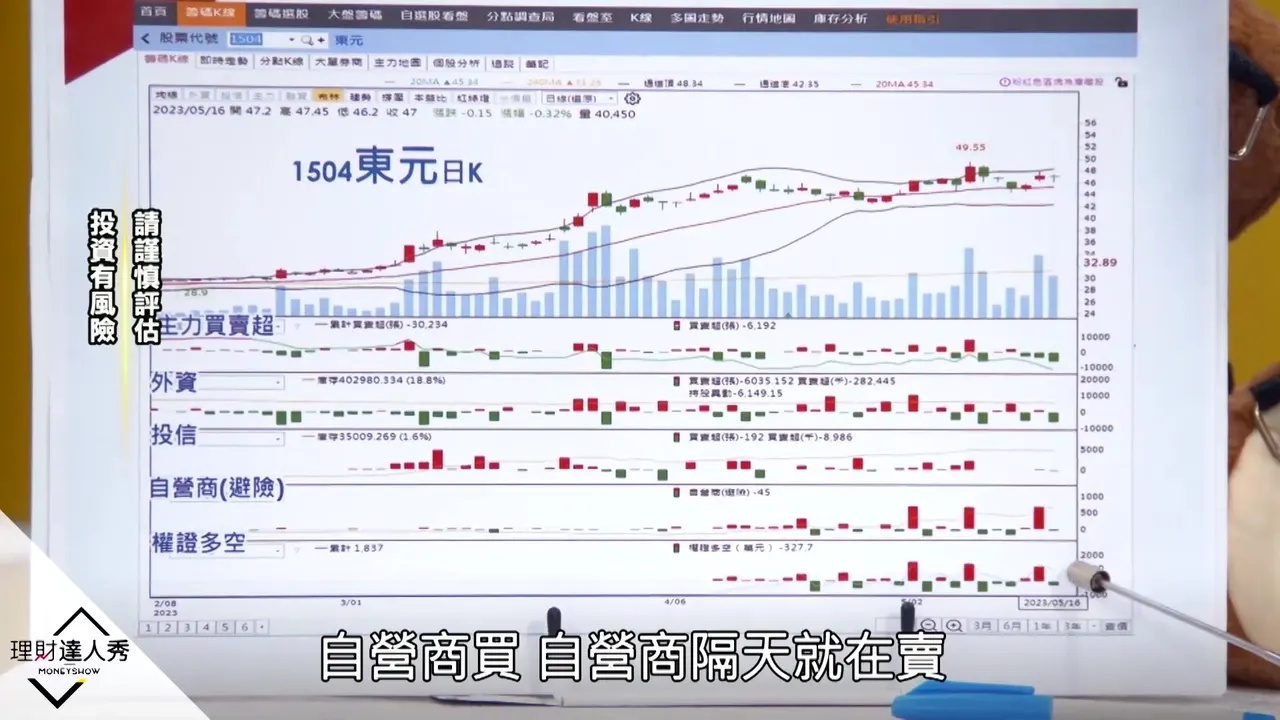
In stock trading you have to watch the rhythm, focusing on dealers' net buying and selling. On May 15 Gold Long (長聖) surged, with major players, foreign investors, investment trusts and dealers all buying heavily, yet the next day even the investment trusts flipped overnight, which is quite rare; the speaker guesses these trusts had bought earlier and, having turned to swing trading, were only then unloading. When all three major institutions flip overnight, a black candlestick the next day is very likely, and the day after heavy dealer buying is also often a black candle. These branches are not changed easily: if you see them buying, selling pressure comes out the next day; when they sell, buying may return the next day, so remember the rhythm.
▶ Watch from here