Warrants for Beginners: In-the-Money vs. Out-of-the-Money, How to Pick, and Trading Short-Term
TL;DR: Warrants are highly leveraged but lose time value continuously, so trade them in and out quickly and pick them by 3 criteria: low spread-to-leverage ratio, leaning in-the-money, and a stable issuer; held too long, 47% of the more than 2 wan (ten-thousand) warrants are already down more than half from their issue price.
Key ideas
- Warrant leverage is set by the issuer: leverage of 6.5x means that when the underlying rises 1%, the warrant rises about 6%. The underlying may rise only modestly while the warrant can gain 2–3 times, but the ASRock example of a 5x gain in 6 days is hindsight chart-reading, and even luck cannot guarantee a repeat.
- Do not hold warrants too long: when the underlying moves sideways, warrants keep sliding lower. Of the more than 2 wan (ten-thousand) warrants, 47% have already lost half their value, 60% have under 3 months to expiry, and as many as 69% have under 1 month. Longer maturities decay more slowly and short ones are a gamble, but never hold either for the long haul.
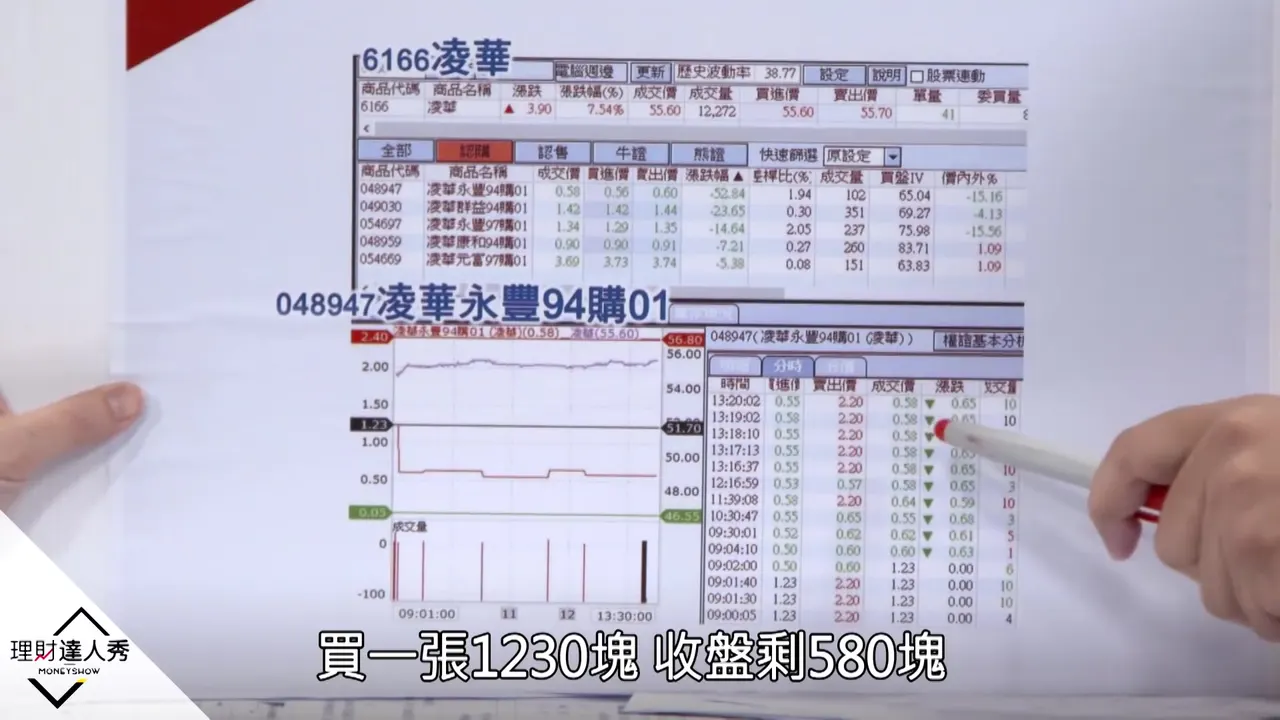
- Chasing warrants after a run-up is very risky: when ADLINK's stock rose 7%, its warrant opened at 1.23 and closed at 0.58, a drop of more than 52%, because the open gapped too high and buyers did not know how to calculate a fair price. In-the-money warrants can be exercised for cash and carry lower risk; out-of-the-money warrants have bigger leverage but easily go to zero, and the common preference for out-of-the-money comes from the issuer's standpoint.
- Pick warrants by 3 criteria: a low spread-to-leverage ratio (combining the bid-ask spread ratio and effective leverage, with a standard below 0.3%), leaning in-the-money, and a good issuer. The lower the ratio, the less the underlying needs to rise to break even; TSMC's warrants go as low as 0.04%.
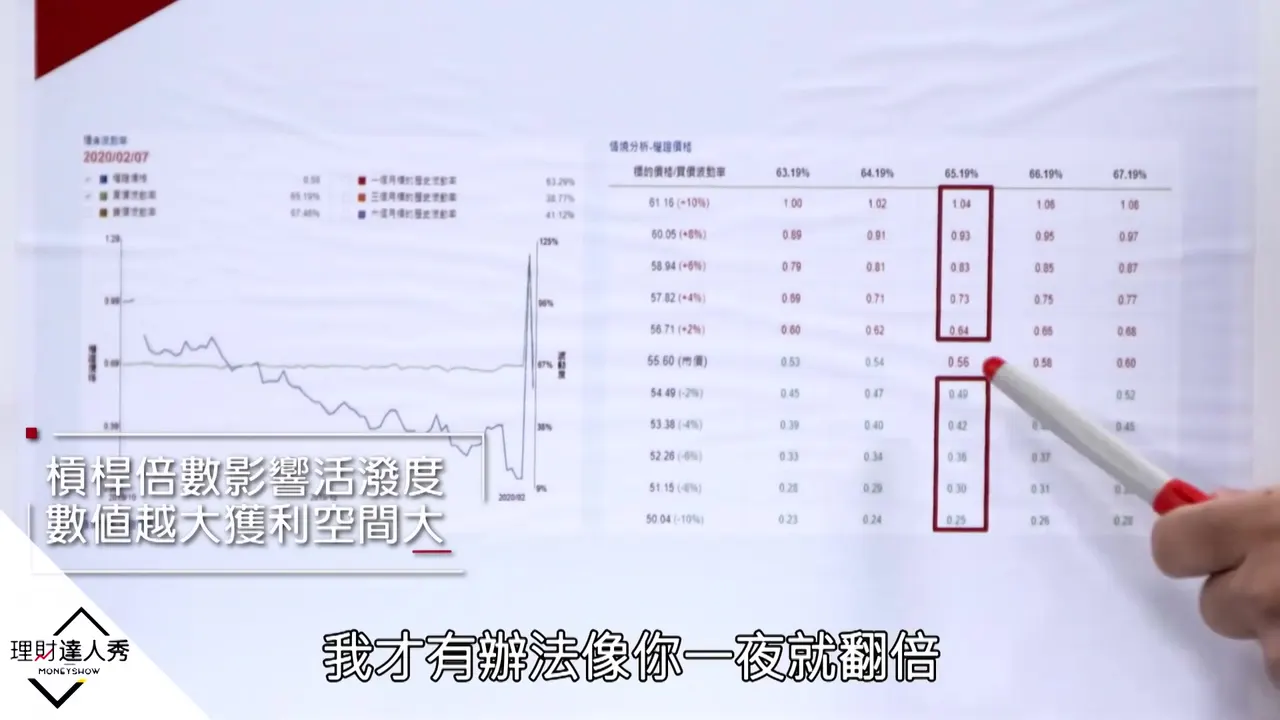
- Even a perfect warrant can go bad: if people scalp the spread intraday for too long, the issuer will cut the implied volatility and the warrant price suddenly becomes cheaper, so keep watching implied volatility. An issuer that is too generous makes no money and may also change hands and turn bad.
Section summaries
0:25Opening: The Risk of Going to Zero and the Issuer's Position
The opening previews two key points: warrants cannot be held too long, and the biggest fear is going to zero. It then raises the other side of warrants: if an issuer is very generous to investors, investors profit easily while the issuer itself earns little, so an issuer that makes no money is actually a good issuer; and an issuer's quality also changes with how it is run.
▶ Watch from here0:35The Warrant Guy's Comeback Story
The Warrant Guy explains why he is known by warrants: around 2008 he lost over 100 wan (ten-thousand) and was left with only 10 wan. In 2009, when the new warrant rules had just started, leverage was high and issuer quotes were cheap. He used 400 wan to buy a fairly priced warrant at limit-up, the underlying hit limit-up again the next day, and his capital turned into 800 wan. Turning 10 wan into 1000 wan took only 7 months. He also stresses that this loophole no longer exists and such speed is not possible now.
▶ Watch from here5:30ASRock Warrant Example: 5x in 6 Days
Using the earlier Bollinger Band stock-picking method as an example: major players buy, the band narrows first, and then you grab the first candle as price breaks out along the upper band. The stock rose from the 80s to over 100, and the corresponding warrant went from 1 to a high of 5, a 5x gain in 6 days. At entry the upper band's slope was 1.2% (the condition is above 1%), and major players had bought for 7 days straight; you exit once price leaves the upper band. The speaker warns this is a hindsight chart example, that the next day's high price was pushed up by others chasing and should not be chased; and buying at 0.19 and selling at 1 the next day would take luck and good fortune, cannot be predicted, and is not guaranteed to repeat.
▶ Watch from here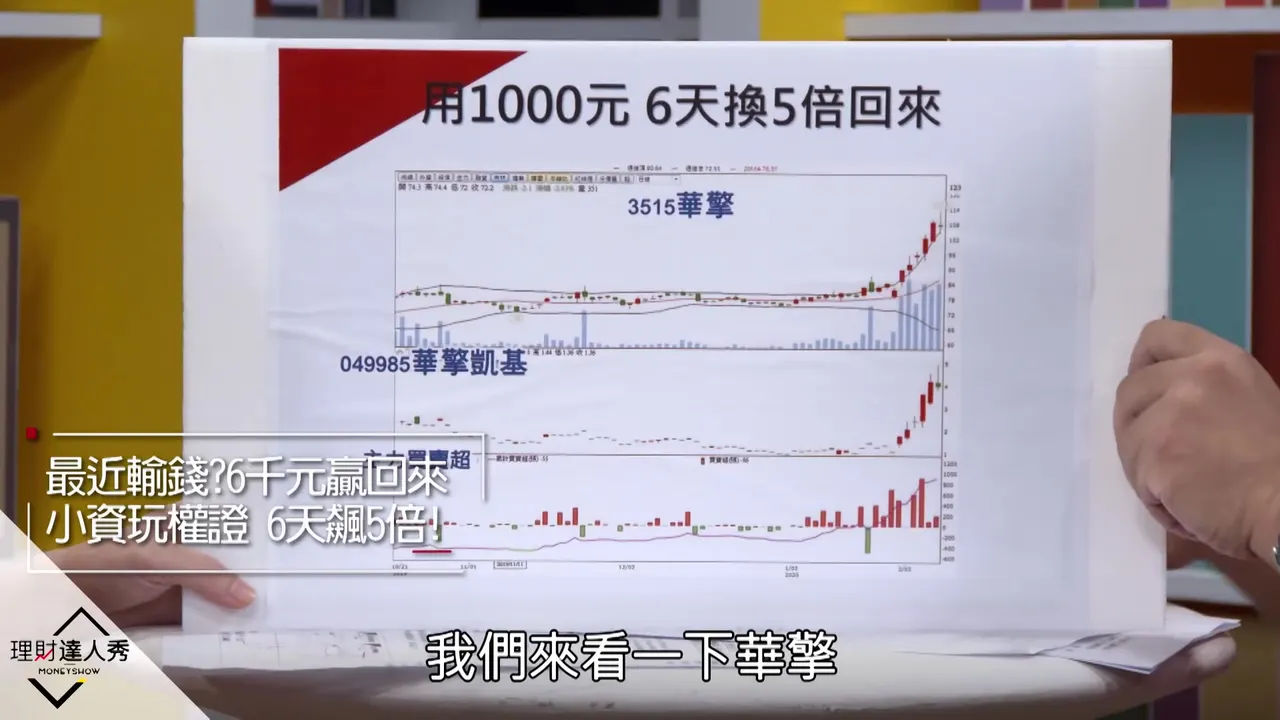
8:24Analyzing the ADLINK Warrant Loss
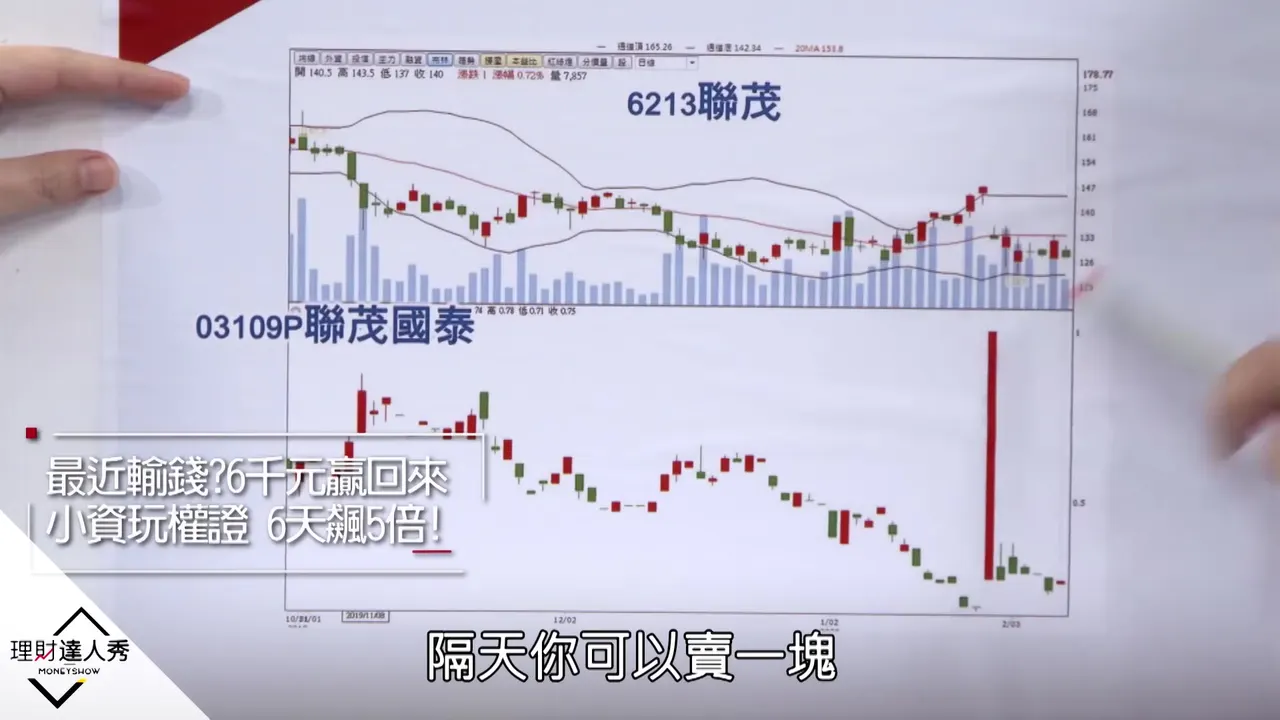
Another example is a tender-offer trade: following the method taught earlier, he first confirmed 60–70 wan lots in the closing session before jumping in, but the host's order did not fill. The speaker also says that after the technique was made public, views passed 10 wan, more people are competing for the same trades, and trading has become harder. The Warrant Guy predicted ADLINK's warrant would fall sharply the next day; the stock rose 7%, yet the warrant opened at 1.23 (1230 to buy one lot) and closed at 0.58 (580), a drop of more than 52%. The reasons were an opening gap that was too high and investors chasing without knowing how to calculate a fair warrant price. When the stock moves sideways, warrants also keep sliding lower, so they should not be held too long and should be traded short-term.
▶ Watch from here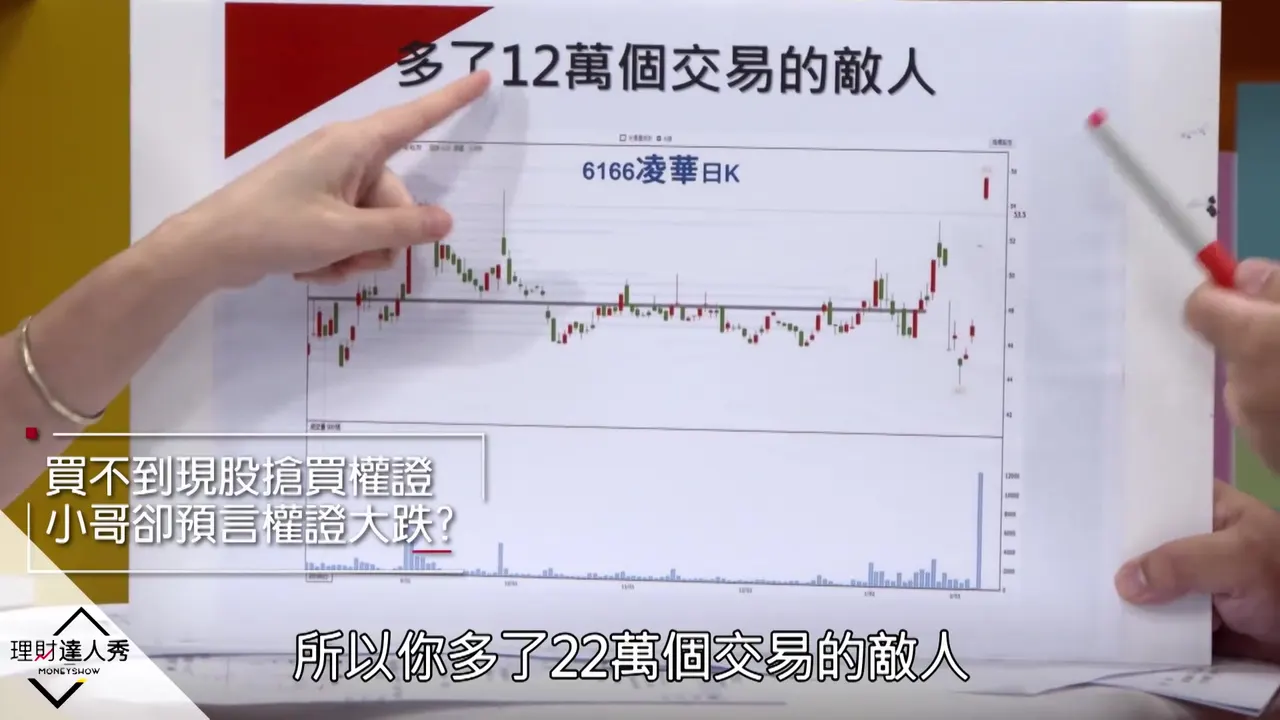
13:51Reading Warrant Names: New vs. Old Rules
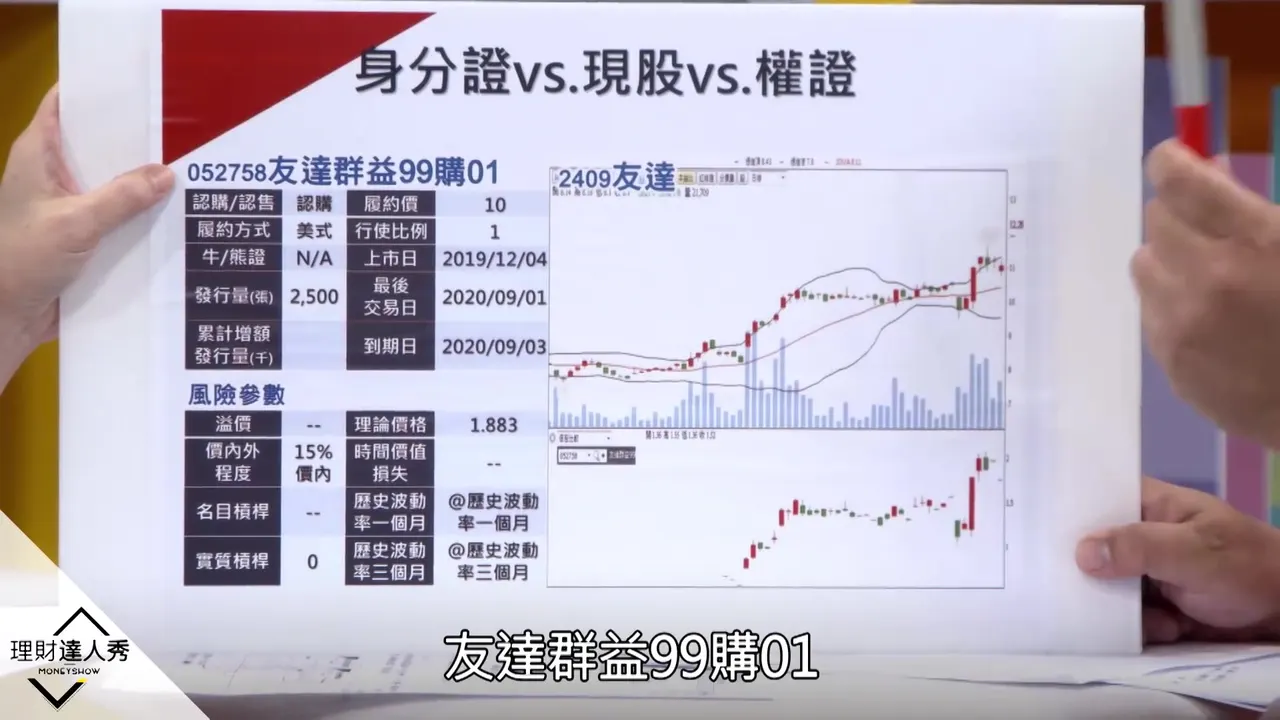
The speaker starts with the most basic warrant ID, aiming to help listeners understand enough to dare to place orders. Old-rule names had only 4 characters and were issued in rotation like license plates; when it reached LV, investors grabbed it without even looking at the underlying, and when it reached GG it was shunned, so the rules were changed. Under the new rules the names are longer, and the underlying, issuing broker, expiry year and month, and series number are all included in the name, clear at a glance.
▶ Watch from here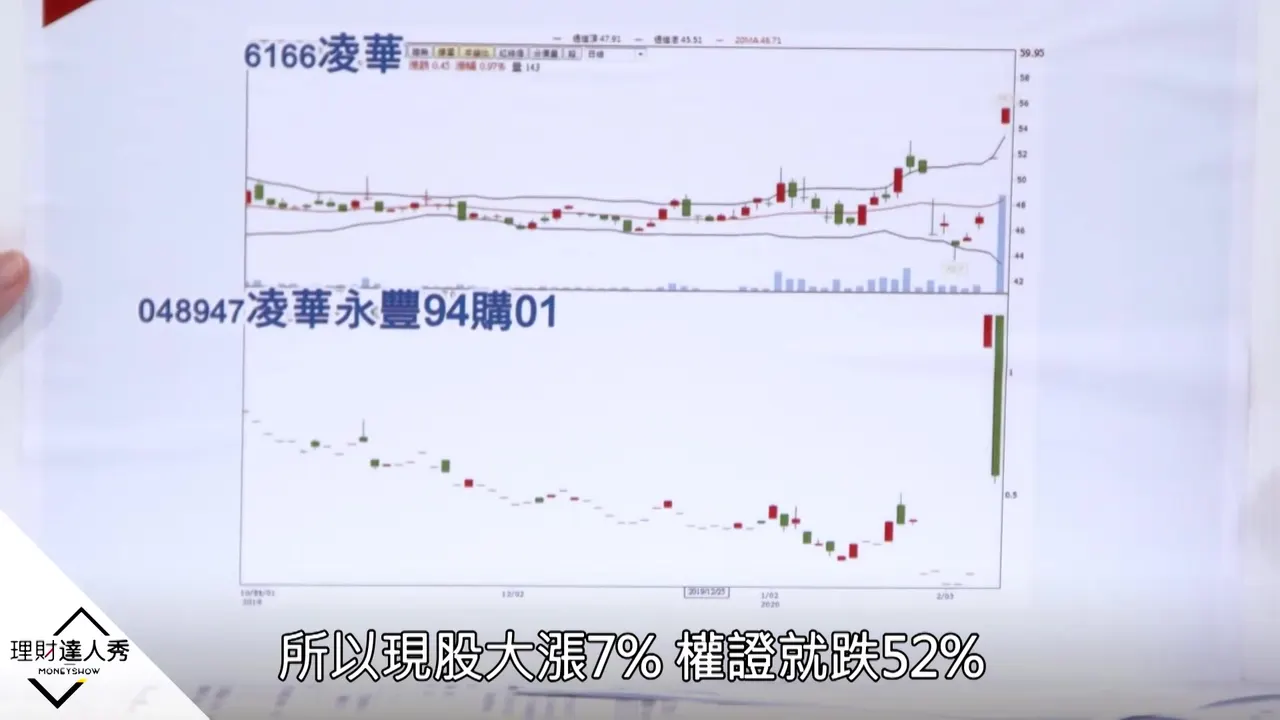
16:35Calls, Puts, and American vs. European Exercise
Warrants are divided into calls (bullish) and puts (bearish). Exercise styles are American and European: American can be settled on request any day, while European must wait until the expiry date. Take a strike price of 10 as an example: at expiry you can buy the underlying from the issuer at 10, and if the underlying has risen to 100, the warrant earns 90; a warrant's value is the stock price minus the strike price.
▶ Watch from here18:21Intrinsic Value and Time Value
In a warrant's value, the stock price minus the strike price (multiplied by the exercise ratio) is called intrinsic value, and anything above intrinsic value is called time value. The speaker gives one warrant as an example: with the underlying at about 11, the warrant had reached 2; it went from 0.8 to 2, up more than 2 times, while the underlying only went from 8 to 11. The underlying rises modestly, yet the warrant can gain 2–3 times, and that is leverage. This warrant is already in the money, but key broker branches were selling heavily, so the speaker warns against chasing it higher.
▶ Watch from here19:46Leverage Multiples and the In/Out-of-the-Money Rule
A warrant with leverage of 6.5x means that when the underlying rises 1%, the warrant rises about 6%; above 5x counts as high, and this figure is set by the issuer and changes daily. The rule of thumb for in/out-of-the-money: if exercising gets you money it is in the money, and if not it is out of the money; a call is in the money when the stock is above the strike price, and a put is the opposite. For a call with a strike of 10 and a premium of 1, the stock must reach 11 to break even, and then the more it rises the more you make; a put's gains from a decline are capped, earning at most about 9 when the stock falls to near 0.
▶ Watch from here25:12Comparing In-the-Money and Out-of-the-Money Warrants
Many popular books tell people to buy out-of-the-money warrants, but this originates from the issuer's standpoint, since out-of-the-money favors the issuer; out-of-the-money warrants have a high implied interest rate and also a higher holding cost. The speaker believes buying in-the-money has more advantages: in-the-money carries low risk, small leverage and lower returns, but can be exercised for cash; out-of-the-money has big leverage and high returns, but easily goes to zero and usually means a big loss at exercise, suitable only for betting on a big rise or fall within 1 day. He also mentions that some people bought out-of-the-money warrants on popular stocks and still lost heavily.
▶ Watch from here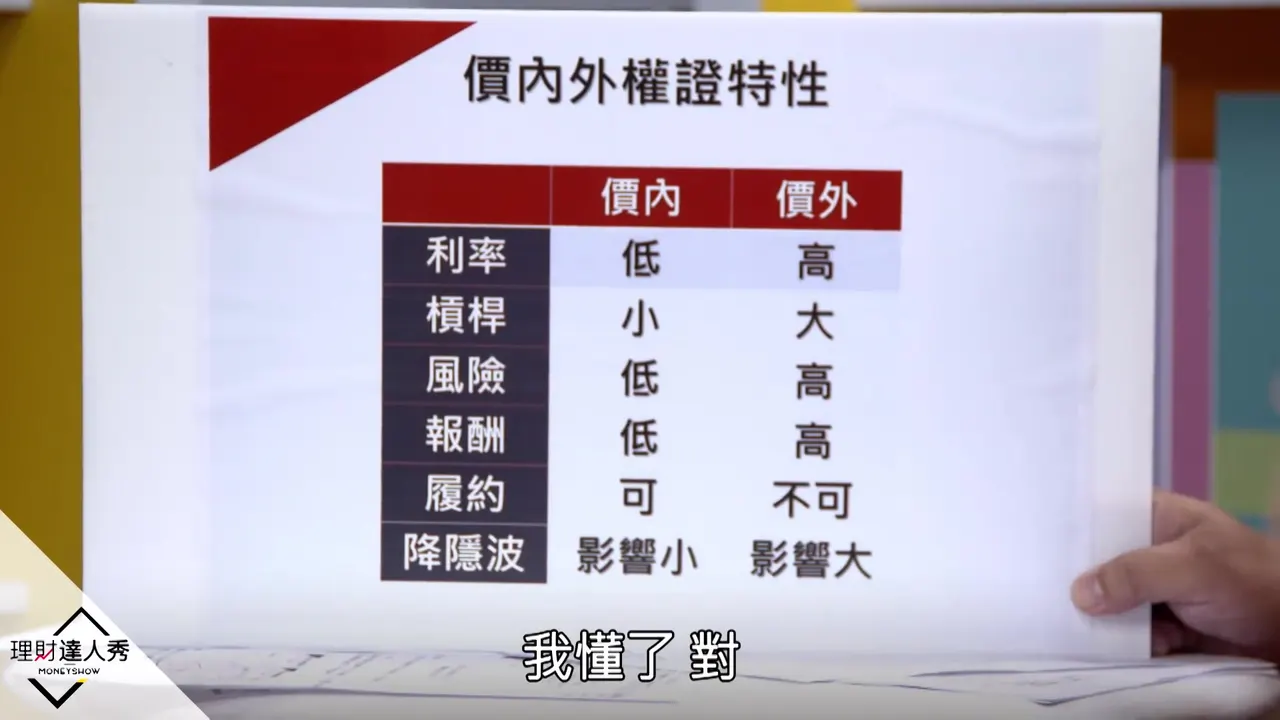
28:12The 3 Criteria for Picking Warrants
There are 3 criteria for picking warrants: the spread-to-leverage ratio should be low, which makes profits easier; lean in-the-money, which carries lower risk; and choose a good issuer. An issuer's quality can be checked on the Taiwan Stock Exchange's warrant information disclosure platform. The speaker reminds viewers that an issuer very generous to investors earns little itself and may turn bad after a change of management, so keep watching; a good issuer also will not casually cut implied volatility.
▶ Watch from here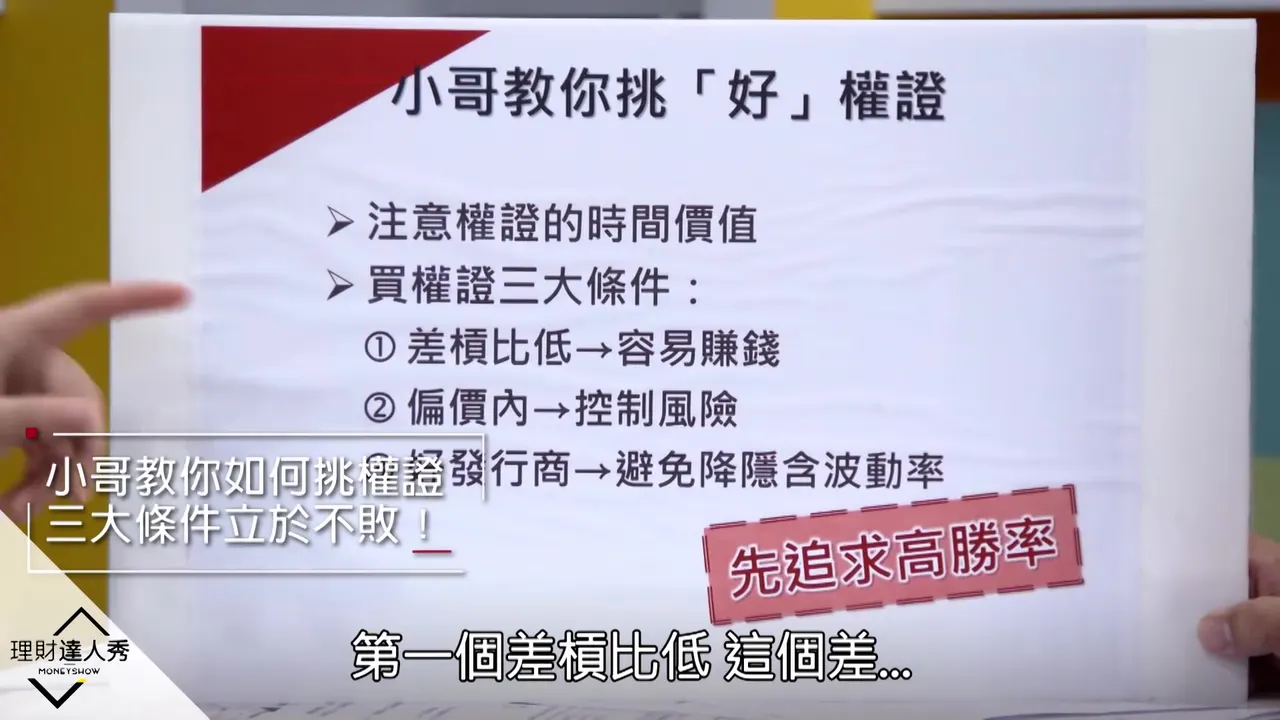
29:47Going to Zero and the Loss of Time Value
The biggest fear in buying warrants is going to zero, and the speaker opened with a pun on "zero-going paste." One person's warrant was already down 90%, and the speaker still advised picking a day to sell. He compiled data on more than 2 wan (ten-thousand) warrants: 47% have a current price down more than half from the issue price; 60% have under 3 months to expiry; and as many as 69% have under 1 month, mainly because of time value loss. Longer maturities decay more slowly and can be held a little longer, while short ones are a gamble; choose the maturity based on your purpose, but never hold for the long haul. He then used a diamond and gold analogy: a certified diamond bought for 300 wan might fetch only 210 wan on buyback the next day, and an unscrupulous shop might offer under 100 wan, showing how much ease of cashing out and the bid-ask spread matter.
▶ Watch from here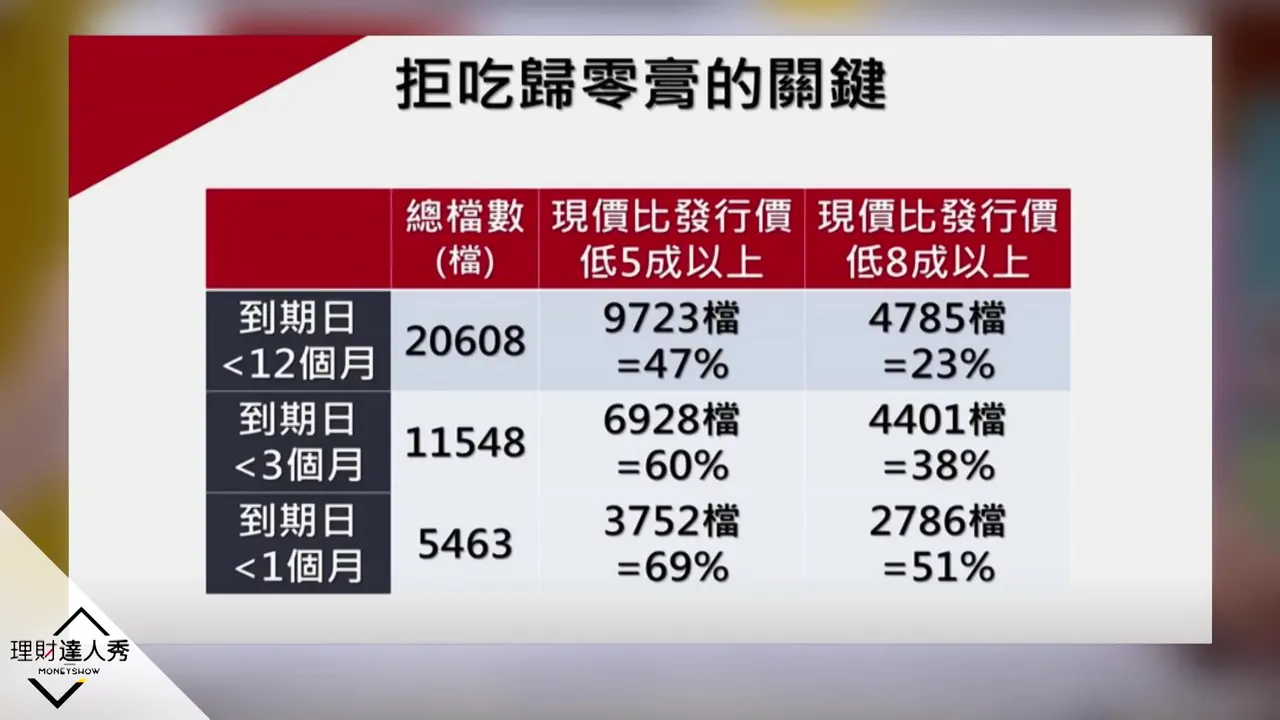
34:55The Spread Ratio and Spread-to-Leverage Ratio
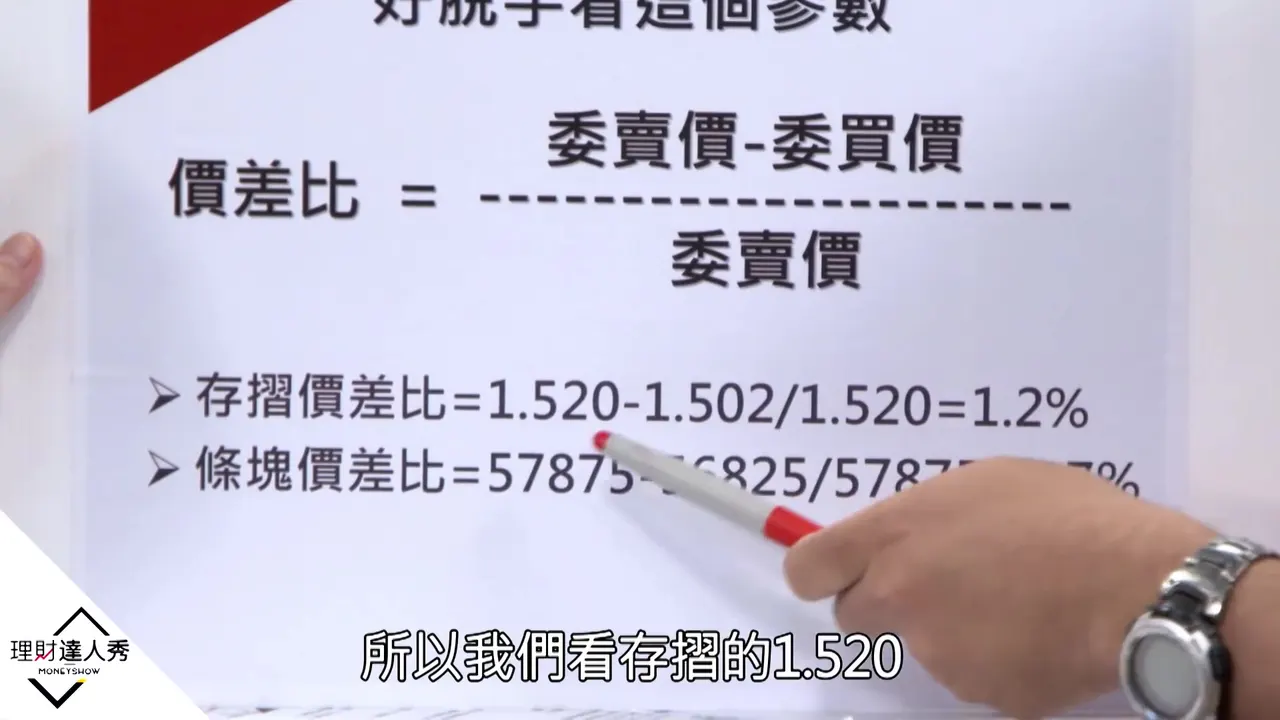
Spread ratio = (ask price − bid price) ÷ ask price, representing the loss from buying and immediately selling. The gold passbook's spread ratio is about 1.2%, so buying with 100 wan and selling at once leaves about 98 wan 8 (thousand); gold bars are about 2.7%, a larger loss. When picking warrants, the bid-ask spread ratio should be small and effective leverage should be above 5x to be lively; combining the two gives the speaker's self-created spread-to-leverage ratio, with a standard of below 0.3%, the lower the better. 0.3% roughly equals the securities transaction tax, meaning you break even once the underlying rises 0.3%; TSMC's warrants go as low as 0.04%.
▶ Watch from here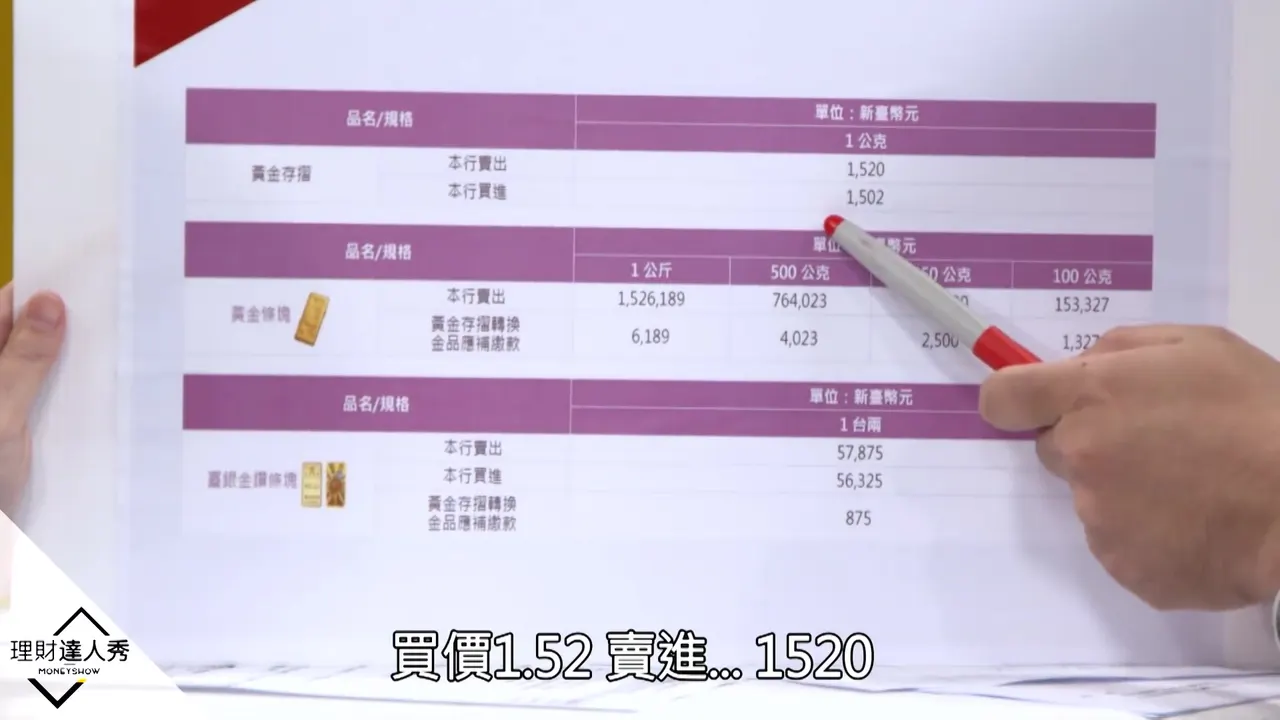
39:42Intraday Spread Trading and Implied Volatility
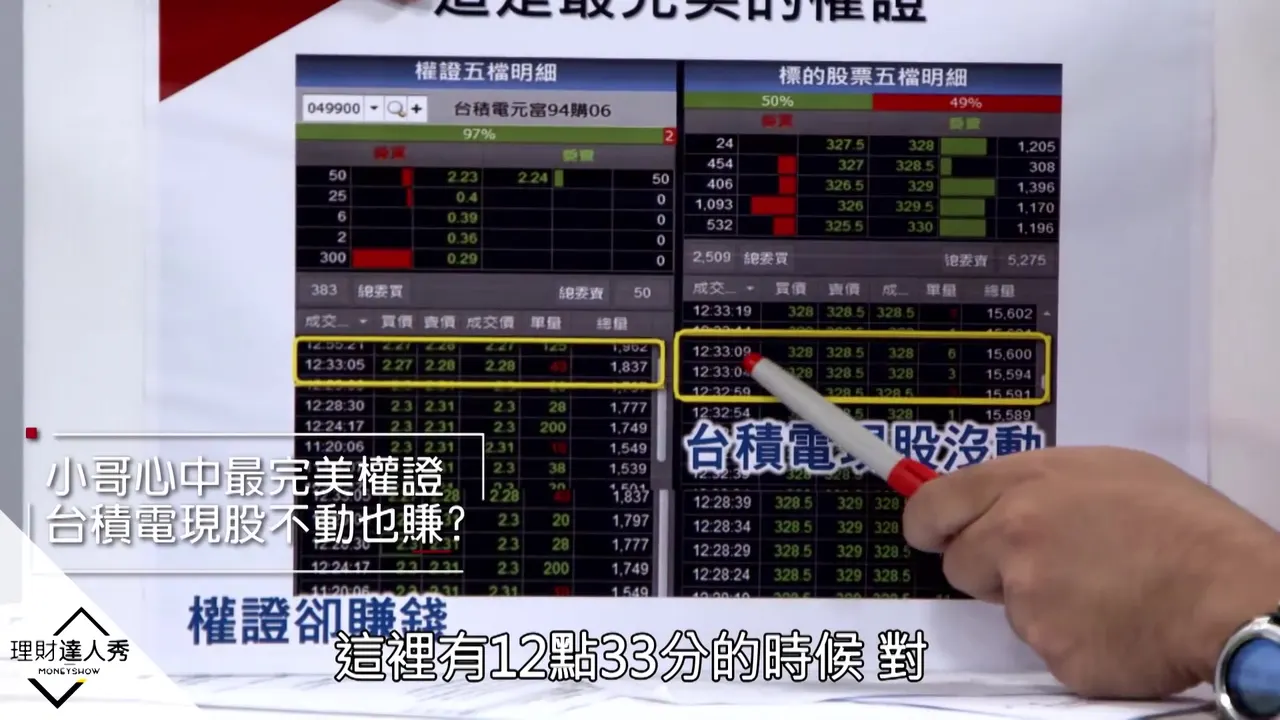
Using TSMC as an example, he shows the intraday spread play: with the underlying at 328, you can buy the warrant at 2.28; when the underlying jumps to 328.5, the warrant's bid has reached 2.3, and some people profit back and forth from this small spread. But if this goes on too long, the issuer gets hurt and will cut the implied volatility, the warrant price suddenly becomes cheaper, and it is no longer a perfect warrant. So you must keep watching whether implied volatility has changed.
▶ Watch from here