Short-Term Warrant Trading: Avoid Range-Bound Stocks, Catch Earnings-Call Rallies
TL;DR: Warrants lose time value every day, so they are not for holding long; pick high-volatility stocks and trade short term ahead of known events like earnings calls, accepting limited losses for a bigger profit potential.
Key ideas
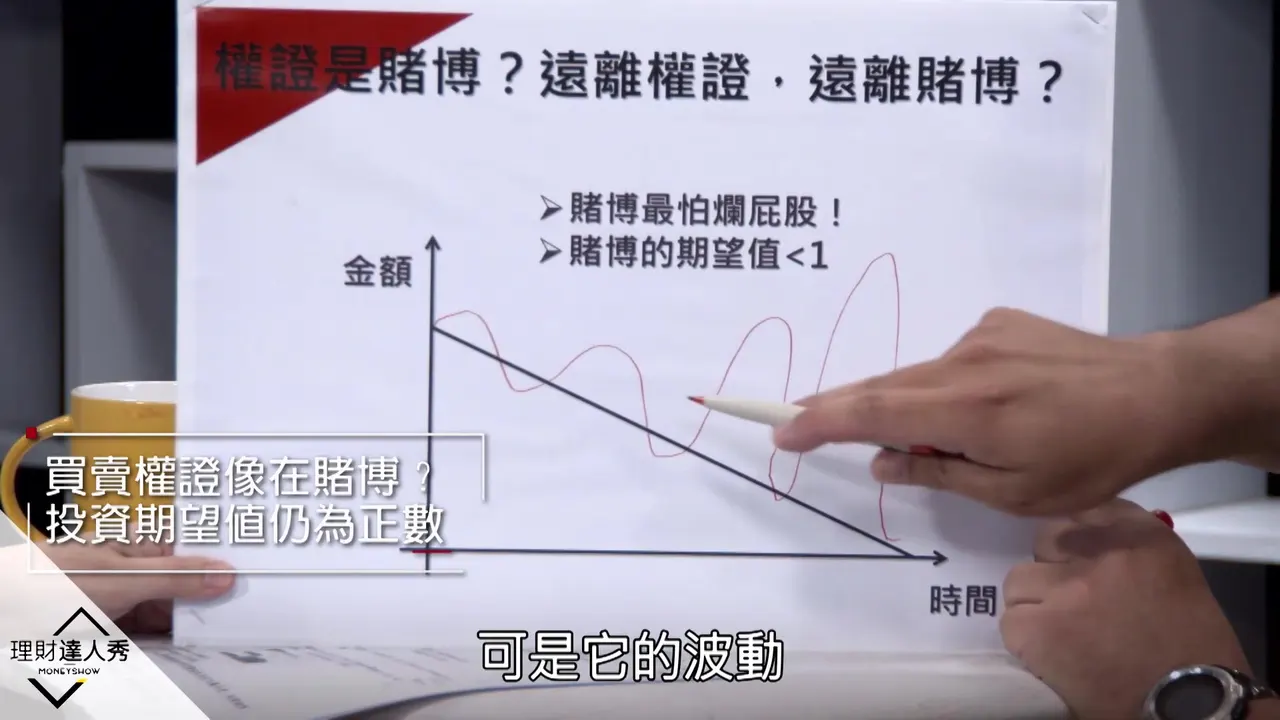
- Warrants are not the same as gambling: a casino's long-run expected value is negative (in sic bo, every 100 yuan wagered leaves only about 97 yuan in the long run), while warrants have limited losses and large gains; but you still have to exit decisively when losing, and the worst habit is refusing to leave after losses, the dreaded "ugly tail end".
- Time value shrinks every day (Theta is negative): about 1% a day is normal, but near expiry it can be 6–8% or even more than 10%; warrants last only half a year and there is no such thing as "waiting longer earns more dividends", so you cannot set a break-even line and hold on stubbornly.
- Warrants love volatility and fear range-bound trading: when Taichung Commercial Bank, China Steel and Compal traded sideways, their warrants fell all the way; stay away from low-volatility stocks, and dividend investors can play with their dividends but should not buy warrants on the stocks they hold for dividends.
- When choosing a warrant, first check the bid-ask spread ratio (the smaller the better; a low-priced warrant at 0.1 must rise 10% just to be sold) and Theta: if you plan to hold longer, pick low Theta and low leverage, while for same-day trades it matters little.
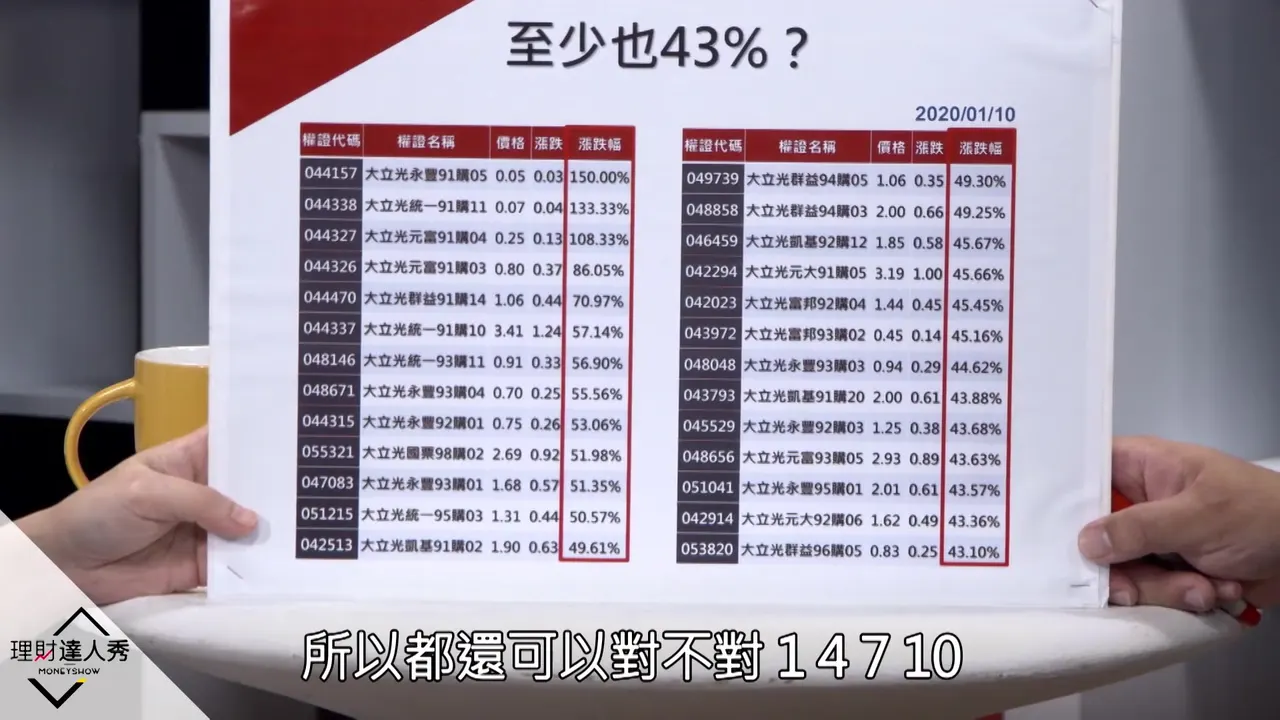
- Earnings calls are predictable big-volatility moments: the day after a Merry Electronics call, the stock rose with a 54.2% probability, averaging +2.9% on up days and −2.7% on down days, so even a win rate of about 50% can profit; the day after Largan's 2020 call the stock rose 4.1% and its warrants gained up to 150%. Earnings-call season is January, April, July and October, and even in the pandemic bad news can be fully priced in and spark a big rally.
Section summaries
4:20Answering the Claim That Warrants Are Gambling
Some viewers claim warrants are a gambling trap that brokers use to lure young people. The host thinks that goes too far: the expected value of warrants is far higher than gambling, so they are different things. Strong traders look for ways to raise their win rate, and dividend investors can play warrants with their dividends, which puts less psychological pressure on them. Also, brokers stop quoting once a warrant is more than about 20% in the money, so deeper in the money is not always better.
▶ Watch from here5:50Gambling Rake and the Idea of Cutting Losses
Casinos are designed so that the long-run expected value is negative: in sic bo, for example, every 100 yuan wagered leaves only about 97 yuan in the long run. So when you win at gambling you should leave fast, since the worst outcome is the "ugly tail end" of winning first and then losing everything. With warrants you can also take profit and go, buying today and selling tomorrow; but more important, you must also exit when you are losing money, because the worst habit is refusing to leave after losses. The show then switches to exam questions that read straight from the numbers, replacing the previous episode's overly complex formulas.
▶ Watch from here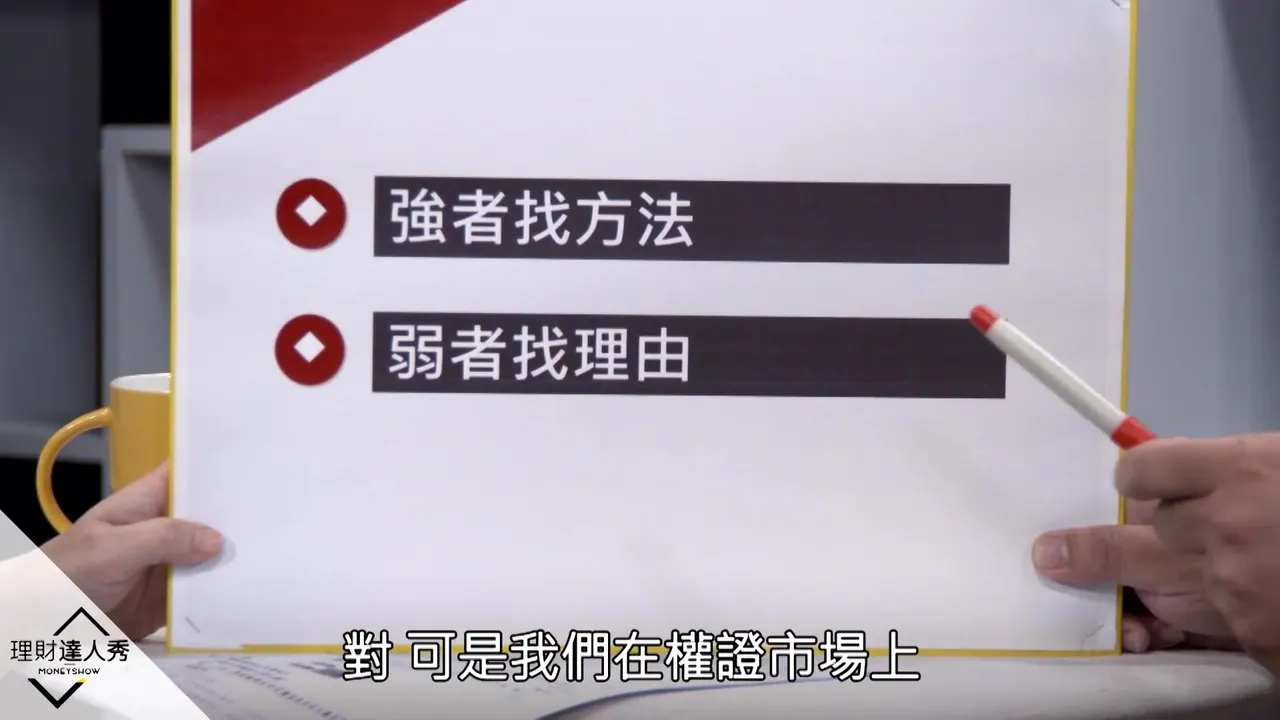
8:51Exam Question: The Smaller the Spread Ratio, the Better
The first question is about the bid-ask spread ratio: with everything else equal, the smaller the bid-ask spread ratio, the better, so choose the higher-priced warrant with the smaller spread ratio. Many people prefer low-priced warrants at just 0.1 because 2 wan yuan (wan = ten thousand) buys 200 lots and feels like being a big player; but these warrants have a large spread ratio, and after buying, the price must rise 10% just to be sold, which makes them hard to exit.
▶ Watch from here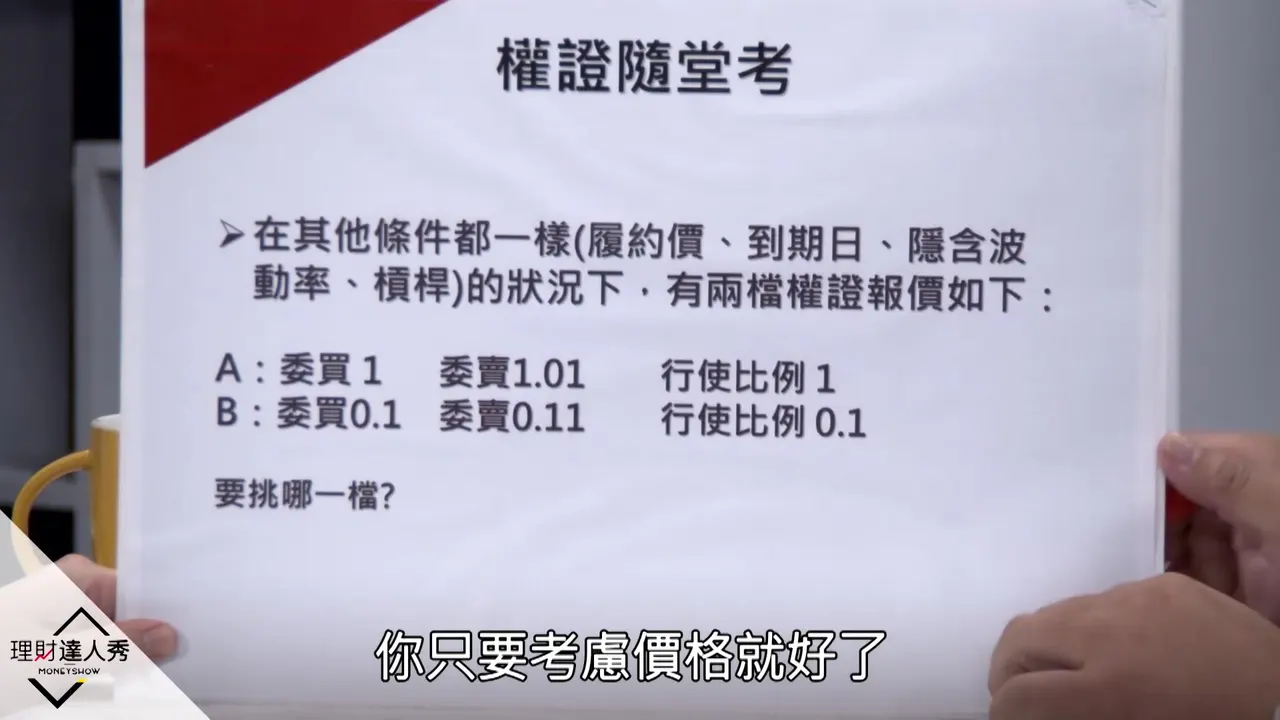
10:15How Warrant Codes Work
Take Capital Securities 99 Call 01 as an example: this warrant expires in September of ROC year 109. For an October expiry the code would gain an extra digit and become longer, and the English word October could also cause confusion, so letters are used instead: A for October, B for November, C for December, which even people unfamiliar with English can read at a glance.
▶ Watch from here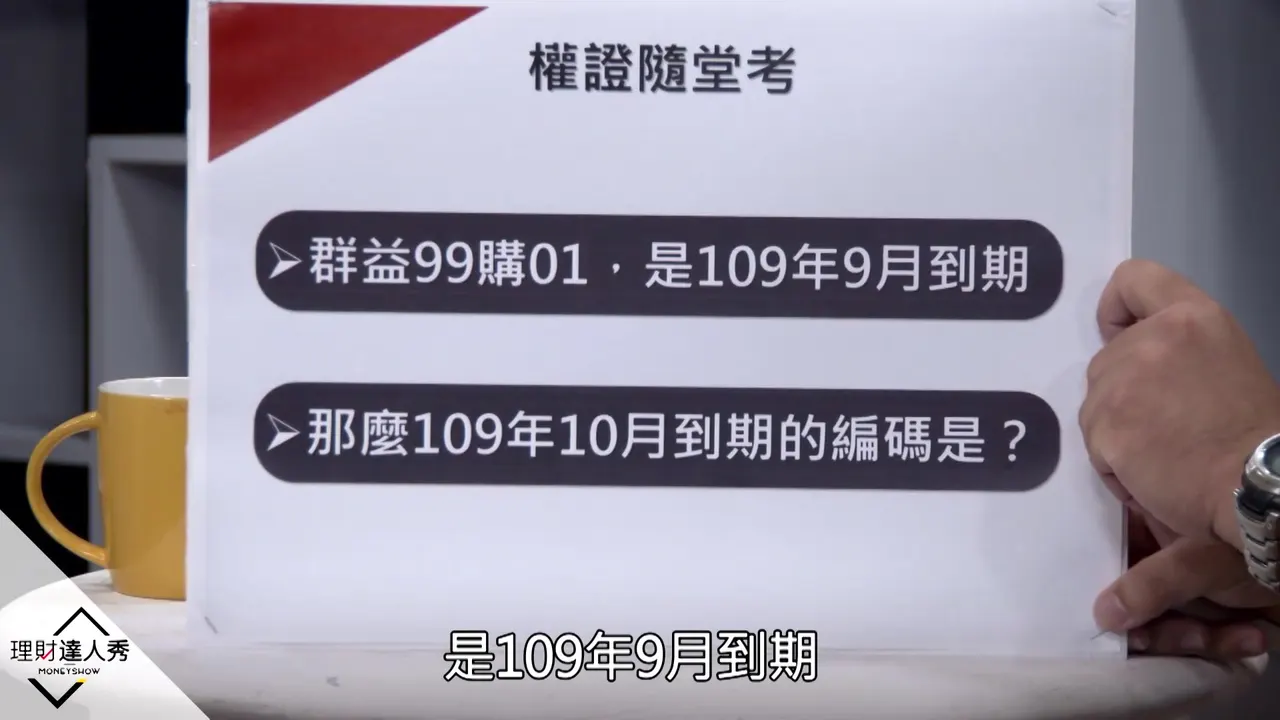
11:51Case Review: AUO Confirms Don't Chase Highs
Reviewing the AUO warrant Capital 99 Call 01 flagged in the previous episode: it was pointed out then that a key broker branch had net sold more than 1 wan lots in a single day, with a warning not to chase. Afterward the stock fell all the way from a high of 11.6 yuan to 10.5 yuan, and the warrant dropped from over 2 yuan to 1.46 yuan, confirming the warning. So warrants should be played short term and not held too long; as for American or European style, don't worry, whatever works is fine.
▶ Watch from here12:21What Marriage and Warrants Share: Not Enough Waiting
The shared regret of marriage and warrants is the answer "not enough waiting". The host shares a student who ran an account from 10 wan yuan to over 300 wan yuan and later held a wedding in a church in Okinawa; warrants lack enough waiting because they have an expiry date, only half a year, so you cannot park them for the long term like a stock. The method this student uses every year around ex-dividend is not taught in this episode and will come later.
▶ Watch from here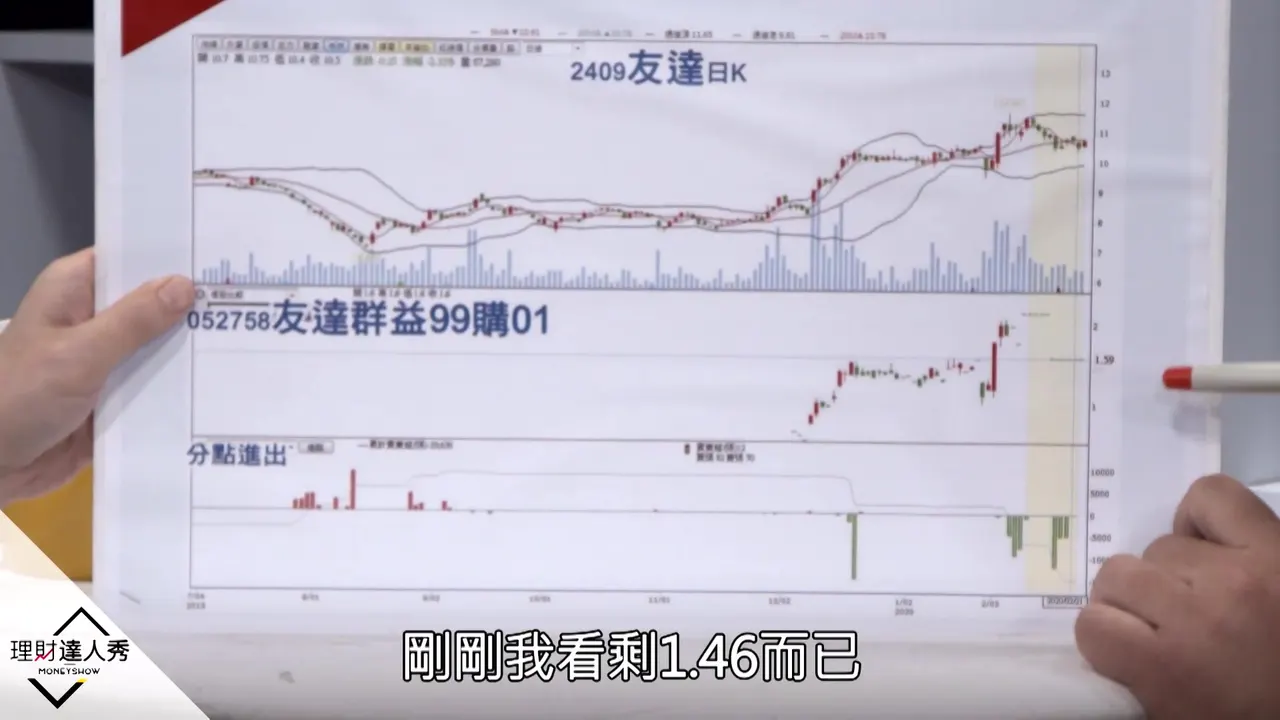

15:51Time Value Decay (Theta)
Warrants cannot be held long because they lose time value every day, which is Theta, the daily time cost of holding a warrant. Take the warrant in the show: its Theta is −0.02 while the price is only 0.29, so it loses nearly 7% in a day because it is close to expiry. About 1% per day is normal, but near expiry it can be 6–8% or even more than 10%. Theta is always negative, smaller when more time remains and larger as expiry nears, so a warrant cannot be held long and defended stubbornly; you have to choose your timing.
▶ Watch from here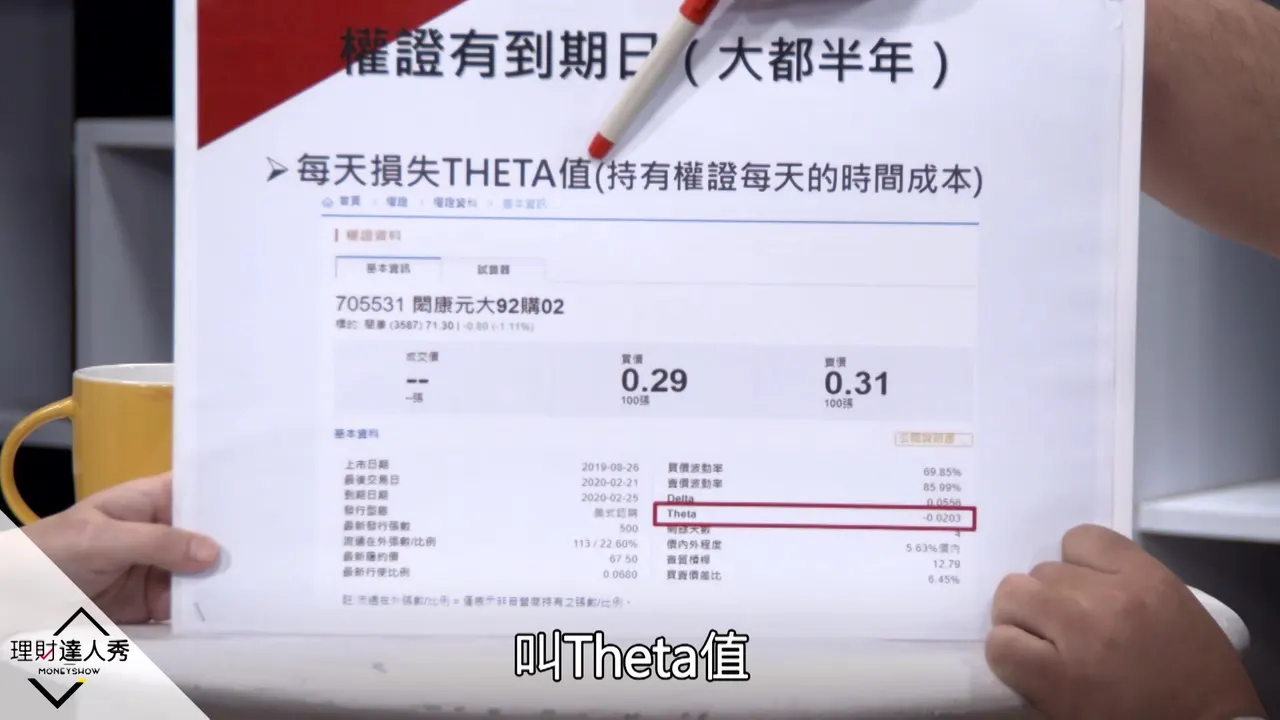
18:11When to Trade High-Theta Warrants
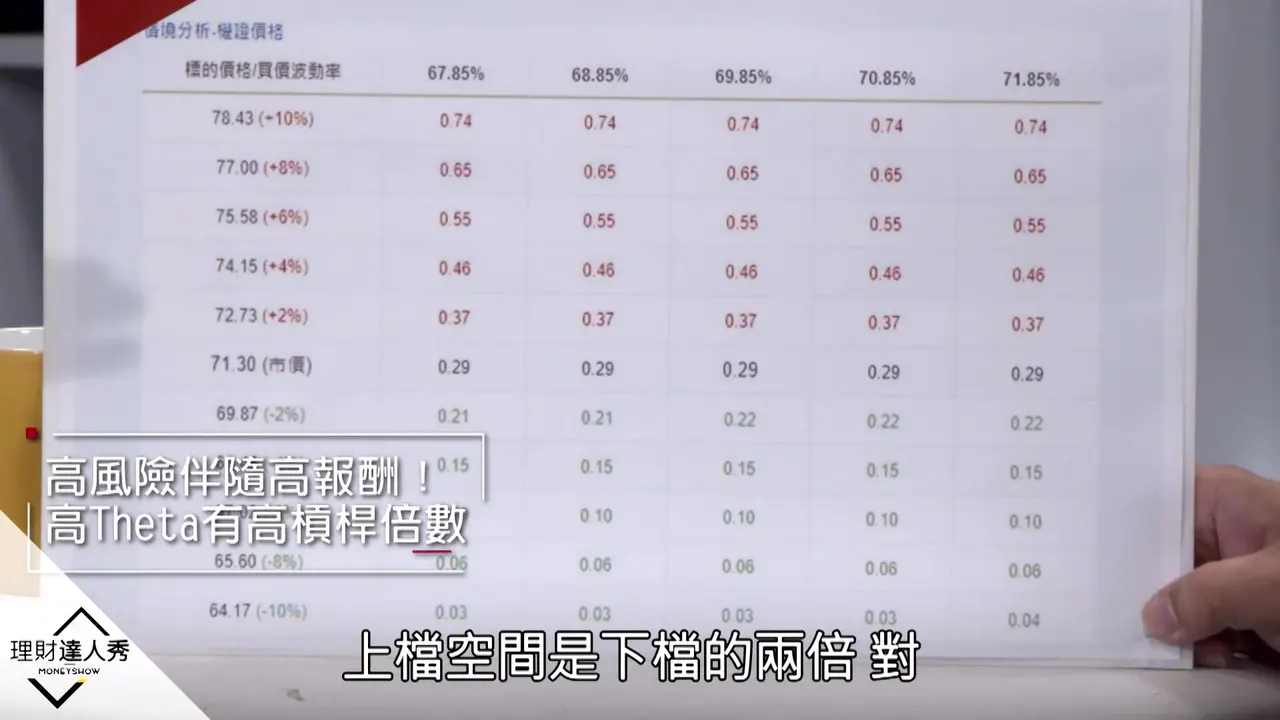
When buying a warrant, the less time value lost per day the better, but a small Theta usually means lower leverage: if you plan to hold longer, choose a small Theta; if you buy today and sell tomorrow, one day's decay is not worth worrying about. A high-Theta warrant has high leverage and loses about 7–8% a day, which is high risk but can also bring high profit, like opening a shop in a prime location where rent is expensive but customers are many. In the show's example, the fair price is 0.29 at a flat close, up to 0.74 at limit-up, and only 0.03 at limit-down, so the upside is larger than the downside. If you know in advance that a major event is coming the next day, such as an earnings call, a financial report, monthly revenue released on the 10th, or quarterly reports, you can bet on it with warrants.
▶ Watch from here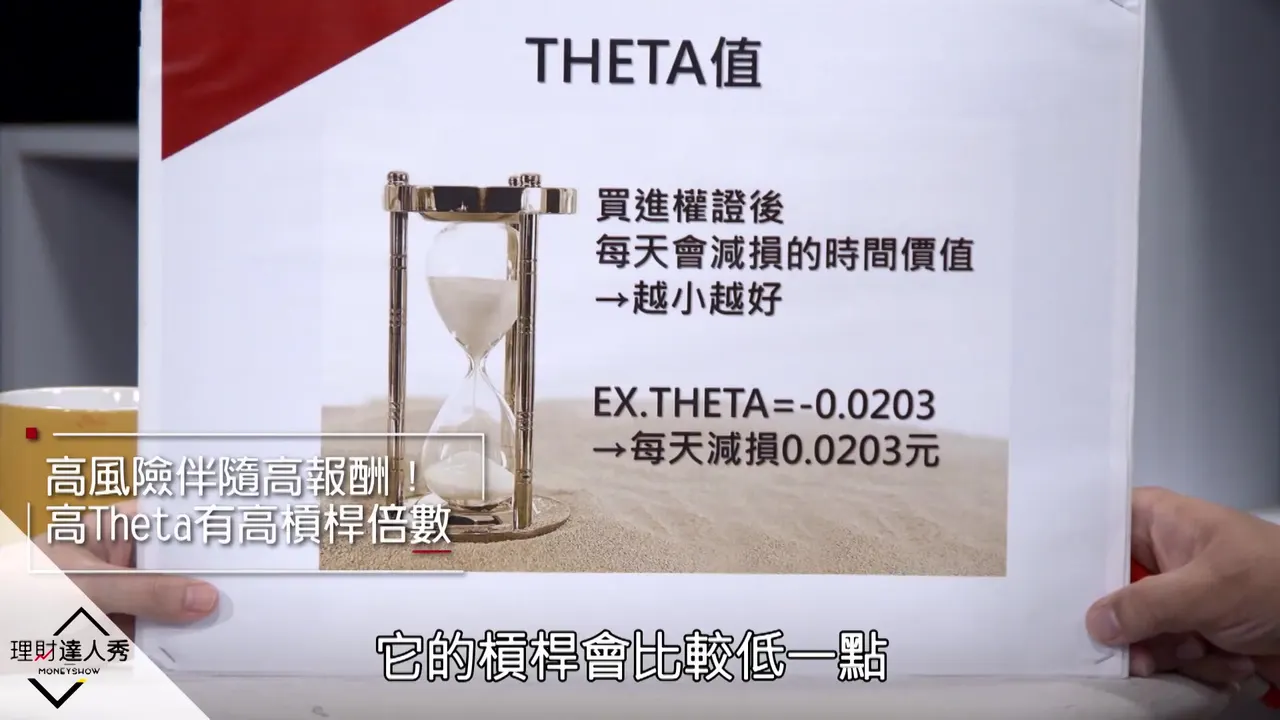
21:01Using Limited Loss and Large Gain
Warrants suit situations where profit and loss are out of proportion: at limit-up you can earn 0.45 or more, since above limit-up you can quote any price you like; even at limit-down, with no one buying from you, the most you lose is 0.29, so the loss is limited and the gain is large. The host once described an acquisition whose success or failure was about to be announced: the next day would be either limit-up or limit-down, so he bought both calls and puts, making a big profit on one side and a small loss on the other. Such events are rare and cannot be forced, so he switches to elimination: first rule out the warrant underlyings that don't make money.
▶ Watch from here22:51Warrants Love Volatility: Stay Away from Range-Bound Stocks
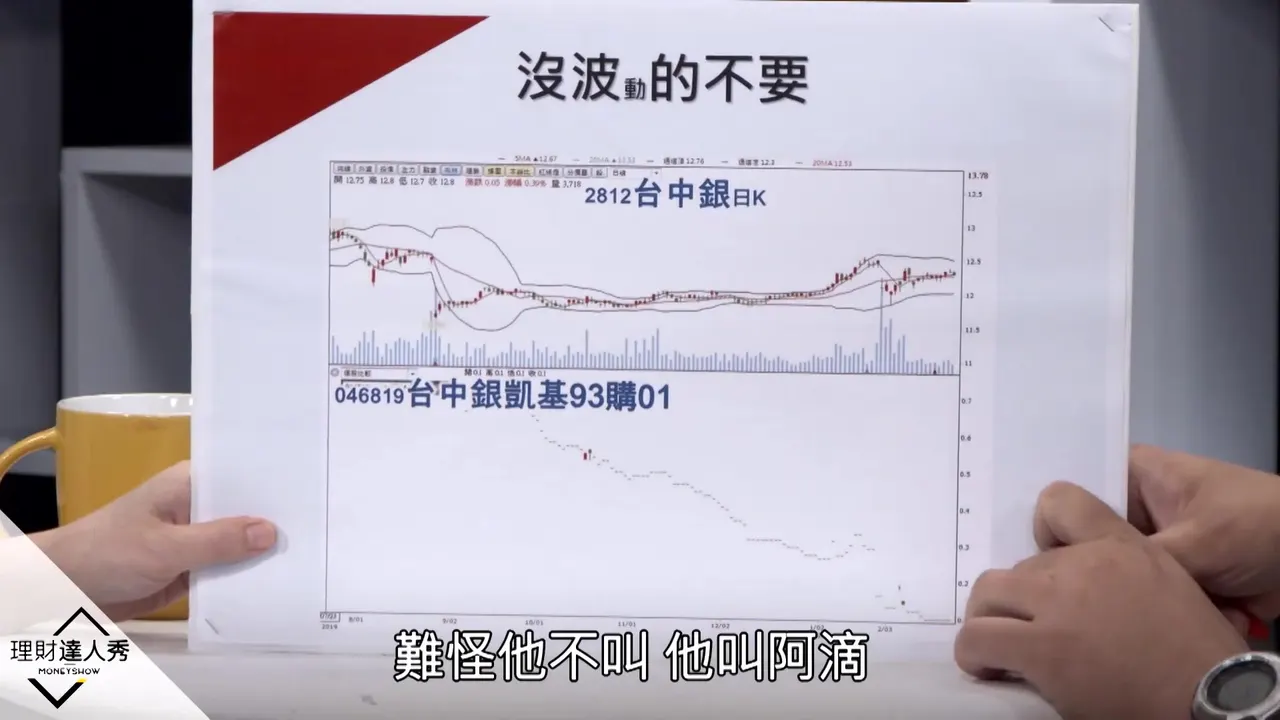
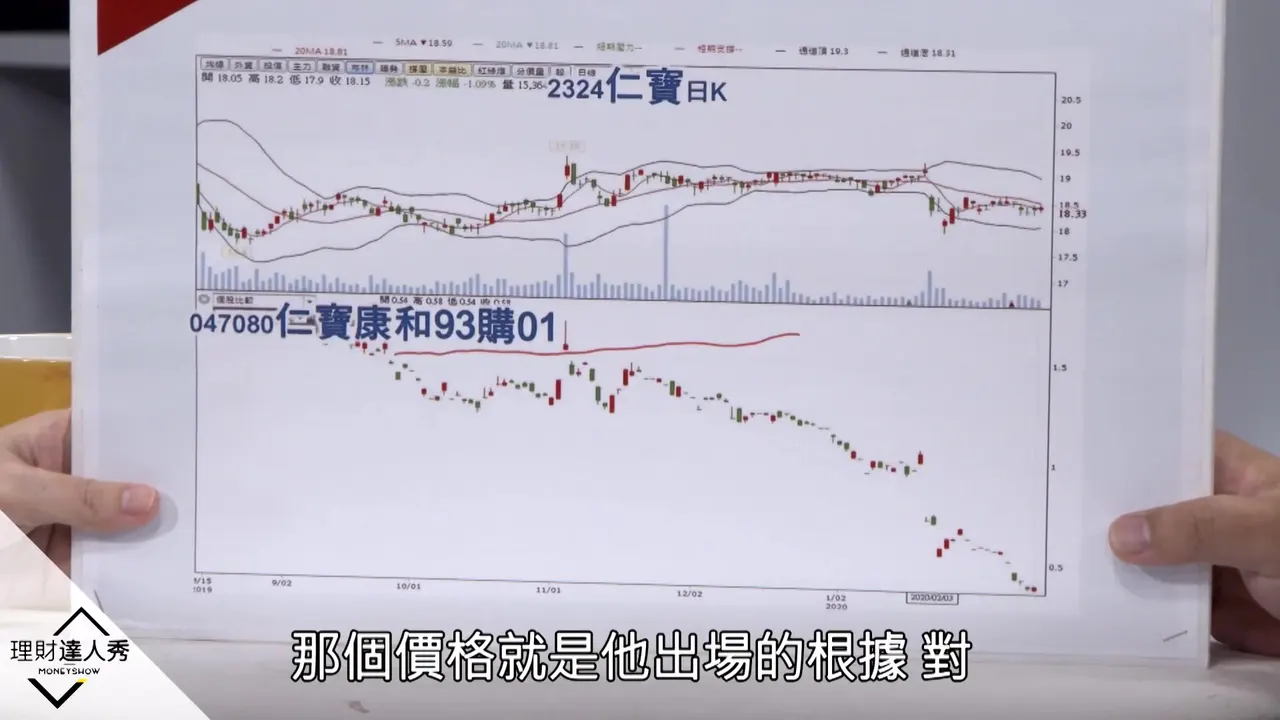
Warrants follow the stock, and if the stock doesn't move the warrant is finished, so stay away from low-volatility stocks. Taichung Commercial Bank traded around 12 yuan for half a year and its warrants fell all the way; China Steel, whether calls or puts, rose only limitedly when it rose and kept sinking over the long run as time value drained away. A reminder to dividend investors: when using dividends to play warrants, never buy warrants on the stocks you hold for dividends; pick high-volatility stocks you would not dare touch.
▶ Watch from here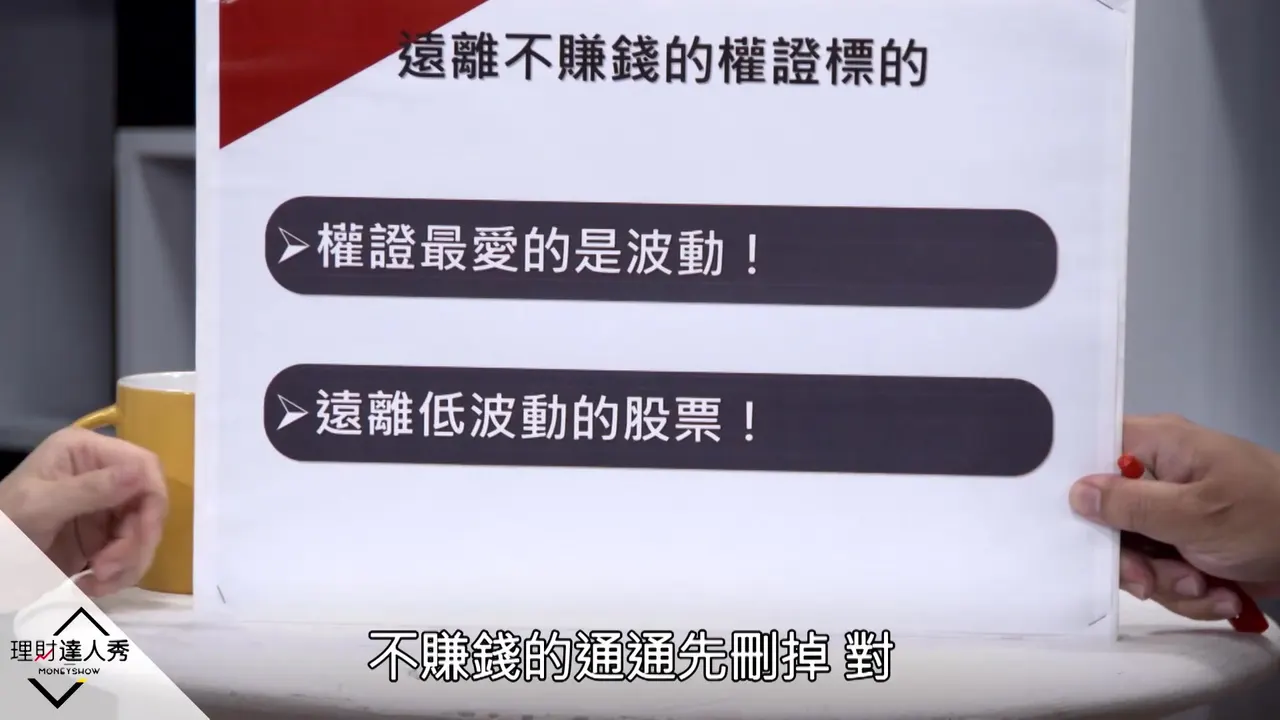
25:02Why the Break-Even Line Fails: Exit Fast
Investors often keep a "break-even line" in mind: whatever price they bought at, they won't leave until it gets back there. For stocks like Compal that stay range-bound for long periods, the warrants likewise slid all the way down. This mindset still has a chance with stocks, because you can wait for dividends and for the gap to fill; but with warrants there is no such thing as waiting longer to earn more dividends, and time value keeps draining, so you must exit fast and choose your entry timing. The previous episode listed 4 moments when a single bet can decide the outcome; this episode covers only the earnings call first.
▶ Watch from here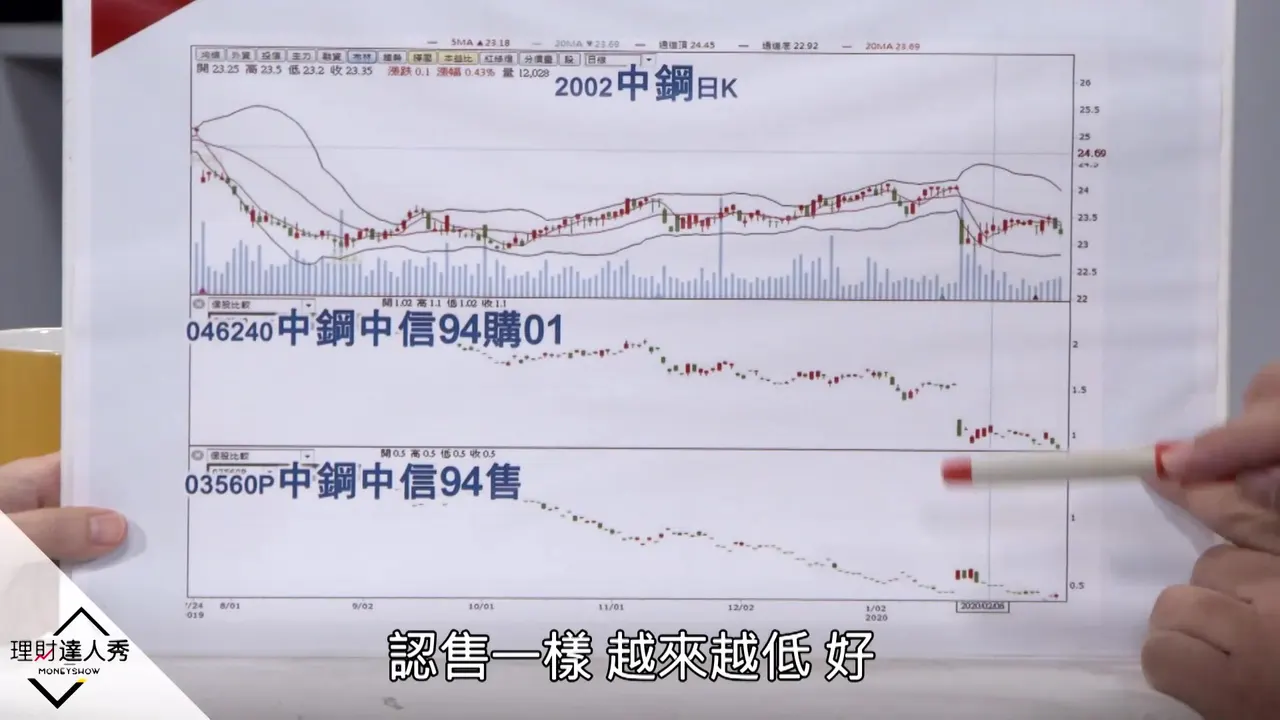
26:52Merry Electronics Earnings-Call Statistics
Take Merry Electronics, Taiwan's "earnings-call king": since 2017, at the earnings calls held every January, April, July and October, the stock has often hit limit-up the next day; the boss tends to report good news rather than bad at the call, and a key broker branch often buys ahead of the call, which can be watched and followed. The show's statistics for the day after the call: the probability of a rise is 54.2%, with an average gain of 2.9% on up days; the probability of a fall is about 45%, with an average drop of 2.7% on down days. Gains are slightly larger than losses and the volatility is concentrated on the day after the call, so even with a win rate of only about 50% you can still make money.
▶ Watch from here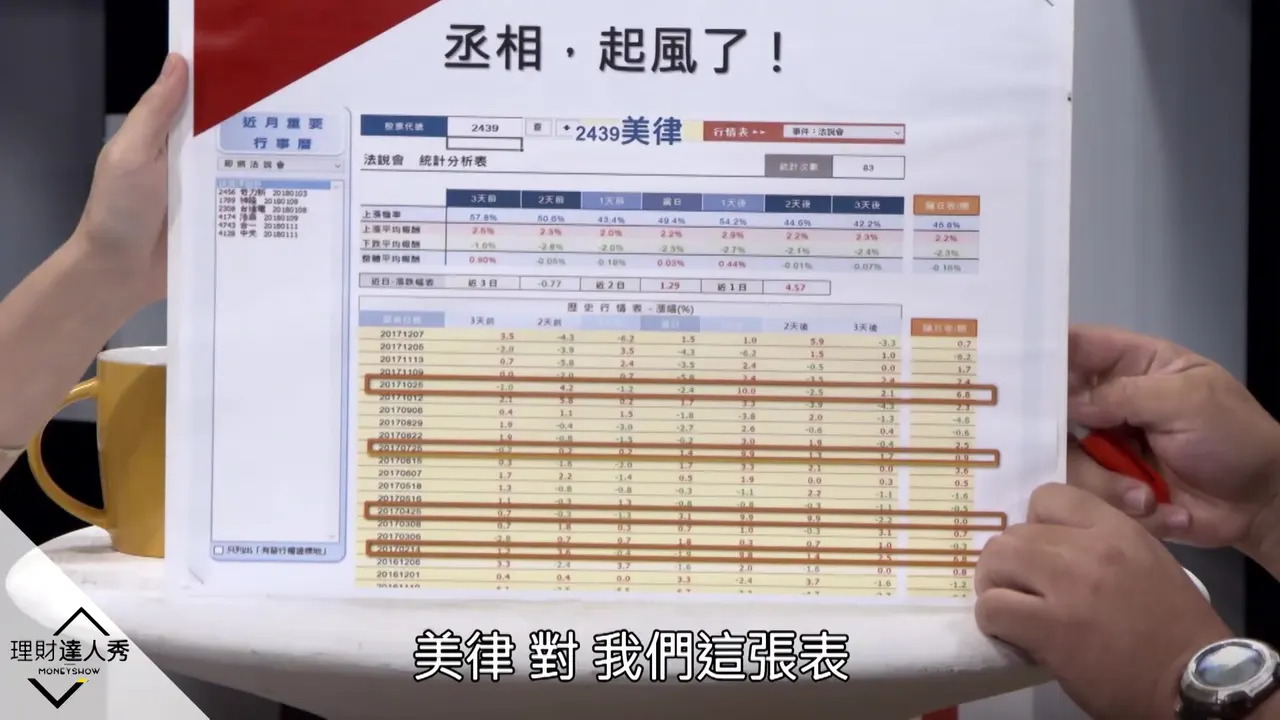
29:42Data Check on Earnings-Call Rallies
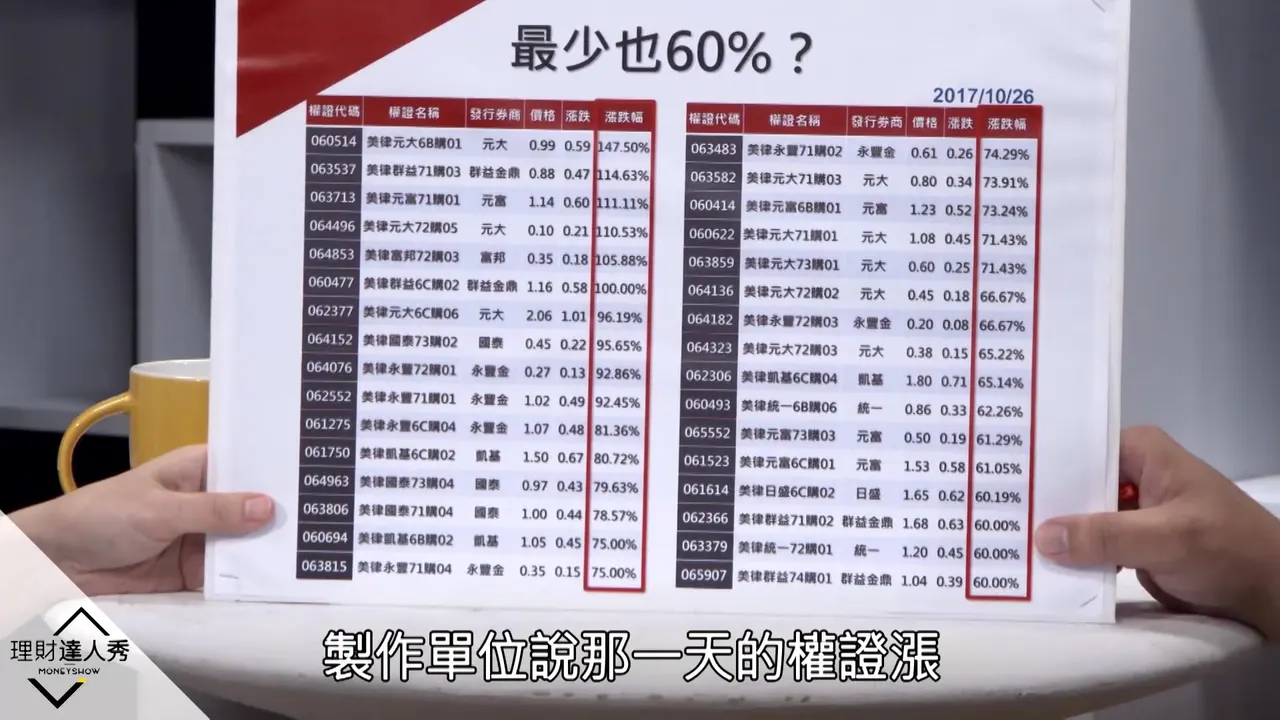
Not just Merry Electronics: many companies like to release good news at earnings calls or at year-end banquets. The host has saved warrant data every day since 2017, and it now comes in handy: on the day after Merry's call, its warrants rose up to 147%, at least 60%. So you can focus on volatile stocks you like and buy before the call; after the call it usually rises more than it falls. Next is Largan, whose calls are held early in the year: in 2018 it hit limit-up at 9.9% the next day, and in 2019 it jumped 8.2% the next day.
▶ Watch from here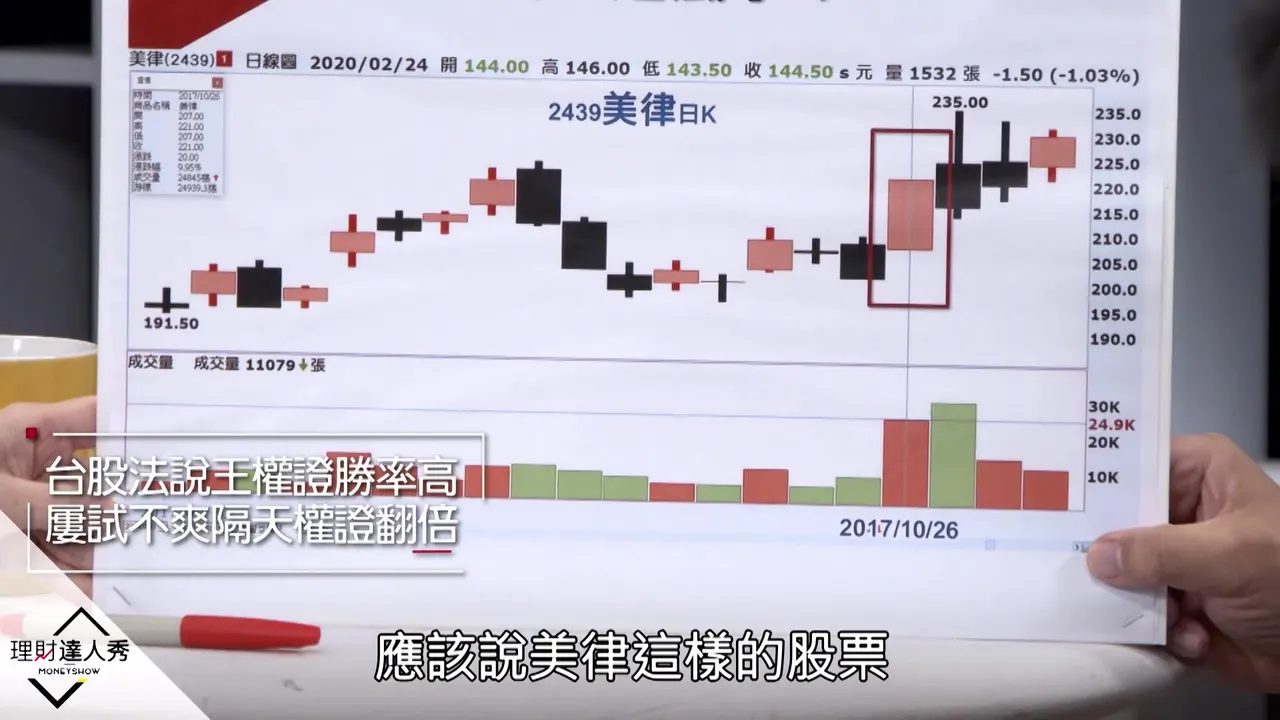
31:47Leverage in Largan's Earnings-Call Warrants
At Largan's call in early 2020 the stock also jumped 4.1% the next day. Brokers rarely get Largan's financial report before the call, so everyone can only guess what it will deliver, and the boss is fairly honest, which suits warrants: buy calls if bullish, puts if bearish, and both sides if unsure, and you can play even if you can't afford the stock. Foreign institutions mostly stayed bullish the day after the call, some raising target prices to 6000 yuan, but you needn't bet on the stock price: buy warrants and sell after the big jump the next day. When Largan rose 4%, its warrants gained as much as 150%, an astonishing leverage effect.
▶ Watch from here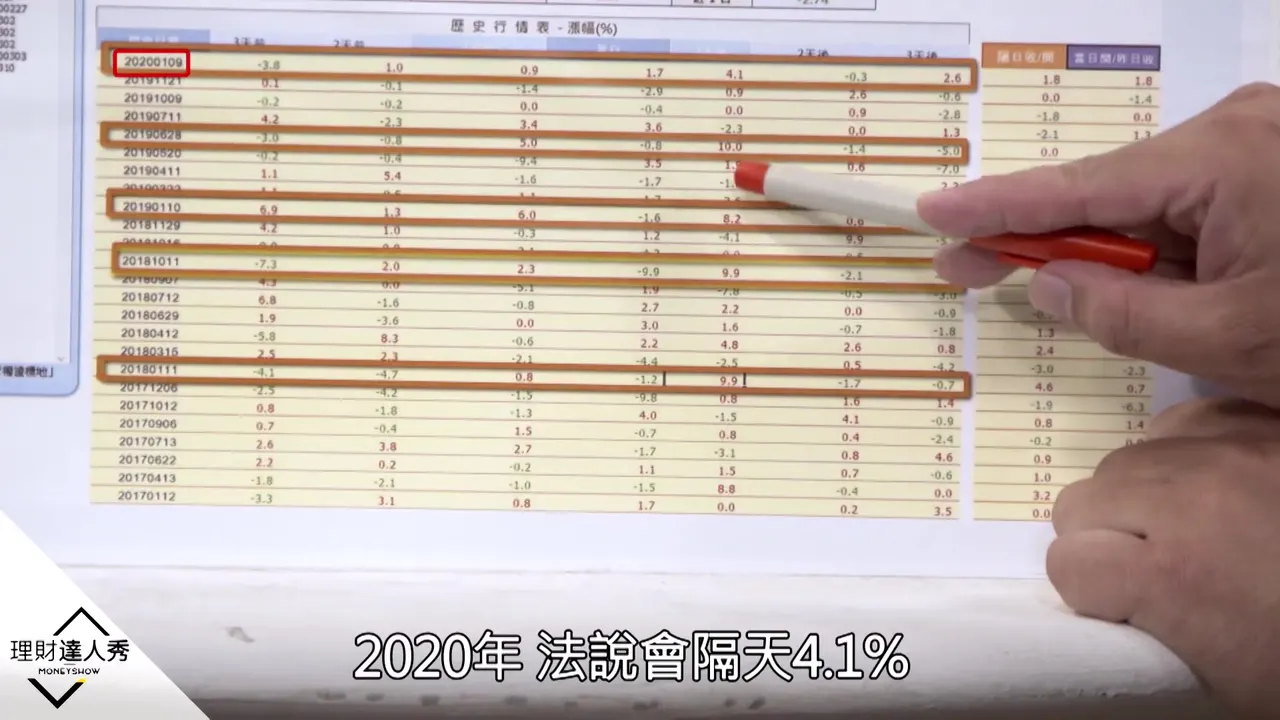
33:02Timing in Earnings-Call Season
January, April, July and October are earnings-call season every year; January has already passed this year, and the next round is April. With the pandemic, corporate results may be weak, but earnings calls have a special feature: bad news can instead be fully priced in and the stock may jump the next day, because the real situation is not as bad as imagined. The show also previews the next episode, which will answer a viewer's question: whether buying put warrants is workable because the stock falls after ex-dividend, and it will also discuss whether warrants can be day-traded.
▶ Watch from here