Shorting with Put Warrants: Advantages and 4 Entry Signals
TL;DR: Put warrants are the best short-selling tool for small-capital investors because they carry no borrowing-fee risk, no forced buy-back, and a maximum loss of zero; enter only when signals appear, such as wide Bollinger Bands touching the upper band, major players on the sell side, negative news, and key broker branches selling first.
Key ideas
- Other short-selling tools each have flaws: inverse ETFs have odd names and designs, the Fubon VX tracks its index poorly and has traded at a 30% premium; day trading with the stock itself wears out capital after about 250 trades; margin short selling often faces forced buy-backs and may carry a 3.5–7% borrowing fee, and shorting at the flat price into consecutive limit-ups can lose up to 27% in the worst case.
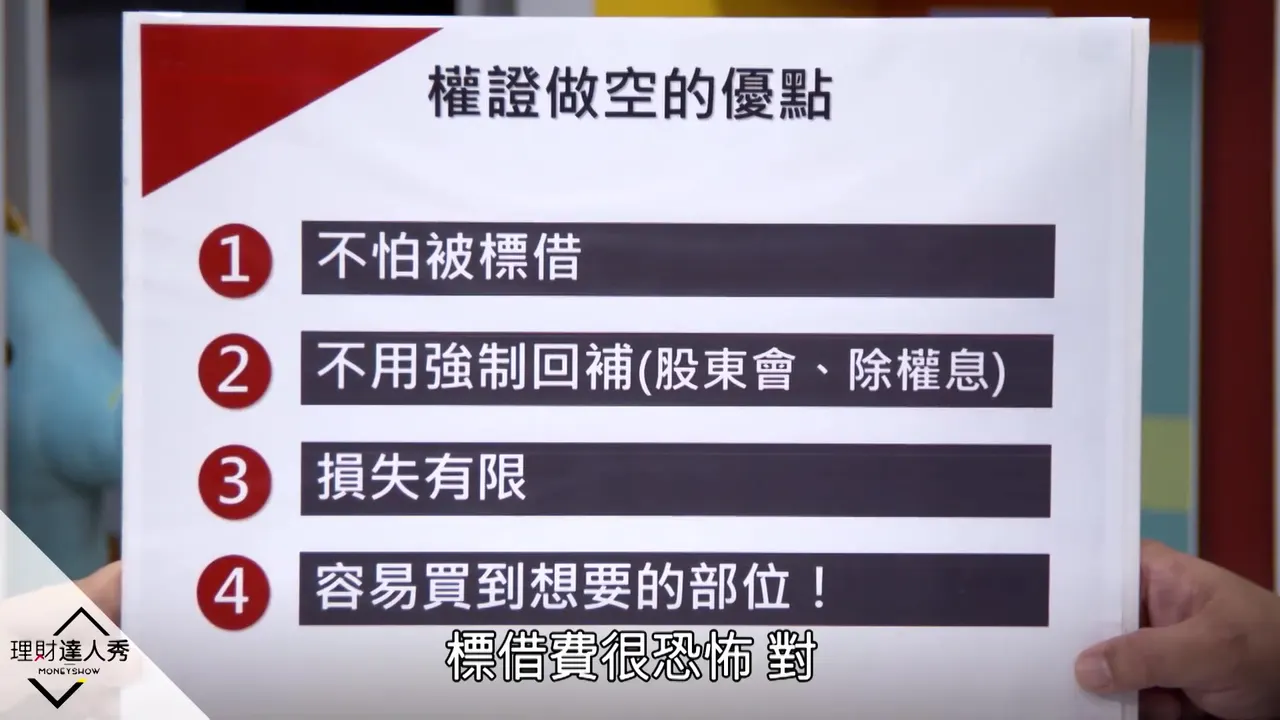
- Put warrants have these advantages: no borrowing-fee worries, no forced buy-back, limited loss, and issuers act as market makers so positions are easy to buy. Since trading volume does not need to be watched, the key is picking the right timing.
- The 4 entry signals: wide Bollinger Bands with the price touching the upper band (upper band flat or curving down), major-player flows on the sell side, negative news such as shareholder meetings or investor conferences, and key broker branches selling first.
- Avoid entering a short out of emotion, and look for several reasons. The Yageo example had a price-flow divergence, a GDR issue that would inflate share capital by 18.6%, and a foreign-investor downgrade, earning up to 121% in 2 days, whereas poor timing could lose 10%–20% the next day.
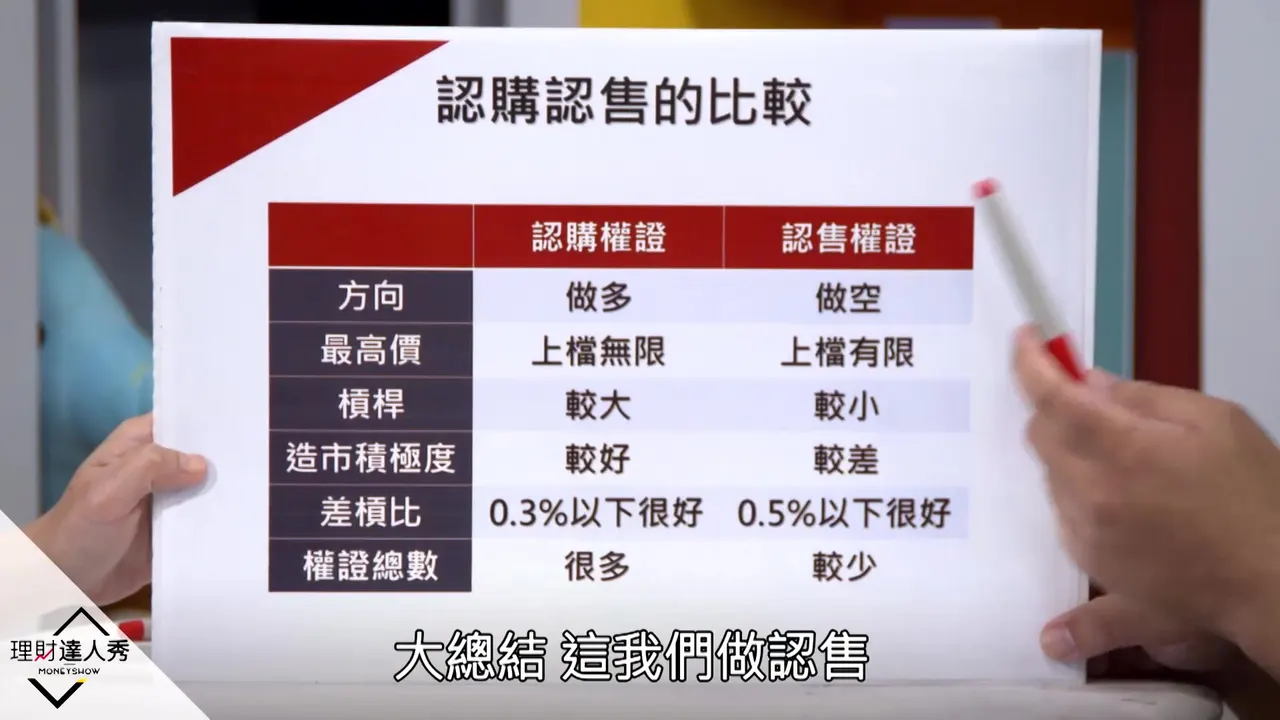
- A key broker branch selling does not mean an immediate drop: Walsin Technology's branch sold more than 1000 lots at 227, yet the price still rose to 256 before falling. Look for a cost-to-leverage ratio below 0.3 for call warrants and below 0.5% for puts; single stock futures have a round-trip transaction tax of only 2 per 10 wan (a wan is a Chinese unit of ten thousand), making them another short-selling tool worth learning.
Section summaries
5:20Debunking Ex-Dividend Warrant Myths
On the myths around ex-dividend dates: issuers adjust the exercise price and exercise ratio on the night before the ex-dividend date, so the old loophole of buying puts and profiting as the share price is adjusted down after the dividend no longer exists; in the early years issuers occasionally forgot to adjust, which is how some people picked up easy gains. As for warrant trading volume, because issuers act as market makers and always post bid and ask prices, you need not worry about buying or selling, so trading volume really does not matter at all.
▶ Watch from here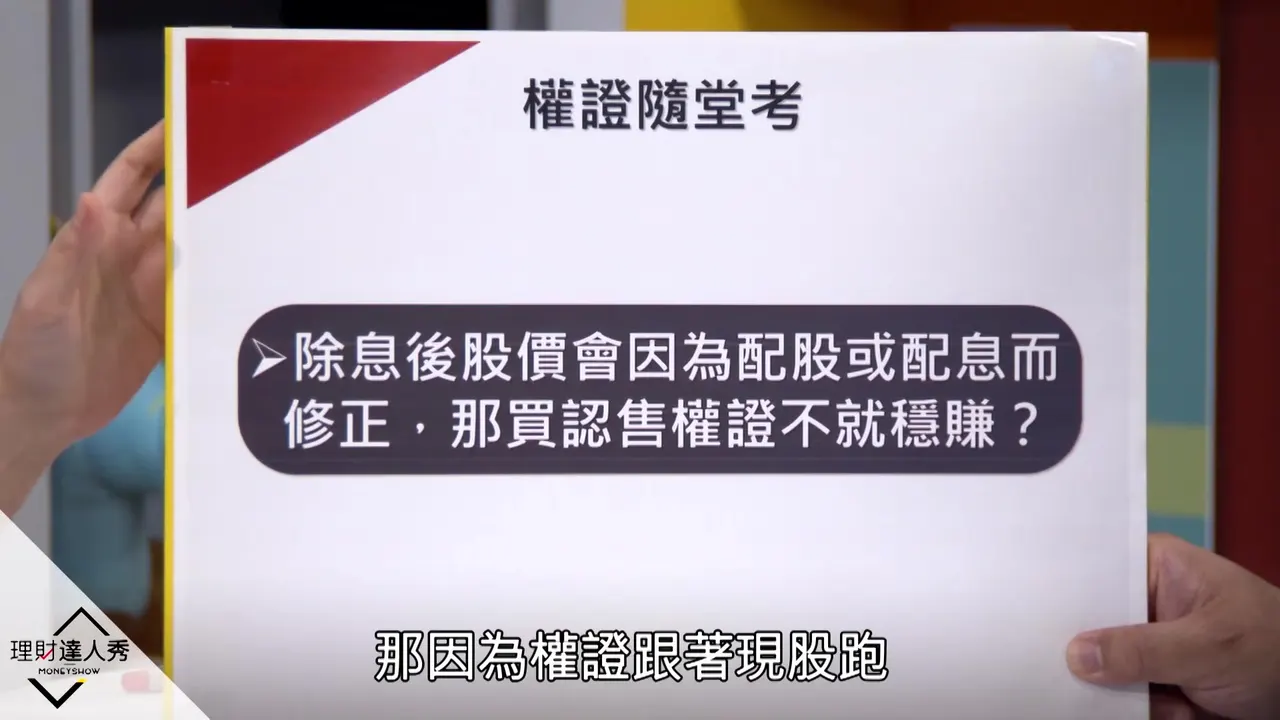
10:21Reviewing Inverse ETFs as Short Tools
You need a short position, but neither inverse ETFs nor the Fubon VX suit as short-selling tools. The T50 inverse fund has an odd name and shorts the strong top 50 heavyweight stocks; the Fubon VX tracks the US fear index, follows it poorly, and has traded at a 30% premium, so buyers easily lose out.
▶ Watch from here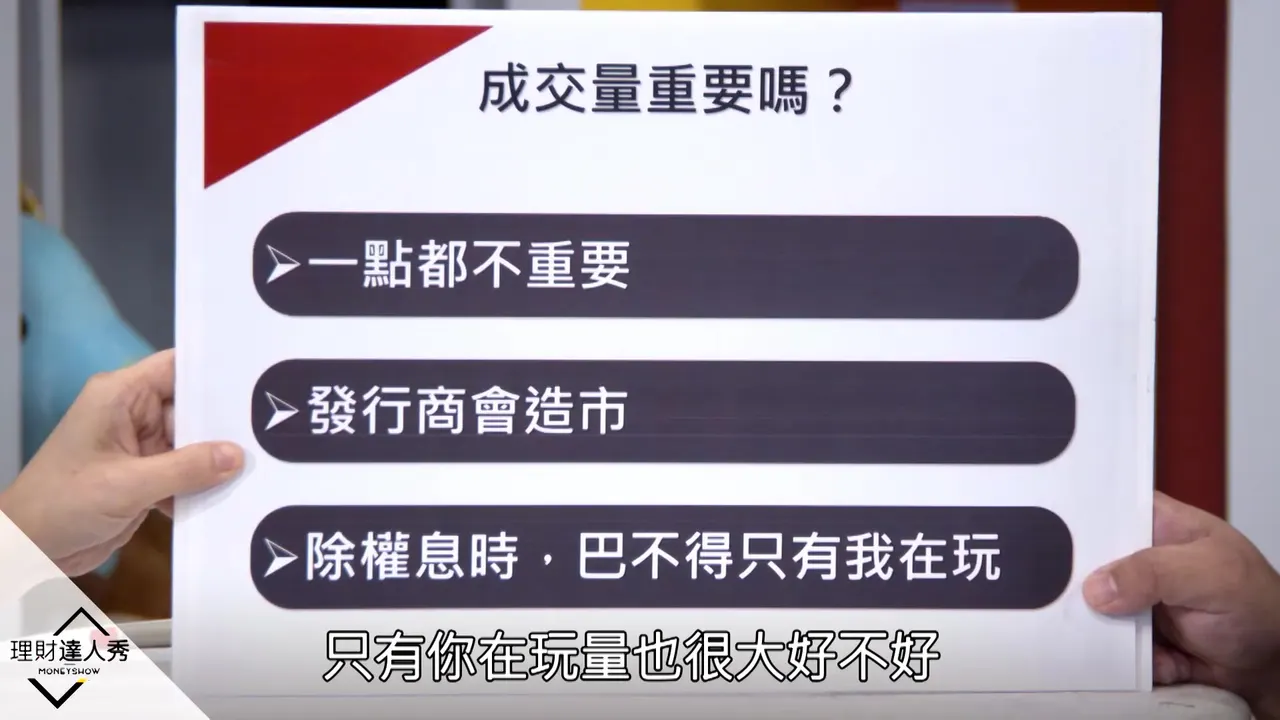
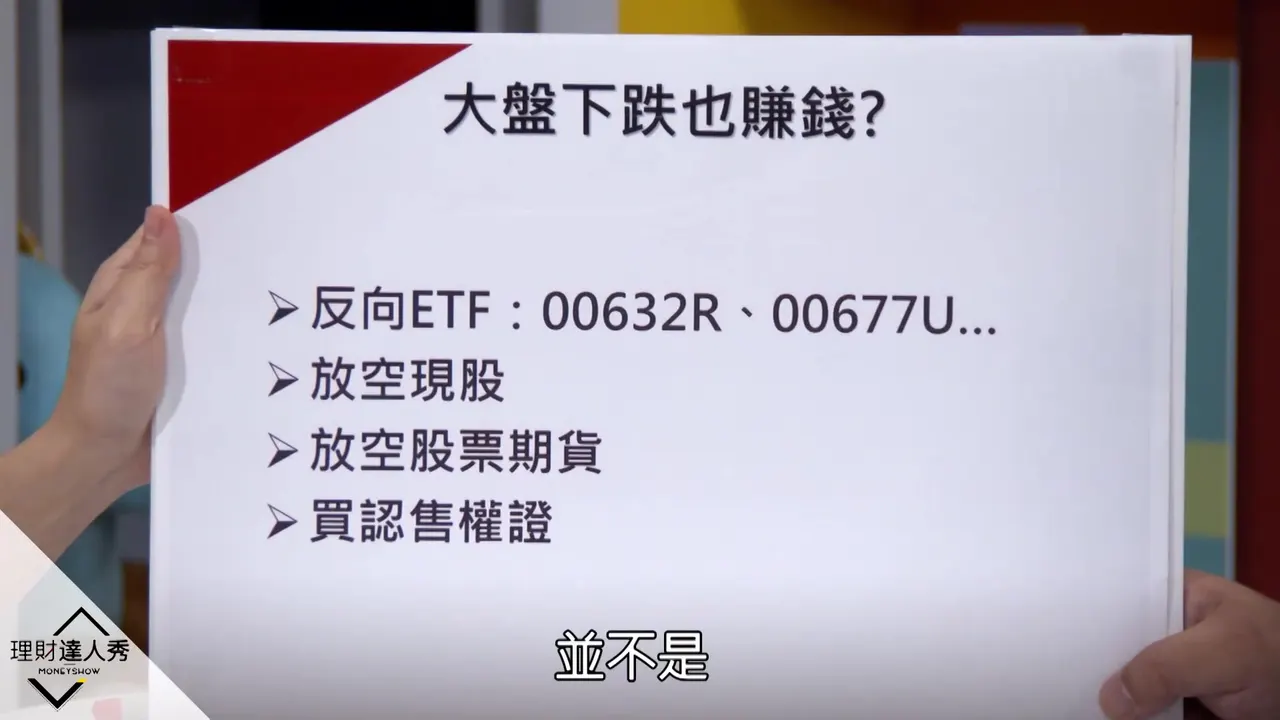
13:51Short-Selling Tools for Small Capital
People with less capital who want to short can use single stock futures with roughly 4–7 times leverage, or buy put warrants; the speaker thinks put warrants suit small-capital investors best, but you must nail the timing. The basic idea of shorting is simply the reverse of going long: sell high first, buy back after the price falls, and earn the same price difference.
▶ Watch from here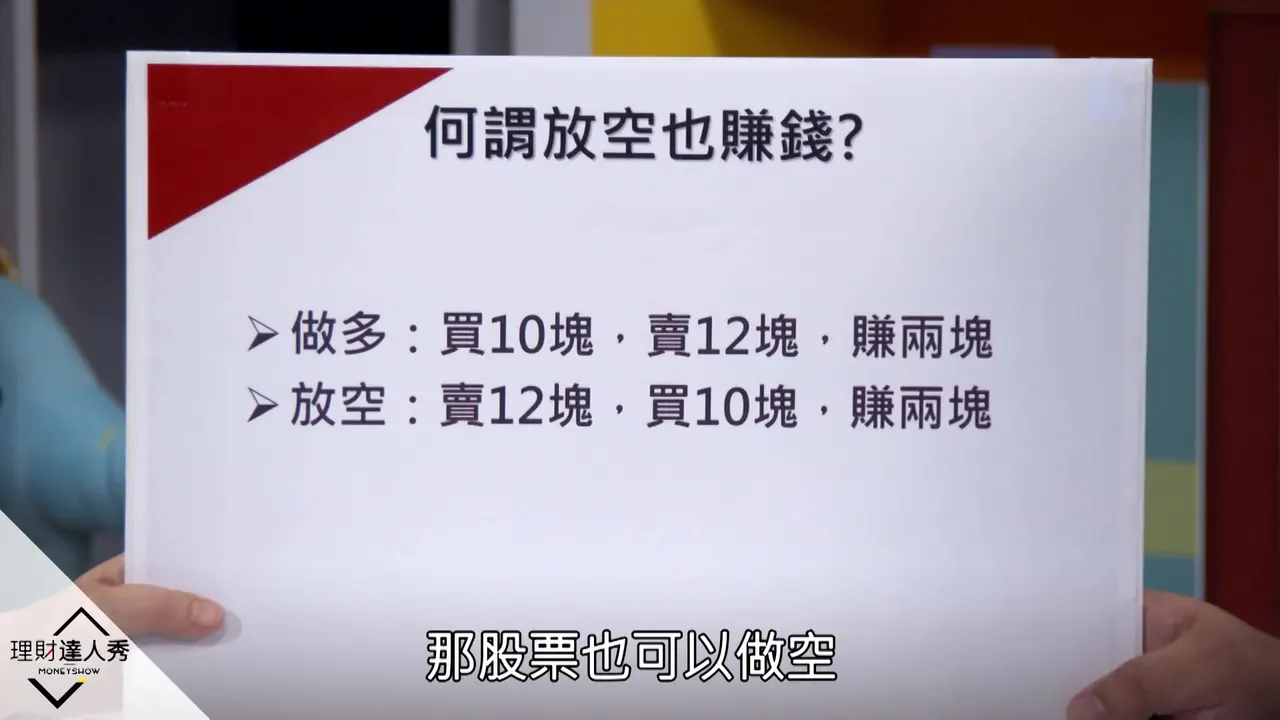
14:50Risks of Stock Day Trading and Margin Shorting
Day trading the stock itself by selling first and buying later has the highest cost and very high risk: after about 250 trades your capital is worn away, so don't believe ads for zero-capital day trading. Margin short selling in Taiwan often faces forced buy-backs and may also carry a borrowing fee of roughly 3.5–7%; if consecutive limit-ups lock the price, shorting at the flat price can lose up to 27% in the worst case.
▶ Watch from here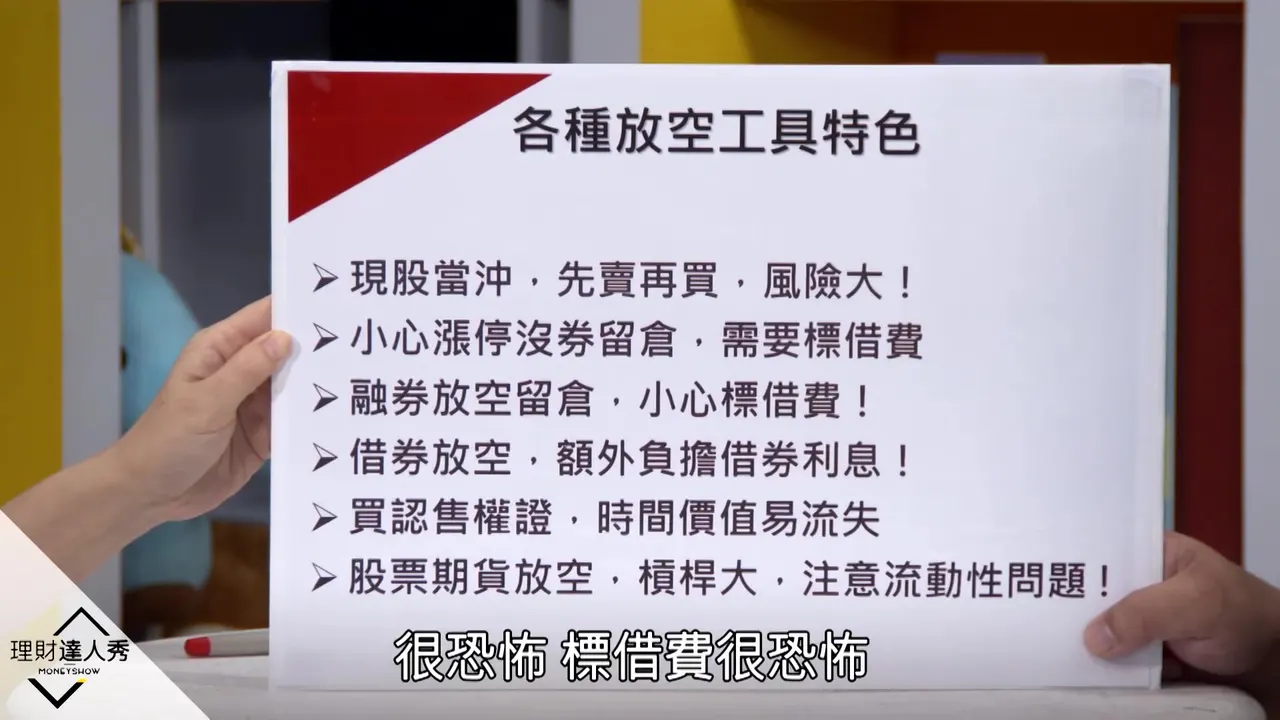
20:01Four Advantages of Shorting with Put Warrants
Among all short-selling tools, put warrants are the best choice for small-capital investors: they rise when the stock falls, and their 4 advantages are no borrowing-fee worries, no forced buy-back, limited loss (at most it goes to zero, unlike shorting stock where you can lose more than your capital), and issuers act as market makers, making it easy to buy the position you want.
▶ Watch from here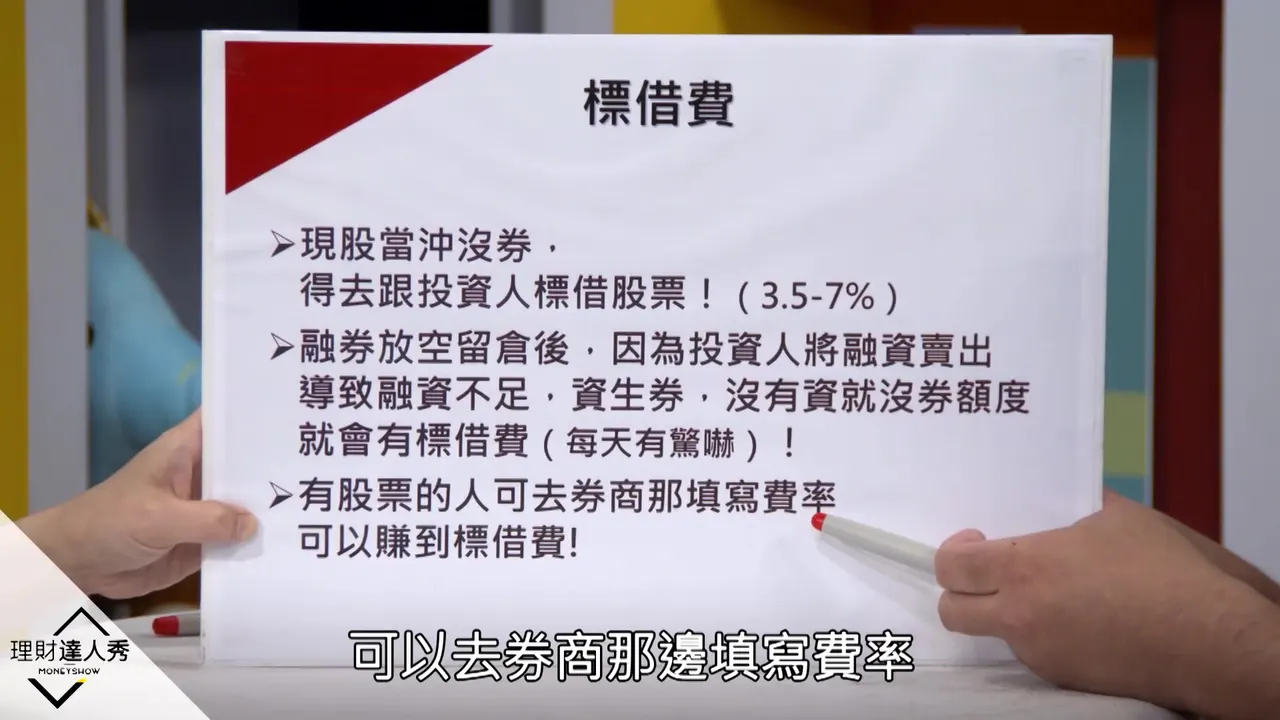
22:35Entry Signal One: Wide Bollinger Bands
The first entry signal is wide Bollinger Bands, meaning the band width is 20% or more, for example a lower band of 100 and an upper band of 120; the speaker uses a waistline analogy. The price must touch the upper band, not sit above it; also check the slope of the upper band: if it is steep, don't short, and a flat or downward-curving slope is the good time to short.
▶ Watch from here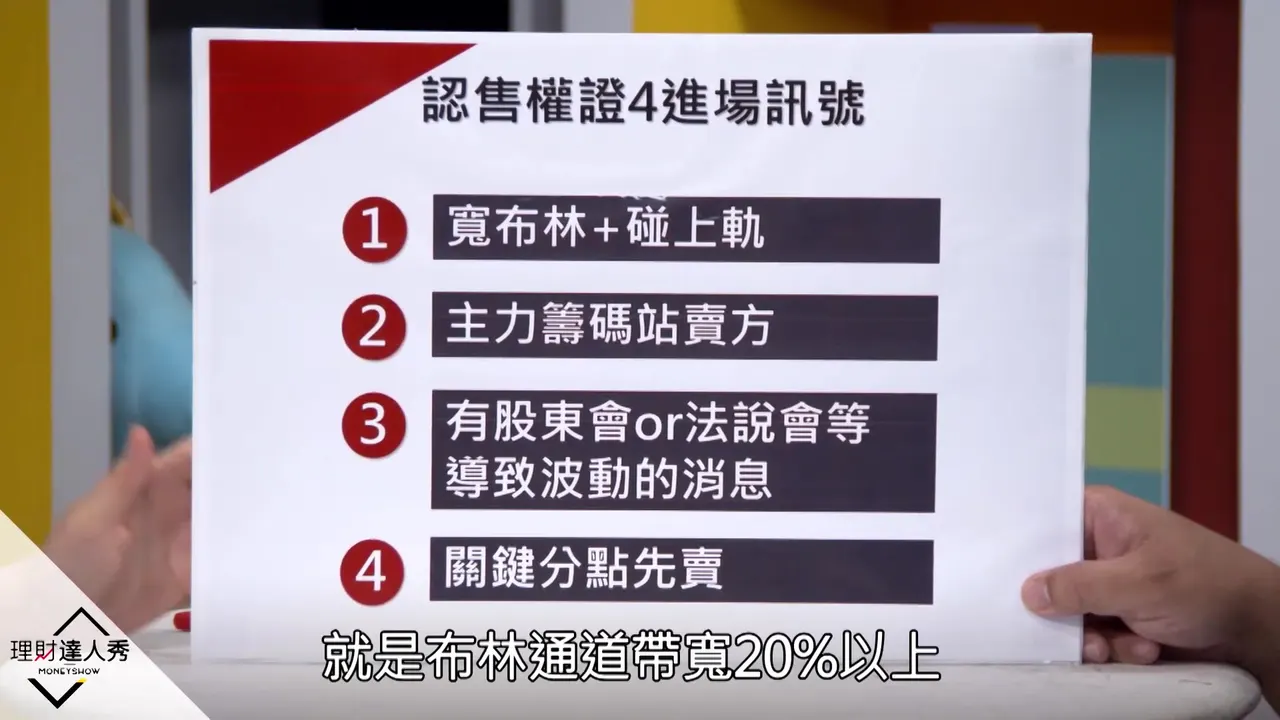
23:41Entry Signal Two: Major Players on the Sell Side
The second signal is major-player flows on the sell side. Taiwan publishes major players' buy and sell lots every day, and its flow data is the most transparent in the world, almost nonexistent abroad, so investing in Taiwan stocks is relatively fortunate; if you still can't make money in such a transparent environment, you shouldn't go learn overseas futures with less transparent information.
▶ Watch from here24:41Entry Signals Three and Four: News and Broker Branches
The third signal is using news that may cause volatility, such as shareholder meetings and investor conferences, betting that the company gets downgraded by foreign investors or grilled by shareholders and produces negative news, and buying put warrants; the fourth signal is key broker branches selling first. The speaker stresses that the biggest taboo in shorting is entering out of emotion: you can't short a stock just because you dislike it, but must find a good timing and act only when conditions are met.
▶ Watch from here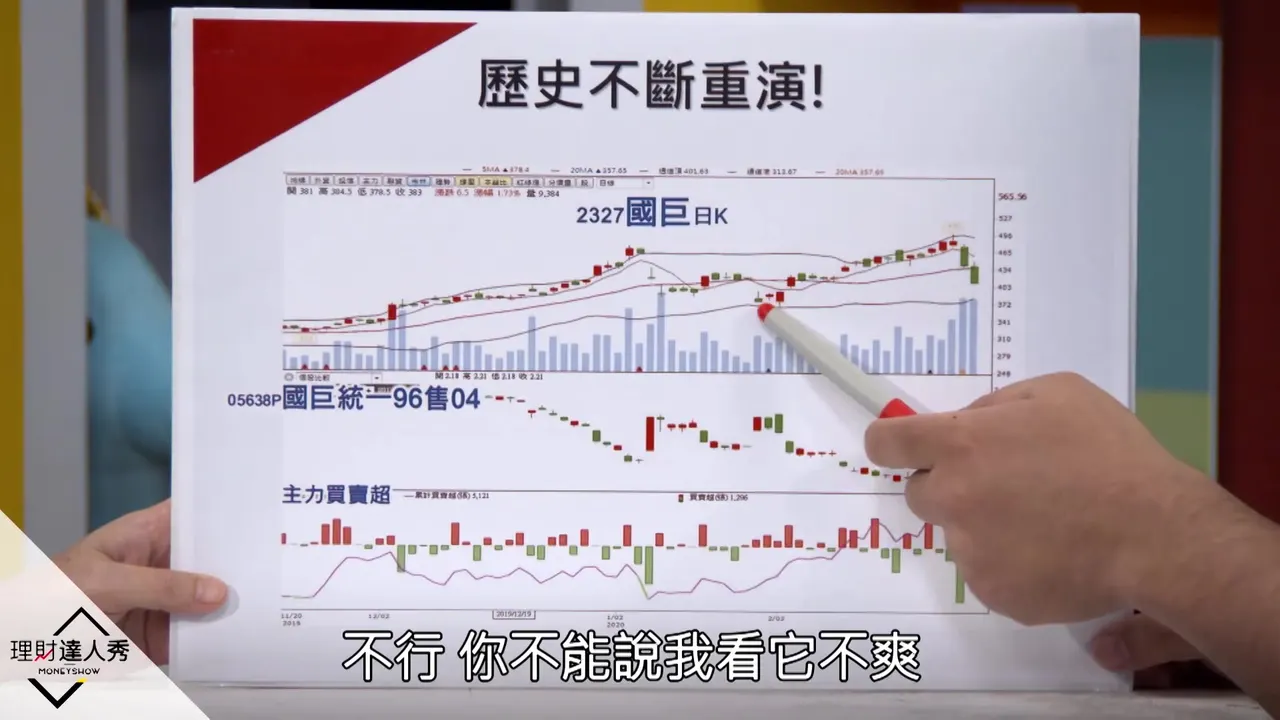
26:42Case Study: Reasons to Short
Taking passive-component maker Yageo as an example, look for several reasons to short. The first is a price-flow divergence: the price hit a new high, but major players unloaded during the last 2 red candlesticks, and once they had sold for 2 days you could act. The second is a planned GDR issue: the earlier announcement sent the price down sharply by 16%, and this time an extraordinary shareholder meeting confirmed the issue, inflating share capital by 18.6% and diluting earnings, so foreign investors downgraded the stock. The speaker bought on the day of the shareholder meeting and traded for only 2 days.
▶ Watch from here31:02Put Warrant Trade and Broker-Branch Verification
Put warrants bought at 0.44 and 0.43 were sold at about 0.8–0.89, for a peak return of 121%; 2 days of profit roughly equaled 20 years of dividend-stock holding, but with poor timing you could lose 10%–20% the next day. The third reason came from fellow passive-component maker Walsin Technology: a key broker branch sold more than 1000 lots in a day at 227, yet the price did not fall right away and even rose to a high of 256 before dropping, which only afterwards proved the branch had sold well. The speaker also showed actual trading records, to show these were real trades made beforehand.
▶ Watch from here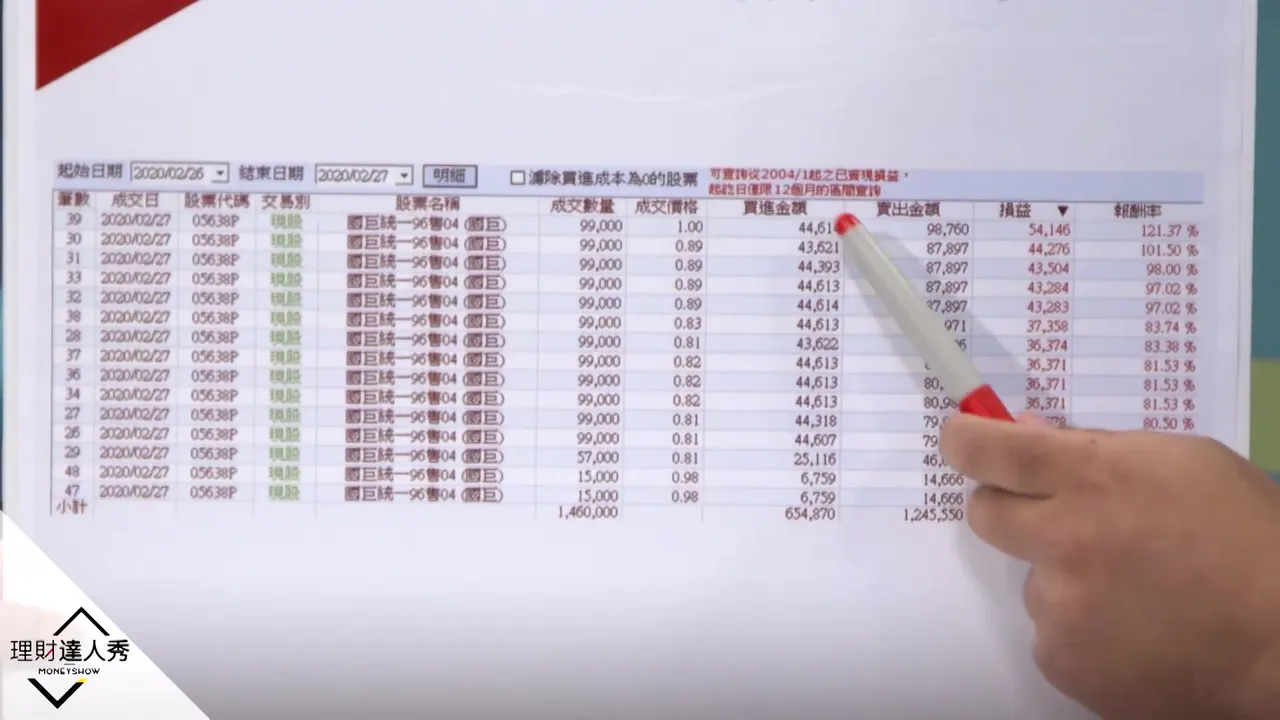
35:25Stock Futures Results and Tax Comparison
Using the same signal of a key broker branch selling first, the speaker traded Walsin Technology with stock futures: 21 contracts earned about 100 wan (a wan is a Chinese unit of ten thousand), roughly 5 wan per contract; Yageo with 13 contracts earned 95 wan, a bit over 7 wan per contract. One stock futures contract is 2000 shares, and the round-trip transaction tax is only 2 per 10 wan, about 75 times cheaper than warrants; it needs little capital and few people play it, so he suggests learning the method first and then trying it in a diversified way.
▶ Watch from here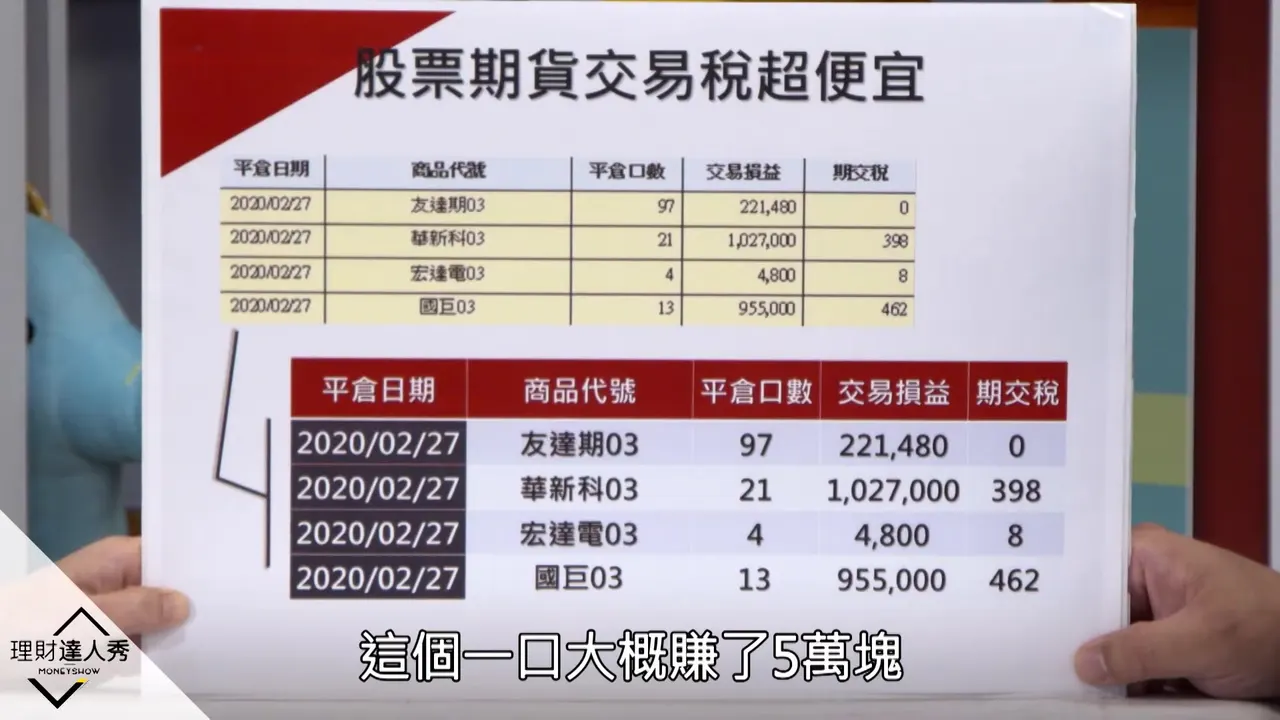
36:52Call vs. Put Warrants: Summary
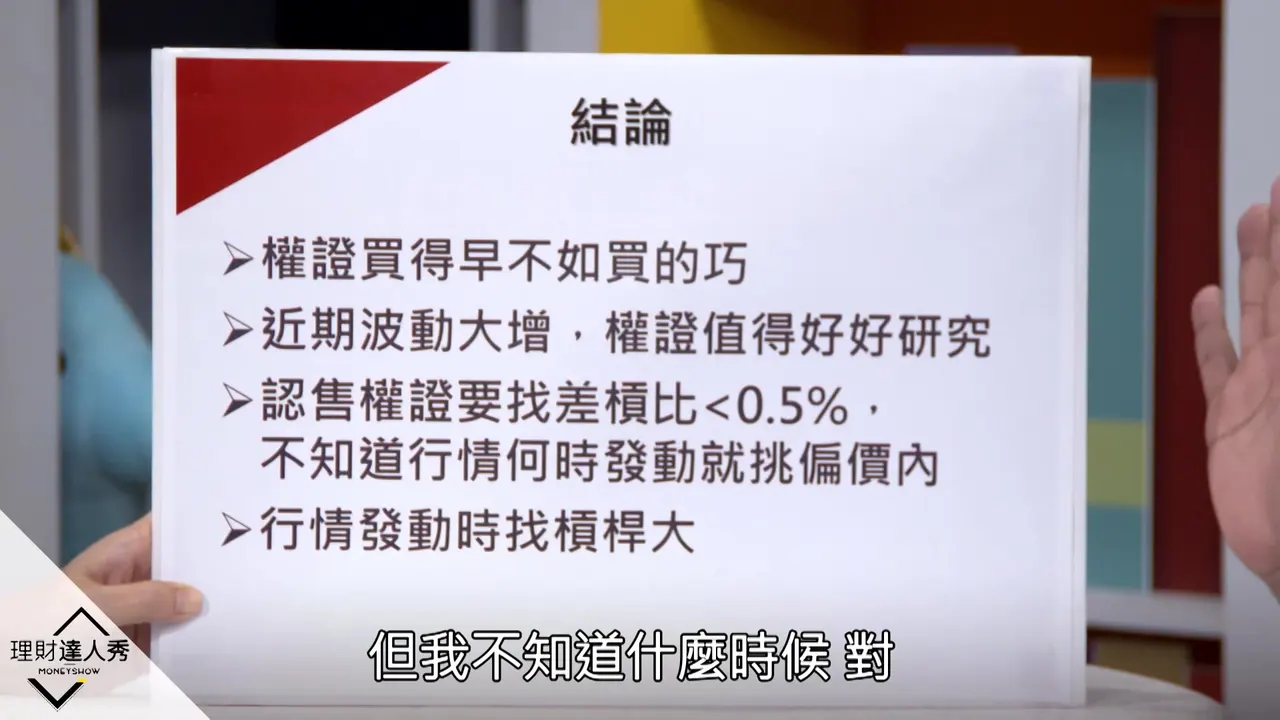
Comparing calls and puts: call warrants usually have better terms than puts, with the cost-to-leverage ratio at 0.3 or below for calls and 0.5% or below for puts; there are fewer put warrants, so you are less likely to suffer choice overload. With recent market swings growing larger, warrants deserve careful study, and you should buy only after studying them thoroughly.
▶ Watch from here