Major Player Distribution Signals at Highs and Shorting Wrong-Way Stocks
TL;DR: When major players keep selling, retail investors take over and the number of shareholders in custody records jumps, shares are moving from big holders to retail; such stocks that are wrong at the highs can be shorted in small size to hedge long-position risk, but a stop-loss is required and any new high means removing the stock from the list.
Key ideas
- Heavy major-player selling at highs shows 3 signals: major players keep selling, retail investors keep selling, and the number of shareholders in custody records surges, meaning shares move from big holders to retail hands.
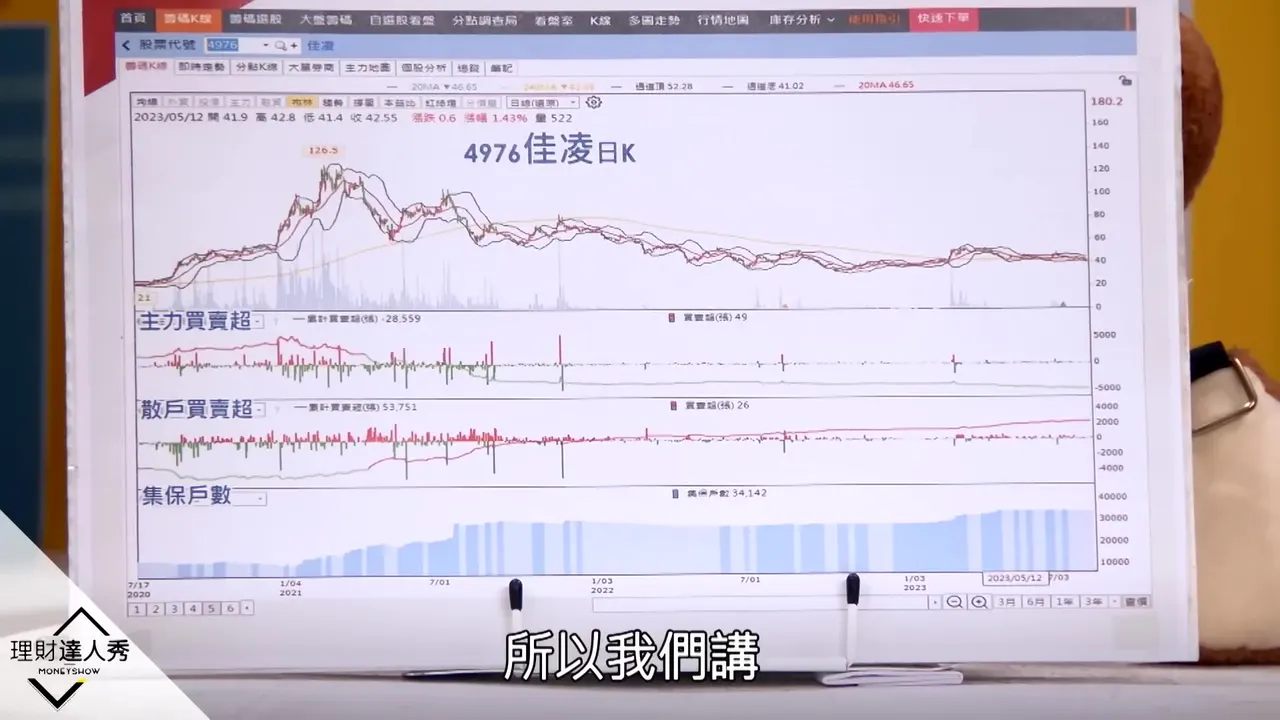
- After adjusting for ex-dividend, cases such as Jialing and Evergreen have prices at only about 30% and about 40% of their highs respectively; Evergreen's shareholder count jumped from a low to nearly 50 wan (ten thousand) households, showing retail investors absorbed it at the highs and the later drop was deep.
- Stocks with poor earnings that were pumped up by themes are especially damaged once major players sell; they suit swing short positions that protect against long-position losses in wildly swinging markets.
- Major players in Hsieh Yi Machinery began distributing at an average price of about 20, yet the stock was squeezed to a limit-up at 39.5 on strong revenue, then gapped to limit-down the next day on weaker revenue; selling early does not mean being wrong at that moment, so it must be verified afterwards.
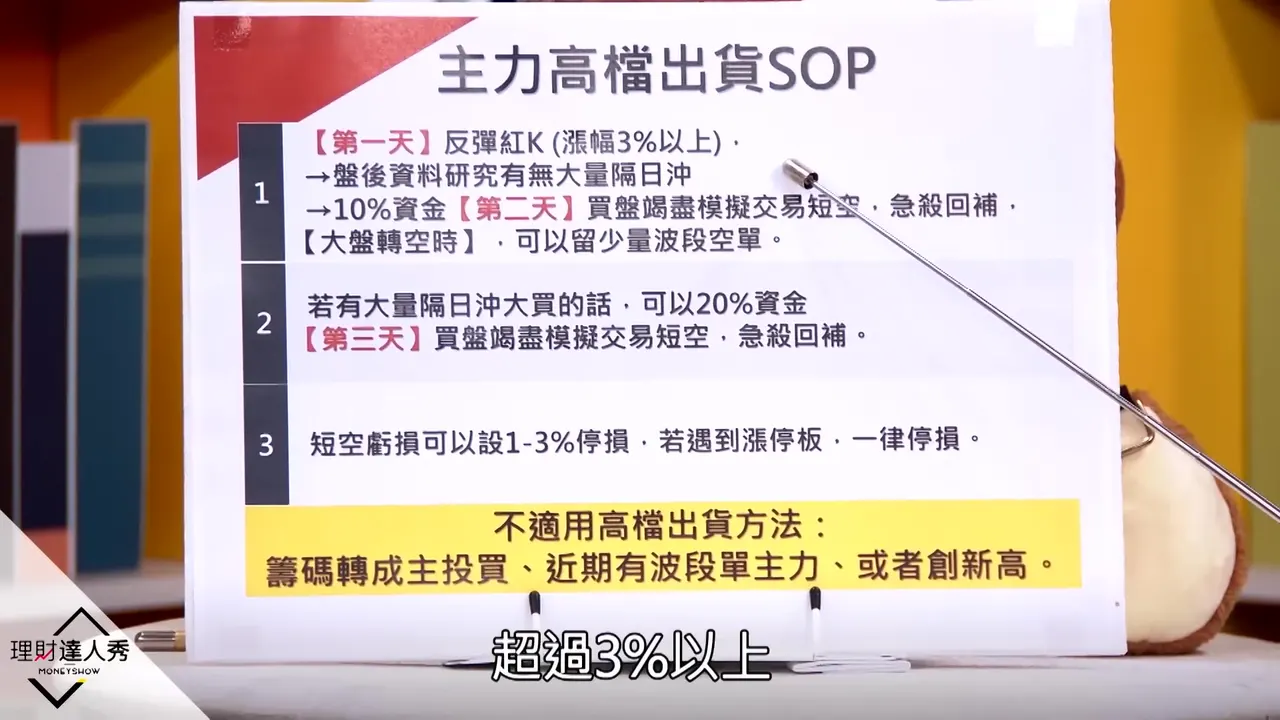
- The steps to find wrong-way stocks at highs are: sort by deviation from the yearly moving average, find short-term major-player selling in flow data, verify retail net buying and the custody shareholder count, then add to a watchlist; simulate trades first, always set stop-losses on short sells, always stop out on a limit-up, and remove the stock if major players turn to buying, swing-trade major players enter, or it makes a new high.
Section summaries
3:45Opening Review and Signals of Major Players Selling at Highs
The opening discusses dynamic hedging: short positions made nice profits while long-position gains largely vanished, a reminder that the market's power deserves respect. Recent Taiwan spot market action has been frightening, and only the short positions held in weak stocks kept the win rate up. The talk then presents 3 signals of heavy major-player selling at highs: major players keep selling, retail investors keep selling, and the custody shareholder count jumps, meaning shares move from big holders to retail.
▶ Watch from here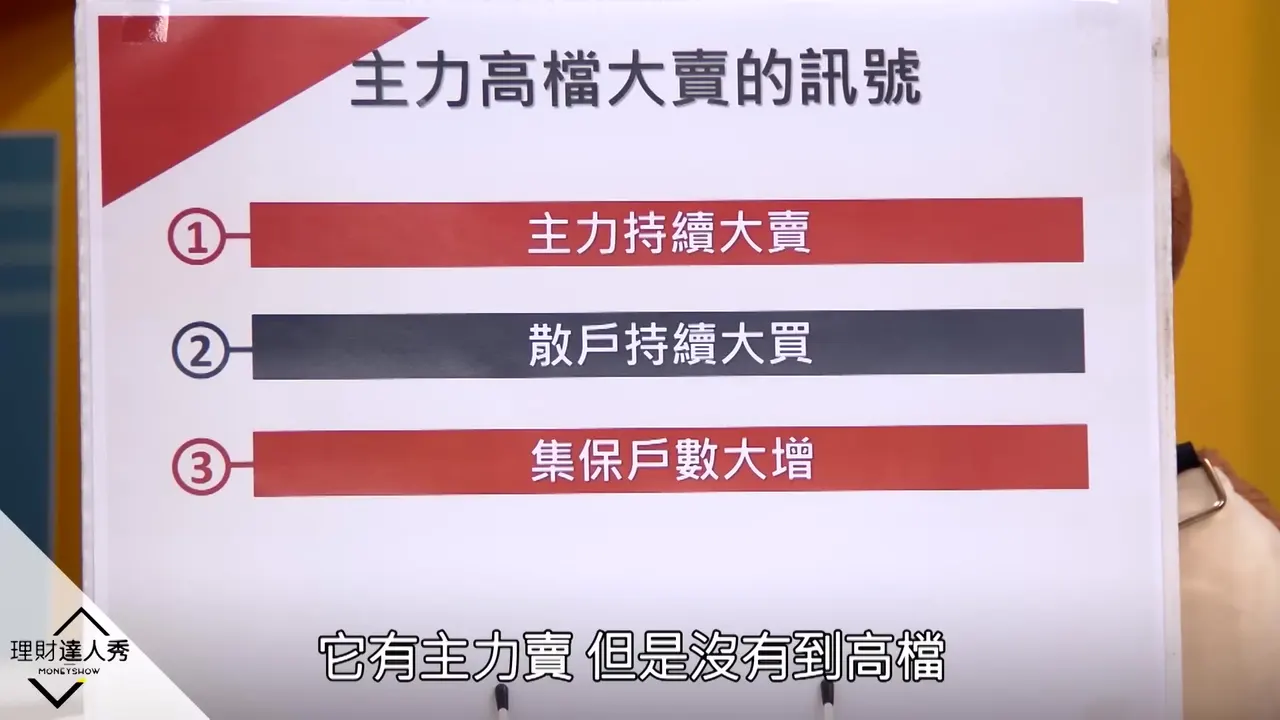
5:25A 2021 High and Swing Short Positions
Take Jialing, whose high came in 2021: at the highs major players were selling and retail investors were selling too, yet the custody shareholder count kept rising, and after ex-dividend adjustment it is now only about 30% of its high. For companies with poor earnings that were pumped up by themes, it is dangerous once major players sell, so they suit building swing short positions that protect against long-position losses in wildly swinging markets.
▶ Watch from here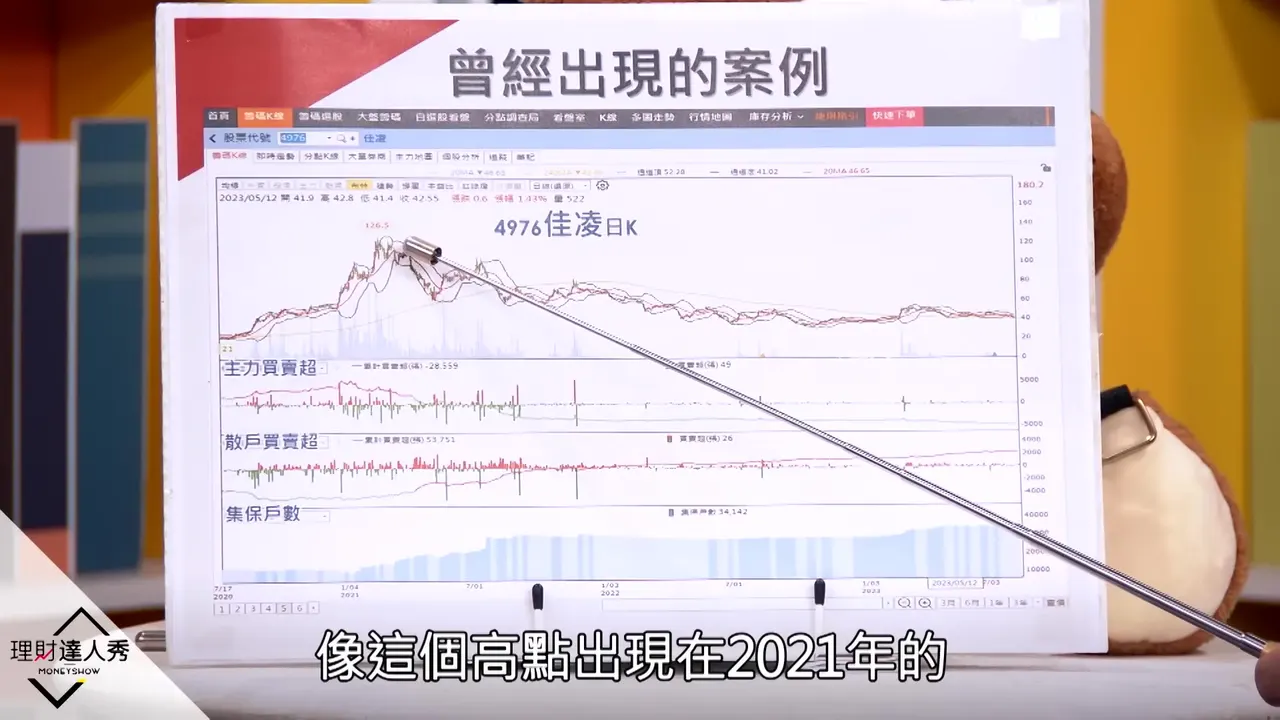
6:47Evergreen's Adjusted Price and Flow Analysis
Evergreen went through a capital reduction and two large ex-dividends; after adjustment the previous high went from 233 to 241.81, and the price is now a little over 100, about 40% of the high, with major players selling heavily at the highs. Investors traded in and out quickly on the way up, but on the way down kept averaging down and got trapped; the custody shareholder count surged from a low to nearly 50 wan (ten thousand) households, showing that many people hold Evergreen. The speaker also mentioned major shareholders releasing pledged shares at highs, and that shipping still has to wait for the business cycle.
▶ Watch from here10:10Retail Takeover and Shrinking Volume Case
Take Sanyang Industry: at the highs major players showed one buy and one sell, with flows looking more like next-day-reversal trading, so the swing-trade major players had already left; retail investors kept taking over and bought more as they got trapped, with the custody shareholder count up by nearly 2 wan (ten thousand) households. Volume is only about 50% of the level at the highs, and gradually nobody wants to play. The speaker stressed this is just telling a story from charts, not commenting on the company's performance.
▶ Watch from here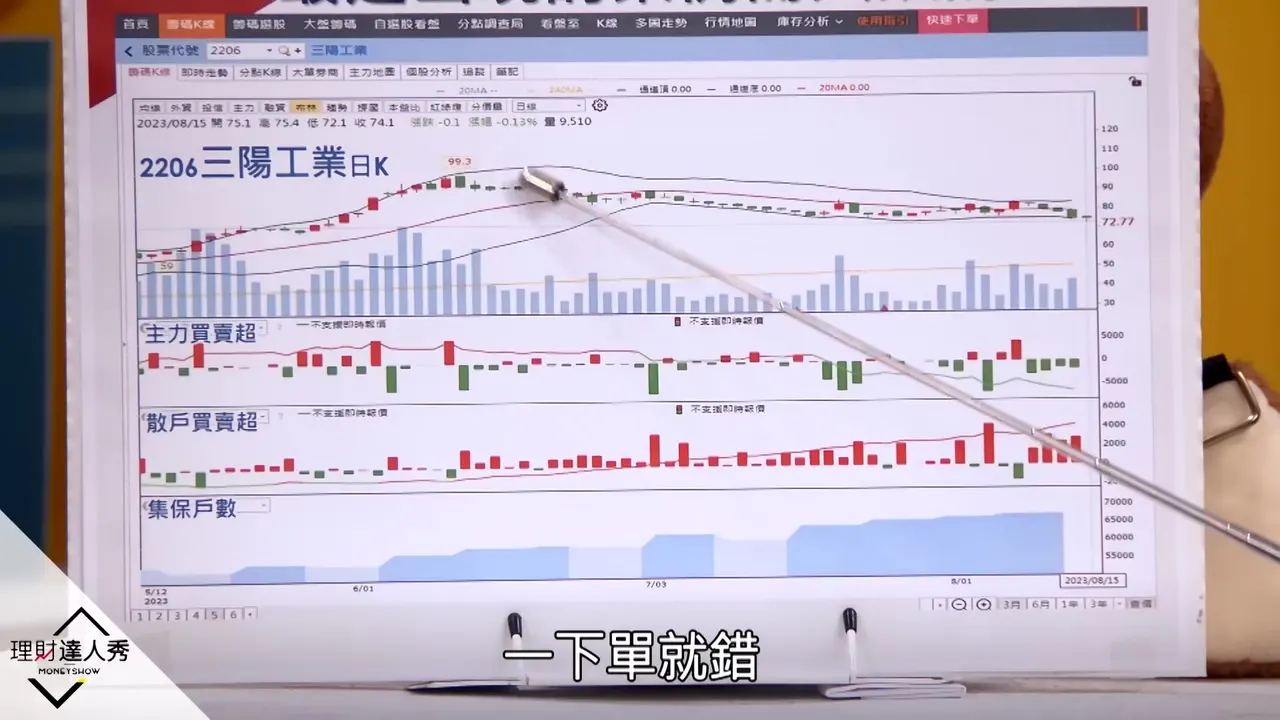
12:06Major Player Distribution and Short Squeeze Case
In Hsieh Yi Machinery, major players were already selling heavily during the rally, at an average selling price of about 20, which was very early; the stock had been recommended by a magazine and rose all the way to a limit-up at 39.5, squeezing short sellers. The next day, on the revenue release (May very good, June terrible), it gapped to limit-down, and those who chased the top were unlucky too. The speaker reminded that major players selling early is not necessarily right at that moment, and it often only shows in hindsight.
▶ Watch from here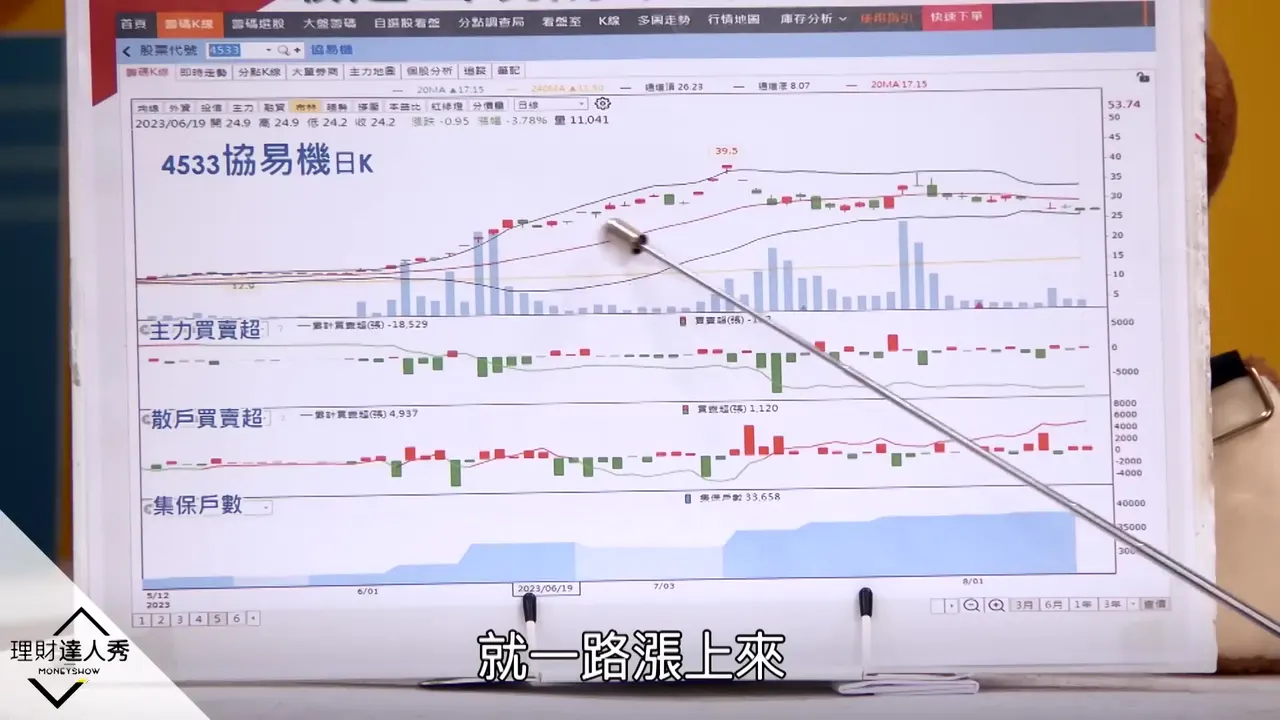
14:45Screening Criteria for Wrong-Way Stocks at Highs
There are 4 steps to find wrong-way stocks at highs: first sort by deviation from the yearly moving average, as such stocks are usually at least 30% above the yearly line and many in the recent market are above 50%; then look in flow data for short-term major-player shorting, meaning major players have been selling recently; then verify major-player net selling, retail net buying and a big jump in custody shareholders; finally add them to a watchlist. The SOP is that if the first rebound candlestick rises more than 3%, it fits as a wrong-way stock at highs; after the close check for next-day-reversal traders, and if there are any, start simulated short trades the second day.
▶ Watch from here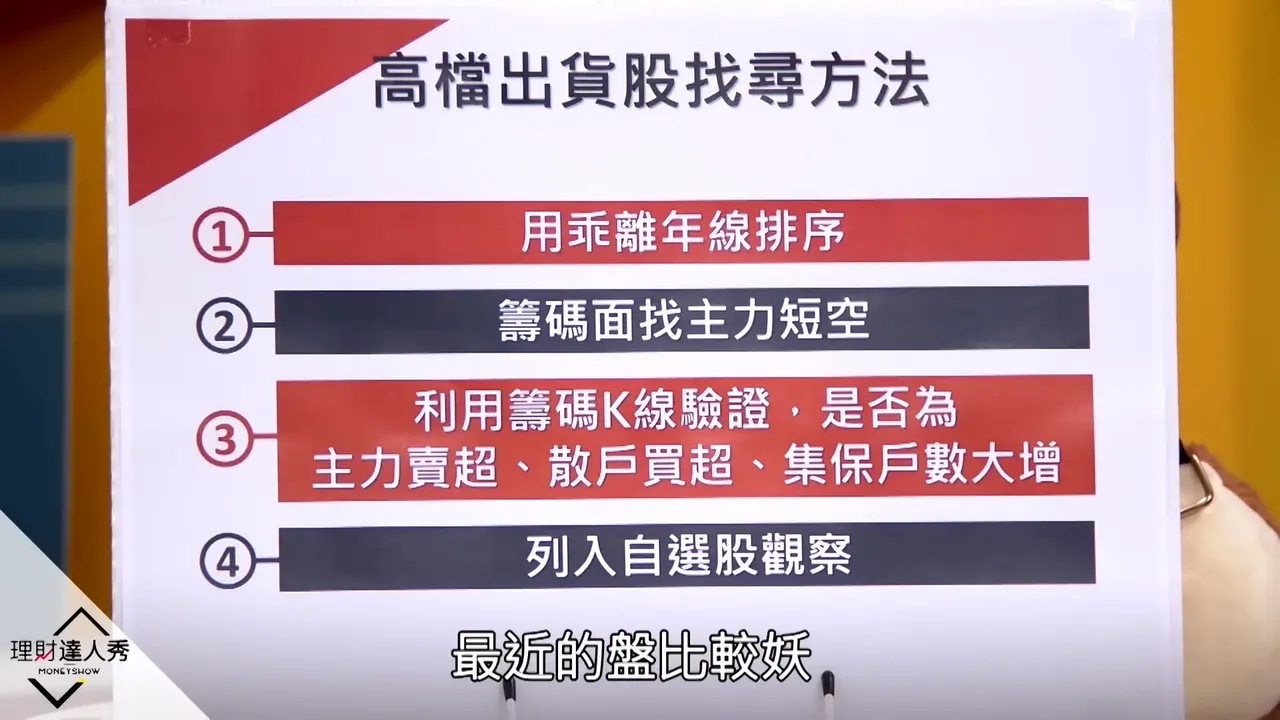
15:25Simulated Trading Risk Control and Course Wrap-up
Risk control principles: when the broad market is bearish you can keep some wrong-way-stock shorts to ride along for a while; if shorts are pushed up by next-day-reversal traders, keep holding and watch, and if there is still heavy next-day-reversal trading, short again the next day; always set a stop-loss on short sells because not every wrong-way stock at highs falls, and always stop out on a limit-up. If flows turn to major-player buying, swing-trade major players enter, or the stock makes a new high, remove it from the list; a new high matters most, since it means the mountain top has not appeared yet. Finally, a reminder that major-player distribution is not necessarily the top; when the price rises to a swing high and major players are seen distributing again, at least avoid shorting and reduce positions moderately.
▶ Watch from here