Ex-Dividend Plays: Using Warrants and Futures to Capture the Ex-Dividend Gap-Up
TL;DR: Stocks tend to open higher on ex-dividend day, so pick stocks with high dividend yields, a large markdown and good chip flows, and take part through warrants or futures, selling on the gap-up; this avoids the dividend tax burden of holding the stock and skips whatever happens afterward.
Key ideas
- Stocks tend to open higher on ex-dividend day for 3 reasons: major shareholders sell first and buy back to avoid tax, the stock looks cheaper after the ex-dividend, and some people who do not know it has gone ex-dividend still place buy orders at the previous day's close. The speaker therefore only takes the gap-up portion, sells on the gap-up, and leaves the rest to others.
- Stock selection looks at dividend yield and the size of the markdown: the higher the yield, the cheaper the stock looks the next day, combined with a high past gap-up probability and good chip flows. Warrants or stock futures are the tools, which avoids having dividends from held shares push you into a higher income tax bracket.
- The approach stops working when too many people take part: the high may come the day before ex-dividend, and the stock may open high and then fall on the day itself. So position 2 days ahead, and sell first if the stock jumps the day before; stocks with a bonus-share theme can be bought early, financial stocks need not be bought too early, and you should exit on ex-dividend day whether you are making or losing money.
- Examples show the approach works both long and short: Evergreen Marine paid 70 this year, with the price going from 155 to 85, and warrant returns were 200–300-plus%; for Yang Ming, the speaker bought early, sold at a high and shorted futures, with warrant returns of 100–200%.
- Choosing warrants comes down to two points: the spread-to-leverage ratio should be low and the warrant should not be too far out of the money, while time to expiry does not matter; implied volatility must be stable, and a slide from 50 down to 30 is a bad sign, since stability is what lets you earn the return you should.
Section summaries
3:45Stock Price Behavior Around Ex-Dividend
Explains how high-dividend stocks behave around the ex-dividend date: dividends are subject to income tax and the supplementary national health insurance premium, so the tax burden is heavy, and major shareholders often sell first and buy back later, which weakens the stock the day before ex-dividend and makes it prone to rise the day after.
▶ Watch from here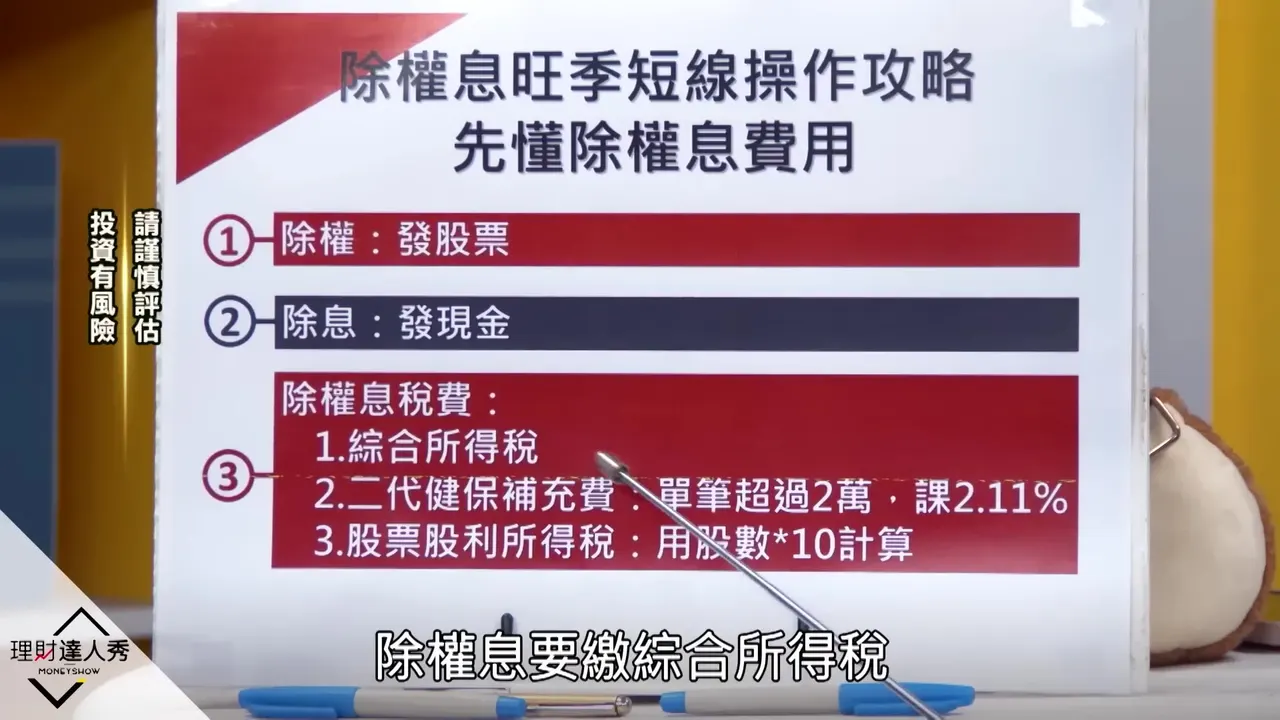
4:25Why Stocks Tend to Rise on Ex-Dividend Day
Two other reasons stocks tend to rise on ex-dividend day: first, the stock becomes much cheaper after the ex-dividend, for example one stock closed at 155 before and its flat reference price the next day was 85, which attracts buyers; second, some people do not know it has gone ex-dividend and still place buy orders at the previous day's close, which pushes the open higher.
▶ Watch from here5:05The Speaker's Trading Strategy
The speaker only plays the ex-dividend gap-up: sell as soon as it opens high, leave the later moves to others, and focus on earning the gap-up spread.
▶ Watch from here5:15How the Speaker's Approach Differs From Gu Yu's
Xiaoge only plays the front part, selling on the gap-up and hoping someone takes over afterward; Gu Yu plays both before and after, has done so for several years, and also starts building positions once the stock gets cheaper after ex-dividend. The video then covers step one of ex-dividend plays, knowing how to select: prioritize stocks with high dividend yields.
▶ Watch from here6:05Stock Selection and How to Participate
The principle of selecting is to pick high-yield stocks, because the higher the yield, the cheaper the stock looks the next day; for example, at a 7% yield the flat reference price is about 7% below the pre-ex-dividend price. A bonus-share theme is even better, and look for stocks with a large opening markdown and a high past gap-up probability, though a high gap-up probability is never absolute. You can also pick stocks with good chip flows, for example major-player 5-day chip concentration of about 5% or consecutive net buying by major players. Knowing how to trade means using stock futures or warrants, which avoids having dividends from held shares push you into a higher income tax bracket (5% to 40%); those in a high bracket can choose the 28% separate taxation.
▶ Watch from here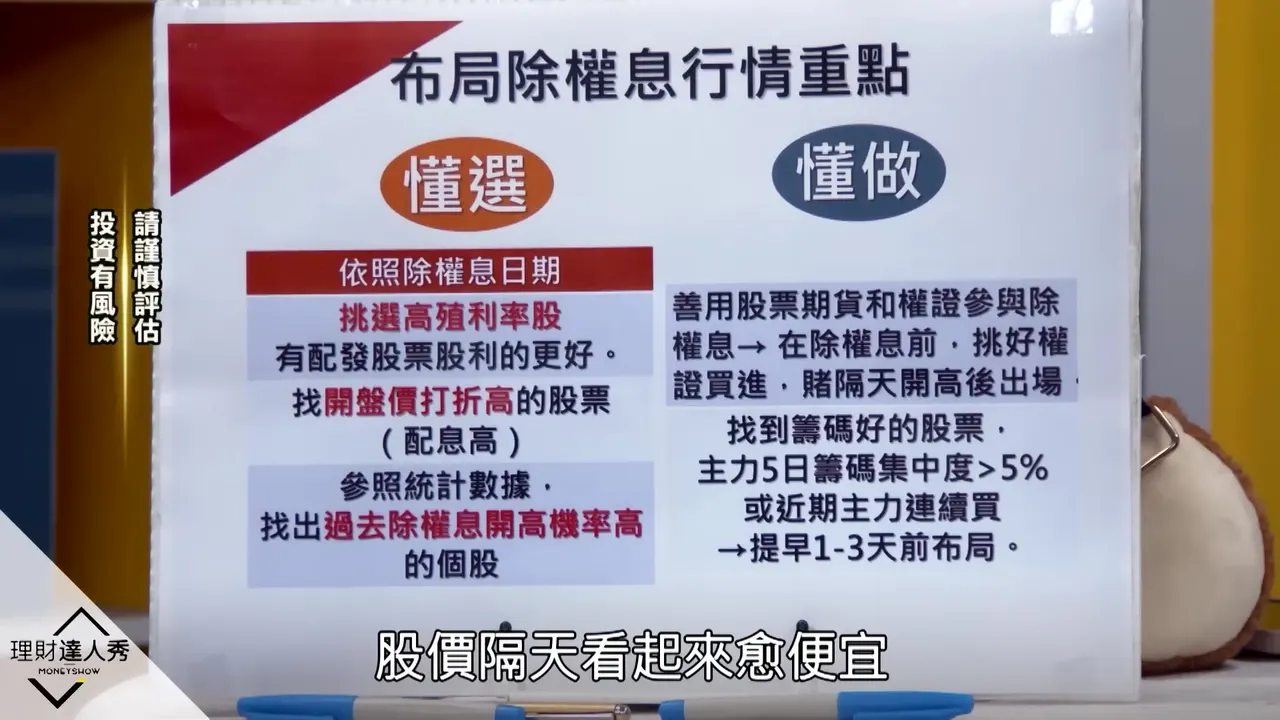
7:49A Case of the Risk of Early Buying
When too many people take part, the stock may peak the day before ex-dividend and open high but fall on ex-dividend day. Take an unpopular construction stock this year: because of its bonus-share theme, everyone bought 1–3 days early, and with large warrant money as well, it opened high on ex-dividend day but was sold off immediately. The advice is to buy 2 days ahead and sell first if it jumps the day before, so you are not crowded into selling the next day with everyone else; the speaker also lamented that teaching can easily create opponents in trading.
▶ Watch from here9:51Rule 1: Build Positions Early for Bonus-Share Themes
Now the summary of ex-dividend trading rules begins. The first rule: stocks with a bonus-share theme have a large markdown and easily attract buyers, so you can build positions early and take your spot before market money floods in.
▶ Watch from here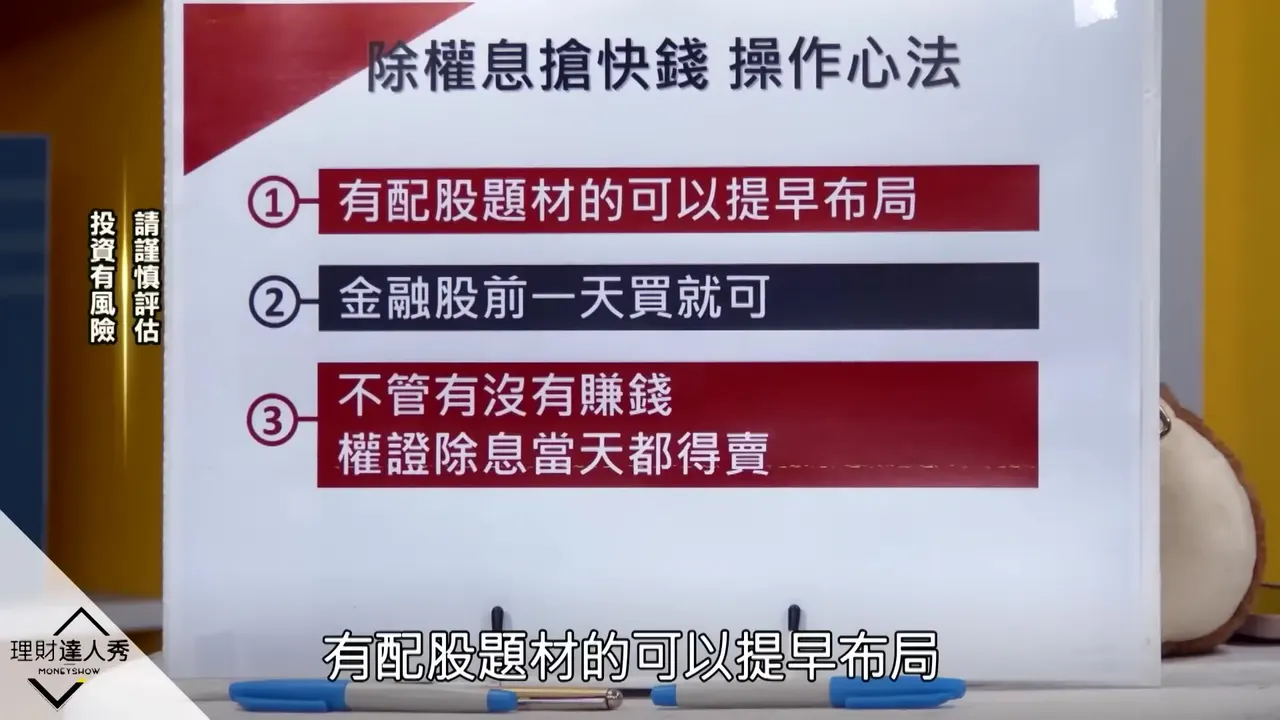
10:16Rule 2: No Need to Buy Financial Stocks Too Early
The second rule is that financial stocks need not be bought too early; buying the day before is enough. Financial stocks are mostly priced at 20–30, even in the low teens, and after ex-dividend people feel they have become cheap, so shareholders who just want dividends come in; as a result financial stocks are often still strong on ex-dividend day, leaving room for profit.
▶ Watch from here10:56Rule 3: Exit on Ex-Dividend Day
A reminder that when playing ex-dividend, you should exit on ex-dividend day whether or not you are making money, and not keep holding without a stop-loss. After the rules, the video moves on to actual ex-dividend cases for individual stocks.
▶ Watch from here11:15Start of the Evergreen Marine Ex-Dividend Case
Now individual examples, starting with Evergreen Marine. The speaker says the markdown figures calculated by the software have some error, because the actual situation on the day can no longer be retrieved afterward. Evergreen paid 70 this year, the biggest markdown this year, with the price going from 155 to 85, a little over half, and its gap-up probability is also high, so the speaker bought a large amount of warrants to take part in the ex-dividend and showed the trading records.
▶ Watch from here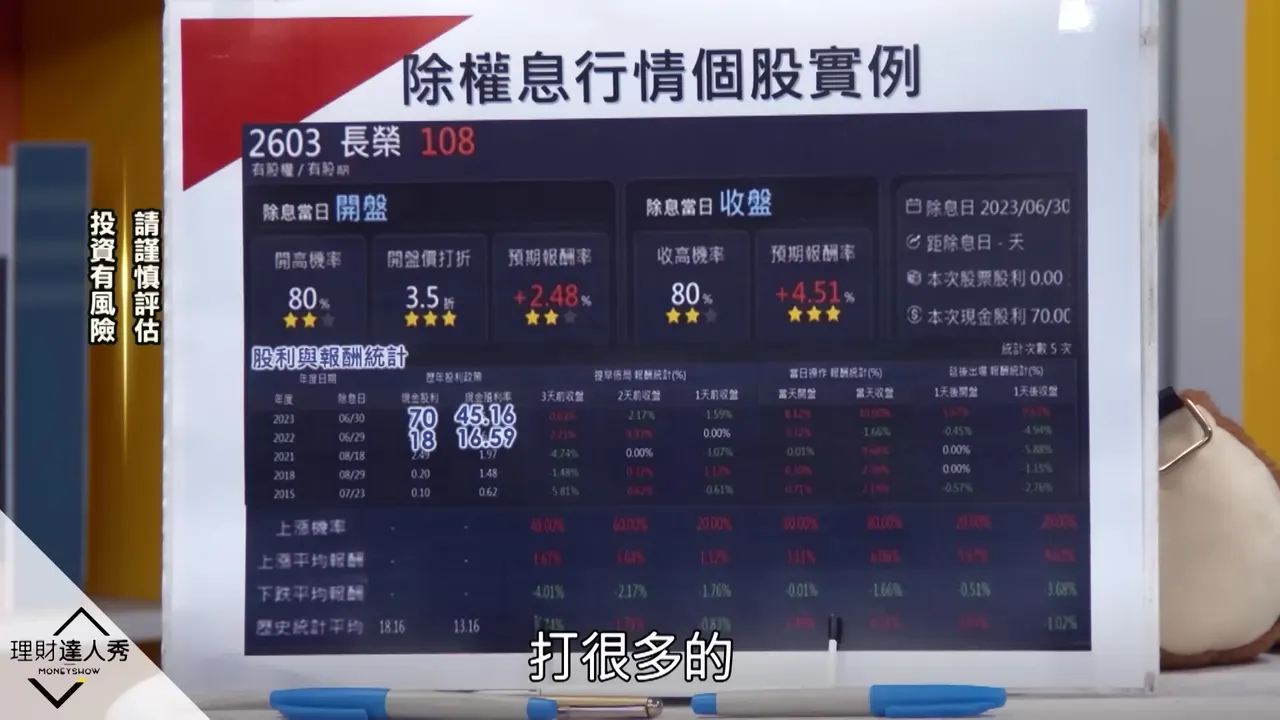
12:05Evergreen Marine Warrant Results
Shows the Evergreen warrant results: returns of 200–300-plus%, with profits all in 6 figures. The speaker bought especially heavily because of particular confidence in Evergreen: it has the highest yield this year, and many people take over after ex-dividend. Next comes Yang Ming, of the same group, which rose before ex-dividend.
▶ Watch from here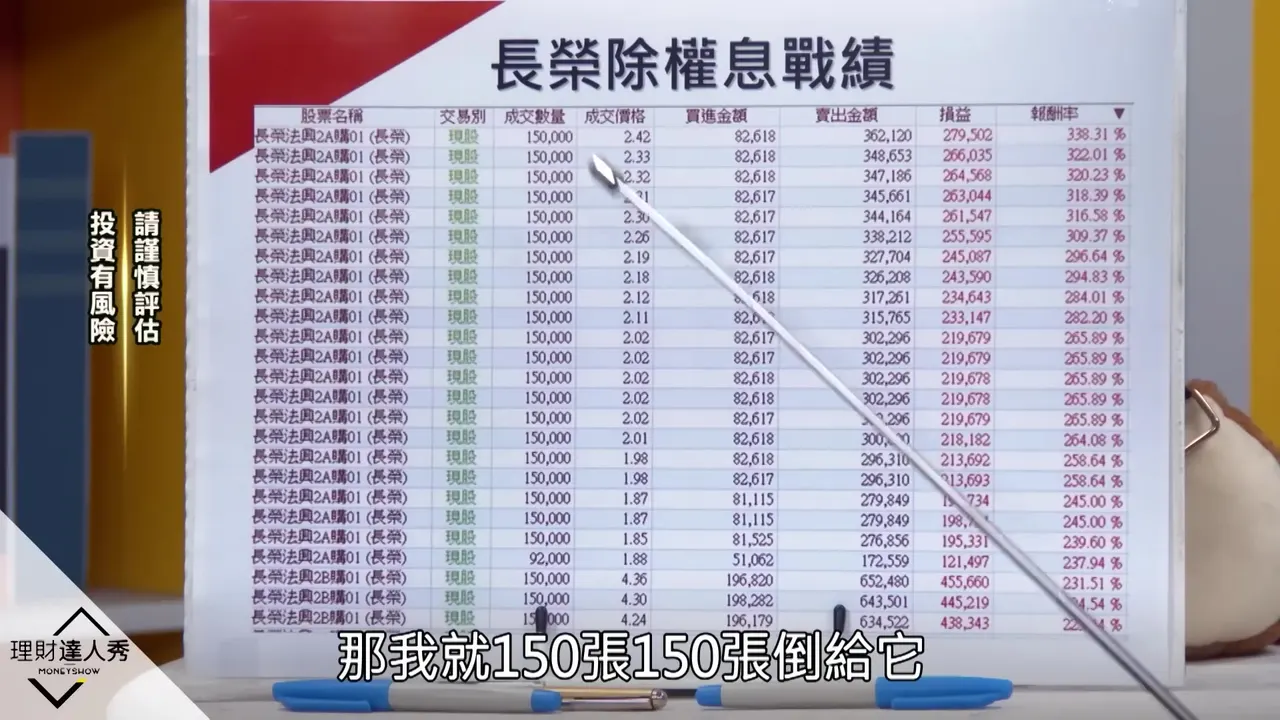
13:01The Yang Ming Case and Long-Short Trading
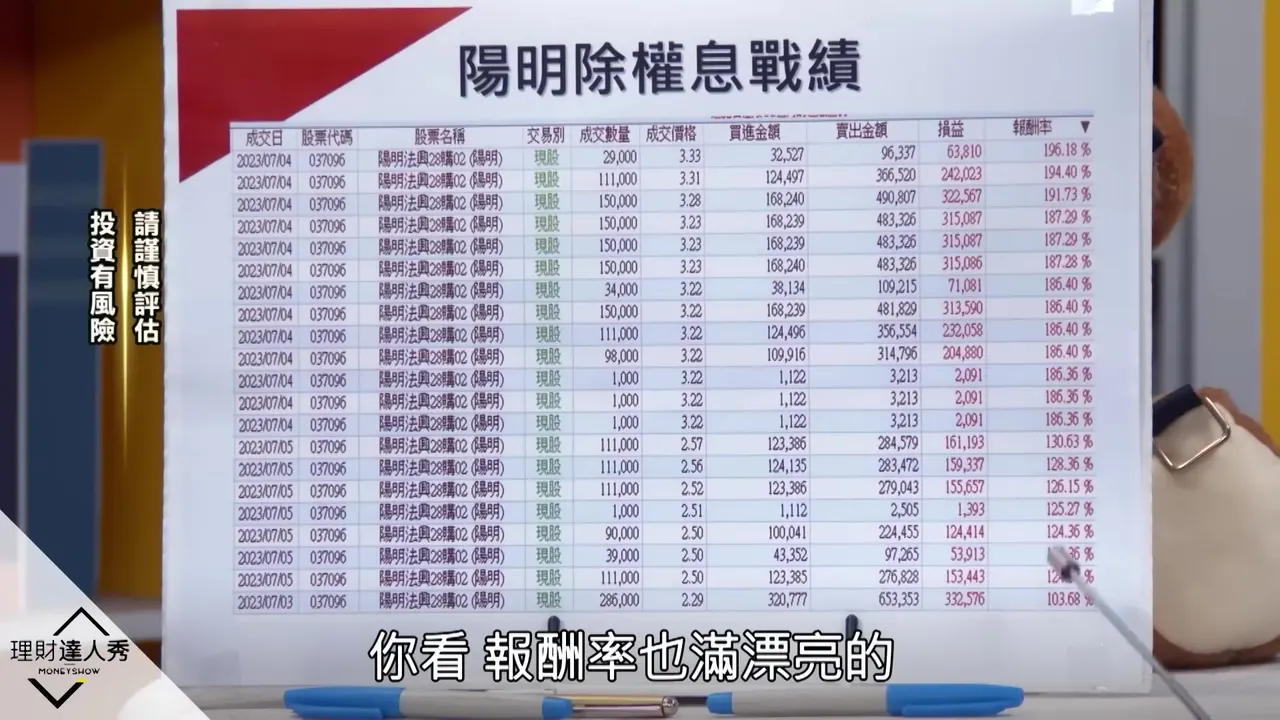
Yang Ming's gap-up probability is also high, but it rose ahead of the ex-dividend. While Evergreen was surging, the speaker bought Yang Ming warrants 2 days early; it hit limit-up the day before and limit-up again on ex-dividend day. Since last year's experience showed that after a big ex-dividend rise it falls back, the speaker sold the warrants at the high and shorted futures betting on a pullback. Warrant returns were 100–200%, with profits in 6 figures; the gap-up to limit-up also caused brokers big losses on Evergreen and Yang Ming. The speaker stresses that this approach works both long and short, not only long, and in the past also warned of risk at the high of 233.
▶ Watch from here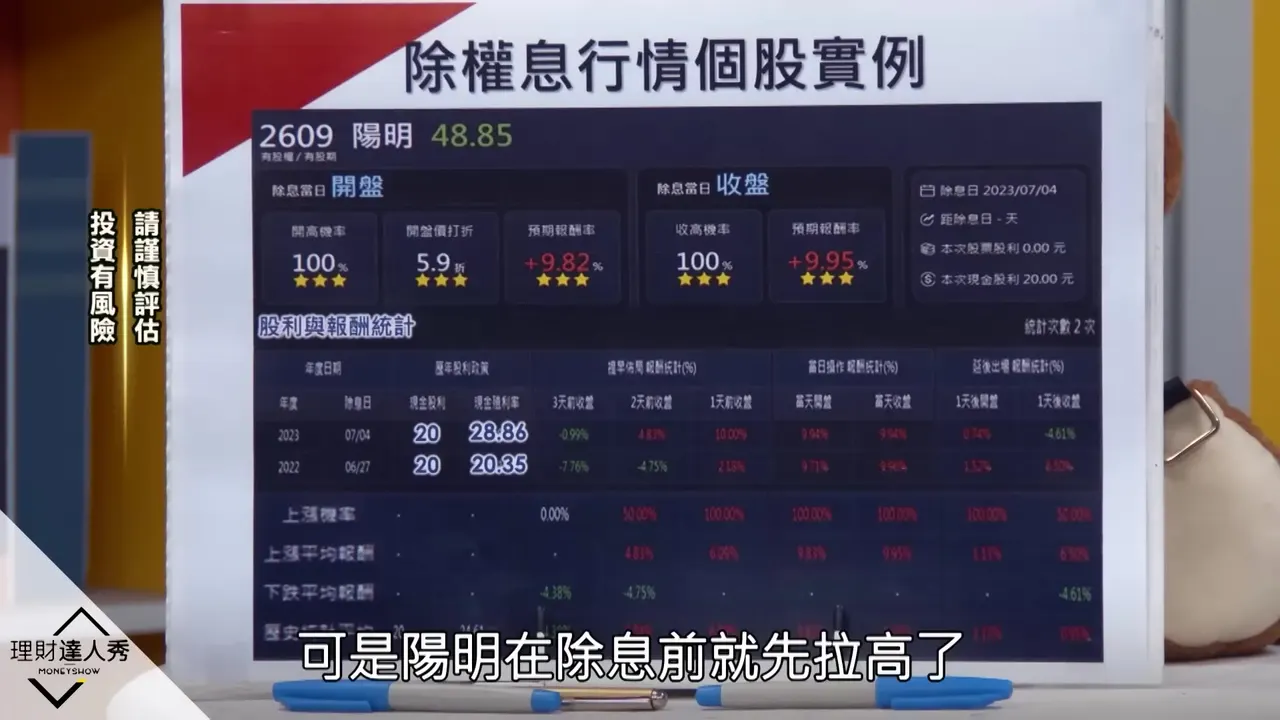
15:11How to Take Part in Ex-Dividend Plays With Warrants
The warrant approach to ex-dividend: pick a good warrant and buy before the ex-dividend, betting on exiting after the next day's gap-up. The key to selection is a low spread-to-leverage ratio (the price spread ratio divided by effective leverage) and not being too far out of the money; since you only take part for 1–2 days, time to expiry does not matter much, and otherwise just check that implied volatility does not keep falling.
▶ Watch from here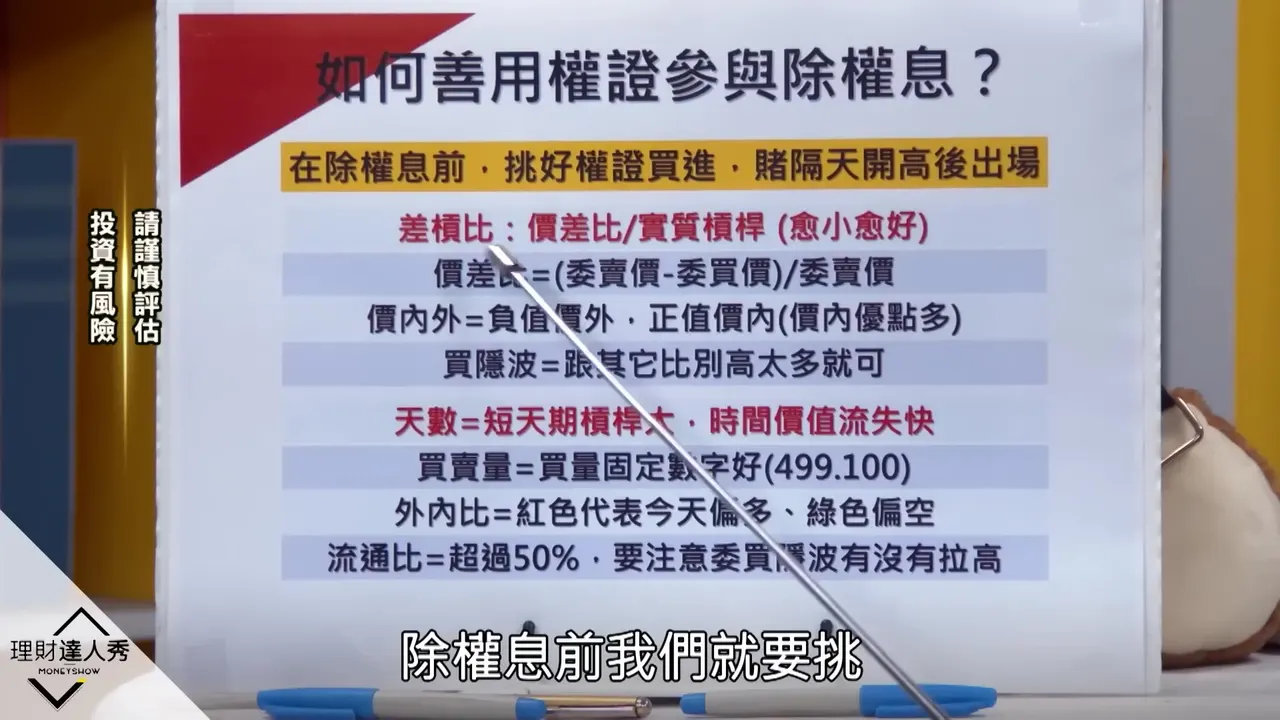
15:56E.SUN Financial Spread-to-Leverage Demonstration
Using E.SUN Financial as an example, shows how to check a warrant's spread-to-leverage ratio in the software. E.SUN pays bonus shares every year and trades well, and it has opened higher on ex-dividend for the past 7–8 years, but its share price is high, so producing a big red candle is not that easy; the speaker takes part roughly every year.
▶ Watch from here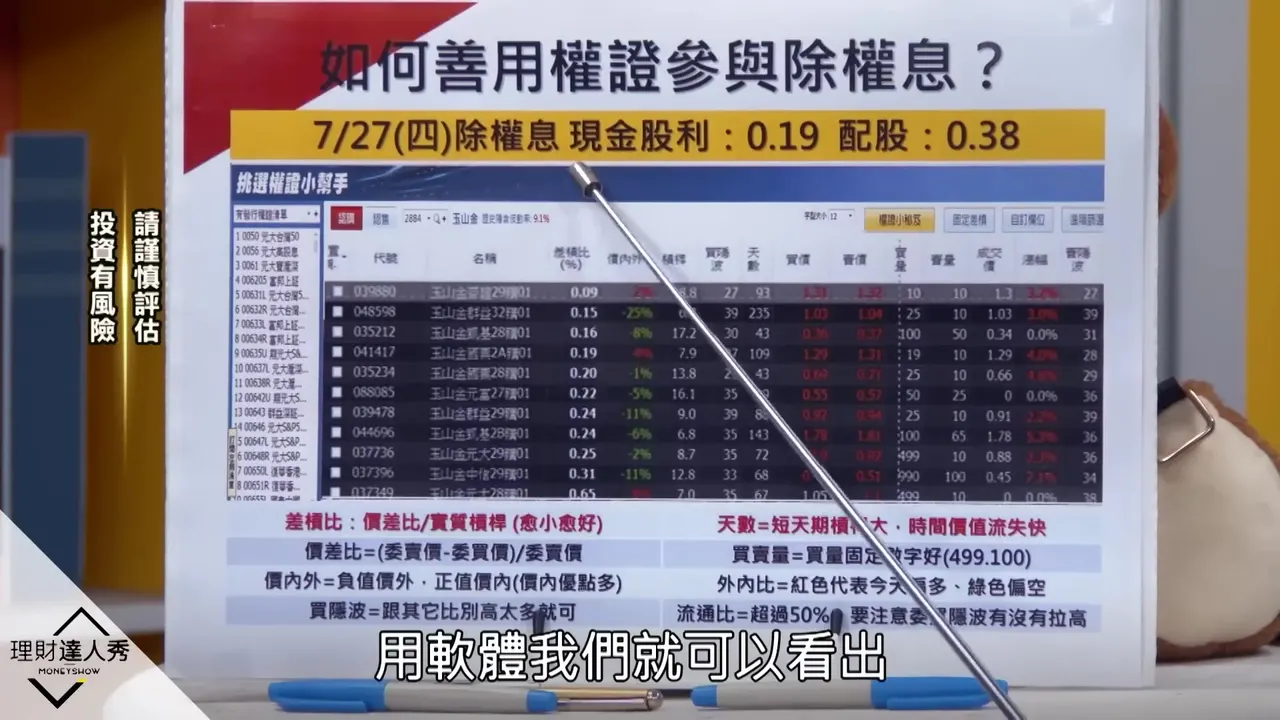
16:31Watching Implied Volatility
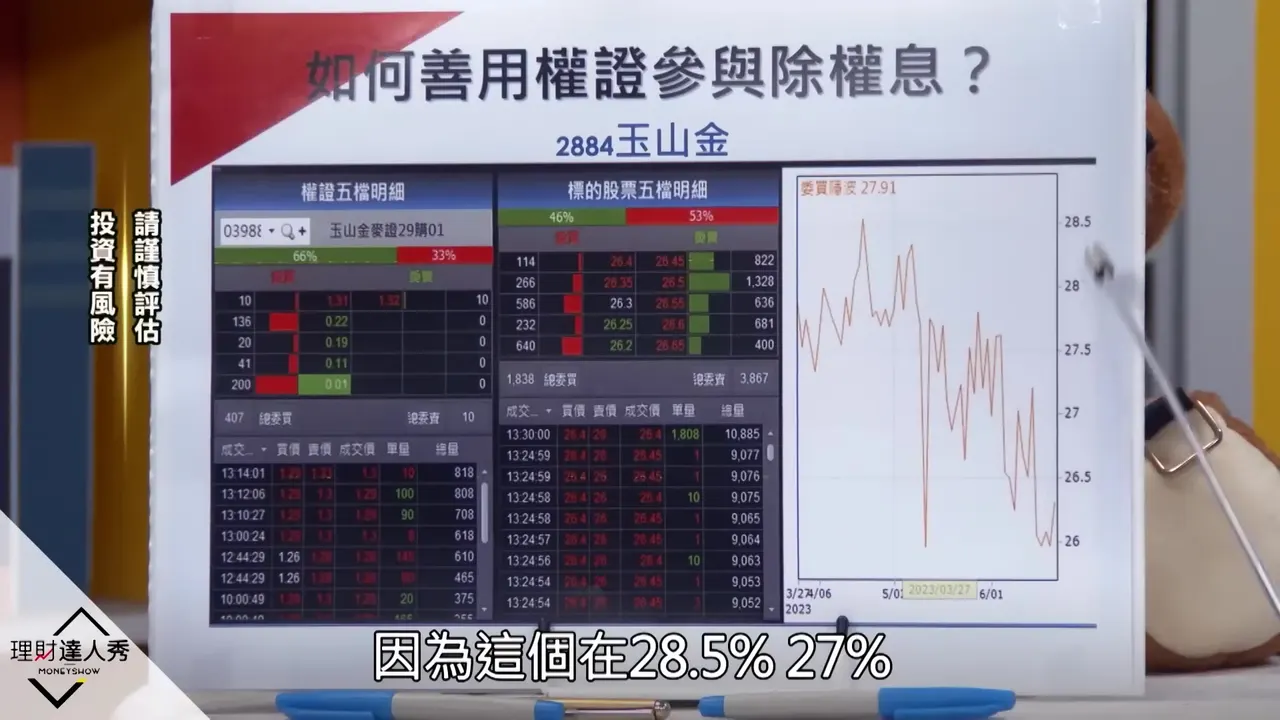
When taking part in ex-dividend plays you must watch implied volatility, a value used in calculating a warrant's fair price. Steady implied volatility means the issuing broker is making the market well; if it is unstable, be careful. This E.SUN warrant's implied volatility hovers around 28.57 without large swings, which is fairly fine.
▶ Watch from here17:11Reading Implied Volatility and Wrap-Up
If implied volatility slides from 50 all the way to 30, the warrant's market making is poor; as long as implied volatility is stable, you can basically earn the return you should. E.SUN is not as strong as Evergreen or Yang Ming, but it opens at least 1–2% higher every year, which is quite stable, though this year's result has to be verified once it opens.
▶ Watch from here