After the PCB Show: Material Shortages, Price Hikes, and the Signals to Wait for Before Turning Bullish
TL;DR: The PCB show confirmed that ABF substrates are getting larger and more multilayered while upstream materials are short and equipment lead times are stretching, so the industry trend is irreversible; but market volume is weak and foreign investors are still selling, so he waits for foreign buying and falling oil prices before turning bullish, and for individual stocks he waits for a base to form near the quarterly moving average before entering.
Key ideas
- ABF substrates are getting bigger and having more layers, which raises material loss and area; with copper foil, CCL and glass cloth short by about 20% and key equipment lead times over 30 months, no one can expand capacity fast enough, so price hikes are inevitable; equipment delays only defer revenue, which must eventually be delivered.
- The PCB sector rotates quickly and has many upper shadows, which he reads as the mid-to-long-term major players not having bought enough; with market turnover of 800 billion unable to support it, he took profits on Taiwan Glass, is watching Compeq and Chin Poon near cost, and keeps 50% of his funds in cash.
- Facing rumors about M10 certification, he does not bet on whether the company passes and uses the quarterly moving average instead: if the price falls below it and recovers within 3 days, the decline has roughly stopped; Taiwan Union's low CB conversion price benefits subscribers and delays share dilution, and the 3–5 year conversion period does not signal a lack of confidence.
- Foreign investors have net sold about 3000 billion in total; he does not care how many days the market falls, only whether foreign investors turn to buying and oil prices fall; a stronger Taiwan dollar and a stabilizing Bitcoin are good, but only when all 5 factors turn bullish and foreign investors buy back 700–800 billion would it be a true bottom reversal.
- For individual stocks, wait for a base to form below or near the quarterly moving average, then enter when it turns up and market sentiment steadies; the sector is recovering but lacks continuity, and the retreat in margin trading has not been clean enough, so range-bound consolidation is healthier than a V-shaped rebound.
Ask AI about this episode
Copy the prompt, paste it into an AI service, and add the question. The AI reads the notes on this site and links to the page and the video timestamps.
Or open directly:ChatGPTClaudeGrokPerplexity
Section summaries
0:05Observations from the PCB Show and Two Questions
Boss Lei says the most accurate call at this show was his prediction that Compeq would leave another upper shadow; many people messaged him backstage, and fellow analysts at the venue followed him in filming the show. He also answers two viewer questions: why Taiwan Union did not keep rising after its pricing, and what to make of Compeq and Nan Ya failing to hold limit-up, with Taiwan Glass also closing with upper shadows after he took profits.
▶ Watch from here3:53Three Key Takeaways from the Show and Material Shortages Driving Price Hikes
ABF substrates are becoming larger, thinner, and more multilayered, and as area grows revenue rises; the top 3 makers together hold over 50% market share, yet none can expand capacity fast enough. Upstream copper foil, CCL, and glass cloth are short by about 20%, and key equipment lead times have stretched to over 30 months, so shortages will certainly be passed on as price hikes. He believes equipment delays only defer revenue, which must eventually be delivered, so there is no need to worry; he also names 3 CCL stocks: Elite Material, Taiwan Union, and ITEQ.
▶ Watch from here10:29Adjusting Trades Amid Weak Volume
Market volume is insufficient: prices spike intraday, get sold down, and only recover near the close, leaving many shadows; Nan Ya struggled to hold limit-up and Compeq did not. He thinks Compeq's chip structure is weaker than Nan Ya's, as it is stuck at 9th or 10th place in the daily turnover ranking; the PCB sector rotates quickly, meaning the mid-to-long-term major players have not bought enough, and 800 billion in market turnover can hardly support the whole sector. So he took profits on Taiwan Glass, will watch Compeq and Chin Poon near cost for 2–3 days, and keeps 50% of his funds in cash; Zhen Ding gapped up and reclaimed the 5-day and 10-day lines.
▶ Watch from here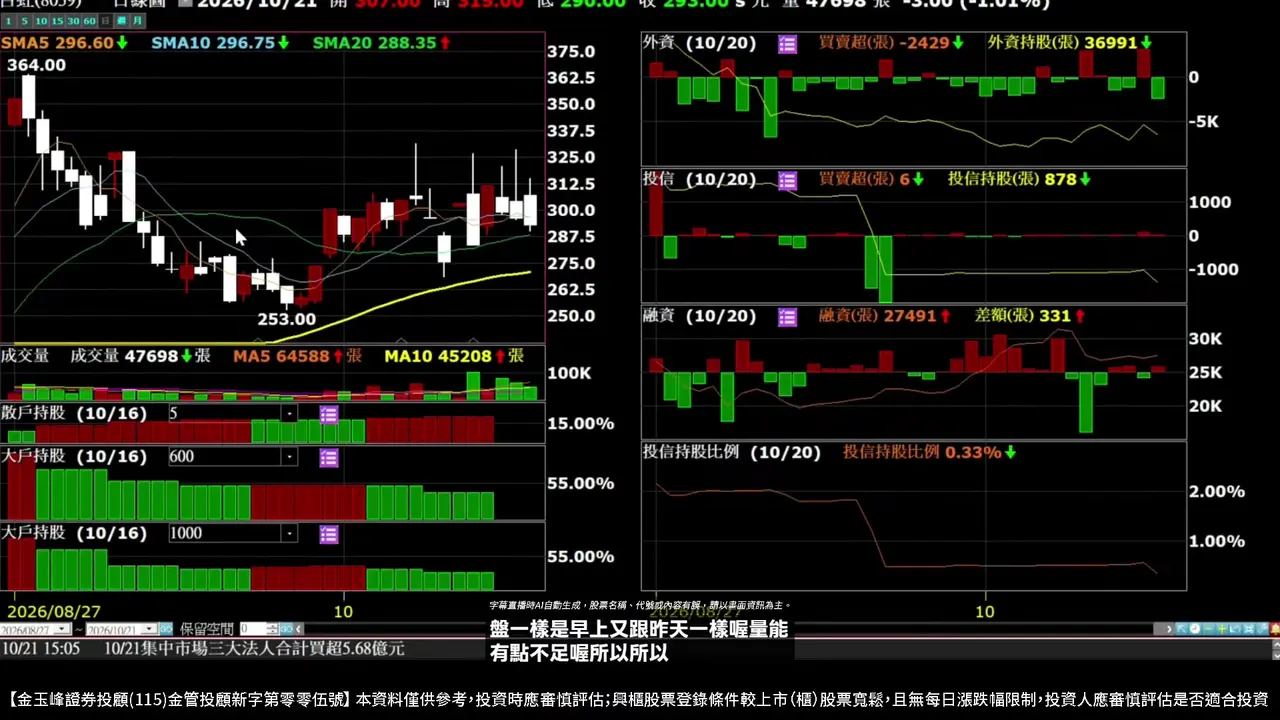
15:05Capital Rotation Among the ABF Names
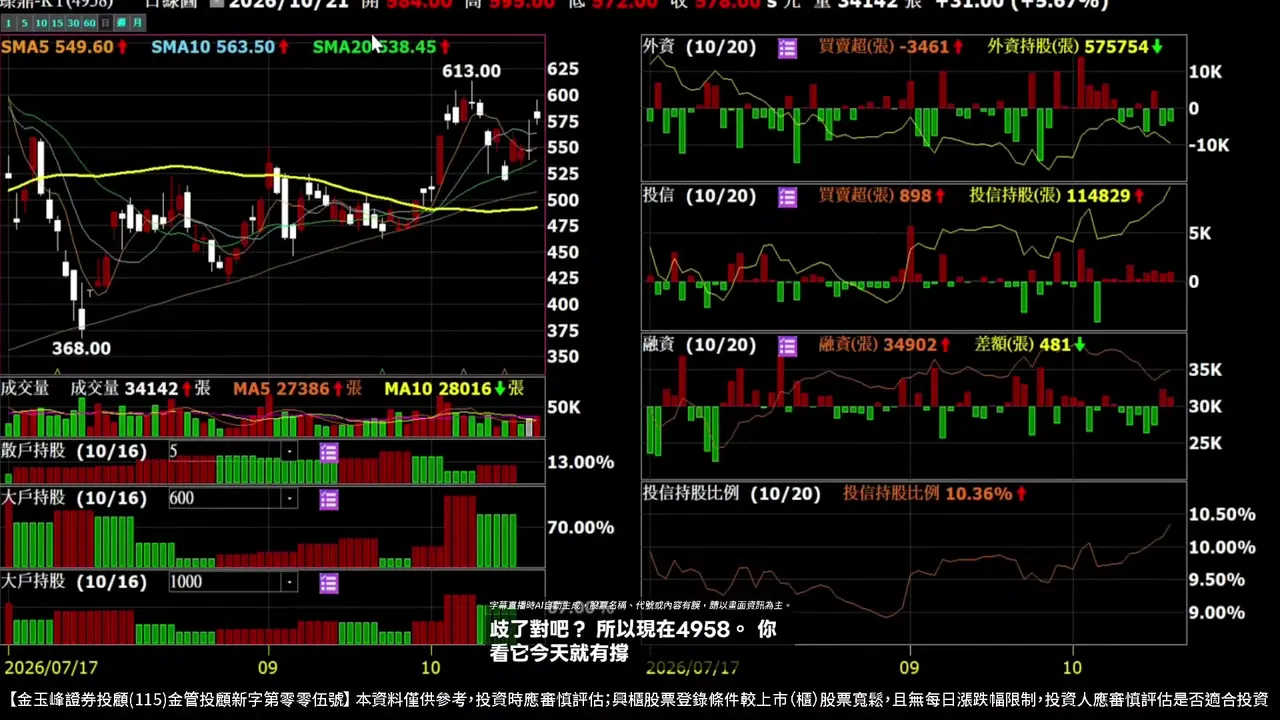
Among the 4 ABF leaders, Zhen Ding (4958) gapped up today and reclaimed the 5-day and 10-day lines, with the best-looking chart; Kinsus is back at 1000, and since it was at 500–600 he has been calling it the new 1000-dollar stock. He remains bullish on ABF after consolidation but says there is no rush: wait for stocks still under the quarterly moving average to reclaim it before adding, and for now buy at most a little for confidence. This week is a key time for the market; near the quarterly line it will either stop falling or rebound slowly, and he can accept a slow bullish climb.
▶ Watch from here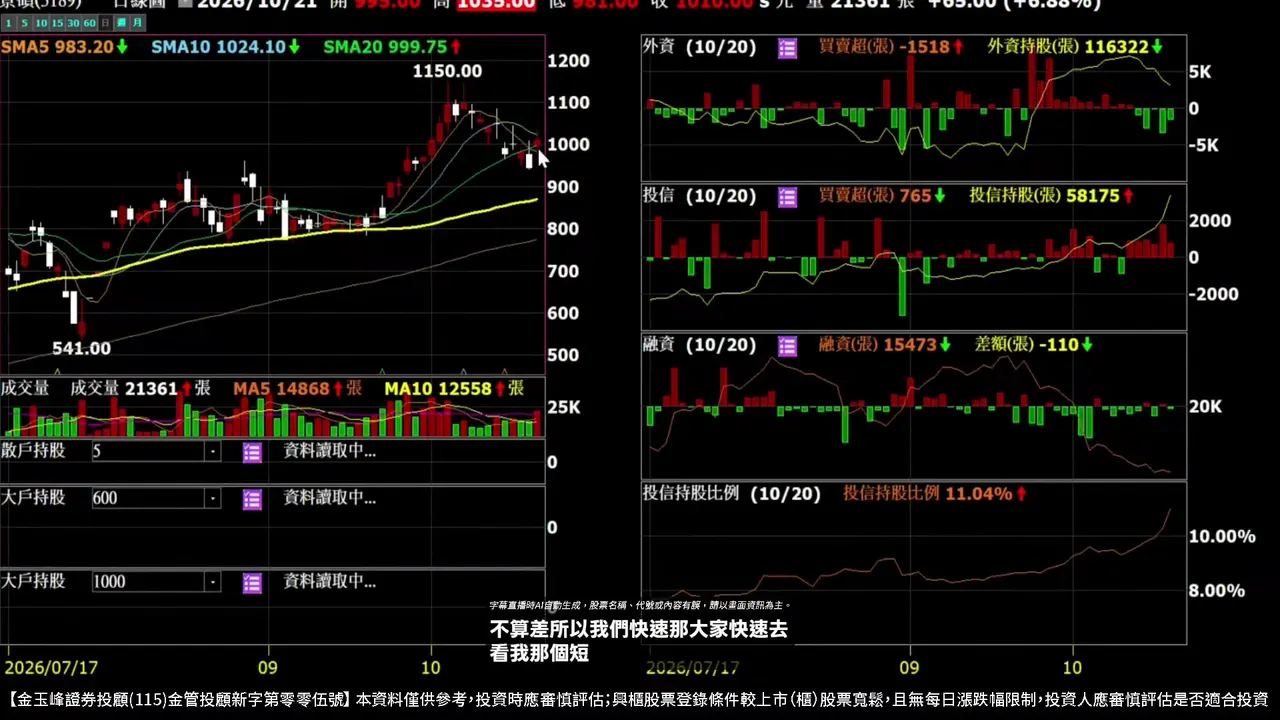
18:17The M10 Material Theme and the Quarterly-Line Defense
Elite Material began to stabilize near its low of the past two months; earlier, active ETFs were selling, and recently some investment trusts have been buying back. Taiwan Union did not rise today because of a minor negative: word from the show that it did not pass M10 certification. He reminds viewers that M8 and M9 are still the mainstream, that samples in the first half of next year still have a chance, that it may still get in when mass production ramps up in the second half, and that such news used to send the stock limit-down but did not this time. ITEQ hit limit-up on hopes it might pass, though it has not passed either. Those worried about Taiwan Union being shut out can switch to ITEQ or wait on Elite Material, which is the M10 leader. He does not bet on certification results and watches the quarterly moving average instead: if the price falls below it and recovers within 3 days, the decline has roughly stopped.
▶ Watch from here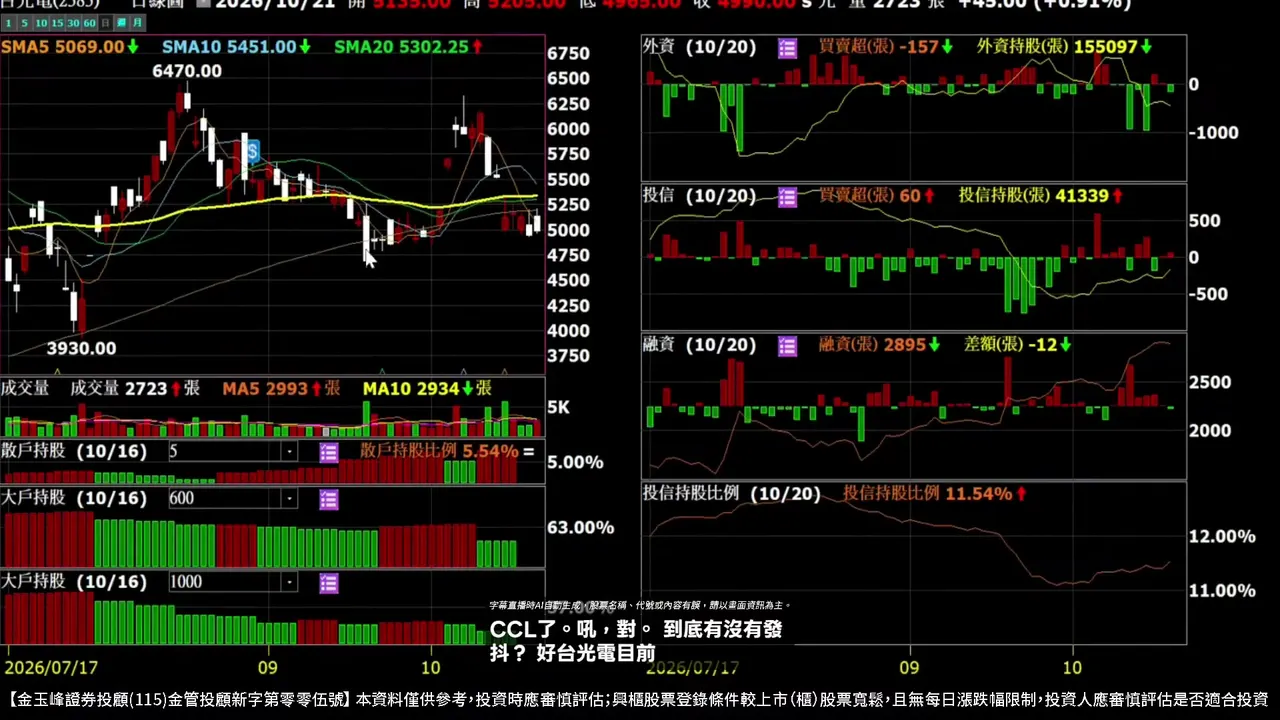
25:05Taking Profits on ITEQ and the Logic of Taiwan Union's CB
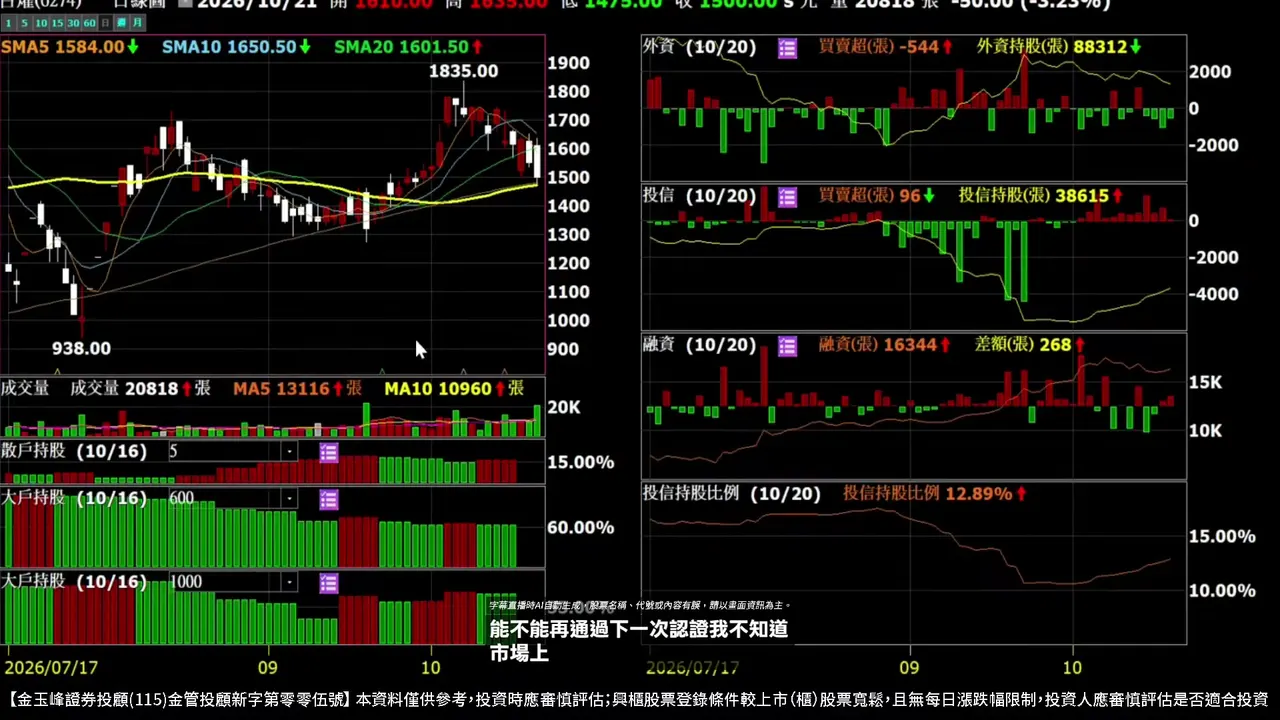
ITEQ was locked at limit-up with investment trusts continuing to buy, and he exited with about 50% return. The shop manager asked whether Taiwan Union setting its CB conversion price at 1655 signals a lack of confidence; Boss Lei explains from two angles: a low conversion price is more favorable to those subscribing to the CB and makes conversion easier, which is often how a chairman strengthens outside relationships; and issuing debt delays share dilution, so EPS is not diluted. CB conversion periods are usually 3–5 years, and a high price does not guarantee an immediate rise, so there is no need to fixate on the price.
▶ Watch from here30:35Foreign Investor Flows and the 5 Bullish Signals
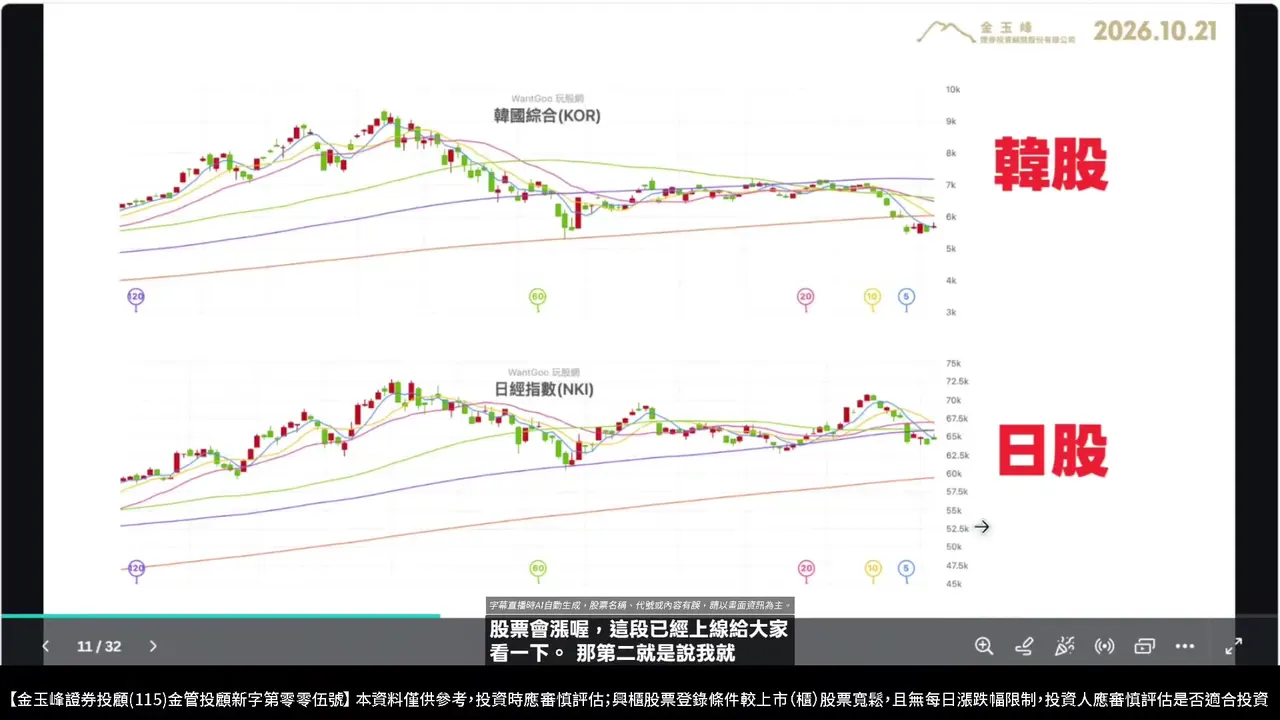
Foreign investors have lately bought back almost only Tripod, with cumulative net selling of about 3000 billion; after he cut positions, foreign investors indeed net sold over 700 billion more, so he keeps his cash level at about 50% and is in no hurry to enter. He does not care how many days the market falls, only whether foreign investors turn to buying and whether oil prices fall. The Taiwan dollar appreciating on the first day and Bitcoin's rally stalling are good, but he wants all 5 factors to turn bullish, not just 2. He needs to see oil falling, foreign investors buying back 700–800 billion, and Japan and Korea surging before calling it a true bottom reversal.
▶ Watch from here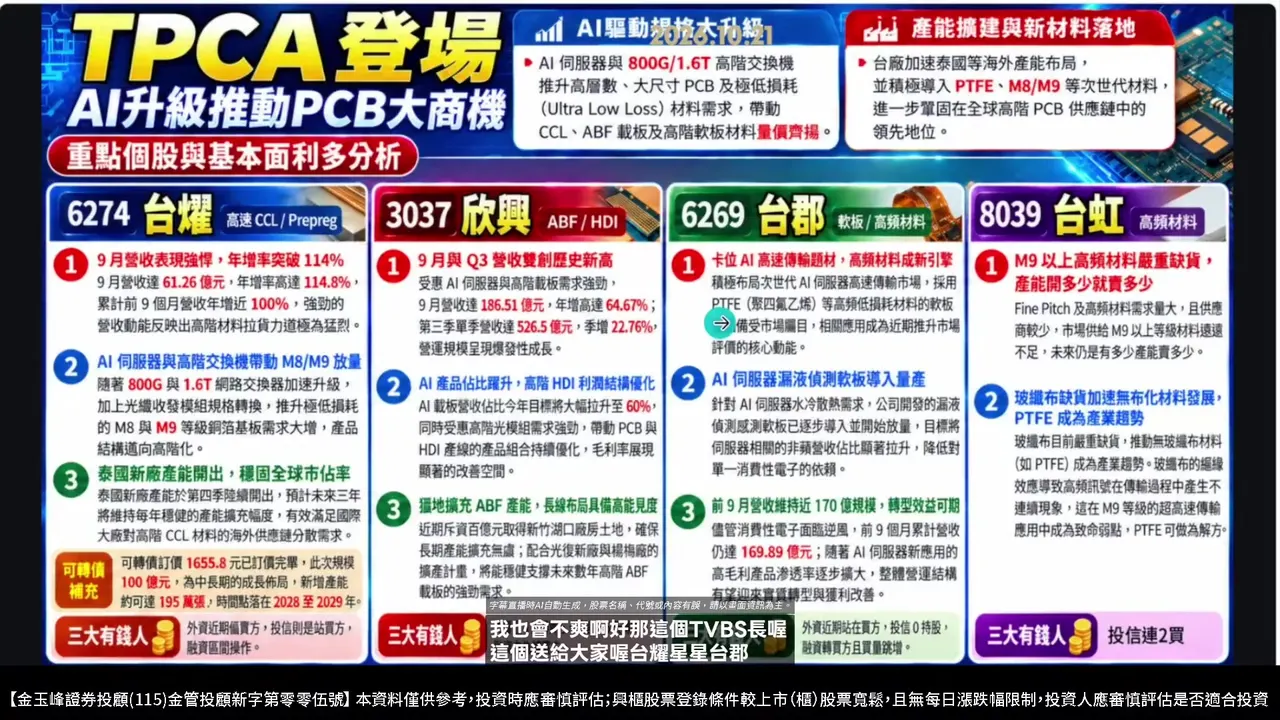
35:50Sectors Recovering but Lacking Continuity
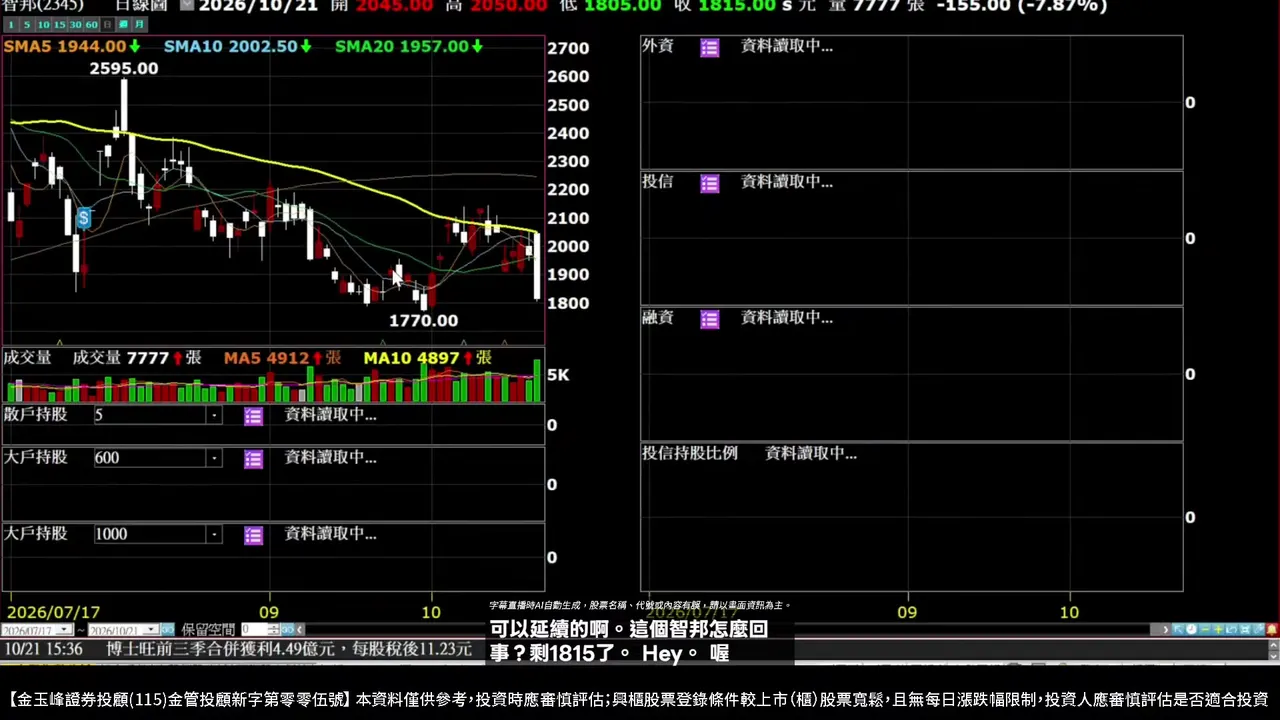
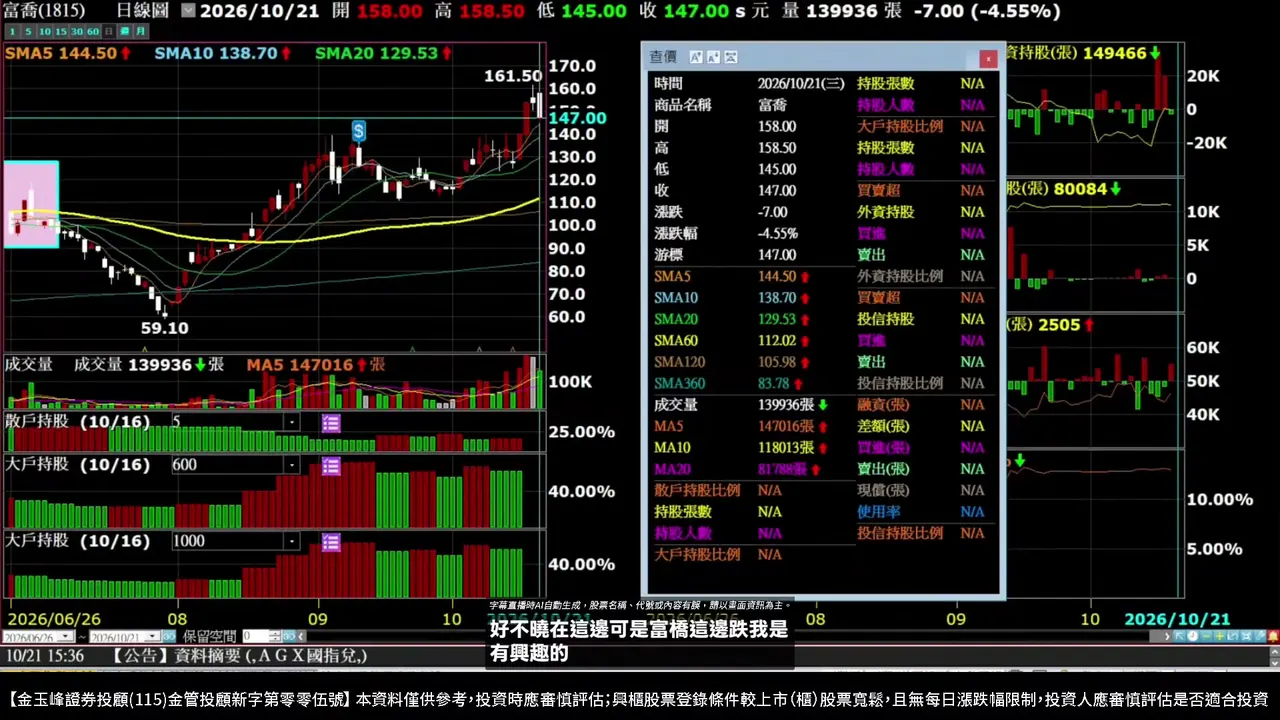
On today's limit-up list, Xintec (semiconductor materials), passive component makers such as Walsin Technology and Thinking Electronic, Bin Chuan (servers), Thinflex (CCL), Taiwan Surface Mounting Technology, and Taiwan Sumco all performed. Both weak sectors and sectors led by the main funds are coming back, so Taiwan's market structure is improving, but not enough yet, because Taiwan Fuqiao, strong yesterday, lost its continuity today. Accton fell to 1815 and suddenly broke its bottom without any known negative news, yet other optical communications stocks still rose today.
▶ Watch from here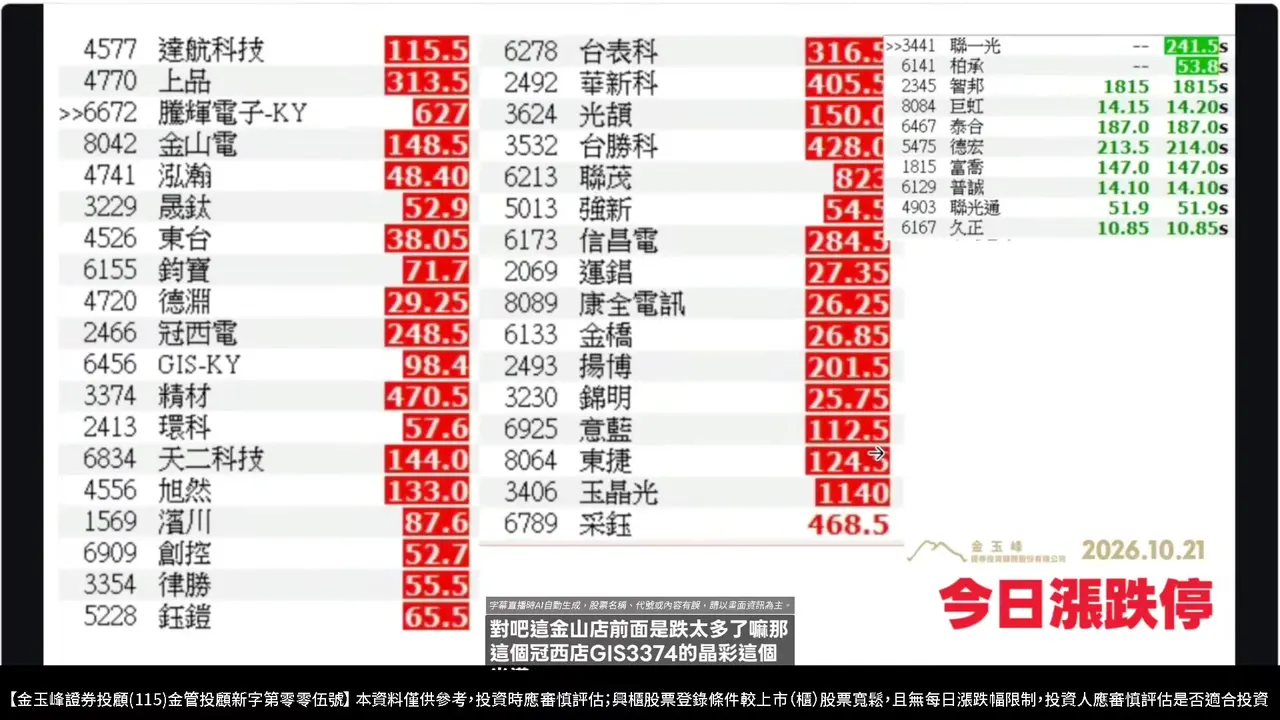
37:10Optical Communications Consolidation and Warrant Buying
AWS and Gold Circuit also did well today. Optical communications broke the quarterly line near it without following through, which he sees as a stock that should fall but does not, looking less like a crash and more like consolidation, with quite a few heavyweight stocks already consolidating. He will not buy at the first touch of the quarterly line, but waits for a base to form below or near it and then a turn up, and enters only once market sentiment steadies, at the cost of often missing the exact low. Warrant buying that day was concentrated in Taiwan Glass, Xintec, Wistron, AVC, Yageo, and Darfon.
▶ Watch from here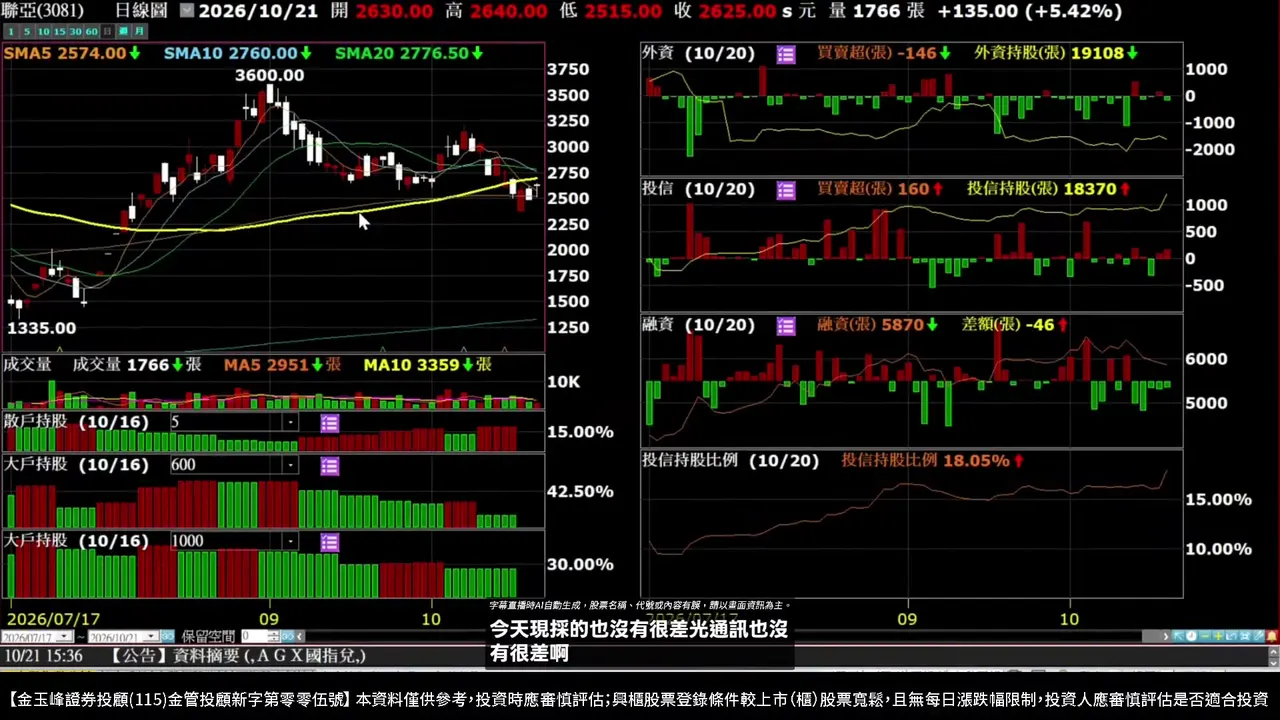
38:10Popular Warrant Stocks and Key Price Levels
Darfon (2478, passive components) rarely sees heavy warrant buying; its defensive point only needs to be 3–4 dollars away, not far. Although Taiwan Glass, like Compeq, keeps closing with upper shadows, its 5-day line slopes upward, and another small red candle would likely send it surging; yesterday he also said falling near 270 was attractive. What he cares about is a stock building a base below the quarterly line and then turning up, since such stocks attract buyers; Wistron is a high-probability candidate to push above 210.
▶ Watch from here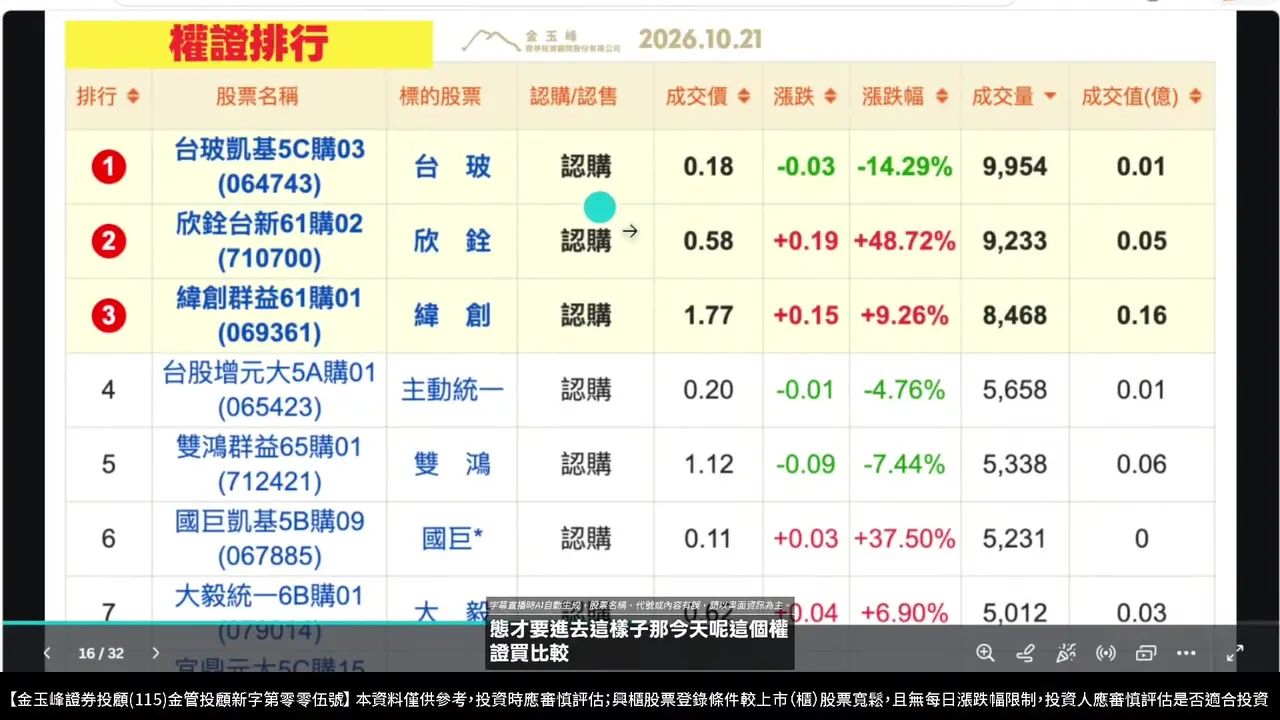
40:25TSMC Returns to the Top of the Turnover Ranking
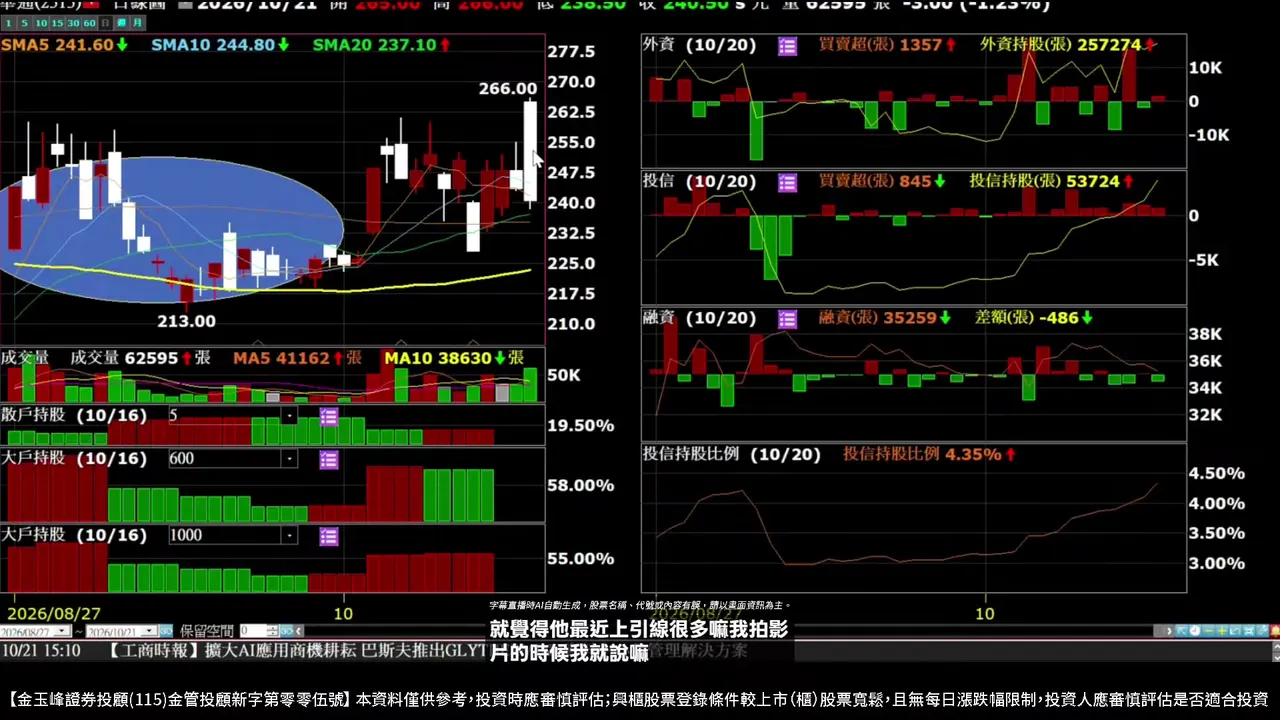
On the turnover ranking, Global Unichip had large turnover, Largan and Delta also made the list, and TSMC returned to first place, which he thinks may mean big money is starting to come back to play large stocks. After Kinguo Kuang hit a new high he turned more conservative: if it clearly falls that day he should be more careful, while if it simply opens higher in the next day or two there is no need to sell yet, and he regards 150 as the ideal upper limit. The retreat in margin trading in the broad market has not been clean enough; range-bound back-and-forth consolidation is healthier than a V-shaped rebound, and bottoming through November would look better.
▶ Watch from here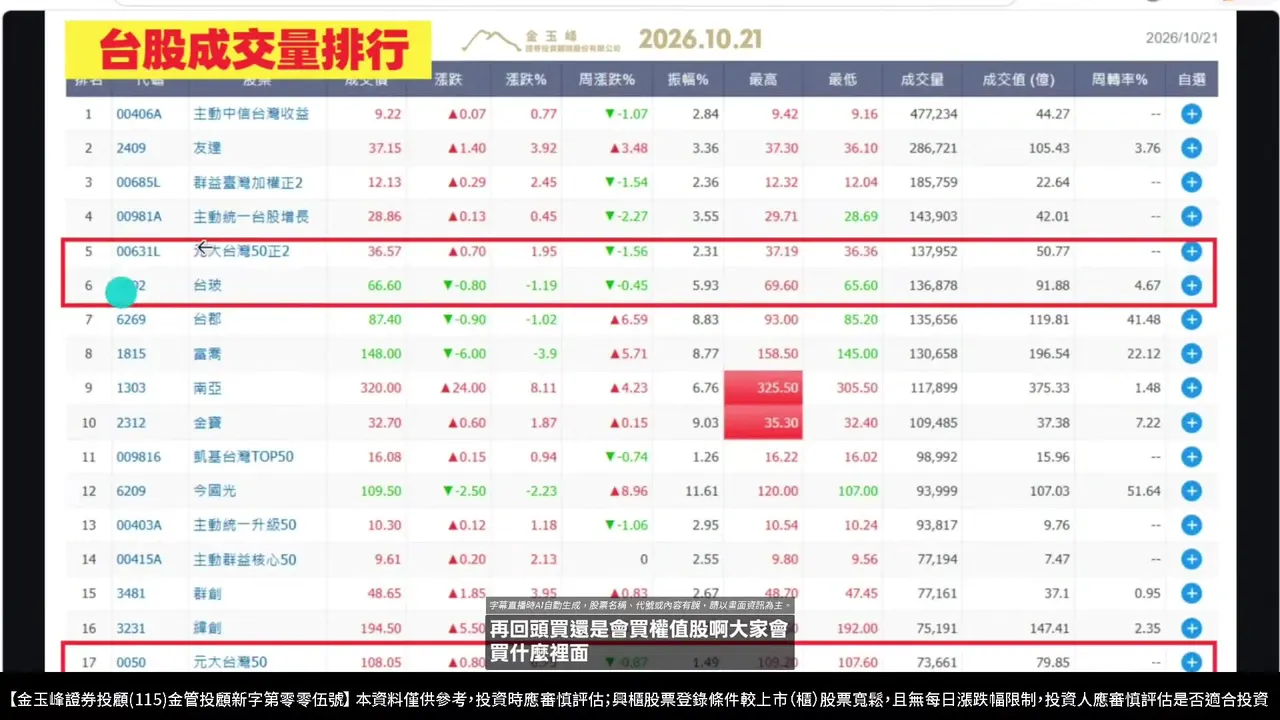
42:35Taiwan Dollar Appreciation and Korean Memory Stocks
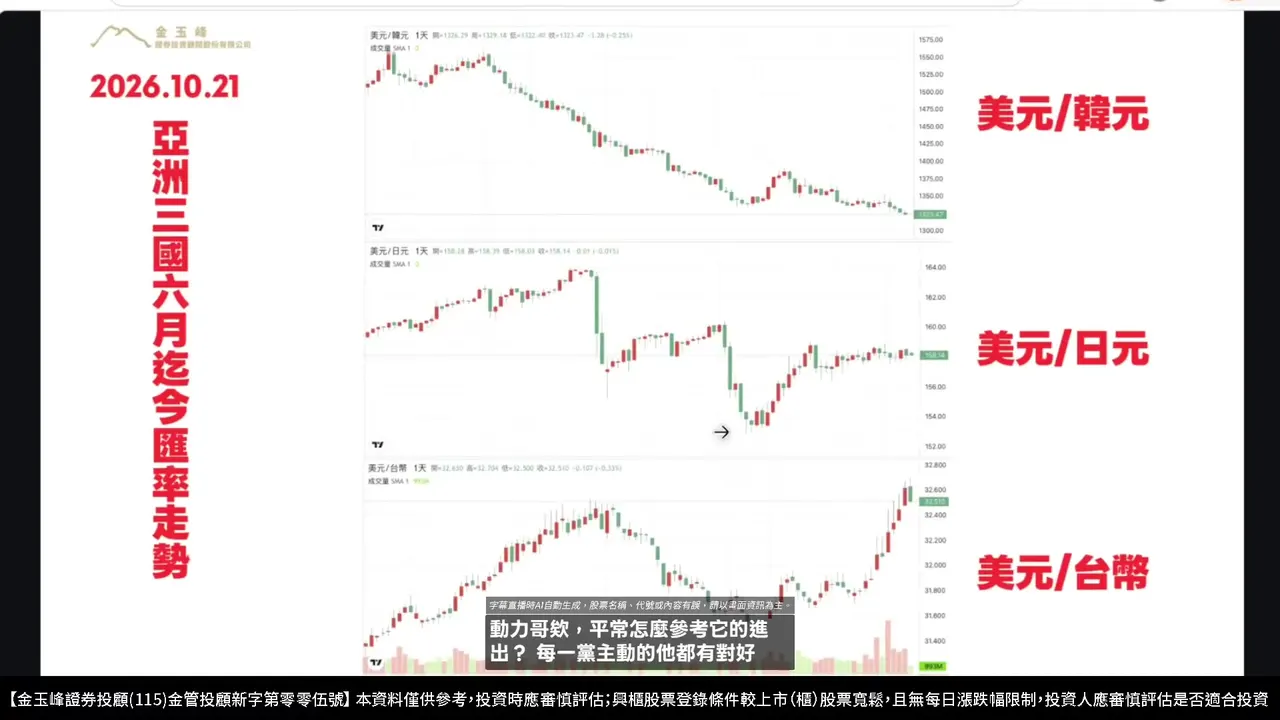
The yen is flat and the Taiwan dollar has finally turned to appreciation; Taiwan stocks, the strongest earlier, pulled back because of the Taiwan dollar's depreciation, so if the currency returns to an appreciating path there is an opportunity. Everyone is now waiting on Korea, which he treats as one big memory stock; if Korean memory starts moving, it means capital is coming alive.
▶ Watch from here